What is a Rock?
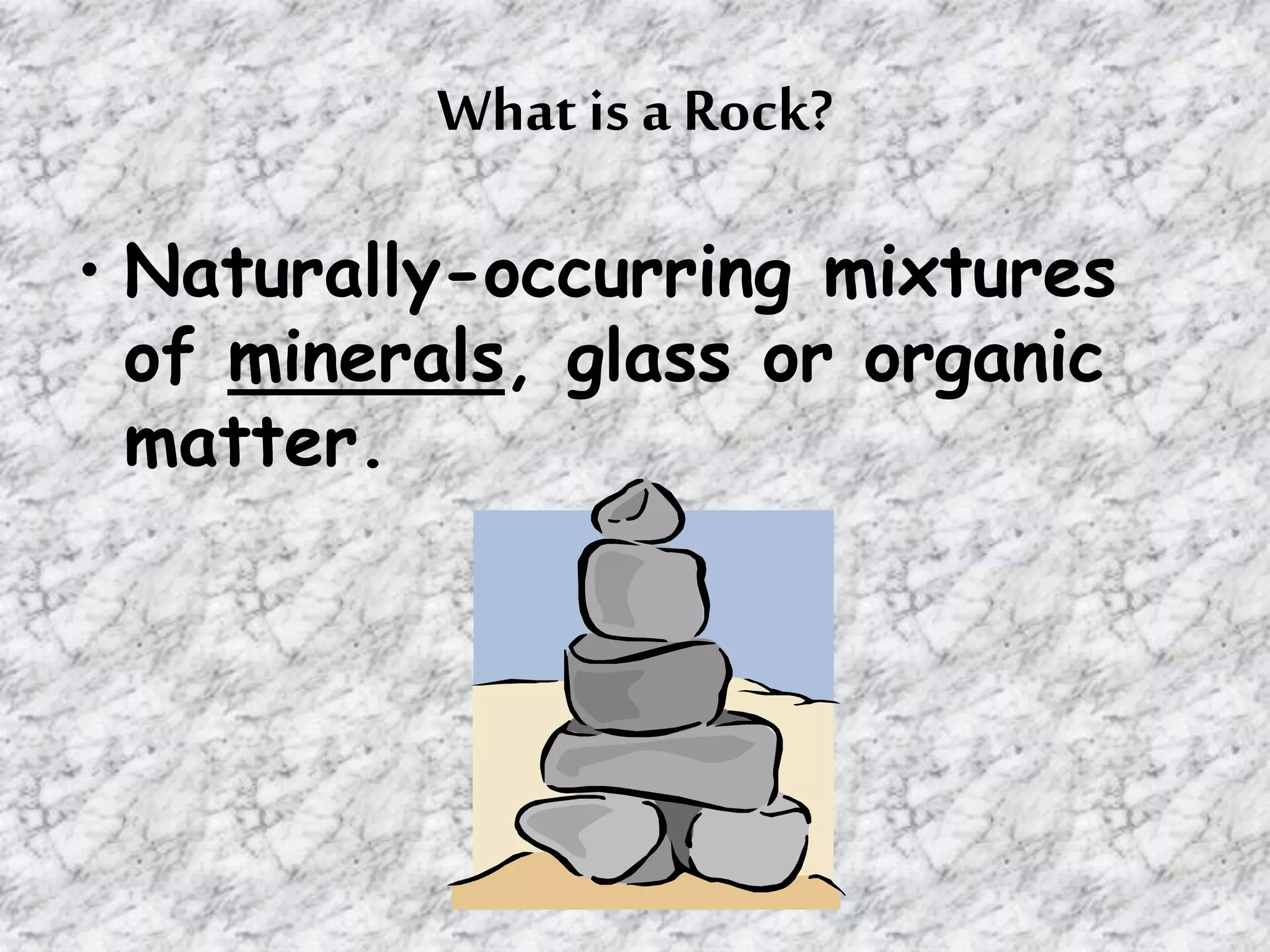
• Naturally-occurring mixtures
of minerals, glass or organic
matter.
Types of Rocks?
What is the difference between
a rock and a mineral?
• Rocks are made up of ONE or
MORE minerals.
Once a rock is formed, does it
stay the same rock forever?
• NO!
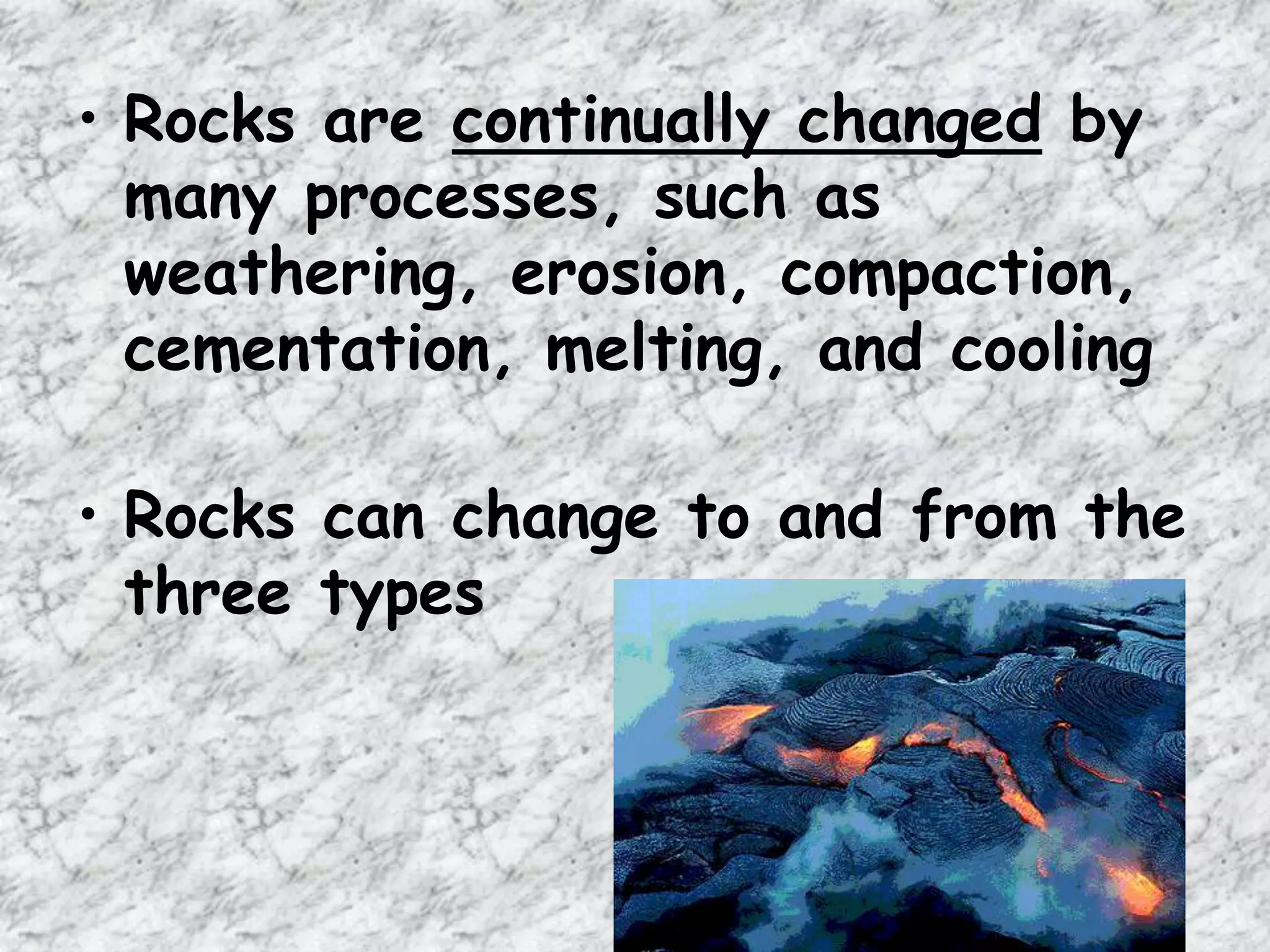
• Rocks are continually changed by
many processes, such as
weathering, erosion, compaction,
cementation, melting, and cooling
• Rocks can change to and from the
three types
What is the process through
which rocks change?
• The Rock Cycle—earth materials change
back and forth among the different types
of rocks
• “Ignis” = Latin for “fire”
• Formed from the cooling of either
magma or lava
• The most abundant type of rock
• Classified according to their origin and
composition
ORIGIN— Where rocks are formed
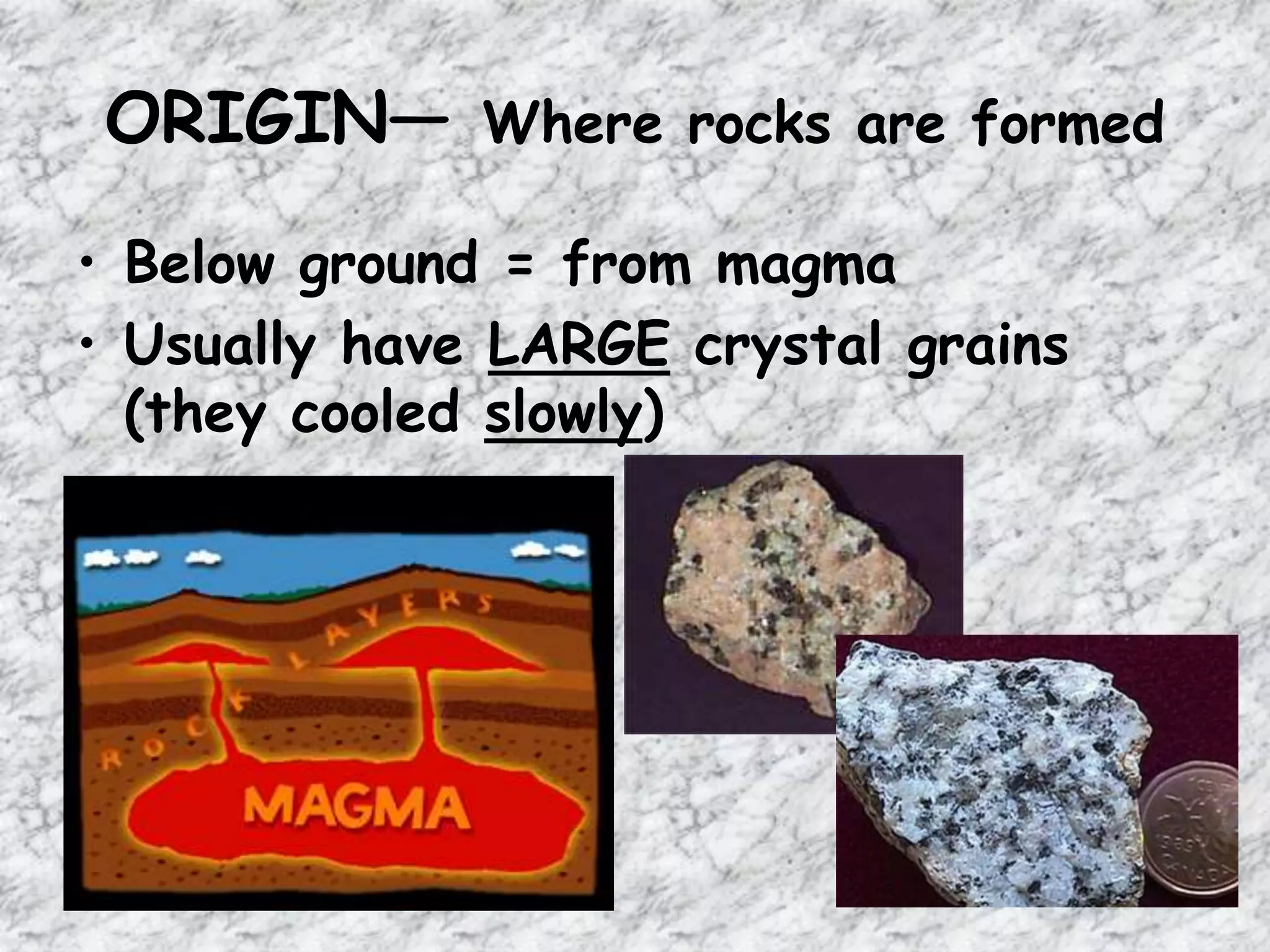
• Below ground = from magma
• Usually have LARGE crystal grains
(they cooled slowly)
Intrinsic Igneous Rocks:
Have large or small crystals
Extrinsic Igneous Rocks
• Above ground = from lava
• Usually have SMALL or NO crystals
(they cooled too quickly)
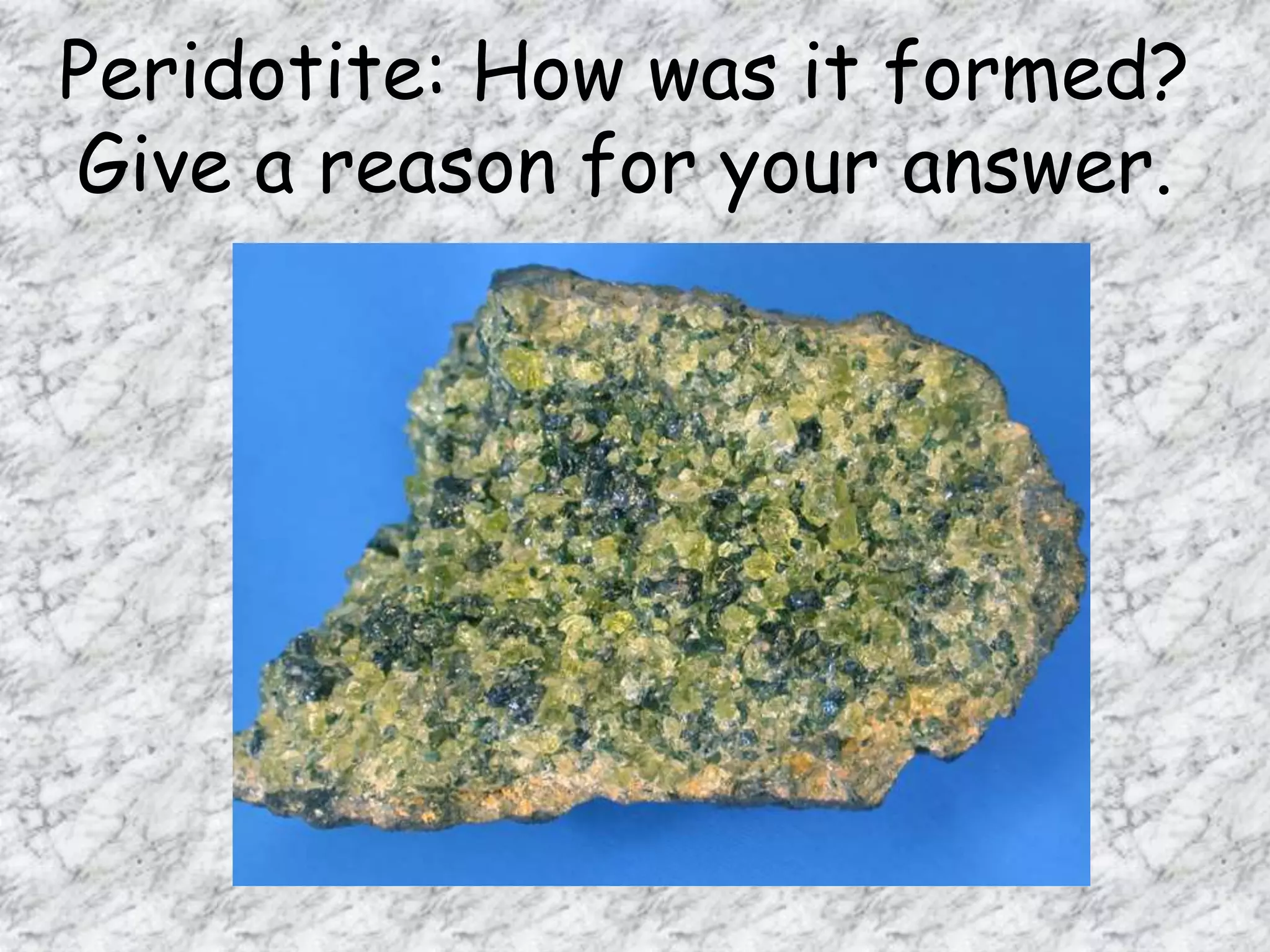
Peridotite: How was it formed?
Give a reason for your answer.
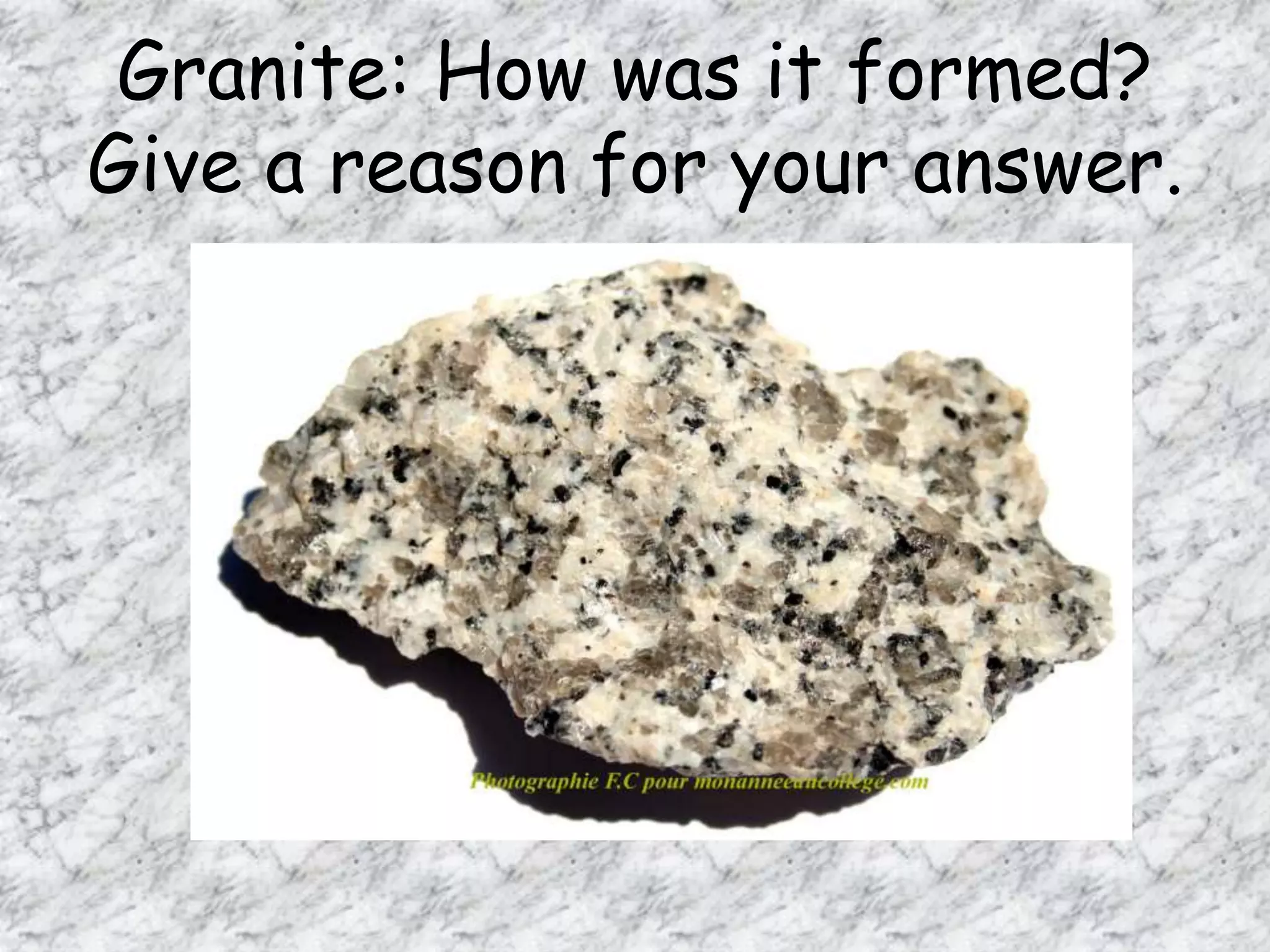
Granite: How was it formed?
Give a reason for your answer.
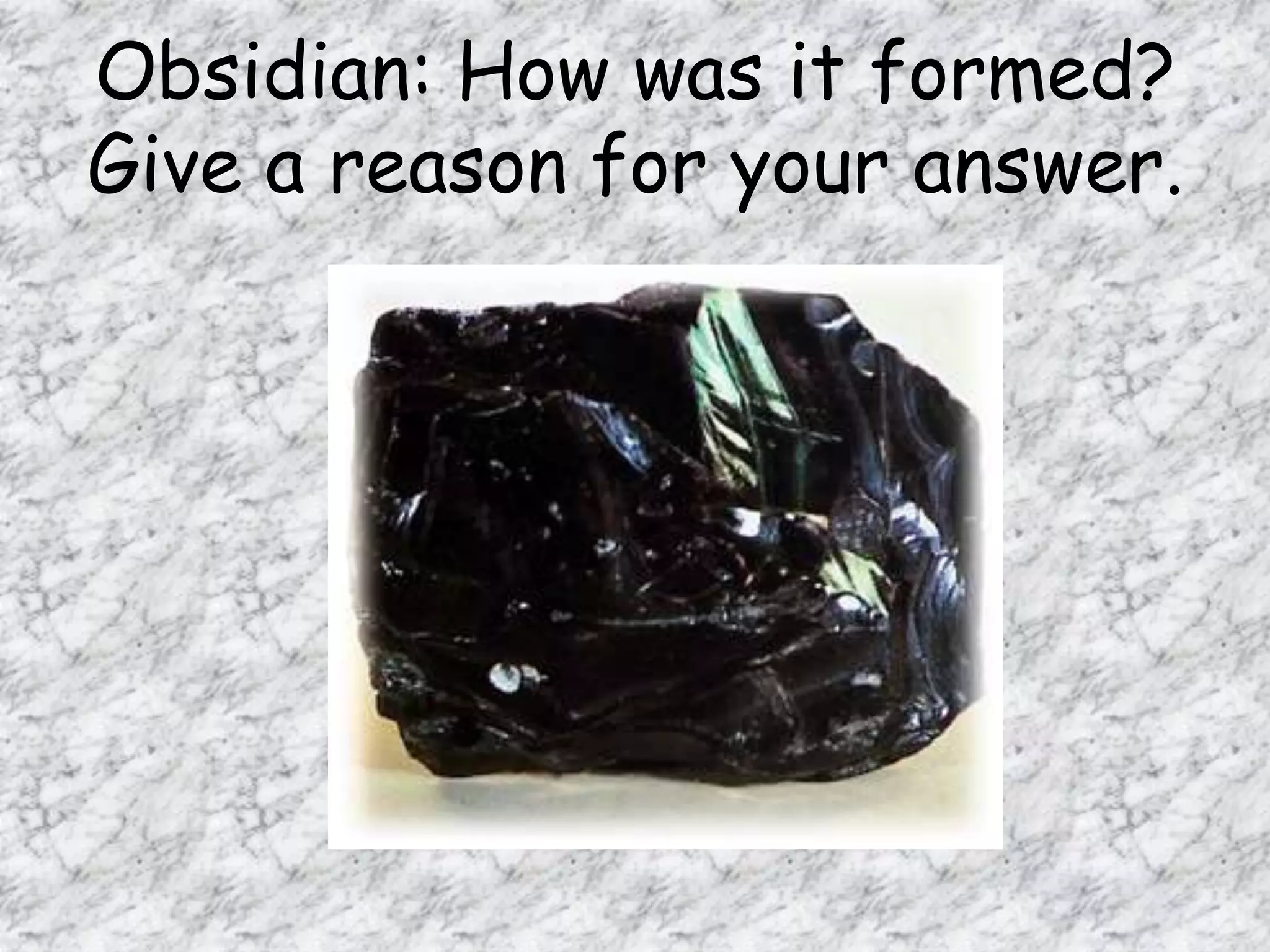
Obsidian: How was it formed?
Give a reason for your answer.
Diorite: How was it formed?
Give a reason for your answer.
Basalt: How was it formed?
Give a reason for your answer.
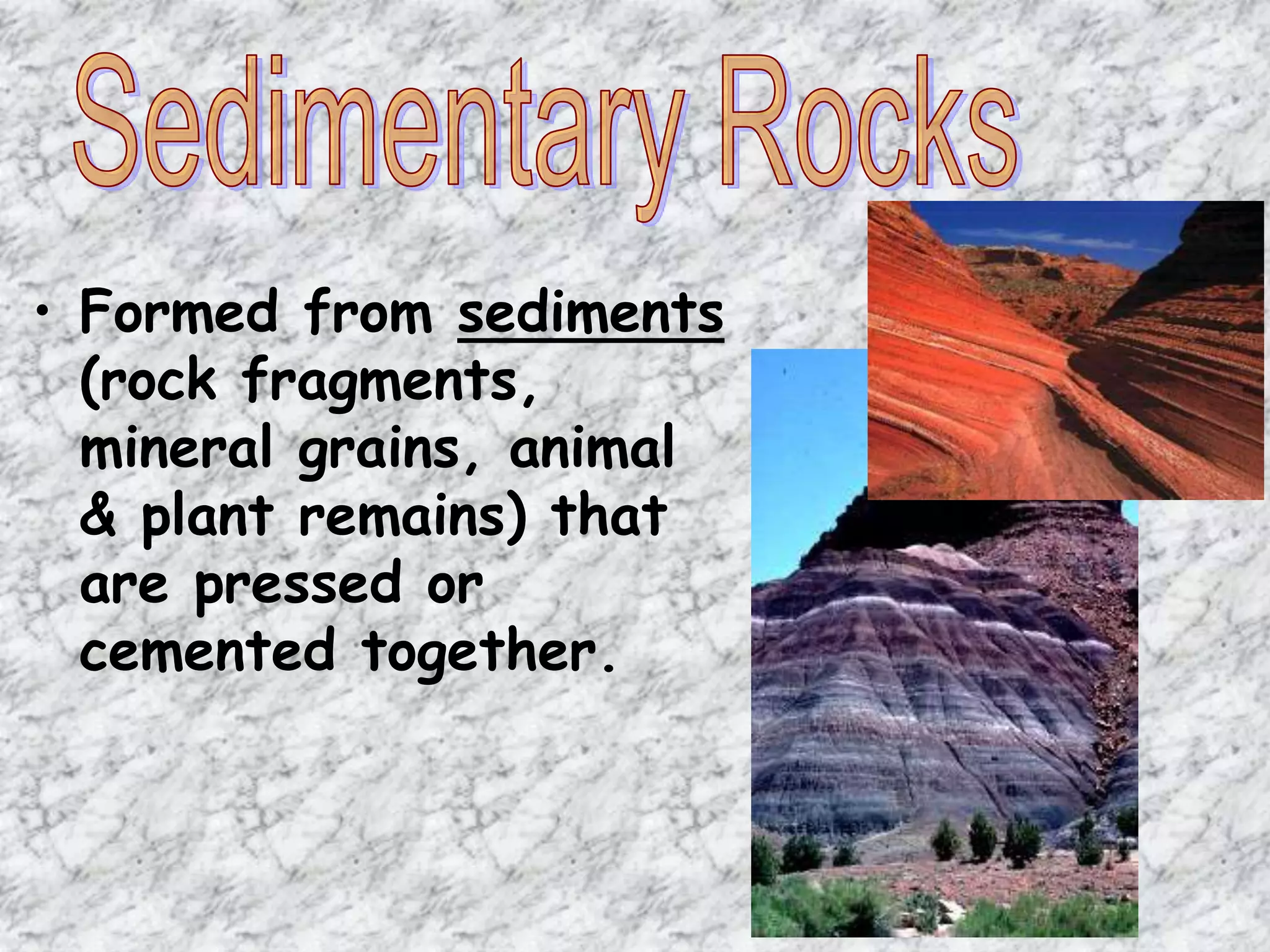
• Formed from sediments
(rock fragments,
mineral grains, animal
& plant remains) that
are pressed or
cemented together.
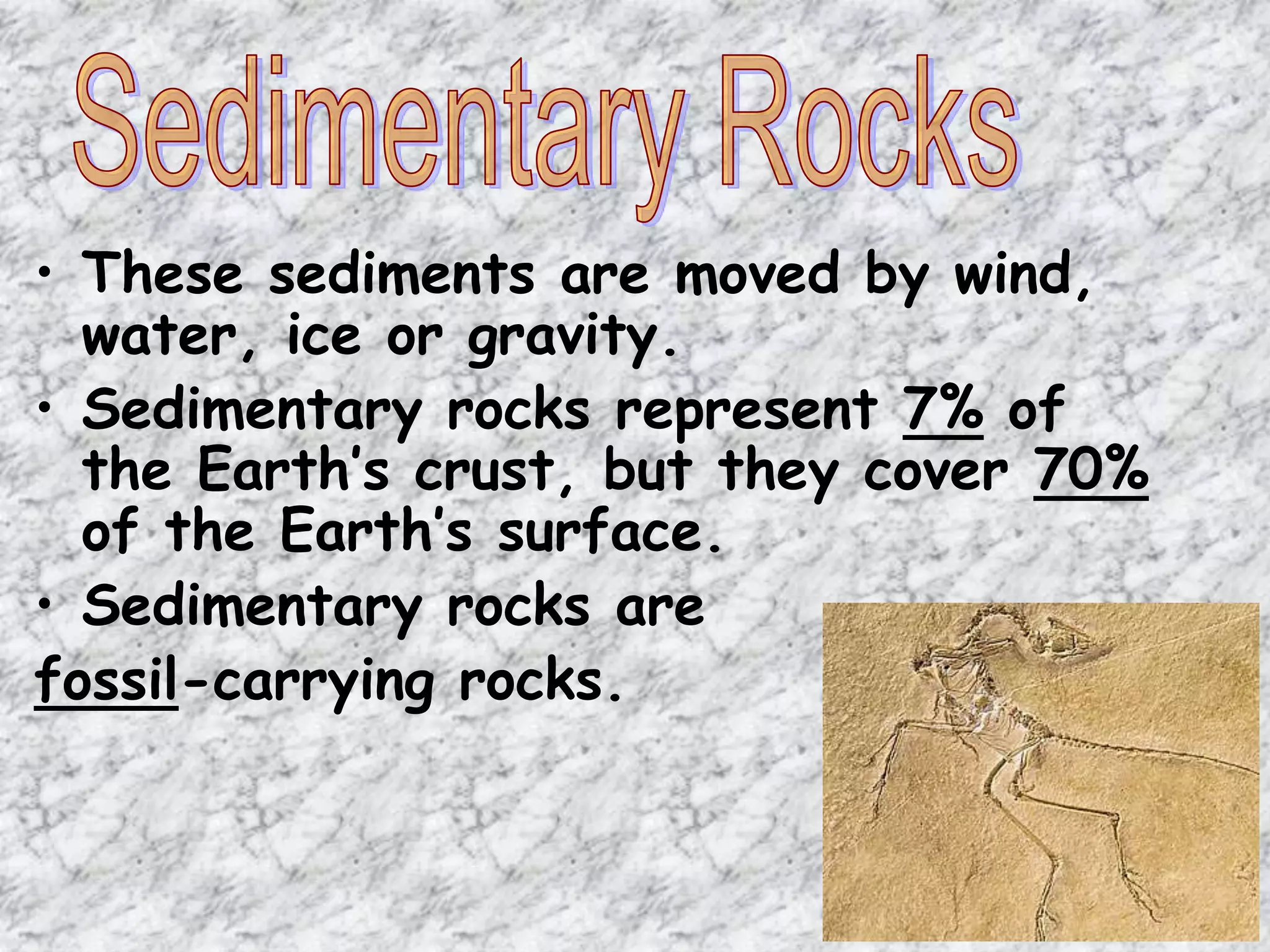
• These sediments are moved by wind,
water, ice or gravity.
• Sedimentary rocks represent 7% of
the Earth’s crust, but they cover 70%
of the Earth’s surface.
• Sedimentary rocks are
fossil-carrying rocks.
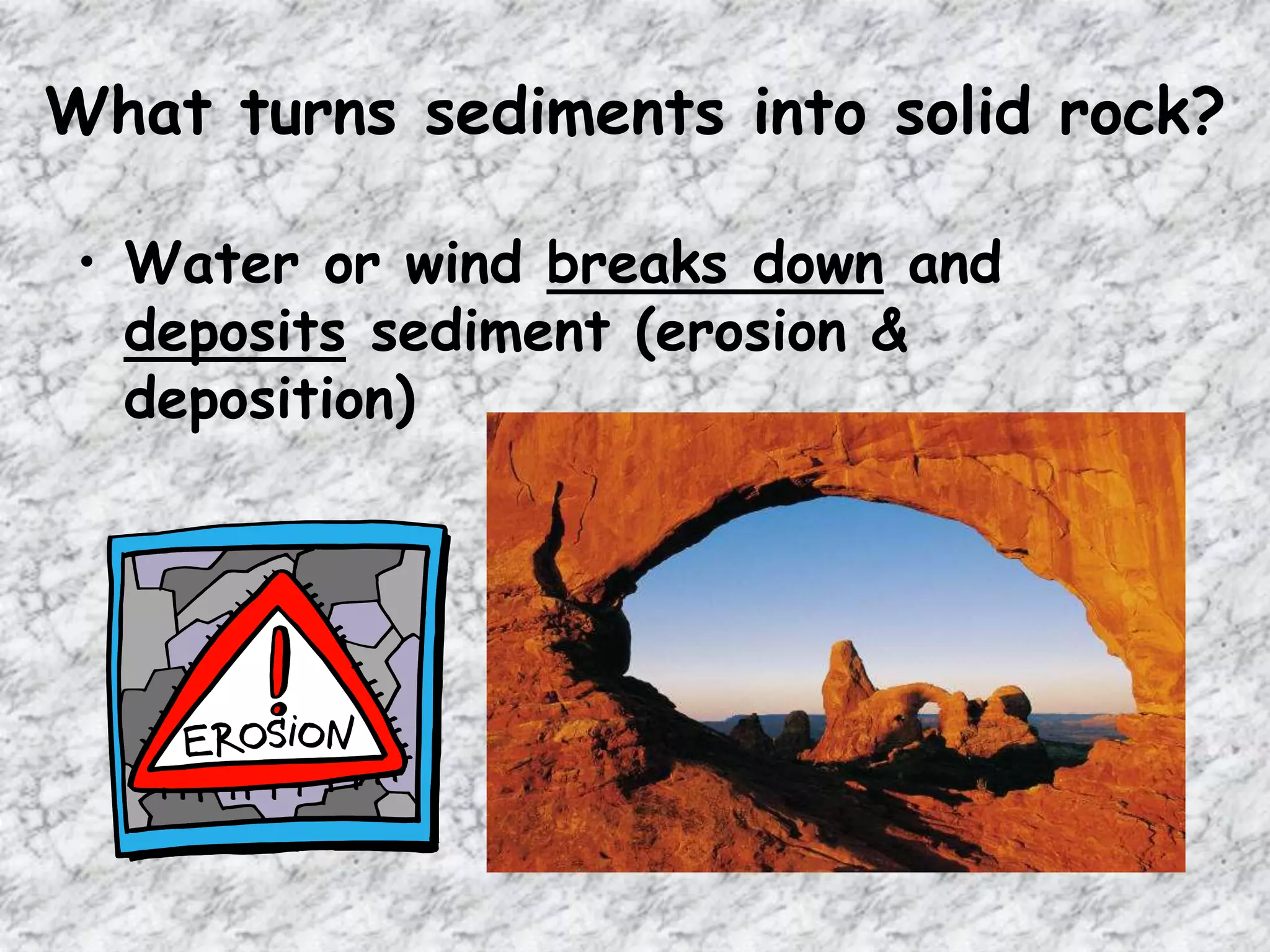
What turns sediments into solid rock?
• Water or wind breaks down and
deposits sediment (erosion &
deposition)
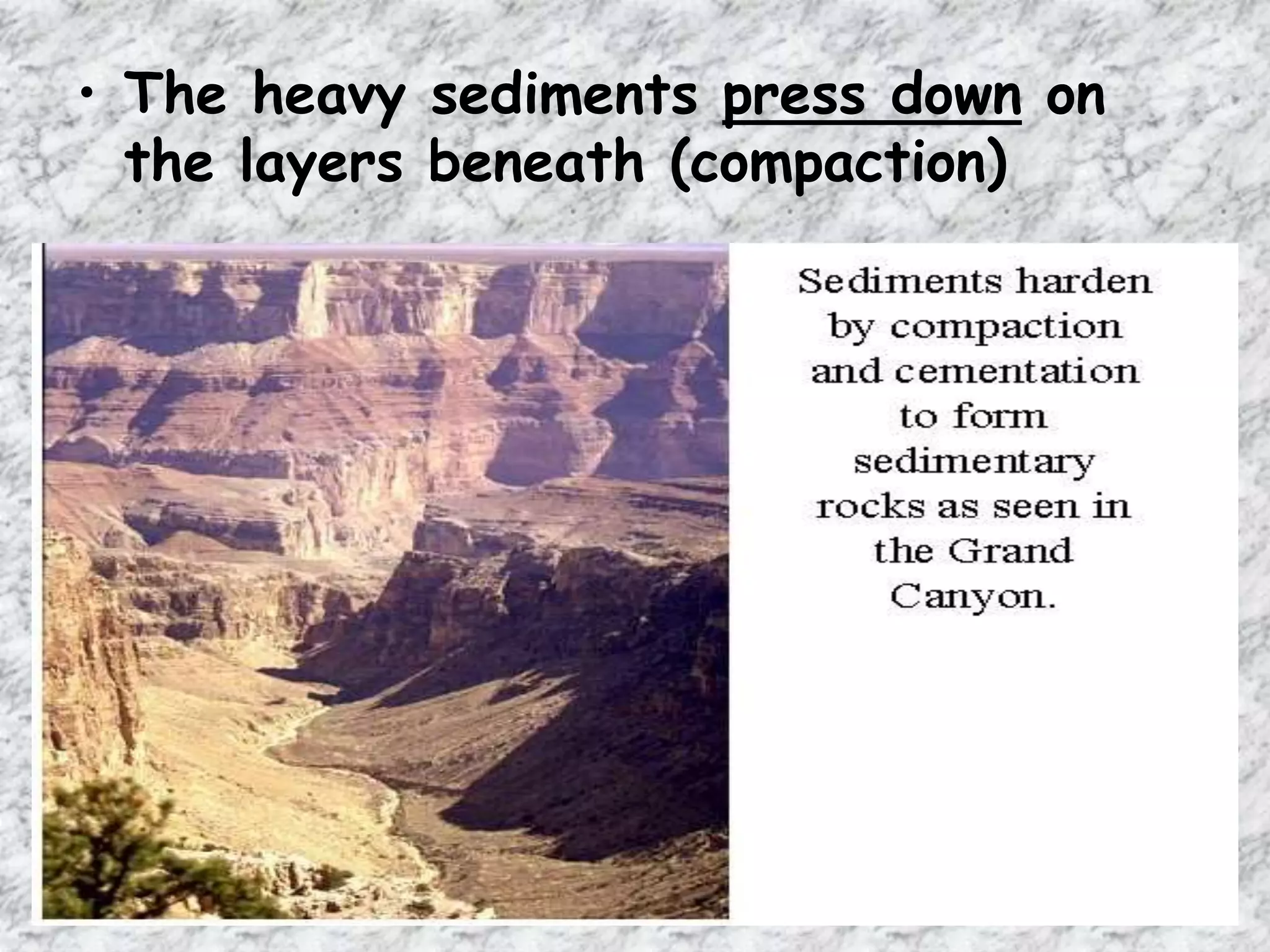
• The heavy sediments press down on
the layers beneath (compaction)
Recognise this place in Egypt?
• Dissolved minerals flow between the
particles and cement (glue) them
together this is called cementation.
How can sedimentary layers help us
understand the age of fossils?
• As sedimentary rocks
are deposited, they
form horizontal
layers
• Scientists know that
the layers on top
(and the fossils in
the top layer) are
YOUNGER than the
fossils in lower
layers.
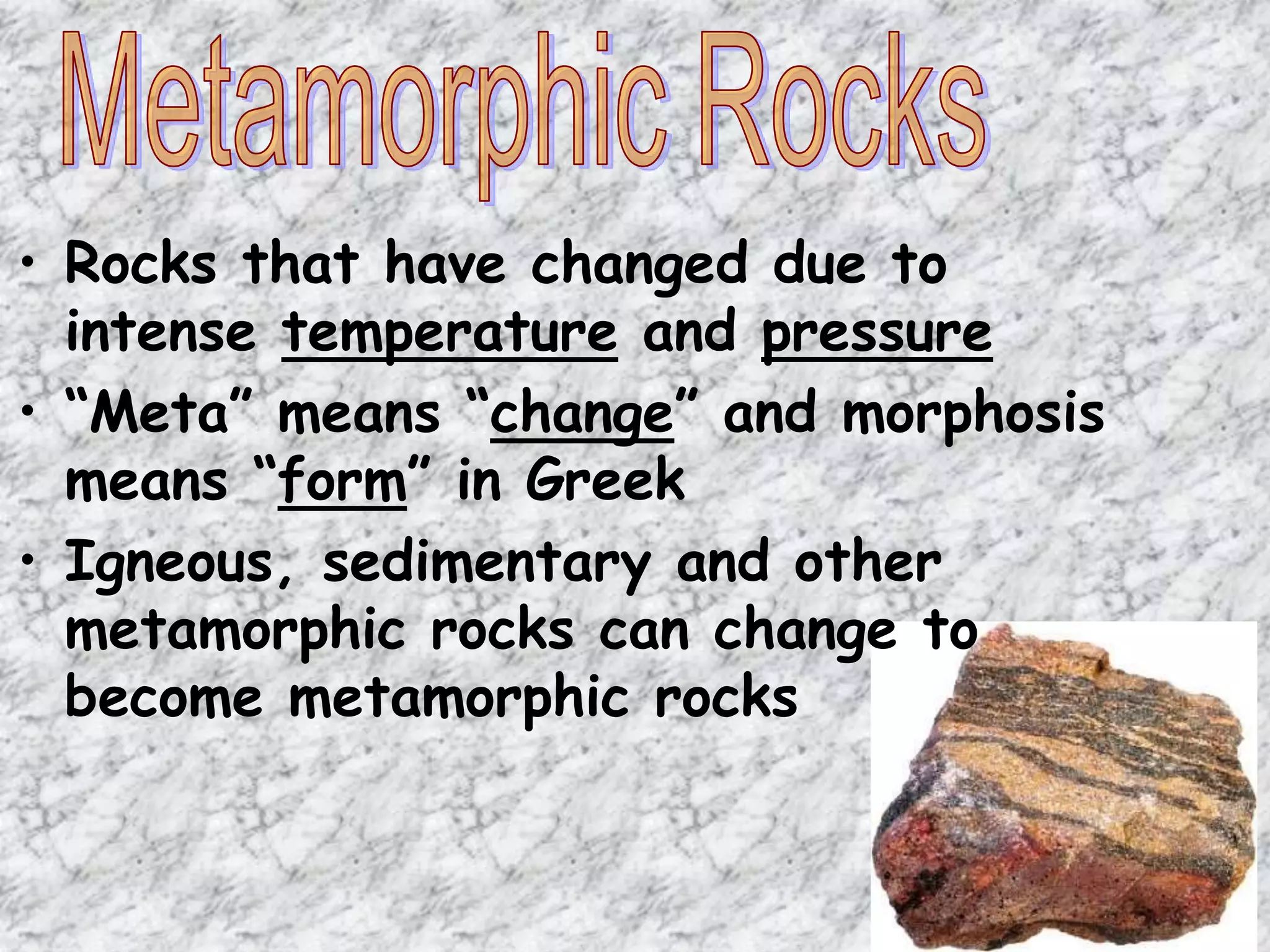
• Rocks that have changed due to
intense temperature and pressure
• “Meta” means “change” and morphosis
means “form” in Greek
• Igneous, sedimentary and other
metamorphic rocks can change to
become metamorphic rocks
What occurs in the Earth to
change these rocks?
• Pressure from rock layers on top of it
• High heat, but not enough to melt the rock
• Rocks may be flattened or bent or chemicals
may be exchanged to form new minerals.
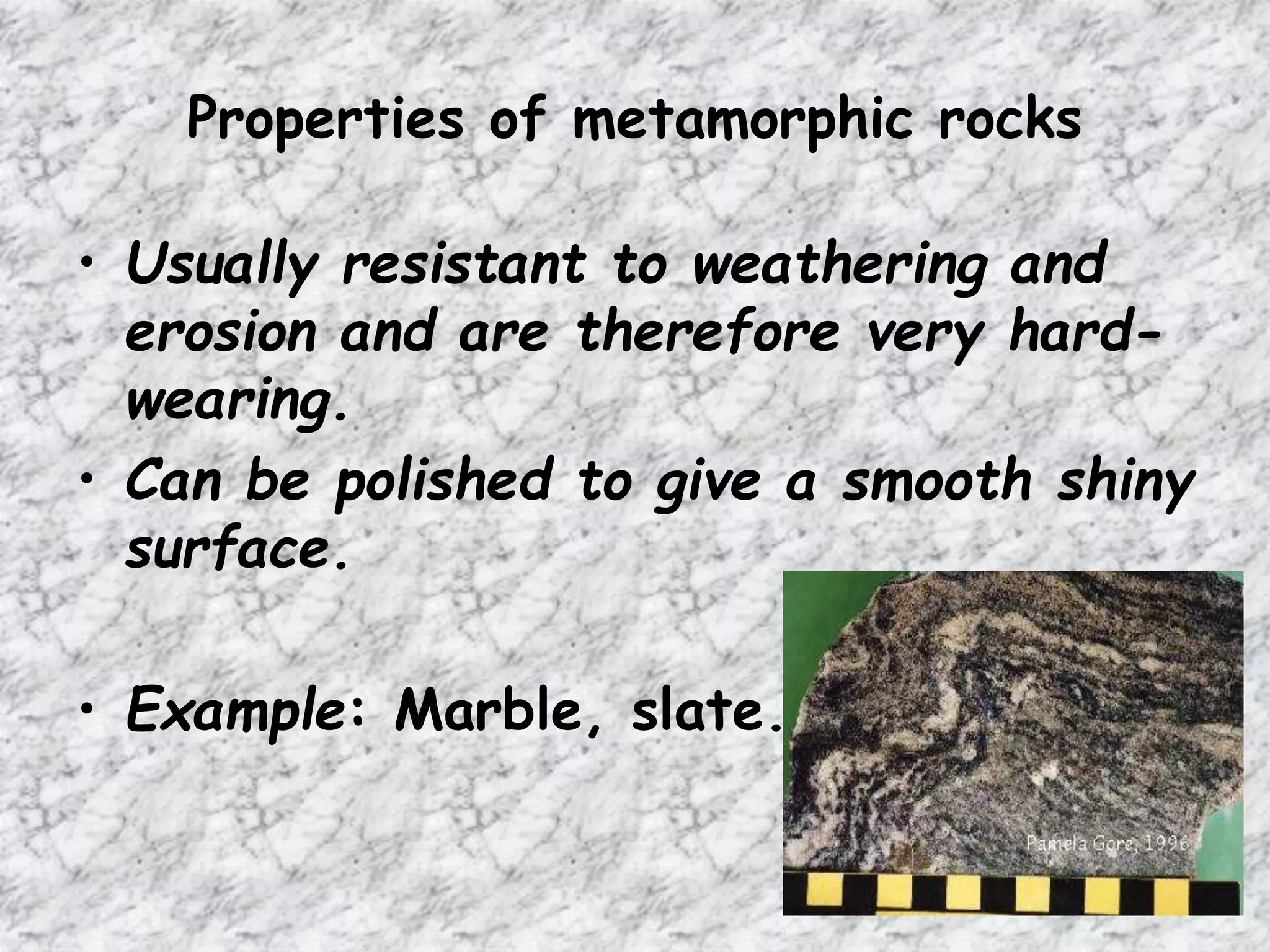
Properties of metamorphic rocks
• Usually resistant to weathering and
erosion and are therefore very hard-
wearing.
• Can be polished to give a smooth shiny
surface.
• Example: Marble, slate.
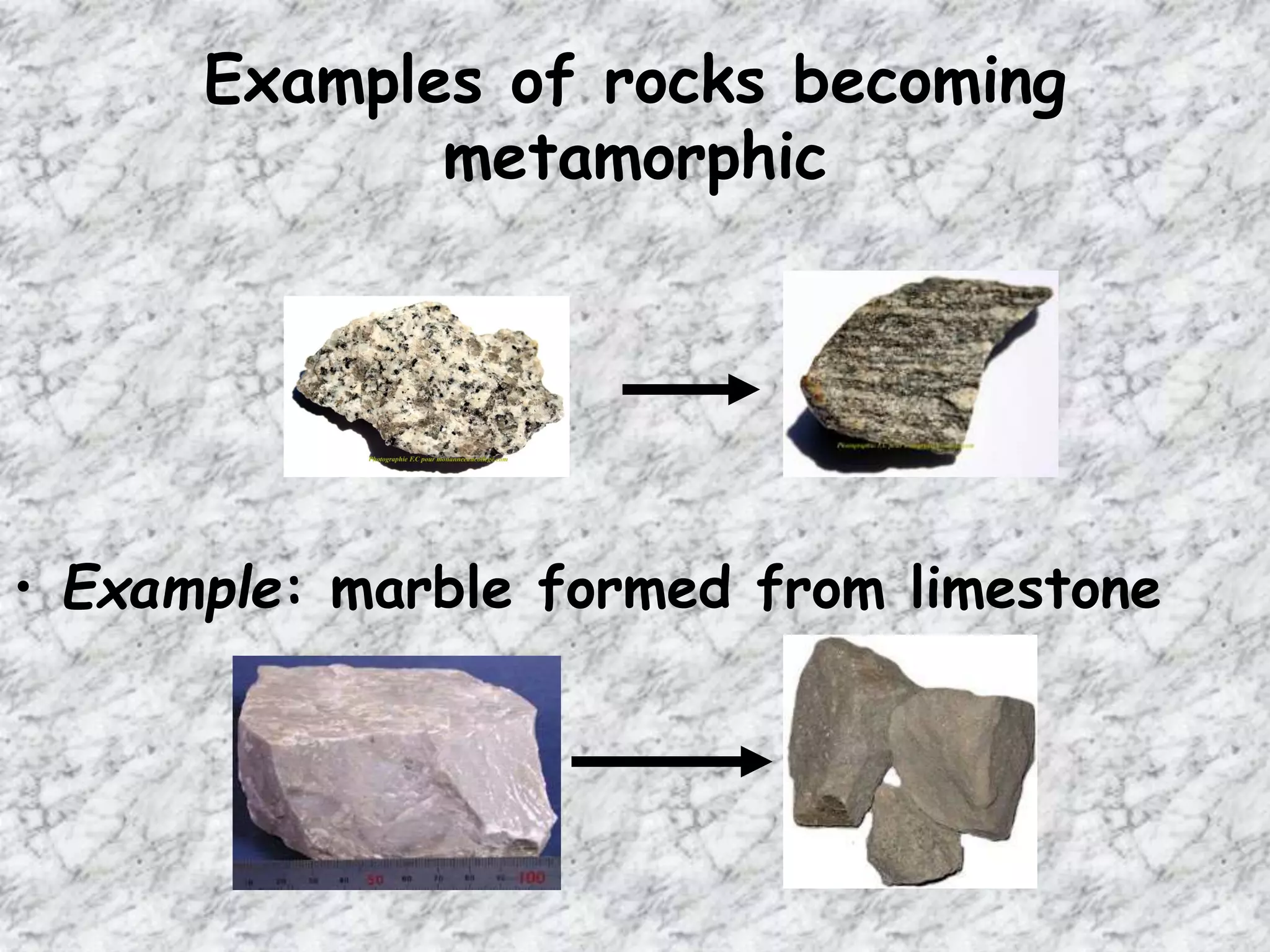
Examples of rocks becoming
metamorphic
• Example: marble formed from limestone
Magma
Igneous Rock
Sediments
Sedimentary Rock
Metamorphic Rock
Lava
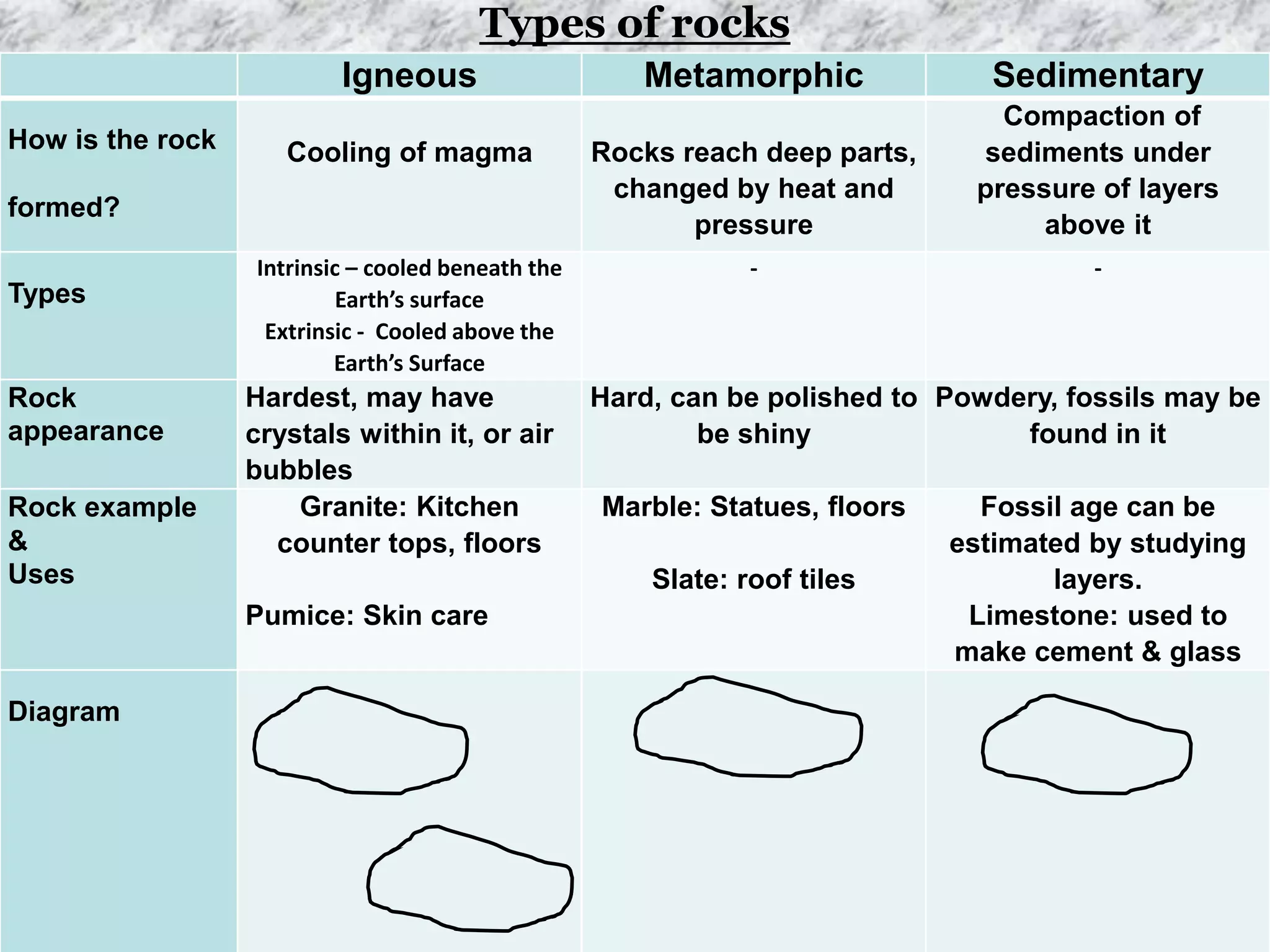
Igneous Metamorphic Sedimentary
How is the rock
formed?
Cooling of magma Rocks reach deep parts,
changed by heat and
pressure
Compaction of
sediments under
pressure of layers
above it
Types
Intrinsic – cooled beneath the
Earth’s surface
Extrinsic - Cooled above the
Earth’s Surface
- -
Rock
appearance
Hardest, may have
crystals within it, or air
bubbles
Hard, can be polished to
be shiny
Powdery, fossils may be
found in it
Rock example
&
Uses
Granite: Kitchen
counter tops, floors
Pumice: Skin care
Marble: Statues, floors
Slate: roof tiles
Fossil age can be
estimated by studying
layers.
Limestone: used to
make cement & glass
Diagram
Types of rocks

Types of rocks gr. 6 2019

  • 2.
    What is aRock? • Naturally-occurring mixtures of minerals, glass or organic matter.
  • 3.
  • 4.
    What is thedifference between a rock and a mineral? • Rocks are made up of ONE or MORE minerals.
  • 5.
    Once a rockis formed, does it stay the same rock forever? • NO!
  • 6.
    • Rocks arecontinually changed by many processes, such as weathering, erosion, compaction, cementation, melting, and cooling • Rocks can change to and from the three types
  • 7.
    What is theprocess through which rocks change? • The Rock Cycle—earth materials change back and forth among the different types of rocks
  • 8.
    • “Ignis” =Latin for “fire” • Formed from the cooling of either magma or lava • The most abundant type of rock • Classified according to their origin and composition
  • 9.
    ORIGIN— Where rocksare formed • Below ground = from magma • Usually have LARGE crystal grains (they cooled slowly)
  • 10.
    Intrinsic Igneous Rocks: Havelarge or small crystals
  • 11.
    Extrinsic Igneous Rocks •Above ground = from lava • Usually have SMALL or NO crystals (they cooled too quickly)
  • 12.
    Peridotite: How wasit formed? Give a reason for your answer.
  • 13.
    Granite: How wasit formed? Give a reason for your answer.
  • 14.
    Obsidian: How wasit formed? Give a reason for your answer.
  • 15.
    Diorite: How wasit formed? Give a reason for your answer.
  • 16.
    Basalt: How wasit formed? Give a reason for your answer.
  • 18.
    • Formed fromsediments (rock fragments, mineral grains, animal & plant remains) that are pressed or cemented together.
  • 19.
    • These sedimentsare moved by wind, water, ice or gravity. • Sedimentary rocks represent 7% of the Earth’s crust, but they cover 70% of the Earth’s surface. • Sedimentary rocks are fossil-carrying rocks.
  • 20.
    What turns sedimentsinto solid rock? • Water or wind breaks down and deposits sediment (erosion & deposition)
  • 21.
    • The heavysediments press down on the layers beneath (compaction)
  • 22.
  • 23.
    • Dissolved mineralsflow between the particles and cement (glue) them together this is called cementation.
  • 24.
    How can sedimentarylayers help us understand the age of fossils? • As sedimentary rocks are deposited, they form horizontal layers • Scientists know that the layers on top (and the fossils in the top layer) are YOUNGER than the fossils in lower layers.
  • 25.
    • Rocks thathave changed due to intense temperature and pressure • “Meta” means “change” and morphosis means “form” in Greek • Igneous, sedimentary and other metamorphic rocks can change to become metamorphic rocks
  • 26.
    What occurs inthe Earth to change these rocks? • Pressure from rock layers on top of it • High heat, but not enough to melt the rock • Rocks may be flattened or bent or chemicals may be exchanged to form new minerals.
  • 27.
    Properties of metamorphicrocks • Usually resistant to weathering and erosion and are therefore very hard- wearing. • Can be polished to give a smooth shiny surface. • Example: Marble, slate.
  • 28.
    Examples of rocksbecoming metamorphic • Example: marble formed from limestone
  • 30.
  • 32.
    Igneous Metamorphic Sedimentary Howis the rock formed? Cooling of magma Rocks reach deep parts, changed by heat and pressure Compaction of sediments under pressure of layers above it Types Intrinsic – cooled beneath the Earth’s surface Extrinsic - Cooled above the Earth’s Surface - - Rock appearance Hardest, may have crystals within it, or air bubbles Hard, can be polished to be shiny Powdery, fossils may be found in it Rock example & Uses Granite: Kitchen counter tops, floors Pumice: Skin care Marble: Statues, floors Slate: roof tiles Fossil age can be estimated by studying layers. Limestone: used to make cement & glass Diagram Types of rocks