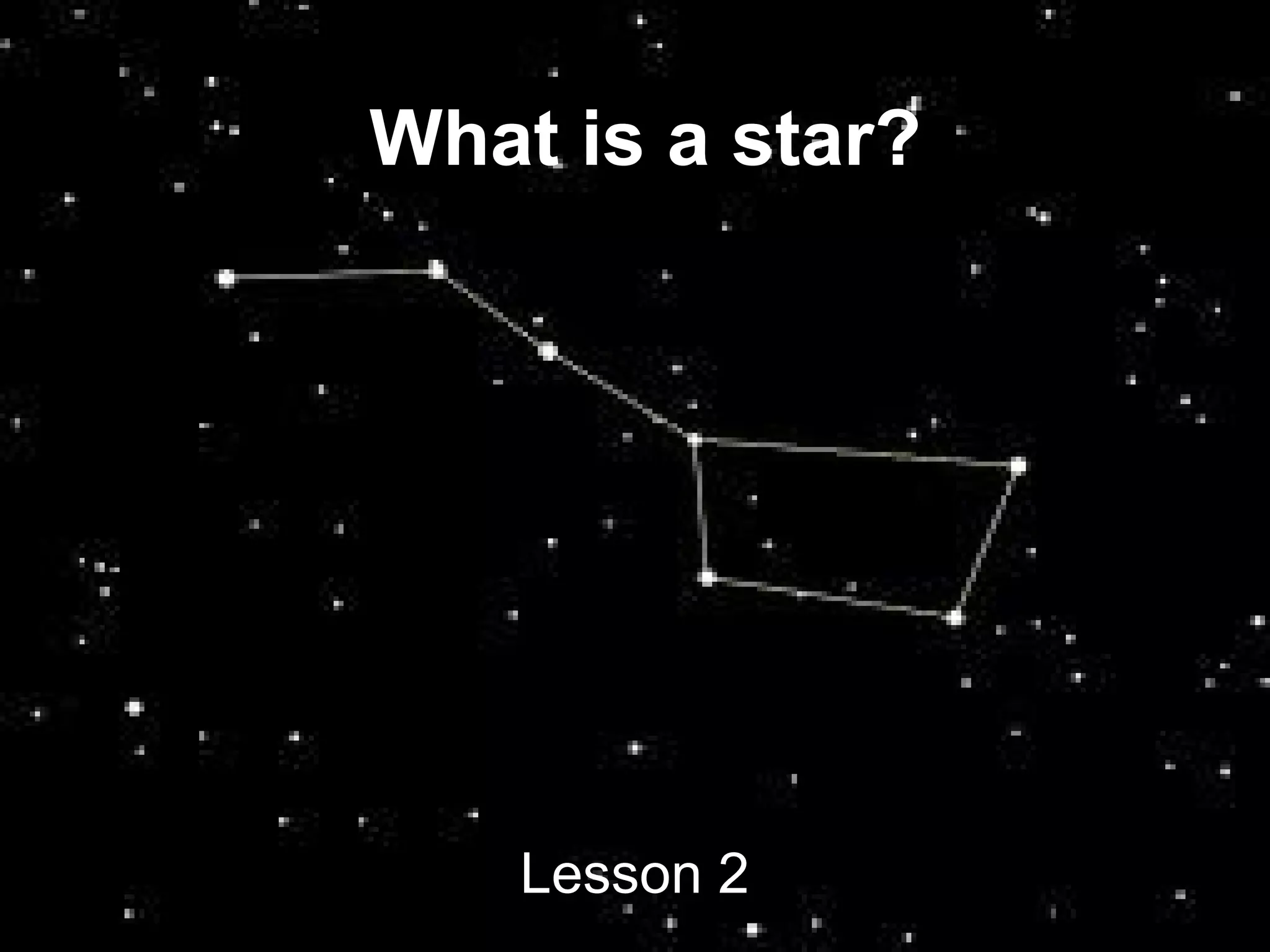
What is a star?

Lesson 2
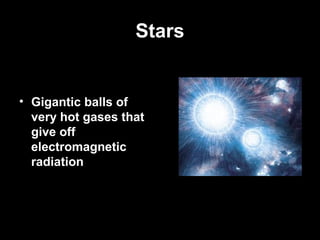
Stars

• Gigantic balls of
very hot gases that
give off
electromagnetic
radiation
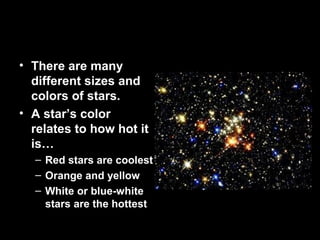
• There are many
different sizes and
colors of stars.
• A star’s color
relates to how hot it
is…
– Red stars are coolest
– Orange and yellow
– White or blue-white
stars are the hottest
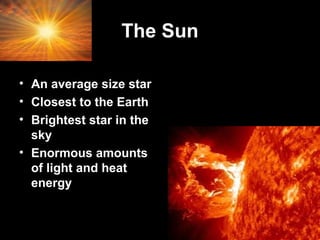
The Sun
• An average size star
• Closest to the Earth
• Brightest star in the
sky
• Enormous amounts
of light and heat
energy
Short Review…
1. Which star is hotter, a yellow star or a
white star?

2. What star is the closest to the Earth?
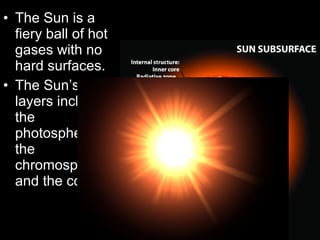
• The Sun is a
fiery ball of hot
gases with no
hard surfaces.
• The Sun’s
layers include
the
photosphere,
the
chromosphere,
and the corona.
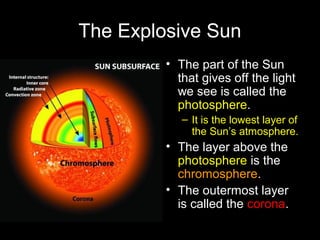
The Explosive Sun
• The part of the Sun
that gives off the light
we see is called the
photosphere.
– It is the lowest layer of
the Sun’s atmosphere.

• The layer above the
photosphere is the
chromosphere.
• The outermost layer
is called the corona.
Sunspots
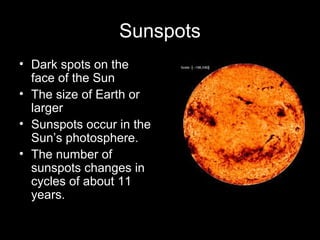
• Dark spots on the
face of the Sun
• The size of Earth or
larger
• Sunspots occur in the
Sun’s photosphere.
• The number of
sunspots changes in
cycles of about 11
years.
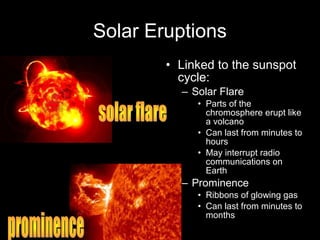
Solar Eruptions
• Linked to the sunspot
cycle:
– Solar Flare
• Parts of the
chromosphere erupt like
a volcano
• Can last from minutes to
hours
• May interrupt radio
communications on
Earth

– Prominence
• Ribbons of glowing gas
• Can last from minutes to
months
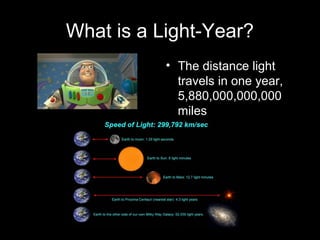
What is a Light-Year?
• The distance light
travels in one year,
5,880,000,000,000
miles
Short Review…
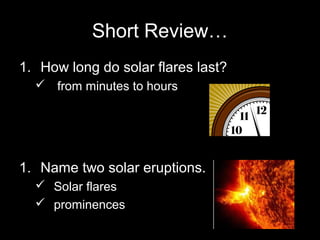
1. How long do solar flares last?
 from minutes to hours

1. Name two solar eruptions.
 Solar flares
 prominences
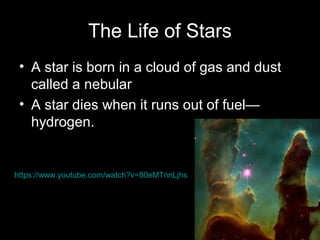
The Life of Stars
• A star is born in a cloud of gas and dust
called a nebular
• A star dies when it runs out of fuel—
hydrogen.

https://www.youtube.com/watch?v=80eMTnnLjhs

What is a star?

  • 1.
    What is astar? Lesson 2
  • 2.
    Stars • Gigantic ballsof very hot gases that give off electromagnetic radiation
  • 3.
    • There aremany different sizes and colors of stars. • A star’s color relates to how hot it is… – Red stars are coolest – Orange and yellow – White or blue-white stars are the hottest
  • 4.
    The Sun • Anaverage size star • Closest to the Earth • Brightest star in the sky • Enormous amounts of light and heat energy
  • 5.
    Short Review… 1. Whichstar is hotter, a yellow star or a white star? 2. What star is the closest to the Earth?
  • 6.
    • The Sunis a fiery ball of hot gases with no hard surfaces. • The Sun’s layers include the photosphere, the chromosphere, and the corona.
  • 7.
    The Explosive Sun •The part of the Sun that gives off the light we see is called the photosphere. – It is the lowest layer of the Sun’s atmosphere. • The layer above the photosphere is the chromosphere. • The outermost layer is called the corona.
  • 8.
    Sunspots • Dark spotson the face of the Sun • The size of Earth or larger • Sunspots occur in the Sun’s photosphere. • The number of sunspots changes in cycles of about 11 years.
  • 9.
    Solar Eruptions • Linkedto the sunspot cycle: – Solar Flare • Parts of the chromosphere erupt like a volcano • Can last from minutes to hours • May interrupt radio communications on Earth – Prominence • Ribbons of glowing gas • Can last from minutes to months
  • 10.
    What is aLight-Year? • The distance light travels in one year, 5,880,000,000,000 miles
  • 11.
    Short Review… 1. Howlong do solar flares last?  from minutes to hours 1. Name two solar eruptions.  Solar flares  prominences
  • 12.
    The Life ofStars • A star is born in a cloud of gas and dust called a nebular • A star dies when it runs out of fuel— hydrogen. https://www.youtube.com/watch?v=80eMTnnLjhs