Download to read offline

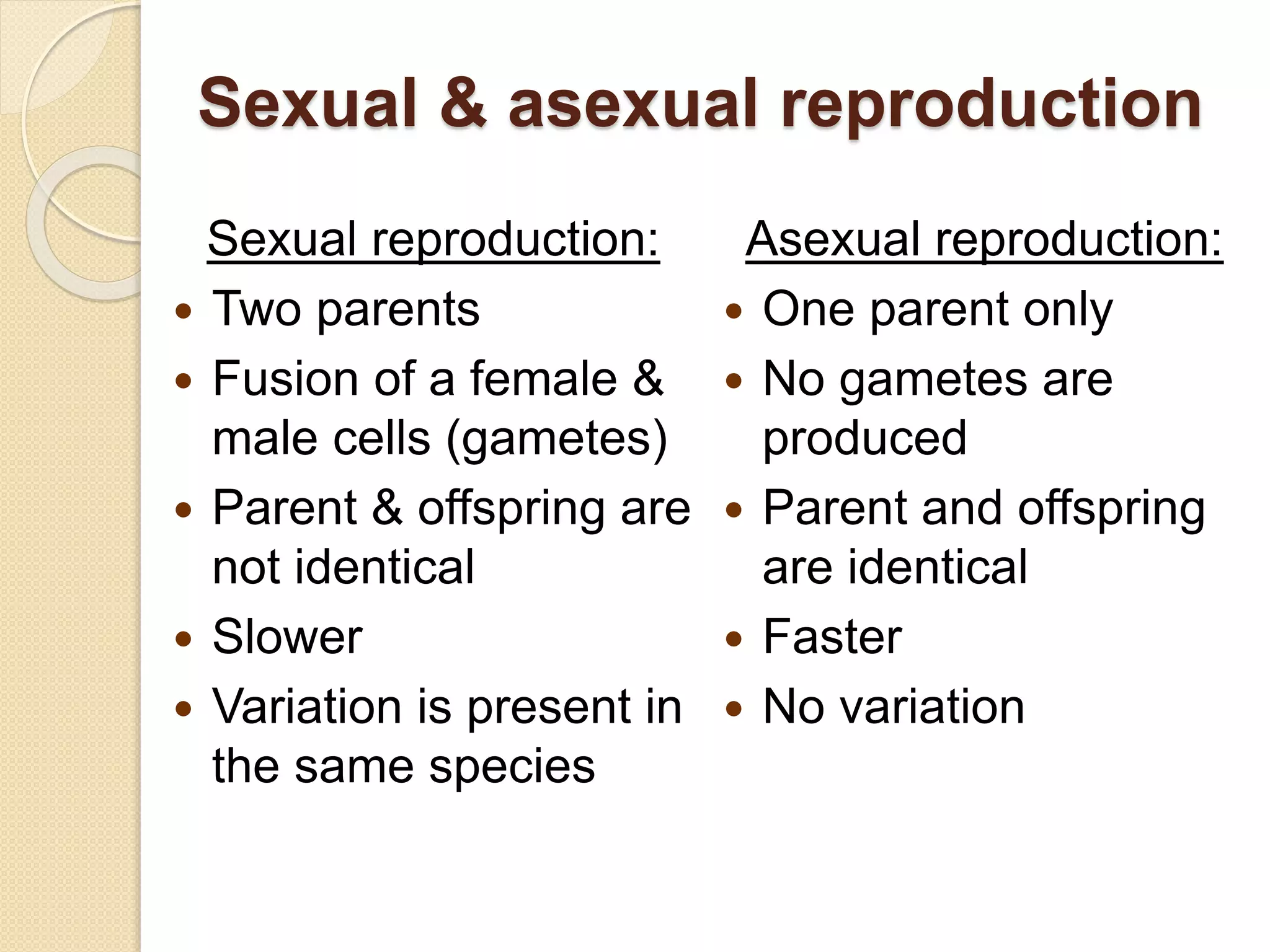


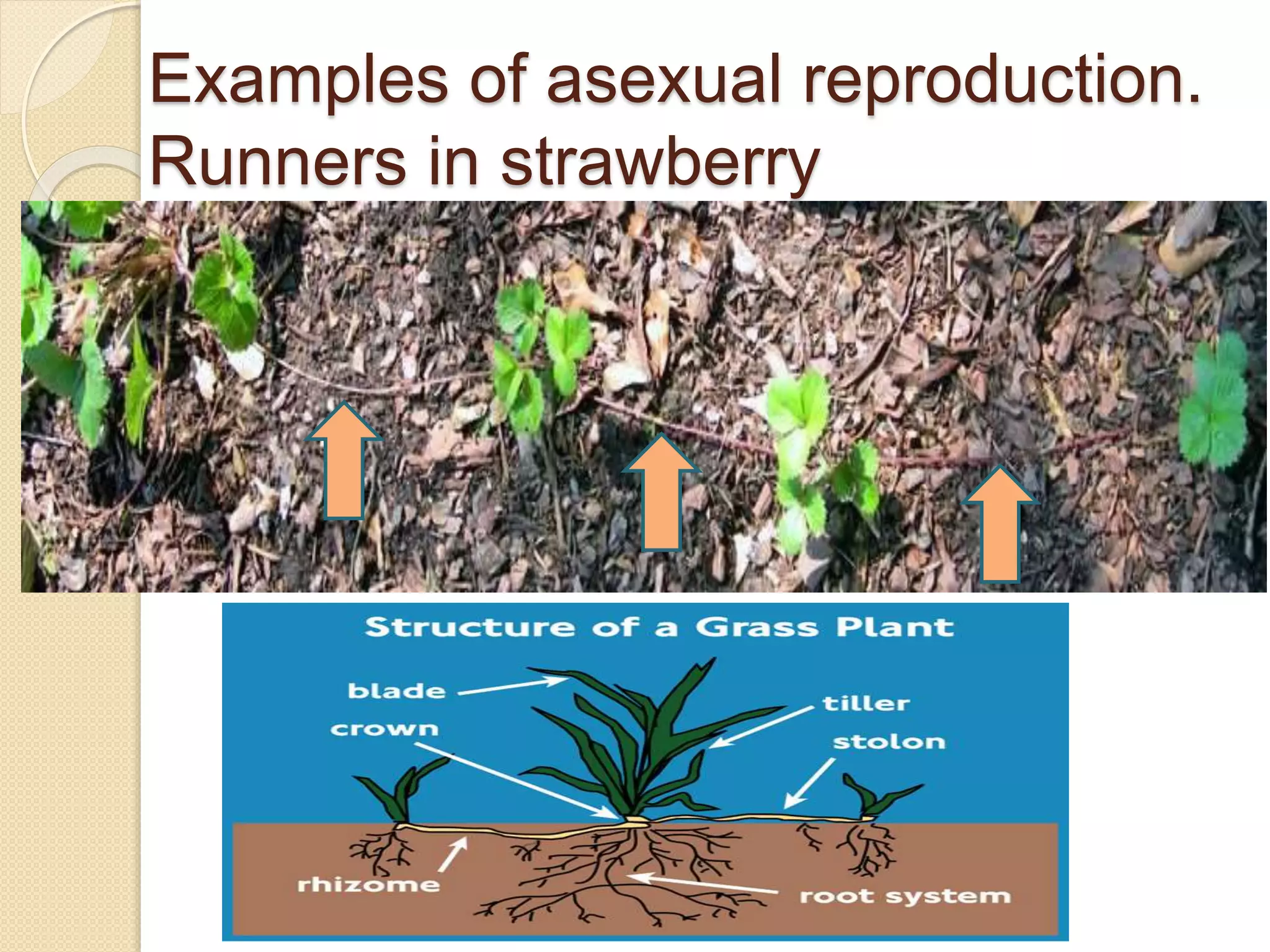


Plants can reproduce sexually or asexually. Sexual reproduction involves two parents fusing gametes to produce offspring that differ from the parents, while asexual reproduction uses one parent to produce identical offspring through budding, stolons, or runners. In plants, sexual reproduction occurs through flowers containing male stamens and female carpels. Pollination transfers pollen grains from anthers to stigmas, aided by insects or wind. Fertilization joins male and female cells to form zygotes which develop into fruits containing seeds. Seeds require suitable temperature, oxygen, and water to germinate.


