By - NM Spirit
T- 91-901-568-0202
Email- nm.sspirit@gmail.com
FRICTION
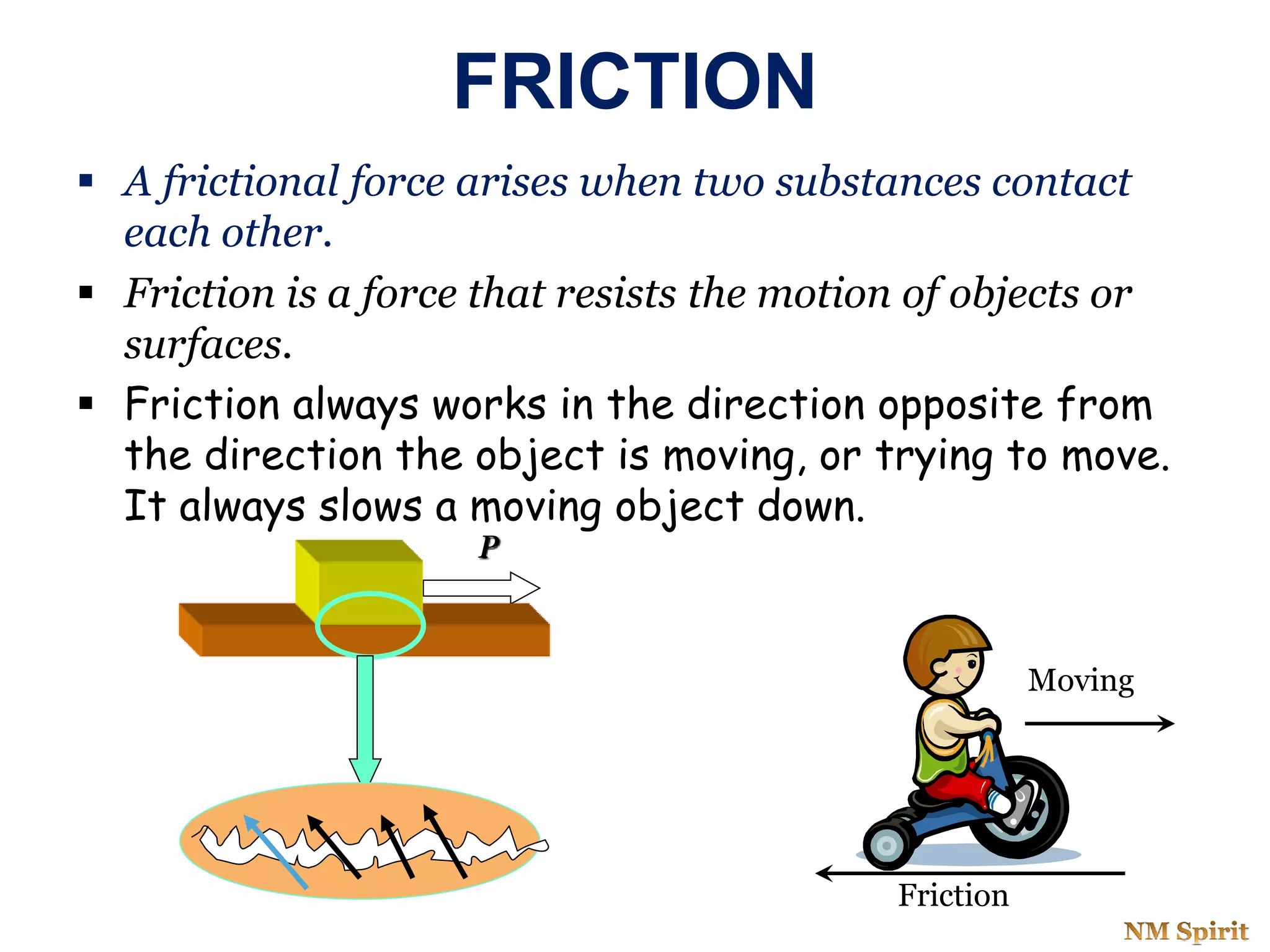
 A frictional force arises when two substances contact
each other.
 Friction is a force that resists the motion of objects or
surfaces.
 Friction always works in the direction opposite from
the direction the object is moving, or trying to move.
It always slows a moving object down.
P
Moving
Friction
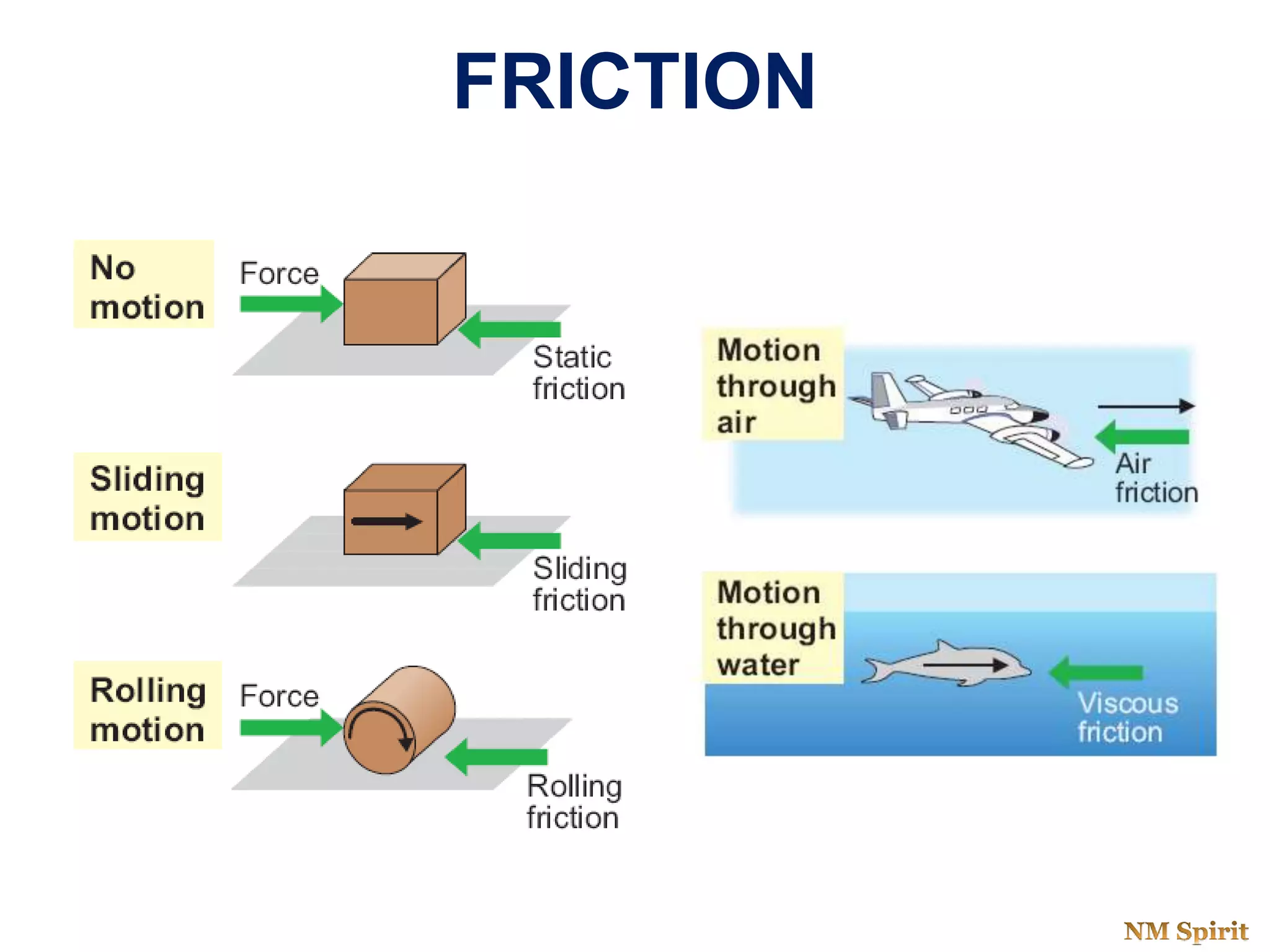
FRICTION
FRICTION
 Friction depends on both of the surfaces in contact.
 When the hockey puck slides on ice, a thin layer of water
between the rubber and the ice allows the puck to slide
easily.
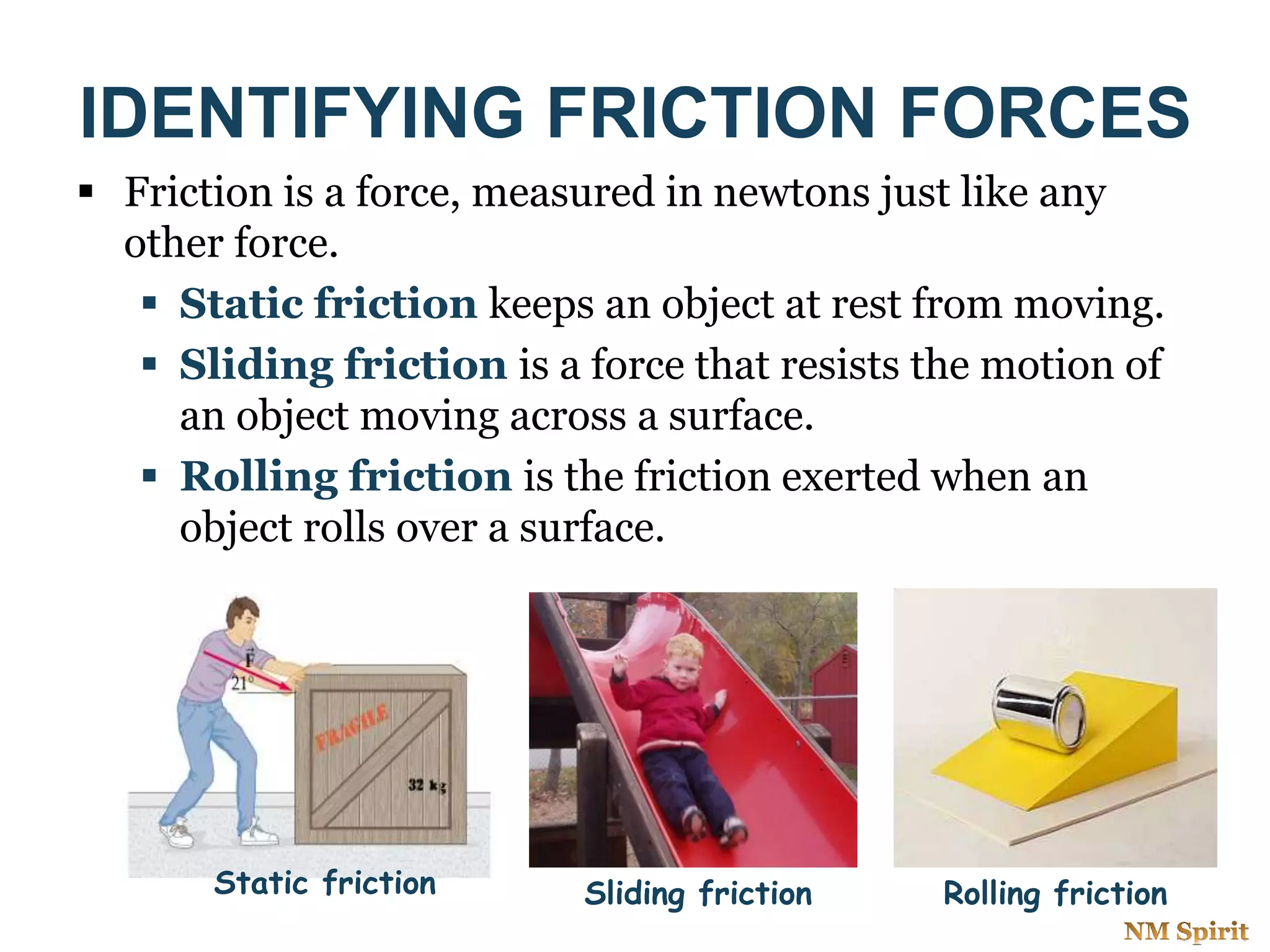
IDENTIFYING FRICTION FORCES
 Friction is a force, measured in newtons just like any
other force.
 Static friction keeps an object at rest from moving.
 Sliding friction is a force that resists the motion of
an object moving across a surface.
 Rolling friction is the friction exerted when an
object rolls over a surface.
Static friction Sliding friction Rolling friction
FACTORS AFFECTING FRICTION
 Friction depends on a material’s properties such as
roughness, how clean the surfaces are, and other factors.
 Friction depends upon two factors.
 Nature of the surfaces in contact. ( The smoothness of the
surfaces).
 How hard the surfaces press together.
Friction is less on a smooth surface.
Friction is more on a rough surface
Friction is more if the surfaces are
pressed harder.
Friction is less if the surfaces are
not pressed harder.
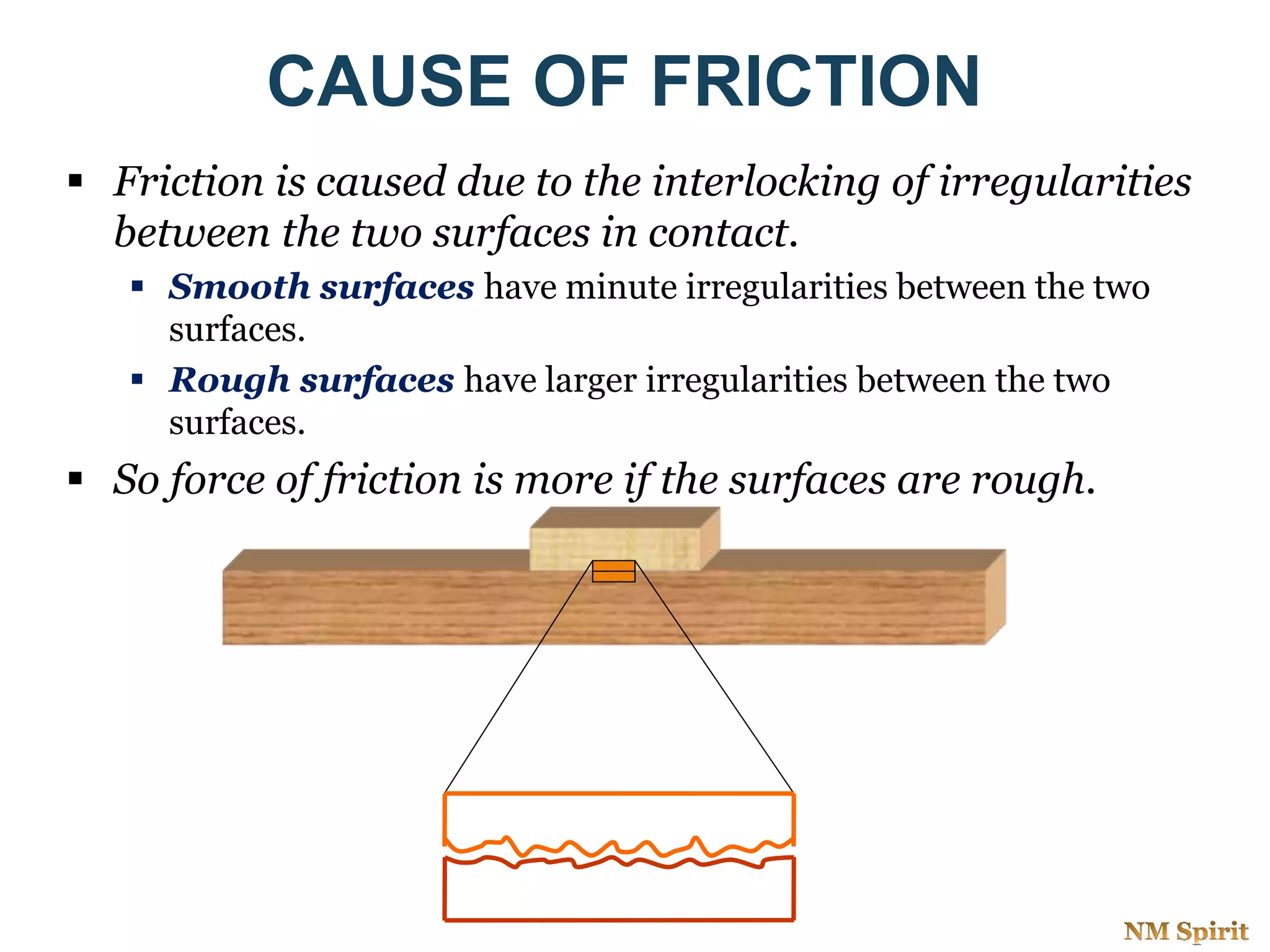
CAUSE OF FRICTION
 Friction is caused due to the interlocking of irregularities
between the two surfaces in contact.
 Smooth surfaces have minute irregularities between the two
surfaces.
 Rough surfaces have larger irregularities between the two
surfaces.
 So force of friction is more if the surfaces are rough.
Reducing the force of friction
 Unless a force is constantly applied, friction will slow all
motion to a stop eventually.
 It is impossible to completely get rid of friction, but it can
be reduced.
 The friction between a shaft (the long pole in the picture) and an
outer part of a machine produces a lot of heat.
 Friction can be reduced by placing ball bearings between the
shaft and the outer part.
Forces from rolling
friction are much
smaller
Forces from sliding
friction are relatively
large
Rolling
balls
Reducing friction
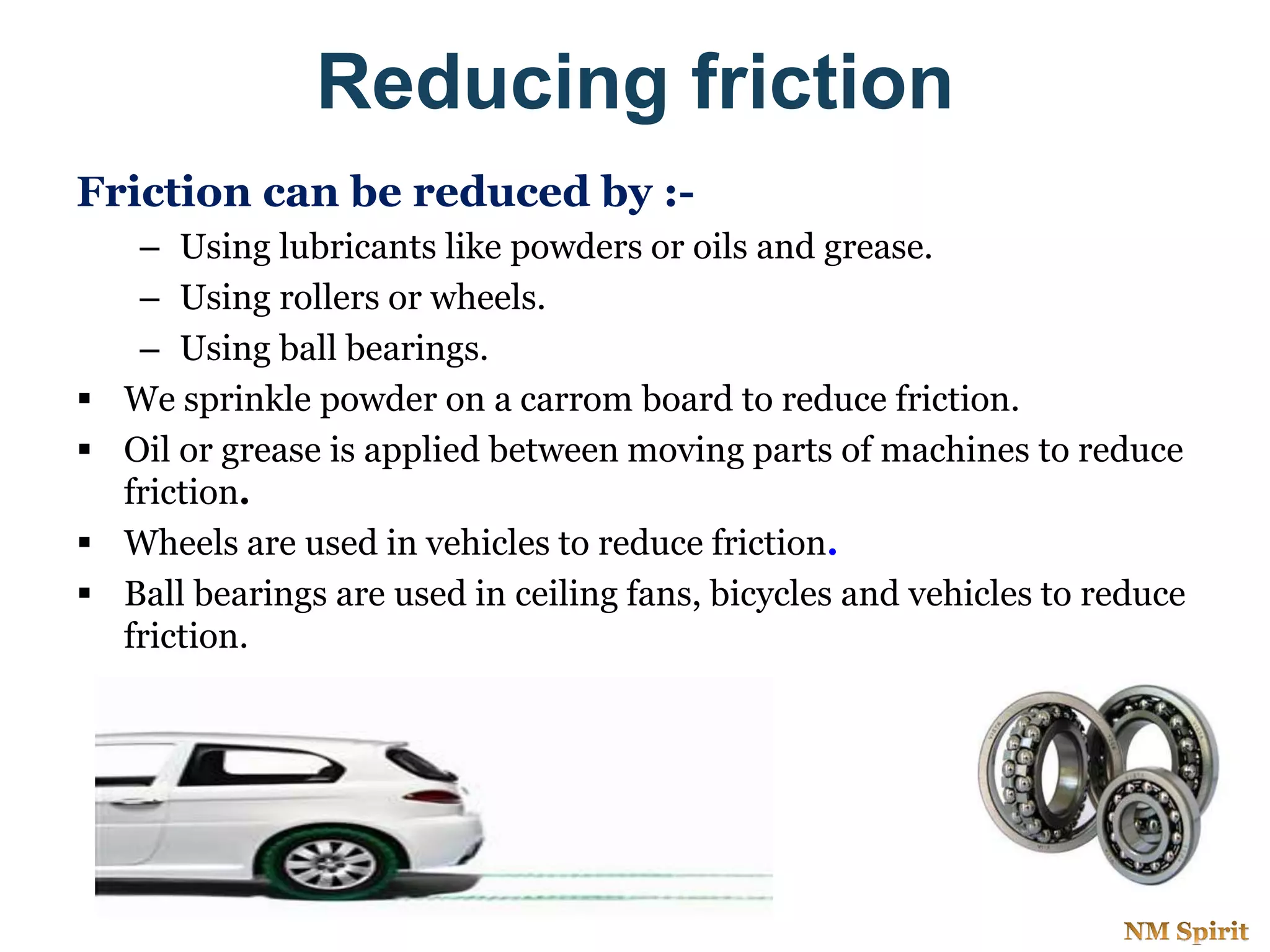
Friction can be reduced by :-
– Using lubricants like powders or oils and grease.
– Using rollers or wheels.
– Using ball bearings.
 We sprinkle powder on a carrom board to reduce friction.
 Oil or grease is applied between moving parts of machines to reduce
friction.
 Wheels are used in vehicles to reduce friction.
 Ball bearings are used in ceiling fans, bicycles and vehicles to reduce
friction.
Useful friction
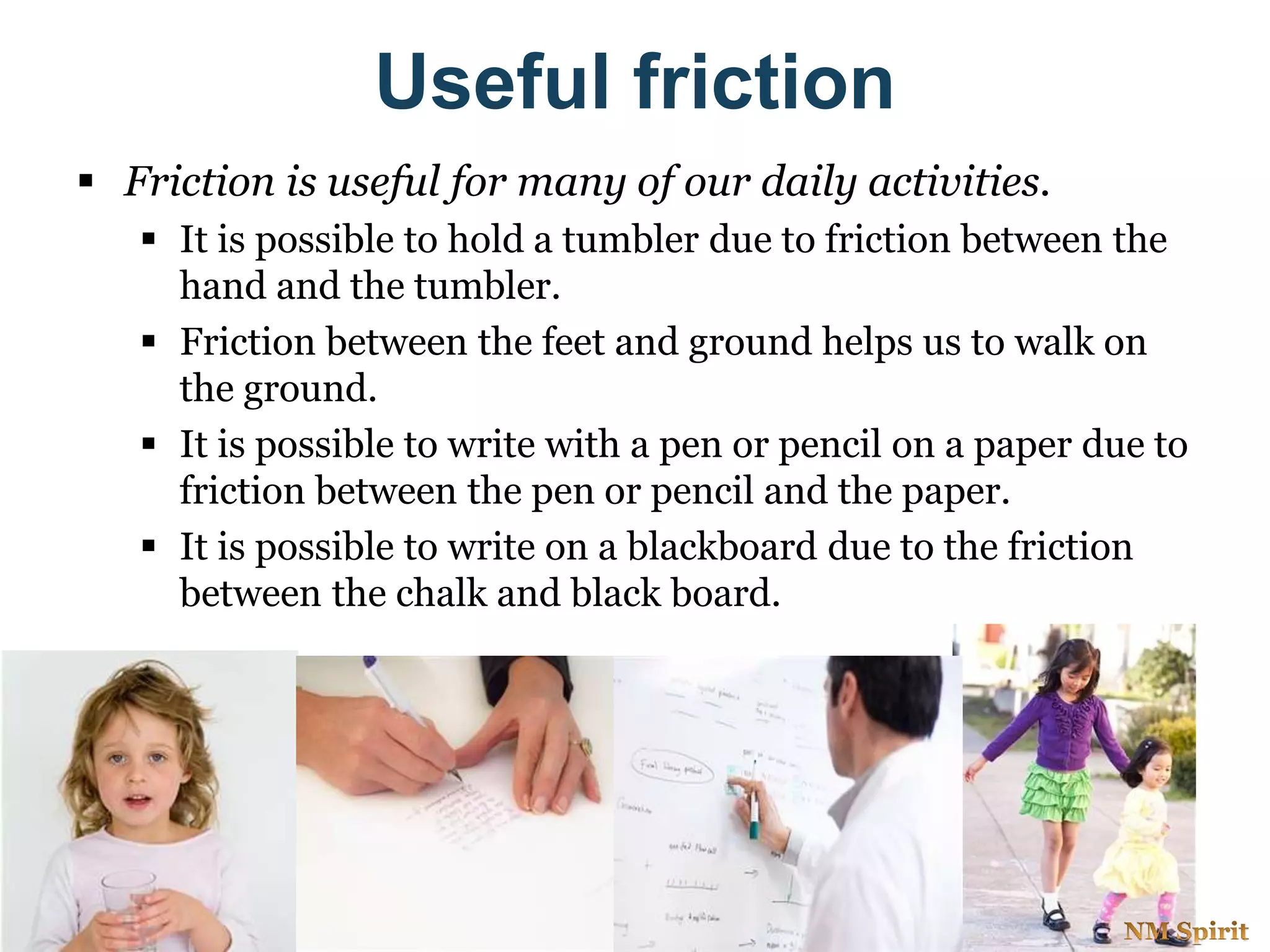
 Friction is useful for many of our daily activities.
 It is possible to hold a tumbler due to friction between the
hand and the tumbler.
 Friction between the feet and ground helps us to walk on
the ground.
 It is possible to write with a pen or pencil on a paper due to
friction between the pen or pencil and the paper.
 It is possible to write on a blackboard due to the friction
between the chalk and black board.
Useful friction
 Friction is also important to
anyone driving a car.
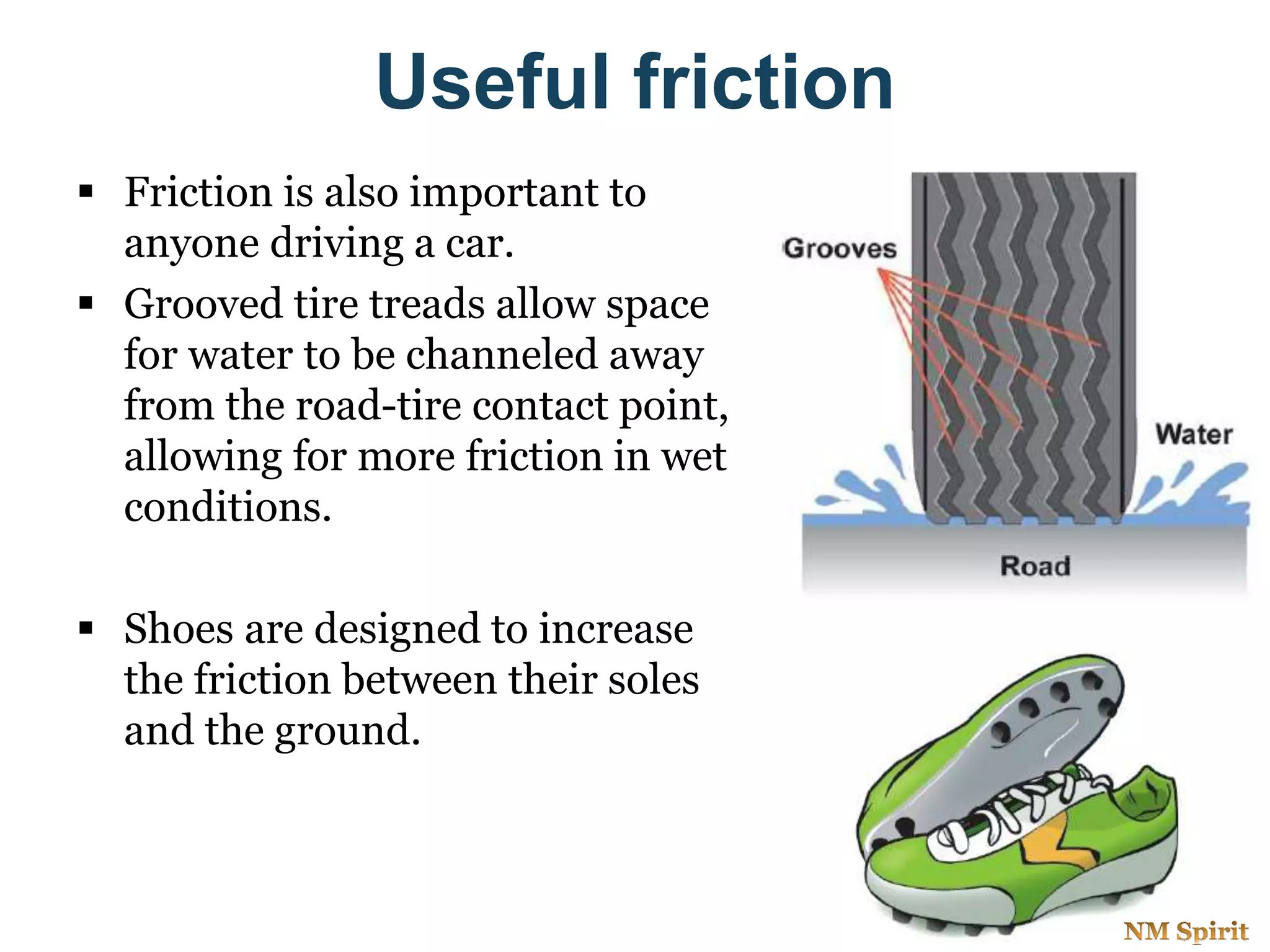
 Grooved tire treads allow space
for water to be channeled away
from the road-tire contact point,
allowing for more friction in wet
conditions.
 Shoes are designed to increase
the friction between their soles
and the ground.
Friction and energy
 Friction is always present in any
machine with moving parts.
 If the machine is small, or the forces are
low, the amount of heat produced by
friction may also be small.
 Each time two moving surfaces touch
each other, tiny bits of material are
broken off by friction.
 Breaking off bits of material uses energy.
FLUID FRICTION
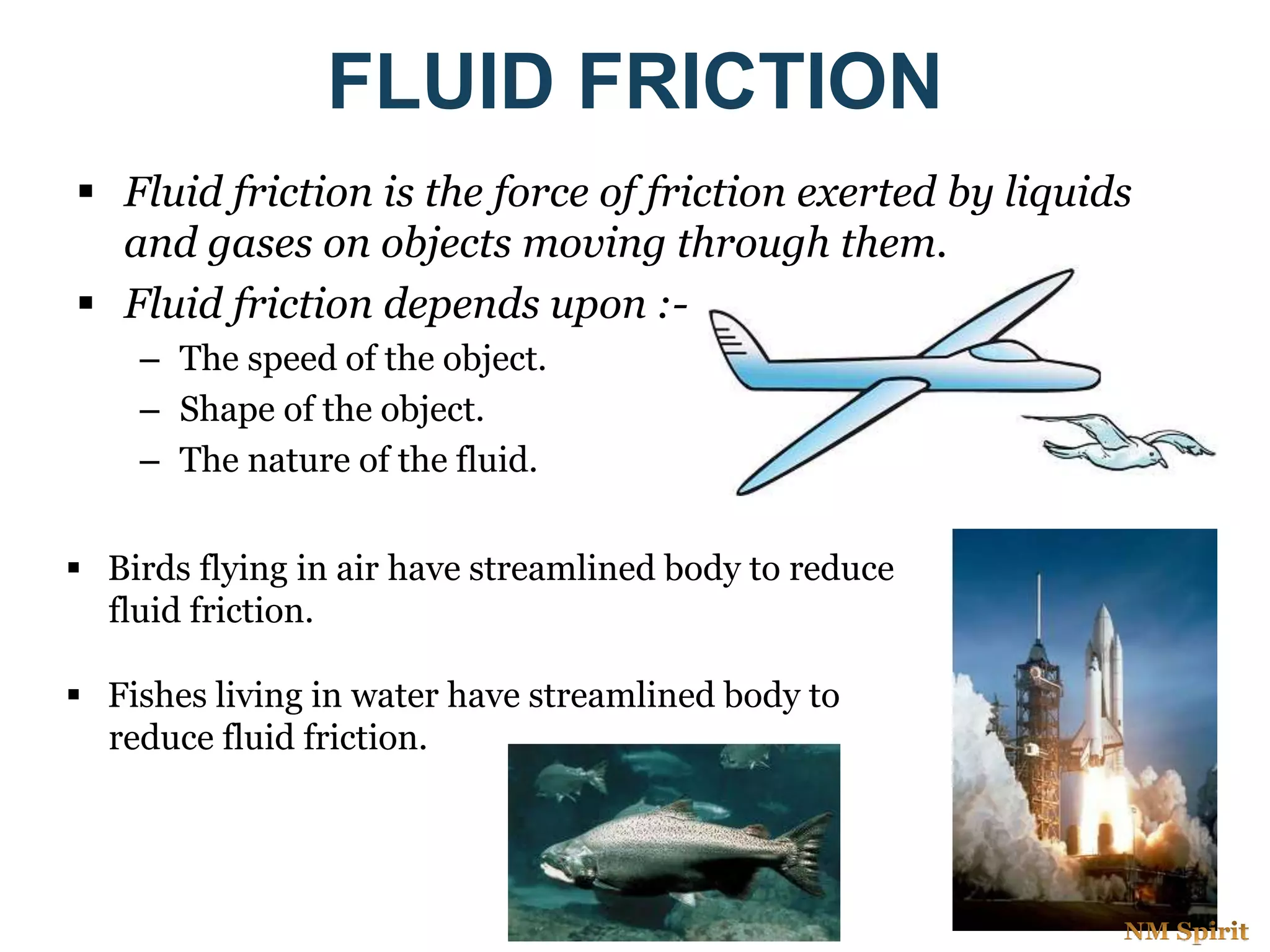
 Fluid friction is the force of friction exerted by liquids
and gases on objects moving through them.
 Fluid friction depends upon :-
– The speed of the object.
– Shape of the object.
– The nature of the fluid.
 Birds flying in air have streamlined body to reduce
fluid friction.
 Fishes living in water have streamlined body to
reduce fluid friction.
The End
Call us for more
information:
91-901-568-0202

Friction

  • 1.
    By - NMSpirit T- 91-901-568-0202 Email- nm.sspirit@gmail.com
  • 2.
    FRICTION  A frictionalforce arises when two substances contact each other.  Friction is a force that resists the motion of objects or surfaces.  Friction always works in the direction opposite from the direction the object is moving, or trying to move. It always slows a moving object down. P Moving Friction
  • 3.
  • 4.
    FRICTION  Friction dependson both of the surfaces in contact.  When the hockey puck slides on ice, a thin layer of water between the rubber and the ice allows the puck to slide easily.
  • 5.
    IDENTIFYING FRICTION FORCES Friction is a force, measured in newtons just like any other force.  Static friction keeps an object at rest from moving.  Sliding friction is a force that resists the motion of an object moving across a surface.  Rolling friction is the friction exerted when an object rolls over a surface. Static friction Sliding friction Rolling friction
  • 6.
    FACTORS AFFECTING FRICTION Friction depends on a material’s properties such as roughness, how clean the surfaces are, and other factors.  Friction depends upon two factors.  Nature of the surfaces in contact. ( The smoothness of the surfaces).  How hard the surfaces press together. Friction is less on a smooth surface. Friction is more on a rough surface
  • 7.
    Friction is moreif the surfaces are pressed harder. Friction is less if the surfaces are not pressed harder.
  • 8.
    CAUSE OF FRICTION Friction is caused due to the interlocking of irregularities between the two surfaces in contact.  Smooth surfaces have minute irregularities between the two surfaces.  Rough surfaces have larger irregularities between the two surfaces.  So force of friction is more if the surfaces are rough.
  • 9.
    Reducing the forceof friction  Unless a force is constantly applied, friction will slow all motion to a stop eventually.  It is impossible to completely get rid of friction, but it can be reduced.  The friction between a shaft (the long pole in the picture) and an outer part of a machine produces a lot of heat.  Friction can be reduced by placing ball bearings between the shaft and the outer part. Forces from rolling friction are much smaller Forces from sliding friction are relatively large Rolling balls
  • 10.
    Reducing friction Friction canbe reduced by :- – Using lubricants like powders or oils and grease. – Using rollers or wheels. – Using ball bearings.  We sprinkle powder on a carrom board to reduce friction.  Oil or grease is applied between moving parts of machines to reduce friction.  Wheels are used in vehicles to reduce friction.  Ball bearings are used in ceiling fans, bicycles and vehicles to reduce friction.
  • 11.
    Useful friction  Frictionis useful for many of our daily activities.  It is possible to hold a tumbler due to friction between the hand and the tumbler.  Friction between the feet and ground helps us to walk on the ground.  It is possible to write with a pen or pencil on a paper due to friction between the pen or pencil and the paper.  It is possible to write on a blackboard due to the friction between the chalk and black board.
  • 12.
    Useful friction  Frictionis also important to anyone driving a car.  Grooved tire treads allow space for water to be channeled away from the road-tire contact point, allowing for more friction in wet conditions.  Shoes are designed to increase the friction between their soles and the ground.
  • 13.
    Friction and energy Friction is always present in any machine with moving parts.  If the machine is small, or the forces are low, the amount of heat produced by friction may also be small.  Each time two moving surfaces touch each other, tiny bits of material are broken off by friction.  Breaking off bits of material uses energy.
  • 14.
    FLUID FRICTION  Fluidfriction is the force of friction exerted by liquids and gases on objects moving through them.  Fluid friction depends upon :- – The speed of the object. – Shape of the object. – The nature of the fluid.  Birds flying in air have streamlined body to reduce fluid friction.  Fishes living in water have streamlined body to reduce fluid friction.
  • 15.
    The End Call usfor more information: 91-901-568-0202