Properties of the
Different Kinds of Soil
by Moira Whitehouse PhD
Physical properties are the things we can
observe about a substance using our five
senses.
For soil, the two main physical properties
are colour and texture.
Texture, determined by the size of
particles in the soil, affects the soil’s ability
to hold water and thereby sustain plant
growth.
Colour tells us something about the plant
nutrients that are found in the soil.
Soil Colour
The most obvious property when looking
at soil is its colour.
Geologists officially recognize over 170
different soil colours.
But the most common colour of soils are
shades of black, brown, red and gray.
Red soil
The darker color often indicates an increase in
decomposed organic matter known as humus.
Generally speaking, the darker a soil, the
more nutrients it contains.
infertile red soil black fertile soil
Soil texture however, not colour, is the
single most important physical property of
the soil. Knowing the soil texture alone
will provide information about:
• 1) how easily water flows through it
• 2) its water holding capacity
• 3) how well plants will grow in it
The three types of soil formed
from weathered rock
Sand ClaySilt
largest smallest particles
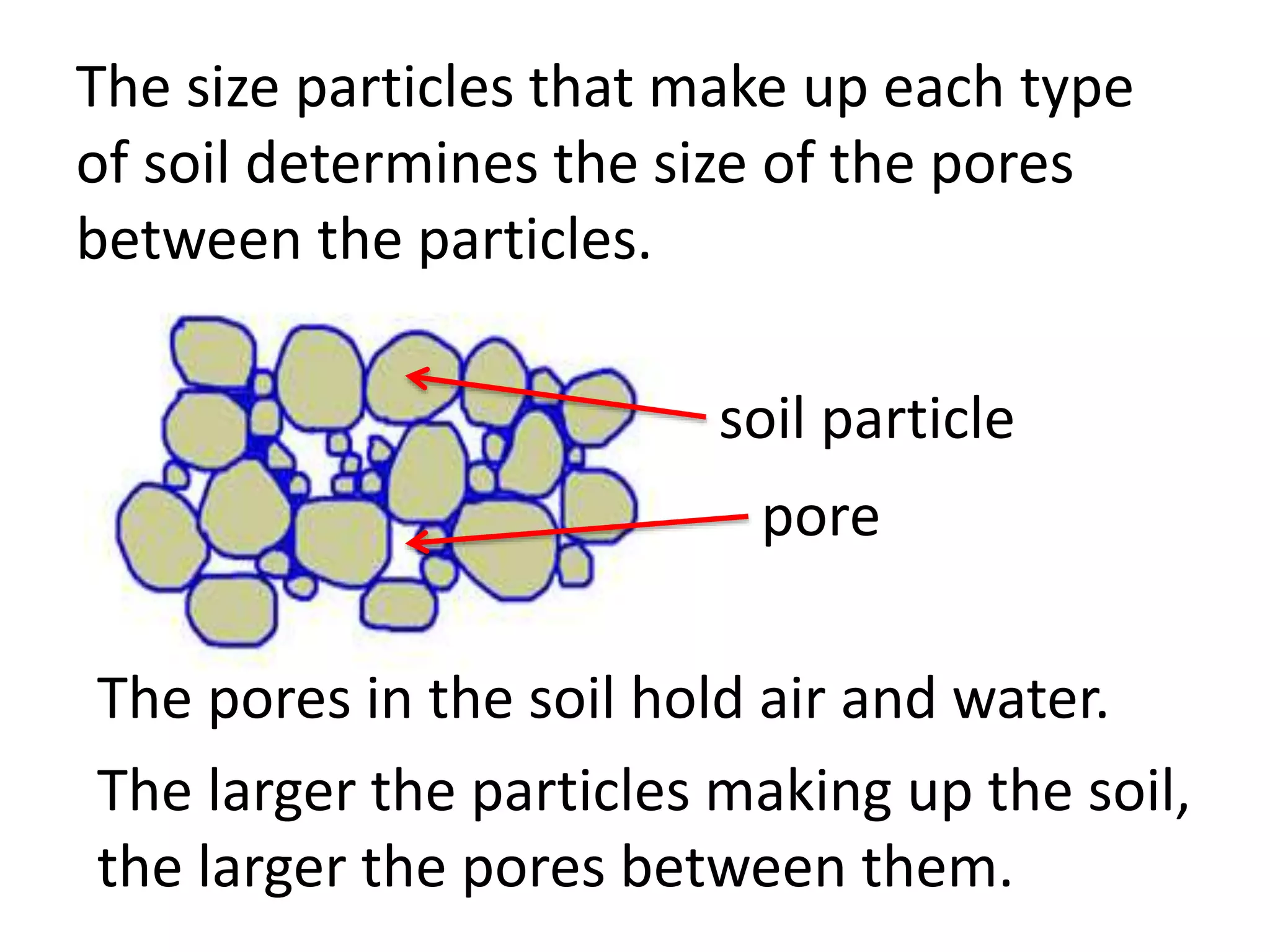
The size particles that make up each type
of soil determines the size of the pores
between the particles.
pore
soil particle
The larger the particles making up the soil,
the larger the pores between them.
The pores in the soil hold air and water.
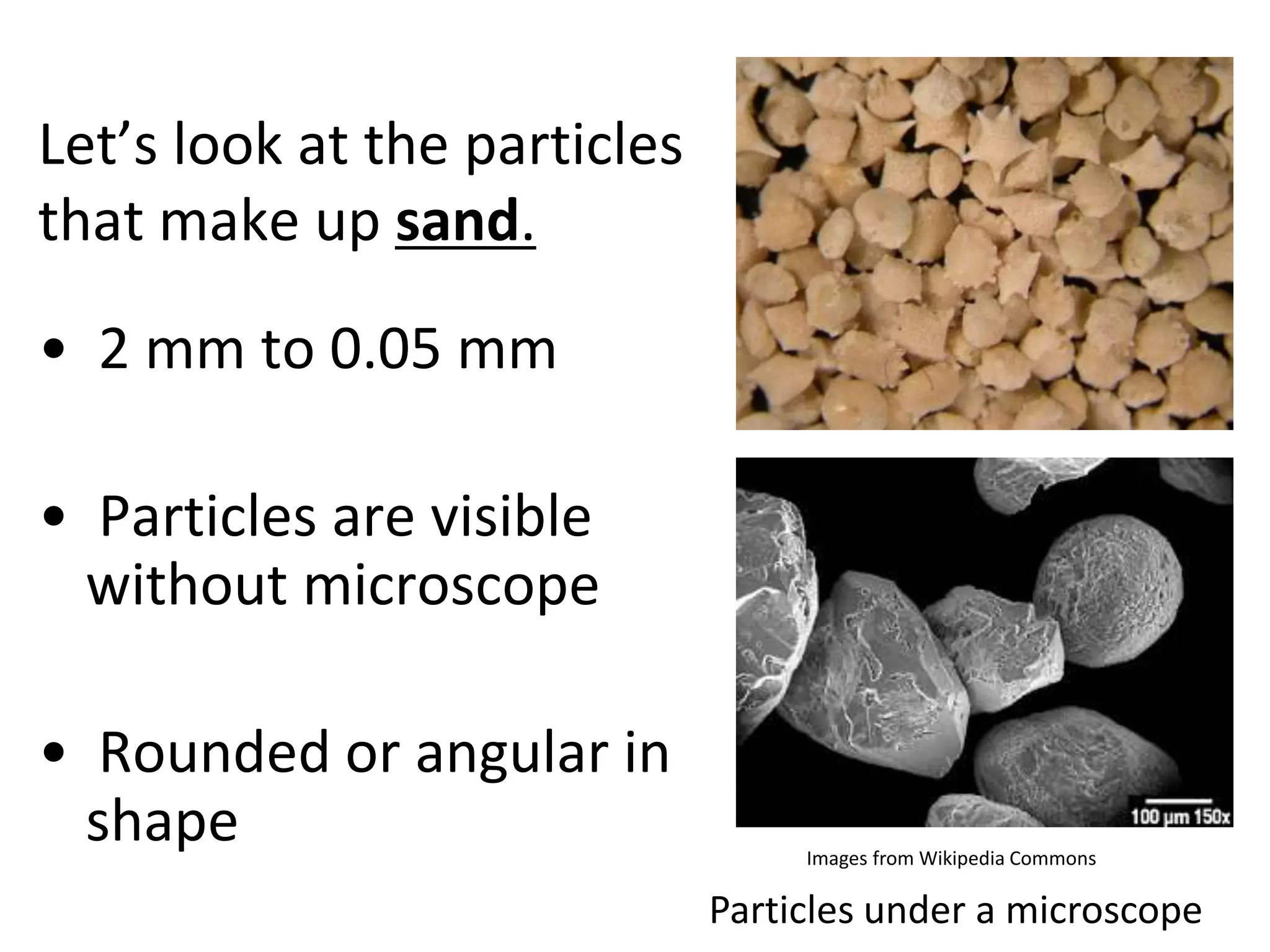
Let’s look at the particles
that make up sand.
• 2 mm to 0.05 mm
• Particles are visible
without microscope
• Rounded or angular in
shape Images from Wikipedia Commons
Particles under a microscope
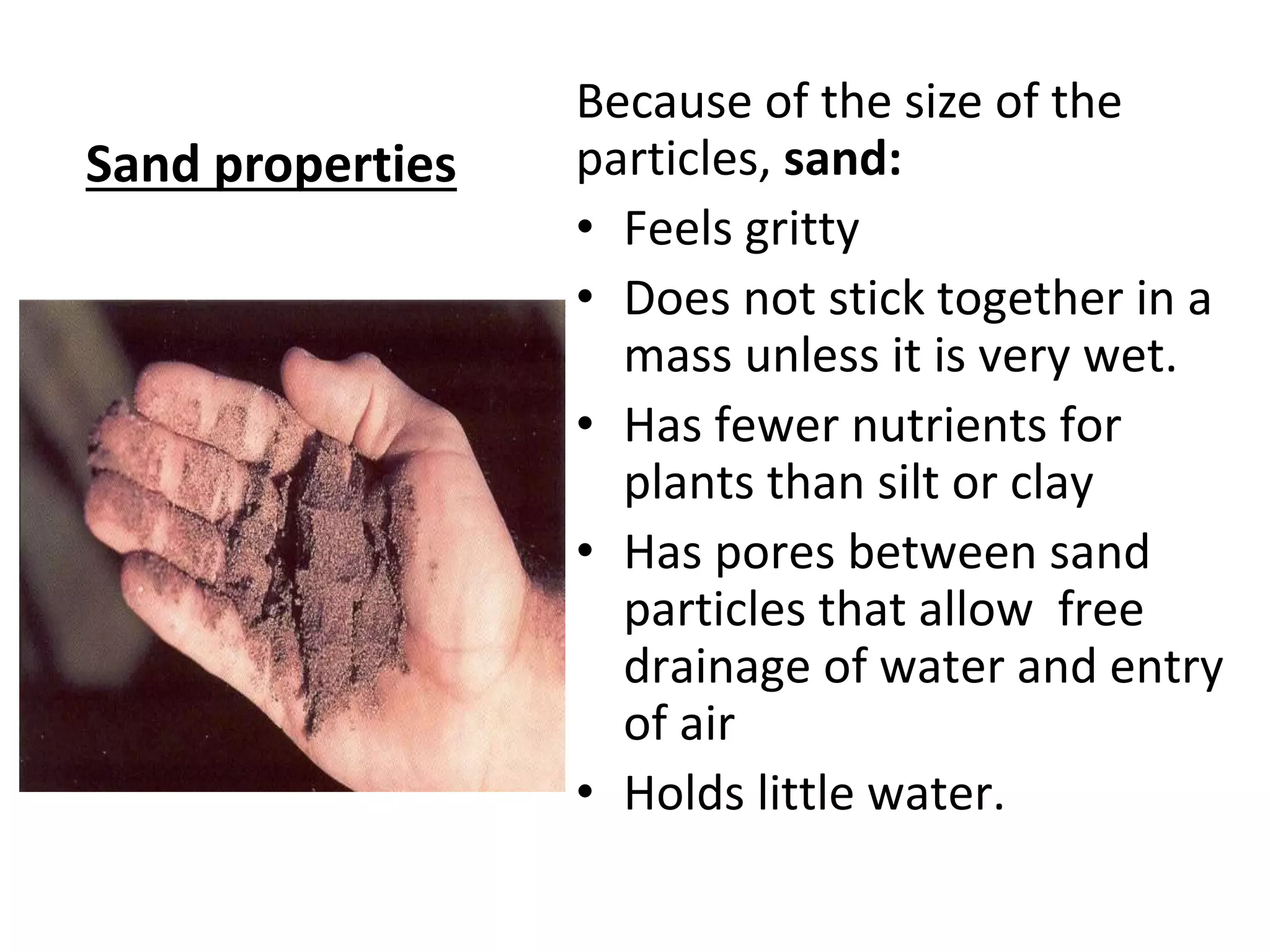
Sand properties
Because of the size of the
particles, sand:
• Feels gritty
• Does not stick together in a
mass unless it is very wet.
• Has fewer nutrients for
plants than silt or clay
• Has pores between sand
particles that allow free
drainage of water and entry
of air
• Holds little water.
Sandy soil
Sandy soil has large particles with large
spaces or pores between them.
Therefore, water drains through sandy soil
quickly. Sandy soils do not hold or retain
water very well. As a result, it is not good
for growing most plants.
Humus added to sandy soil acts like a
sponge, absorbing and holding moisture and
any nutrients dissolved in it.
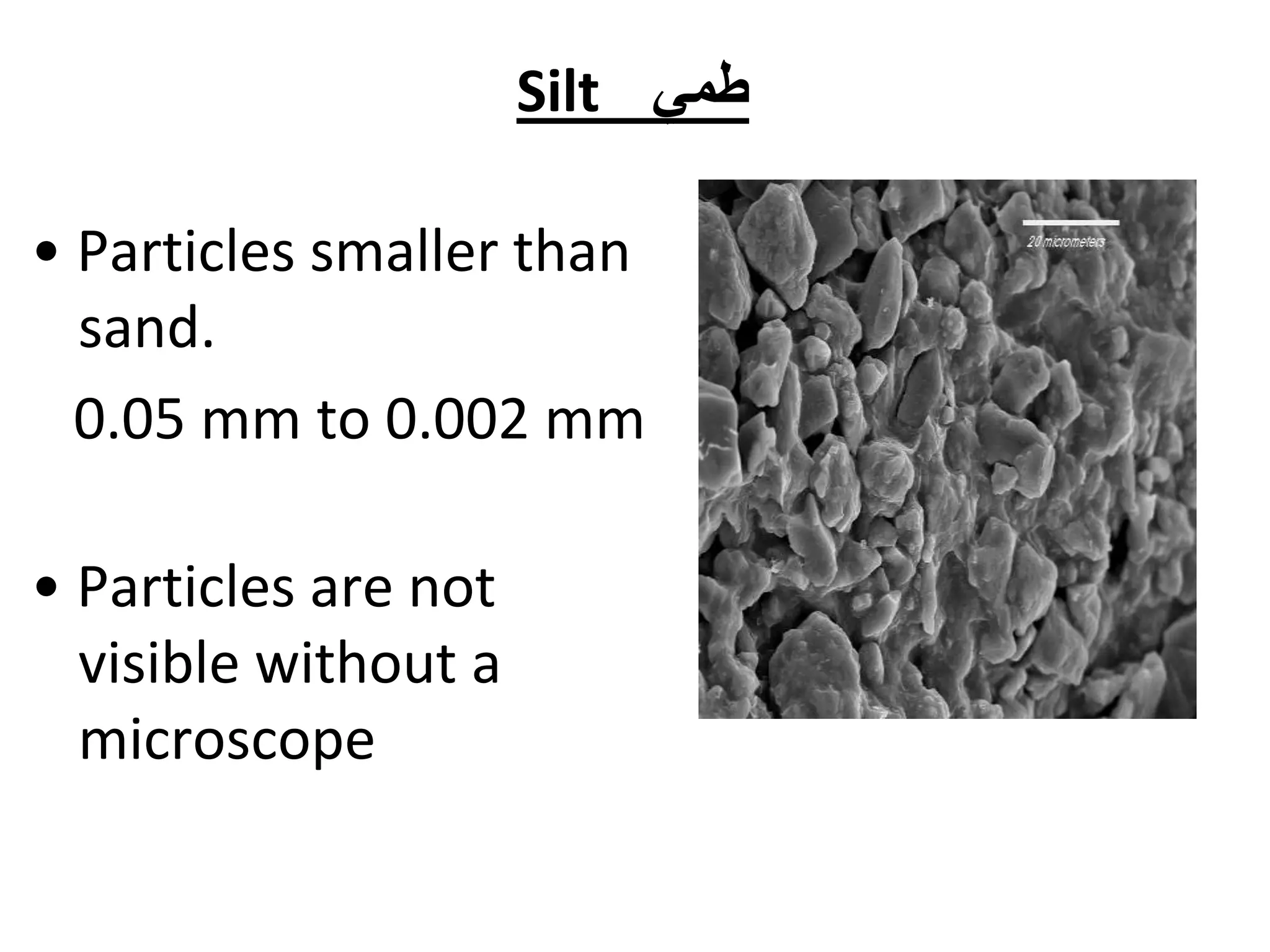
• Particles smaller than
sand.
0.05 mm to 0.002 mm
Silt ‫طمي‬
• Particles are not
visible without a
microscope
Silt properties • Feels powdery, smooth when
wet.
• Wet silt does not stick
together and cannot be
molded into different shapes.
• Smaller particles than sand;
holds more water for plants.
• Easily washed away by
flowing water.
• Has more plant nutrients
than sand.
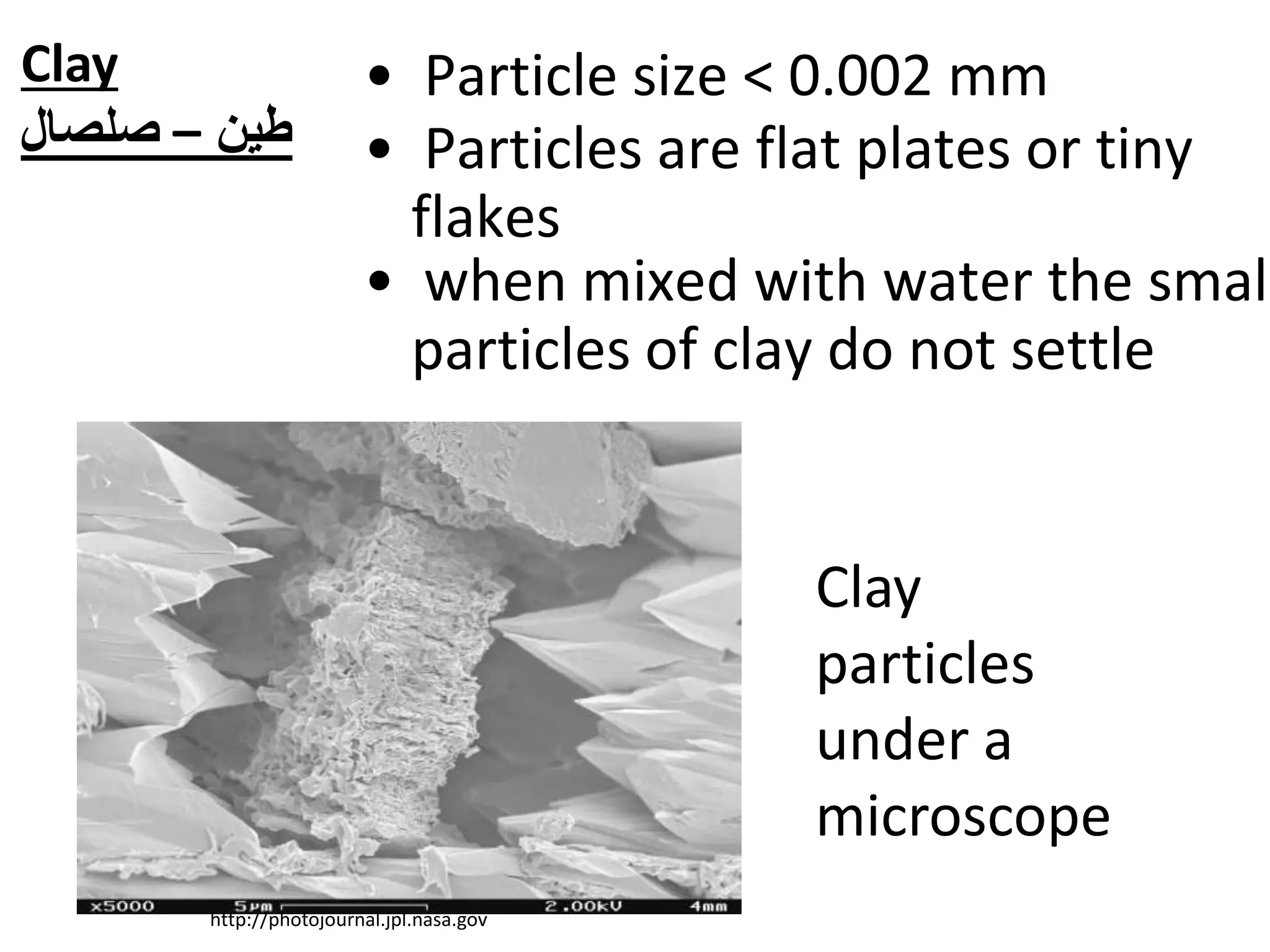
• Particle size < 0.002 mm
Clay
particles
under a
microscope
http://photojournal.jpl.nasa.gov
• when mixed with water the small
particles of clay do not settle
• Particles are flat plates or tiny
flakes
Clay
‫طين‬–‫صلصال‬
Clay properties • Clay is very powdery when
dry but very sticky and
slippery when wet.
• Wet clay can be molded
easily into any shape or a
rod.
• Swells when you add
water, shrinks and
becomes hard when water
evaporates.
• Clay is used to make
pottery.
Clay Soil
• pore spaces between particles are very small
• water and air move very slowly through clay
• Very high ability to hold water.
Clay soil
Clay soils has small particles and small spaces or
pores between them.
Since moisture does not drain from this soil well,
clay soil is often too wet for plant roots to absorb
oxygen. As a result, they rot.
Clay soil tends to stick together causing water to
fill up the air spaces.
Adding humus to clay soils discourages the small
particles from sticking so tightly together, resulting
in larger spaces that drain water more easily and
hold more air.
Now what about the
properties of humus?
Humus is the soil
formed when dead
plants and animals
decay.
It is a dark brown or black in colour.
It feels crumbly and loose when dry and
spongy when wet (texture).
http://www.edupic.net/sci_gr.htm
Free clip are for educational use
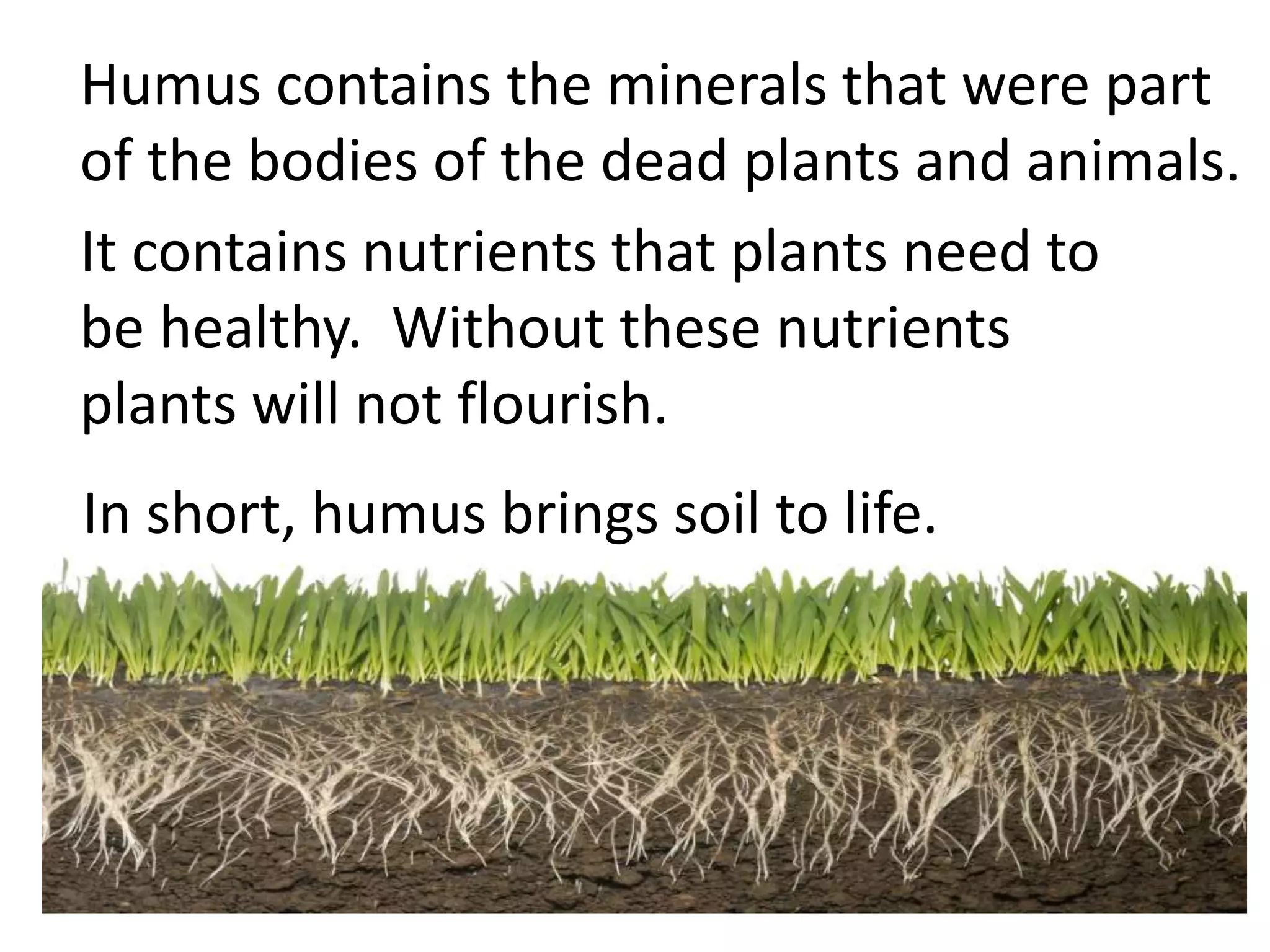
In short, humus brings soil to life.
It contains nutrients that plants need to
be healthy. Without these nutrients
plants will not flourish.
Humus contains the minerals that were part
of the bodies of the dead plants and animals.
Humus holds more water than sand or silt
but less than clay.
Water does drain through humus quickly.
Properties of soil
Types of soil
Sand Silt clay Humus
Size of
Particles Largest Smaller Smallest Variable
How does it feel?
Gritty, rough Floury, smooth
Very smooth
powder, sticky
when wet
Crumbly when
dry, spongy
when wet.
Amount of air
spaces in soil Largest Smaller Smallest Variable
Water holding
Capacity Least More Most
holds more
water than
sand & silt,
less than clay
Fertility of soil Least More than sand More than silt Most fertile
Why is it added
to soil used to
grow plants?
To improve
drainage in soil,
allow air spaces
for roots to
breathe
To increase
water holding
capacity
To increase
water holding
capacity, enrich
soil with
minerals
To enrich soil
with minerals

Soil properties gr. 6 2019

  • 1.
    Properties of the DifferentKinds of Soil by Moira Whitehouse PhD
  • 2.
    Physical properties arethe things we can observe about a substance using our five senses. For soil, the two main physical properties are colour and texture. Texture, determined by the size of particles in the soil, affects the soil’s ability to hold water and thereby sustain plant growth. Colour tells us something about the plant nutrients that are found in the soil.
  • 3.
    Soil Colour The mostobvious property when looking at soil is its colour. Geologists officially recognize over 170 different soil colours. But the most common colour of soils are shades of black, brown, red and gray. Red soil
  • 4.
    The darker coloroften indicates an increase in decomposed organic matter known as humus. Generally speaking, the darker a soil, the more nutrients it contains. infertile red soil black fertile soil
  • 5.
    Soil texture however,not colour, is the single most important physical property of the soil. Knowing the soil texture alone will provide information about: • 1) how easily water flows through it • 2) its water holding capacity • 3) how well plants will grow in it
  • 6.
    The three typesof soil formed from weathered rock Sand ClaySilt largest smallest particles
  • 7.
    The size particlesthat make up each type of soil determines the size of the pores between the particles. pore soil particle The larger the particles making up the soil, the larger the pores between them. The pores in the soil hold air and water.
  • 8.
    Let’s look atthe particles that make up sand. • 2 mm to 0.05 mm • Particles are visible without microscope • Rounded or angular in shape Images from Wikipedia Commons Particles under a microscope
  • 9.
    Sand properties Because ofthe size of the particles, sand: • Feels gritty • Does not stick together in a mass unless it is very wet. • Has fewer nutrients for plants than silt or clay • Has pores between sand particles that allow free drainage of water and entry of air • Holds little water.
  • 10.
    Sandy soil Sandy soilhas large particles with large spaces or pores between them. Therefore, water drains through sandy soil quickly. Sandy soils do not hold or retain water very well. As a result, it is not good for growing most plants. Humus added to sandy soil acts like a sponge, absorbing and holding moisture and any nutrients dissolved in it.
  • 11.
    • Particles smallerthan sand. 0.05 mm to 0.002 mm Silt ‫طمي‬ • Particles are not visible without a microscope
  • 12.
    Silt properties •Feels powdery, smooth when wet. • Wet silt does not stick together and cannot be molded into different shapes. • Smaller particles than sand; holds more water for plants. • Easily washed away by flowing water. • Has more plant nutrients than sand.
  • 13.
    • Particle size< 0.002 mm Clay particles under a microscope http://photojournal.jpl.nasa.gov • when mixed with water the small particles of clay do not settle • Particles are flat plates or tiny flakes Clay ‫طين‬–‫صلصال‬
  • 14.
    Clay properties •Clay is very powdery when dry but very sticky and slippery when wet. • Wet clay can be molded easily into any shape or a rod. • Swells when you add water, shrinks and becomes hard when water evaporates. • Clay is used to make pottery.
  • 15.
    Clay Soil • porespaces between particles are very small • water and air move very slowly through clay • Very high ability to hold water.
  • 16.
    Clay soil Clay soilshas small particles and small spaces or pores between them. Since moisture does not drain from this soil well, clay soil is often too wet for plant roots to absorb oxygen. As a result, they rot. Clay soil tends to stick together causing water to fill up the air spaces. Adding humus to clay soils discourages the small particles from sticking so tightly together, resulting in larger spaces that drain water more easily and hold more air.
  • 17.
    Now what aboutthe properties of humus? Humus is the soil formed when dead plants and animals decay. It is a dark brown or black in colour. It feels crumbly and loose when dry and spongy when wet (texture). http://www.edupic.net/sci_gr.htm Free clip are for educational use
  • 18.
    In short, humusbrings soil to life. It contains nutrients that plants need to be healthy. Without these nutrients plants will not flourish. Humus contains the minerals that were part of the bodies of the dead plants and animals.
  • 19.
    Humus holds morewater than sand or silt but less than clay. Water does drain through humus quickly.
  • 20.
    Properties of soil Typesof soil Sand Silt clay Humus Size of Particles Largest Smaller Smallest Variable How does it feel? Gritty, rough Floury, smooth Very smooth powder, sticky when wet Crumbly when dry, spongy when wet. Amount of air spaces in soil Largest Smaller Smallest Variable Water holding Capacity Least More Most holds more water than sand & silt, less than clay Fertility of soil Least More than sand More than silt Most fertile Why is it added to soil used to grow plants? To improve drainage in soil, allow air spaces for roots to breathe To increase water holding capacity To increase water holding capacity, enrich soil with minerals To enrich soil with minerals