By: ANIL POUDYAL
Introduction
 Form of computer data storage
 Allows to read or write the data
 Nowadays in the form of integrated circuits
 Volatile memory
History
 Was invented in around 1947 (Williams Tube)
 Magnetic-core memory was invented in 1947 and
developed until mid-1970s
 Integrated circuit RAM came into the market in early
1970s, with the first commercially DRAM
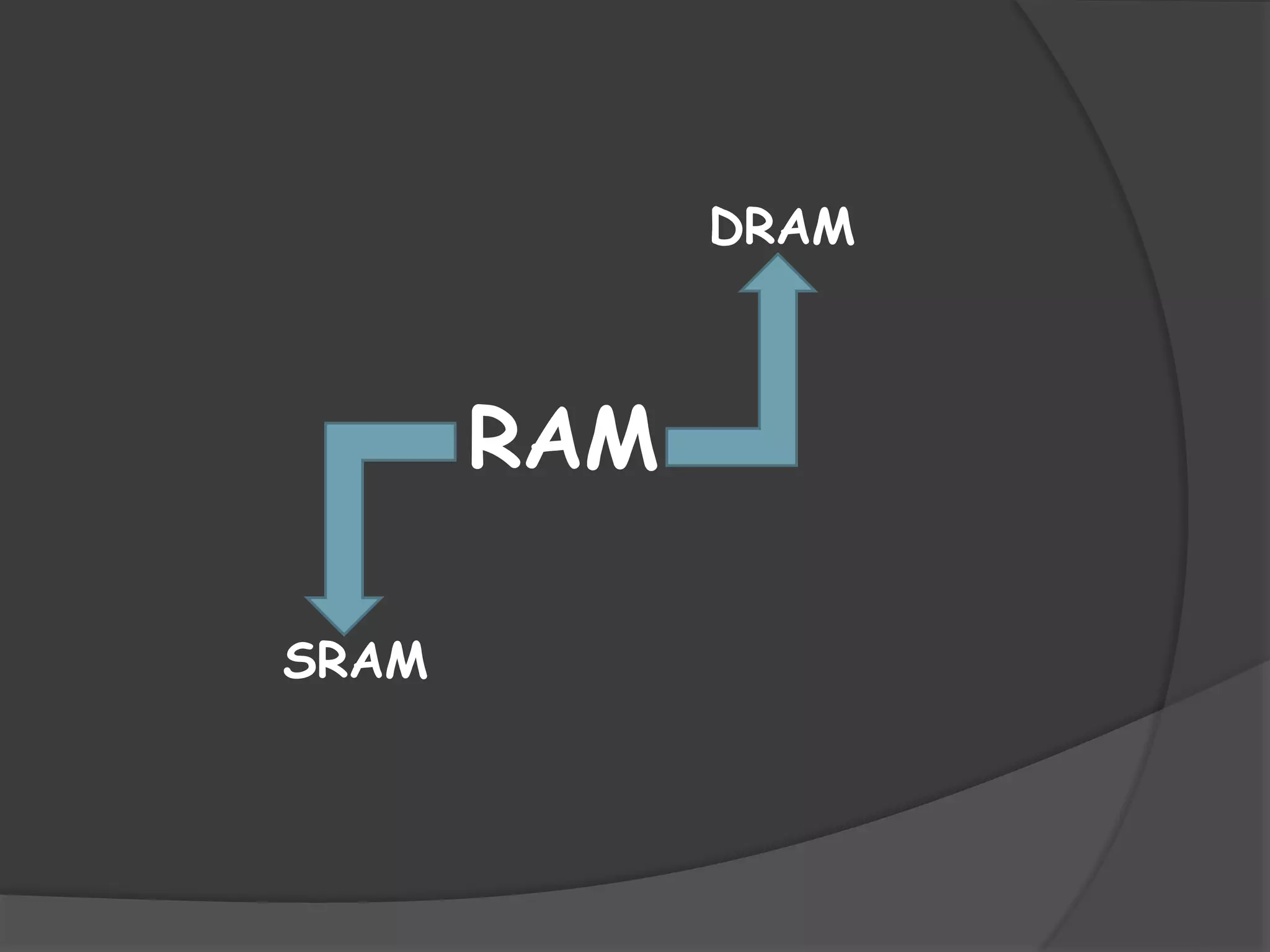
DRAM
RAM
SRAM
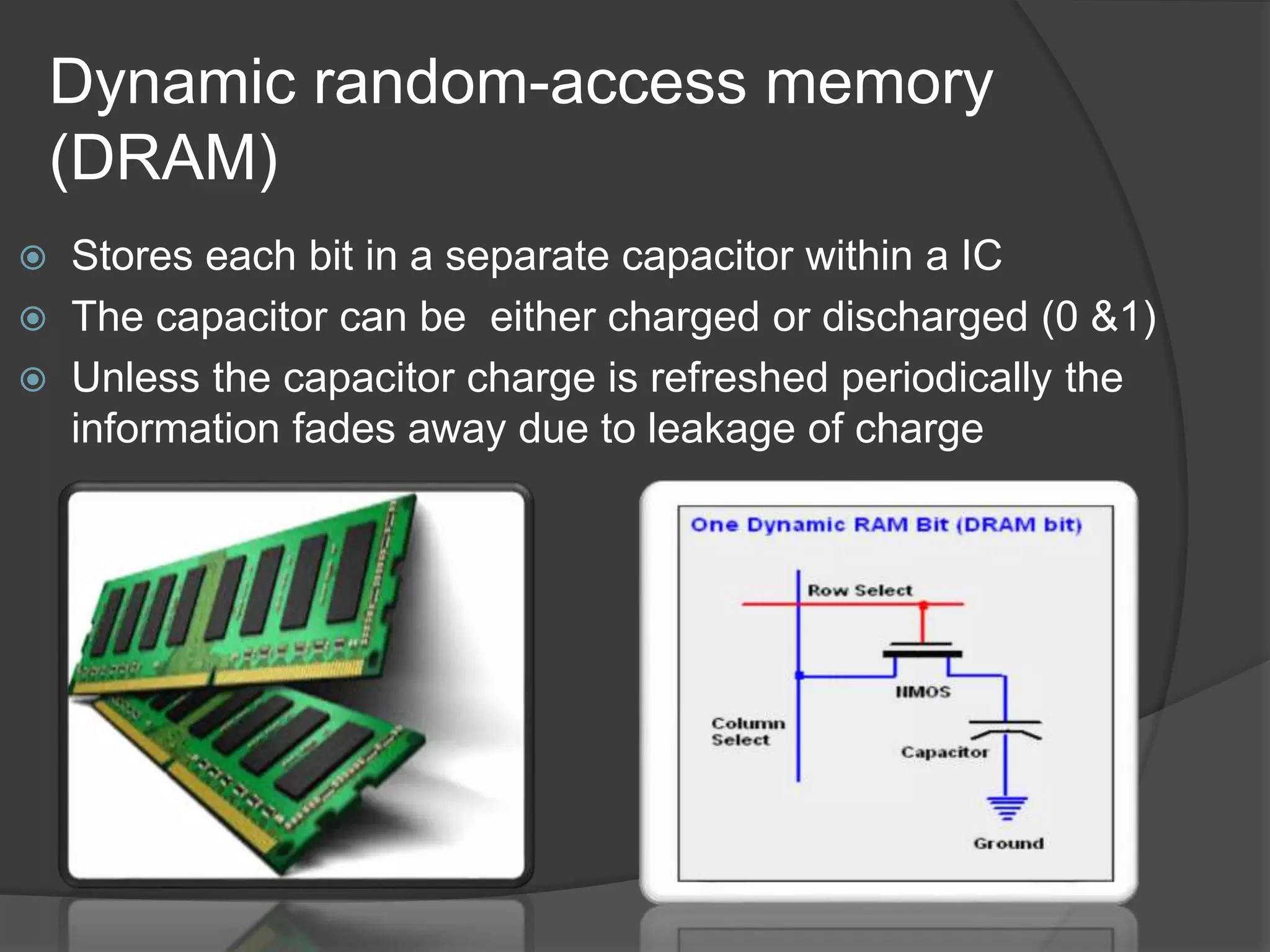
Dynamic random-access memory
(DRAM)
 Stores each bit in a separate capacitor within a IC
 The capacitor can be either charged or discharged (0 &1)
 Unless the capacitor charge is refreshed periodically the
information fades away due to leakage of charge
Static random-access memory
(SRAM)
 Type of semiconductor memory
 It doesn’t need a periodical refreshment
 Uses bandwidth or low power or both
 Easier to control
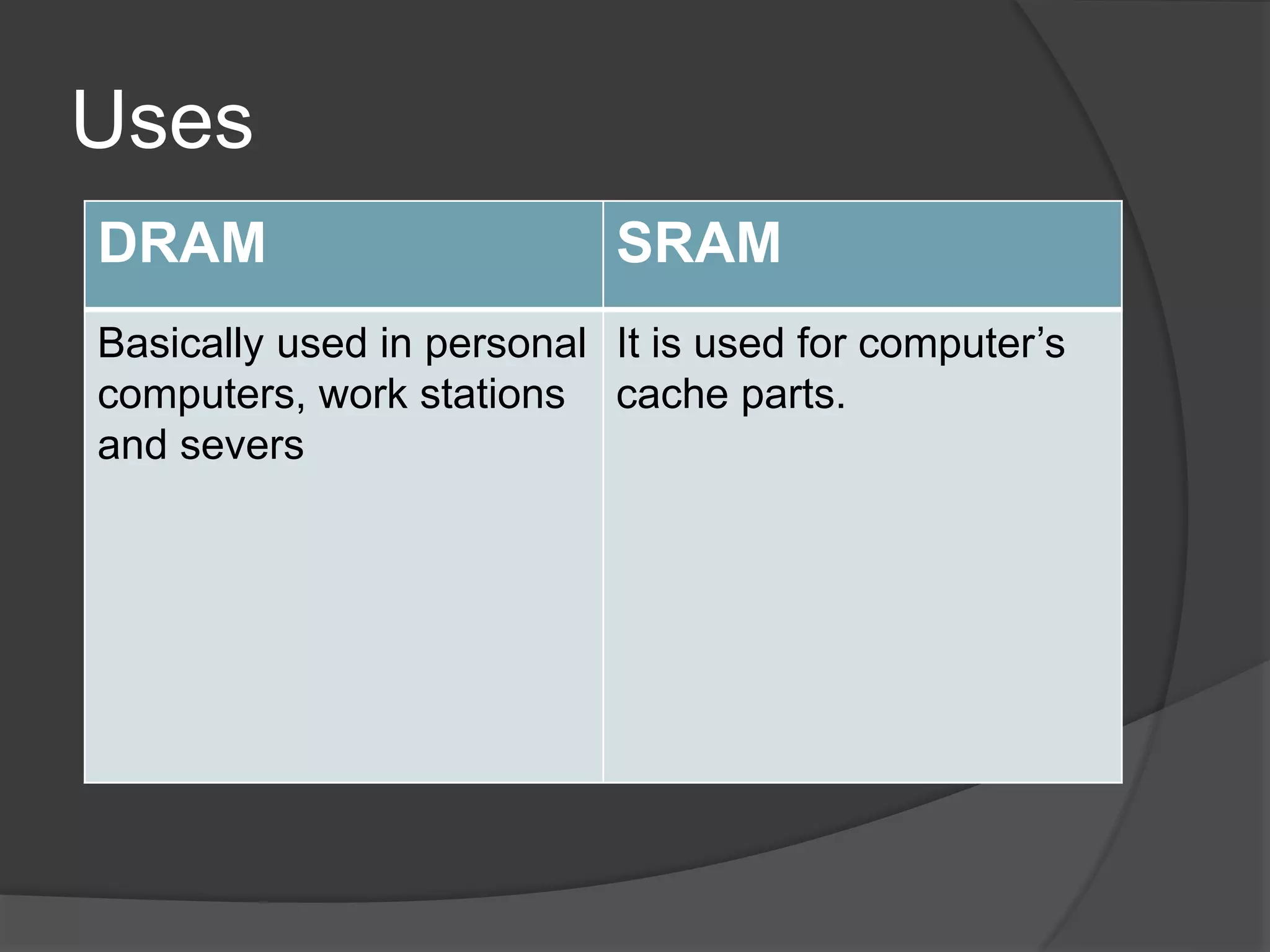
Uses
DRAM SRAM
Basically used in personal
computers, work stations
and severs
It is used for computer’s
cache parts.

Types of ram

  • 1.
  • 2.
    Introduction  Form ofcomputer data storage  Allows to read or write the data  Nowadays in the form of integrated circuits  Volatile memory
  • 3.
    History  Was inventedin around 1947 (Williams Tube)  Magnetic-core memory was invented in 1947 and developed until mid-1970s  Integrated circuit RAM came into the market in early 1970s, with the first commercially DRAM
  • 4.
  • 5.
    Dynamic random-access memory (DRAM) Stores each bit in a separate capacitor within a IC  The capacitor can be either charged or discharged (0 &1)  Unless the capacitor charge is refreshed periodically the information fades away due to leakage of charge
  • 6.
    Static random-access memory (SRAM) Type of semiconductor memory  It doesn’t need a periodical refreshment  Uses bandwidth or low power or both  Easier to control
  • 7.
    Uses DRAM SRAM Basically usedin personal computers, work stations and severs It is used for computer’s cache parts.