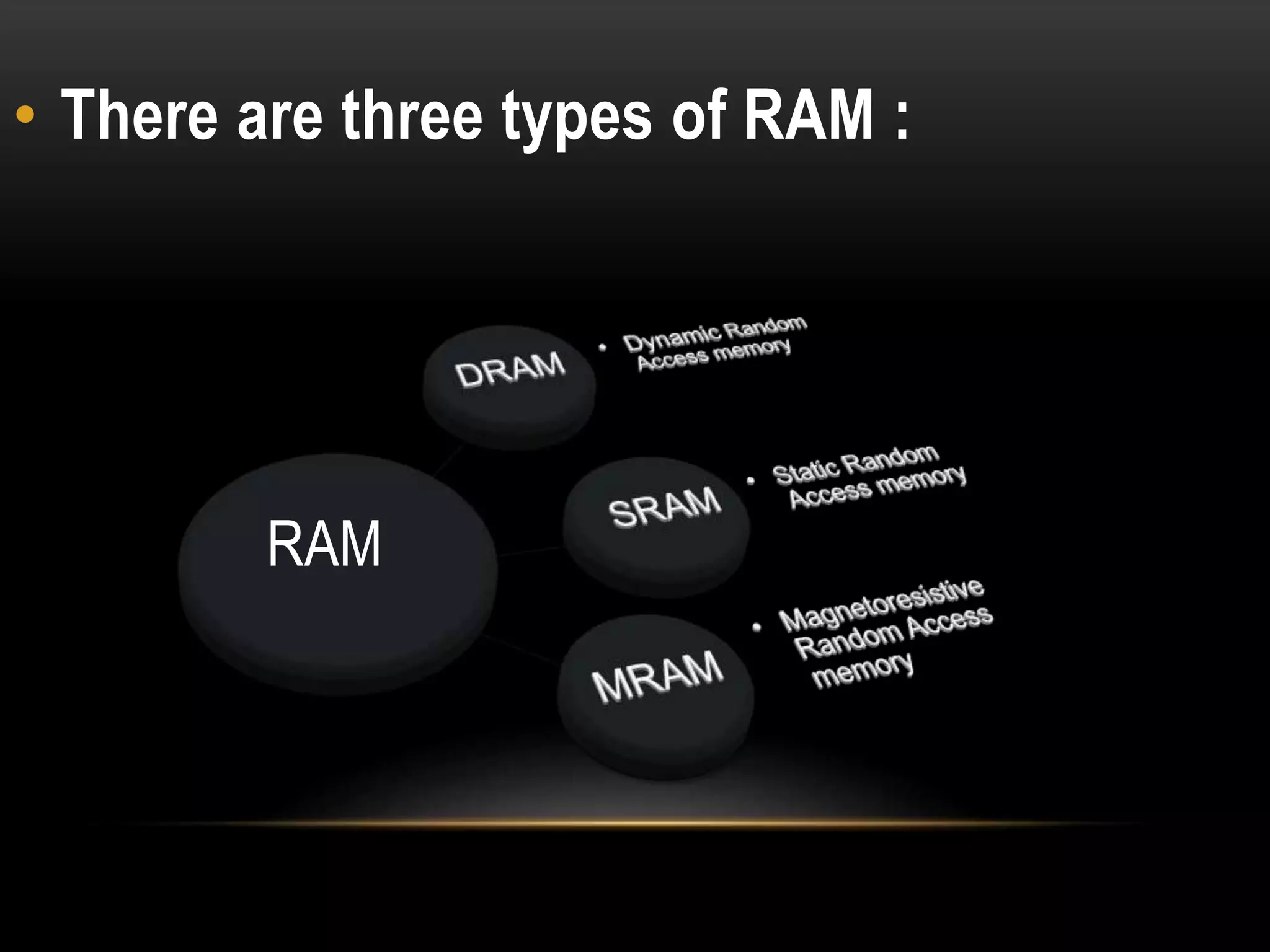
• There are three types of RAM :
RAM
Dynamic Random Access Memory
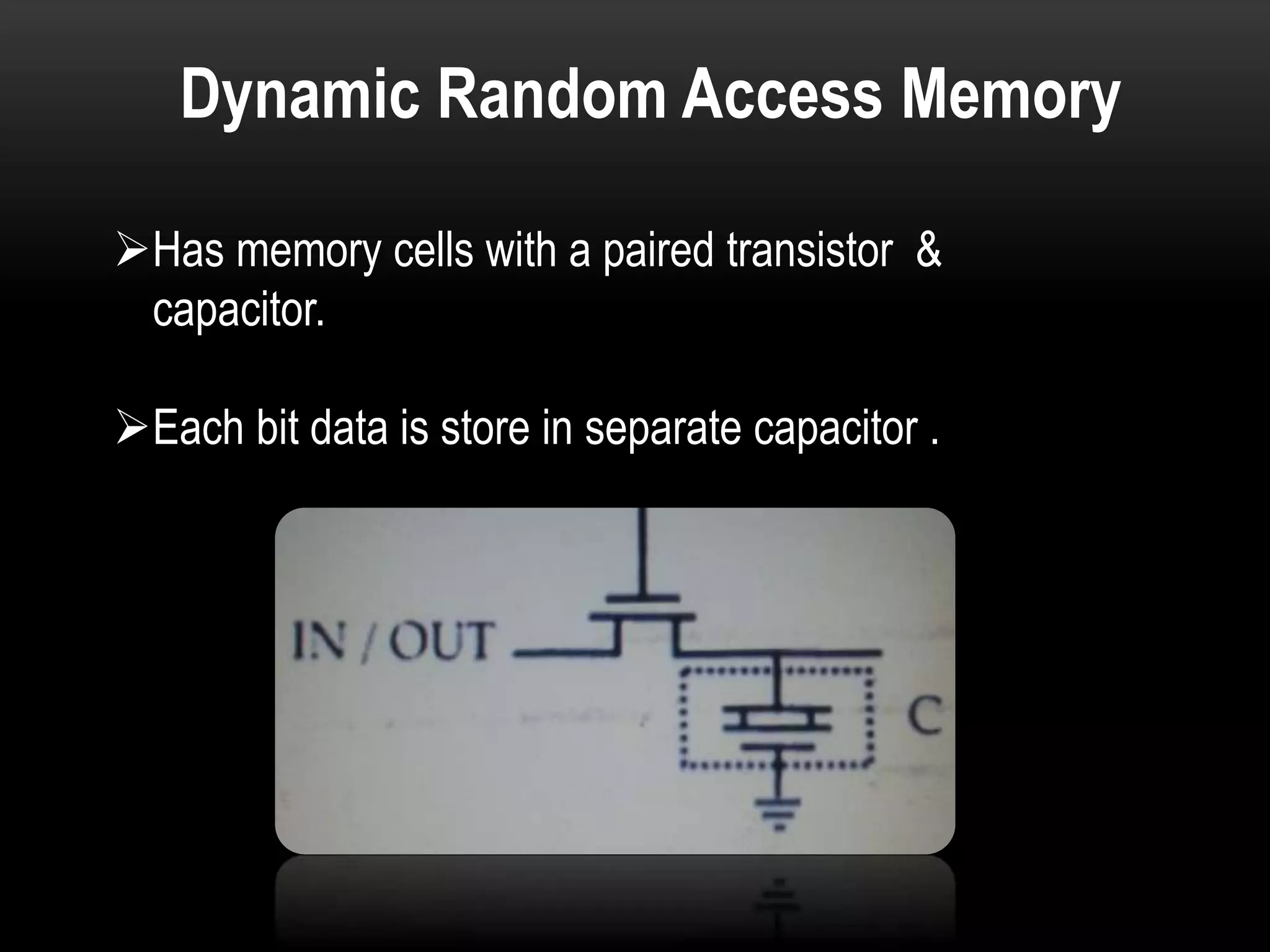
Has memory cells with a paired transistor &
capacitor.
Each bit data is store in separate capacitor .
Dynamic Random Access Memory
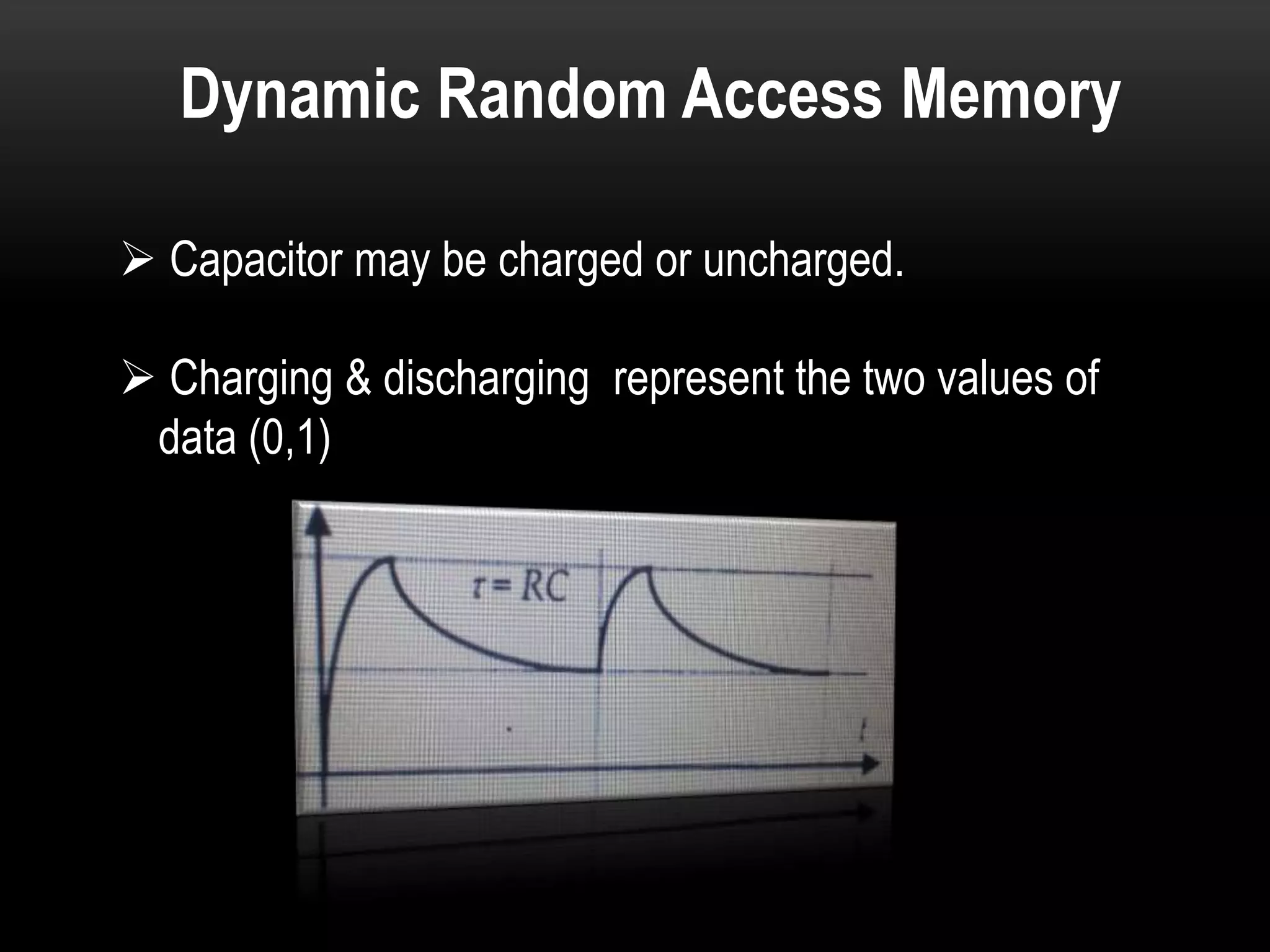
 Capacitor may be charged or uncharged.
 Charging & discharging represent the two values of
data (0,1)
Dynamic Random Access Memory
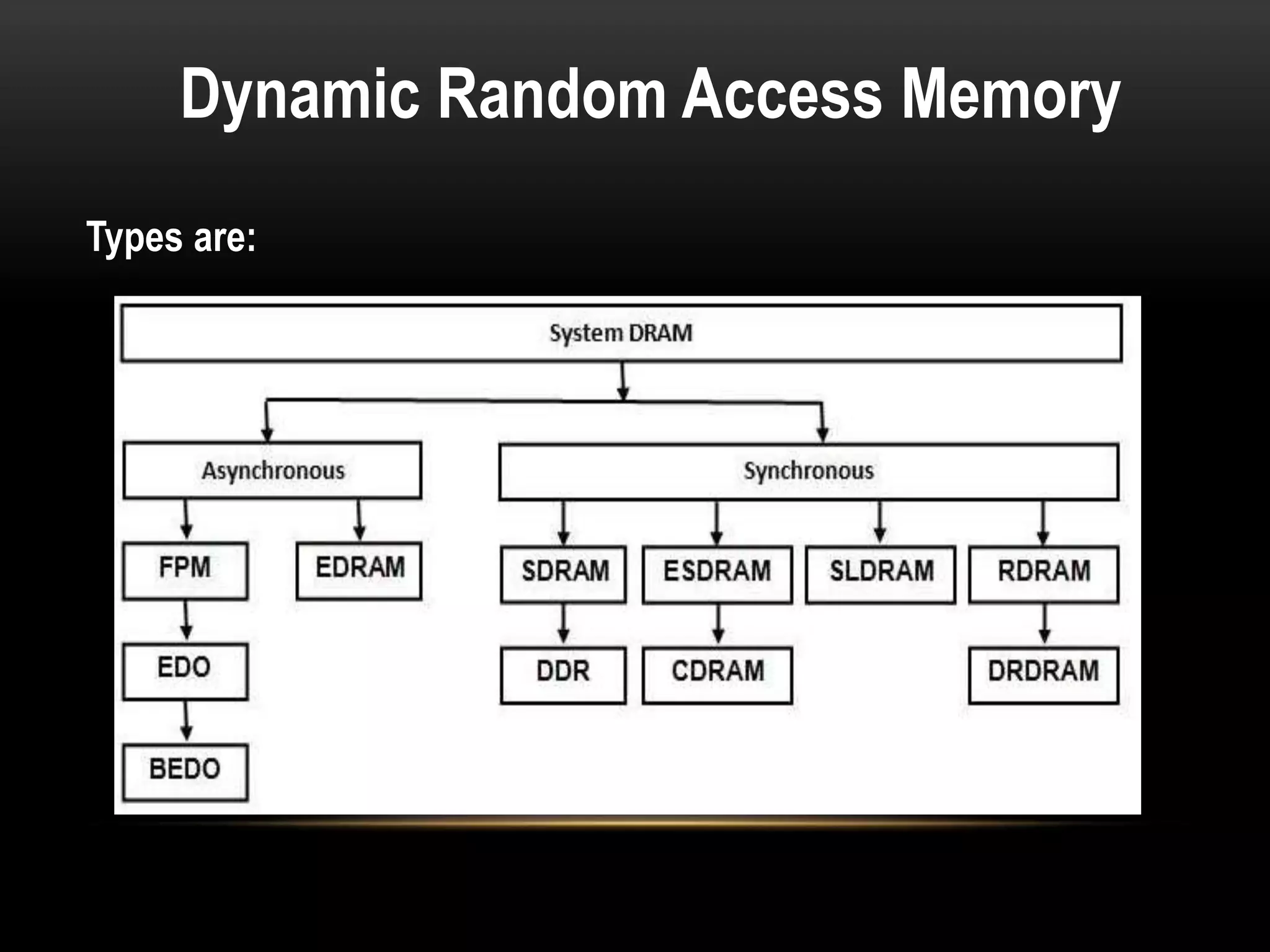
Types are:
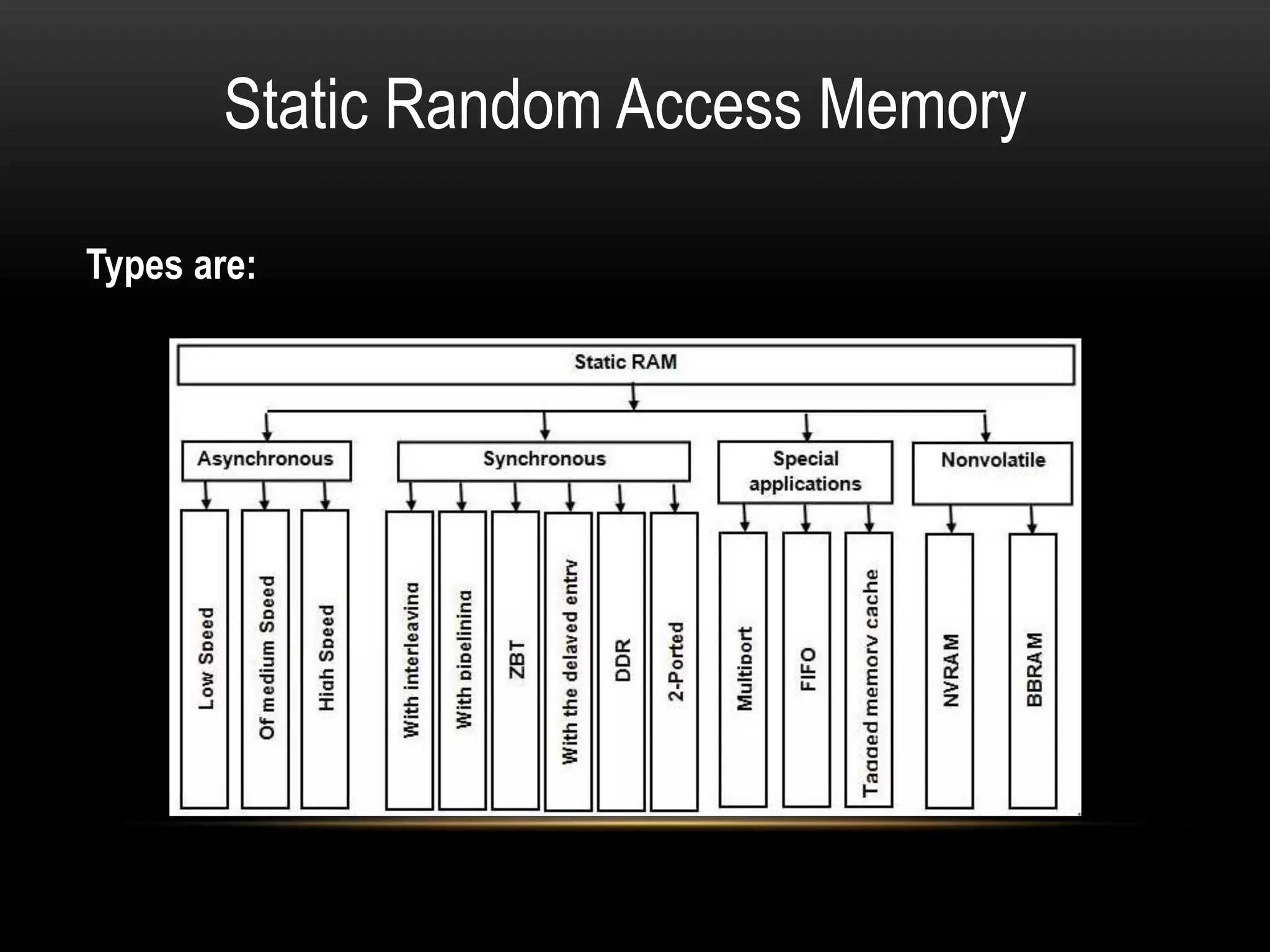
Static Random Access Memory
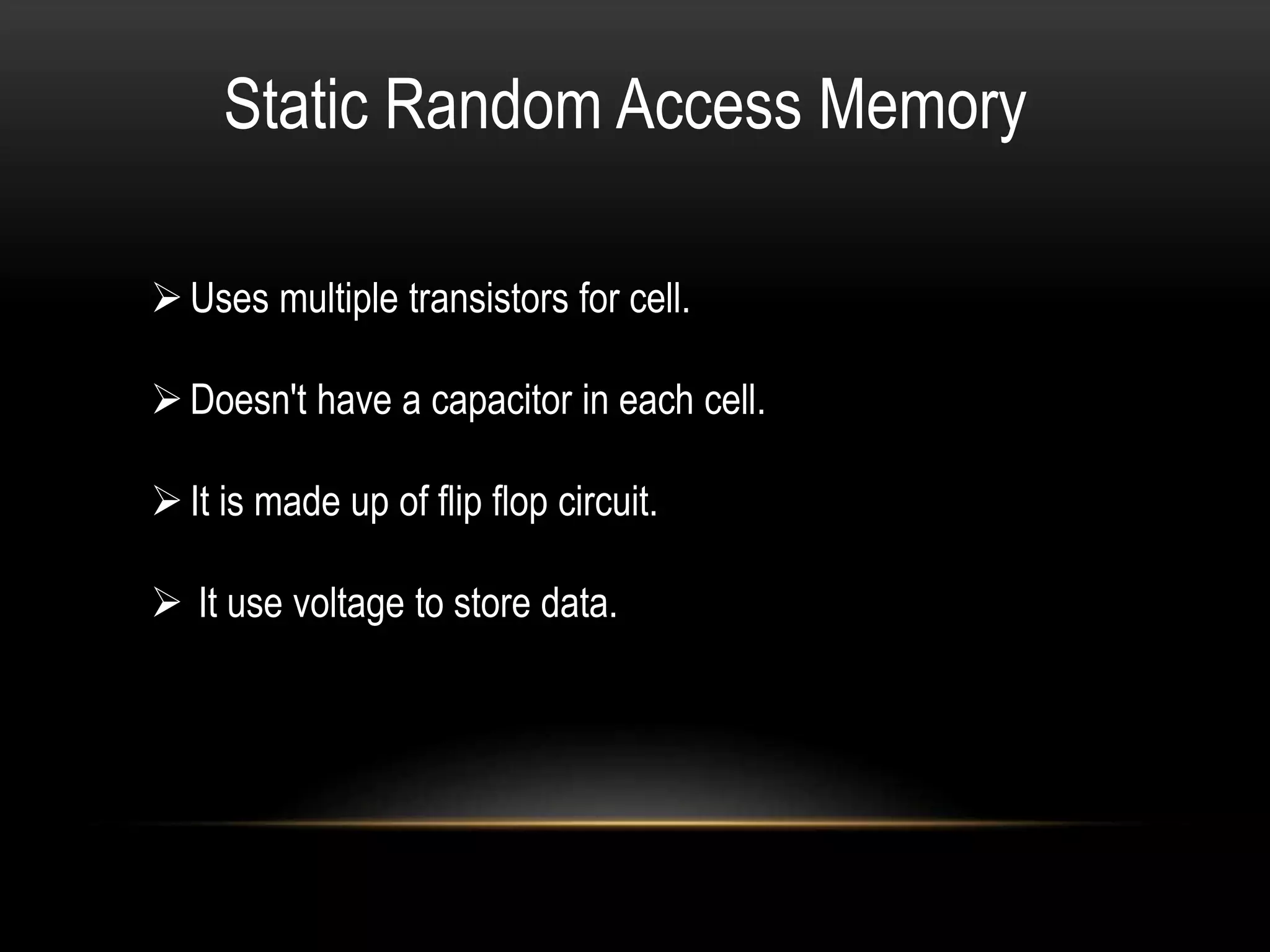
Uses multiple transistors for cell.
Doesn't have a capacitor in each cell.
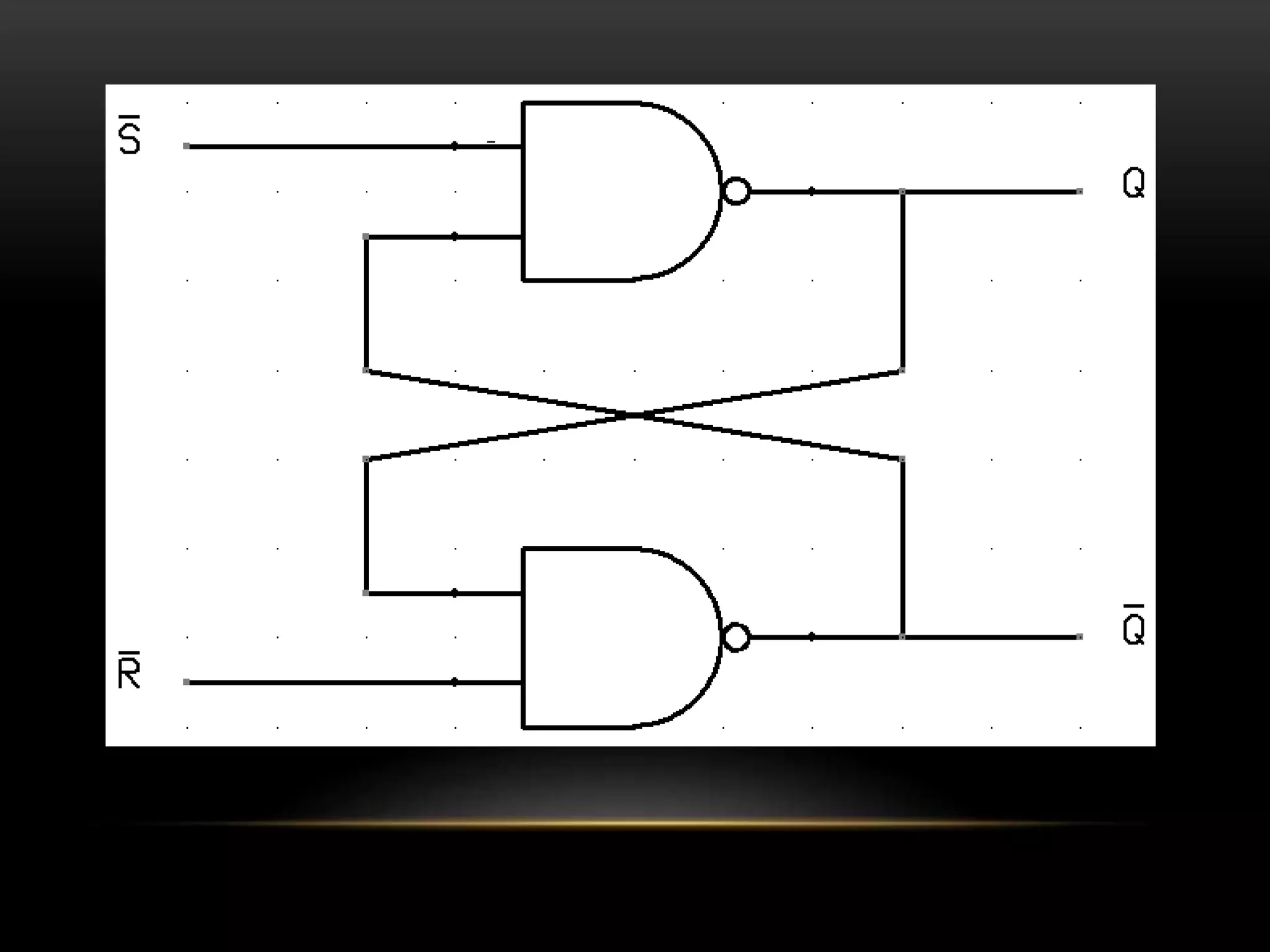
It is made up of flip flop circuit.
 It use voltage to store data.
Static Random Access Memory
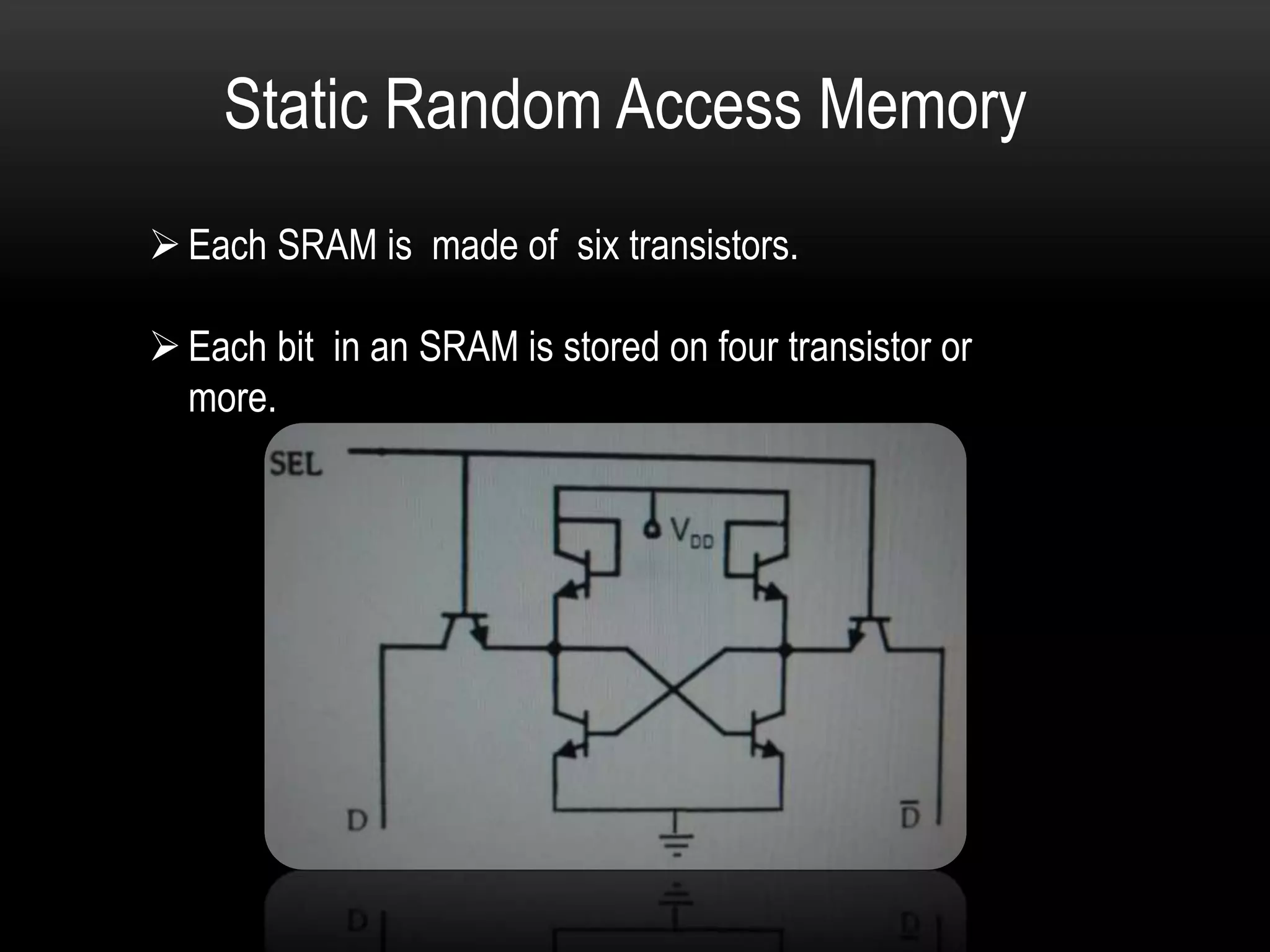
Each SRAM is made of six transistors.
Each bit in an SRAM is stored on four transistor or
more.
Types are:
Static Random Access Memory
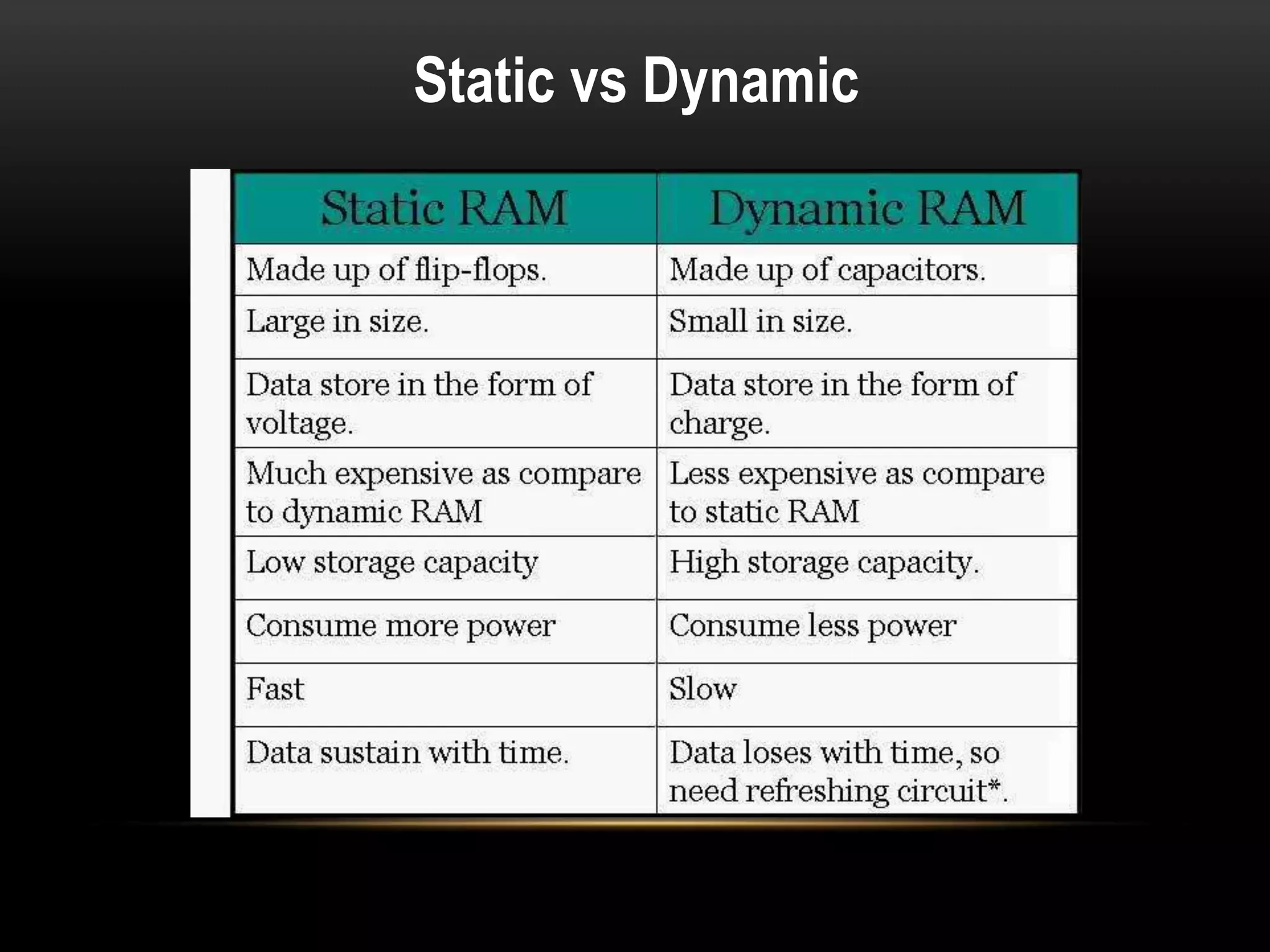
Static vs Dynamic
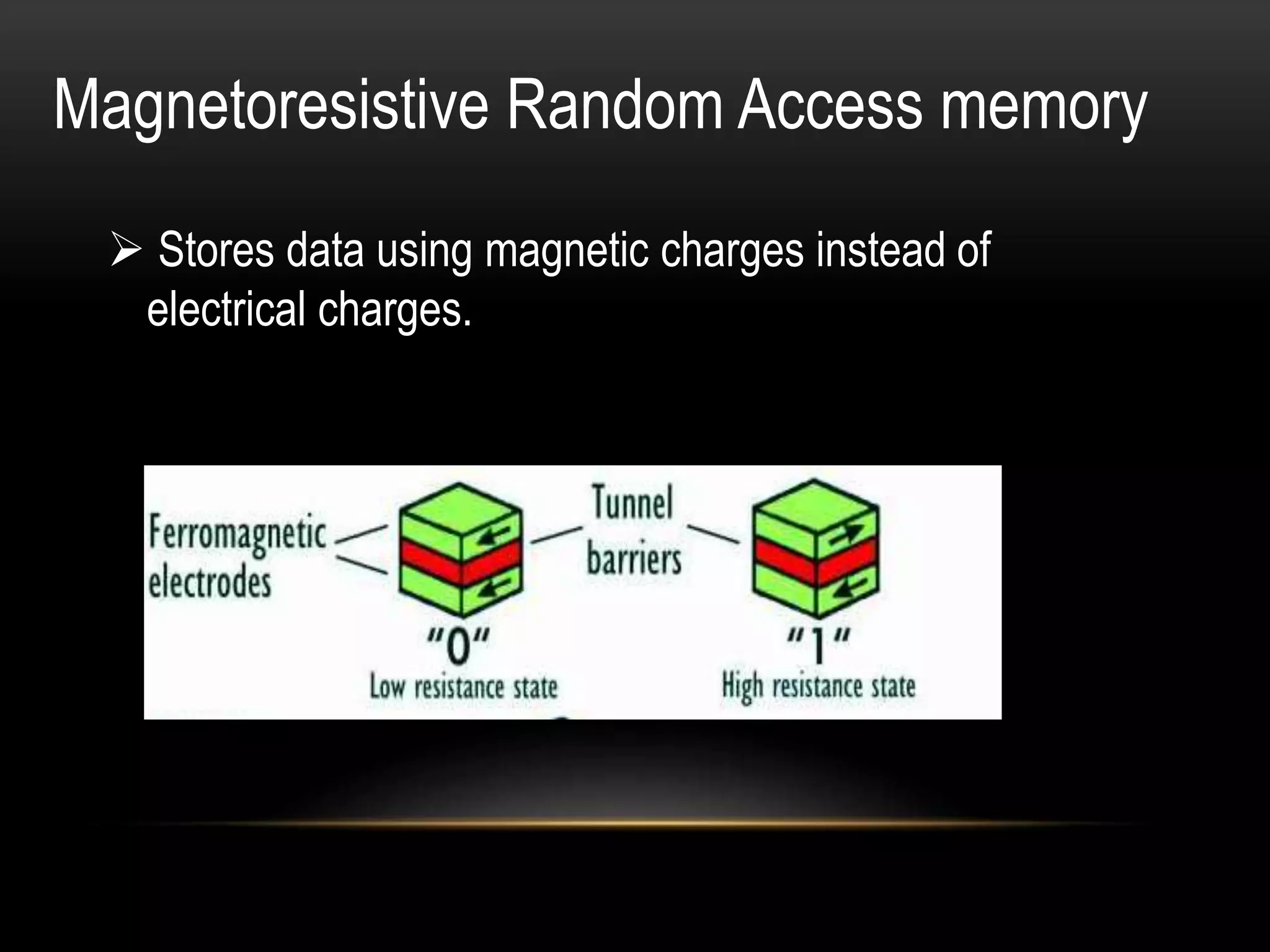
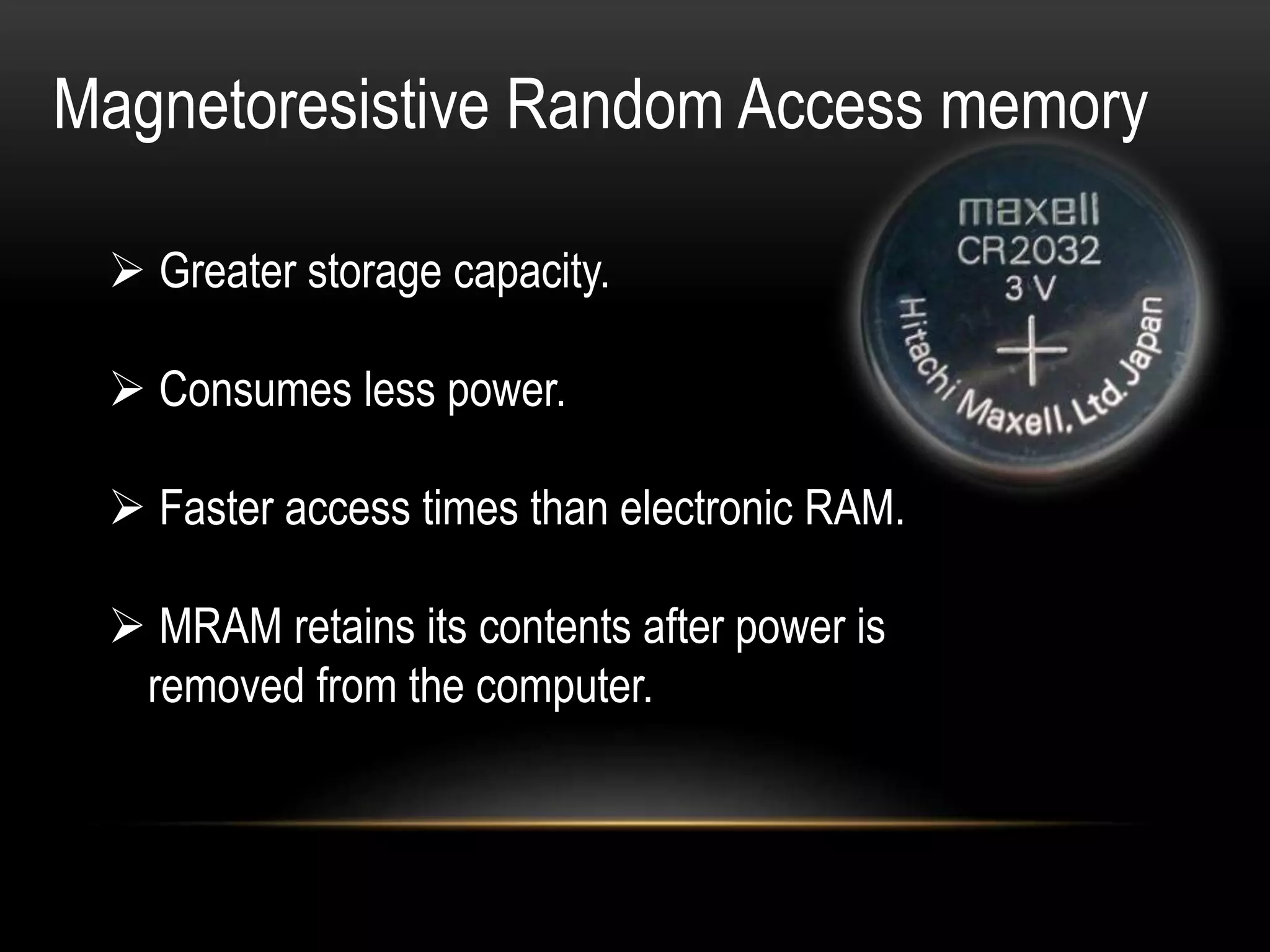
Magnetoresistive Random Access memory
 Stores data using magnetic charges instead of
electrical charges.
 Greater storage capacity.
 Consumes less power.
 Faster access times than electronic RAM.
 MRAM retains its contents after power is
removed from the computer.
Magnetoresistive Random Access memory
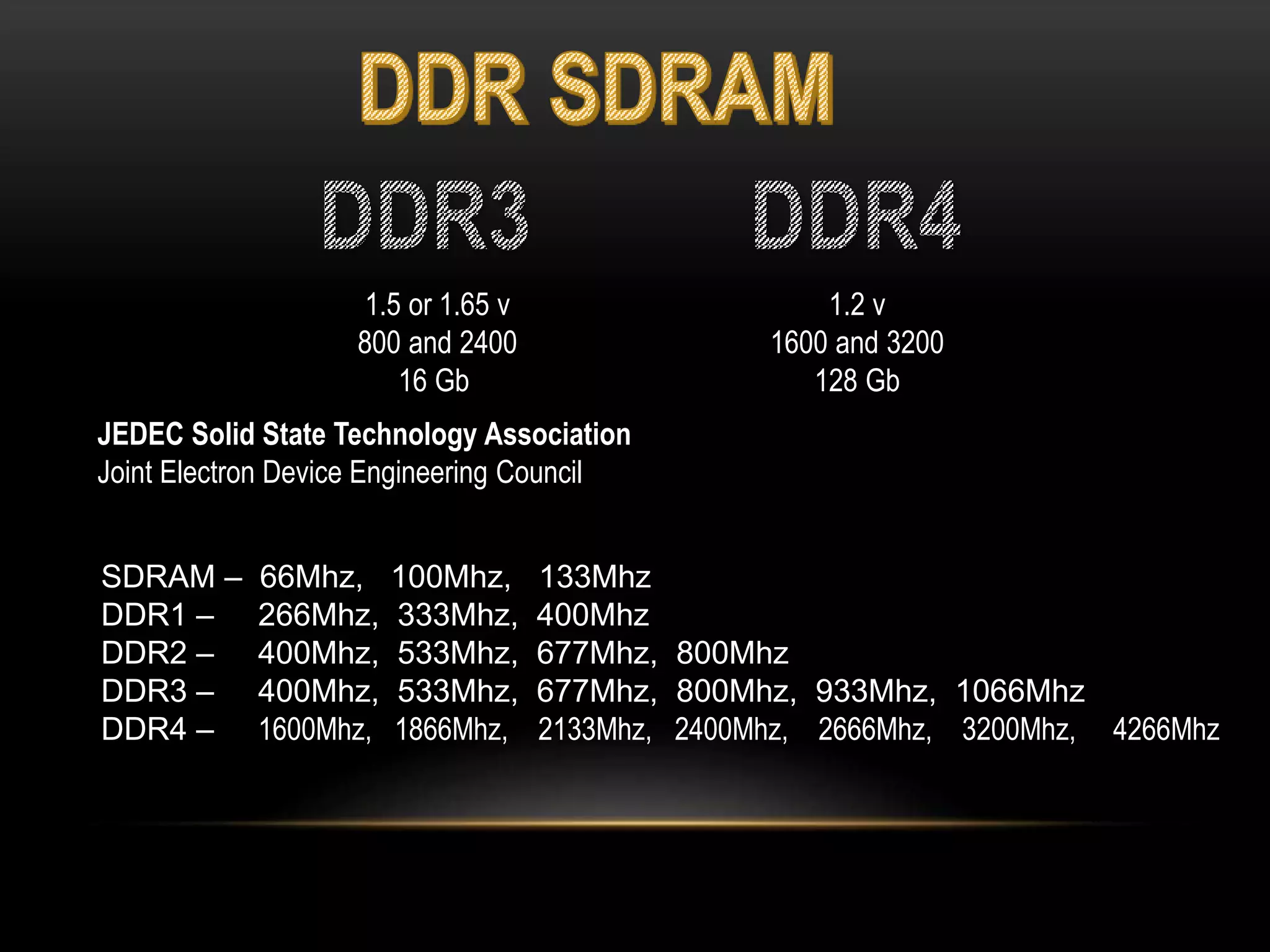
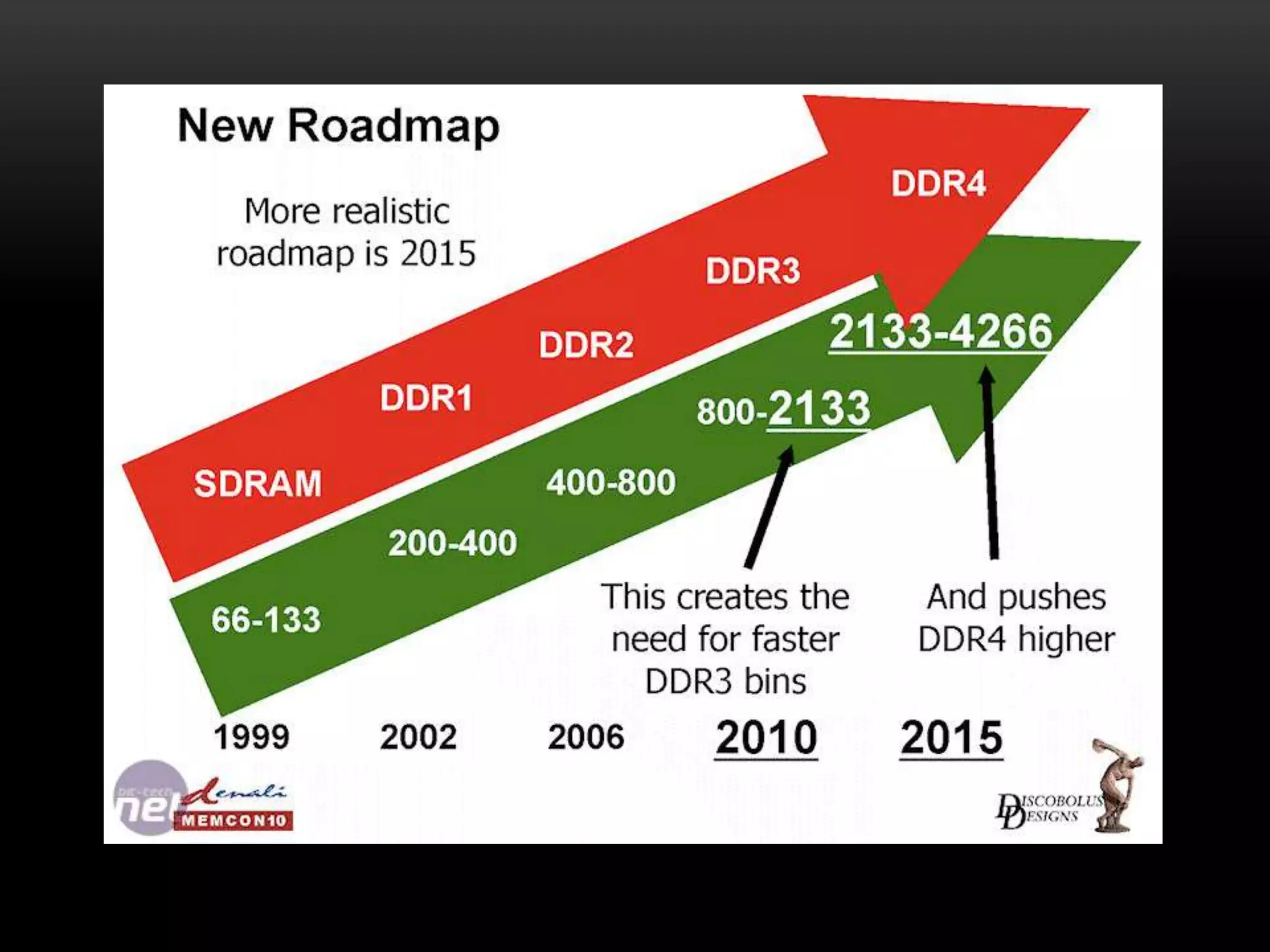
SDRAM – 66Mhz, 100Mhz, 133Mhz
DDR1 – 266Mhz, 333Mhz, 400Mhz
DDR2 – 400Mhz, 533Mhz, 677Mhz, 800Mhz
DDR3 – 400Mhz, 533Mhz, 677Mhz, 800Mhz, 933Mhz, 1066Mhz
DDR4 – 1600Mhz, 1866Mhz, 2133Mhz, 2400Mhz, 2666Mhz, 3200Mhz, 4266Mhz
JEDEC Solid State Technology Association
Joint Electron Device Engineering Council
1.5 or 1.65 v
800 and 2400
16 Gb
1.2 v
1600 and 3200
128 Gb
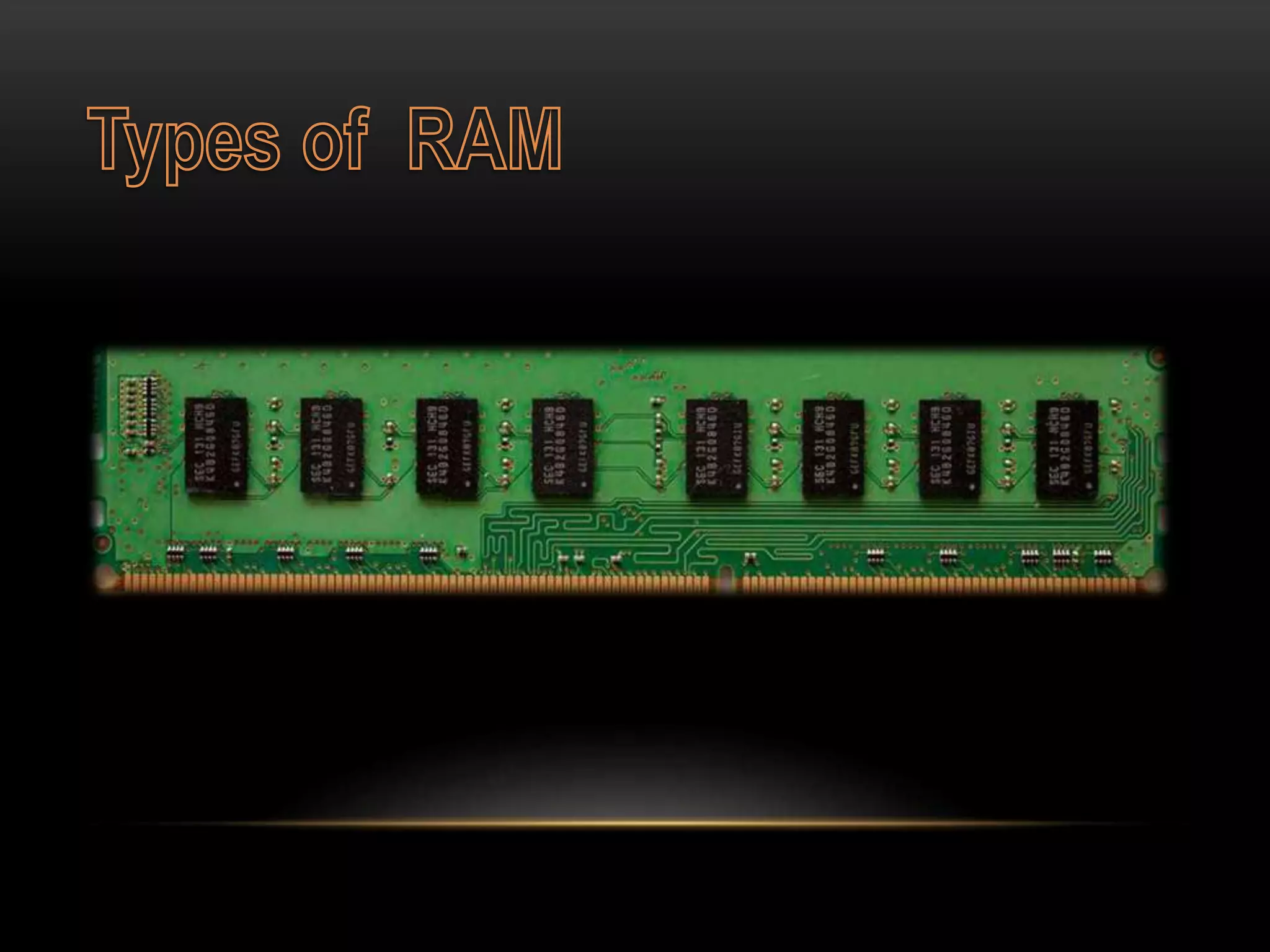
Types of  ram
Types of  ram
Types of  ram

Types of ram

  • 2.
    • There arethree types of RAM : RAM
  • 4.
    Dynamic Random AccessMemory Has memory cells with a paired transistor & capacitor. Each bit data is store in separate capacitor .
  • 5.
    Dynamic Random AccessMemory  Capacitor may be charged or uncharged.  Charging & discharging represent the two values of data (0,1)
  • 6.
    Dynamic Random AccessMemory Types are:
  • 8.
    Static Random AccessMemory Uses multiple transistors for cell. Doesn't have a capacitor in each cell. It is made up of flip flop circuit.  It use voltage to store data.
  • 9.
    Static Random AccessMemory Each SRAM is made of six transistors. Each bit in an SRAM is stored on four transistor or more.
  • 11.
  • 12.
  • 14.
    Magnetoresistive Random Accessmemory  Stores data using magnetic charges instead of electrical charges.
  • 15.
     Greater storagecapacity.  Consumes less power.  Faster access times than electronic RAM.  MRAM retains its contents after power is removed from the computer. Magnetoresistive Random Access memory
  • 16.
    SDRAM – 66Mhz,100Mhz, 133Mhz DDR1 – 266Mhz, 333Mhz, 400Mhz DDR2 – 400Mhz, 533Mhz, 677Mhz, 800Mhz DDR3 – 400Mhz, 533Mhz, 677Mhz, 800Mhz, 933Mhz, 1066Mhz DDR4 – 1600Mhz, 1866Mhz, 2133Mhz, 2400Mhz, 2666Mhz, 3200Mhz, 4266Mhz JEDEC Solid State Technology Association Joint Electron Device Engineering Council 1.5 or 1.65 v 800 and 2400 16 Gb 1.2 v 1600 and 3200 128 Gb