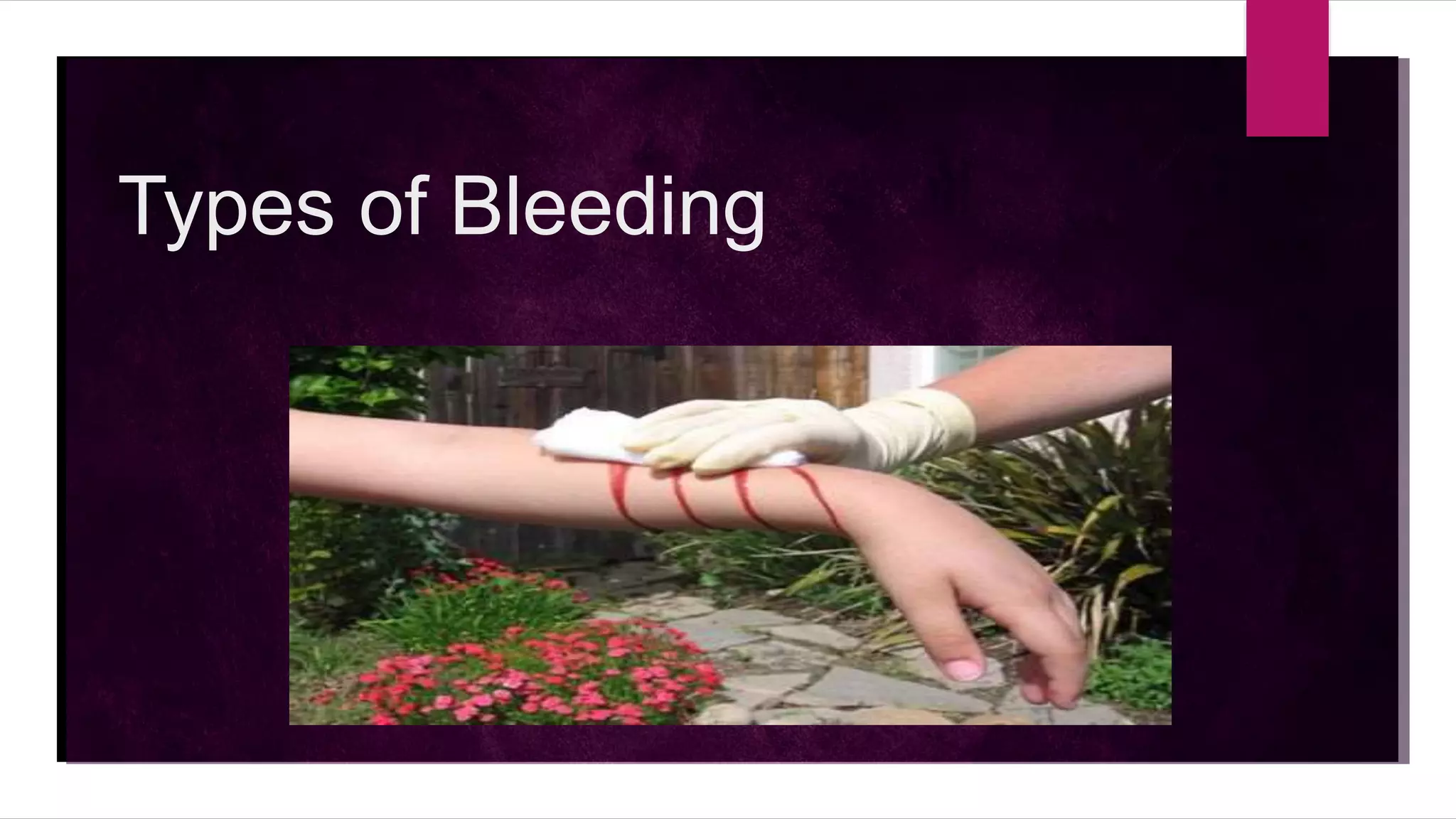

Types of Bleeding
What is bleeding
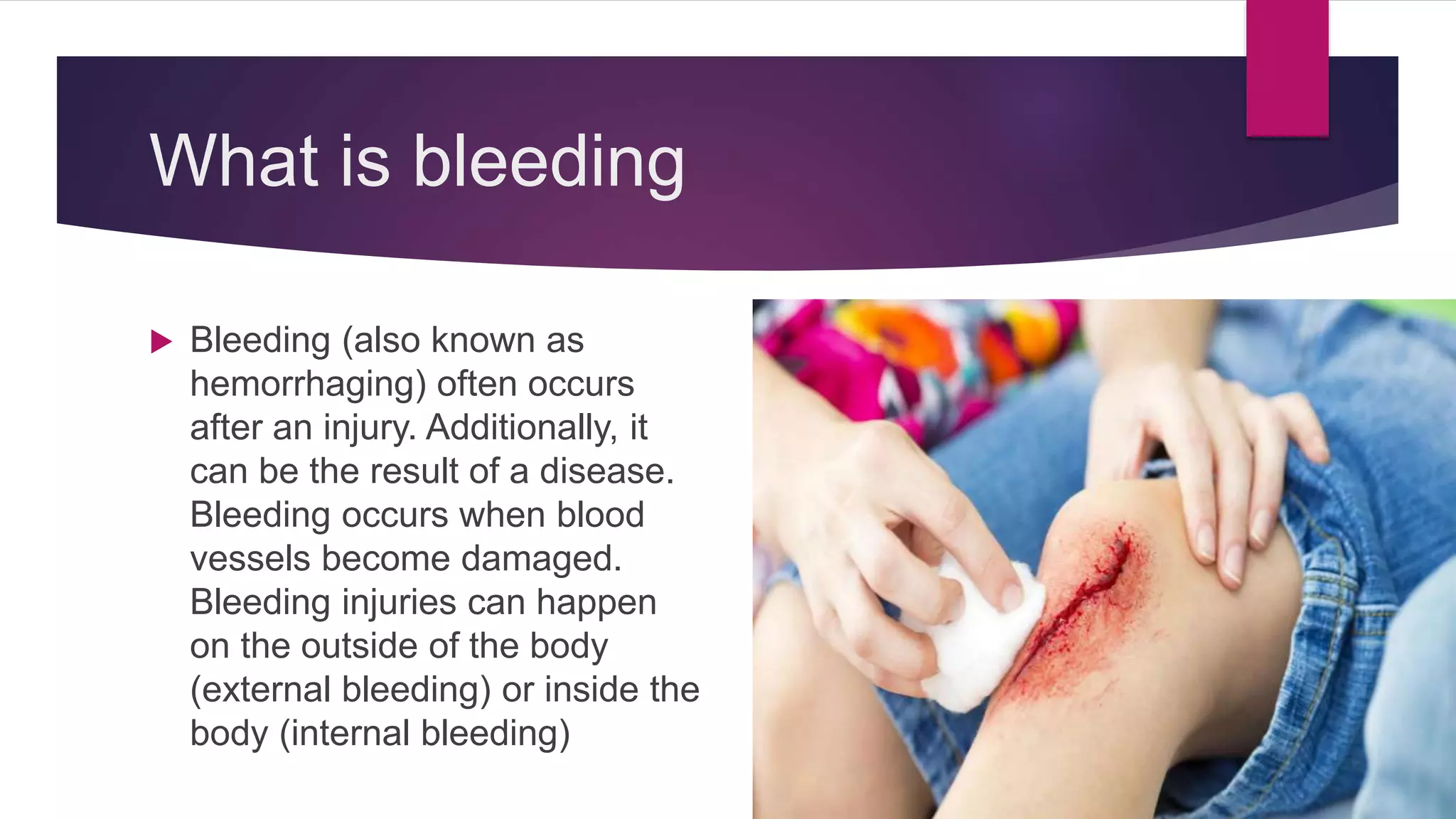
 Bleeding (also known as
hemorrhaging) often occurs
after an injury. Additionally, it
can be the result of a disease.
Bleeding occurs when blood
vessels become damaged.
Bleeding injuries can happen
on the outside of the body
(external bleeding) or inside the
body (internal bleeding)
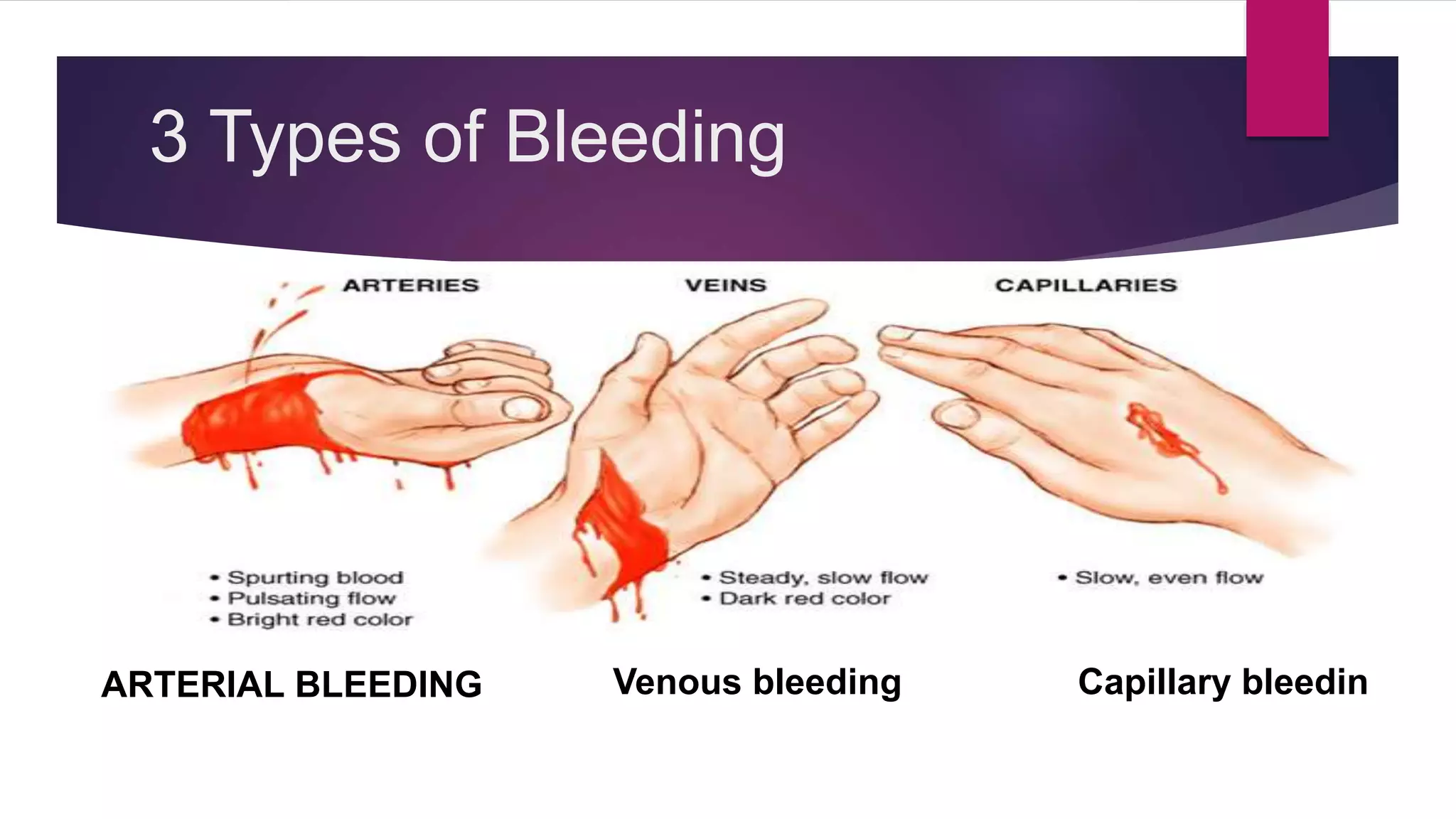
3 Types of Bleeding
ARTERIAL BLEEDING Venous bleeding Capillary bleedin
Arterial bleeding
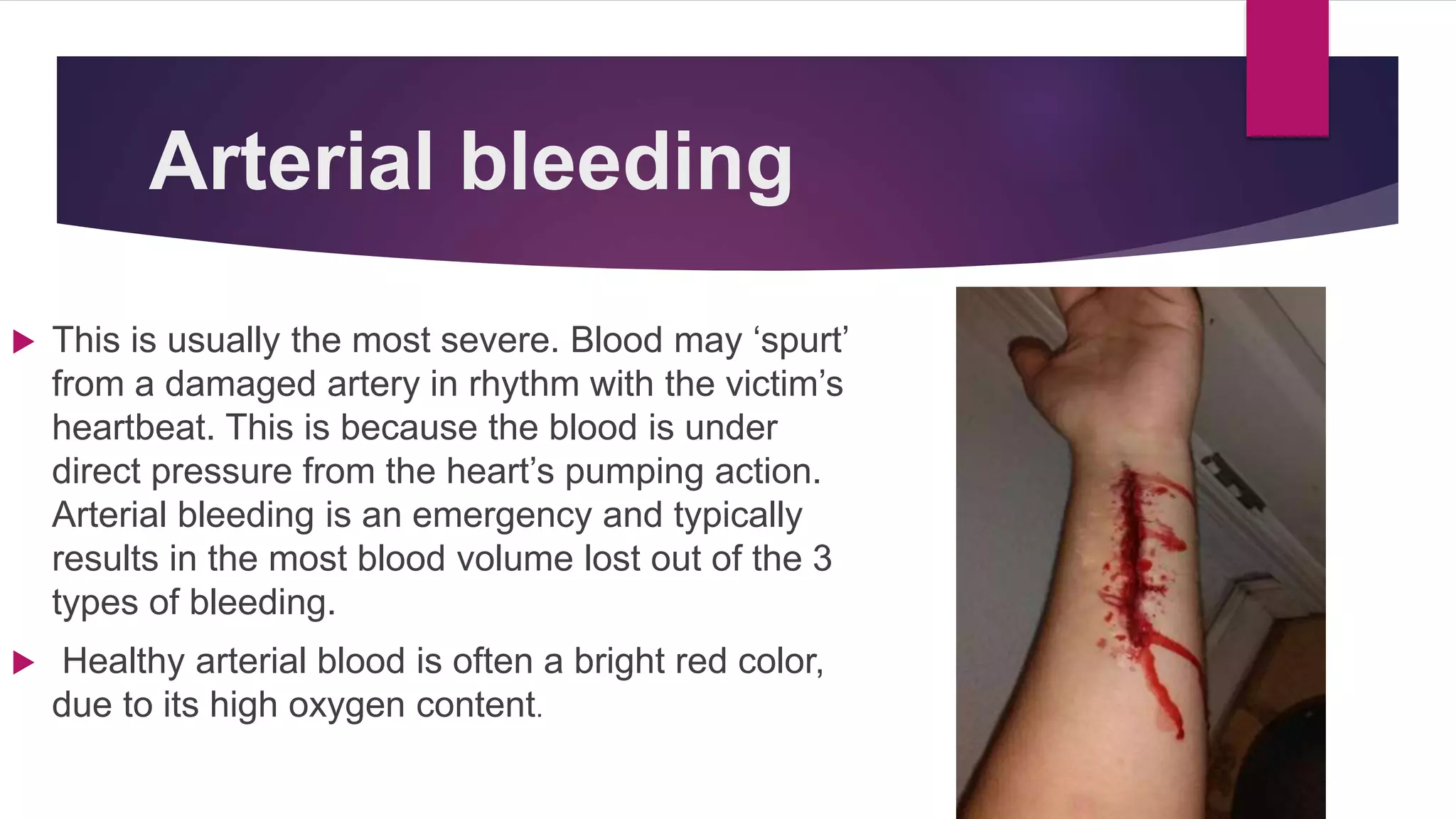
 This is usually the most severe. Blood may ‘spurt’
from a damaged artery in rhythm with the victim’s
heartbeat. This is because the blood is under
direct pressure from the heart’s pumping action.
Arterial bleeding is an emergency and typically
results in the most blood volume lost out of the 3
types of bleeding.
 Healthy arterial blood is often a bright red color,
due to its high oxygen content.
Venous bleeding
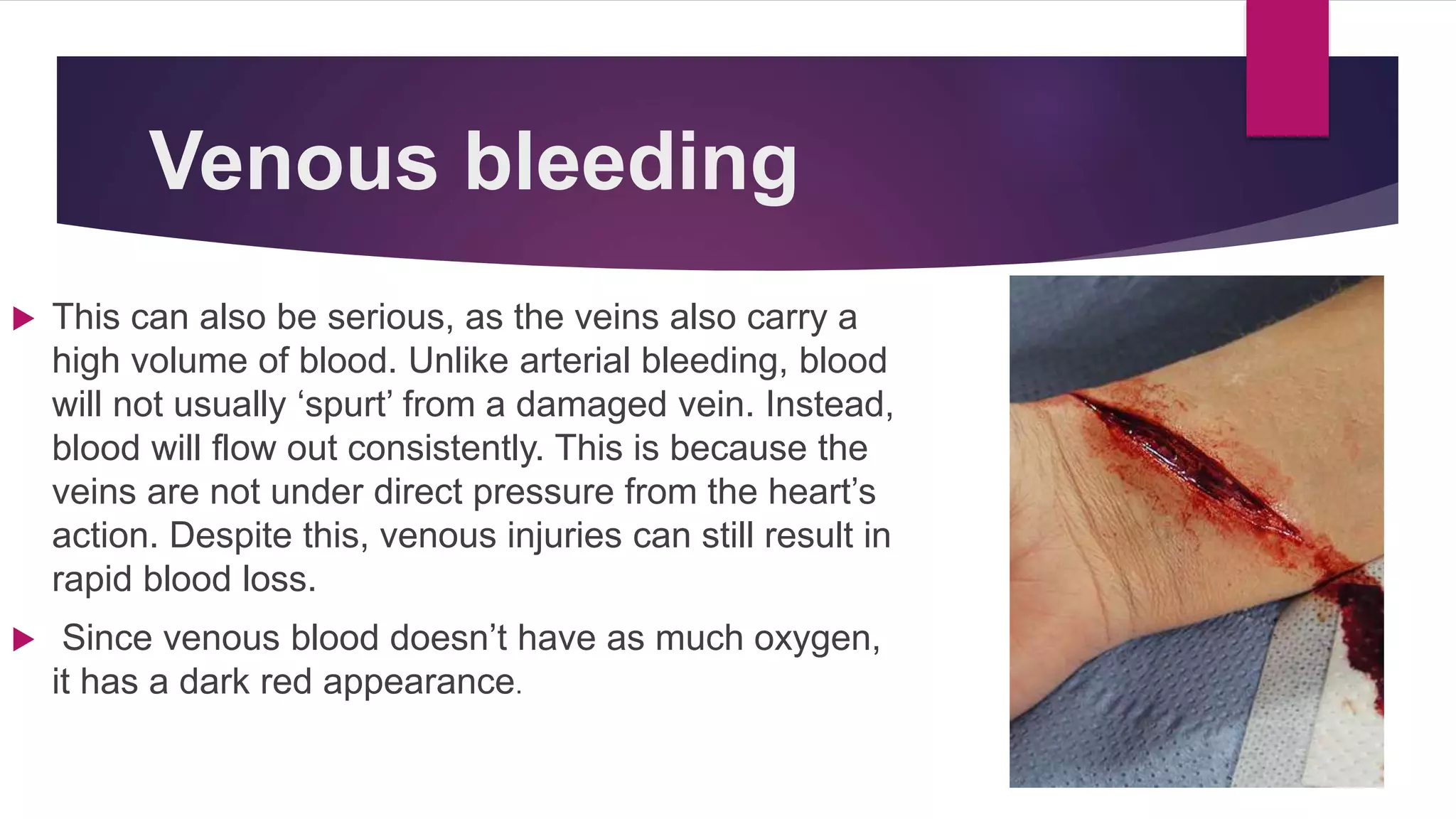
 This can also be serious, as the veins also carry a
high volume of blood. Unlike arterial bleeding, blood
will not usually ‘spurt’ from a damaged vein. Instead,
blood will flow out consistently. This is because the
veins are not under direct pressure from the heart’s
action. Despite this, venous injuries can still result in
rapid blood loss.
 Since venous blood doesn’t have as much oxygen,
it has a dark red appearance.
Capillary bleeding
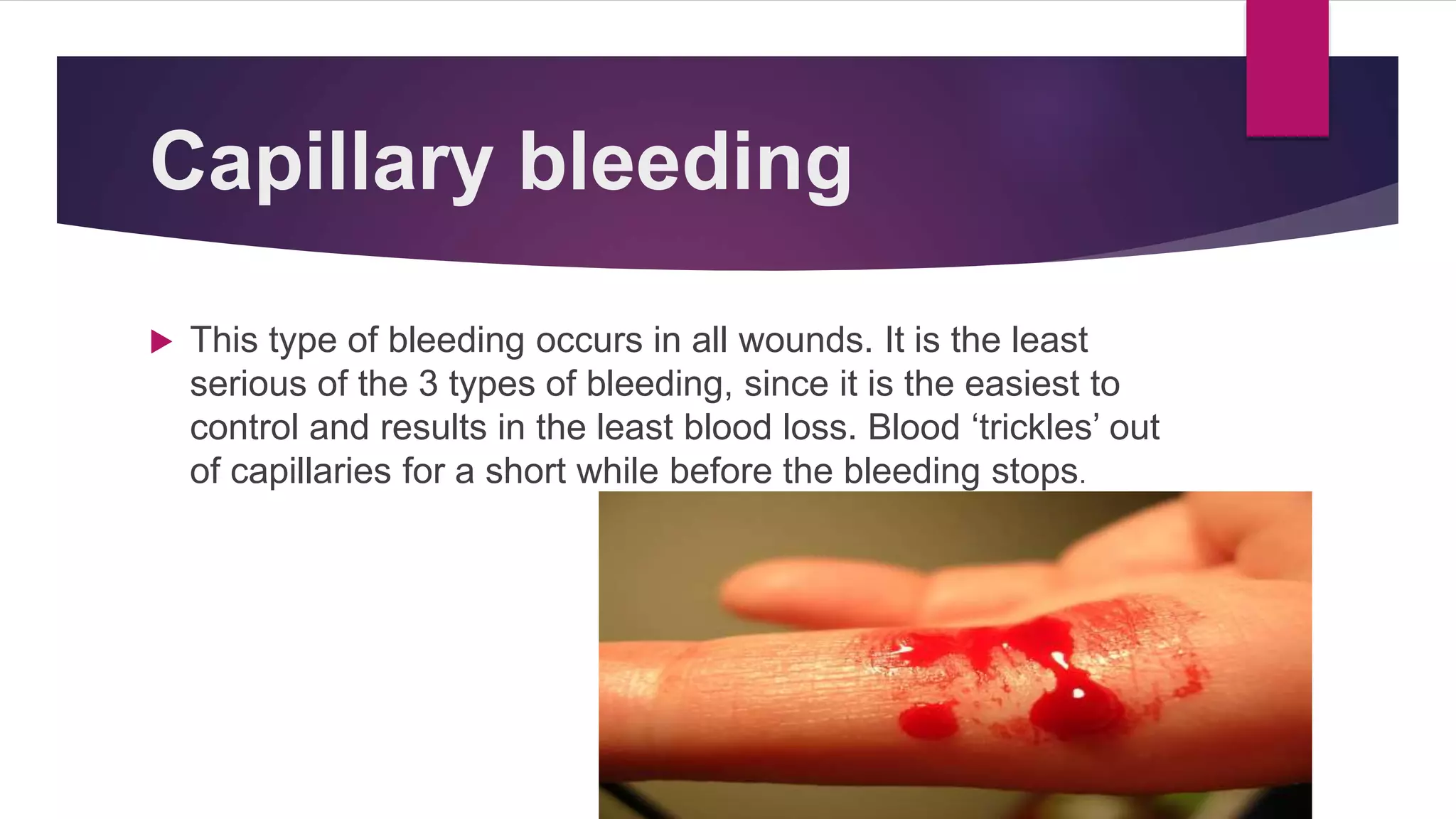
 This type of bleeding occurs in all wounds. It is the least
serious of the 3 types of bleeding, since it is the easiest to
control and results in the least blood loss. Blood ‘trickles’ out
of capillaries for a short while before the bleeding stops.
First Aid For Arterial Bleeding
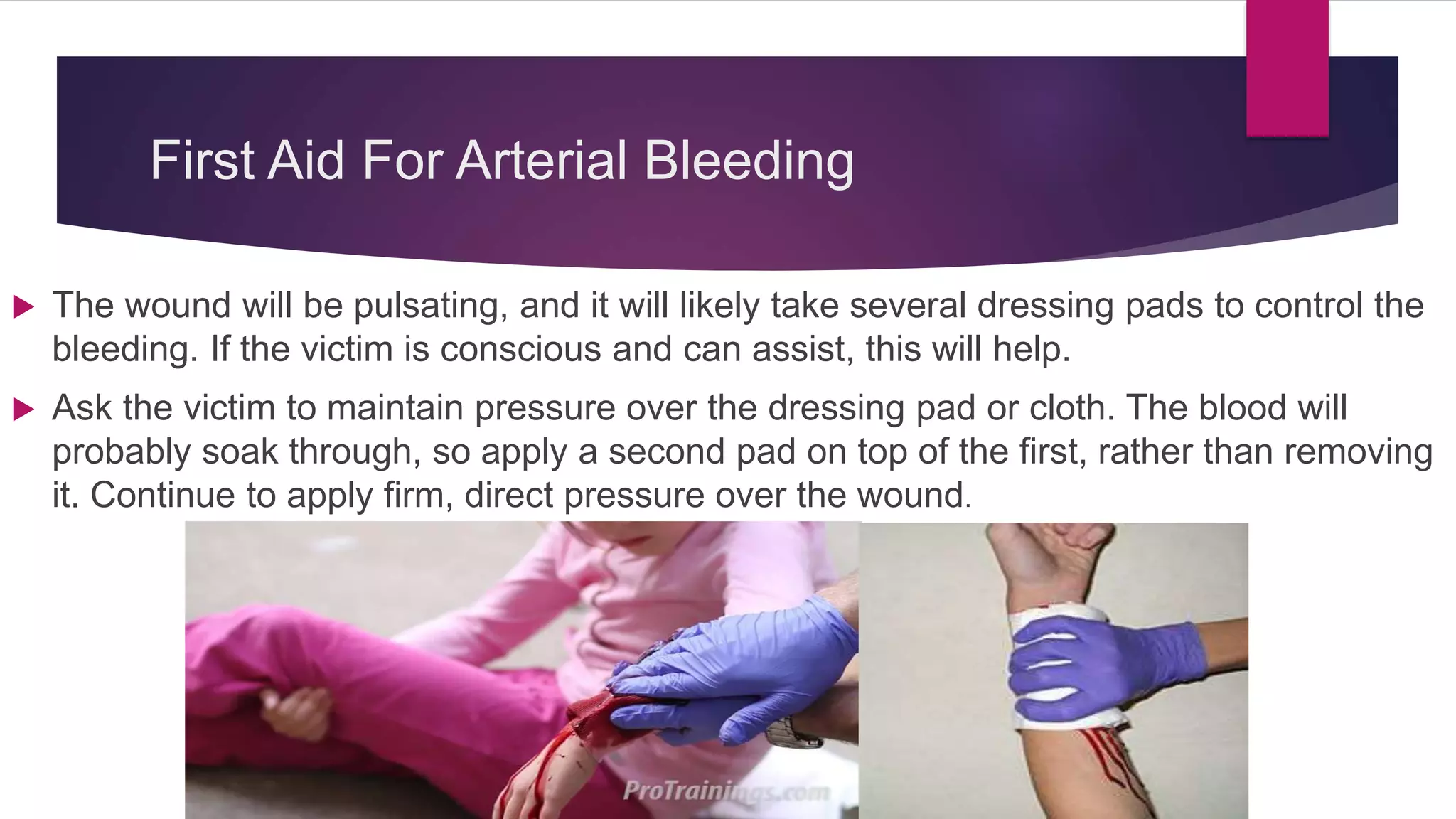
 The wound will be pulsating, and it will likely take several dressing pads to control the
bleeding. If the victim is conscious and can assist, this will help.
 Ask the victim to maintain pressure over the dressing pad or cloth. The blood will
probably soak through, so apply a second pad on top of the first, rather than removing
it. Continue to apply firm, direct pressure over the wound.
First Aid For Arterial Bleeding
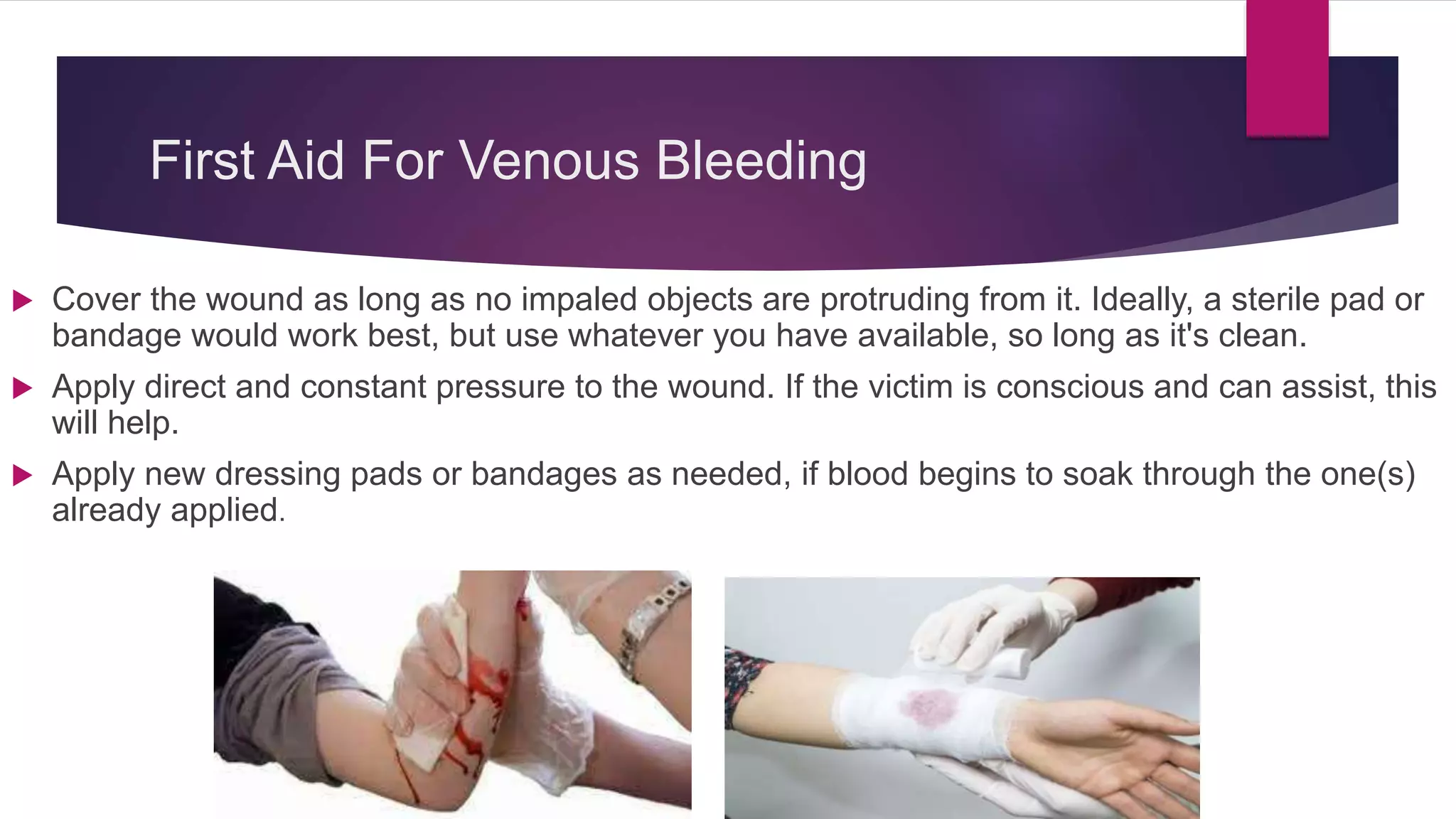
First Aid For Venous Bleeding
 Cover the wound as long as no impaled objects are protruding from it. Ideally, a sterile pad or
bandage would work best, but use whatever you have available, so long as it's clean.
 Apply direct and constant pressure to the wound. If the victim is conscious and can assist, this
will help.
 Apply new dressing pads or bandages as needed, if blood begins to soak through the one(s)
already applied.
First Aid For Venous Bleeding
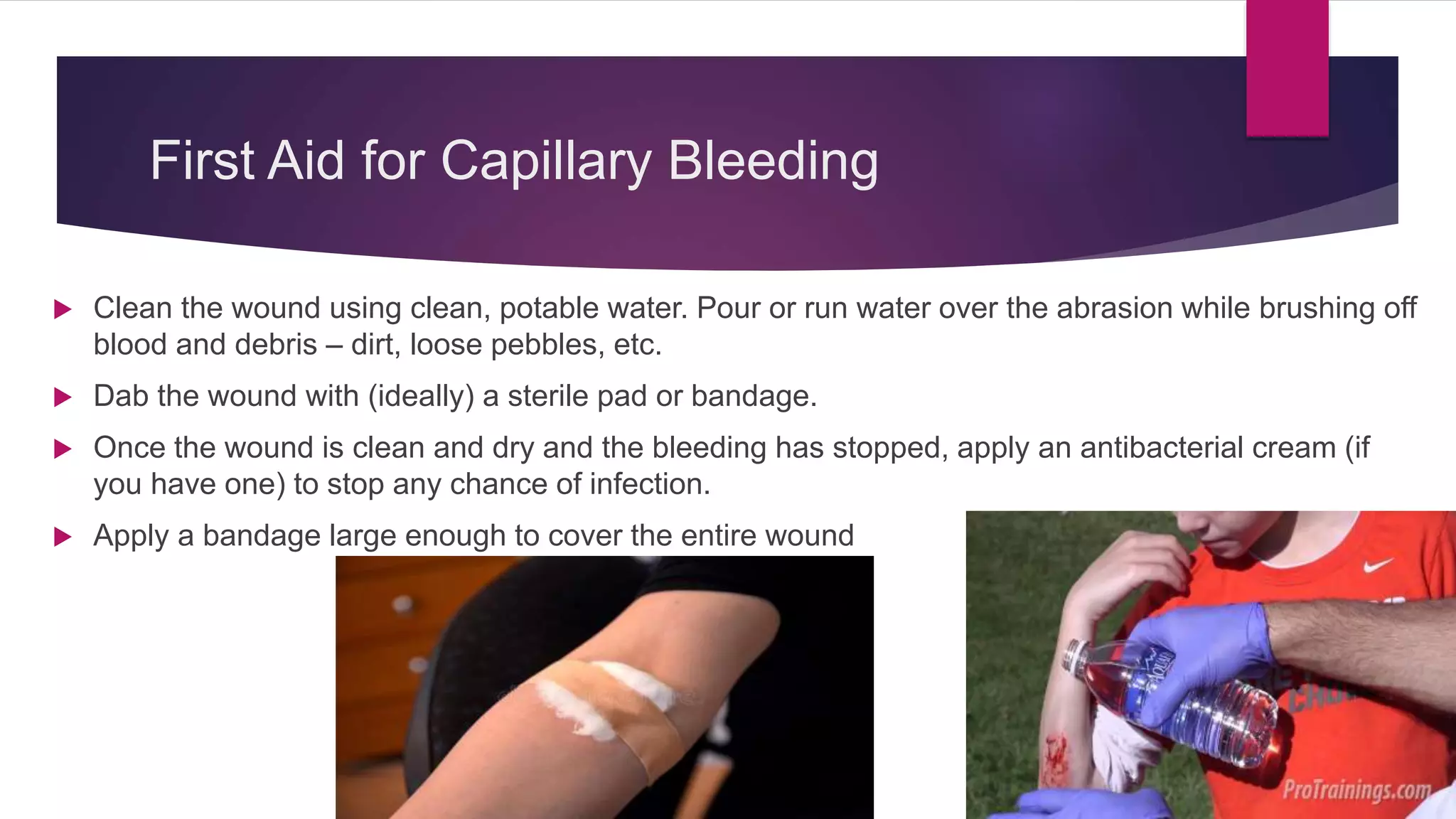
First Aid for Capillary Bleeding
 Clean the wound using clean, potable water. Pour or run water over the abrasion while brushing off
blood and debris – dirt, loose pebbles, etc.
 Dab the wound with (ideally) a sterile pad or bandage.
 Once the wound is clean and dry and the bleeding has stopped, apply an antibacterial cream (if
you have one) to stop any chance of infection.
 Apply a bandage large enough to cover the entire wound
First Aid For Capillary Bleeding
Types of bleeding ppt

Types of bleeding ppt

  • 1.
  • 2.
    What is bleeding Bleeding (also known as hemorrhaging) often occurs after an injury. Additionally, it can be the result of a disease. Bleeding occurs when blood vessels become damaged. Bleeding injuries can happen on the outside of the body (external bleeding) or inside the body (internal bleeding)
  • 3.
    3 Types ofBleeding ARTERIAL BLEEDING Venous bleeding Capillary bleedin
  • 4.
    Arterial bleeding  Thisis usually the most severe. Blood may ‘spurt’ from a damaged artery in rhythm with the victim’s heartbeat. This is because the blood is under direct pressure from the heart’s pumping action. Arterial bleeding is an emergency and typically results in the most blood volume lost out of the 3 types of bleeding.  Healthy arterial blood is often a bright red color, due to its high oxygen content.
  • 5.
    Venous bleeding  Thiscan also be serious, as the veins also carry a high volume of blood. Unlike arterial bleeding, blood will not usually ‘spurt’ from a damaged vein. Instead, blood will flow out consistently. This is because the veins are not under direct pressure from the heart’s action. Despite this, venous injuries can still result in rapid blood loss.  Since venous blood doesn’t have as much oxygen, it has a dark red appearance.
  • 6.
    Capillary bleeding  Thistype of bleeding occurs in all wounds. It is the least serious of the 3 types of bleeding, since it is the easiest to control and results in the least blood loss. Blood ‘trickles’ out of capillaries for a short while before the bleeding stops.
  • 7.
    First Aid ForArterial Bleeding  The wound will be pulsating, and it will likely take several dressing pads to control the bleeding. If the victim is conscious and can assist, this will help.  Ask the victim to maintain pressure over the dressing pad or cloth. The blood will probably soak through, so apply a second pad on top of the first, rather than removing it. Continue to apply firm, direct pressure over the wound.
  • 8.
    First Aid ForArterial Bleeding
  • 9.
    First Aid ForVenous Bleeding  Cover the wound as long as no impaled objects are protruding from it. Ideally, a sterile pad or bandage would work best, but use whatever you have available, so long as it's clean.  Apply direct and constant pressure to the wound. If the victim is conscious and can assist, this will help.  Apply new dressing pads or bandages as needed, if blood begins to soak through the one(s) already applied.
  • 10.
    First Aid ForVenous Bleeding
  • 11.
    First Aid forCapillary Bleeding  Clean the wound using clean, potable water. Pour or run water over the abrasion while brushing off blood and debris – dirt, loose pebbles, etc.  Dab the wound with (ideally) a sterile pad or bandage.  Once the wound is clean and dry and the bleeding has stopped, apply an antibacterial cream (if you have one) to stop any chance of infection.  Apply a bandage large enough to cover the entire wound
  • 12.
    First Aid ForCapillary Bleeding