Pyramidal system
Keshav Kumar Panwar[Group 9]
2nd year 1st Semester
Kursk State Medical University
Motor System : The Pyramidal Tract
1.Intro
2.Origin
3.Structure
4.Function
5. Corticobulbar tract
6. Corticospinal tract
7. Clinical significance
• Pyramidal tracts – These tracts originate in the cerebral cortex, carrying
motor fibres to the spinal cord and brain stem. They are responsible for
the voluntary control of the muscle of the body and face..
• Consists of two tracts:
1) Corticospinal
2) Corticobulbar
• Fibers of 1 and 2 terminate on sensory neurons, interneurons and motor
neurons.
• PT provides the central control for beginning the skilled motor
movements.
• PT also has effects on myotatic reflexes, muscle tone and Cutaneous
reflexes.
Introduction
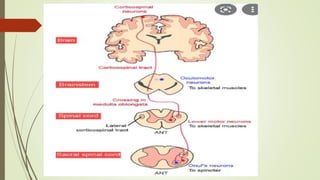
• The pyramidal tract originates from the cerebral cortex
and it divides into two main tracts (Corticospinal tract and
Corticobulbar tract).
• Each of these tracts carry efferent signals to either the
spinal cord or the brainstem
• Nerve fibres in the corticospinal tract originate from
pyramidal cells in layer V of the cerebral cortex.
Origin
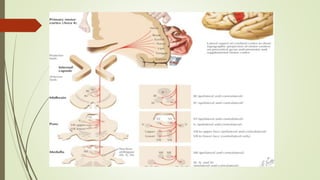
• Nerves emerge in the cerebral cortex, pass down
and may cross sides in the medulla oblongata, and
travel as part of the spinal cord until
they synapse with interneurons in the grey
column of the spinal cord.
• There is some variation in terminology.
• The pyramidal tracts definitively encompass
the corticospinal tracts, and many authors also
include the corticobulbar tracts.
Structure
• The corticobulbar (or corticonuclear) tract is a two-
neuron white matter motor pathway connecting
the motor cortex in the cerebral cortex to
the medullary pyramids, which are part of
the brainstem's medulla oblongata (also called
"bulbar") region and primarily involved in carrying
the motor function of the non-oculomotor cranial
nerves.
• The corticobulbar tract is one of the pyramidal tracts,
the other being the corticospinal tract.
Corticobulbar tract
• The Corticospinal tract (CST) also known as
the pyramidal tract, is a collection of axons that
carry movement-related information from the
cerebral cortex to the spinal cord.
• It forms part of the descending spinal tract
system that originate from the cortex
or brainstem.
Corticospinal tract
Clinical significance
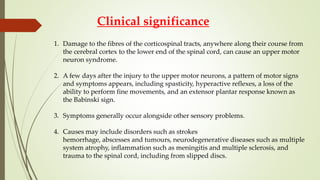
1. Damage to the fibres of the corticospinal tracts, anywhere along their course from
the cerebral cortex to the lower end of the spinal cord, can cause an upper motor
neuron syndrome.
2. A few days after the injury to the upper motor neurons, a pattern of motor signs
and symptoms appears, including spasticity, hyperactive reflexes, a loss of the
ability to perform fine movements, and an extensor plantar response known as
the Babinski sign.
3. Symptoms generally occur alongside other sensory problems.
4. Causes may include disorders such as strokes
hemorrhage, abscesses and tumours, neurodegenerative diseases such as multiple
system atrophy, inflammation such as meningitis and multiple sclerosis, and
trauma to the spinal cord, including from slipped discs.
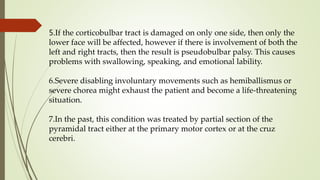
5.If the corticobulbar tract is damaged on only one side, then only the
lower face will be affected, however if there is involvement of both the
left and right tracts, then the result is pseudobulbar palsy. This causes
problems with swallowing, speaking, and emotional lability.
6.Severe disabling involuntary movements such as hemiballismus or
severe chorea might exhaust the patient and become a life-threatening
situation.
7.In the past, this condition was treated by partial section of the
pyramidal tract either at the primary motor cortex or at the cruz
cerebri.
Pyramidal system Keshav Kumar Panwar.pptx

Pyramidal system Keshav Kumar Panwar.pptx

  • 1.
    Pyramidal system Keshav KumarPanwar[Group 9] 2nd year 1st Semester Kursk State Medical University
  • 2.
    Motor System :The Pyramidal Tract 1.Intro 2.Origin 3.Structure 4.Function 5. Corticobulbar tract 6. Corticospinal tract 7. Clinical significance
  • 3.
    • Pyramidal tracts– These tracts originate in the cerebral cortex, carrying motor fibres to the spinal cord and brain stem. They are responsible for the voluntary control of the muscle of the body and face.. • Consists of two tracts: 1) Corticospinal 2) Corticobulbar • Fibers of 1 and 2 terminate on sensory neurons, interneurons and motor neurons. • PT provides the central control for beginning the skilled motor movements. • PT also has effects on myotatic reflexes, muscle tone and Cutaneous reflexes. Introduction
  • 4.
    • The pyramidaltract originates from the cerebral cortex and it divides into two main tracts (Corticospinal tract and Corticobulbar tract). • Each of these tracts carry efferent signals to either the spinal cord or the brainstem • Nerve fibres in the corticospinal tract originate from pyramidal cells in layer V of the cerebral cortex. Origin
  • 5.
    • Nerves emergein the cerebral cortex, pass down and may cross sides in the medulla oblongata, and travel as part of the spinal cord until they synapse with interneurons in the grey column of the spinal cord. • There is some variation in terminology. • The pyramidal tracts definitively encompass the corticospinal tracts, and many authors also include the corticobulbar tracts. Structure
  • 6.
    • The corticobulbar(or corticonuclear) tract is a two- neuron white matter motor pathway connecting the motor cortex in the cerebral cortex to the medullary pyramids, which are part of the brainstem's medulla oblongata (also called "bulbar") region and primarily involved in carrying the motor function of the non-oculomotor cranial nerves. • The corticobulbar tract is one of the pyramidal tracts, the other being the corticospinal tract. Corticobulbar tract
  • 7.
    • The Corticospinaltract (CST) also known as the pyramidal tract, is a collection of axons that carry movement-related information from the cerebral cortex to the spinal cord. • It forms part of the descending spinal tract system that originate from the cortex or brainstem. Corticospinal tract
  • 10.
    Clinical significance 1. Damageto the fibres of the corticospinal tracts, anywhere along their course from the cerebral cortex to the lower end of the spinal cord, can cause an upper motor neuron syndrome. 2. A few days after the injury to the upper motor neurons, a pattern of motor signs and symptoms appears, including spasticity, hyperactive reflexes, a loss of the ability to perform fine movements, and an extensor plantar response known as the Babinski sign. 3. Symptoms generally occur alongside other sensory problems. 4. Causes may include disorders such as strokes hemorrhage, abscesses and tumours, neurodegenerative diseases such as multiple system atrophy, inflammation such as meningitis and multiple sclerosis, and trauma to the spinal cord, including from slipped discs.
  • 11.
    5.If the corticobulbartract is damaged on only one side, then only the lower face will be affected, however if there is involvement of both the left and right tracts, then the result is pseudobulbar palsy. This causes problems with swallowing, speaking, and emotional lability. 6.Severe disabling involuntary movements such as hemiballismus or severe chorea might exhaust the patient and become a life-threatening situation. 7.In the past, this condition was treated by partial section of the pyramidal tract either at the primary motor cortex or at the cruz cerebri.