 Blood circulates in blood vessels (arteries, veins, and
capillaries). When a blood vessel is damaged, several
mechanisms are activated to control blood loss: the vessel
constricts, and a series of chemical reactions occur to form
a blood clot as a “plug” over the damaged area.
 If blood vessels are torn or severed, uncontrolled blood
loss may occur before clotting can take place, and shock
may develop.
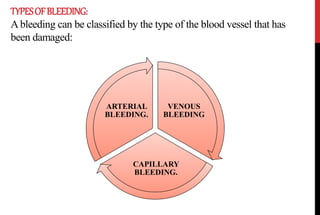
TYPESOFBLEEDING:
Ableeding can be classified by the type of the blood vessel that has
been damaged:
VENOUS
BLEEDING
CAPILLARY
BLEEDING.
ARTERIAL
BLEEDING.
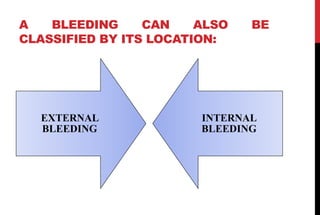
A BLEEDING CAN ALSO BE
CLASSIFIED BY ITS LOCATION:
EXTERNAL
BLEEDING
INTERNAL
BLEEDING
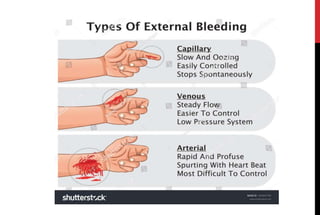
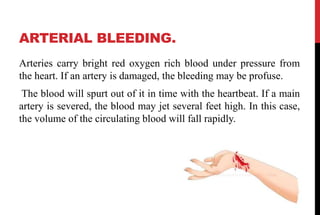
ARTERIAL BLEEDING.
Arteries carry bright red oxygen rich blood under pressure from
the heart. If an artery is damaged, the bleeding may be profuse.
The blood will spurt out of it in time with the heartbeat. If a main
artery is severed, the blood may jet several feet high. In this case,
the volume of the circulating blood will fall rapidly.
VENOUS BLEEDING
The blood in the veins, having given up its oxygen into the
tissues, is dark red. The blood flows under less pressure than
arterial blood, but the vein walls can widen greatly and the
blood can ‘pool’ inside them. If a major vein is damaged, the
blood may gush from it profusely.
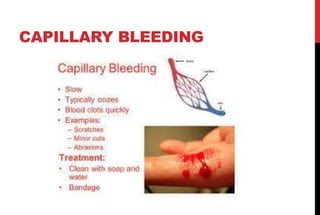
CAPILLARY BLEEDING
CONTI…
Bleeding from the capillaries occurs with any wound. At first
the bleeding may be brisk, but blood loss is usually slight. A
blow may rupture capillaries under the skin, causing bleeding
into the tissues (bruising).
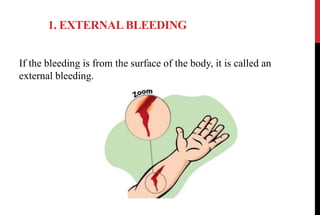
1. EXTERNAL BLEEDING
If the bleeding is from the surface of the body, it is called an
external bleeding.
INTERNAL BLEEDING
If the bleeding is within the skull, chest and abdomen or
inside the body, it is called an internal bleeding.
These bleedings might not been noticed immediately. At a
later stage, blood might ooze out of the nose or ears (bleeding
inside the head), be coughed up (bleeding inside the lungs),
vomited or defecated (bleeding inside the digestive tract) or
urinated out (bleeding inside the urinary tract).
WHAT DO I SEE AND
ENQUIRE?
A person who has an injury which is bleeding severely is in a life-threatening situation
and needs immediate help. Therefore, stopping the bleeding is a core first aid activity.
In addition, bleeding in the face or neck may impede the air flow to the lungs.
There might be an open wound that is bleeding.
The bleeding might be profuse.
There might be an object stuck in the wound. Even if you cannot see an object, there
might be something stuck in the wound if:
 The Injured Feels Pain In A Specific Area;
 The Injured Person Reveals A Painful Lump;
 The Injured Person Feels There Is Something Stuck In The Wound;
 There Is A Discolored Area Where The Pain Is.

BLEEDING (2).pptx

  • 2.
     Blood circulatesin blood vessels (arteries, veins, and capillaries). When a blood vessel is damaged, several mechanisms are activated to control blood loss: the vessel constricts, and a series of chemical reactions occur to form a blood clot as a “plug” over the damaged area.  If blood vessels are torn or severed, uncontrolled blood loss may occur before clotting can take place, and shock may develop.
  • 3.
    TYPESOFBLEEDING: Ableeding can beclassified by the type of the blood vessel that has been damaged: VENOUS BLEEDING CAPILLARY BLEEDING. ARTERIAL BLEEDING.
  • 4.
    A BLEEDING CANALSO BE CLASSIFIED BY ITS LOCATION: EXTERNAL BLEEDING INTERNAL BLEEDING
  • 6.
    ARTERIAL BLEEDING. Arteries carrybright red oxygen rich blood under pressure from the heart. If an artery is damaged, the bleeding may be profuse. The blood will spurt out of it in time with the heartbeat. If a main artery is severed, the blood may jet several feet high. In this case, the volume of the circulating blood will fall rapidly.
  • 7.
    VENOUS BLEEDING The bloodin the veins, having given up its oxygen into the tissues, is dark red. The blood flows under less pressure than arterial blood, but the vein walls can widen greatly and the blood can ‘pool’ inside them. If a major vein is damaged, the blood may gush from it profusely.
  • 8.
  • 9.
    CONTI… Bleeding from thecapillaries occurs with any wound. At first the bleeding may be brisk, but blood loss is usually slight. A blow may rupture capillaries under the skin, causing bleeding into the tissues (bruising).
  • 10.
    1. EXTERNAL BLEEDING Ifthe bleeding is from the surface of the body, it is called an external bleeding.
  • 11.
    INTERNAL BLEEDING If thebleeding is within the skull, chest and abdomen or inside the body, it is called an internal bleeding. These bleedings might not been noticed immediately. At a later stage, blood might ooze out of the nose or ears (bleeding inside the head), be coughed up (bleeding inside the lungs), vomited or defecated (bleeding inside the digestive tract) or urinated out (bleeding inside the urinary tract).
  • 12.
    WHAT DO ISEE AND ENQUIRE? A person who has an injury which is bleeding severely is in a life-threatening situation and needs immediate help. Therefore, stopping the bleeding is a core first aid activity. In addition, bleeding in the face or neck may impede the air flow to the lungs. There might be an open wound that is bleeding. The bleeding might be profuse. There might be an object stuck in the wound. Even if you cannot see an object, there might be something stuck in the wound if:  The Injured Feels Pain In A Specific Area;  The Injured Person Reveals A Painful Lump;  The Injured Person Feels There Is Something Stuck In The Wound;  There Is A Discolored Area Where The Pain Is.