First Aid & Safety
Airway obstruction
(CHOKING)
Prepared By
Dr. Zuhair Rushdi Mustafa
Lecturer at University of Duhok/ College of
Nursing
Airway Obstructions
 In order for oxygen from the air to flow and
return from the lungs, the upper airway must
be unobstructed.
 CHOKING
Choking is the mechanical obstruction of the flow
of air from the environment into the lungs.
 Choking occurs when an object gets stuck in
the throat and partly or completely blocks the
airway
Upper airway obstructions often occur because
(causes)—
1. The most common cause of airway
obstruction is the tongue. The casualty’s tongue
falls back into his throat while he is unconscious.
Obstructed Airway
open
closed
obstructed
Tongue
2. Foreign bodies become stuck in the throat.
These obstructions usually occur while eating.
Causes
-Choking on food (usually meat) is associated
with—
a. Attempting to swallow large pieces of poorly
chewed food.
b. Drinking alcohol.
c. Slipping dentures.
3. The contents of the stomach are regurgitated
and may block the airway.
4. Blood clots may form as a result of head and
facial injuries.
5. Respiratory diseases like cancer of larynx.
Upper airway obstruction may cause either
partial or complete airway blockage.
 Partial airway obstruction.
In this case, the casualty may still have an air
exchange.
A good air exchange means that the casualty
can cough forcefully, although he may be
wheezing between coughs.
 Important Notes
 Do not interfere or treat with any choking
victim who is able to cough or speak.
 Coughing is the most effective way to clear a
foreign body from the airway, and the ability to
speak indicates that adequate ventilation is still
occurring.
 You, the rescuer, should encourage the
casualty to cough up the object obstructing his
airway on his own.
 Complete airway obstruction.
 A complete obstruction (no air exchange) is
indicated if the casualty cannot speak, breathe,
or cough at all.
 He may be grasping his neck and moving
irregularly.
 First aid for chocking is crucial for this type of
obstruction.
Obstructed Airway (choking)
Signs Symptoms:
1. Unable to breath, speak or cough due to obstruction
2. Face turns blue from lack of oxygen
3. Distress, and panic.
4. Victim wrapped Hands around the neck
(Universal sign)
5. Wheezing, gagging, ineffective coughing
6. If not treated, lead to unconsciousness
Treatment of Airway obstruction (choking)
More than one technique may be needed in
removing a severe obstruction include:
1. abdominal thrusts
2. chest thrusts
 Clearing a conscious casualty’s airway
obstruction can be performed with the casualty
either standing or sitting.
Abdominal thrusts (Heimlich maneuver) For
conscious victim:
Procedure
1. If the casualty is breathing, encourage hem to
continue coughing. If he is not coughing and not
able to breathe, this means he is choking. Go to
step 2.
2. Ask the victim, are you chocking? If yes,
Start Abdominal thrusts.
3. Standing behind the casualty
with one leg back and the
other between the casualty’s
legs and put both arms around
the upper part of her abdomen.
And tip the person slightly
forward
4. Make a fist with one hand and grasp it with
the other. The fist should be touching the
casualty’s abdomen, slightly above the
casualty’s navel, below the tip of the breastbone
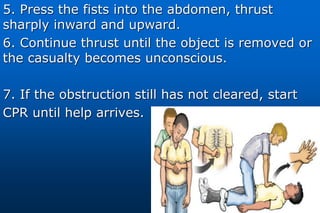
5. Press the fists into the abdomen, thrust
sharply inward and upward.
6. Continue thrust until the object is removed or
the casualty becomes unconscious.
7. If the obstruction still has not cleared, start
CPR until help arrives.
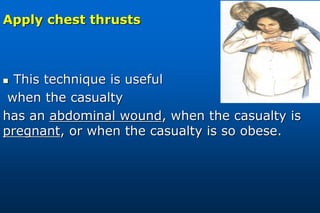
Apply chest thrusts
 This technique is useful
when the casualty
has an abdominal wound, when the casualty is
pregnant, or when the casualty is so obese.
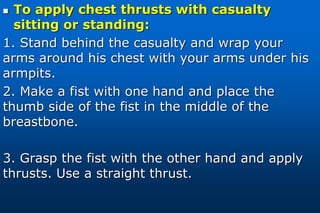
 To apply chest thrusts with casualty
sitting or standing:
1. Stand behind the casualty and wrap your
arms around his chest with your arms under his
armpits.
2. Make a fist with one hand and place the
thumb side of the fist in the middle of the
breastbone.
3. Grasp the fist with the other hand and apply
thrusts. Use a straight thrust.
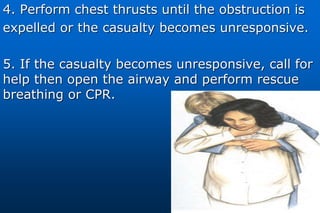
4. Perform chest thrusts until the obstruction is
expelled or the casualty becomes unresponsive.
5. If the casualty becomes unresponsive, call for
help then open the airway and perform rescue
breathing or CPR.
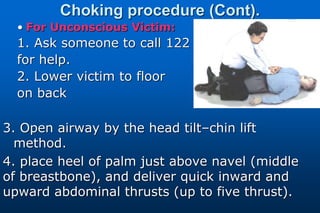
Choking procedure (Cont).
• For Unconscious Victim:
1. Ask someone to call 122
for help.
2. Lower victim to floor
on back
3. Open airway by the head tilt–chin lift
method.
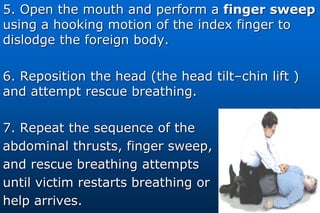
4. place heel of palm just above navel (middle
of breastbone), and deliver quick inward and
upward abdominal thrusts (up to five thrust).
5. Open the mouth and perform a finger sweep
using a hooking motion of the index finger to
dislodge the foreign body.
6. Reposition the head (the head tilt–chin lift )
and attempt rescue breathing.
7. Repeat the sequence of the
abdominal thrusts, finger sweep,
and rescue breathing attempts
until victim restarts breathing or
help arrives.
 The steps to perform the Heimlich
maneuver on yourself if you are choking
are:
1. Place your fist just slightly above your navel.
2. Grasp your fist with your other hand, bend
over a hard surface like a chair or table, and
thrust your fist inward and upward.
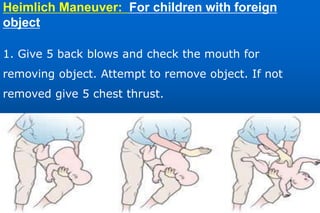
Heimlich Maneuver: For children with foreign
object
1. Give 5 back blows and check the mouth for
removing object. Attempt to remove object. If not
removed give 5 chest thrust.
2. continue 3 cycles of 5 back blows and 5 chest
thrust
3. If unsuccessful, call the ambulance or emergency
help.
3. Continue 5 back blows and 5 chest thrusts until the
object is removed or emergency help arrives.
4. If the baby become unconscious, start CPR.

Choking

  • 1.
    First Aid &Safety Airway obstruction (CHOKING) Prepared By Dr. Zuhair Rushdi Mustafa Lecturer at University of Duhok/ College of Nursing
  • 2.
    Airway Obstructions  Inorder for oxygen from the air to flow and return from the lungs, the upper airway must be unobstructed.  CHOKING Choking is the mechanical obstruction of the flow of air from the environment into the lungs.  Choking occurs when an object gets stuck in the throat and partly or completely blocks the airway
  • 3.
    Upper airway obstructionsoften occur because (causes)— 1. The most common cause of airway obstruction is the tongue. The casualty’s tongue falls back into his throat while he is unconscious.
  • 4.
  • 5.
    2. Foreign bodiesbecome stuck in the throat. These obstructions usually occur while eating. Causes -Choking on food (usually meat) is associated with— a. Attempting to swallow large pieces of poorly chewed food. b. Drinking alcohol. c. Slipping dentures.
  • 6.
    3. The contentsof the stomach are regurgitated and may block the airway. 4. Blood clots may form as a result of head and facial injuries. 5. Respiratory diseases like cancer of larynx.
  • 7.
    Upper airway obstructionmay cause either partial or complete airway blockage.  Partial airway obstruction. In this case, the casualty may still have an air exchange. A good air exchange means that the casualty can cough forcefully, although he may be wheezing between coughs.
  • 8.
     Important Notes Do not interfere or treat with any choking victim who is able to cough or speak.  Coughing is the most effective way to clear a foreign body from the airway, and the ability to speak indicates that adequate ventilation is still occurring.  You, the rescuer, should encourage the casualty to cough up the object obstructing his airway on his own.
  • 9.
     Complete airwayobstruction.  A complete obstruction (no air exchange) is indicated if the casualty cannot speak, breathe, or cough at all.  He may be grasping his neck and moving irregularly.  First aid for chocking is crucial for this type of obstruction.
  • 10.
    Obstructed Airway (choking) SignsSymptoms: 1. Unable to breath, speak or cough due to obstruction 2. Face turns blue from lack of oxygen 3. Distress, and panic. 4. Victim wrapped Hands around the neck (Universal sign) 5. Wheezing, gagging, ineffective coughing 6. If not treated, lead to unconsciousness
  • 11.
    Treatment of Airwayobstruction (choking) More than one technique may be needed in removing a severe obstruction include: 1. abdominal thrusts 2. chest thrusts  Clearing a conscious casualty’s airway obstruction can be performed with the casualty either standing or sitting.
  • 12.
    Abdominal thrusts (Heimlichmaneuver) For conscious victim: Procedure 1. If the casualty is breathing, encourage hem to continue coughing. If he is not coughing and not able to breathe, this means he is choking. Go to step 2. 2. Ask the victim, are you chocking? If yes, Start Abdominal thrusts.
  • 13.
    3. Standing behindthe casualty with one leg back and the other between the casualty’s legs and put both arms around the upper part of her abdomen. And tip the person slightly forward
  • 14.
    4. Make afist with one hand and grasp it with the other. The fist should be touching the casualty’s abdomen, slightly above the casualty’s navel, below the tip of the breastbone
  • 15.
    5. Press thefists into the abdomen, thrust sharply inward and upward. 6. Continue thrust until the object is removed or the casualty becomes unconscious. 7. If the obstruction still has not cleared, start CPR until help arrives.
  • 16.
    Apply chest thrusts This technique is useful when the casualty has an abdominal wound, when the casualty is pregnant, or when the casualty is so obese.
  • 17.
     To applychest thrusts with casualty sitting or standing: 1. Stand behind the casualty and wrap your arms around his chest with your arms under his armpits. 2. Make a fist with one hand and place the thumb side of the fist in the middle of the breastbone. 3. Grasp the fist with the other hand and apply thrusts. Use a straight thrust.
  • 18.
    4. Perform chestthrusts until the obstruction is expelled or the casualty becomes unresponsive. 5. If the casualty becomes unresponsive, call for help then open the airway and perform rescue breathing or CPR.
  • 19.
    Choking procedure (Cont). •For Unconscious Victim: 1. Ask someone to call 122 for help. 2. Lower victim to floor on back 3. Open airway by the head tilt–chin lift method. 4. place heel of palm just above navel (middle of breastbone), and deliver quick inward and upward abdominal thrusts (up to five thrust).
  • 20.
    5. Open themouth and perform a finger sweep using a hooking motion of the index finger to dislodge the foreign body. 6. Reposition the head (the head tilt–chin lift ) and attempt rescue breathing. 7. Repeat the sequence of the abdominal thrusts, finger sweep, and rescue breathing attempts until victim restarts breathing or help arrives.
  • 21.
     The stepsto perform the Heimlich maneuver on yourself if you are choking are: 1. Place your fist just slightly above your navel. 2. Grasp your fist with your other hand, bend over a hard surface like a chair or table, and thrust your fist inward and upward.
  • 22.
    Heimlich Maneuver: Forchildren with foreign object 1. Give 5 back blows and check the mouth for removing object. Attempt to remove object. If not removed give 5 chest thrust.
  • 23.
    2. continue 3cycles of 5 back blows and 5 chest thrust 3. If unsuccessful, call the ambulance or emergency help. 3. Continue 5 back blows and 5 chest thrusts until the object is removed or emergency help arrives. 4. If the baby become unconscious, start CPR.