MEASURES IN EMERGENCY
SITUATIONS
Emergency situations
• Hemorrhage
• Shock
• Sprain
• Dislocation
• Asphyxia
• Drowning
• Strangulation
• Electric shock
• Poisoning
• Burns and scalds
• Convulsion
• Bite and stings
• fainting
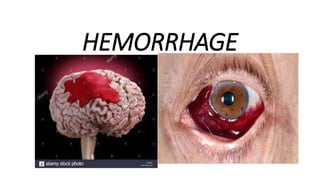
HEMORRHAGE
Hemorrhage – Bleeding
 Escape of the blood from vessels due to the damage of vessels.
 Uncontrol bleeding may cause in shock or death.
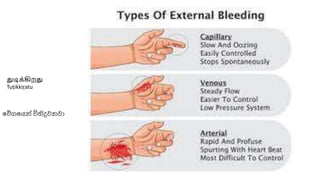
 There are three types.
 Arterial bleeding
 venous bleeding
 capilary bleeding
Characteristics of bleeding
1. Arterial bleeding
Must always be treated first. ( Major arterial bleeding is the
most serious )
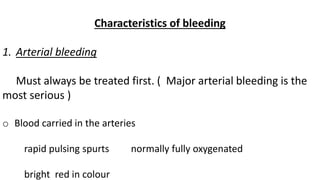
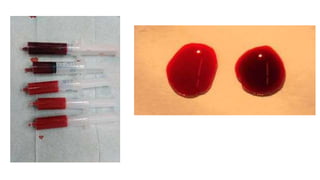
o Blood carried in the arteries
rapid pulsing spurts normally fully oxygenated
bright red in colour
වේගවෙන් විහිදුවනවා
துடிக்கிறது
Tuṭikkiṟatu
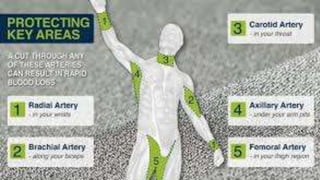
Commonly affected arteries
o Femoral arteries
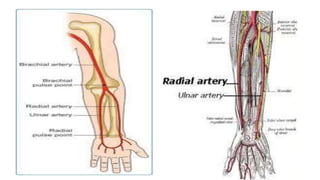
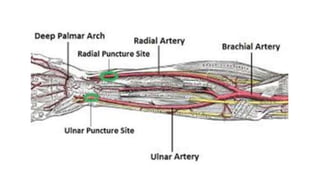
o Radial arteries
o Brachial arteries
o Carotid arteries
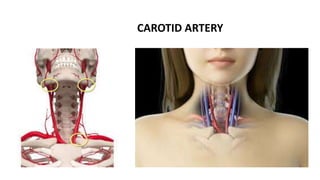
CAROTID ARTERY
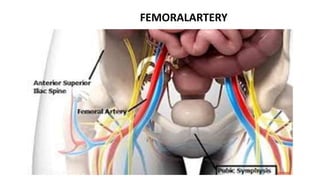
FEMORALARTERY
Venous bleeding
o Normally darker red
o It contains less oxygen
o Will not spurt.
o Slow drain.
Capillary bleeding
o Common type of bleeding.
o Slightly comes from injured capillaries.
o Very slow and small in quantity.
o Can cause infections.
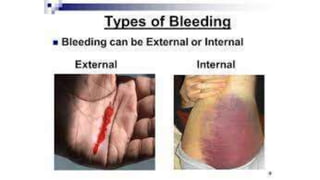
TYPES OF BLEEDING
• External bleeding
Bleeding that flows out of the body
• Examples:
Nose bleeding
Bleeding from a minor skin cut.
INTERNAL BLEEDING
• Bleeding that occurs inside the body when a blood vessel is damaged.
• Examples:
may occur in :
abdominal cavity
chest cavity
digestive tract
tissues surrounding broken large bones:
the thighbone (femur)
pelvis
The most serious sources of internal bleeding
due to trauma
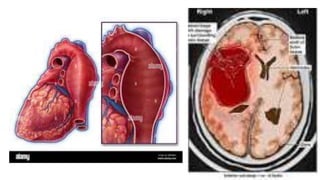
• Head trauma with internal bleeding (intracranial hemorrhage)
• Bleeding around the lungs (hemothorax)
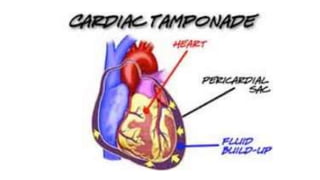
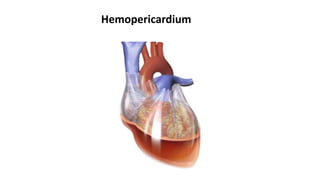
• Bleeding around the heart (hemopericardium and cardiac
tamponade)
Hemopericardium
Treatment or First aid for external bleeding
• Wash your hands.
• If the wound is dirty, lightly rinse with running water, until clean.
• Temporarily protect the wound with a sterile cotton.
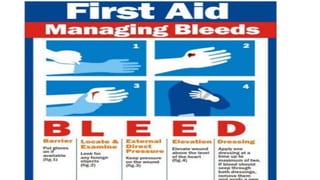
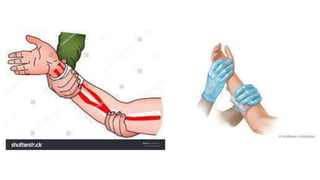
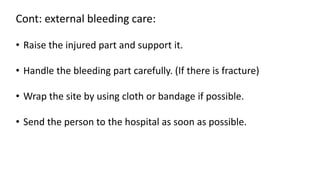
• Apply direct pressure until bleeding is control.
 (Press down firmly on either side)
Cont: external bleeding care:
• Raise the injured part and support it.
• Handle the bleeding part carefully. (If there is fracture)
• Wrap the site by using cloth or bandage if possible.
• Send the person to the hospital as soon as possible.
First aid for internal bleeding
• Causes –
1) Fracture
2) Crush or penetrating injuries (Bullet injuries)
3) Head injuries
4) Organ injuries
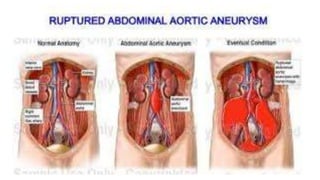
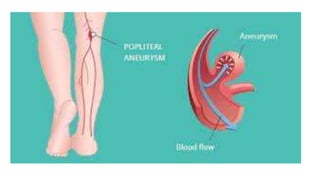
5) Ruptured aneurisms
abdominal aortic,
thoracic aortic, and
cerebral.
Internal bleeding may be more serious than external bleeding.
Get a quick assessment.
• Haematemesis
- Vomiting out blood
• Haemoptysis
- Coughed out blood
• Malaena-dark tarry stool
-Blood in stool
•Epistaxis
-nose bleeds
•Blood in urine
-Haematurea
Signs and symptoms for internal bleeding
 Pallor
 Shallow rapid respiration
 Weak or thread pulse
 Restlessness
 Confusion
 Thirsty
 Cold clammy skin
 Low blood pressure
Hypotension
 Hypothermia
Low temperature
First aid for internal bleeding
 Lay the casualty down with his head low
– supine position
 Loosen the clothing
 Reassure the patient
( For relaxation )
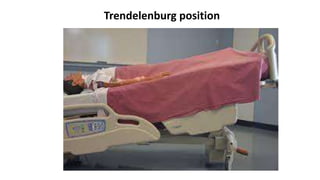
Trendelenburg position
 Examine for other injuries and treat.
 If unconscious:
Open his mouth and remove foreign particles
Check for ABCDE
Start resuscitation.
 Do not give anything by mouth
 Arrange urgent transportation to hospital
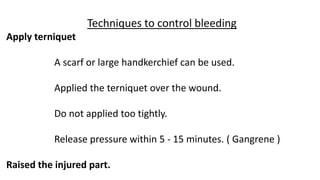
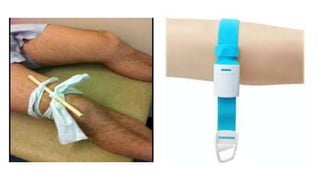
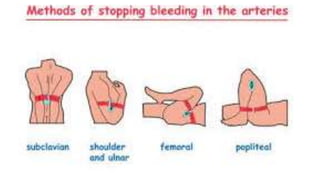
Techniques to control bleeding
Apply terniquet
A scarf or large handkerchief can be used.
Applied the terniquet over the wound.
Do not applied too tightly.
Release pressure within 5 - 15 minutes. ( Gangrene )
Raised the injured part.
Epistaxis (Nose bleeds)
Bleeding from the blood vessels inside the nostrils.
Common condition
Causes :-
1. Head injury
2. Fracture of the skull and nasal bone
First aid or treatment
1) Reassure the patient.
2) Firmly pinch the entire soft part of the nose just above the nostrils.
3) Sit and lean forward (this will ensure that blood and other secretions
do not go down your throat).
4) Breathe through your mouth.
5) Hold this position for 5 minutes.
6) Loosen any tight clothing.
7) Do not plug the nose.
.
8) Avoid speak swallowing and cough.
9) Apply a cold swabs onthe nose.
10) Release the applied pressure after 10 minutes.
11) Still bleeding reapply pressure.
12) Seek medical aid
Bleeding from the ear
Bleeding from inside the ear canal.
Causes :-
Ear drum rupture
Skull fracture
First aid
 Reassure the patient.
 Cover the ear with a sterile dressing. Do not plug the ear.
 Head is turn to the injured side.
 Arrange removal to hospital.
Bleeding from the mouth
Causes :-
• Laceration of the gums
• Fracture of the jaw
• Tooth socket after accidental loss of a tooth
• Dental extraction
First aid
1) Sit down with his head forward and inclined (bend towards the
injured side)
2) Place clean dressing.
3) Allow him to dribble out any blood in his mouth.
4) Maintain pressure on the dressing. After 10-20 minutes carefully
remove dressing.
 If the bleeding persists, seek medical advice.
Haematemesis (Vomitting of blood)
Causes :-
- Can occur any site of GI Tract
- Usually from gastric ulcers
.
First aid
• Keep the patient in supine position.
• Raise the patient head.
• Nil by mouth.
• Seek medical advice
Shock
 The state due to stop blood supply into vital organs of the
body.
 Life threatening situation.
 Medical condition of lower blood perfusion to the tissues,
resulting inadequate tissue function.
 It is not treated as early as possible vital organ such as heart
and brain may fail, can lead to death.
Causes :-
- Severe haemarrhage
- Severe pain
- Sepsis
- Trauma

MEASURES IN EMERGENCY SITUATIONS.pptx

  • 1.
  • 2.
    Emergency situations • Hemorrhage •Shock • Sprain • Dislocation • Asphyxia • Drowning
  • 3.
    • Strangulation • Electricshock • Poisoning • Burns and scalds • Convulsion • Bite and stings • fainting
  • 4.
  • 5.
    Hemorrhage – Bleeding Escape of the blood from vessels due to the damage of vessels.  Uncontrol bleeding may cause in shock or death.  There are three types.  Arterial bleeding  venous bleeding  capilary bleeding
  • 6.
    Characteristics of bleeding 1.Arterial bleeding Must always be treated first. ( Major arterial bleeding is the most serious ) o Blood carried in the arteries rapid pulsing spurts normally fully oxygenated bright red in colour
  • 8.
  • 9.
    Commonly affected arteries oFemoral arteries o Radial arteries o Brachial arteries o Carotid arteries
  • 11.
  • 12.
  • 15.
    Venous bleeding o Normallydarker red o It contains less oxygen o Will not spurt. o Slow drain.
  • 16.
    Capillary bleeding o Commontype of bleeding. o Slightly comes from injured capillaries. o Very slow and small in quantity. o Can cause infections.
  • 18.
    TYPES OF BLEEDING •External bleeding Bleeding that flows out of the body • Examples: Nose bleeding Bleeding from a minor skin cut.
  • 19.
    INTERNAL BLEEDING • Bleedingthat occurs inside the body when a blood vessel is damaged. • Examples: may occur in : abdominal cavity chest cavity digestive tract tissues surrounding broken large bones: the thighbone (femur) pelvis
  • 20.
    The most serioussources of internal bleeding due to trauma • Head trauma with internal bleeding (intracranial hemorrhage) • Bleeding around the lungs (hemothorax) • Bleeding around the heart (hemopericardium and cardiac tamponade)
  • 22.
  • 24.
    Treatment or Firstaid for external bleeding • Wash your hands. • If the wound is dirty, lightly rinse with running water, until clean. • Temporarily protect the wound with a sterile cotton. • Apply direct pressure until bleeding is control.  (Press down firmly on either side)
  • 26.
    Cont: external bleedingcare: • Raise the injured part and support it. • Handle the bleeding part carefully. (If there is fracture) • Wrap the site by using cloth or bandage if possible. • Send the person to the hospital as soon as possible.
  • 27.
    First aid forinternal bleeding • Causes – 1) Fracture 2) Crush or penetrating injuries (Bullet injuries) 3) Head injuries 4) Organ injuries 5) Ruptured aneurisms
  • 28.
  • 31.
    Internal bleeding maybe more serious than external bleeding. Get a quick assessment. • Haematemesis - Vomiting out blood • Haemoptysis - Coughed out blood
  • 32.
    • Malaena-dark tarrystool -Blood in stool •Epistaxis -nose bleeds •Blood in urine -Haematurea
  • 33.
    Signs and symptomsfor internal bleeding  Pallor  Shallow rapid respiration  Weak or thread pulse  Restlessness  Confusion
  • 34.
     Thirsty  Coldclammy skin  Low blood pressure Hypotension  Hypothermia Low temperature
  • 35.
    First aid forinternal bleeding  Lay the casualty down with his head low – supine position  Loosen the clothing  Reassure the patient ( For relaxation )
  • 36.
  • 37.
     Examine forother injuries and treat.  If unconscious: Open his mouth and remove foreign particles Check for ABCDE Start resuscitation.  Do not give anything by mouth  Arrange urgent transportation to hospital
  • 38.
    Techniques to controlbleeding Apply terniquet A scarf or large handkerchief can be used. Applied the terniquet over the wound. Do not applied too tightly. Release pressure within 5 - 15 minutes. ( Gangrene ) Raised the injured part.
  • 41.
    Epistaxis (Nose bleeds) Bleedingfrom the blood vessels inside the nostrils. Common condition Causes :- 1. Head injury 2. Fracture of the skull and nasal bone
  • 42.
    First aid ortreatment 1) Reassure the patient. 2) Firmly pinch the entire soft part of the nose just above the nostrils. 3) Sit and lean forward (this will ensure that blood and other secretions do not go down your throat).
  • 43.
    4) Breathe throughyour mouth. 5) Hold this position for 5 minutes. 6) Loosen any tight clothing. 7) Do not plug the nose. .
  • 44.
    8) Avoid speakswallowing and cough. 9) Apply a cold swabs onthe nose. 10) Release the applied pressure after 10 minutes. 11) Still bleeding reapply pressure. 12) Seek medical aid
  • 45.
    Bleeding from theear Bleeding from inside the ear canal. Causes :- Ear drum rupture Skull fracture
  • 46.
    First aid  Reassurethe patient.  Cover the ear with a sterile dressing. Do not plug the ear.  Head is turn to the injured side.  Arrange removal to hospital.
  • 47.
    Bleeding from themouth Causes :- • Laceration of the gums • Fracture of the jaw • Tooth socket after accidental loss of a tooth • Dental extraction
  • 48.
    First aid 1) Sitdown with his head forward and inclined (bend towards the injured side) 2) Place clean dressing. 3) Allow him to dribble out any blood in his mouth. 4) Maintain pressure on the dressing. After 10-20 minutes carefully remove dressing.  If the bleeding persists, seek medical advice.
  • 49.
    Haematemesis (Vomitting ofblood) Causes :- - Can occur any site of GI Tract - Usually from gastric ulcers .
  • 50.
    First aid • Keepthe patient in supine position. • Raise the patient head. • Nil by mouth. • Seek medical advice
  • 51.
    Shock  The statedue to stop blood supply into vital organs of the body.  Life threatening situation.  Medical condition of lower blood perfusion to the tissues, resulting inadequate tissue function.  It is not treated as early as possible vital organ such as heart and brain may fail, can lead to death.
  • 52.
    Causes :- - Severehaemarrhage - Severe pain - Sepsis - Trauma