TWO-­‐FACTOR 
FACTORIAL 
DESIGN 
PREPARED 
BY: 
SITI 
AISYAH 
BT 
NAWAWI
Basic 
Definition 
and 
Principles 
▪ Factorial 
designs 
➢ 
most 
efficient 
in 
experiments 
that 
involve 
the 
study 
of 
the 
effects 
of 
two 
or 
more 
factors. 
➢2k 
means 
there 
are 
k 
factors 
in 
the 
experiment 
and 
each 
factor 
has 
two 
levels 
➢Factor 
levels: 
❖ Quantitative 
❖ All 
combinations 
of 
factor 
levels 
will 
be 
investigated 
❖ Number 
of 
treatment 
combinations 
= 
2k 
! 
E.g.: 
a 
levels 
of 
factor 
A, 
b 
levels 
of 
factor 
B; 
each 
replicate 
contains 
all 
ab 
treatment 
combinations. 
!!!!!!!!! 
!!! 
32 
=2 
factors 
with 
each 
factor 
has 
3 
levels
THE 
ADVANTAGE 
OF 
FACTORIALS 
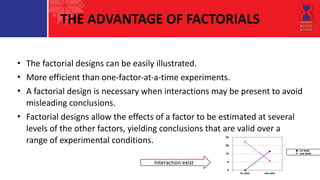
! 
• The 
factorial 
designs 
can 
be 
easily 
illustrated. 
• More 
efficient 
than 
one-­‐factor-­‐at-­‐a-­‐time 
experiments. 
• A 
factorial 
design 
is 
necessary 
when 
interactions 
may 
be 
present 
to 
avoid 
misleading 
conclusions. 
• Factorial 
designs 
allow 
the 
effects 
of 
a 
factor 
to 
be 
estimated 
at 
several 
levels 
of 
the 
other 
factors, 
yielding 
conclusions 
that 
are 
valid 
over 
a 
range 
of 
experimental 
conditions. 
35 
26 
18 
9 
0 
no alch. one alch 
no barb. 
one barb. 
Interaction 
exist
THE 
TWO-­‐FACTOR 
FACTORIAL 
DESIGN 
! 
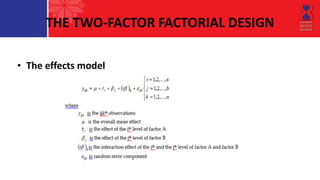
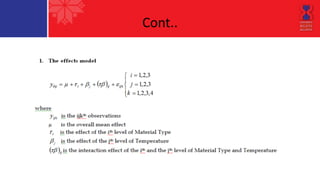
• The 
effects 
model
General 
arrangement 
for 
a 
Two-­‐Factor 
Factorial 
Design 
! 
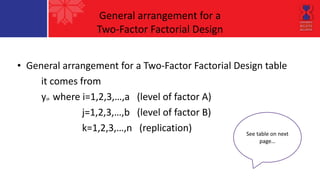
• General 
arrangement 
for 
a 
Two-­‐Factor 
Factorial 
Design 
table 
it 
comes 
from 
yijk 
where 
i=1,2,3,…,a 
(level 
of 
factor 
A) 
j=1,2,3,…,b 
(level 
of 
factor 
B) 
k=1,2,3,…,n 
(replication) See 
table 
on 
next 
page…
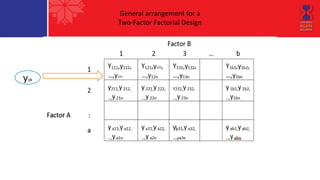
General 
arrangement 
for 
a 
Two-­‐Factor 
Factorial 
Design 
! 
! 
! 
yijk
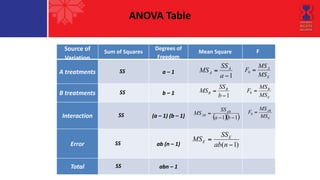
ANOVA 
Table 
Source 
of 
Variation 
Sum 
of 
Squares Degrees 
of 
Freedom 
Mean 
Square F 
A 
treatments SS a 
– 
1 
B 
treatments SS b 
– 
1 
Interaction SS (a 
– 
1) 
(b 
– 
1) 
Error SS ab 
(n 
– 
1) 
Total SS abn 
– 
1 
MS SSA 
−1 
= 
a 
A 
A 
E 
F MS 0 = 
MS 
MS SSB 
−1 
= 
b 
B 
B 
E 
F MS 0 = 
MS 
MS SSAB 
= 
a b 
( −1)( −1) 
AB 
AB 
MS 
E 
F MS 0 = 
MS SSE 
= 
ab n 
( −1) 
E
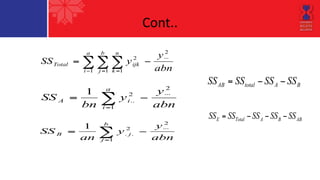
Cont.. 
a 
ΣΣΣ 
− = = 
= − ⋅⋅⋅ 
Total ijk abn 
i 
b 
j 
n 
k 
y 
SS y 
1 1 1 
2 
2 
y 
1 ⋅⋅⋅ 
abn 
y 
= Σ − 
A i 
bn 
SS 
a 
i 
2 
1 
2. 
. 
= 
y 
1 ⋅⋅⋅ 
abn 
y 
= Σ − 
B j 
an 
SS 
b 
j 
2 
1 
2 
. . 
= 
AB total A B SS = SS − SS − SS 
E Total A B AB SS = SS − SS − SS − SS
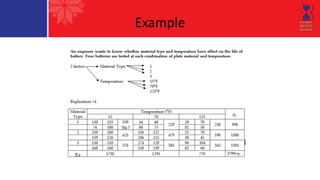
Example
Cont..
cont.. 
• 2) 
ANOVA 
Now, 
calculate 
ANOVA 
table 
using 
formula 
given 
in 
previous 
slide
Cont.. 
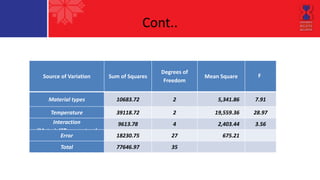
Source 
of 
Variation Sum 
of 
Squares 
Degrees 
of 
Freedom 
Mean 
Square F 
Material 
types 10683.72 2 5,341.86 7.91 
Temperature 39118.72 2 19,559.36 28.97 
Interaction 
(Material*Temperature) 
9613.78 4 2,403.44 3.56 
Error 18230.75 27 675.21 
Total 77646.97 35
cont..
Cont.. 
Do 
you 
get 
the 
same 
answer? 
If 
YES, 
lets 
continue..
Cont..
! 
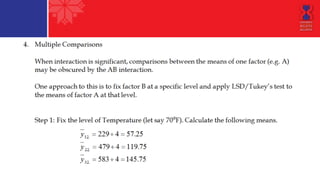
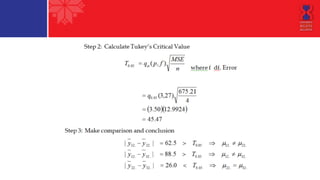
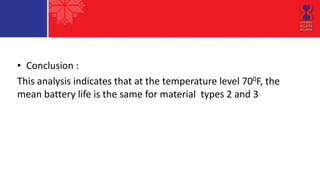
• Conclusion 
: 
This 
analysis 
indicates 
that 
at 
the 
temperature 
level 
700F, 
the 
mean 
battery 
life 
is 
the 
same 
for 
material 
types 
2 
and 
3

Two factor factorial_design_pdf

  • 1.
    TWO-­‐FACTOR FACTORIAL DESIGN PREPARED BY: SITI AISYAH BT NAWAWI
  • 2.
    Basic Definition and Principles ▪ Factorial designs ➢ most efficient in experiments that involve the study of the effects of two or more factors. ➢2k means there are k factors in the experiment and each factor has two levels ➢Factor levels: ❖ Quantitative ❖ All combinations of factor levels will be investigated ❖ Number of treatment combinations = 2k ! E.g.: a levels of factor A, b levels of factor B; each replicate contains all ab treatment combinations. !!!!!!!!! !!! 32 =2 factors with each factor has 3 levels
  • 3.
    THE ADVANTAGE OF FACTORIALS ! • The factorial designs can be easily illustrated. • More efficient than one-­‐factor-­‐at-­‐a-­‐time experiments. • A factorial design is necessary when interactions may be present to avoid misleading conclusions. • Factorial designs allow the effects of a factor to be estimated at several levels of the other factors, yielding conclusions that are valid over a range of experimental conditions. 35 26 18 9 0 no alch. one alch no barb. one barb. Interaction exist
  • 4.
    THE TWO-­‐FACTOR FACTORIAL DESIGN ! • The effects model
  • 5.
    General arrangement for a Two-­‐Factor Factorial Design ! • General arrangement for a Two-­‐Factor Factorial Design table it comes from yijk where i=1,2,3,…,a (level of factor A) j=1,2,3,…,b (level of factor B) k=1,2,3,…,n (replication) See table on next page…
  • 6.
    General arrangement for a Two-­‐Factor Factorial Design ! ! ! yijk
  • 7.
    ANOVA Table Source of Variation Sum of Squares Degrees of Freedom Mean Square F A treatments SS a – 1 B treatments SS b – 1 Interaction SS (a – 1) (b – 1) Error SS ab (n – 1) Total SS abn – 1 MS SSA −1 = a A A E F MS 0 = MS MS SSB −1 = b B B E F MS 0 = MS MS SSAB = a b ( −1)( −1) AB AB MS E F MS 0 = MS SSE = ab n ( −1) E
  • 8.
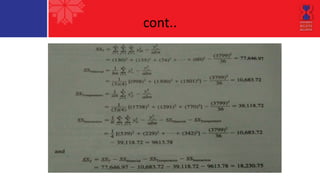
    Cont.. a ΣΣΣ − = = = − ⋅⋅⋅ Total ijk abn i b j n k y SS y 1 1 1 2 2 y 1 ⋅⋅⋅ abn y = Σ − A i bn SS a i 2 1 2. . = y 1 ⋅⋅⋅ abn y = Σ − B j an SS b j 2 1 2 . . = AB total A B SS = SS − SS − SS E Total A B AB SS = SS − SS − SS − SS
  • 9.
  • 10.
  • 11.
    cont.. • 2) ANOVA Now, calculate ANOVA table using formula given in previous slide
  • 12.
    Cont.. Source of Variation Sum of Squares Degrees of Freedom Mean Square F Material types 10683.72 2 5,341.86 7.91 Temperature 39118.72 2 19,559.36 28.97 Interaction (Material*Temperature) 9613.78 4 2,403.44 3.56 Error 18230.75 27 675.21 Total 77646.97 35
  • 13.
  • 14.
    Cont.. Do you get the same answer? If YES, lets continue..
  • 15.
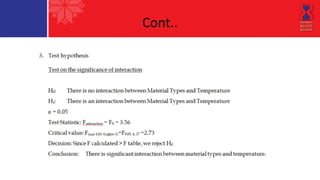
  • 18.
    ! • Conclusion : This analysis indicates that at the temperature level 700F, the mean battery life is the same for material types 2 and 3