Embed presentation
Downloaded 65 times


Experimental design is a statistical method used to observe the effects of independent variables on dependent variables, establishing cause and effect relationships. It includes principles such as randomization, replication, and blocking, and features various types of designs like randomized, quasi-experimental, and factorial designs. For more information, a link to a detailed resource is provided.
Introduces experimental design as a statistical method to observe the effects of factors on responses.
Experimental design helps establish cause and effect relationships, optimize responses, and identify variables.
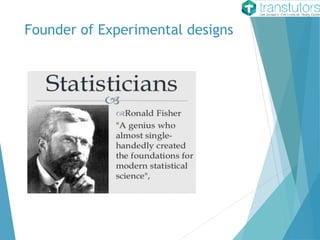
Highlights the founder of experimental designs, providing historical context.
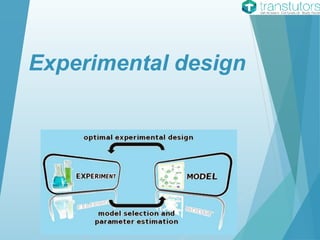
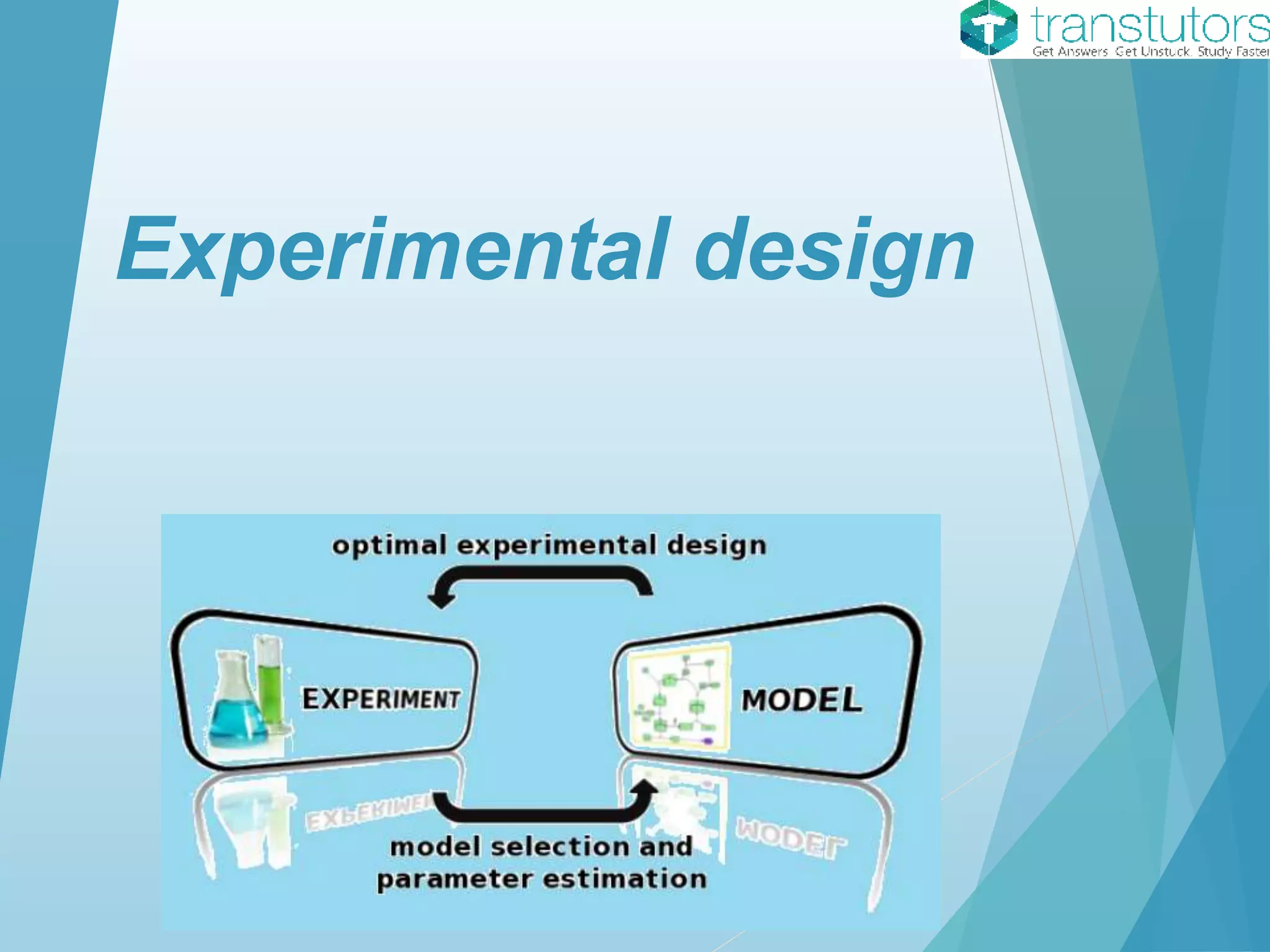
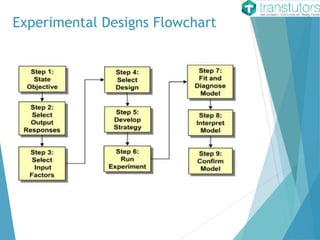
Presents a flowchart outlining the process and components involved in experimental designs.
Discusses essential principles like randomization, replication, and blocking in experimental designs.
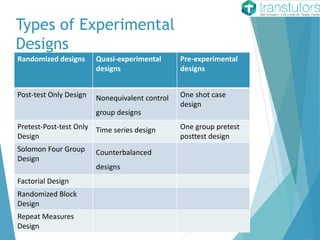
Lists various experimental design types including randomized, quasi-experimental, and factorial designs.
Encourages seeking additional detailed information on experimental design via a provided link.


