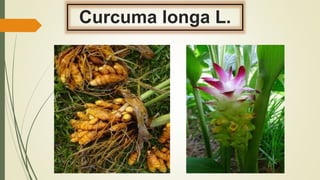
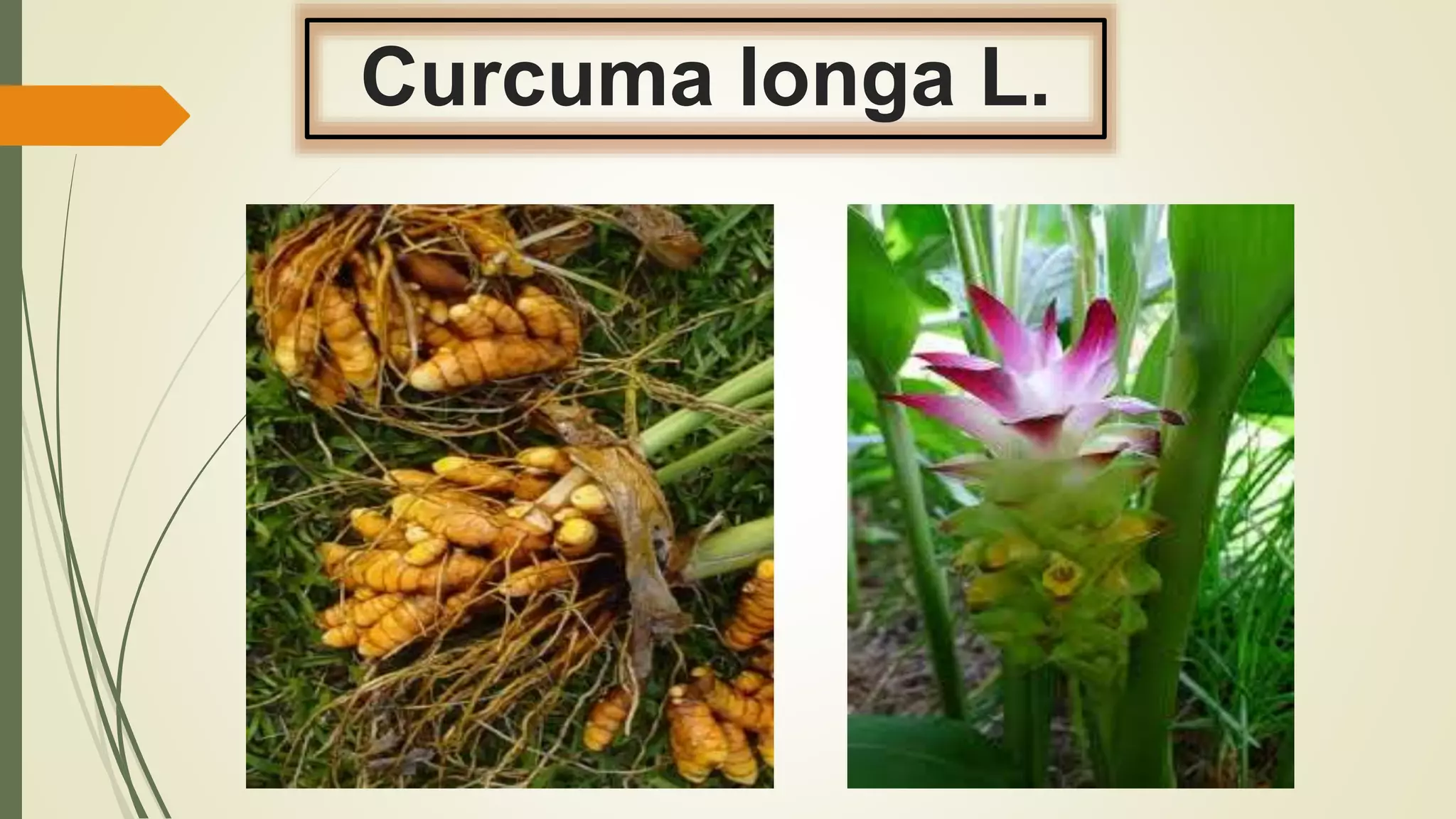
Curcuma longa L.
INTRODUCTION
• curcuma longaBotanical origin
• zingiberaceaeFamily
• TurmericCommon name
• HaldiUrdu name
• Dried rhizomesPart used
CHEMICAL CONSTITUENTS
Curcumin
Curcuminiods
Cymene
Tumeron
Isdemethoxycurcumin
Demethoxycurcumin
Diaryl heptanoids
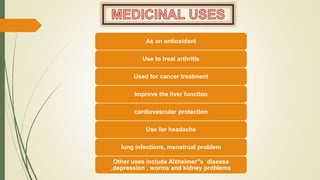
As an antioxidant
Use to treat arthritis
Used for cancer treatment
Improve the liver function
cardiovascular protection
Use for headache
lung infections, menstrual problem
Other uses include Alzheimer”s disease
,depression , worms and kidney problems
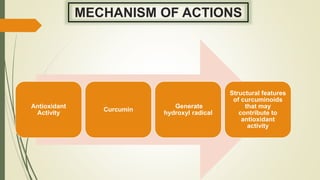
MECHANISM OF ACTIONS
Antioxidant
Activity
Curcumin
Generate
hydroxyl radical
Structural features
of curcuminoids
that may
contribute to
antioxidant
activity
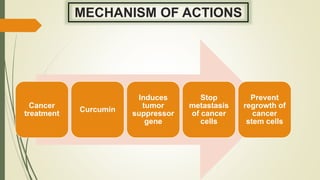
MECHANISM OF ACTIONS
Cancer
treatment
Curcumin
Induces
tumor
suppressor
gene
Stop
metastasis
of cancer
cells
Prevent
regrowth of
cancer
stem cells
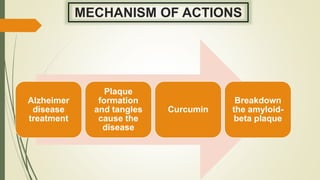
MECHANISM OF ACTIONS
Alzheimer
disease
treatment
Plaque
formation
and tangles
cause the
disease
Curcumin
Breakdown
the amyloid-
beta plaque
MECHANISM OF ACTIONS
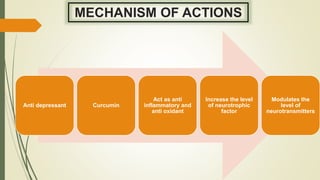
Anti depressant Curcumin
Act as anti
inflammatory and
anti oxidant
Increase the level
of neurotrophic
factor
Modulates the
level of
neurotransmitters
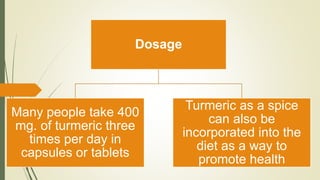
Dosage
Many people take 400
mg. of turmeric three
times per day in
capsules or tablets
Turmeric as a spice
can also be
incorporated into the
diet as a way to
promote health
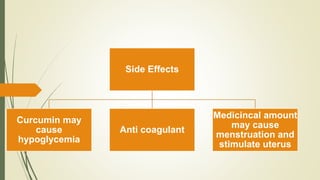
Side Effects
Curcumin may
cause
hypoglycemia
Anti coagulant
Medicincal amount
may cause
menstruation and
stimulate uterus
TOXICITY
 Primary active compound is curcumin and it is found that it may also
be toxic to your liver, depending on dose
INTERACTION:
 Medications that slow blood clotting interacts with TURMERIC
Turmeric might slow blood clotting. Taking turmeric along with
medications that also slow clotting might increase the chances of
bleeding. Anticoagulant example: aspirin.
REFERENCES
 http://holisticonline.com/Herbal-Med/_Herbs/h27.htm
 http://www.whfoods.com/genpage.php?tname=foodspice&dbid=78
 http://thetruthaboutcancer.com/benefits-turmeric-cancer-treatment/

Turmeric (Curcuma longa)