WEL COME
AntioxidantsPresented byG. Anvesh Kumar(M Pharm Pharmacology)10T21S0103.Under the guidance ofMrs. Geeta Reddy(Dept of Biotechnology)
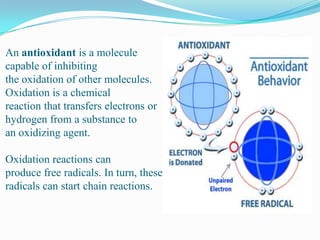
An antioxidant is a molecule capable of inhibiting the oxidation of other molecules. Oxidation is a chemical reaction that transfers electrons or hydrogen from a substance to an oxidizing agent.Oxidation reactions can produce free radicals. In turn, these radicals can start chain reactions.
Types of Free Radicals1. Hydroxyl radical (OH•)2. Superoxide anion radical (O2–•)3. Singlet oxygen4. Hydrogen peroxide5. Lipid peroxyl free radical6. Nitric oxide7. Alkoxyl radical8. Peroxynitrite
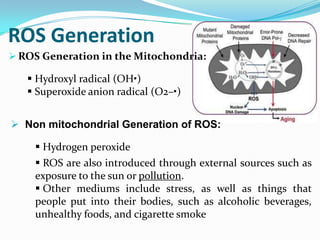
ROS GenerationROS Generation in the Mitochondria:
 Hydroxyl radical (OH•)
 Superoxide anion radical (O2–•)
  Non mitochondrial Generation of ROS:
 Hydrogen peroxide
 ROS are also introduced through external sources such as exposure to the sun or pollution.
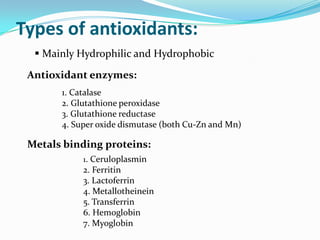
 Other mediums include stress, as well as things that people put into their bodies, such as alcoholic beverages, unhealthy foods, and cigarette smokeTypes of antioxidants: Mainly Hydrophilic and HydrophobicAntioxidant enzymes: 1. Catalase2. Glutathione peroxidase3. Glutathione reductase4. Super oxide dismutase (both Cu-Zn and Mn)Metals binding proteins: 1. Ceruloplasmin 2. Ferritin3. Lactoferrin 4. Metallotheinein5. Transferrin 6. Hemoglobin7. Myoglobin
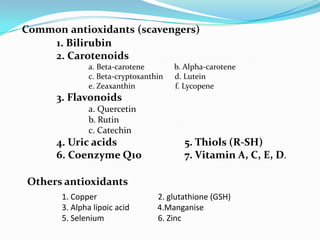
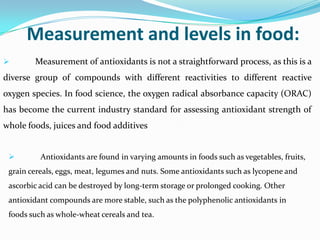
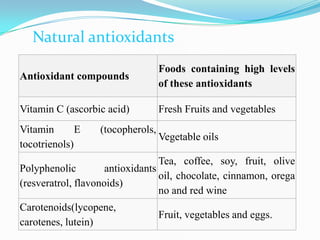
Common antioxidants (scavengers) 1. Bilirubin 2. Carotenoids	a. Beta-carotene               b. Alpha-carotene 	c. Beta-cryptoxanthin      d. Lutein 	e. Zeaxanthin                    f. Lycopene 3. Flavonoids	a. Quercetin	b. Rutin 	c. Catechin4. Uric acids			5. Thiols (R-SH) 6. Coenzyme Q10		7. Vitamin A, C, E, D. Others antioxidants 1. Copper 2. glutathione (GSH) 3. Alpha lipoic acid              4.Manganise5. Selenium6. Zinc
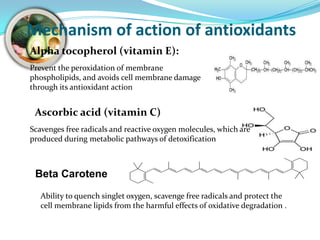
Mechanism of action of antioxidantsAlpha tocopherol (vitamin E):   Prevent the peroxidation of membrane phospholipids, and avoids cell membrane damage through its antioxidant action Ascorbic acid (vitamin C)Scavenges free radicals and reactive oxygen molecules, which are produced during metabolic pathways of detoxificationBeta CaroteneAbility to quench singlet oxygen, scavenge free radicals and protect the cell membrane lipids from the harmful effects of oxidative degradation .
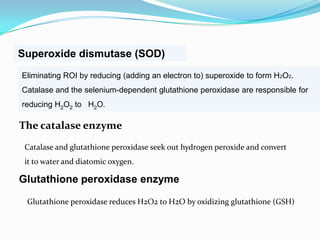
Superoxide dismutase(SOD)Eliminating ROI by reducing (adding an electron to) superoxide to form H2O2. Catalase and the selenium-dependent glutathione peroxidase are responsible for reducing H2O2 to   H2O.The catalase enzymeCatalase and glutathione peroxidase seek out hydrogen peroxide and convert it to water and diatomic oxygen. Glutathione peroxidase enzymeGlutathione peroxidase reduces H2O2 to H2O by oxidizing glutathione (GSH)
Antioxidant System in our bodyThe enzymatic antioxidants Superoxide dismutase (SOD)CatalaseGlutathione peroxidaseThe nonenzymatic antioxidants Vitamins E, C, A or Provitamin A(beta-carotene), GSH
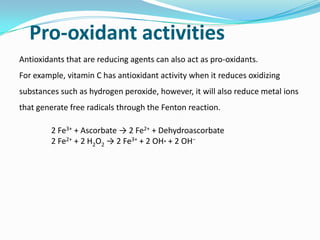
Pro-oxidant activitiesAntioxidants that are reducing agents can also act as pro-oxidants. For example, vitamin C has antioxidant activity when it reduces oxidizing substances such as hydrogen peroxide, however, it will also reduce metal ions that generate free radicals through the Fenton reaction.2 Fe3+ + Ascorbate -> 2 Fe2+ + Dehydroascorbate	2 Fe2+ + 2 H2O2 -> 2 Fe3+ + 2 OH· + 2 OH−
Determining Antioxidant Activity• ORAC, Oxygen Radical Absorbance Capacity method• TRAP, Total Radical-Trapping Antioxidant Parameter method.• TEAC, Trolox Equivalent Antioxidant Capacity method• DPPH• TOSC, Total Oxyradical Scavenging Capacity method• PSC, Peroxyl Radical Scavenging Capacity method• FRAP, Ferric Reducing/Antioxidant Power method.
Oxidative stress in disease:Oxidative stress is thought to contribute to the development of a wide range of diseases including Alzheimer's disease, Parkinson's disease, the pathologies caused by diabetes, rheumatoid arthritis, and neurodegeneration in motor neuron diseasesHow to measure the oxidative stressd-ROMs TThis test is used to determine the antioxidant capacity of plasma, mainly due to the level of hydroperoxides - a subclass of reactive oxygen metabolites (ROM) - amplifiers and considered markers of cell damage by free radicals.BAP TestThis test is used to determine the efficiency of the plasma barrier opposes the attack of free radicals in terms of iron-reducing activity		An increase in the values of d-ROMs Test (> 300 U CARR) and / or a reduction of the values of the BAP Test (<2200 micromol / L) are indicative of a condition of oxidative stress 
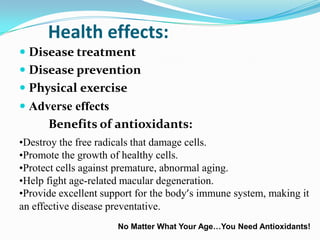
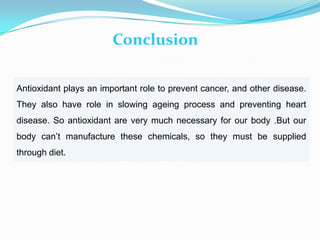
Health effects:Disease treatmentDisease preventionPhysical exerciseAdverse effectsBenefits of antioxidants:Destroy the free radicals that damage cells.
Promote the growth of healthy cells.
Protect cells against premature, abnormal aging.
Help fight age-related macular degeneration.

Antioxidants

  • 1.
  • 2.
    AntioxidantsPresented byG. AnveshKumar(M Pharm Pharmacology)10T21S0103.Under the guidance ofMrs. Geeta Reddy(Dept of Biotechnology)
  • 3.
    An antioxidant is a molecule capableof inhibiting the oxidation of other molecules. Oxidation is a chemical reaction that transfers electrons or hydrogen from a substance to an oxidizing agent.Oxidation reactions can produce free radicals. In turn, these radicals can start chain reactions.
  • 4.
    Types of Free Radicals1.Hydroxyl radical (OH•)2. Superoxide anion radical (O2–•)3. Singlet oxygen4. Hydrogen peroxide5. Lipid peroxyl free radical6. Nitric oxide7. Alkoxyl radical8. Peroxynitrite
  • 5.
    ROS GenerationROS Generationin the Mitochondria:
  • 6.
  • 7.
    Superoxide anionradical (O2–•)
  • 8.
    Nonmitochondrial Generation of ROS:
  • 9.
  • 10.
    ROS arealso introduced through external sources such as exposure to the sun or pollution.
  • 11.
    Other mediumsinclude stress, as well as things that people put into their bodies, such as alcoholic beverages, unhealthy foods, and cigarette smokeTypes of antioxidants: Mainly Hydrophilic and HydrophobicAntioxidant enzymes: 1. Catalase2. Glutathione peroxidase3. Glutathione reductase4. Super oxide dismutase (both Cu-Zn and Mn)Metals binding proteins: 1. Ceruloplasmin 2. Ferritin3. Lactoferrin 4. Metallotheinein5. Transferrin 6. Hemoglobin7. Myoglobin
  • 12.
    Common antioxidants (scavengers) 1. Bilirubin 2. Carotenoids a.Beta-carotene b. Alpha-carotene  c. Beta-cryptoxanthin d. Lutein  e. Zeaxanthin f. Lycopene 3. Flavonoids a. Quercetin b. Rutin  c. Catechin4. Uric acids 5. Thiols (R-SH) 6. Coenzyme Q10 7. Vitamin A, C, E, D. Others antioxidants 1. Copper 2. glutathione (GSH) 3. Alpha lipoic acid 4.Manganise5. Selenium6. Zinc
  • 13.
    Mechanism of actionof antioxidantsAlpha tocopherol (vitamin E):  Prevent the peroxidation of membrane phospholipids, and avoids cell membrane damage through its antioxidant action Ascorbic acid (vitamin C)Scavenges free radicals and reactive oxygen molecules, which are produced during metabolic pathways of detoxificationBeta CaroteneAbility to quench singlet oxygen, scavenge free radicals and protect the cell membrane lipids from the harmful effects of oxidative degradation .
  • 14.
    Superoxide dismutase(SOD)Eliminating ROIby reducing (adding an electron to) superoxide to form H2O2. Catalase and the selenium-dependent glutathione peroxidase are responsible for reducing H2O2 to   H2O.The catalase enzymeCatalase and glutathione peroxidase seek out hydrogen peroxide and convert it to water and diatomic oxygen. Glutathione peroxidase enzymeGlutathione peroxidase reduces H2O2 to H2O by oxidizing glutathione (GSH)
  • 15.
    Antioxidant System inour bodyThe enzymatic antioxidants Superoxide dismutase (SOD)CatalaseGlutathione peroxidaseThe nonenzymatic antioxidants Vitamins E, C, A or Provitamin A(beta-carotene), GSH
  • 16.
    Pro-oxidant activitiesAntioxidants thatare reducing agents can also act as pro-oxidants. For example, vitamin C has antioxidant activity when it reduces oxidizing substances such as hydrogen peroxide, however, it will also reduce metal ions that generate free radicals through the Fenton reaction.2 Fe3+ + Ascorbate -> 2 Fe2+ + Dehydroascorbate 2 Fe2+ + 2 H2O2 -> 2 Fe3+ + 2 OH· + 2 OH−
  • 17.
    Determining Antioxidant Activity•ORAC, Oxygen Radical Absorbance Capacity method• TRAP, Total Radical-Trapping Antioxidant Parameter method.• TEAC, Trolox Equivalent Antioxidant Capacity method• DPPH• TOSC, Total Oxyradical Scavenging Capacity method• PSC, Peroxyl Radical Scavenging Capacity method• FRAP, Ferric Reducing/Antioxidant Power method.
  • 18.
    Oxidative stress indisease:Oxidative stress is thought to contribute to the development of a wide range of diseases including Alzheimer's disease, Parkinson's disease, the pathologies caused by diabetes, rheumatoid arthritis, and neurodegeneration in motor neuron diseasesHow to measure the oxidative stressd-ROMs TThis test is used to determine the antioxidant capacity of plasma, mainly due to the level of hydroperoxides - a subclass of reactive oxygen metabolites (ROM) - amplifiers and considered markers of cell damage by free radicals.BAP TestThis test is used to determine the efficiency of the plasma barrier opposes the attack of free radicals in terms of iron-reducing activity An increase in the values of d-ROMs Test (> 300 U CARR) and / or a reduction of the values of the BAP Test (<2200 micromol / L) are indicative of a condition of oxidative stress 
  • 19.
    Health effects:Disease treatmentDiseasepreventionPhysical exerciseAdverse effectsBenefits of antioxidants:Destroy the free radicals that damage cells.
  • 20.
    Promote the growthof healthy cells.
  • 21.
    Protect cells againstpremature, abnormal aging.
  • 22.
    Help fight age-relatedmacular degeneration.