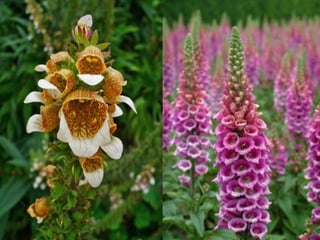
Digitalis
(Scrophulariacea
e)
Pharmacognostic Features
 Botanical origin: Digitalis purpurea L
 Family: Scrophulariaceae
 English name: Foxglove, Fairy cap
 Part used: Dried leaves
 Chemical class: Digitalis glycoside
Species of digitalis
Two known species of Digitalis are:
1) Digitalis lanata Ehrh.
2) Digitalis purpurea L.
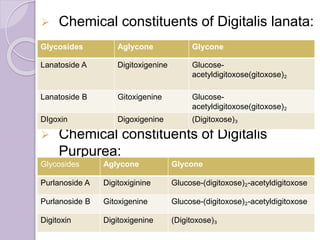
 Chemical constituents of Digitalis lanata:
 Chemical constituents of Digitalis
Purpurea:
Glycosides Aglycone Glycone
Lanatoside A Digitoxigenine Glucose-
acetyldigitoxose(gitoxose)₂
Lanatoside B Gitoxigenine Glucose-
acetyldigitoxose(gitoxose)₂
DIgoxin Digoxigenine (Digitoxose)₃
Glycosides Aglycone Glycone
Purlanoside A Digitoxiginine Glucose-(digitoxose)₂-acetyldigitoxose
Purlanoside B Gitoxigenine Glucose-(digitoxose)₂-acetyldigitoxose
Digitoxin Digitoxigenine (Digitoxose)₃
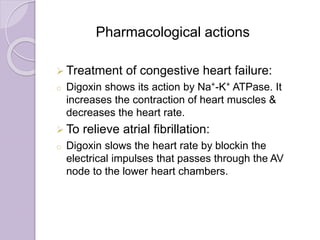
Pharmacological actions
 Treatment of congestive heart failure:
o Digoxin shows its action by Na⁺-K⁺ ATPase. It
increases the contraction of heart muscles &
decreases the heart rate.
 To relieve atrial fibrillation:
o Digoxin slows the heart rate by blockin the
electrical impulses that passes through the AV
node to the lower heart chambers.
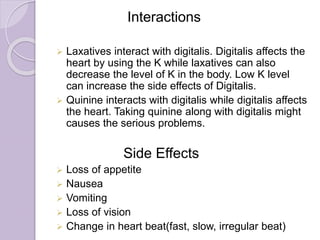
Interactions
 Laxatives interact with digitalis. Digitalis affects the
heart by using the K while laxatives can also
decrease the level of K in the body. Low K level
can increase the side effects of Digitalis.
 Quinine interacts with digitalis while digitalis affects
the heart. Taking quinine along with digitalis might
causes the serious problems.
Side Effects
 Loss of appetite
 Nausea
 Vomiting
 Loss of vision
 Change in heart beat(fast, slow, irregular beat)
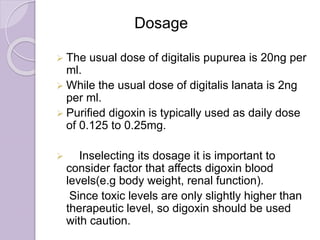
Dosage
 The usual dose of digitalis pupurea is 20ng per
ml.
 While the usual dose of digitalis lanata is 2ng
per ml.
 Purified digoxin is typically used as daily dose
of 0.125 to 0.25mg.
 Inselecting its dosage it is important to
consider factor that affects digoxin blood
levels(e.g body weight, renal function).
Since toxic levels are only slightly higher than
therapeutic level, so digoxin should be used
with caution.
Contraindications
 Compounds that have absorable calcium when
used always decrease the dose of cardiotonic
glycosides.
 Drugs that cause the deppression of Potassium
within the cell, should be used in caution with
cardiac glycosides.
 Digoxin is contraindicated with patients having
ventricular fibrillation.
 It should be used with caution during pregnancy
and breast feeding.
Toxicity
 Abdominal pain
 Fatigue
 Ventricular tachycardia
 Ventricular fibrillation
 Hyperkalemia
References
 www.webmd.com/vitamins
 www.drugs.com
 www.medbroadcast.com
 www.medscape.com
 www.nhlbi.nih.gov
 Eurhearty.oxfordjournals.org
Digitalis (Scrophulariaceae)

Digitalis (Scrophulariaceae)

  • 1.
  • 3.
    Pharmacognostic Features  Botanicalorigin: Digitalis purpurea L  Family: Scrophulariaceae  English name: Foxglove, Fairy cap  Part used: Dried leaves  Chemical class: Digitalis glycoside Species of digitalis Two known species of Digitalis are: 1) Digitalis lanata Ehrh. 2) Digitalis purpurea L.
  • 4.
     Chemical constituentsof Digitalis lanata:  Chemical constituents of Digitalis Purpurea: Glycosides Aglycone Glycone Lanatoside A Digitoxigenine Glucose- acetyldigitoxose(gitoxose)₂ Lanatoside B Gitoxigenine Glucose- acetyldigitoxose(gitoxose)₂ DIgoxin Digoxigenine (Digitoxose)₃ Glycosides Aglycone Glycone Purlanoside A Digitoxiginine Glucose-(digitoxose)₂-acetyldigitoxose Purlanoside B Gitoxigenine Glucose-(digitoxose)₂-acetyldigitoxose Digitoxin Digitoxigenine (Digitoxose)₃
  • 5.
    Pharmacological actions  Treatmentof congestive heart failure: o Digoxin shows its action by Na⁺-K⁺ ATPase. It increases the contraction of heart muscles & decreases the heart rate.  To relieve atrial fibrillation: o Digoxin slows the heart rate by blockin the electrical impulses that passes through the AV node to the lower heart chambers.
  • 6.
    Interactions  Laxatives interactwith digitalis. Digitalis affects the heart by using the K while laxatives can also decrease the level of K in the body. Low K level can increase the side effects of Digitalis.  Quinine interacts with digitalis while digitalis affects the heart. Taking quinine along with digitalis might causes the serious problems. Side Effects  Loss of appetite  Nausea  Vomiting  Loss of vision  Change in heart beat(fast, slow, irregular beat)
  • 7.
    Dosage  The usualdose of digitalis pupurea is 20ng per ml.  While the usual dose of digitalis lanata is 2ng per ml.  Purified digoxin is typically used as daily dose of 0.125 to 0.25mg.  Inselecting its dosage it is important to consider factor that affects digoxin blood levels(e.g body weight, renal function). Since toxic levels are only slightly higher than therapeutic level, so digoxin should be used with caution.
  • 8.
    Contraindications  Compounds thathave absorable calcium when used always decrease the dose of cardiotonic glycosides.  Drugs that cause the deppression of Potassium within the cell, should be used in caution with cardiac glycosides.  Digoxin is contraindicated with patients having ventricular fibrillation.  It should be used with caution during pregnancy and breast feeding. Toxicity  Abdominal pain  Fatigue  Ventricular tachycardia  Ventricular fibrillation  Hyperkalemia
  • 9.
    References  www.webmd.com/vitamins  www.drugs.com www.medbroadcast.com  www.medscape.com  www.nhlbi.nih.gov  Eurhearty.oxfordjournals.org