TAMARINDUS INDICA L.
Botanical origin: Tamarindus indica L.
Family: Leguminosae or Fabaceae
Urdu name: Imli or Imlee
English name: Tamarind
Part used: Roots,Trunk ,Flowers ,Pulp
of fruit ,Seeds , Leaves
CHEMICAL CONSTITUENTS
 Organic acids(tartaric acid ,malic acid ,oxalic acid)
 Vitamins (C ,E ,K ,Choline ,Folate ,Naicin)
 Minerals (Ca ,Fe ,Mg ,P ,K ,Na)
 Fats(0liec acid ,stearic acid ,palmitic acid )
 Safrole
 Hordenine
 Carbohydrates
 Proteins
 Tannins
 Water
 Fibres (pectin)
USES
 As Laxative
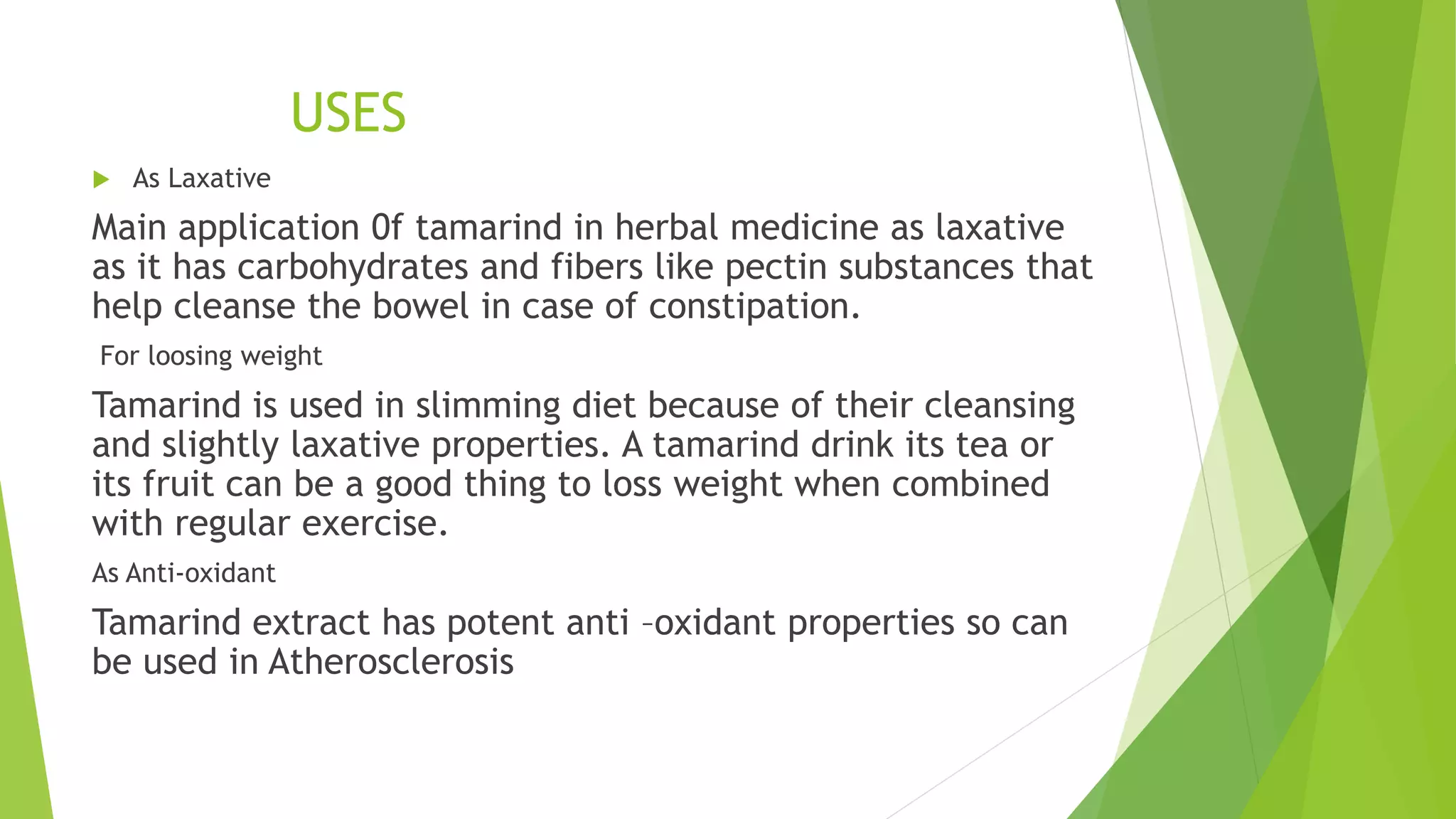
Main application 0f tamarind in herbal medicine as laxative
as it has carbohydrates and fibers like pectin substances that
help cleanse the bowel in case of constipation.
For loosing weight
Tamarind is used in slimming diet because of their cleansing
and slightly laxative properties. A tamarind drink its tea or
its fruit can be a good thing to loss weight when combined
with regular exercise.
As Anti-oxidant
Tamarind extract has potent anti –oxidant properties so can
be used in Atherosclerosis
As Anthelmintics
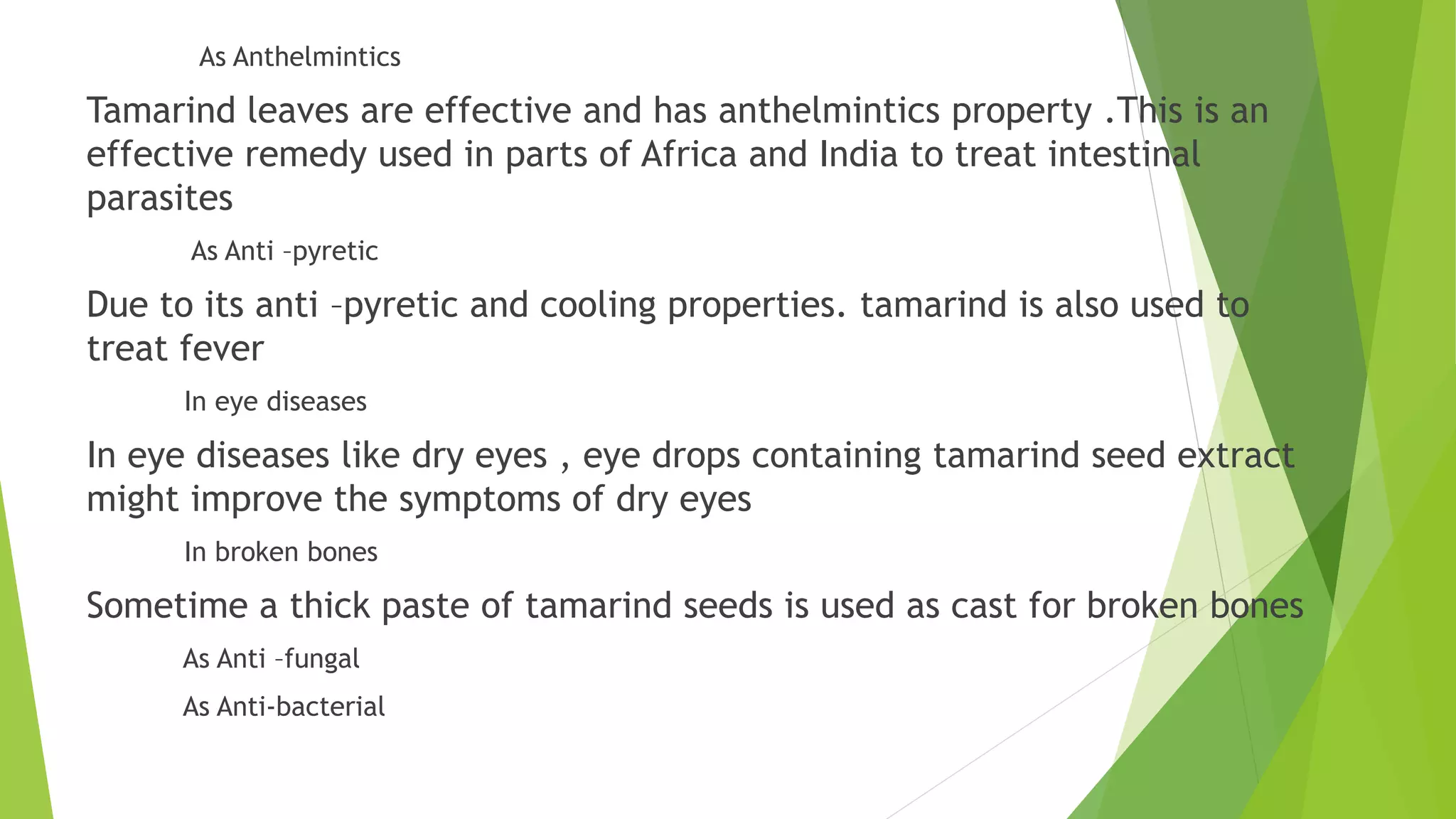
Tamarind leaves are effective and has anthelmintics property .This is an
effective remedy used in parts of Africa and India to treat intestinal
parasites
As Anti –pyretic
Due to its anti –pyretic and cooling properties. tamarind is also used to
treat fever
In eye diseases
In eye diseases like dry eyes , eye drops containing tamarind seed extract
might improve the symptoms of dry eyes
In broken bones
Sometime a thick paste of tamarind seeds is used as cast for broken bones
As Anti –fungal
As Anti-bacterial
Dosage
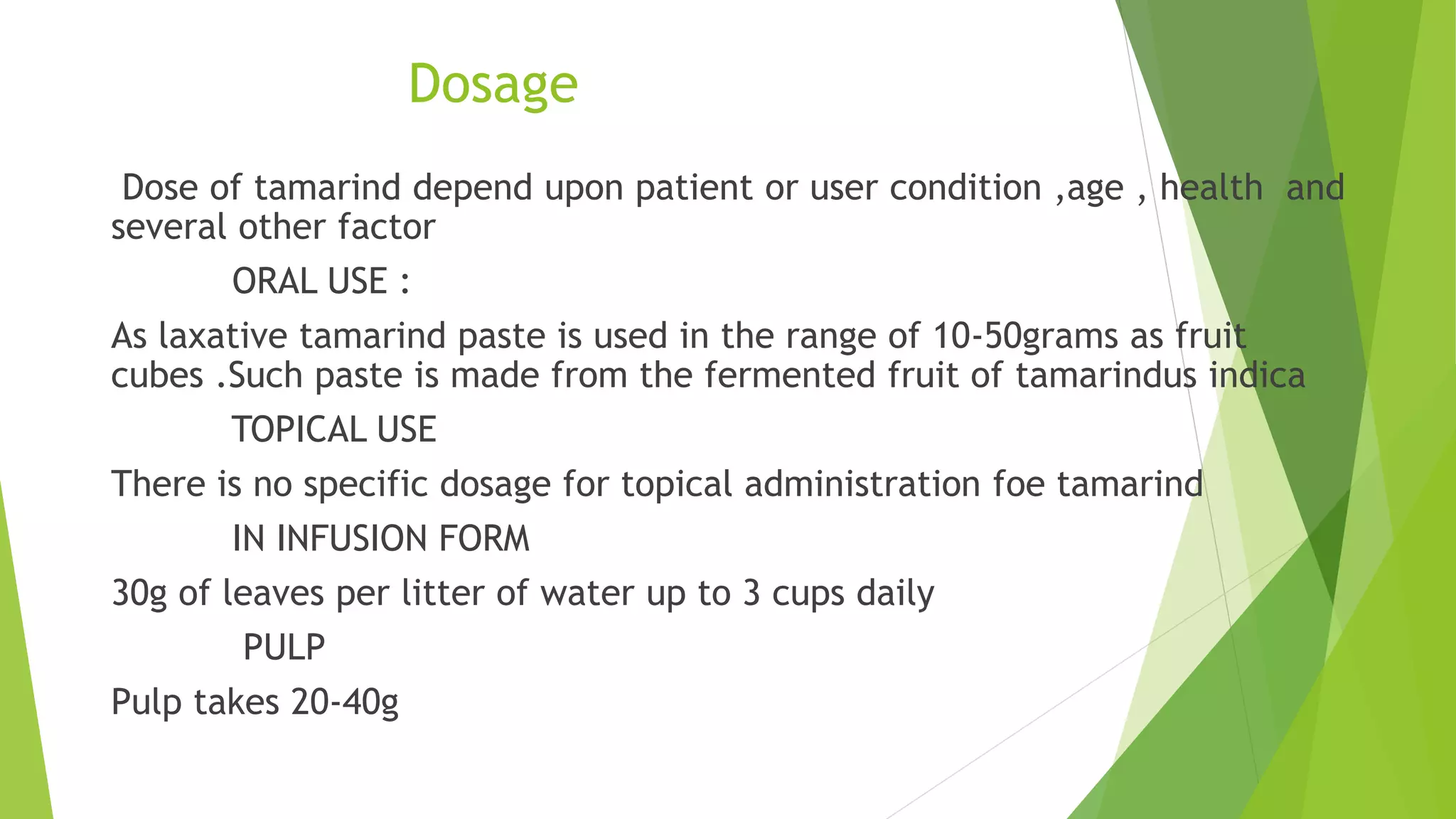
Dose of tamarind depend upon patient or user condition ,age , health and
several other factor
ORAL USE :
As laxative tamarind paste is used in the range of 10-50grams as fruit
cubes .Such paste is made from the fermented fruit of tamarindus indica
TOPICAL USE
There is no specific dosage for topical administration foe tamarind
IN INFUSION FORM
30g of leaves per litter of water up to 3 cups daily
PULP
Pulp takes 20-40g
TOXICITY
 It is generally considered as save as (GCAS) by United States when used orally
and in food amount appropriately
 It has been found to be well tolerated in dose of 10 g daily for up to 3 weeks
 Insufficient reliable information available in case of pregnancy and lactation .
avoid using in amount greater than in food
MECHANISM OF ACTION
As opthelmic
seed part of tamarind consist upon polysaccharides with a branch chain
arrangement identical to MUCIN found in the eye which assist to wet and protect
the corneal surface .Eye drops containing polysaccharides are being reported in
dry eye syndrome
As Anti-Bacterial
Tamarind component Tamarindienal interfere with bacterial adhesion such as
E.Coli , Pseusomonas and Staphlococcus aureus to epithelial intestinal cell
through bioactive properties
As Anti-viral
Inhibition of rubella virus antigen synthesis possibly by blocking a
step in virus replication to virus attachment
As Hypoglycemic
Octasaccharide and Nonasaccharide reduce blood suger level
As Immunoprotective
seed component Xyloglucans and Pectinic oligogalacturondes prevent
suppression of delayed type hypersensitivity immune response
TAMARIND INTERACTIONS
Interaction with food
not known
Interaction with lab tests
Tamarind might decreased the the fasting blood glucose level and lab tests
Interaction with herbs and supplements
seed extract of tamarind can reduce fasting blood glucose level .Tamarind
might have additive effect when used with herbs and supplements with
hypoglycemic potential include devil’s claw ,guar gum ,panax ginseng ,Siberian
ginseng and others
INTERACTION WITH DRUGS
Interaction rating =MODERATE (be caution with this combination)
With anti-diabetic drugs
May increase blood glucose level .may have additive effect with Anti-
diabetic drugs like glimepiride ,glyburide ,insulin ,pioglitazone ,rosiglitazone
and others
Monitor blood glucose level and dose adujustment might be necessary
With aspirin and ibuprofen
fruit extract as a component of food interact with aspirin and ibuprofen
absorption and can cause increased risks of aspirin and ibuprofen
With conditions like surgery
Might interact with blood glucose level before and after surgical procedures
SIDE EFFECTS
 Increased risks of bleeding :
when taken with anti- coagulant , asprin ,and acetaminophene
 lead poisoning
leads towards poisoning and death have been accociated with tamarind candy
 Lowering blood glucose level
tamarind has potential to lower blood glucose level during diabetes
 During pregnancy and lactation
due to insufficient data or not enough reliable information tamarind should be
avoided in quantities greater then those in food during pregnancy and lactation
 During surgery
REFERENCES
 https//naturalmedicines therapeuticsearch.com
 Fact Sheat:Tamarindus indica University of Florida Retrieved July22,2012
 Tropical gournal of Pharmaceutical Research 5
 Tamarind .Micromedex:Martindale.Truven Health Analytics 2014Accesed
121114

Tamarindus indica (Tamarind)

  • 2.
    TAMARINDUS INDICA L. Botanicalorigin: Tamarindus indica L. Family: Leguminosae or Fabaceae Urdu name: Imli or Imlee English name: Tamarind Part used: Roots,Trunk ,Flowers ,Pulp of fruit ,Seeds , Leaves
  • 3.
    CHEMICAL CONSTITUENTS  Organicacids(tartaric acid ,malic acid ,oxalic acid)  Vitamins (C ,E ,K ,Choline ,Folate ,Naicin)  Minerals (Ca ,Fe ,Mg ,P ,K ,Na)  Fats(0liec acid ,stearic acid ,palmitic acid )  Safrole  Hordenine  Carbohydrates  Proteins  Tannins  Water  Fibres (pectin)
  • 4.
    USES  As Laxative Mainapplication 0f tamarind in herbal medicine as laxative as it has carbohydrates and fibers like pectin substances that help cleanse the bowel in case of constipation. For loosing weight Tamarind is used in slimming diet because of their cleansing and slightly laxative properties. A tamarind drink its tea or its fruit can be a good thing to loss weight when combined with regular exercise. As Anti-oxidant Tamarind extract has potent anti –oxidant properties so can be used in Atherosclerosis
  • 5.
    As Anthelmintics Tamarind leavesare effective and has anthelmintics property .This is an effective remedy used in parts of Africa and India to treat intestinal parasites As Anti –pyretic Due to its anti –pyretic and cooling properties. tamarind is also used to treat fever In eye diseases In eye diseases like dry eyes , eye drops containing tamarind seed extract might improve the symptoms of dry eyes In broken bones Sometime a thick paste of tamarind seeds is used as cast for broken bones As Anti –fungal As Anti-bacterial
  • 6.
    Dosage Dose of tamarinddepend upon patient or user condition ,age , health and several other factor ORAL USE : As laxative tamarind paste is used in the range of 10-50grams as fruit cubes .Such paste is made from the fermented fruit of tamarindus indica TOPICAL USE There is no specific dosage for topical administration foe tamarind IN INFUSION FORM 30g of leaves per litter of water up to 3 cups daily PULP Pulp takes 20-40g
  • 7.
    TOXICITY  It isgenerally considered as save as (GCAS) by United States when used orally and in food amount appropriately  It has been found to be well tolerated in dose of 10 g daily for up to 3 weeks  Insufficient reliable information available in case of pregnancy and lactation . avoid using in amount greater than in food MECHANISM OF ACTION As opthelmic seed part of tamarind consist upon polysaccharides with a branch chain arrangement identical to MUCIN found in the eye which assist to wet and protect the corneal surface .Eye drops containing polysaccharides are being reported in dry eye syndrome As Anti-Bacterial Tamarind component Tamarindienal interfere with bacterial adhesion such as E.Coli , Pseusomonas and Staphlococcus aureus to epithelial intestinal cell through bioactive properties
  • 8.
    As Anti-viral Inhibition ofrubella virus antigen synthesis possibly by blocking a step in virus replication to virus attachment As Hypoglycemic Octasaccharide and Nonasaccharide reduce blood suger level As Immunoprotective seed component Xyloglucans and Pectinic oligogalacturondes prevent suppression of delayed type hypersensitivity immune response
  • 9.
    TAMARIND INTERACTIONS Interaction withfood not known Interaction with lab tests Tamarind might decreased the the fasting blood glucose level and lab tests Interaction with herbs and supplements seed extract of tamarind can reduce fasting blood glucose level .Tamarind might have additive effect when used with herbs and supplements with hypoglycemic potential include devil’s claw ,guar gum ,panax ginseng ,Siberian ginseng and others
  • 10.
    INTERACTION WITH DRUGS Interactionrating =MODERATE (be caution with this combination) With anti-diabetic drugs May increase blood glucose level .may have additive effect with Anti- diabetic drugs like glimepiride ,glyburide ,insulin ,pioglitazone ,rosiglitazone and others Monitor blood glucose level and dose adujustment might be necessary With aspirin and ibuprofen fruit extract as a component of food interact with aspirin and ibuprofen absorption and can cause increased risks of aspirin and ibuprofen With conditions like surgery Might interact with blood glucose level before and after surgical procedures
  • 11.
    SIDE EFFECTS  Increasedrisks of bleeding : when taken with anti- coagulant , asprin ,and acetaminophene  lead poisoning leads towards poisoning and death have been accociated with tamarind candy  Lowering blood glucose level tamarind has potential to lower blood glucose level during diabetes  During pregnancy and lactation due to insufficient data or not enough reliable information tamarind should be avoided in quantities greater then those in food during pregnancy and lactation  During surgery
  • 12.
    REFERENCES  https//naturalmedicines therapeuticsearch.com Fact Sheat:Tamarindus indica University of Florida Retrieved July22,2012  Tropical gournal of Pharmaceutical Research 5  Tamarind .Micromedex:Martindale.Truven Health Analytics 2014Accesed 121114