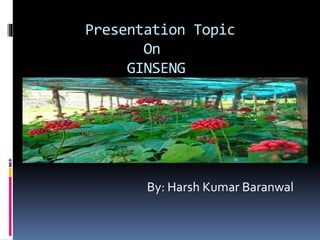
Presentation Topic
On
GINSENG
By: Harsh Kumar Baranwal
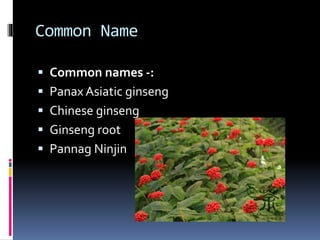
Common Name
 Common names -:
 Panax Asiatic ginseng
 Chinese ginseng
 Ginseng root
 Pannag Ninjin
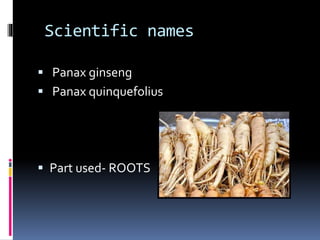
Scientific names
 Panax ginseng
 Panax quinquefolius
 Part used- ROOTS
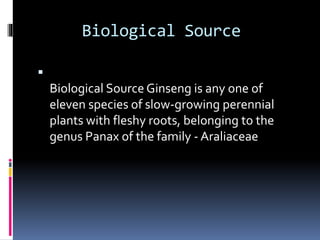
Biological Source

Biological Source Ginseng is any one of
eleven species of slow-growing perennial
plants with fleshy roots, belonging to the
genus Panax of the family - Araliaceae
Geographical source
 Ginseng is found only in the Northern
Hemisphere,
 in North America
 in eastern Asia (mostly Korea , northern China
( Manchuria ), and eastern Siberia ), typically
in cooler climates
Commercial Varieties
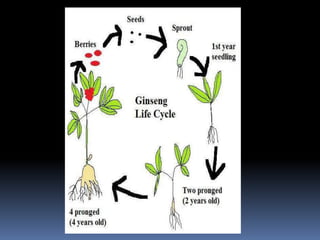
Cultivation
 It is prennial growing to 0.8 to 0.7cm.
 It is cultivated by seed propagation method.
 The ripe seeds are collected & sown in a nursery
beds in months of november.
 After about a period of 5 to 6 months.
 The seedlings are transplanted in the open fields
,proper shade is provided for protecting.
 It from direct sun light & plants are allowed to grow
for 3 to 5 yrs .
 The drug is harvested in between july to october .
Adulterants
Codonopsis tangshen a well flowered plant
used by poor people in china as a substitute
for costly ginseng. Ginseng is sometimes
adulterated with senega root & with virginian
snake roots .
USES
 anti –stress
 Anticancer
 immune system
 Modulation
 Cardiovascular
 CNS, and hormonal effects
 for improvement of athletic performance.
Great Heart Tonic
 Red panax ginseng are particularly beneficial
to patients with heart disorders
 as it decreases the oxidation of LDL
cholesterol.
 It contributes to the health of the
cardiovascular system and promotes healthy
blood flow.
 it may increase your blood pressure and so,
those with high blood pressure should avoid
it.
Treatment of Erectile
Dysfunction
 Ginseng can treat sex related conditions like
erectile dysfunction in men.
 Red panax ginseng has been used in Chinese
herbal medicine for the treatment of sexual
disorders because of its positive effects on
erection, desire and sexual satisfaction.
Korean red ginseng has also been used to
stimulate male sexual function.
Benefits for Women
 American ginseng tea is often recommended
to young women to ease menstrual cramps.
 This herb is effective in relieving stomach
pain associated with menstruation.
 Ginseng is often recommended to
perimenopausal women to improve
oestrogen production in the body.
Anti-inflammatory Properties
 Ginseng comprises of seven constituent
ginsenocides, which possess immune-
suppressive effects. Its anti-inflammatory
properties can be attributed to the combined
effects of the ginsenocides, which target
different levels of immunological activity in
the body
Aids in Weight Control:
 Ginseng tea is a great appetite suppressant
and aids in controlling weight.
 Extract from ginseng berry can help fight
obesity and aid in weight management.
CHEMICAL CONSTITUENTS
 These include
 triterpene saponins
 essential oil-containing polyacetylenes
 Sesquiterpenes
 Polysaccharides
 peptidoglycans,
 nitrogen-containing compounds
 compounds such as fatty acid, carbohydrates, and
phenolic compounds
 the major biologically active constituents - the 20(S)-
protopanaxadiol and 20(S)- protopanaxatriol
Dosage of Ginseng-
 Crude preparations of dried root powder 1 to
2 g can be taken daily for up to 3 months.
 In numerous clinical trials, the dosage of
crude root has ranged from 0.5 to 3 g/day and
the dose of extracts has generally ranged
from 100 to 400 mg.
Side Effects
 Allergic reactions have been reported.
 In appropriate use of P.ginsengor ginseng abuse
syndrome includes symptoms - such as
 high blood pressure
 Diarrhea
 Sleeplessness
 breast pain,
 skin rash
 confusion,
 depression .
Classification
 Asian ginseng (root)
 Red ginseng
 White ginseng
 Fresh ginseng
 Wild ginseng
Ginseng
Ginseng

Ginseng

  • 1.
  • 2.
    Common Name  Commonnames -:  Panax Asiatic ginseng  Chinese ginseng  Ginseng root  Pannag Ninjin
  • 3.
    Scientific names  Panaxginseng  Panax quinquefolius  Part used- ROOTS
  • 4.
    Biological Source  Biological SourceGinseng is any one of eleven species of slow-growing perennial plants with fleshy roots, belonging to the genus Panax of the family - Araliaceae
  • 5.
    Geographical source  Ginsengis found only in the Northern Hemisphere,  in North America  in eastern Asia (mostly Korea , northern China ( Manchuria ), and eastern Siberia ), typically in cooler climates
  • 6.
    Commercial Varieties Cultivation  Itis prennial growing to 0.8 to 0.7cm.  It is cultivated by seed propagation method.  The ripe seeds are collected & sown in a nursery beds in months of november.  After about a period of 5 to 6 months.  The seedlings are transplanted in the open fields ,proper shade is provided for protecting.  It from direct sun light & plants are allowed to grow for 3 to 5 yrs .  The drug is harvested in between july to october .
  • 7.
    Adulterants Codonopsis tangshen awell flowered plant used by poor people in china as a substitute for costly ginseng. Ginseng is sometimes adulterated with senega root & with virginian snake roots .
  • 8.
    USES  anti –stress Anticancer  immune system  Modulation  Cardiovascular  CNS, and hormonal effects  for improvement of athletic performance.
  • 9.
    Great Heart Tonic Red panax ginseng are particularly beneficial to patients with heart disorders  as it decreases the oxidation of LDL cholesterol.  It contributes to the health of the cardiovascular system and promotes healthy blood flow.  it may increase your blood pressure and so, those with high blood pressure should avoid it.
  • 10.
    Treatment of Erectile Dysfunction Ginseng can treat sex related conditions like erectile dysfunction in men.  Red panax ginseng has been used in Chinese herbal medicine for the treatment of sexual disorders because of its positive effects on erection, desire and sexual satisfaction. Korean red ginseng has also been used to stimulate male sexual function.
  • 11.
    Benefits for Women American ginseng tea is often recommended to young women to ease menstrual cramps.  This herb is effective in relieving stomach pain associated with menstruation.  Ginseng is often recommended to perimenopausal women to improve oestrogen production in the body.
  • 12.
    Anti-inflammatory Properties  Ginsengcomprises of seven constituent ginsenocides, which possess immune- suppressive effects. Its anti-inflammatory properties can be attributed to the combined effects of the ginsenocides, which target different levels of immunological activity in the body
  • 13.
    Aids in WeightControl:  Ginseng tea is a great appetite suppressant and aids in controlling weight.  Extract from ginseng berry can help fight obesity and aid in weight management.
  • 14.
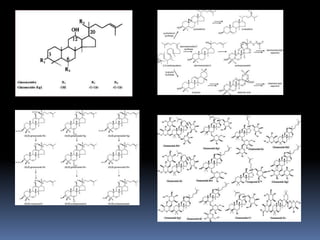
    CHEMICAL CONSTITUENTS  Theseinclude  triterpene saponins  essential oil-containing polyacetylenes  Sesquiterpenes  Polysaccharides  peptidoglycans,  nitrogen-containing compounds  compounds such as fatty acid, carbohydrates, and phenolic compounds  the major biologically active constituents - the 20(S)- protopanaxadiol and 20(S)- protopanaxatriol
  • 16.
    Dosage of Ginseng- Crude preparations of dried root powder 1 to 2 g can be taken daily for up to 3 months.  In numerous clinical trials, the dosage of crude root has ranged from 0.5 to 3 g/day and the dose of extracts has generally ranged from 100 to 400 mg.
  • 17.
    Side Effects  Allergicreactions have been reported.  In appropriate use of P.ginsengor ginseng abuse syndrome includes symptoms - such as  high blood pressure  Diarrhea  Sleeplessness  breast pain,  skin rash  confusion,  depression .
  • 18.
    Classification  Asian ginseng(root)  Red ginseng  White ginseng  Fresh ginseng  Wild ginseng