




Trends in open and online education:
is it just MOOCs?
Robert Schuwer
A detour
About me
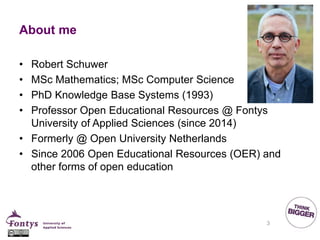
• Robert Schuwer
• MSc Mathematics; MSc Computer Science
• PhD Knowledge Base Systems (1993)
• Professor Open Educational Resources @ Fontys
University of Applied Sciences (since 2014)
• Formerly @ Open University Netherlands
• Since 2006 Open Educational Resources (OER) and
other forms of open education
3
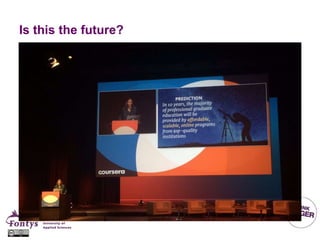
Is this the future?
Agenda
• Trends in (online) education
• Trends in open education
CC-BY Hester Jelgerhuis
Trends in (online)
education
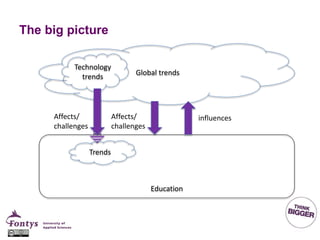
The big picture
Global trends
Education
Technology
trends
Affects/
challenges
Affects/
challenges
influences
Trends
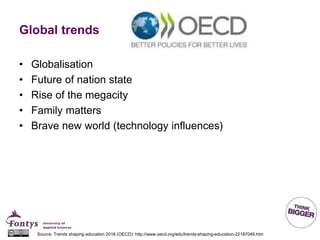
Global trends
• Globalisation
• Future of nation state
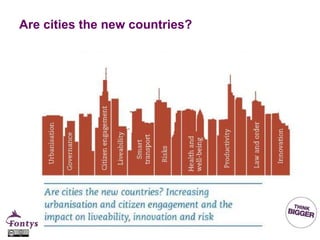
• Rise of the megacity
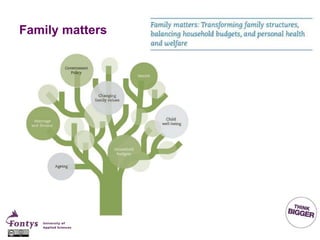
• Family matters
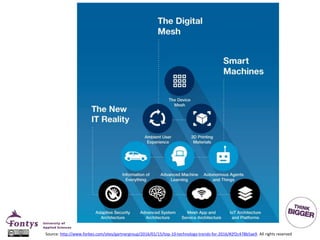
• Brave new world (technology influences)
Source: Trends shaping education 2016 (OECD): http://www.oecd.org/edu/trends-shaping-education-22187049.htm
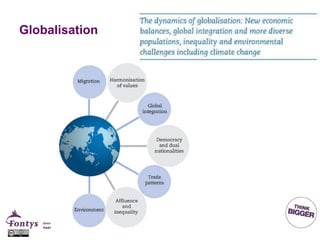
Globalisation
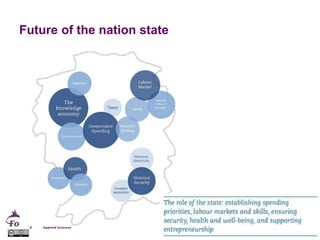
Future of the nation state
Are cities the new countries?
Family matters
Technology trends
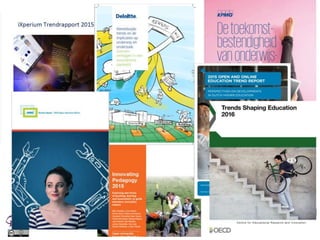
• Several sources
– NMC Horizon
– Ixperium
– Gartner
– Forbes
– OECD
Source: http://www.forbes.com/sites/gartnergroup/2016/01/15/top-10-technology-trends-for-2016/#2f2c478b5ae9. All rights reserved
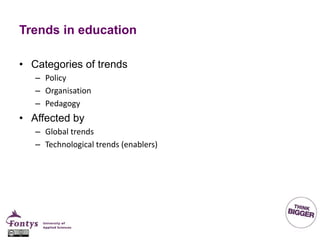
Trends in education
• Categories of trends
– Policy
– Organisation
– Pedagogy
• Affected by
– Global trends
– Technological trends (enablers)
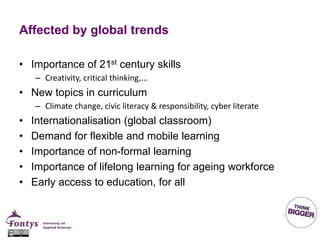
Affected by global trends
• Importance of 21st century skills
– Creativity, critical thinking,...
• New topics in curriculum
– Climate change, civic literacy & responsibility, cyber literate
• Internationalisation (global classroom)
• Demand for flexible and mobile learning
• Importance of non-formal learning
• Importance of lifelong learning for ageing workforce
• Early access to education, for all
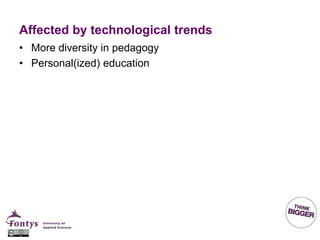
Affected by technological trends
• More diversity in pedagogy
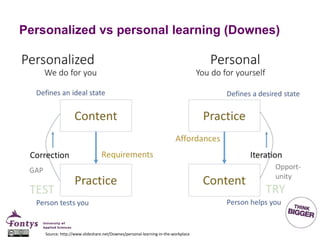
• Personal(ized) education
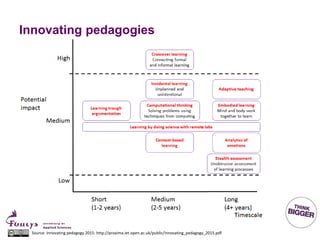
Innovating pedagogies
Source: Innovating pedagogy 2015: http://proxima.iet.open.ac.uk/public/innovating_pedagogy_2015.pdf
Personalized vs personal learning (Downes)
Source: http://www.slideshare.net/Downes/personal-learning-in-the-workplace
CC-BY Hester Jelgerhuis
Trends in Open
Education
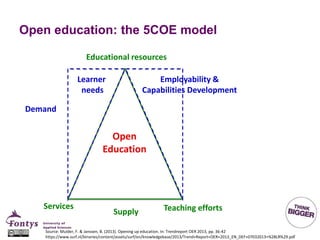
Open education: the 5COE model
Open
Education
Educational resources
Teaching effortsServices
Learner
needs
Employability &
Capabilities Development
Supply
Demand
Source: Mulder, F. & Janssen, B. (2013). Opening up education. In: Trendreport OER 2013, pp. 36-42
https://www.surf.nl/binaries/content/assets/surf/en/knowledgebase/2013/Trend+Report+OER+2013_EN_DEF+07032013+%28LR%29.pdf
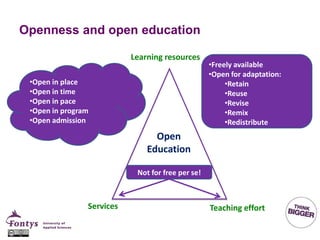
Openness and open education
Open
Education
Learning resources
Teaching effortServices
•Freely available
•Open for adaptation:
•Retain
•Reuse
•Revise
•Remix
•Redistribute
•Open in place
•Open in time
•Open in pace
•Open in program
•Open admission
Not for free per se!
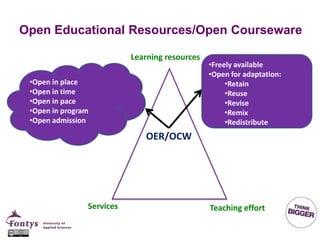
Open Educational Resources/Open Courseware
OER/OCW
Learning resources
Teaching effortServices
•Freely available
•Open for adaptation:
•Retain
•Reuse
•Revise
•Remix
•Redistribute
•Open in place
•Open in time
•Open in pace
•Open in program
•Open admission
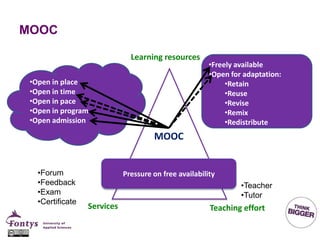
MOOC
MOOC
Learning resources
Teaching effortServices
•Freely available
•Open for adaptation:
•Retain
•Reuse
•Revise
•Remix
•Redistribute
•Open in place
•Open in time
•Open in pace
•Open in program
•Open admission
•Forum
•Feedback
•Exam
•Certificate
•Teacher
•Tutor
Pressure on free availability
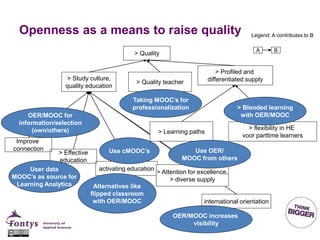
Openness as a means to raise quality
activating education
international orientation
> Profiled and
differentiated supply
> Quality
> Study culture,
quality education
> Effective
education
> flexibility in HE
voor parttime learners
> Quality teacher
> Learning paths
Improve
connection
> Attention for excellence,
> diverse supply
OER/MOOC for
information/selection
(own/others)
Alternatives like
flipped classroom
with OER/MOOC
Use cMOOC’s Use OER/
MOOC from others
OER/MOOC increases
visibility
> Blended learning
with OER/MOOC
A B
Legend: A contributes to B
Taking MOOC’s for
professionalization
User data
MOOC’s as source for
Learning Analytics
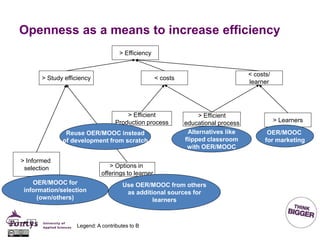
Openness as a means to increase efficiency
> Efficiency
> Study efficiency < costs
> Informed
selection > Options in
offerings to learner
> Efficient
educational process > Learners
< costs/
learner
Use OER/MOOC from others
as additional sources for
learners
Alternatives like
flipped classroom
with OER/MOOC
OER/MOOC
for marketing
A B
Legend: A contributes to B
OER/MOOC for
information/selection
(own/others)
> Efficient
Production process
Reuse OER/MOOC instead
of development from scratch
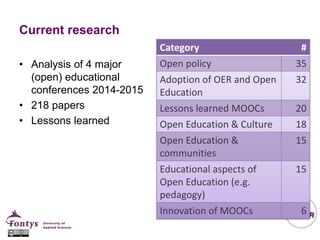
Current research
• Analysis of 4 major
(open) educational
conferences 2014-2015
• 218 papers
• Lessons learned
Category #
Open policy 35
Adoption of OER and Open
Education
32
Lessons learned MOOCs 20
Open Education & Culture 18
Open Education &
communities
15
Educational aspects of
Open Education (e.g.
pedagogy)
15
Innovation of MOOCs 6
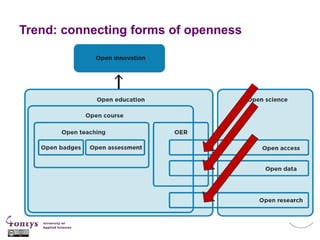
Trend: connecting forms of openness
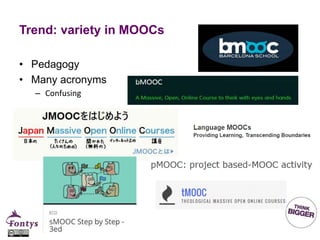
Trend: variety in MOOCs
• Pedagogy
• Many acronyms
– Confusing
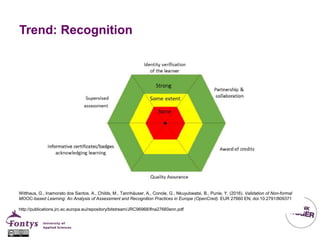
Trend: Recognition
Witthaus, G., Inamorato dos Santos. A., Childs, M., Tannhäuser, A., Conole, G., Nkuyubwatsi, B., Punie, Y. (2016). Validation of Non-formal
MOOC-based Learning: An Analysis of Assessment and Recognition Practices in Europe (OpenCred). EUR 27660 EN; doi:10.2791/809371
http://publications.jrc.ec.europa.eu/repository/bitstream/JRC96968/lfna27660enn.pdf
Trend: Research on effectiveness
• Influence of openness on results of learning
• Studies on effects of OER (open textbooks)
– No significant differences in # completions, compared to users of
proprietary books
– No significant differences in achievement
• Studies on perception
– At least the same quality for OER as for proprietary resources
• Gains partly explained by financial benefits
Fischer, L., Hilton, J., Robinson, T. J., & Wiley, D. A. (2015). A multi-institutional study of the impact of open textbook adoption on the learning outcomes of
post-secondary students. Journal of Computing in Higher Education, 27(3), 159–172. http://doi.org/10.1007/s12528-015-9101-x
Hilton, J. (2016). Open educational resources and college textbook choices: a review of research on efficacy and perceptions. Educational Technology
Research and Development. http://doi.org/10.1007/s11423-016-9434-9
Conclusions
• Many trends resulting in many challenges
• Open education can be a means
• Large variety in pedagogies for better results
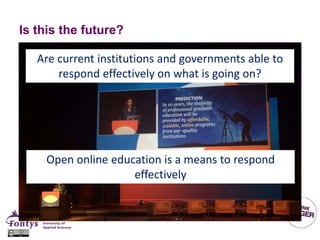
Is this the future?
Are current institutions and governments able to
respond effectively on what is going on?
Open online education is a means to respond
effectively
Thank you!
@fagottissimo
bassoonvenlo
http://nl.linkedin.com/in/robertschuwer
robertschuwer.nl
+31 - 6 1446 9300
r.schuwer@fontys.nl
35

Trends in open and online education

  • 1.
    Trends in openand online education: is it just MOOCs? Robert Schuwer
  • 2.
  • 3.
    About me • RobertSchuwer • MSc Mathematics; MSc Computer Science • PhD Knowledge Base Systems (1993) • Professor Open Educational Resources @ Fontys University of Applied Sciences (since 2014) • Formerly @ Open University Netherlands • Since 2006 Open Educational Resources (OER) and other forms of open education 3
  • 4.
    Is this thefuture?
  • 5.
    Agenda • Trends in(online) education • Trends in open education
  • 6.
    CC-BY Hester Jelgerhuis Trendsin (online) education
  • 8.
    The big picture Globaltrends Education Technology trends Affects/ challenges Affects/ challenges influences Trends
  • 9.
    Global trends • Globalisation •Future of nation state • Rise of the megacity • Family matters • Brave new world (technology influences) Source: Trends shaping education 2016 (OECD): http://www.oecd.org/edu/trends-shaping-education-22187049.htm
  • 10.
  • 11.
    Future of thenation state
  • 12.
    Are cities thenew countries?
  • 13.
  • 14.
    Technology trends • Severalsources – NMC Horizon – Ixperium – Gartner – Forbes – OECD
  • 15.
  • 16.
    Trends in education •Categories of trends – Policy – Organisation – Pedagogy • Affected by – Global trends – Technological trends (enablers)
  • 17.
    Affected by globaltrends • Importance of 21st century skills – Creativity, critical thinking,... • New topics in curriculum – Climate change, civic literacy & responsibility, cyber literate • Internationalisation (global classroom) • Demand for flexible and mobile learning • Importance of non-formal learning • Importance of lifelong learning for ageing workforce • Early access to education, for all
  • 18.
    Affected by technologicaltrends • More diversity in pedagogy • Personal(ized) education
  • 19.
    Innovating pedagogies Source: Innovatingpedagogy 2015: http://proxima.iet.open.ac.uk/public/innovating_pedagogy_2015.pdf
  • 20.
    Personalized vs personallearning (Downes) Source: http://www.slideshare.net/Downes/personal-learning-in-the-workplace
  • 21.
  • 22.
    Open education: the5COE model Open Education Educational resources Teaching effortsServices Learner needs Employability & Capabilities Development Supply Demand Source: Mulder, F. & Janssen, B. (2013). Opening up education. In: Trendreport OER 2013, pp. 36-42 https://www.surf.nl/binaries/content/assets/surf/en/knowledgebase/2013/Trend+Report+OER+2013_EN_DEF+07032013+%28LR%29.pdf
  • 23.
    Openness and openeducation Open Education Learning resources Teaching effortServices •Freely available •Open for adaptation: •Retain •Reuse •Revise •Remix •Redistribute •Open in place •Open in time •Open in pace •Open in program •Open admission Not for free per se!
  • 24.
    Open Educational Resources/OpenCourseware OER/OCW Learning resources Teaching effortServices •Freely available •Open for adaptation: •Retain •Reuse •Revise •Remix •Redistribute •Open in place •Open in time •Open in pace •Open in program •Open admission
  • 25.
    MOOC MOOC Learning resources Teaching effortServices •Freelyavailable •Open for adaptation: •Retain •Reuse •Revise •Remix •Redistribute •Open in place •Open in time •Open in pace •Open in program •Open admission •Forum •Feedback •Exam •Certificate •Teacher •Tutor Pressure on free availability
  • 26.
    Openness as ameans to raise quality activating education international orientation > Profiled and differentiated supply > Quality > Study culture, quality education > Effective education > flexibility in HE voor parttime learners > Quality teacher > Learning paths Improve connection > Attention for excellence, > diverse supply OER/MOOC for information/selection (own/others) Alternatives like flipped classroom with OER/MOOC Use cMOOC’s Use OER/ MOOC from others OER/MOOC increases visibility > Blended learning with OER/MOOC A B Legend: A contributes to B Taking MOOC’s for professionalization User data MOOC’s as source for Learning Analytics
  • 27.
    Openness as ameans to increase efficiency > Efficiency > Study efficiency < costs > Informed selection > Options in offerings to learner > Efficient educational process > Learners < costs/ learner Use OER/MOOC from others as additional sources for learners Alternatives like flipped classroom with OER/MOOC OER/MOOC for marketing A B Legend: A contributes to B OER/MOOC for information/selection (own/others) > Efficient Production process Reuse OER/MOOC instead of development from scratch
  • 28.
    Current research • Analysisof 4 major (open) educational conferences 2014-2015 • 218 papers • Lessons learned Category # Open policy 35 Adoption of OER and Open Education 32 Lessons learned MOOCs 20 Open Education & Culture 18 Open Education & communities 15 Educational aspects of Open Education (e.g. pedagogy) 15 Innovation of MOOCs 6
  • 29.
  • 30.
    Trend: variety inMOOCs • Pedagogy • Many acronyms – Confusing
  • 31.
    Trend: Recognition Witthaus, G.,Inamorato dos Santos. A., Childs, M., Tannhäuser, A., Conole, G., Nkuyubwatsi, B., Punie, Y. (2016). Validation of Non-formal MOOC-based Learning: An Analysis of Assessment and Recognition Practices in Europe (OpenCred). EUR 27660 EN; doi:10.2791/809371 http://publications.jrc.ec.europa.eu/repository/bitstream/JRC96968/lfna27660enn.pdf
  • 32.
    Trend: Research oneffectiveness • Influence of openness on results of learning • Studies on effects of OER (open textbooks) – No significant differences in # completions, compared to users of proprietary books – No significant differences in achievement • Studies on perception – At least the same quality for OER as for proprietary resources • Gains partly explained by financial benefits Fischer, L., Hilton, J., Robinson, T. J., & Wiley, D. A. (2015). A multi-institutional study of the impact of open textbook adoption on the learning outcomes of post-secondary students. Journal of Computing in Higher Education, 27(3), 159–172. http://doi.org/10.1007/s12528-015-9101-x Hilton, J. (2016). Open educational resources and college textbook choices: a review of research on efficacy and perceptions. Educational Technology Research and Development. http://doi.org/10.1007/s11423-016-9434-9
  • 33.
    Conclusions • Many trendsresulting in many challenges • Open education can be a means • Large variety in pedagogies for better results
  • 34.
    Is this thefuture? Are current institutions and governments able to respond effectively on what is going on? Open online education is a means to respond effectively
  • 35.

Editor's Notes

  • #10 Some also mentioned by Deloitte, but OECD is more globally oriented and more complete OECD=Organisation for Economic Co-operation and Development
  • #32 Award of credits: ECTS or other system?