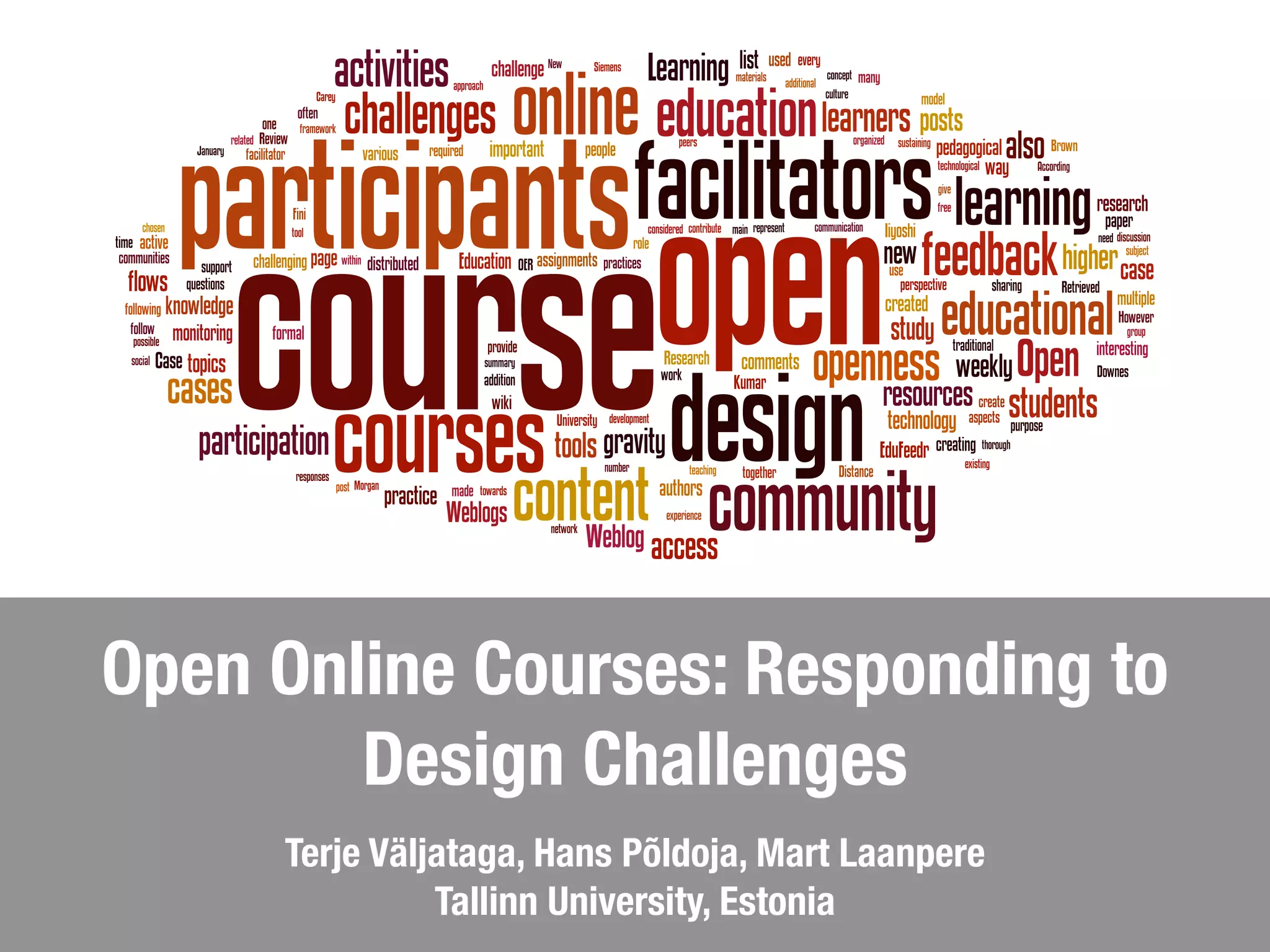
Open Online Courses: Responding to
        Design Challenges
     Terje Väljataga, Hans Põldoja, Mart Laanpere
               Tallinn University, Estonia
cba
This work is licensed under the Creative Commons
Attribution-ShareAlike 3.0 Unported License. To view a copy
of this license, visit http://creativecommons.org/licenses/by-sa/
3.0/ or send a letter to Creative Commons, 444 Castro
Street, Suite 900, Mountain View, California, 94041, USA.
What are open online
     courses?
MOOC
Massive Open Online Course
Pedagogical design
   challenges
Creating and sustaining
        community gravity

•   How to design sustainable community gravity?

•   What are the mechanisms for bringing and keeping
    together distributed groups?

•   What are the tools and techniques that facilitate
    and support the emergence of strong community
    gravity?
Monitoring participation and
      content flows

•   What are the possible technological solutions for
    both students and facilitators to monitor
    participation, observe content flows and
    comprehend the overall course progress?

•   How a course design can contribute to support
    monitoring heterogeneous landscapes of tools and
    services, student created content and their flows?
Designing materials and
             activities


•   To what extent the material and activities are pre-
    defined before the course starts?

•   To what extent students’ created and
    recommended activities should be included into
    this emergent course design?
Providing feedback


•   What type of feedback is realistic and required in
    open courses?

•   Who should provide feedback and how often?

•   How to increase the quality of feedback given by
    facilitators and participants?
Multiple case study
Research design


•   Multiple cases study method (Cohen, Manion &
    Morrison, 2007)

•   3 open online courses

•   Focus on 4 design challenges
Three cases
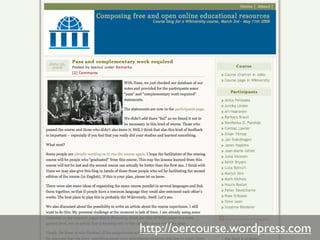
Composing free and
open online educational
      resources
http://oercourse.wordpress.com
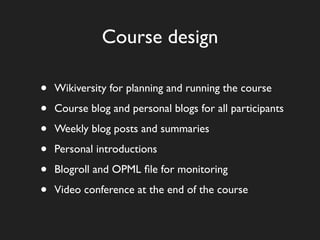
Course design

•   Wikiversity for planning and running the course

•   Course blog and personal blogs for all participants

•   Weekly blog posts and summaries

•   Personal introductions

•   Blogroll and OPML file for monitoring

•   Video conference at the end of the course
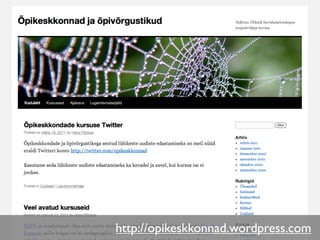
Learning environments
and learning networks
http://opikeskkonnad.wordpress.com
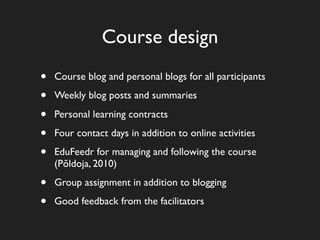
Course design
•   Course blog and personal blogs for all participants

•   Weekly blog posts and summaries

•   Personal learning contracts

•   Four contact days in addition to online activities

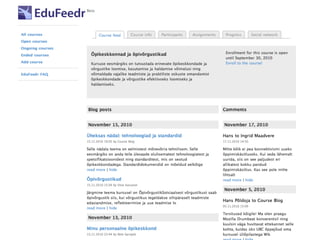
•   EduFeedr for managing and following the course
    (Põldoja, 2010)

•   Group assignment in addition to blogging

•   Good feedback from the facilitators
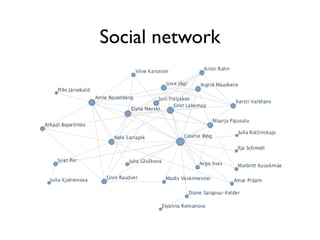
Social network
Learning & knowledge
       analytics
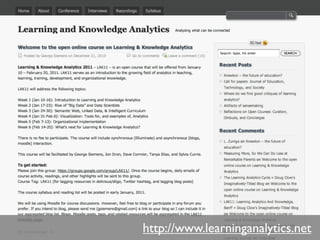
http://www.learninganalytics.net
Course design

•   The participants were free to decide on their level
    of participation

•   No required assignments

•   Moodle forum and Twitter as main communication
    tools

•   Daily summary posts by the facilitators

•   Weekly video conferences with external experts
Conclusions
Conclusions


•   Open online courses require redesigning the
    traditional patterns of learning and teaching

•   Online tools must be carefully selected to support
    planned learning activities

•   Participants see openness as an opportunity, not as
    a threat
References
• Cohen, L., Manion, L. & Morrison, K. (2007). Research methods in education.
  New York: T & F Books UK.

• Põldoja, H. (2010). EduFeedr: following and supporting learners in open blog-
  based courses. In Open ED 2010 Proceedings. Barcelona: UOC, OU, BYU.
Thank You!


Terje Väljataga             Hans Põldoja                 Mart Laanpere
terje.valjataga@tlu.ee      hans.poldoja@tlu.ee          mart.laanpere@tlu.ee
http://terjevaljataga.eu    @hanspoldoja                 @martlaa
                            http://www.hanspoldoja.net

Open Online Courses: Responding to Design Challenges

  • 1.
    Open Online Courses:Responding to Design Challenges Terje Väljataga, Hans Põldoja, Mart Laanpere Tallinn University, Estonia
  • 2.
    cba This work islicensed under the Creative Commons Attribution-ShareAlike 3.0 Unported License. To view a copy of this license, visit http://creativecommons.org/licenses/by-sa/ 3.0/ or send a letter to Creative Commons, 444 Castro Street, Suite 900, Mountain View, California, 94041, USA.
  • 3.
    What are openonline courses?
  • 4.
  • 5.
  • 6.
    Creating and sustaining community gravity • How to design sustainable community gravity? • What are the mechanisms for bringing and keeping together distributed groups? • What are the tools and techniques that facilitate and support the emergence of strong community gravity?
  • 7.
    Monitoring participation and content flows • What are the possible technological solutions for both students and facilitators to monitor participation, observe content flows and comprehend the overall course progress? • How a course design can contribute to support monitoring heterogeneous landscapes of tools and services, student created content and their flows?
  • 8.
    Designing materials and activities • To what extent the material and activities are pre- defined before the course starts? • To what extent students’ created and recommended activities should be included into this emergent course design?
  • 9.
    Providing feedback • What type of feedback is realistic and required in open courses? • Who should provide feedback and how often? • How to increase the quality of feedback given by facilitators and participants?
  • 10.
  • 11.
    Research design • Multiple cases study method (Cohen, Manion & Morrison, 2007) • 3 open online courses • Focus on 4 design challenges
  • 12.
  • 13.
    Composing free and openonline educational resources
  • 14.
  • 15.
    Course design • Wikiversity for planning and running the course • Course blog and personal blogs for all participants • Weekly blog posts and summaries • Personal introductions • Blogroll and OPML file for monitoring • Video conference at the end of the course
  • 16.
  • 17.
  • 18.
    Course design • Course blog and personal blogs for all participants • Weekly blog posts and summaries • Personal learning contracts • Four contact days in addition to online activities • EduFeedr for managing and following the course (Põldoja, 2010) • Group assignment in addition to blogging • Good feedback from the facilitators
  • 20.
  • 21.
  • 22.
  • 23.
    Course design • The participants were free to decide on their level of participation • No required assignments • Moodle forum and Twitter as main communication tools • Daily summary posts by the facilitators • Weekly video conferences with external experts
  • 24.
  • 25.
    Conclusions • Open online courses require redesigning the traditional patterns of learning and teaching • Online tools must be carefully selected to support planned learning activities • Participants see openness as an opportunity, not as a threat
  • 26.
    References • Cohen, L.,Manion, L. & Morrison, K. (2007). Research methods in education. New York: T & F Books UK. • Põldoja, H. (2010). EduFeedr: following and supporting learners in open blog- based courses. In Open ED 2010 Proceedings. Barcelona: UOC, OU, BYU.
  • 27.
    Thank You! Terje Väljataga Hans Põldoja Mart Laanpere terje.valjataga@tlu.ee hans.poldoja@tlu.ee mart.laanpere@tlu.ee http://terjevaljataga.eu @hanspoldoja @martlaa http://www.hanspoldoja.net