Must be downloaded to get the animation effects.


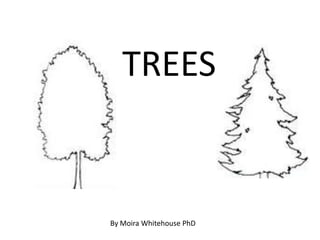
             TREES


          By Moira Whitehouse PhD
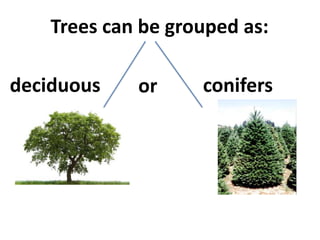
Trees can be grouped as:

deciduous    or     conifers
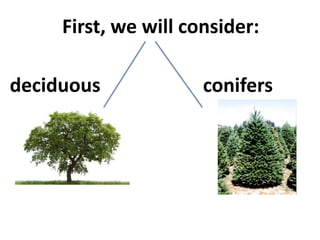
First, we will consider:

deciduous             conifers
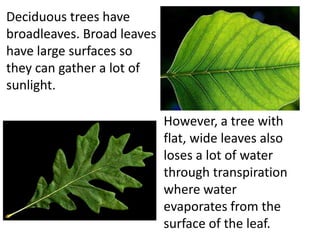
Deciduous trees have
broadleaves. Broad leaves
have large surfaces so
they can gather a lot of
sunlight.

                            However, a tree with
                            flat, wide leaves also
                            loses a lot of water
                            through transpiration
                            where water
                            evaporates from the
                            surface of the leaf.
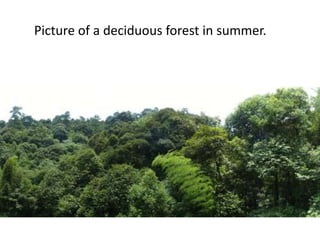
Picture of a deciduous forest in summer.
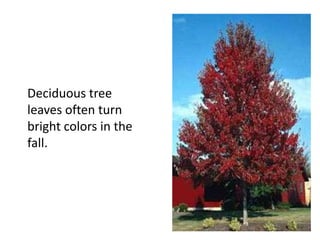
Deciduous tree
leaves often turn
bright colors in the
fall.
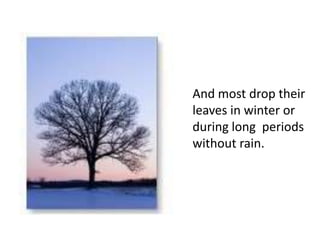
And most drop their
leaves in winter or
during long periods
without rain.
A tree drops its leaves when it is cold or dry in order
to save energy. It takes a lot of energy for a tree to
keep wide broad green and healthy.
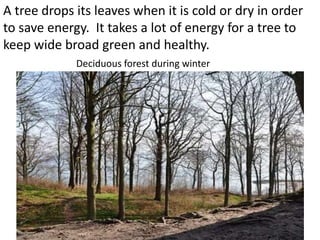
             Deciduous forest during winter
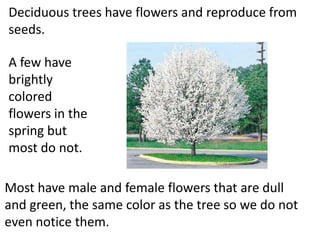
Deciduous trees have flowers and reproduce from
seeds.

A few have
brightly
colored
flowers in the
spring but
most do not.

Most have male and female flowers that are dull
and green, the same color as the tree so we do not
even notice them.
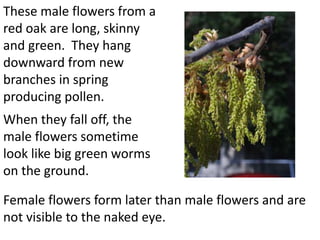
These male flowers from a
red oak are long, skinny
and green. They hang
downward from new
branches in spring
producing pollen.
When they fall off, the
male flowers sometime
look like big green worms
on the ground.

Female flowers form later than male flowers and are
not visible to the naked eye.
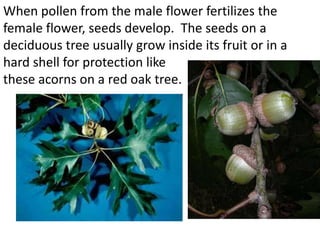
When pollen from the male flower fertilizes the
female flower, seeds develop. The seeds on a
deciduous tree usually grow inside its fruit or in a
hard shell for protection like
these acorns on a red oak tree.
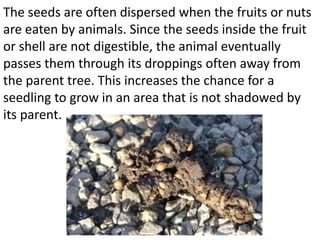
The seeds are often dispersed when the fruits or nuts
are eaten by animals. Since the seeds inside the fruit
or shell are not digestible, the animal eventually
passes them through its droppings often away from
the parent tree. This increases the chance for a
seedling to grow in an area that is not shadowed by
its parent.
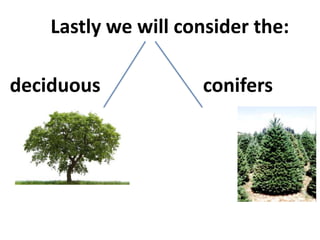
Lastly we will consider the:

deciduous            conifers
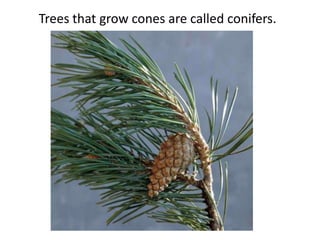
Trees that grow cones are called conifers.
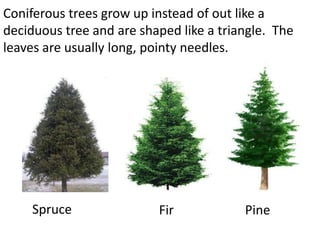
Coniferous trees grow up instead of out like a
deciduous tree and are shaped like a triangle. The
leaves are usually long, pointy needles.


     Spruce               Fir            Pine
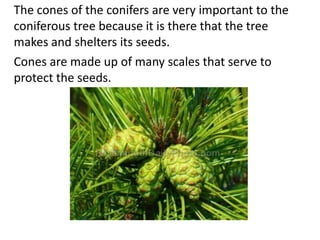
The cones of the conifers are very important to the
coniferous tree because it is there that the tree
makes and shelters its seeds.
Cones are made up of many scales that serve to
protect the seeds.
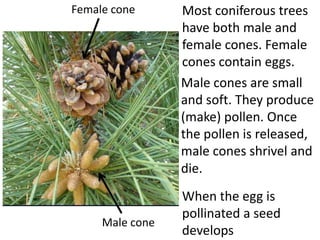
Female cone      Most coniferous trees
                 have both male and
                 female cones. Female
                 cones contain eggs.
                 Male cones are small
                 and soft. They produce
                 (make) pollen. Once
                 the pollen is
                 released, male cones
                 shrivel and die. 

                 When the egg is
                 pollinated a seed
     Male cone
                 develops
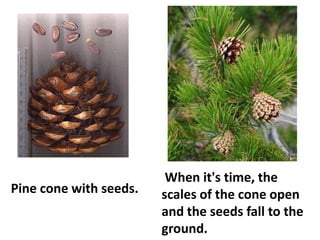
When it's time, the
Pine cone with seeds.   scales of the cone open
                        and the seeds fall to the
                        ground.
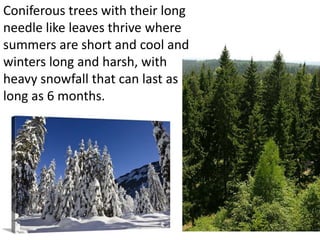
Coniferous trees with their long
needle like leaves thrive where
summers are short and cool and
winters long and harsh, with
heavy snowfall that can last as
long as 6 months.
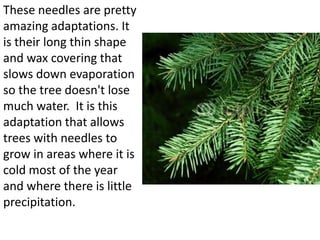
These needles are pretty
amazing adaptations. It
is their long thin shape
and wax covering that
slows down evaporation
so the tree doesn't lose
much water. It is this
adaptation that allows
trees with needles to
grow in areas where it is
cold most of the year
and where there is little
precipitation.
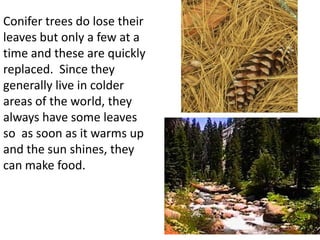
Conifer trees do lose their
leaves but only a few at a
time and these are quickly
replaced. Since they
generally live in colder
areas of the world, they
always have some leaves
so as soon as it warms up
and the sun shines, they
can make food.
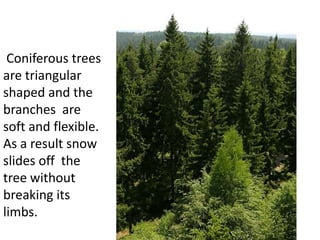
Coniferous trees
are triangular
shaped and the
branches are
soft and flexible.
As a result snow
slides off the
tree without
breaking its
limbs.
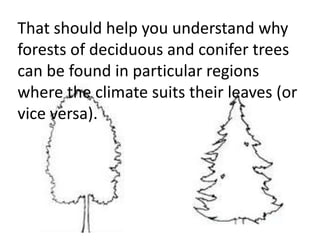
This presentation may help you
understand why forests of deciduous
and conifer trees are found in particular
regions where the climate suits their
leaves (or vice versa).

Trees, deciduous and coniferous (teach)

  • 1.
    Must be downloadedto get the animation effects. TREES By Moira Whitehouse PhD
  • 2.
    Trees can begrouped as: deciduous or conifers
  • 3.
    First, we willconsider: deciduous conifers
  • 4.
    Deciduous trees have broadleaves.Broad leaves have large surfaces so they can gather a lot of sunlight. However, a tree with flat, wide leaves also loses a lot of water through transpiration where water evaporates from the surface of the leaf.
  • 5.
    Picture of adeciduous forest in summer.
  • 6.
    Deciduous tree leaves oftenturn bright colors in the fall.
  • 7.
    And most droptheir leaves in winter or during long periods without rain.
  • 8.
    A tree dropsits leaves when it is cold or dry in order to save energy. It takes a lot of energy for a tree to keep wide broad green and healthy. Deciduous forest during winter
  • 9.
    Deciduous trees haveflowers and reproduce from seeds. A few have brightly colored flowers in the spring but most do not. Most have male and female flowers that are dull and green, the same color as the tree so we do not even notice them.
  • 10.
    These male flowersfrom a red oak are long, skinny and green. They hang downward from new branches in spring producing pollen. When they fall off, the male flowers sometime look like big green worms on the ground. Female flowers form later than male flowers and are not visible to the naked eye.
  • 11.
    When pollen fromthe male flower fertilizes the female flower, seeds develop. The seeds on a deciduous tree usually grow inside its fruit or in a hard shell for protection like these acorns on a red oak tree.
  • 12.
    The seeds areoften dispersed when the fruits or nuts are eaten by animals. Since the seeds inside the fruit or shell are not digestible, the animal eventually passes them through its droppings often away from the parent tree. This increases the chance for a seedling to grow in an area that is not shadowed by its parent.
  • 13.
    Lastly we willconsider the: deciduous conifers
  • 14.
    Trees that growcones are called conifers.
  • 15.
    Coniferous trees growup instead of out like a deciduous tree and are shaped like a triangle. The leaves are usually long, pointy needles. Spruce Fir Pine
  • 16.
    The cones ofthe conifers are very important to the coniferous tree because it is there that the tree makes and shelters its seeds. Cones are made up of many scales that serve to protect the seeds.
  • 17.
    Female cone Most coniferous trees have both male and female cones. Female cones contain eggs. Male cones are small and soft. They produce (make) pollen. Once the pollen is released, male cones shrivel and die. 
 When the egg is pollinated a seed Male cone develops
  • 18.
    When it's time,the Pine cone with seeds. scales of the cone open and the seeds fall to the ground.
  • 19.
    Coniferous trees withtheir long needle like leaves thrive where summers are short and cool and winters long and harsh, with heavy snowfall that can last as long as 6 months.
  • 20.
    These needles arepretty amazing adaptations. It is their long thin shape and wax covering that slows down evaporation so the tree doesn't lose much water. It is this adaptation that allows trees with needles to grow in areas where it is cold most of the year and where there is little precipitation.
  • 21.
    Conifer trees dolose their leaves but only a few at a time and these are quickly replaced. Since they generally live in colder areas of the world, they always have some leaves so as soon as it warms up and the sun shines, they can make food.
  • 22.
    Coniferous trees are triangular shapedand the branches are soft and flexible. As a result snow slides off the tree without breaking its limbs.
  • 23.
    This presentation mayhelp you understand why forests of deciduous and conifer trees are found in particular regions where the climate suits their leaves (or vice versa).