Earth’s Polar Regions

      First the Arctic--Tundra


By Moira Whitehouse PhD
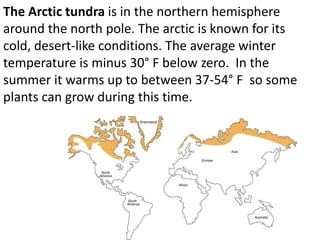
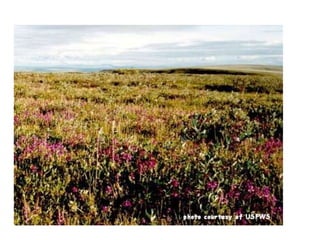
The Arctic tundra is in the northern hemisphere
around the north pole. The arctic is known for its
cold, desert-like conditions. The average winter
temperature is minus 30° F below zero. In the
summer it warms up to between 37-54° F so some
plants can grow during this time.
Summer are short,
                  cool and light most of
Winter are long   the day
cold, and dark
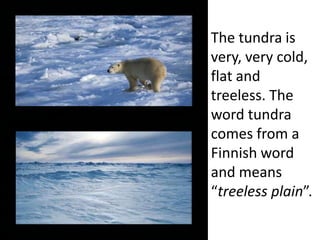
The tundra is
very, very cold,
flat and
treeless. The
word tundra
comes from a
Finnish word
and means
“treeless plain”.
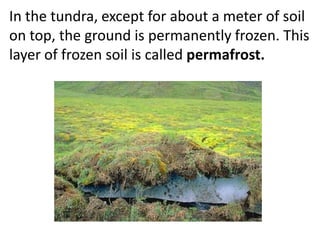
In the tundra, except for about a meter of soil
on top, the ground is permanently frozen. This
layer of frozen soil is called permafrost.
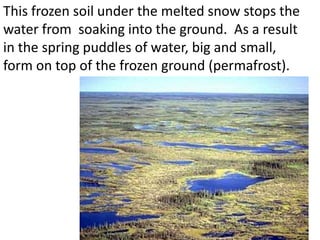
This frozen soil under the melted snow stops the
water from soaking into the ground. As a result
in the spring puddles of water, big and small,
form on top of the frozen ground (permafrost).
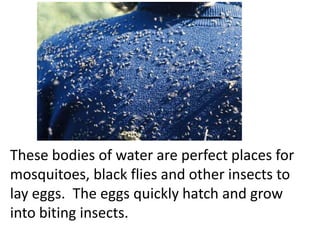
These bodies of water are perfect places for
mosquitoes, black flies and other insects to
lay eggs. The eggs quickly hatch and grow
into biting insects.
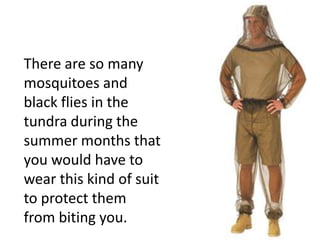
There are so many
mosquitoes and
black flies in the
tundra during the
summer months that
you would have to
wear this kind of suit
to protect them
from biting you.
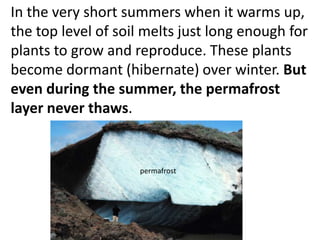
In the very short summers when it warms up,
the top level of soil melts just long enough for
plants to grow and reproduce. These plants
become dormant (hibernate) over winter. But
even during the summer, the permafrost
layer never thaws.


                    permafrost
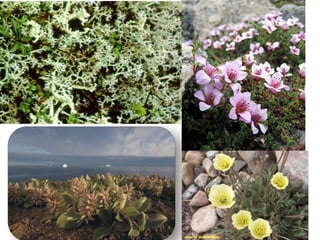
In spite of the harsh conditions, there are many
kinds of lichen and plants that grow in the Arctic.
Lichens are the main living thing in the tundra
that carries out photosynthesis. Lichens are
really two living things– an alga and a fungus.
Together they become a lichen. It is nearly
impossible to identify the alga or the fungus
once they get together and become a lichen.
Lichens can survive very cold temperatures and
many continue to live even when covered with
snow for up to three years.
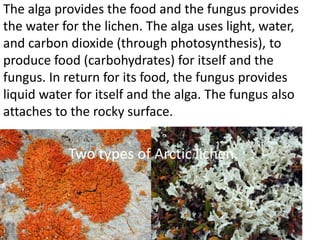
The alga provides the food and the fungus provides
the water for the lichen. The alga uses light, water,
and carbon dioxide (through photosynthesis), to
produce food (carbohydrates) for itself and the
fungus. In return for its food, the fungus provides
liquid water for itself and the alga. The fungus also
attaches to the rocky surface.


           Two types of Arctic lichen.
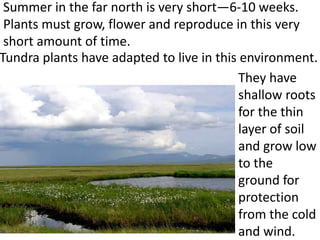
Summer in the far north is very short—6-10 weeks.
 Plants must grow, flower and reproduce in this very
 short amount of time.
Tundra plants have adapted to live in this environment.
                                           They have
                                           shallow roots
                                           for the thin
                                           layer of soil
                                           and grow low
                                           to the
                                           ground for
                                           protection
                                           from the cold
                                           and wind.
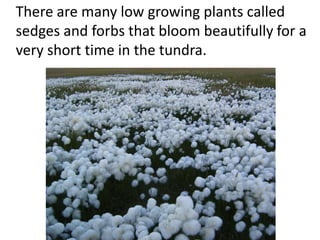
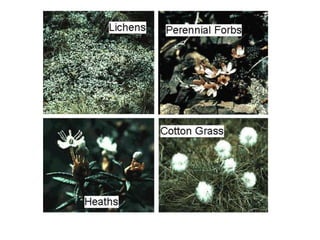
There are many low growing plants called
sedges and forbs that bloom beautifully for a
very short time in the tundra.
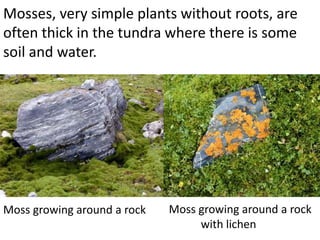
Mosses, very simple plants without roots, are
often thick in the tundra where there is some
soil and water.


Moss growing around a rock   Moss growing around a rock
                                  with lichen
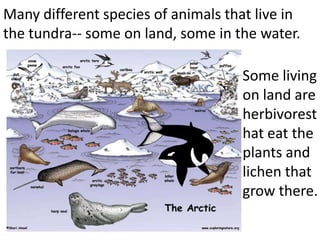
Many different species of animals that live in
the tundra-- some on land, some in the water.

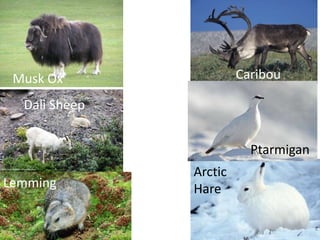
                                     Some living
                                     on land are
                                     herbivorest
                                     hat eat the
                                     plants and
                                     lichen that
                                     grow there.
Musk Ox                Caribou

  Dali Sheep


                          Ptarmigan
               Arctic
Lemming        Hare
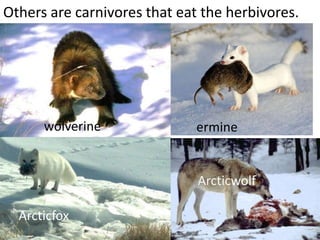
Others are carnivores that eat the herbivores.


      wolverine               ermine


                              Arcticwolf

  Arcticfox
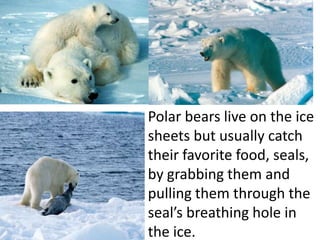
Polar bears live on the ice
sheets but usually catch
their favorite food, seals,
by grabbing them and
pulling them through the
seal’s breathing hole in
the ice.
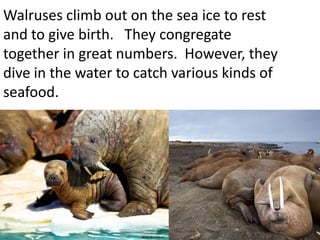
Walruses climb out on the sea ice to rest
and to give birth. They congregate
together in great numbers. However, they
dive in the water to catch various kinds of
seafood.
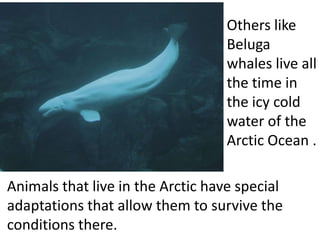
Others like
                                   Beluga
                                   whales live all
                                   the time in
                                   the icy cold
                                   water of the
                                   Arctic Ocean .

Animals that live in the Arctic have special
adaptations that allow them to survive the
conditions there.
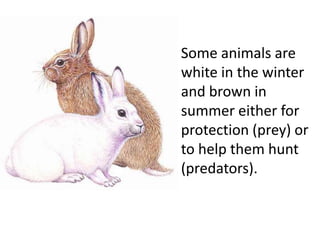
Some animals are
white in the winter
and brown in
summer either for
protection (prey) or
to help them hunt
(predators).
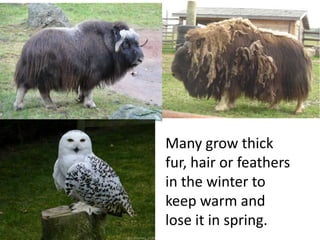
Many grow thick
fur, hair or feathers
in the winter to
keep warm and
lose it in spring.
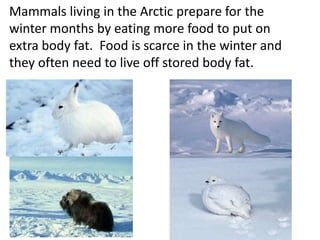
Mammals living in the Arctic prepare for the
winter months by eating more food to put on
extra body fat. Food is scarce in the winter and
they often need to live off stored body fat.
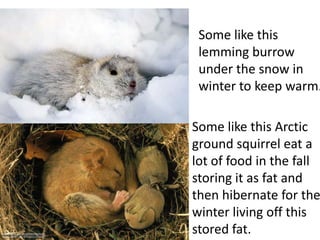
Some like this
 lemming burrow
 under the snow in
 winter to keep warm.

Some like this Arctic
ground squirrel eat a
lot of food in the fall
storing it as fat and
then hibernate for the
winter living off this
stored fat.
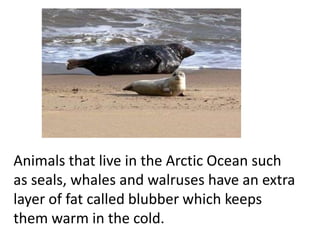
Animals that live in the Arctic Ocean such
as seals, whales and walruses have an extra
layer of fat called blubber which keeps
them warm in the cold.
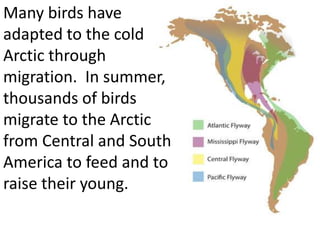
Many birds have
adapted to the cold
Arctic through
migration. In summer,
thousands of birds
migrate to the Arctic
from Central and South
America to feed and to
raise their young.
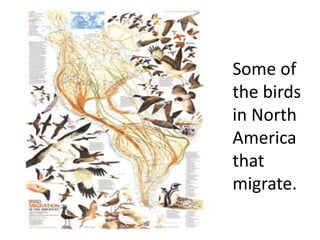
Some of
the birds
in North
America
that
migrate.
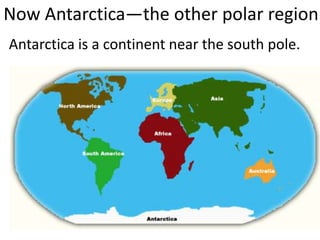
Now Antarctica—the other polar region
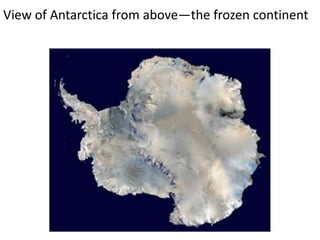
Antarctica is a continent near the south pole.
View of Antarctica from above—the frozen continent
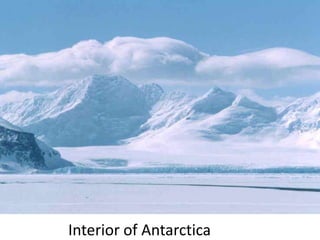
Interior of Antarctica
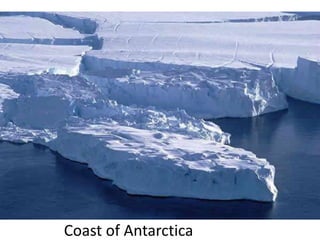
Coast of Antarctica
Antarctica is the coldest, driest, windiest place
 on Earth.
Around the coasts of Antarctica, temperatures
are generally close to freezing in the summer
months. During winter, average monthly
temperatures are always well below freezing--
between 14°F and −22°F.
On the high plateau in the middle of
Antarctica temperatures are much colder.
Here, summer temperatures struggle to get
above −4°F and monthly averages in the
winter fall below −76 °F.
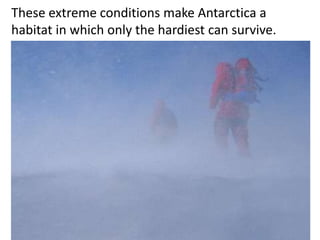
These extreme conditions make Antarctica a
habitat in which only the hardiest can survive.
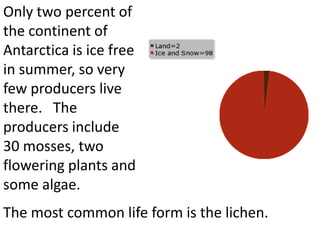
Only two percent of
the continent of
Antarctica is ice free
in summer, so very
few producers live
there. The
producers include
30 mosses, two
flowering plants and
some algae.
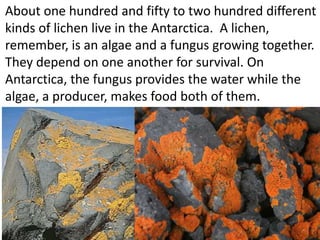
The most common life form is the lichen.
About one hundred and fifty to two hundred different
kinds of lichen live in the Antarctica. A lichen,
remember, is an algae and a fungus growing together.
They depend on one another for survival. On
Antarctica, the fungus provides the water while the
algae, a producer, makes food both of them.
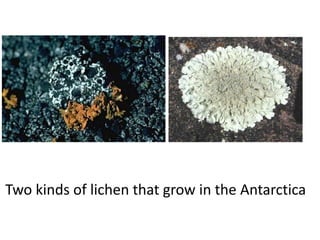
Two kinds of lichen that grow in the Antarctica
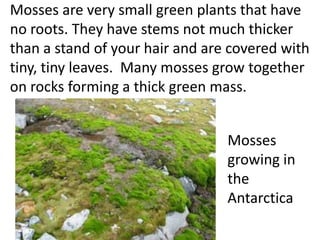
Mosses are very small green plants that have
no roots. They have stems not much thicker
than a stand of your hair and are covered with
tiny, tiny leaves. Many mosses grow together
on rocks forming a thick green mass.


                                 Mosses
                                 growing in
                                 the
                                 Antarctica
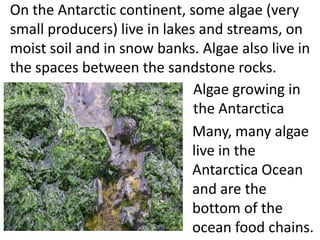
On the Antarctic continent, some algae (very
small producers) live in lakes and streams, on
moist soil and in snow banks. Algae also live in
the spaces between the sandstone rocks.
                              Algae growing in
                              the Antarctica
                              Many, many algae
                              live in the
                              Antarctica Ocean
                              and are the
                              bottom of the
                              ocean food chains.
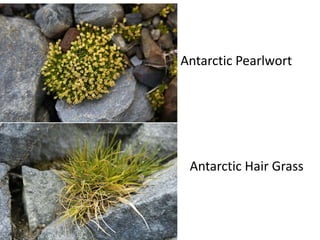
Only two native flowering plants can
survive in this cold climate, the
Antarctica Hair Grass and the Antarctica
Pearlwort. Both these plants tolerate
very cold and dry conditions. They grow
in small clumps near the shore of the
west coast of Antarctic Peninsula. This is
in marked contrast to the Arctic regions
where nearly 100 flowering plants are
found.
Antarctic Pearlwort


 Antarctic Hair Grass
Sincehardly any plants live on the continent, no
land animals can actually call it home. It's just
too cold and dry to support very many life
forms!

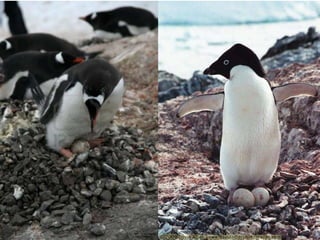
Penguins (Emperors and Adelies) are the only
birds that actually inhabit this frozen landscape.
They come on land only to breed and raise their
young. They must find their food in the oceans
surrounding Antarctica
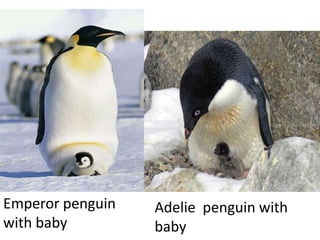
Emperor penguin   Adelie penguin with
with baby         baby
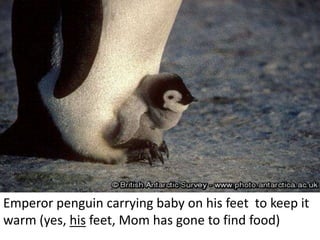
Emperor penguin carrying baby on his feet to keep it
warm (yes, his feet, Mom has gone to find food)
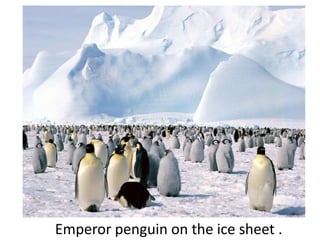
Emperor penguin on the ice sheet .
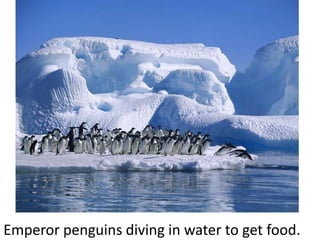
Emperor penguins diving in water to get food.
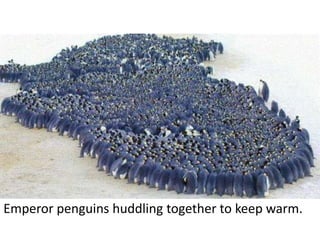
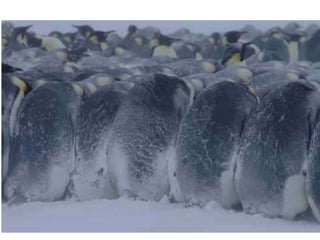
Emperor penguins huddling together to keep warm.
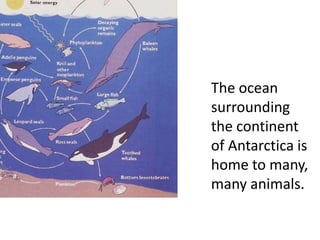
The ocean
surrounding
the continent
of Antarctica is
home to many,
many animals.
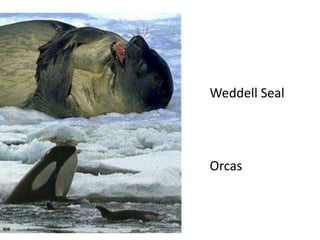
Weddell Seal


Orcas
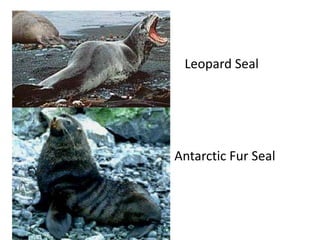
Leopard Seal


Antarctic Fur Seal
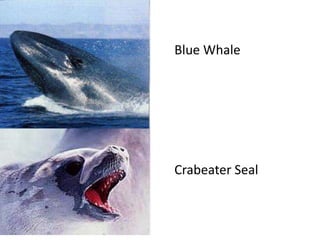
Blue Whale


Crabeater Seal
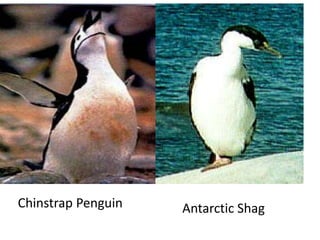
Chinstrap Penguin   Antarctic Shag
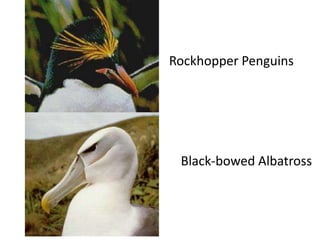
Rockhopper Penguins


 Black-bowed Albatross
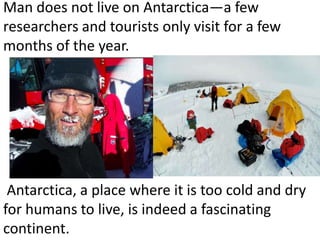
Man does not live on Antarctica—a few
researchers and tourists only visit for a few
months of the year.


 Antarctica, a place where it is too cold and dry
for humans to live, is indeed a fascinating
continent.

Arctic/Antarctic adaptions (Teach)

  • 1.
    Earth’s Polar Regions First the Arctic--Tundra By Moira Whitehouse PhD
  • 2.
    The Arctic tundrais in the northern hemisphere around the north pole. The arctic is known for its cold, desert-like conditions. The average winter temperature is minus 30° F below zero. In the summer it warms up to between 37-54° F so some plants can grow during this time.
  • 3.
    Summer are short, cool and light most of Winter are long the day cold, and dark
  • 4.
    The tundra is very,very cold, flat and treeless. The word tundra comes from a Finnish word and means “treeless plain”.
  • 5.
    In the tundra,except for about a meter of soil on top, the ground is permanently frozen. This layer of frozen soil is called permafrost.
  • 6.
    This frozen soilunder the melted snow stops the water from soaking into the ground. As a result in the spring puddles of water, big and small, form on top of the frozen ground (permafrost).
  • 7.
    These bodies ofwater are perfect places for mosquitoes, black flies and other insects to lay eggs. The eggs quickly hatch and grow into biting insects.
  • 8.
    There are somany mosquitoes and black flies in the tundra during the summer months that you would have to wear this kind of suit to protect them from biting you.
  • 9.
    In the veryshort summers when it warms up, the top level of soil melts just long enough for plants to grow and reproduce. These plants become dormant (hibernate) over winter. But even during the summer, the permafrost layer never thaws. permafrost
  • 10.
    In spite ofthe harsh conditions, there are many kinds of lichen and plants that grow in the Arctic. Lichens are the main living thing in the tundra that carries out photosynthesis. Lichens are really two living things– an alga and a fungus. Together they become a lichen. It is nearly impossible to identify the alga or the fungus once they get together and become a lichen. Lichens can survive very cold temperatures and many continue to live even when covered with snow for up to three years.
  • 11.
    The alga providesthe food and the fungus provides the water for the lichen. The alga uses light, water, and carbon dioxide (through photosynthesis), to produce food (carbohydrates) for itself and the fungus. In return for its food, the fungus provides liquid water for itself and the alga. The fungus also attaches to the rocky surface. Two types of Arctic lichen.
  • 12.
    Summer in thefar north is very short—6-10 weeks. Plants must grow, flower and reproduce in this very short amount of time. Tundra plants have adapted to live in this environment. They have shallow roots for the thin layer of soil and grow low to the ground for protection from the cold and wind.
  • 13.
    There are manylow growing plants called sedges and forbs that bloom beautifully for a very short time in the tundra.
  • 18.
    Mosses, very simpleplants without roots, are often thick in the tundra where there is some soil and water. Moss growing around a rock Moss growing around a rock with lichen
  • 19.
    Many different speciesof animals that live in the tundra-- some on land, some in the water. Some living on land are herbivorest hat eat the plants and lichen that grow there.
  • 20.
    Musk Ox Caribou Dali Sheep Ptarmigan Arctic Lemming Hare
  • 21.
    Others are carnivoresthat eat the herbivores. wolverine ermine Arcticwolf Arcticfox
  • 22.
    Polar bears liveon the ice sheets but usually catch their favorite food, seals, by grabbing them and pulling them through the seal’s breathing hole in the ice.
  • 23.
    Walruses climb outon the sea ice to rest and to give birth. They congregate together in great numbers. However, they dive in the water to catch various kinds of seafood.
  • 24.
    Others like Beluga whales live all the time in the icy cold water of the Arctic Ocean . Animals that live in the Arctic have special adaptations that allow them to survive the conditions there.
  • 25.
    Some animals are whitein the winter and brown in summer either for protection (prey) or to help them hunt (predators).
  • 26.
    Many grow thick fur,hair or feathers in the winter to keep warm and lose it in spring.
  • 27.
    Mammals living inthe Arctic prepare for the winter months by eating more food to put on extra body fat. Food is scarce in the winter and they often need to live off stored body fat.
  • 29.
    Some like this lemming burrow under the snow in winter to keep warm. Some like this Arctic ground squirrel eat a lot of food in the fall storing it as fat and then hibernate for the winter living off this stored fat.
  • 30.
    Animals that livein the Arctic Ocean such as seals, whales and walruses have an extra layer of fat called blubber which keeps them warm in the cold.
  • 31.
    Many birds have adaptedto the cold Arctic through migration. In summer, thousands of birds migrate to the Arctic from Central and South America to feed and to raise their young.
  • 32.
    Some of the birds inNorth America that migrate.
  • 33.
    Now Antarctica—the otherpolar region Antarctica is a continent near the south pole.
  • 34.
    View of Antarcticafrom above—the frozen continent
  • 35.
  • 36.
  • 37.
    Antarctica is thecoldest, driest, windiest place on Earth. Around the coasts of Antarctica, temperatures are generally close to freezing in the summer months. During winter, average monthly temperatures are always well below freezing-- between 14°F and −22°F. On the high plateau in the middle of Antarctica temperatures are much colder. Here, summer temperatures struggle to get above −4°F and monthly averages in the winter fall below −76 °F.
  • 38.
    These extreme conditionsmake Antarctica a habitat in which only the hardiest can survive.
  • 39.
    Only two percentof the continent of Antarctica is ice free in summer, so very few producers live there. The producers include 30 mosses, two flowering plants and some algae. The most common life form is the lichen.
  • 40.
    About one hundredand fifty to two hundred different kinds of lichen live in the Antarctica. A lichen, remember, is an algae and a fungus growing together. They depend on one another for survival. On Antarctica, the fungus provides the water while the algae, a producer, makes food both of them.
  • 41.
    Two kinds oflichen that grow in the Antarctica
  • 42.
    Mosses are verysmall green plants that have no roots. They have stems not much thicker than a stand of your hair and are covered with tiny, tiny leaves. Many mosses grow together on rocks forming a thick green mass. Mosses growing in the Antarctica
  • 43.
    On the Antarcticcontinent, some algae (very small producers) live in lakes and streams, on moist soil and in snow banks. Algae also live in the spaces between the sandstone rocks. Algae growing in the Antarctica Many, many algae live in the Antarctica Ocean and are the bottom of the ocean food chains.
  • 44.
    Only two nativeflowering plants can survive in this cold climate, the Antarctica Hair Grass and the Antarctica Pearlwort. Both these plants tolerate very cold and dry conditions. They grow in small clumps near the shore of the west coast of Antarctic Peninsula. This is in marked contrast to the Arctic regions where nearly 100 flowering plants are found.
  • 45.
  • 46.
    Sincehardly any plantslive on the continent, no land animals can actually call it home. It's just too cold and dry to support very many life forms! Penguins (Emperors and Adelies) are the only birds that actually inhabit this frozen landscape. They come on land only to breed and raise their young. They must find their food in the oceans surrounding Antarctica
  • 48.
    Emperor penguin Adelie penguin with with baby baby
  • 49.
    Emperor penguin carryingbaby on his feet to keep it warm (yes, his feet, Mom has gone to find food)
  • 50.
    Emperor penguin onthe ice sheet .
  • 51.
    Emperor penguins divingin water to get food.
  • 52.
    Emperor penguins huddlingtogether to keep warm.
  • 54.
    The ocean surrounding the continent ofAntarctica is home to many, many animals.
  • 55.
  • 56.
  • 57.
  • 58.
    Chinstrap Penguin Antarctic Shag
  • 59.
  • 60.
    Man does notlive on Antarctica—a few researchers and tourists only visit for a few months of the year. Antarctica, a place where it is too cold and dry for humans to live, is indeed a fascinating continent.

Editor's Notes