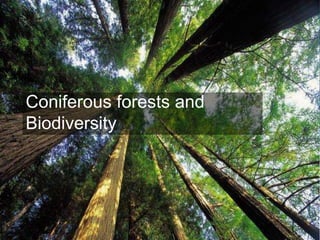
Coniferous forests and
Biodiversity
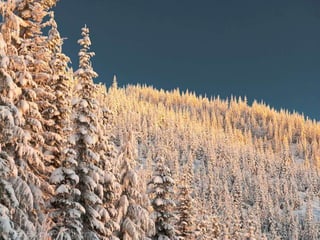
Coniferous forest regions
have cold, long, snowy
winters, and warm,
humid summers; well-
defined seasons, at least
four to six frost-free
months
Biodiversity
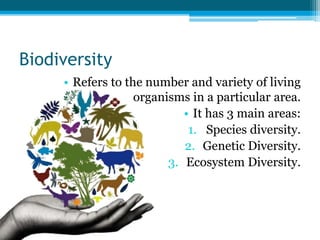
• Refers to the number and variety of living
organisms in a particular area.
• It has 3 main areas:
1. Species diversity.
2. Genetic Diversity.
3. Ecosystem Diversity.
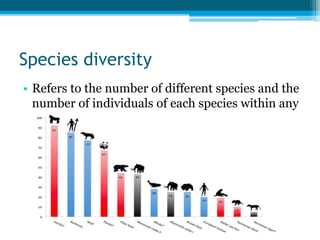
Species diversity
• Refers to the number of different species and the
number of individuals of each species within any
one community.
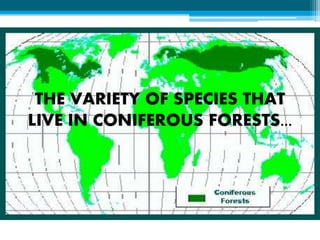
THE VARIETY OF SPECIES THAT
LIVE IN CONIFEROUS FORESTS...
Plant Species Diversity in Coniferous
Forests
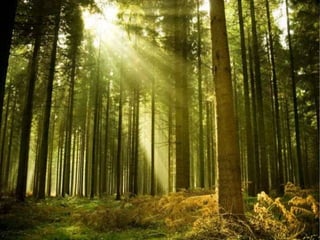
• Coniferous forests are made up mainly of cone-
bearing or coniferous trees, such as spruces,
hemlocks, pines and firs.
• The leaves of these trees are either small and needle-
like or scale-like and most stay green all year around
(evergreen).
• All are softwoods and are able to survive cold
temperatures and acidic soil.
• Coniferous forests are found mainly in the northern
hemisphere, although some are found in the
southern hemisphere.
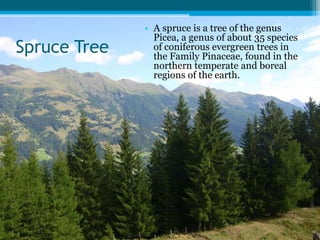
Spruce Tree
• A spruce is a tree of the genus
Picea, a genus of about 35 species
of coniferous evergreen trees in
the Family Pinaceae, found in the
northern temperate and boreal
regions of the earth.
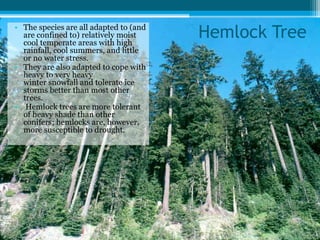
Hemlock Tree• The species are all adapted to (and
are confined to) relatively moist
cool temperate areas with high
rainfall, cool summers, and little
or no water stress.
• They are also adapted to cope with
heavy to very heavy
winter snowfall and tolerate ice
storms better than most other
trees.
• Hemlock trees are more tolerant
of heavy shade than other
conifers; hemlocks are, however,
more susceptible to drought.
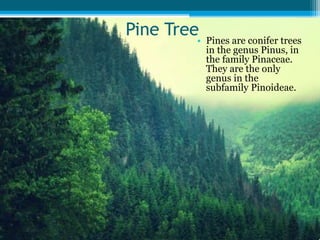
Pine Tree• Pines are conifer trees
in the genus Pinus, in
the family Pinaceae.
They are the only
genus in the
subfamily Pinoideae.
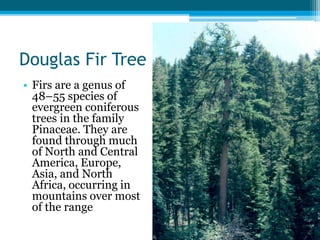
Douglas Fir Tree
• Firs are a genus of
48–55 species of
evergreen coniferous
trees in the family
Pinaceae. They are
found through much
of North and Central
America, Europe,
Asia, and North
Africa, occurring in
mountains over most
of the range
Animal Species Diversity in Coniferous
Forests.
• Though the Coniferous forests have fewer animal species
than other forests, they are home to several different
animals.
• Amphibians and reptiles are rare.
• Birds, insects and mammals are common.
• Not many animals can live in this habitat year-round.
(Animals deal with the hardship of cold, long winters)
• Some of the animals hibernate during the winter; while
others migrate to warmer climates.
• Of those that stay during winter, some die from
starvation, frostbite and hypothermia.
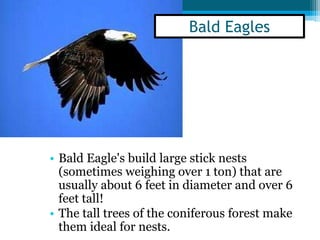
• Bald Eagle's build large stick nests
(sometimes weighing over 1 ton) that are
usually about 6 feet in diameter and over 6
feet tall!
• The tall trees of the coniferous forest make
them ideal for nests.
Bald Eagles
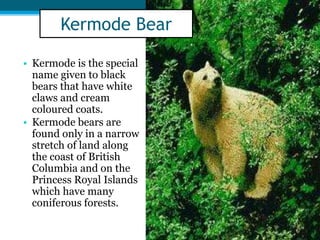
• Kermode is the special
name given to black
bears that have white
claws and cream
coloured coats.
• Kermode bears are
found only in a narrow
stretch of land along
the coast of British
Columbia and on the
Princess Royal Islands
which have many
coniferous forests.
Kermode Bear
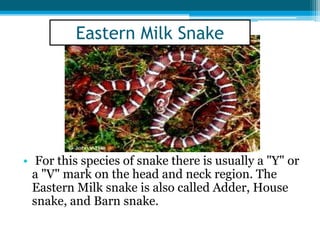
• For this species of snake there is usually a "Y" or
a "V" mark on the head and neck region. The
Eastern Milk snake is also called Adder, House
snake, and Barn snake.
Eastern Milk Snake
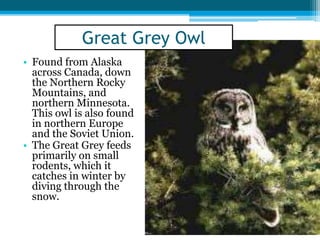
• Found from Alaska
across Canada, down
the Northern Rocky
Mountains, and
northern Minnesota.
This owl is also found
in northern Europe
and the Soviet Union.
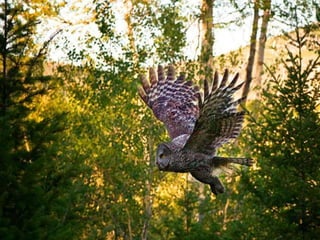
• The Great Grey feeds
primarily on small
rodents, which it
catches in winter by
diving through the
snow.
Great Grey Owl
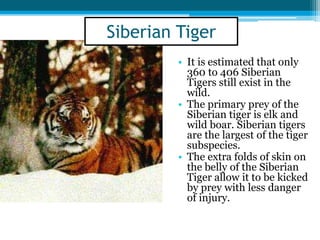
• It is estimated that only
360 to 406 Siberian
Tigers still exist in the
wild.
• The primary prey of the
Siberian tiger is elk and
wild boar. Siberian tigers
are the largest of the tiger
subspecies.
• The extra folds of skin on
the belly of the Siberian
Tiger allow it to be kicked
by prey with less danger
of injury.
Siberian Tiger
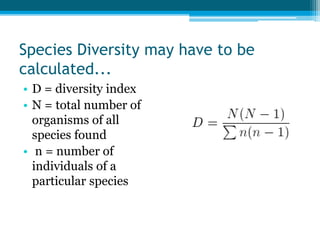
Species Diversity may have to be
calculated...
• D = diversity index
• N = total number of
organisms of all
species found
• n = number of
individuals of a
particular species
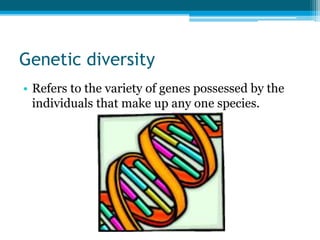
Genetic diversity
• Refers to the variety of genes possessed by the
individuals that make up any one species.
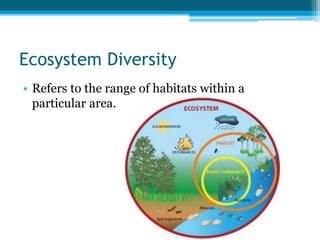
Ecosystem Diversity
• Refers to the range of habitats within a
particular area.
Ecosystem diversity…
• Biodiversity reflects how well an ecosystem
functions.
• The higher the species diversity index, the more
stable an ecosystem usually is and the less it is
affected by climate change.
• There is a high species diversity index in
coniferous forests and therefore the ecosystem is
more stable.
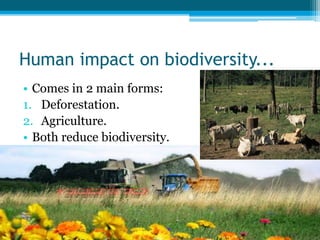
Human impact on biodiversity...
• Comes in 2 main forms:
1. Deforestation.
2. Agriculture.
• Both reduce biodiversity.
Human impact on diversity in
coniferous forests
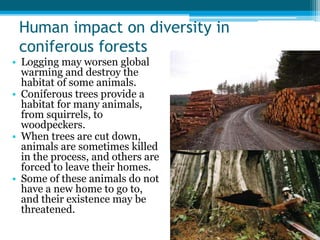
• Logging may worsen global
warming and destroy the
habitat of some animals.
• Coniferous trees provide a
habitat for many animals,
from squirrels, to
woodpeckers.
• When trees are cut down,
animals are sometimes killed
in the process, and others are
forced to leave their homes.
• Some of these animals do not
have a new home to go to,
and their existence may be
threatened.
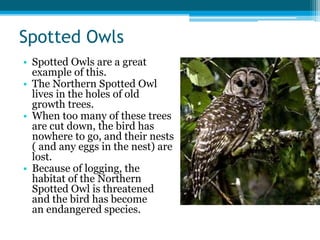
Spotted Owls
• Spotted Owls are a great
example of this.
• The Northern Spotted Owl
lives in the holes of old
growth trees.
• When too many of these trees
are cut down, the bird has
nowhere to go, and their nests
( and any eggs in the nest) are
lost.
• Because of logging, the
habitat of the Northern
Spotted Owl is threatened
and the bird has become
an endangered species.
Because of logging...
CONIFEROUS
FORESTS ARE
LOSING SPECIES
DIVERSITY AND
OVERALL BIODIVERSITY.
SUPPORT WWF!

Coniferous forest

  • 1.
  • 2.
    Coniferous forest regions havecold, long, snowy winters, and warm, humid summers; well- defined seasons, at least four to six frost-free months
  • 8.
    Biodiversity • Refers tothe number and variety of living organisms in a particular area. • It has 3 main areas: 1. Species diversity. 2. Genetic Diversity. 3. Ecosystem Diversity.
  • 9.
    Species diversity • Refersto the number of different species and the number of individuals of each species within any one community.
  • 10.
    THE VARIETY OFSPECIES THAT LIVE IN CONIFEROUS FORESTS...
  • 11.
    Plant Species Diversityin Coniferous Forests • Coniferous forests are made up mainly of cone- bearing or coniferous trees, such as spruces, hemlocks, pines and firs. • The leaves of these trees are either small and needle- like or scale-like and most stay green all year around (evergreen). • All are softwoods and are able to survive cold temperatures and acidic soil. • Coniferous forests are found mainly in the northern hemisphere, although some are found in the southern hemisphere.
  • 12.
    Spruce Tree • Aspruce is a tree of the genus Picea, a genus of about 35 species of coniferous evergreen trees in the Family Pinaceae, found in the northern temperate and boreal regions of the earth.
  • 13.
    Hemlock Tree• Thespecies are all adapted to (and are confined to) relatively moist cool temperate areas with high rainfall, cool summers, and little or no water stress. • They are also adapted to cope with heavy to very heavy winter snowfall and tolerate ice storms better than most other trees. • Hemlock trees are more tolerant of heavy shade than other conifers; hemlocks are, however, more susceptible to drought.
  • 14.
    Pine Tree• Pinesare conifer trees in the genus Pinus, in the family Pinaceae. They are the only genus in the subfamily Pinoideae.
  • 15.
    Douglas Fir Tree •Firs are a genus of 48–55 species of evergreen coniferous trees in the family Pinaceae. They are found through much of North and Central America, Europe, Asia, and North Africa, occurring in mountains over most of the range
  • 16.
    Animal Species Diversityin Coniferous Forests. • Though the Coniferous forests have fewer animal species than other forests, they are home to several different animals. • Amphibians and reptiles are rare. • Birds, insects and mammals are common. • Not many animals can live in this habitat year-round. (Animals deal with the hardship of cold, long winters) • Some of the animals hibernate during the winter; while others migrate to warmer climates. • Of those that stay during winter, some die from starvation, frostbite and hypothermia.
  • 17.
    • Bald Eagle'sbuild large stick nests (sometimes weighing over 1 ton) that are usually about 6 feet in diameter and over 6 feet tall! • The tall trees of the coniferous forest make them ideal for nests. Bald Eagles
  • 18.
    • Kermode isthe special name given to black bears that have white claws and cream coloured coats. • Kermode bears are found only in a narrow stretch of land along the coast of British Columbia and on the Princess Royal Islands which have many coniferous forests. Kermode Bear
  • 19.
    • For thisspecies of snake there is usually a "Y" or a "V" mark on the head and neck region. The Eastern Milk snake is also called Adder, House snake, and Barn snake. Eastern Milk Snake
  • 20.
    • Found fromAlaska across Canada, down the Northern Rocky Mountains, and northern Minnesota. This owl is also found in northern Europe and the Soviet Union. • The Great Grey feeds primarily on small rodents, which it catches in winter by diving through the snow. Great Grey Owl
  • 21.
    • It isestimated that only 360 to 406 Siberian Tigers still exist in the wild. • The primary prey of the Siberian tiger is elk and wild boar. Siberian tigers are the largest of the tiger subspecies. • The extra folds of skin on the belly of the Siberian Tiger allow it to be kicked by prey with less danger of injury. Siberian Tiger
  • 22.
    Species Diversity mayhave to be calculated... • D = diversity index • N = total number of organisms of all species found • n = number of individuals of a particular species
  • 23.
    Genetic diversity • Refersto the variety of genes possessed by the individuals that make up any one species.
  • 24.
    Ecosystem Diversity • Refersto the range of habitats within a particular area.
  • 25.
    Ecosystem diversity… • Biodiversityreflects how well an ecosystem functions. • The higher the species diversity index, the more stable an ecosystem usually is and the less it is affected by climate change. • There is a high species diversity index in coniferous forests and therefore the ecosystem is more stable.
  • 26.
    Human impact onbiodiversity... • Comes in 2 main forms: 1. Deforestation. 2. Agriculture. • Both reduce biodiversity.
  • 27.
    Human impact ondiversity in coniferous forests • Logging may worsen global warming and destroy the habitat of some animals. • Coniferous trees provide a habitat for many animals, from squirrels, to woodpeckers. • When trees are cut down, animals are sometimes killed in the process, and others are forced to leave their homes. • Some of these animals do not have a new home to go to, and their existence may be threatened.
  • 28.
    Spotted Owls • SpottedOwls are a great example of this. • The Northern Spotted Owl lives in the holes of old growth trees. • When too many of these trees are cut down, the bird has nowhere to go, and their nests ( and any eggs in the nest) are lost. • Because of logging, the habitat of the Northern Spotted Owl is threatened and the bird has become an endangered species.
  • 29.
    Because of logging... CONIFEROUS FORESTSARE LOSING SPECIES DIVERSITY AND OVERALL BIODIVERSITY.
  • 30.