Weathering, Erosion and
     Deposition

              By Moira Whitehouse PhD
The Earth’s surface is constantly changing.


Mount St Helens before and after it erupted in 1980.
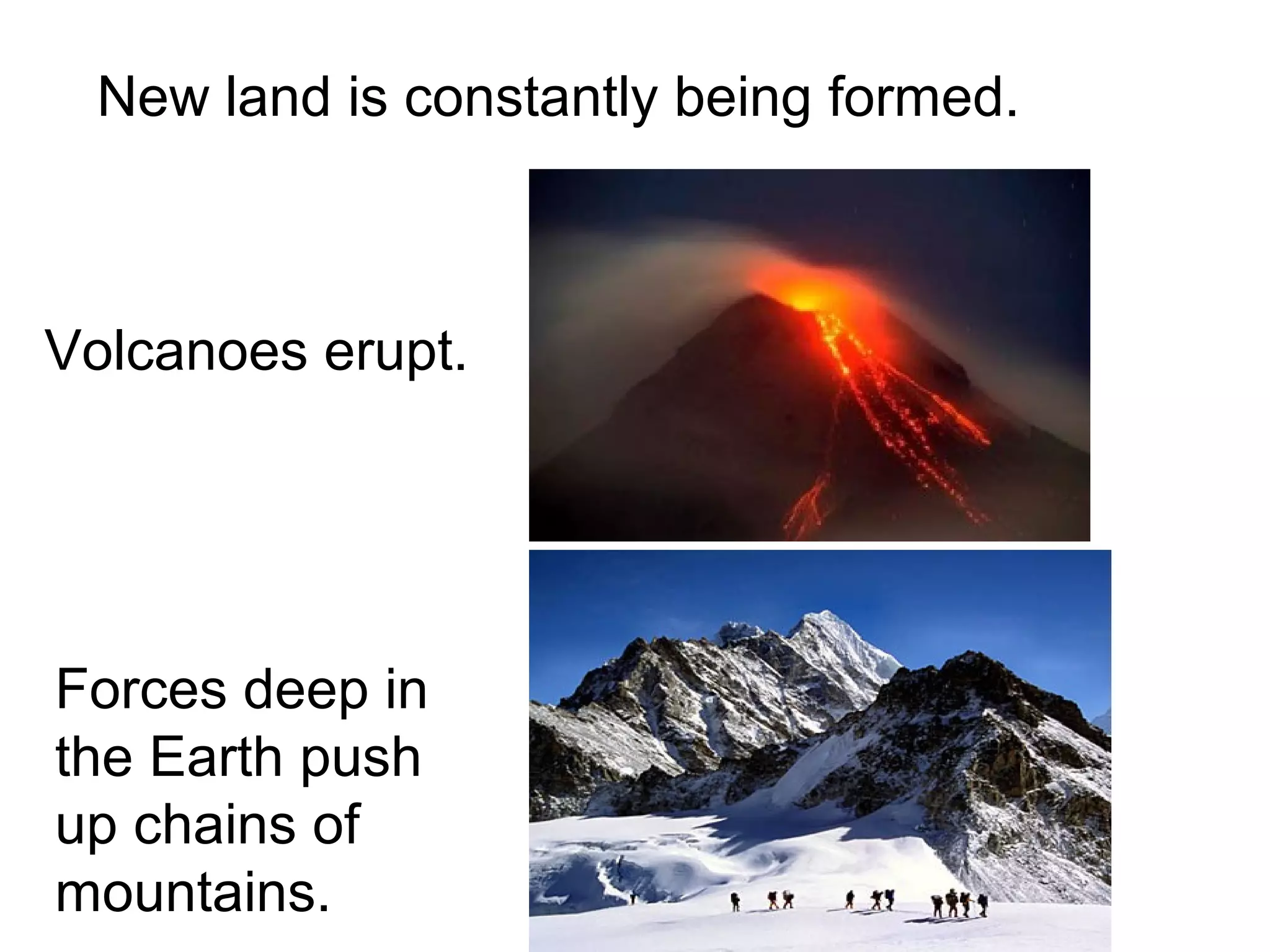
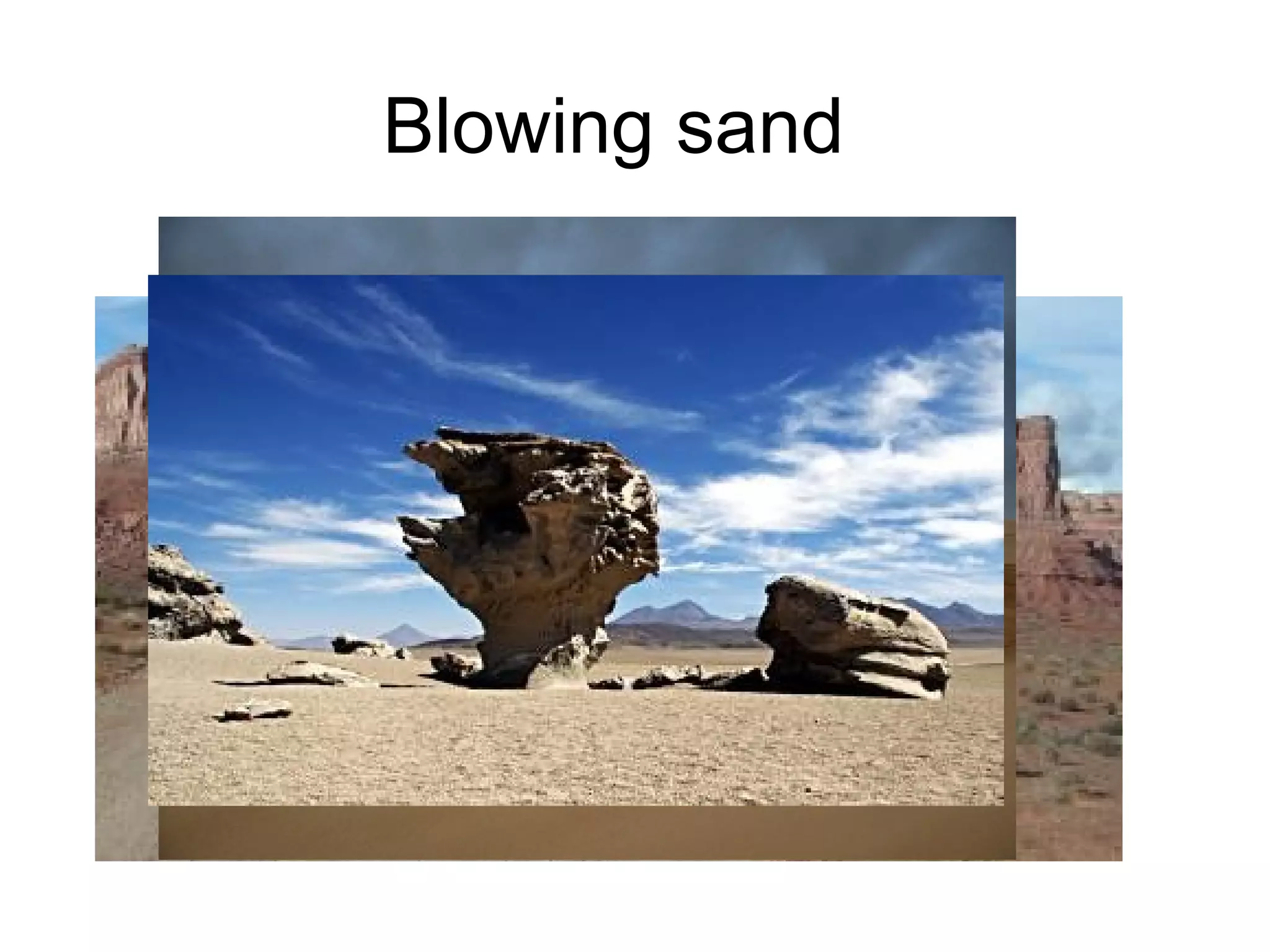
New land is constantly being formed.


Volcanoes erupt.


Forces deep in
the Earth push
up chains of
mountains.
Land is being constantly worn down by wind,
water and ice.                         original
                                        level of
                                        the
                                        plateau.
Weathering
• The breaking down of rock into
  smaller and smaller pieces.
Some things in nature that cause
          weathering
Water in cracks in the rock freezing and
expanding
Plant roots growing into rocks
Water running over rocks, causing the
rocks to hit one another and break into
smaller pieces
Wind carrying sand that wears away rock
Carbon dioxide dissolved in water forming
an acid that eats holes in the rock
Water in cracks in the rock freezes.
As it freezes it expands causing the
           rocks to break.
Expanding water as itwedgingslowly breaks up this
 Frost Action or ice freezes slowly breaks up this
      sedimentary rock into unusual shapes.
            rock into unusual shapes.
Plant roots break apart rocks
Weathering by running water

 When water in waterfalls, rivers and
streams move over rock, the rocks are
 weathered—broken into smaller and
          smaller pieces.
Fast running water causes rocks to hit
one another breaking them into smaller
                rocks.
Weathering by the wind
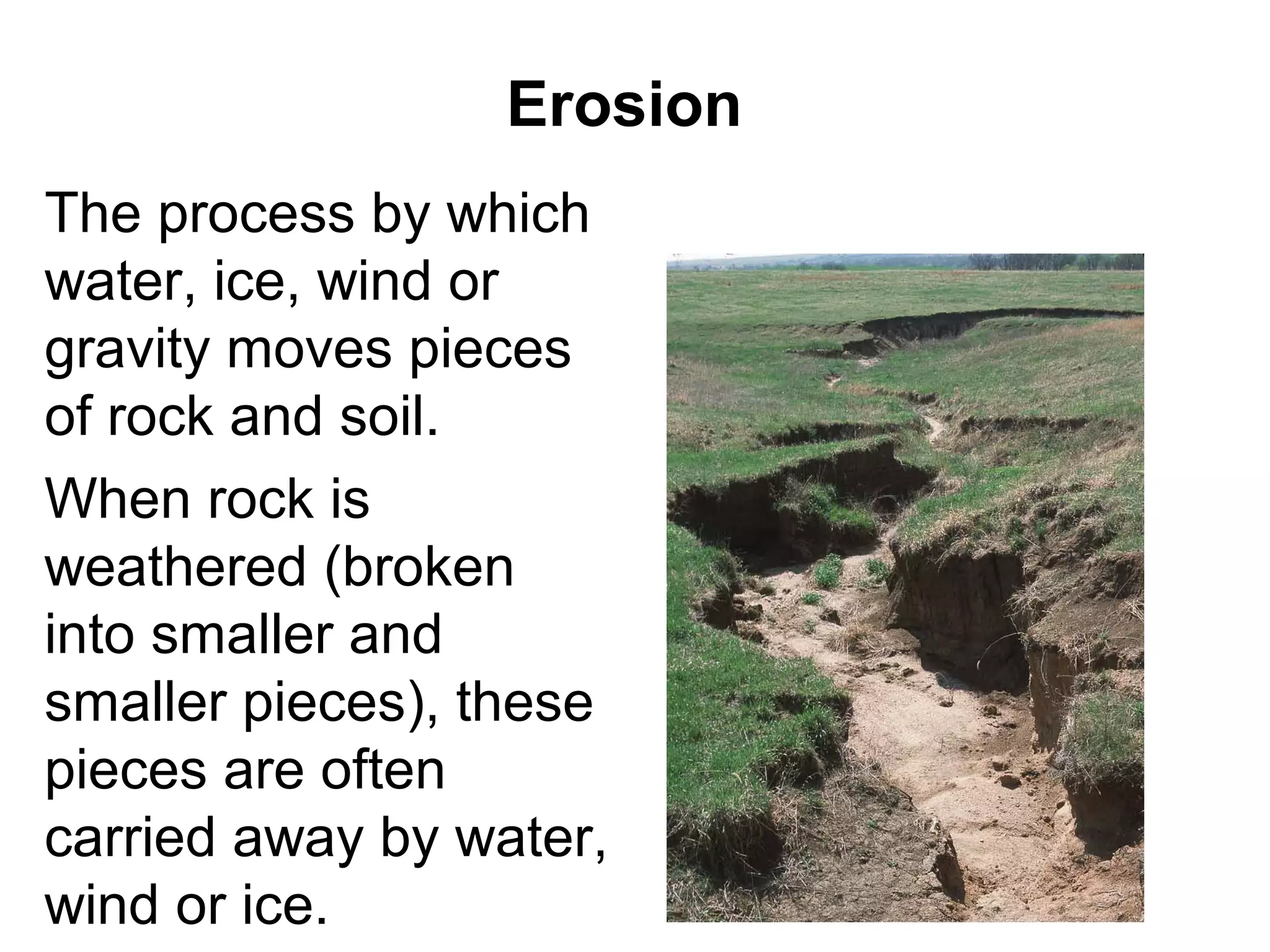
 As the wind
blows it picks
   up small
  particles of
   sand and
 blasts large
rocks with the
   abrasive
   particles,
 cutting and
 shaping the
     rock.
Blowing sand
Weathering by glaciers
A glacier is a large,
  river of ice that
moves very slowly
      downhill.
Glaciers are formed
over many years as
large amounts of snow
fall and accumulate.
The snow compacts
and changes to ice.
 Stuck in the bottom of the glacier are stones
 of various sizes that wear away the rock
 under the glacier as it moves downhill.
Striations or scratches made in the rock
under a glacier by the stones stuck in it as
the glacier moved downhill.
Carbon dioxide that dissolves in water
              weathers rock
• CO2 dissolves in rain water and creates
  carbonic acid
• Carbonic acid easily weathers limestone
  making holes in the rock
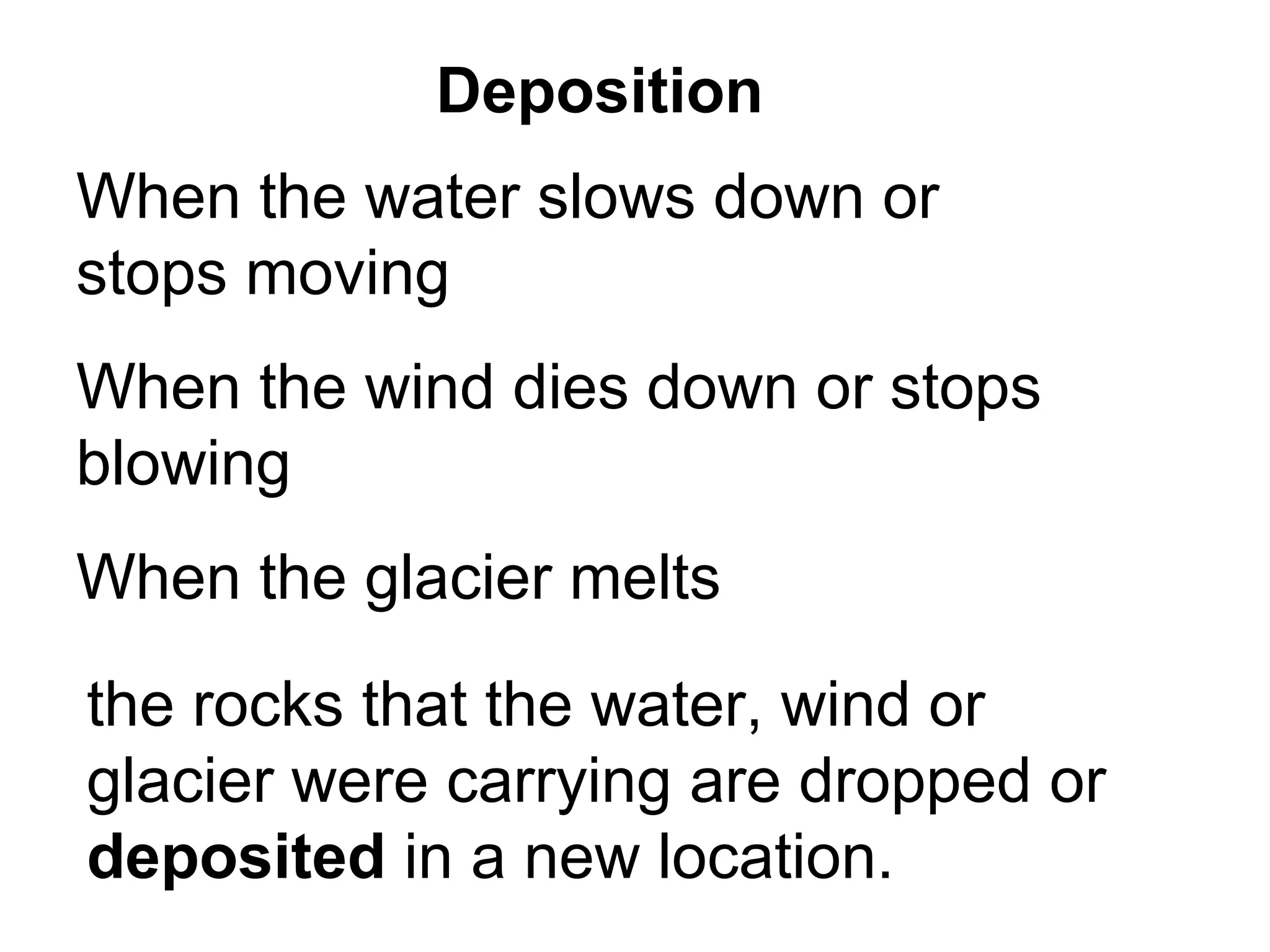
Erosion
The process by which
water, ice, wind or
gravity moves pieces
of rock and soil.
When rock is
weathered (broken
into smaller and
smaller pieces), these
pieces are often
carried away by water,
wind or ice.
Water Erosion
Rivers, streams, and runoff carry weathered
rock or soil to another place.
Fast moving
streams and
rivers carry big
and small
rocks
downstream.
Slower moving water carries smaller rocks
and soil downstream.
Moving water can also cause soil erosion—
carrying the soil away to a different location.
Sometimes a side of the hill is washed away
by running water. The soil and rocks move
down the hill in a landslide.
Canyons
                        This simple animation provides
                        you with a visualization of how
                            the Colorado River has
                       "downcut" into the rock layers of
                              the Grand Canyon.


                          Canyons demonstrate both
                        weathering—the breaking down
                         of rock into smaller pices and
 Canyons are large       erosion—these pieces of rock
valleys created by a    being moved to a new location.
  river or stream.
Wind Erosion
Strong winds can move small rocks and soil from
one location to another.
Ice Erosion
Glaciers moving over
rocks breaks them down
into smaller pieces
(weathering) and carries
them away (erosion).
Deposition
When the water slows down or
stops moving
When the wind dies down or stops
blowing
When the glacier melts

the rocks that the water, wind or
glacier were carrying are dropped or
deposited in a new location.
Delta—water deposition


Where a river meets the ocean is called the
mouth of the river. Soil carried by a river is
deposited at the mouth and new land is formed.
This new soil-rich land is known as a delta.
Wind Deposition
Sand dunes are large deposits of sand
dropped when the wind stopped blowing. The
location of the sand dunes shifts frequently.
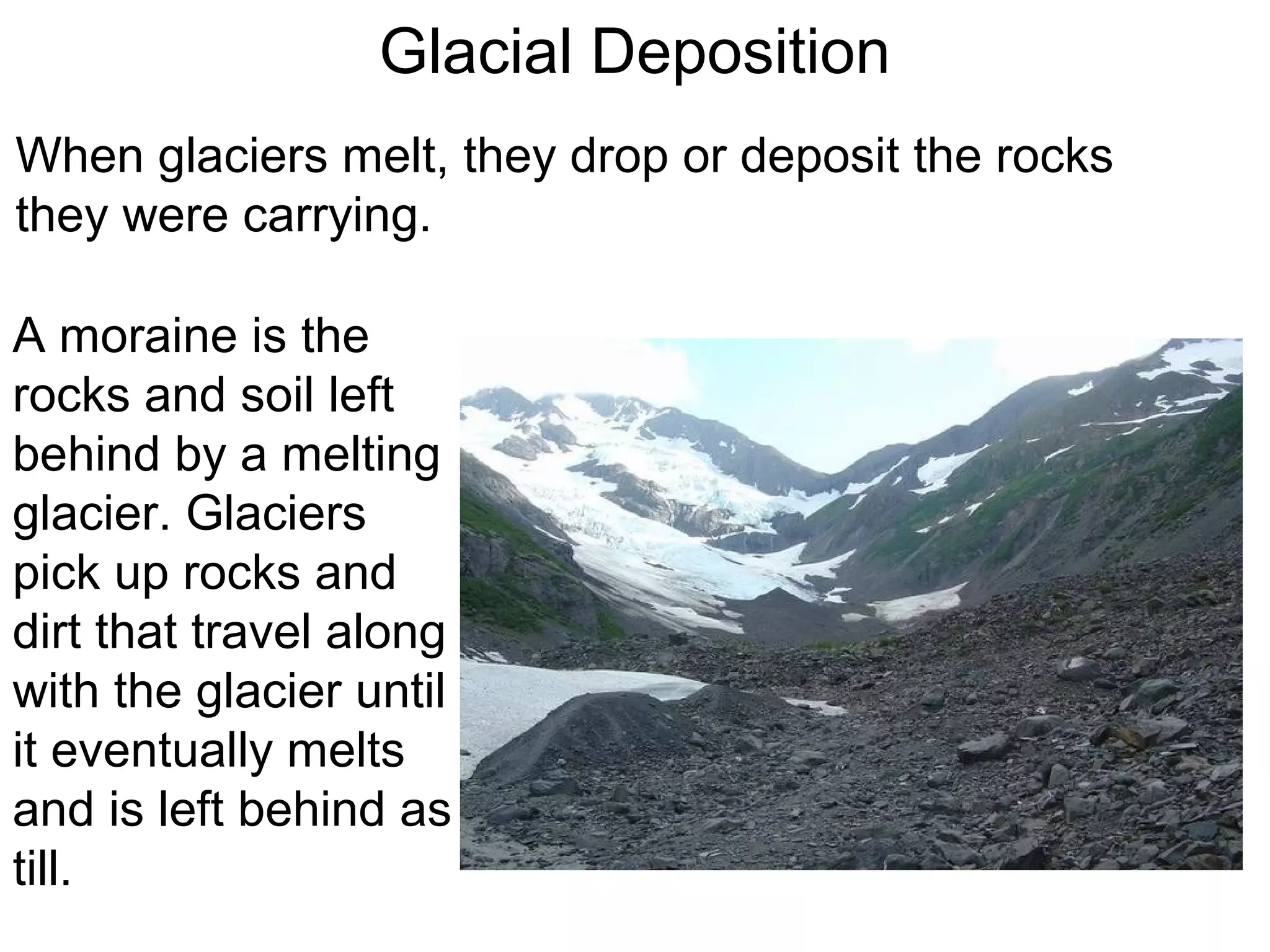
Glacial Deposition
When glaciers melt, they drop or deposit the rocks
they were carrying.

A moraine is the
rocks and soil left
behind by a melting
glacier. Glaciers
pick up rocks and
dirt that travel along
with the glacier until
it eventually melts
and is left behind as
till.
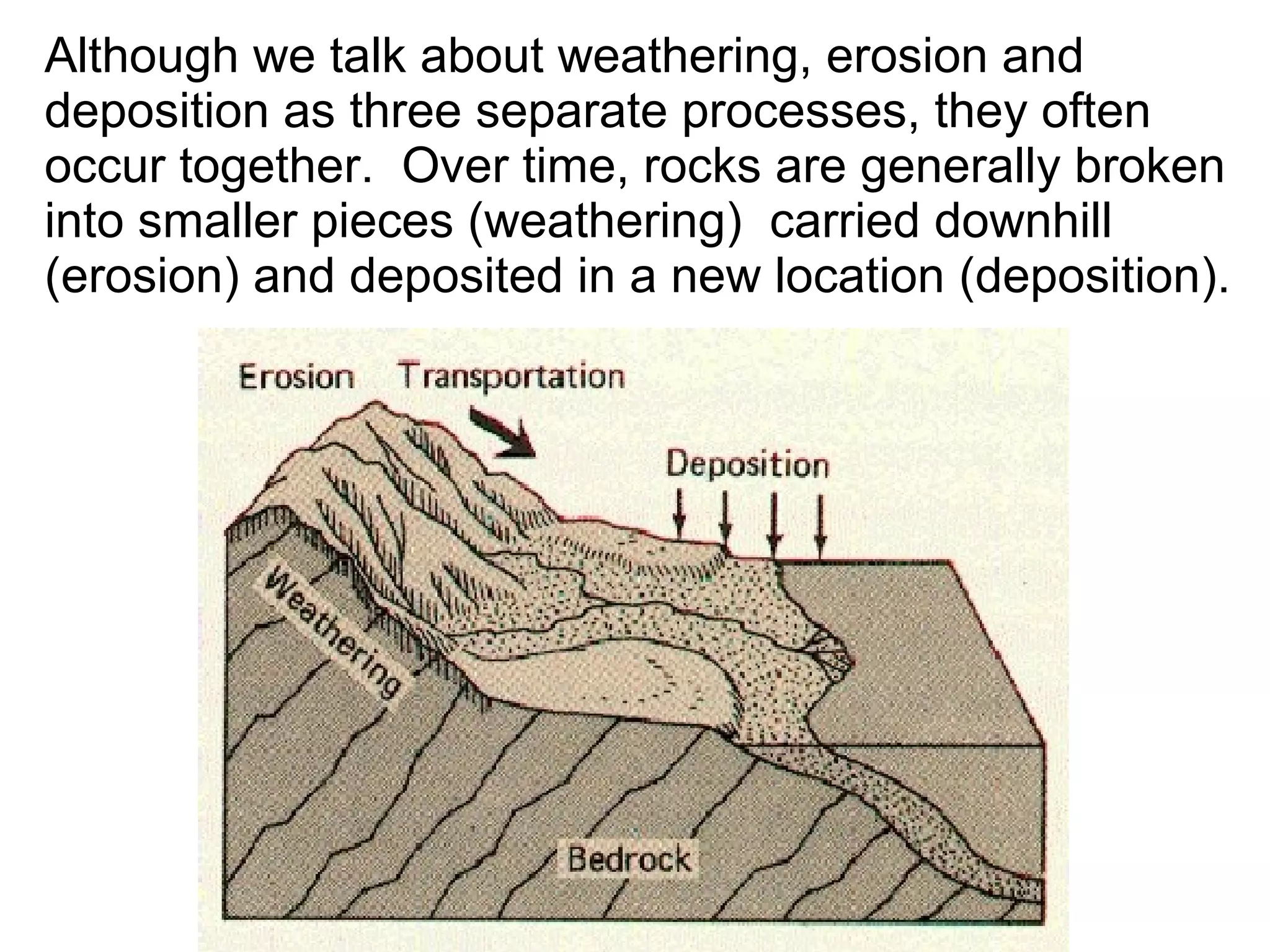
Although we talk about weathering, erosion and
deposition as three separate processes, they often
occur together. Over time, rocks are generally broken
into smaller pieces (weathering) carried downhill
(erosion) and deposited in a new location (deposition).
Do you remember the agents of weathering
that we discussed?

moving water in       water in cracks in rocks
streams and rivers    freezing and expanding

  glaciers    plant roots       wind

Do you remember the agents of erosion that
we discussed?

 moving water in                  glaciers
                      wind
 streams and rivers

Weathering, Erosion and Deposition.(3rd/4th grade teach)

  • 1.
    Weathering, Erosion and Deposition By Moira Whitehouse PhD
  • 2.
    The Earth’s surfaceis constantly changing. Mount St Helens before and after it erupted in 1980.
  • 3.
    New land isconstantly being formed. Volcanoes erupt. Forces deep in the Earth push up chains of mountains.
  • 4.
    Land is beingconstantly worn down by wind, water and ice. original level of the plateau.
  • 5.
    Weathering • The breakingdown of rock into smaller and smaller pieces.
  • 6.
    Some things innature that cause weathering Water in cracks in the rock freezing and expanding Plant roots growing into rocks Water running over rocks, causing the rocks to hit one another and break into smaller pieces Wind carrying sand that wears away rock Carbon dioxide dissolved in water forming an acid that eats holes in the rock
  • 7.
    Water in cracksin the rock freezes. As it freezes it expands causing the rocks to break.
  • 8.
    Expanding water asitwedgingslowly breaks up this Frost Action or ice freezes slowly breaks up this sedimentary rock into unusual shapes. rock into unusual shapes.
  • 9.
    Plant roots breakapart rocks
  • 10.
    Weathering by runningwater When water in waterfalls, rivers and streams move over rock, the rocks are weathered—broken into smaller and smaller pieces.
  • 11.
    Fast running watercauses rocks to hit one another breaking them into smaller rocks.
  • 12.
    Weathering by thewind As the wind blows it picks up small particles of sand and blasts large rocks with the abrasive particles, cutting and shaping the rock.
  • 13.
  • 14.
    Weathering by glaciers Aglacier is a large, river of ice that moves very slowly downhill. Glaciers are formed over many years as large amounts of snow fall and accumulate. The snow compacts and changes to ice. Stuck in the bottom of the glacier are stones of various sizes that wear away the rock under the glacier as it moves downhill.
  • 15.
    Striations or scratchesmade in the rock under a glacier by the stones stuck in it as the glacier moved downhill.
  • 16.
    Carbon dioxide thatdissolves in water weathers rock • CO2 dissolves in rain water and creates carbonic acid • Carbonic acid easily weathers limestone making holes in the rock
  • 17.
    Erosion The process bywhich water, ice, wind or gravity moves pieces of rock and soil. When rock is weathered (broken into smaller and smaller pieces), these pieces are often carried away by water, wind or ice.
  • 18.
    Water Erosion Rivers, streams,and runoff carry weathered rock or soil to another place.
  • 19.
    Fast moving streams and riverscarry big and small rocks downstream.
  • 20.
    Slower moving watercarries smaller rocks and soil downstream.
  • 21.
    Moving water canalso cause soil erosion— carrying the soil away to a different location.
  • 22.
    Sometimes a sideof the hill is washed away by running water. The soil and rocks move down the hill in a landslide.
  • 23.
    Canyons This simple animation provides you with a visualization of how the Colorado River has "downcut" into the rock layers of the Grand Canyon. Canyons demonstrate both weathering—the breaking down of rock into smaller pices and Canyons are large erosion—these pieces of rock valleys created by a being moved to a new location. river or stream.
  • 24.
    Wind Erosion Strong windscan move small rocks and soil from one location to another.
  • 25.
    Ice Erosion Glaciers movingover rocks breaks them down into smaller pieces (weathering) and carries them away (erosion).
  • 26.
    Deposition When the waterslows down or stops moving When the wind dies down or stops blowing When the glacier melts the rocks that the water, wind or glacier were carrying are dropped or deposited in a new location.
  • 27.
    Delta—water deposition Where ariver meets the ocean is called the mouth of the river. Soil carried by a river is deposited at the mouth and new land is formed. This new soil-rich land is known as a delta.
  • 28.
    Wind Deposition Sand dunesare large deposits of sand dropped when the wind stopped blowing. The location of the sand dunes shifts frequently.
  • 29.
    Glacial Deposition When glaciersmelt, they drop or deposit the rocks they were carrying. A moraine is the rocks and soil left behind by a melting glacier. Glaciers pick up rocks and dirt that travel along with the glacier until it eventually melts and is left behind as till.
  • 30.
    Although we talkabout weathering, erosion and deposition as three separate processes, they often occur together. Over time, rocks are generally broken into smaller pieces (weathering) carried downhill (erosion) and deposited in a new location (deposition).
  • 31.
    Do you rememberthe agents of weathering that we discussed? moving water in water in cracks in rocks streams and rivers freezing and expanding glaciers plant roots wind Do you remember the agents of erosion that we discussed? moving water in glaciers wind streams and rivers