D O N E B Y: R O XA N N E H O I L E T T
Flowering Plants
What are flowering plants
A flowering plant is a plant that produces flowers; an
angiosperm.
Types of flowering plants
Lotus
Sunflower
Tulips
Marigold
 Lily
Jasmine
 Rose
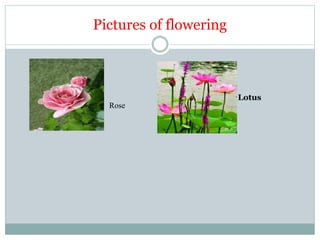
Pictures of flowering
Rose
Lotus
Characteristics of a flowering plant
 Single or Multiple Cotyledons
 Produce Flowers
 Produce Fruits
Characteristics contin..
Single or Multiple Cotyledons
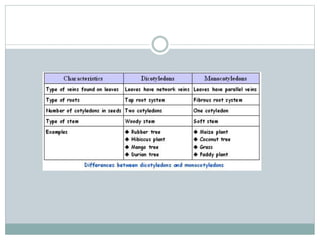
Traditionally, flowering plants are divided into two main
classes--monocots (Liliopsida) and dicots (Magnoliopsida--
depending on the number of cotyledons they contain.
The cotyledon is the part of the seedling first visible when it
grows out of the soil.
This leafy structure is wrapped around the seed and supplies
essential nutrients to it.
Characteristics contin..
Monocots feature an embryo with a single cotyledon
while dicot flowering plants feature two cotyledons.
It is for this reason monocots are called monocotyledonae
(single cotyledon) and dicots are called dicotyledonae
(two cotyledons).
Characteristics contin..
Produce Flowers
Flowers, the reproductive organs of all plants, distinguish
flowering plants (angiosperms) from seed plants
(gymnosperms).
Flowers that contain either male or female parts are called
imperfect, while those with both are called perfect flowers.
The stamen is the male reproductive part that is comprised of a
yellow anther that features a sac full of pollen, and the
delicate, long stem it rests on, called the filament.
Characteristics contin..
The female reproductive part is the pistil that is usually
found in the center of a flower. It is comprised of three
parts--the upper sticky part that catches and traps pollen
is the stigma; the tubular part called style that supports
the stigma; and the lower part that contains the ovule is
called the ovary.
The ovule develops into the seed when fertilized by
pollen grains. Self-pollinating or hermaphroditic plants
contain both male and female flower parts.
Characteristics contin..
Produce Fruits
Flowering plants bear one or several seeds enclosed in
fruit.
This fructification characteristic distinguishes
angiosperms from gymnosperms--seed plants that produce
seeds that are naked and do not lie within any fruit, such
as fir, pine and spruce trees.
Characteristics contin..
Angiosperms are comprised of the largest majority of
plants that bear seeds. Each plant variety of angiosperms
features a different size and shaped fruit which helps
identify and classify the particular species.
These fruits are available in a variety of colors and liven
up the landscape during growing season
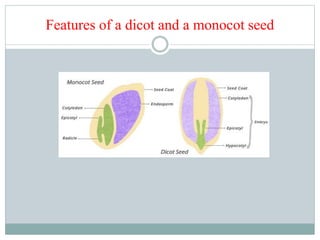
Features of a dicot and a monocot seed

Flowering plants

  • 1.
    D O NE B Y: R O XA N N E H O I L E T T Flowering Plants
  • 2.
    What are floweringplants A flowering plant is a plant that produces flowers; an angiosperm.
  • 3.
    Types of floweringplants Lotus Sunflower Tulips Marigold  Lily Jasmine  Rose
  • 4.
  • 5.
    Characteristics of aflowering plant  Single or Multiple Cotyledons  Produce Flowers  Produce Fruits
  • 6.
    Characteristics contin.. Single orMultiple Cotyledons Traditionally, flowering plants are divided into two main classes--monocots (Liliopsida) and dicots (Magnoliopsida-- depending on the number of cotyledons they contain. The cotyledon is the part of the seedling first visible when it grows out of the soil. This leafy structure is wrapped around the seed and supplies essential nutrients to it.
  • 7.
    Characteristics contin.. Monocots featurean embryo with a single cotyledon while dicot flowering plants feature two cotyledons. It is for this reason monocots are called monocotyledonae (single cotyledon) and dicots are called dicotyledonae (two cotyledons).
  • 8.
    Characteristics contin.. Produce Flowers Flowers,the reproductive organs of all plants, distinguish flowering plants (angiosperms) from seed plants (gymnosperms). Flowers that contain either male or female parts are called imperfect, while those with both are called perfect flowers. The stamen is the male reproductive part that is comprised of a yellow anther that features a sac full of pollen, and the delicate, long stem it rests on, called the filament.
  • 9.
    Characteristics contin.. The femalereproductive part is the pistil that is usually found in the center of a flower. It is comprised of three parts--the upper sticky part that catches and traps pollen is the stigma; the tubular part called style that supports the stigma; and the lower part that contains the ovule is called the ovary. The ovule develops into the seed when fertilized by pollen grains. Self-pollinating or hermaphroditic plants contain both male and female flower parts.
  • 10.
    Characteristics contin.. Produce Fruits Floweringplants bear one or several seeds enclosed in fruit. This fructification characteristic distinguishes angiosperms from gymnosperms--seed plants that produce seeds that are naked and do not lie within any fruit, such as fir, pine and spruce trees.
  • 11.
    Characteristics contin.. Angiosperms arecomprised of the largest majority of plants that bear seeds. Each plant variety of angiosperms features a different size and shaped fruit which helps identify and classify the particular species. These fruits are available in a variety of colors and liven up the landscape during growing season
  • 13.
    Features of adicot and a monocot seed