This document discusses how trees can positively impact annual food crop production by reducing various challenges. It provides examples of how trees can increase water availability for crops through reduced evaporation, hydraulic lift, and improved soil water retention. Trees can also fix nitrogen and recycle nutrients through organic acid exudation and mycorrhizal partnerships, benefiting crops. Additionally, trees may help control pests and rodents, and reduce heat and water stress for crops. The effects depend on tree and crop species selection and spacing, as well as soil fertility management. Measuring environmental, productivity and stress indicators can help understand these impacts. The goal is to answer practical questions for maize farmers on how to best integrate trees and crops.
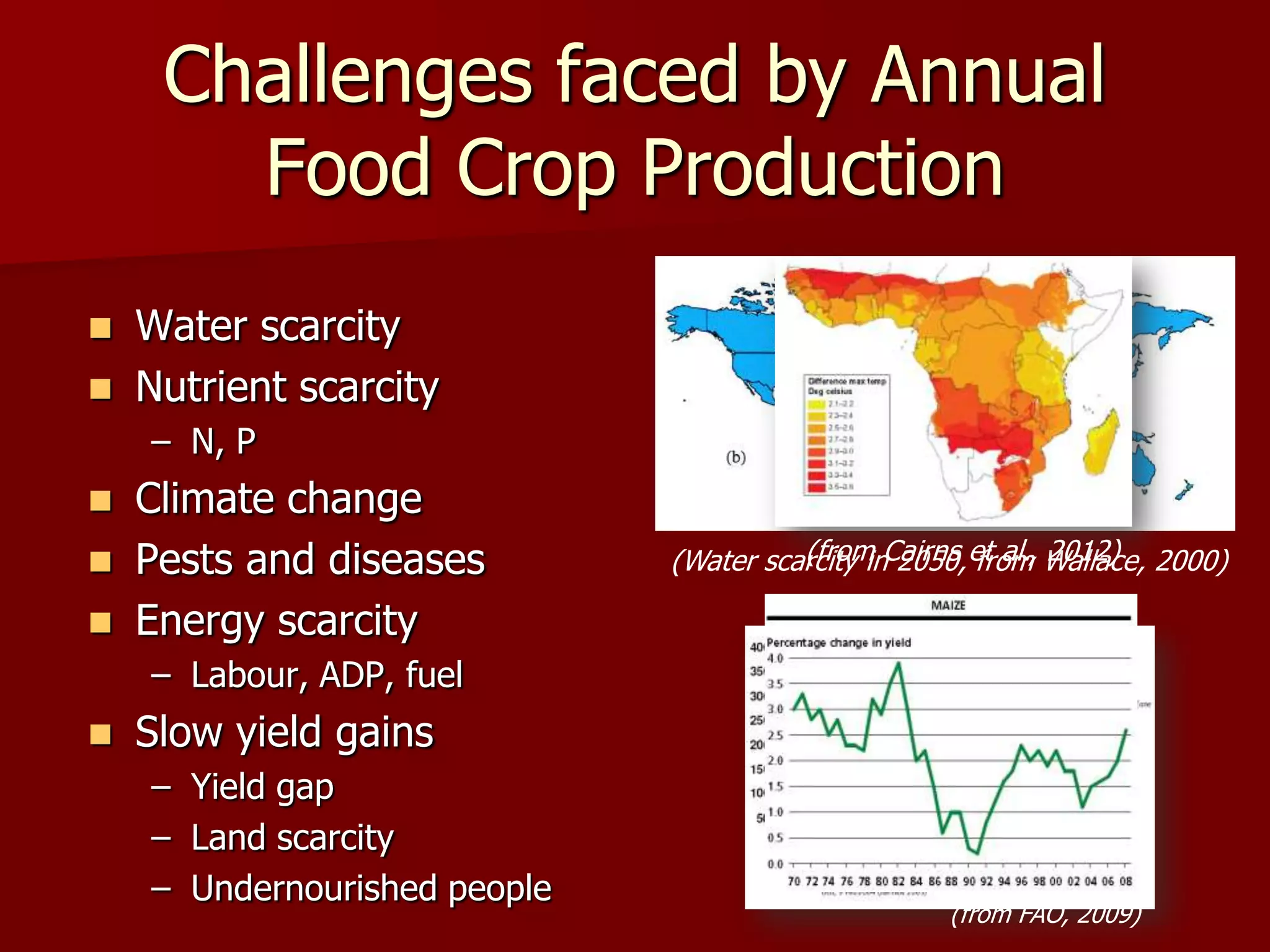
Challenges faced byAnnual
Food Crop Production
Water scarcity
Nutrient scarcity
– N, P
Climate change
Pests and diseases
Energy scarcity
– Labour, ADP, fuel
Slow yield gains
– Yield gap
– Land scarcity
– Undernourished people
(Water scarcity in 2050, from Wallace, 2000)(from Cairns et al., 2012)
(from FAO, 2009)
3.
A Question ofEfficiency?
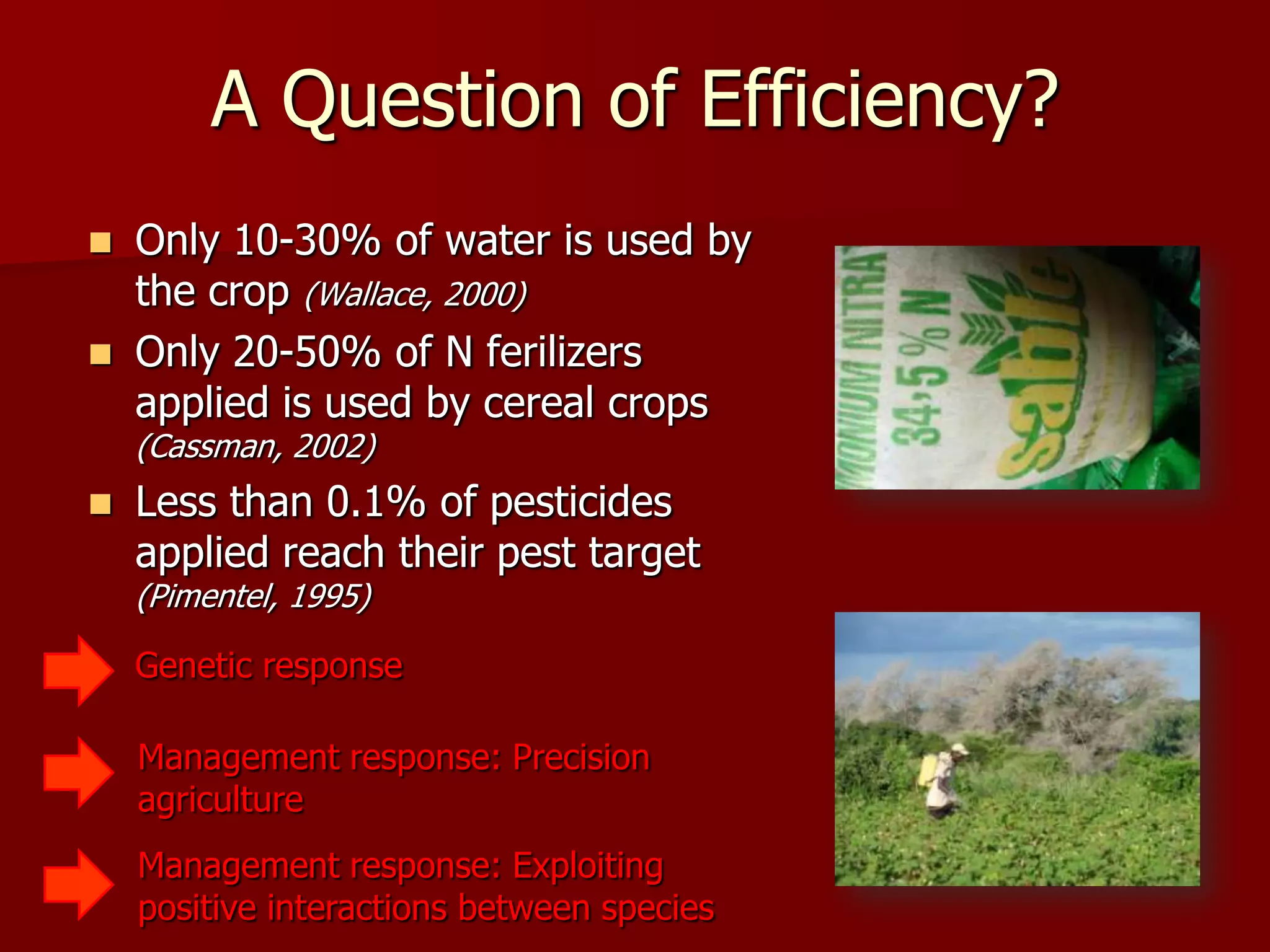
Only 10-30% of water is used by
the crop (Wallace, 2000)
Only 20-50% of N ferilizers
applied is used by cereal crops
(Cassman, 2002)
Less than 0.1% of pesticides
applied reach their pest target
(Pimentel, 1995)
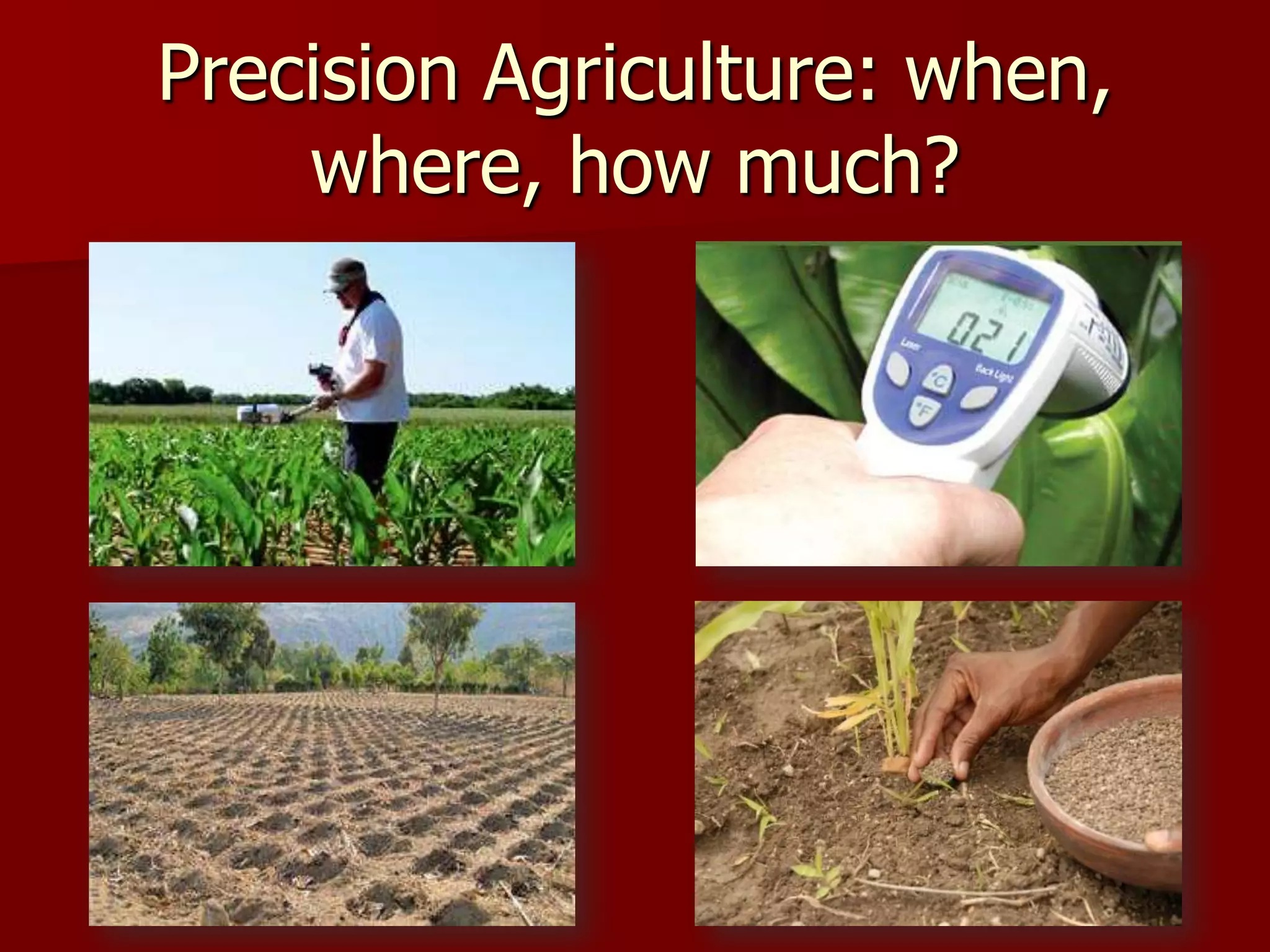
Management response: Precision
agriculture
Genetic response
Management response: Exploiting
positive interactions between species
4.
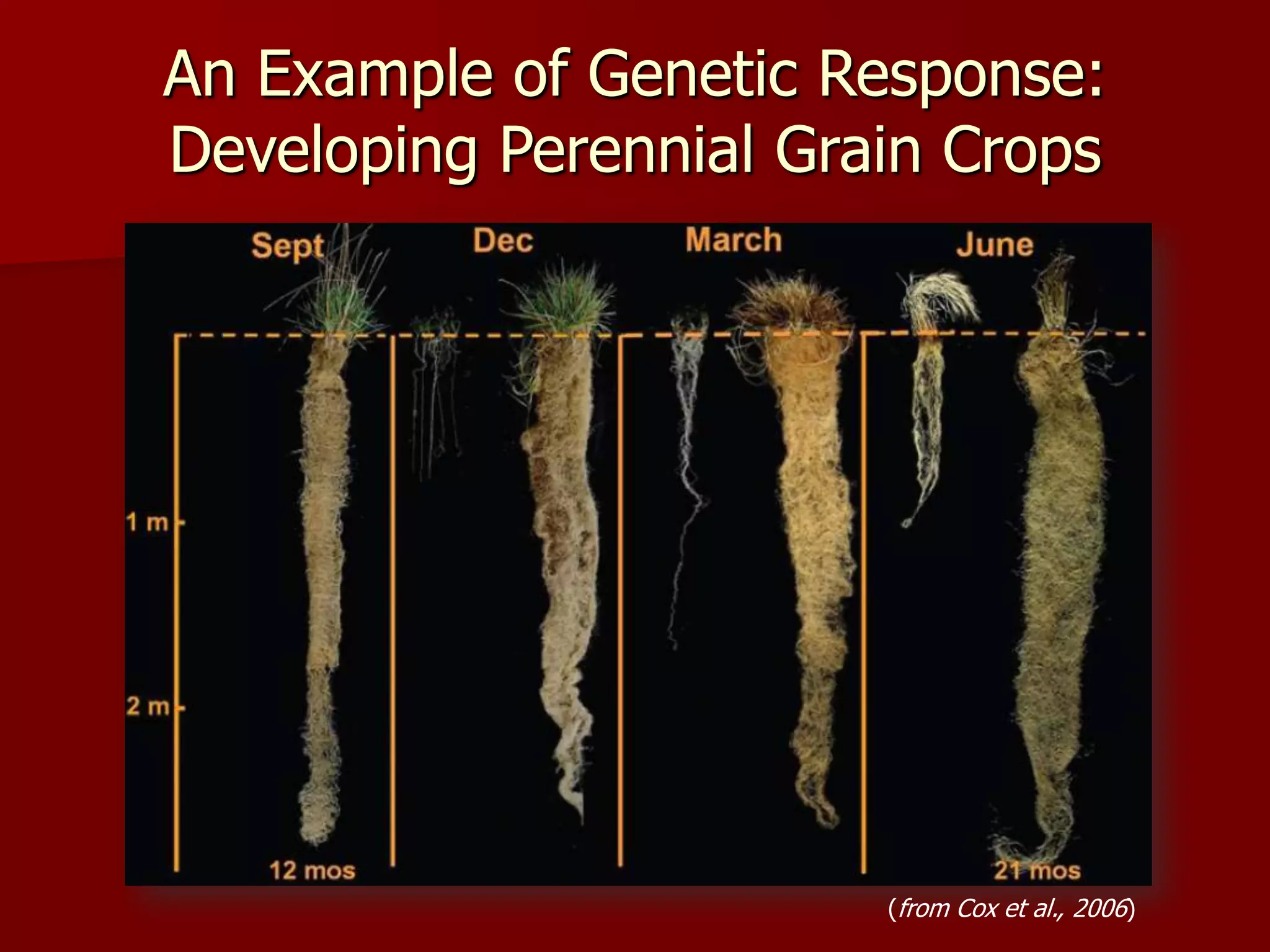
(from Cox etal., 2006)
An Example of Genetic Response:
Developing Perennial Grain Crops
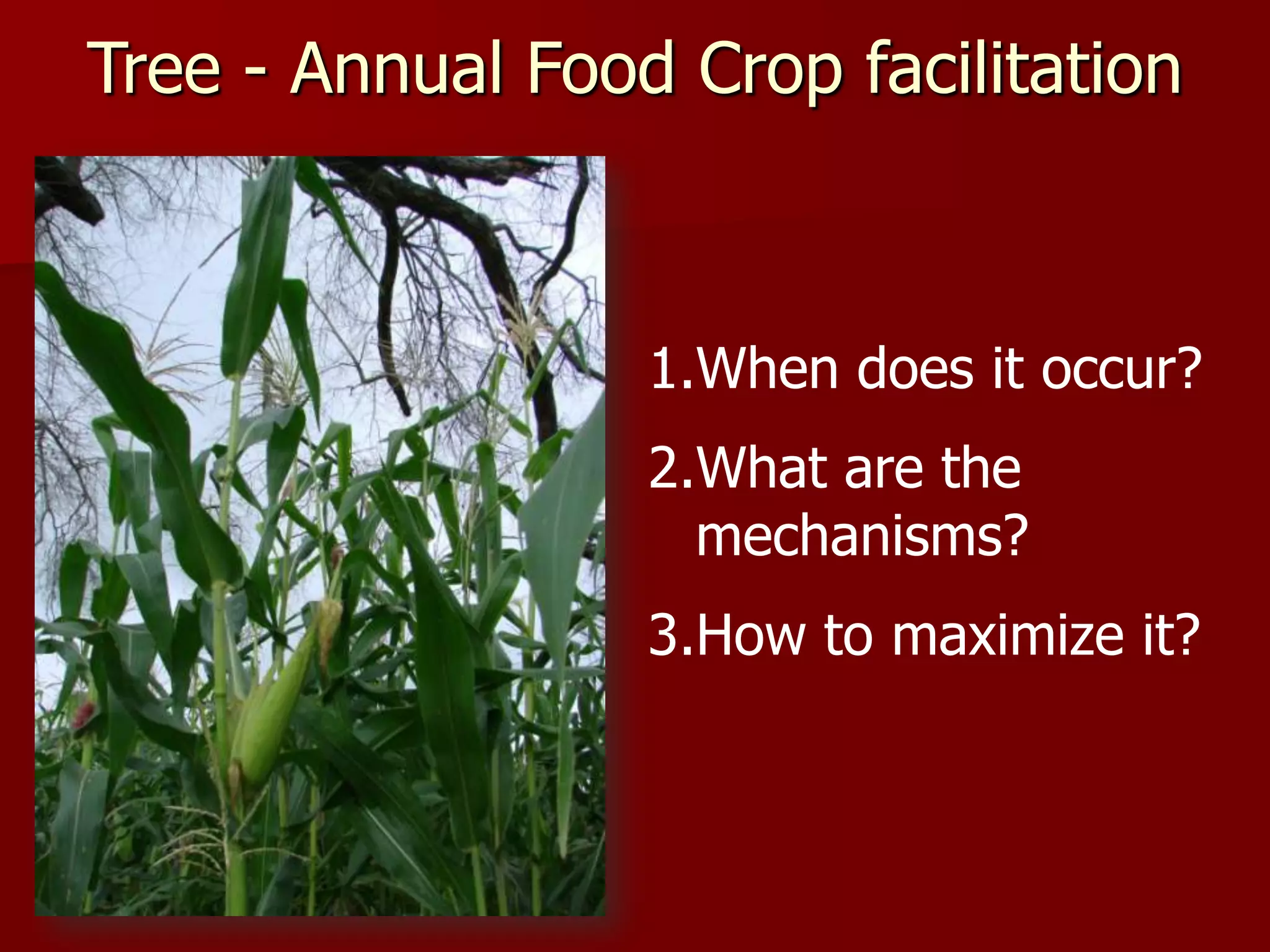
1.When does itoccur?
2.What are the
mechanisms?
3.How to maximize it?
Tree - Annual Food Crop facilitation
7.
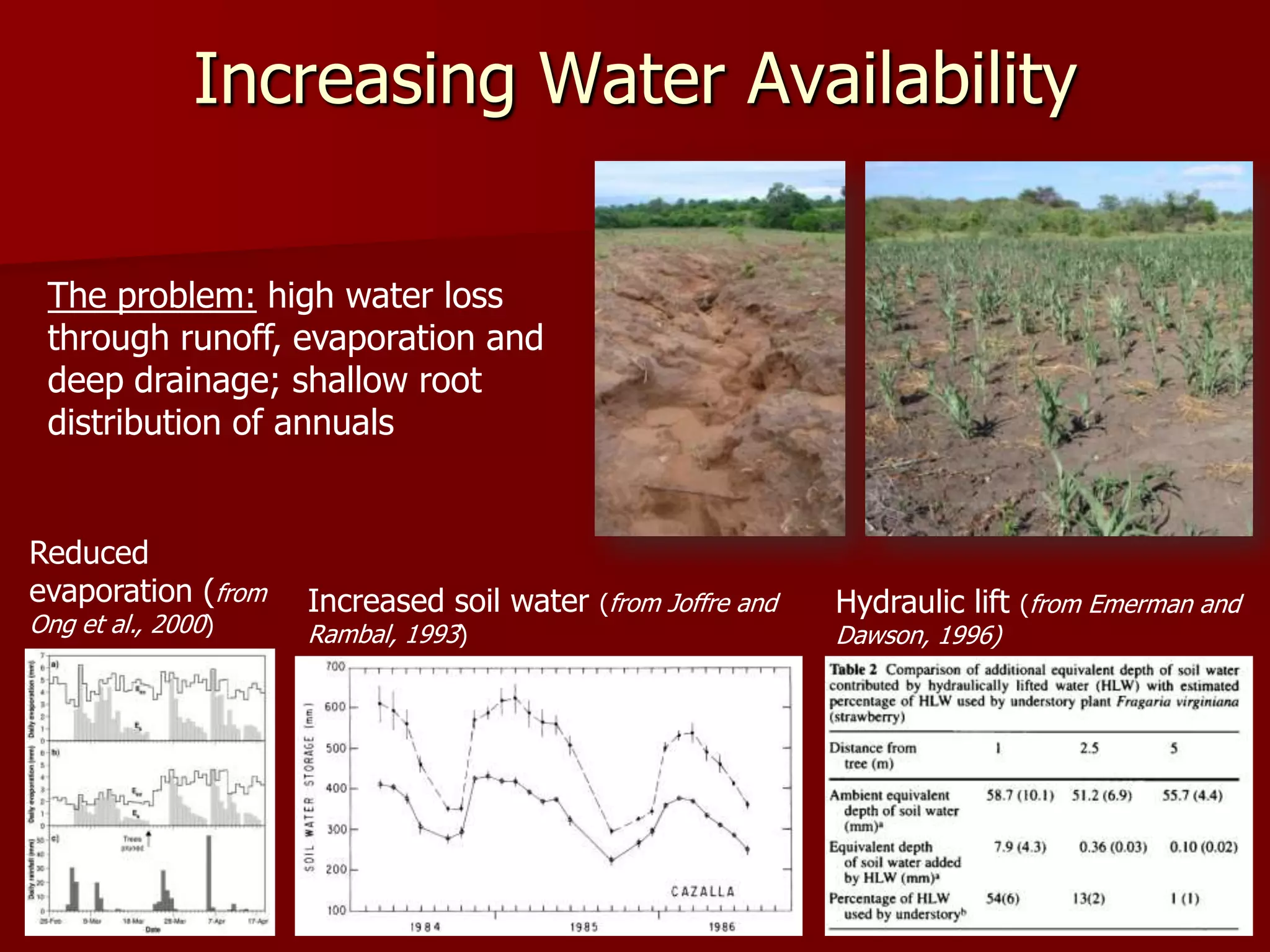
Increasing Water Availability
Theproblem: high water loss
through runoff, evaporation and
deep drainage; shallow root
distribution of annuals
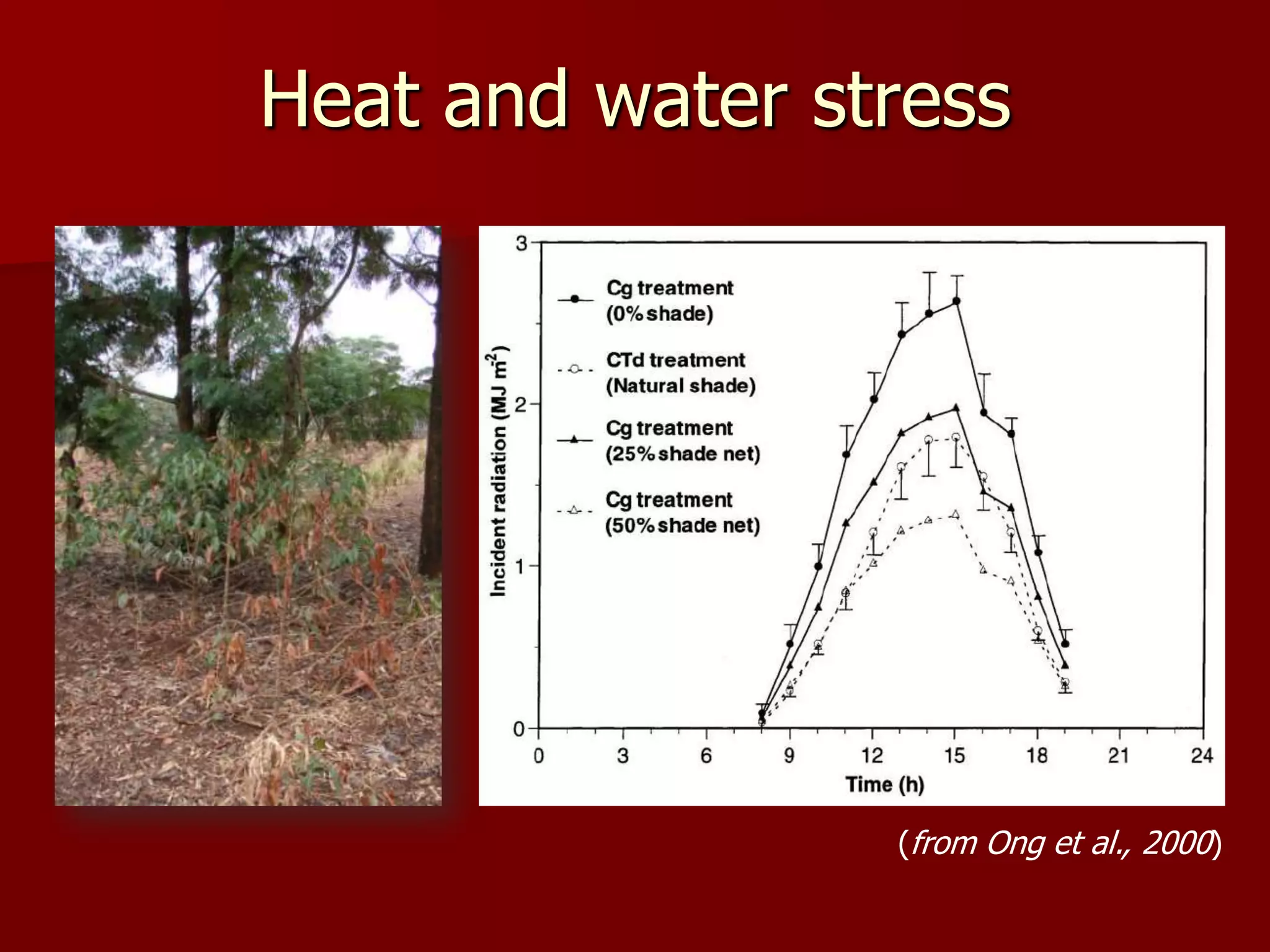
Reduced
evaporation (from
Ong et al., 2000)
Increased soil water (from Joffre and
Rambal, 1993)
Hydraulic lift (from Emerman and
Dawson, 1996)
8.
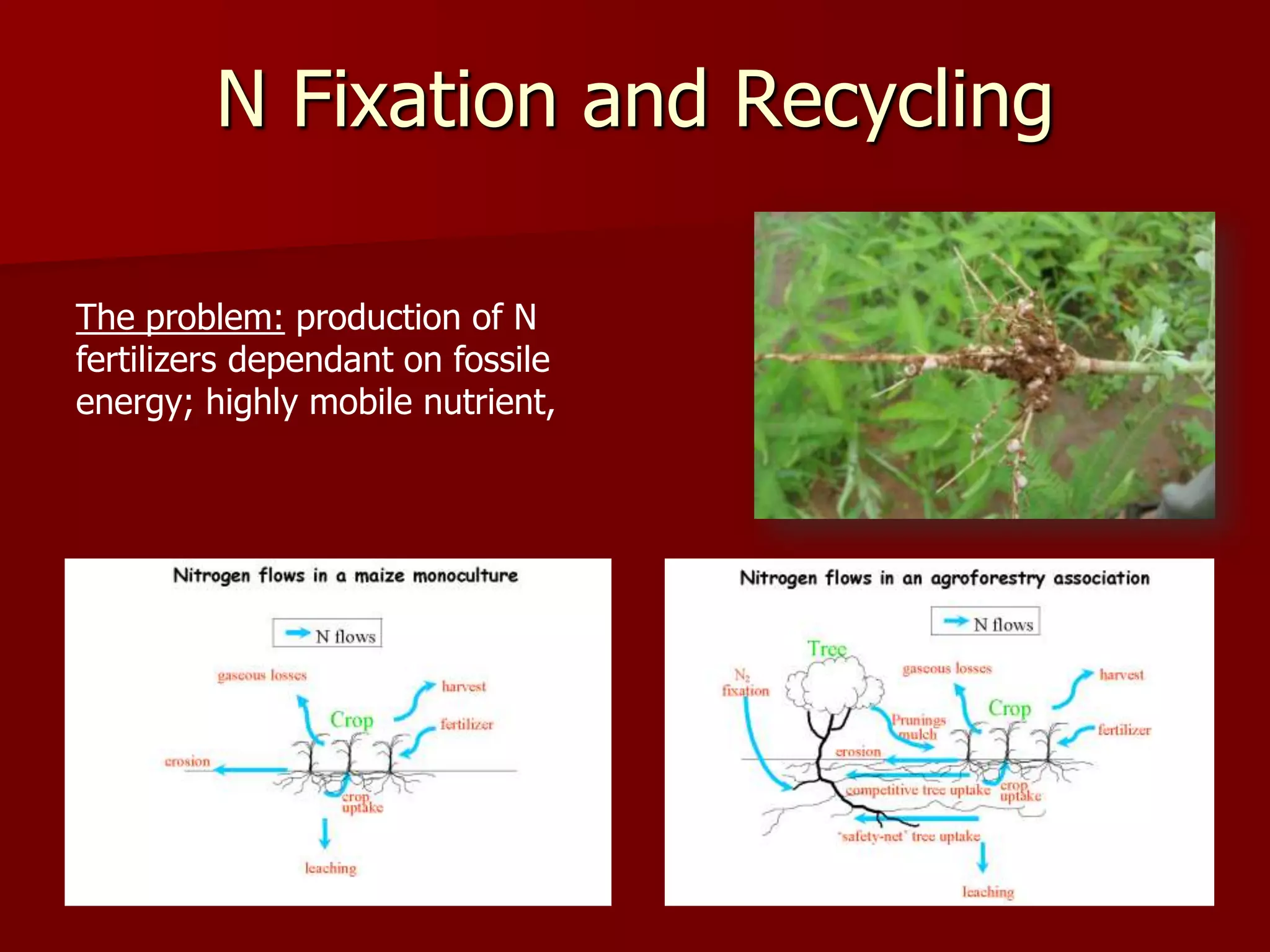
N Fixation andRecycling
The problem: production of N
fertilizers dependant on fossile
energy; highly mobile nutrient,
9.
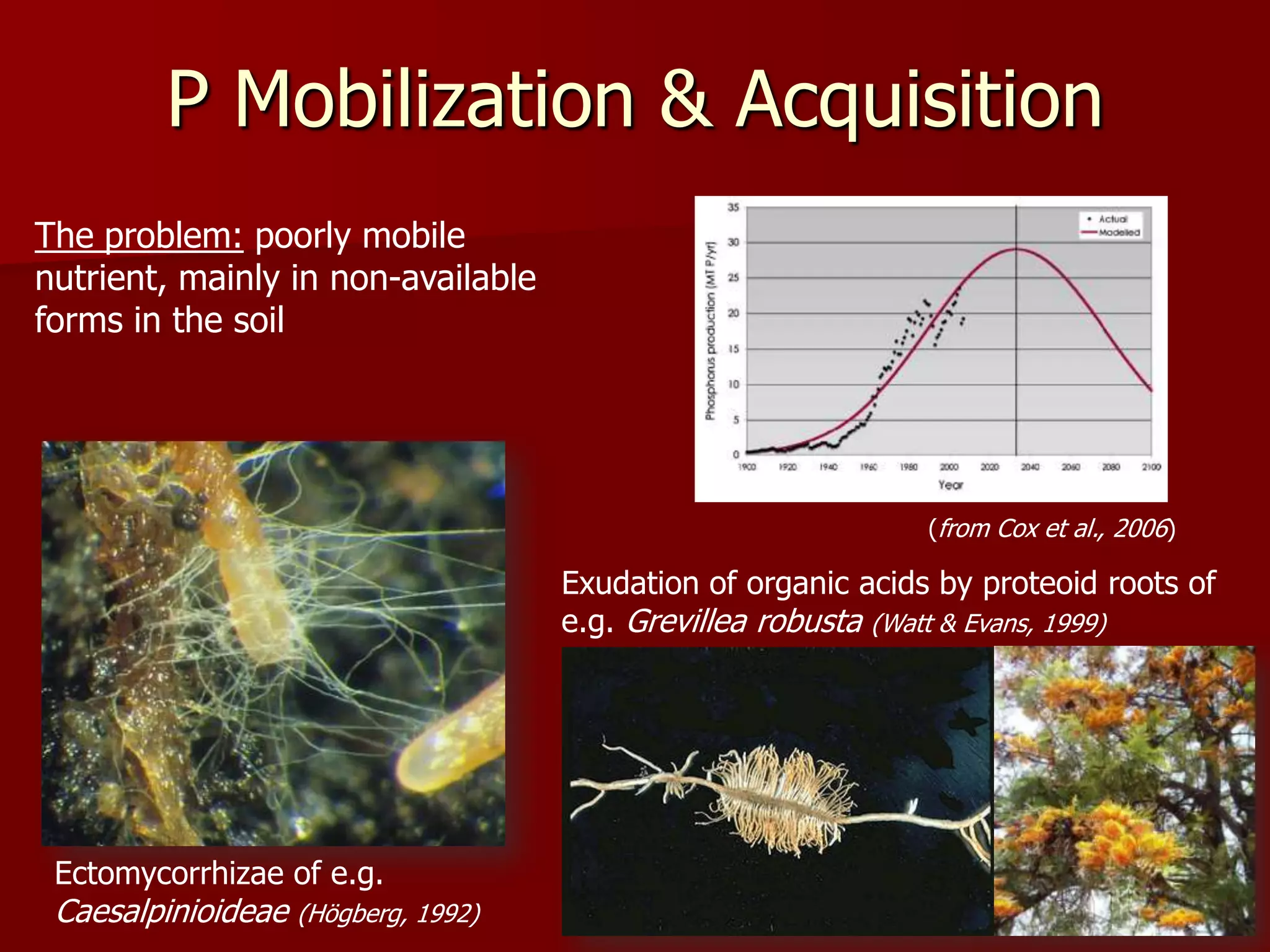
P Mobilization &Acquisition
The problem: poorly mobile
nutrient, mainly in non-available
forms in the soil
(from Cox et al., 2006)
Exudation of organic acids by proteoid roots of
e.g. Grevillea robusta (Watt & Evans, 1999)
Ectomycorrhizae of e.g.
Caesalpinioideae (Högberg, 1992)
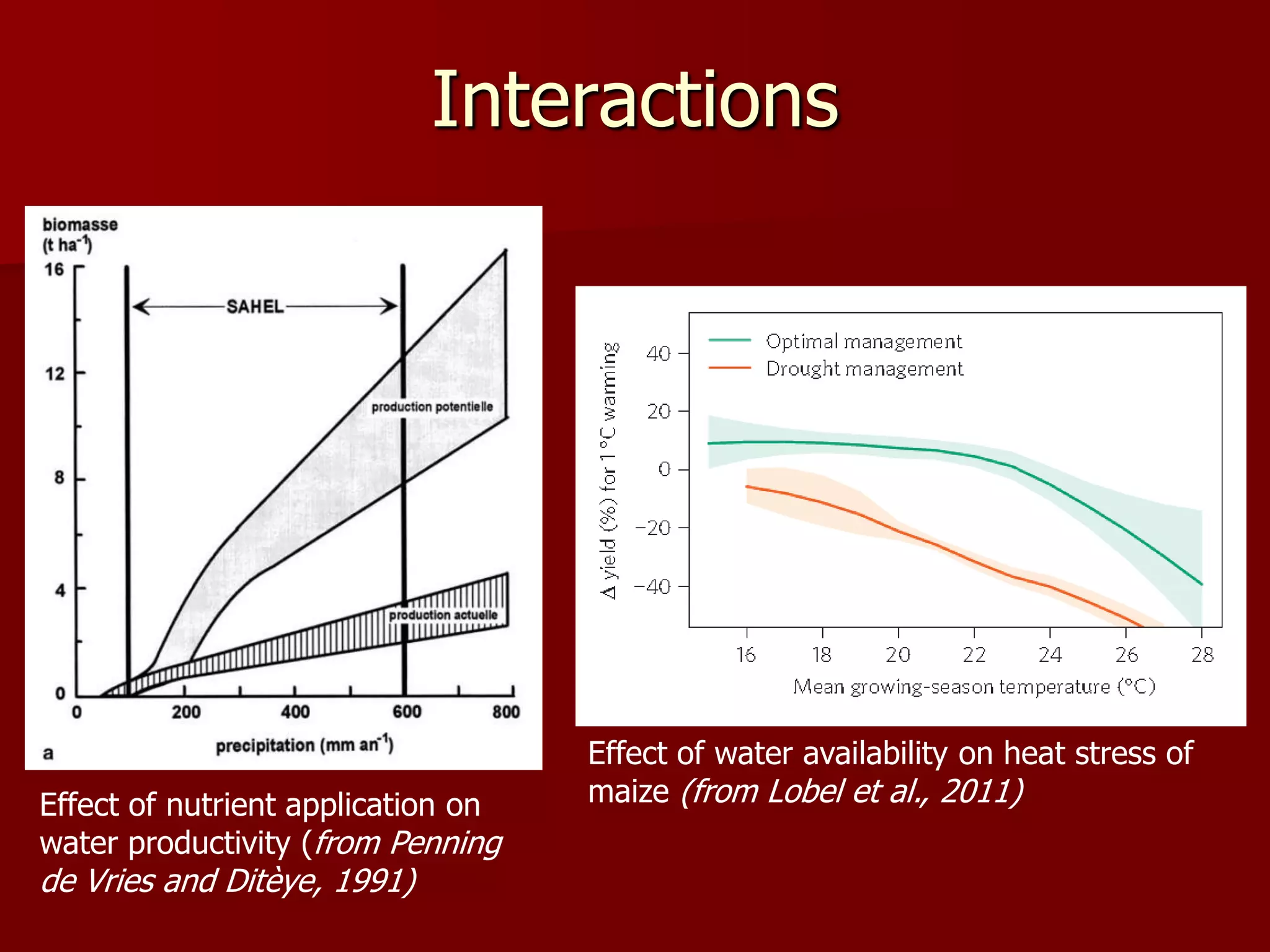
Interactions
Effect of wateravailability on heat stress of
maize (from Lobel et al., 2011)Effect of nutrient application on
water productivity (from Penning
de Vries and Ditèye, 1991)
13.
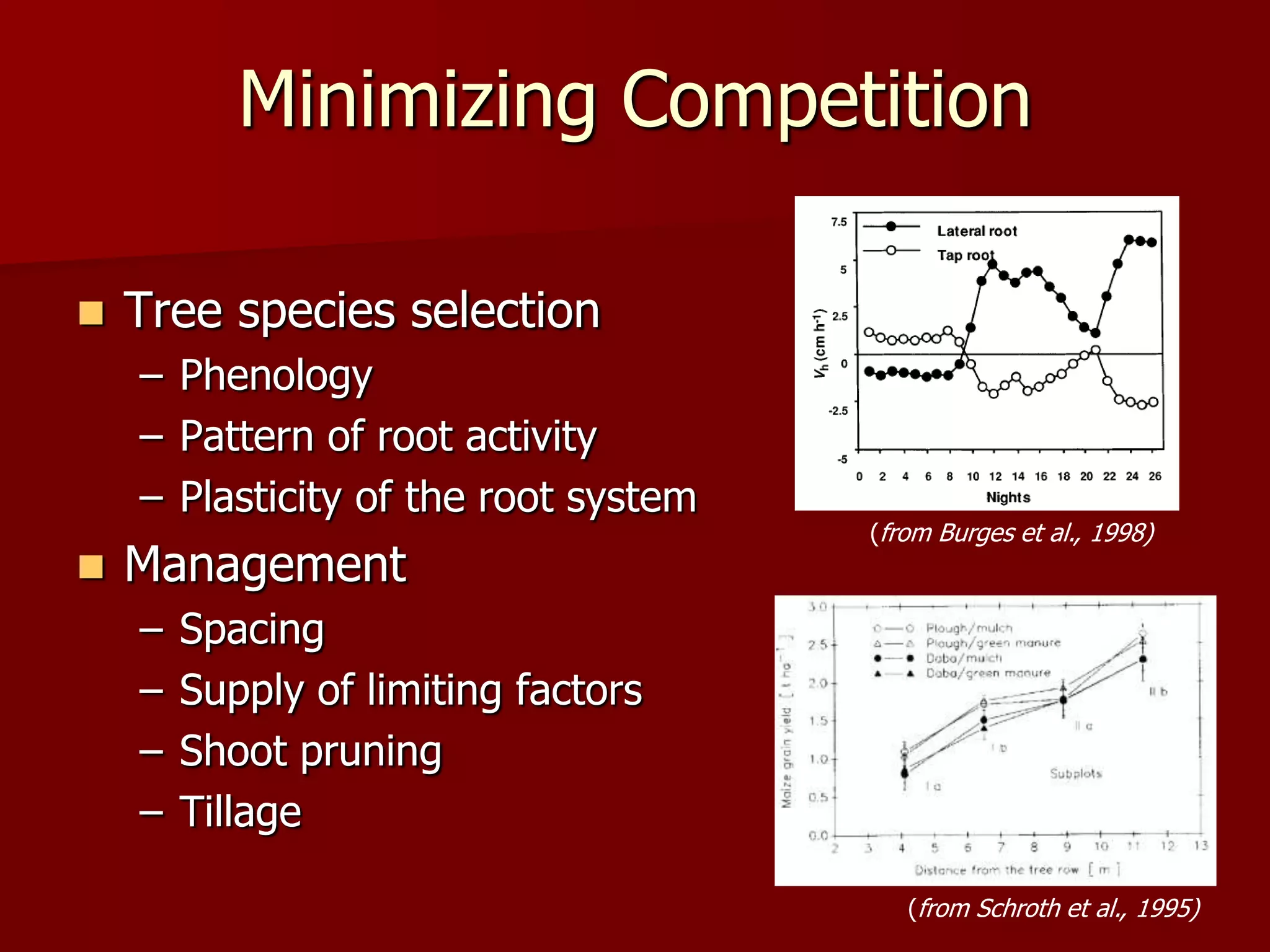
Minimizing Competition
Treespecies selection
– Phenology
– Pattern of root activity
– Plasticity of the root system
Management
– Spacing
– Supply of limiting factors
– Shoot pruning
– Tillage
(from Burges et al., 1998)
(from Schroth et al., 1995)
14.
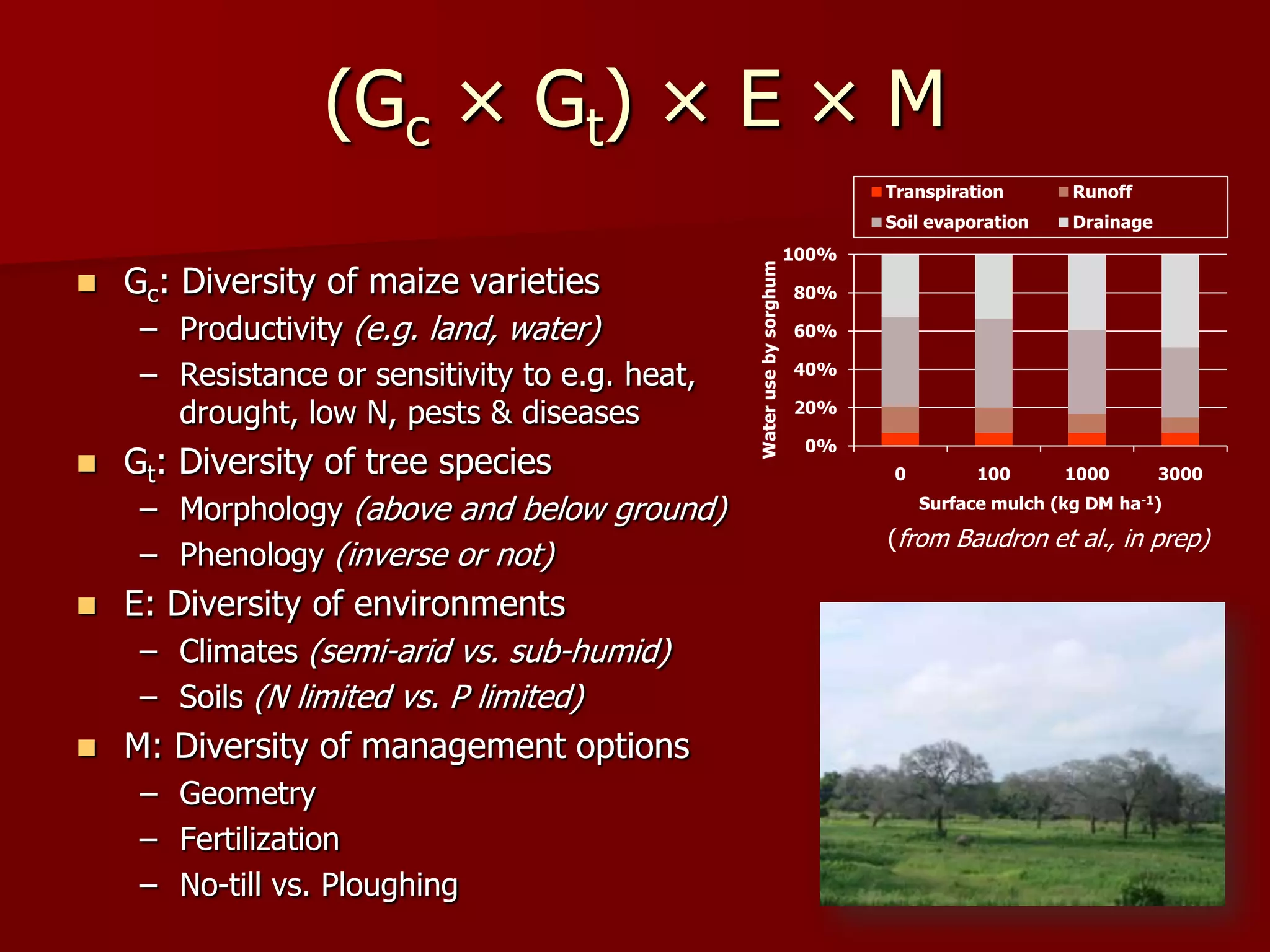
(Gc × Gt)× E × M
Gc: Diversity of maize varieties
– Productivity (e.g. land, water)
– Resistance or sensitivity to e.g. heat,
drought, low N, pests & diseases
Gt: Diversity of tree species
– Morphology (above and below ground)
– Phenology (inverse or not)
E: Diversity of environments
– Climates (semi-arid vs. sub-humid)
– Soils (N limited vs. P limited)
M: Diversity of management options
– Geometry
– Fertilization
– No-till vs. Ploughing
0%
20%
40%
60%
80%
100%
0 100 1000 3000
Waterusebysorghum
Surface mulch (kg DM ha-1)
Transpiration Runoff
Soil evaporation Drainage
(from Baudron et al., in prep)
15.
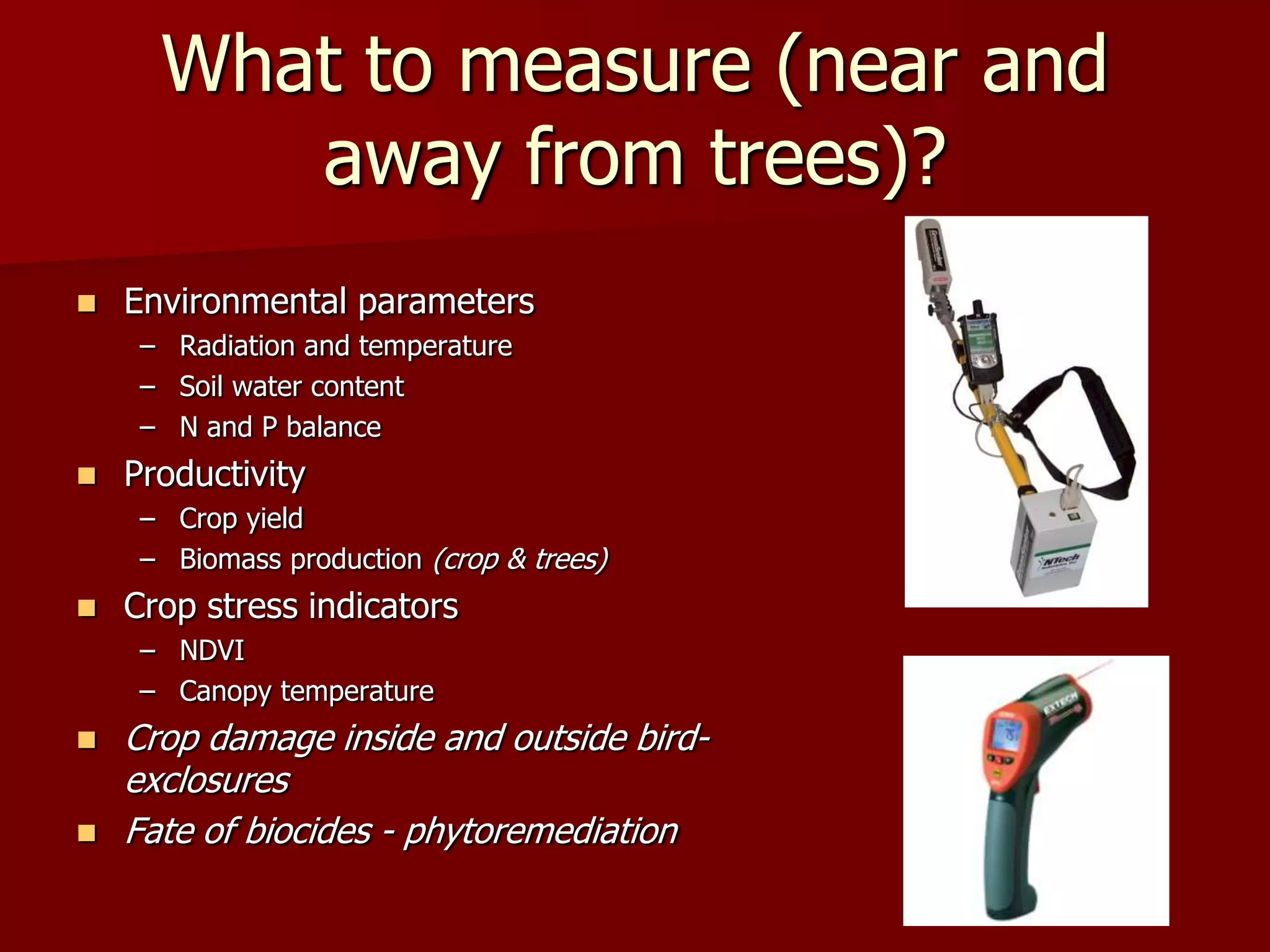
What to measure(near and
away from trees)?
Environmental parameters
– Radiation and temperature
– Soil water content
– N and P balance
Productivity
– Crop yield
– Biomass production (crop & trees)
Crop stress indicators
– NDVI
– Canopy temperature
Crop damage inside and outside bird-
exclosures
Fate of biocides - phytoremediation


![Vibe Coding vs. Spec-Driven Development [Free Meetup]](https://cdn.slidesharecdn.com/ss_thumbnails/vibecodingvsspecdrivendevelopment-251209105622-43f455e7-thumbnail.jpg?width=640&height=640&fit=bounds)


