Lecture 4: Tree crop Interaction
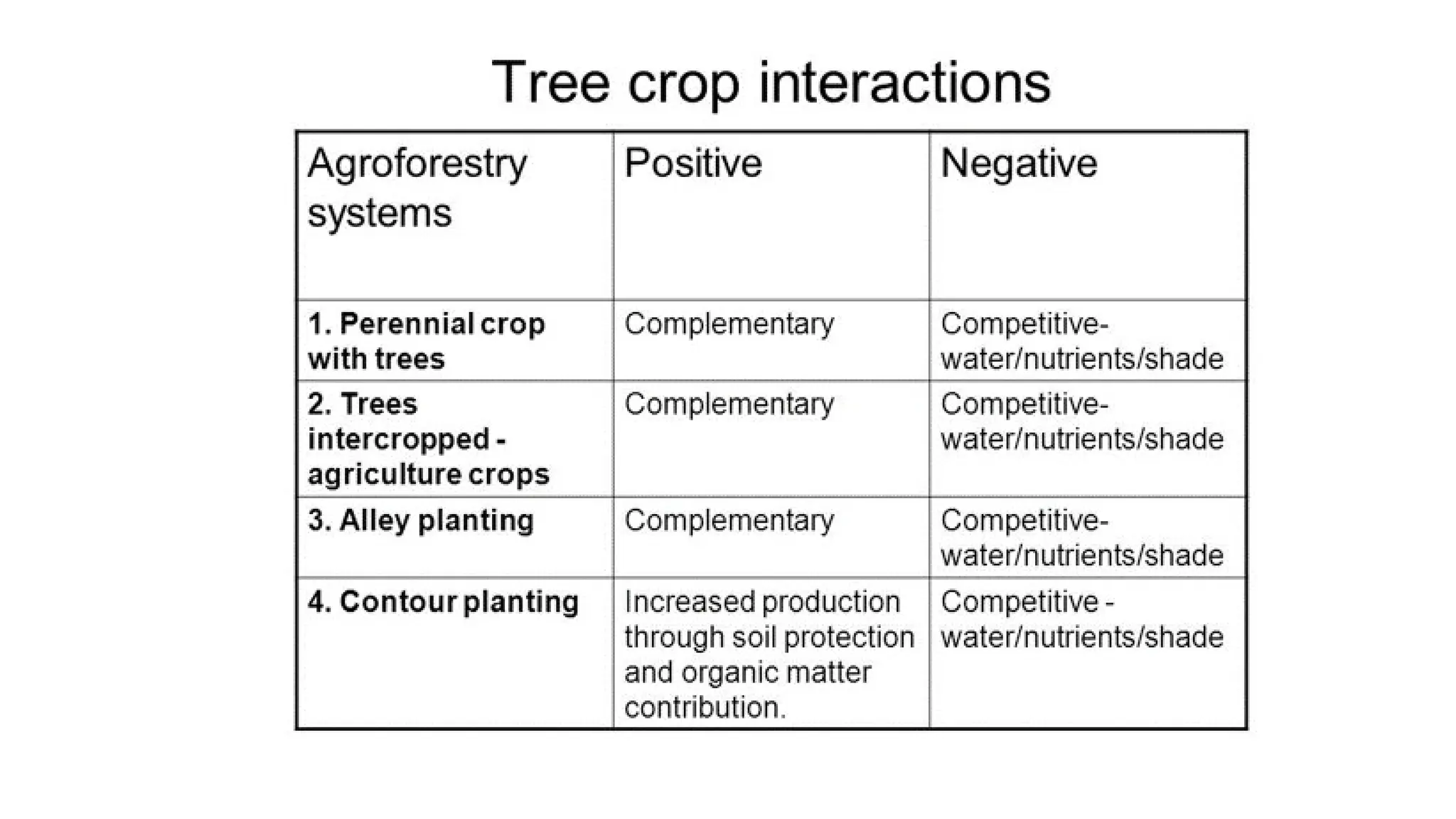
Tree- Crop interaction
• Forestry, agriculture and livestock are the main components of
agroforestry.
• Generally, trees grow in close proximity to crops and pastures, and
therefore, interactions between trees and crops occur both above and
below the ground, which will have both beneficial and harmful
effects.
• The various sets of interactions that occurs between the tree and the
crop in an agroforestry system both above and below ground
including water balance, nutrients, radiation exchange, shelter and
microclimate modifications is known as Tree- crop interaction.
Interaction Types and Descriptions
1. Mutualism:
Both populations benefit from the interaction.
Example: Mycorrhizae and legumes - Mycorrhizae help the legume absorb
nutrients, while the legume provides the mycorrhizae with carbohydrates.
1. Facilitation:
One population benefits, while the other is unaffected.
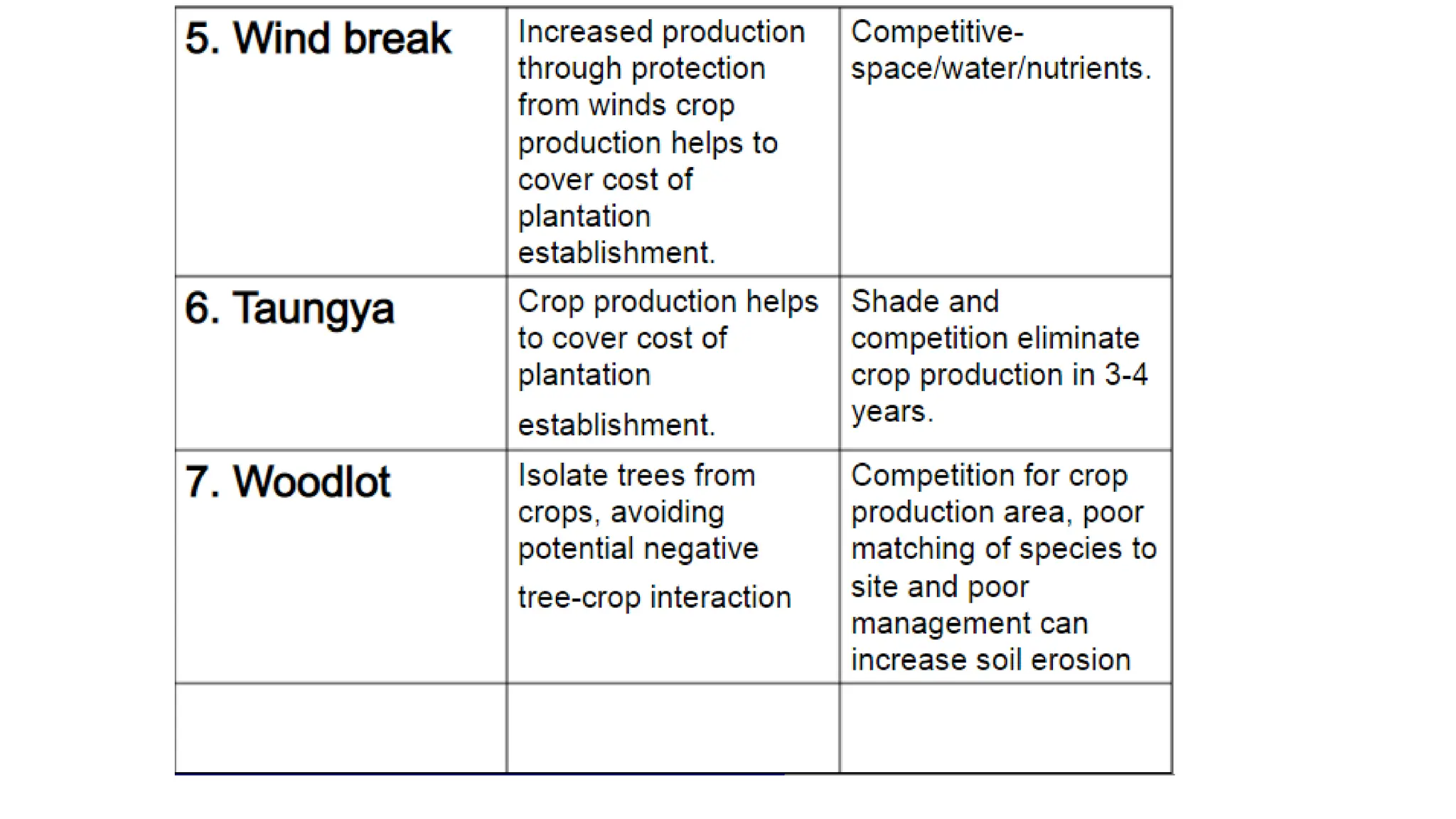
Example: Windbreaks - Windbreaks protect crops from wind, benefiting the
crops without harming the windbreak trees.
2. Commensalism:
One population benefits, while the other is neither helped nor harmed.
Example: Support trees for vines - Vines use trees for support, benefiting
themselves without affecting the trees.
4. Neutralism:
 Neither population is affected by the interaction.
 Example: Scattered trees in crop land - The trees and crops may coexist without
significant impact on each other.
5. Parasitism/Predation:
 One population benefits (parasite or predator), while the other is harmed (host or prey).
 Example: Pests and diseases - Pests and diseases harm crops.
6. Amensalism:
 One population is harmed, while the other is unaffected.
 Example: Allelopathy: Some plants release chemicals that inhibit the growth of other
plants.
7.Competition and Interference:
 Both populations are negatively affected due to competition for resources (e.g., light, water,
nutrients).
 Example: Poorly managed alley cropping - If trees and crops are too close together, they
may compete for resources, reducing yields.
Nature of interaction
1. Complementary
• Tree and crop both are benefitted or have positive interaction. ie. Yield of
both increases by the interaction than the sole cropping.
2. Supplementary
• It is the interaction in which one of the component is benefitted without
affecting the other component.
• Yield of one component (Crop) increases without affecting the yield of the
other component (tree).
• For example: If the fodder yields from a tree is 25kg/tree and crop yield
is 5 tones/ha when grown separately or solely but under agroforestry, the
fodder yield from tree increased to 35kg/tree without any reduction of
crop yield (5 tonnes).
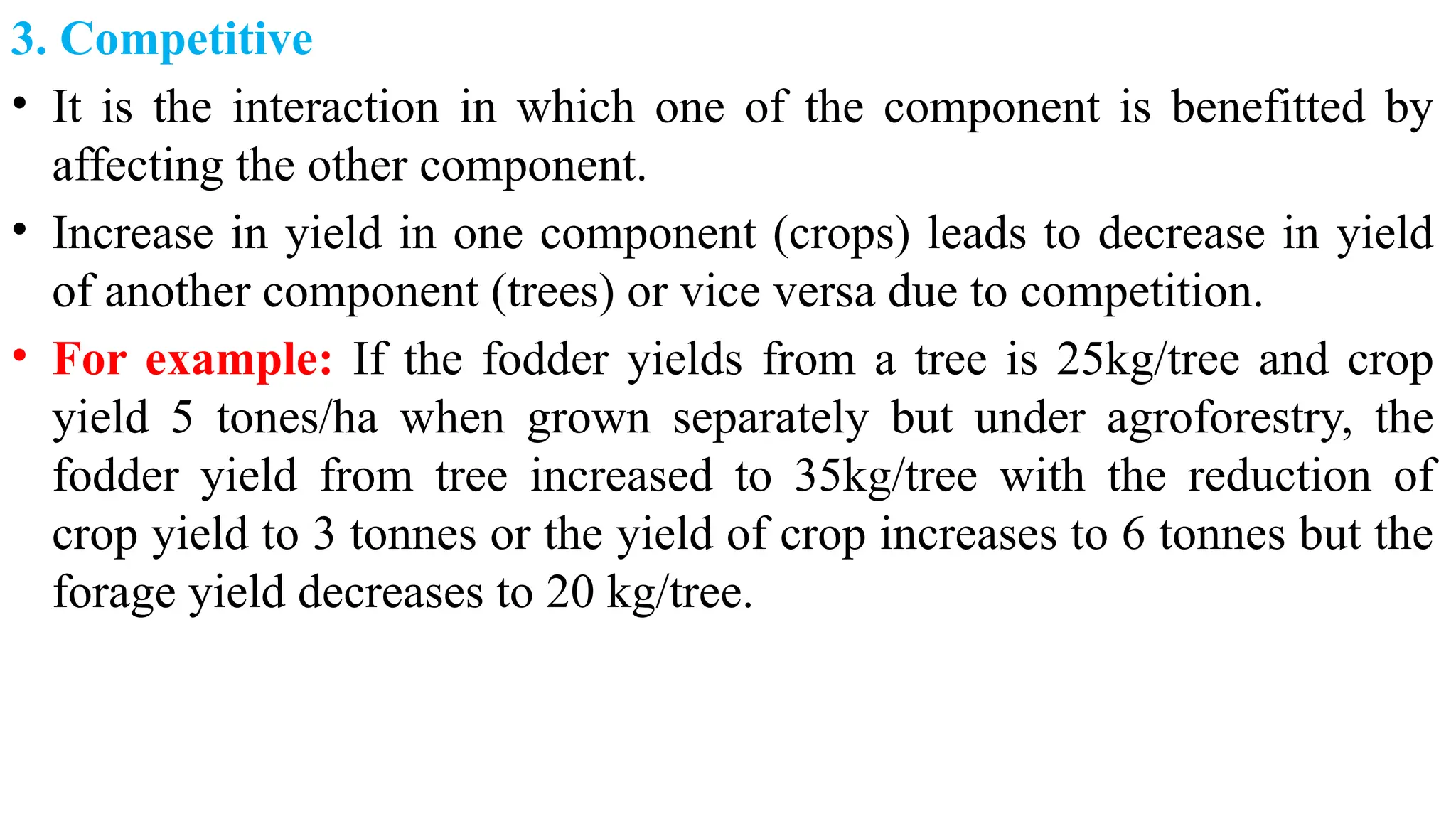
3. Competitive
• It is the interaction in which one of the component is benefitted by
affecting the other component.
• Increase in yield in one component (crops) leads to decrease in yield
of another component (trees) or vice versa due to competition.
• For example: If the fodder yields from a tree is 25kg/tree and crop
yield 5 tones/ha when grown separately but under agroforestry, the
fodder yield from tree increased to 35kg/tree with the reduction of
crop yield to 3 tonnes or the yield of crop increases to 6 tonnes but the
forage yield decreases to 20 kg/tree.
Types of Interactions
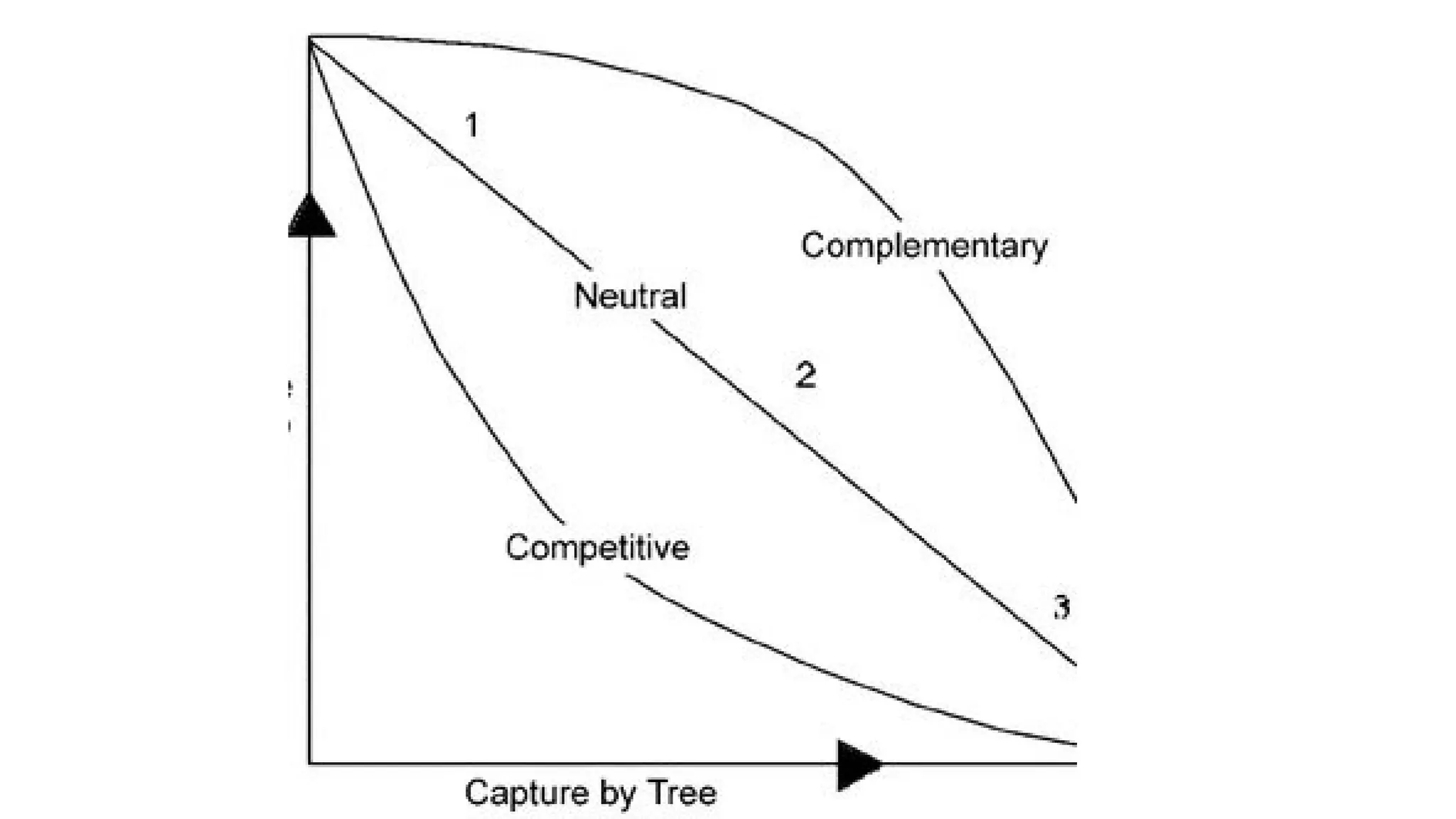
1.Complementary:
Represented by the green line with a positive slope.
An increase in A leads to an increase in B, and vice versa.
This suggests that the two components work together to enhance each other's effects.
2.Supplementary:
Represented by the blue lines.
In the first instance, an increase in A leads to an increase in B.
In the second instance, an increase in A has no effect on B.
This suggests that B is dependent on A to some extent, but can also exist independently.
3.Competitive:
Represented by the red line with a negative slope.
An increase in A leads to a decrease in B, and vice versa.
This indicates that the two components compete for resources or have opposing effects.
Factors affecting tree- crop interaction
1. Effect of species: Proper choosing of compatible tree- crop combinations.
2. Effect of light: Light crown trees, either selection of shade tolerant trees,
crops or management of trees for reducing shade on agricultural crops
3. Effect of density: Number of trees/ha, planting of trees at optimum numbers
of trees in a given area for reducing competition among crop and tree.
4. Effect of age: At the early stage of tree growth, the competition is minimum
5. Effect of site factors: Climatic, edaphic and physiographic features of an area
affect the plant growth.
6. Effect of management (Training and pruning)
• Level of management for tree crops (tree crown and roots) for benefit of
agricultural crops or improving the total productivity of the system
POSSIBLE INTERACTION EFFECTS
•Tree grows better, agricultural crops grows worse.
•Tree grow worse, agricultural crop relatively unaffected.
• Both tree and agricultural crop do better than expected.
• Both tree and crop adversely affected to some degree.
WHY TO STUDY?
• Tree crop interface studies are of particular use in obtaining
preliminary information about the following:
Choice of species
Design of agroforestry systems
Management of agroforestry system.
Interactions based on components:
• Tree – crop interface (TCI)
• Tree – animal interface (TAI)
TREE CROP INTERFACE:
Positive effects:
• Microclimate amelioration
• Weed suppression
• Soil and water conservation
• Biomass and shading
Negative effects:
• Competition for light
• Water
• Nutrients
• Allelopathy
TREE ANIMAL INTERFACE:
Positive effects:
•Shade for livestock
• Manure from livestock acts as fertilizer
• Fodder from trees can be used to feed livestock
Negative effects:
•Low quality of, or toxic components within, tree fodder
can adversely affect livestock production.
• Soil compaction through trampling.
Positive interactions:
1) Shading effect
• Shading causes reduction in temperature which in turn reduces
transpiration rate reducing water stress for shaded crops especially
during short period of drought.
• Shade is always beneficial for livestock and some shade loving crops
like turmeric, zinger, coffee etc.
Shade in summer can be beneficial for livestock, reducing heat
stress.
 Trees in agroforestry system are capable of increasing the
precipitation and relative humidity of the area. This results in
decreasing requirements of irrigation water.
2)Biomass contribution:
• Biomass can be added from pruning material which increases soil
condition.
3)Microclimate regulation:
Increase in soil moisture
Reducing soil temperature
Recycling of nutrients.
4) Efficient utilization of aerial space:
• Tree crop association ensures optimal utilization of aerial space both
horizontally and vertically.
5) Water conservation:
Reducing transpiration, pumping water from deep soil which makes the soil surface
moistened.
6) Weed suppression:
• Effect of shade is more severe for light demanding weeds.
7) Soil conservation:
• In agroforestry system, appropriate tree crop association control soil erosion efficiently.
Trees also control soil erosion by reducing the impacts of rainfall on soil because
about 25-30% rainfall is intercepted by the tree crown, and 10-15% of the rainfall
reaches the ground as stem flow.
Thus, only about 50-60% rainfall comes to the ground directly, which will have less
impact on soil erosion.
• Finally, trees and shrubs grown in agroforestry systems also improve the soil
productivity and production.
Ex: Alley cropping, windbreaks etc.
8) Efficiently use of light or reduce waste of light resource:
• Light interception by monoculture never be achieved 100% where as in agroforestry
system under storey crops can utilize these light, that might be lost otherwise
• A multi-layered agroforestry system efficiently utilize light or reduce waste of light by
using light in different layers.
9. Nutrient Cycling:
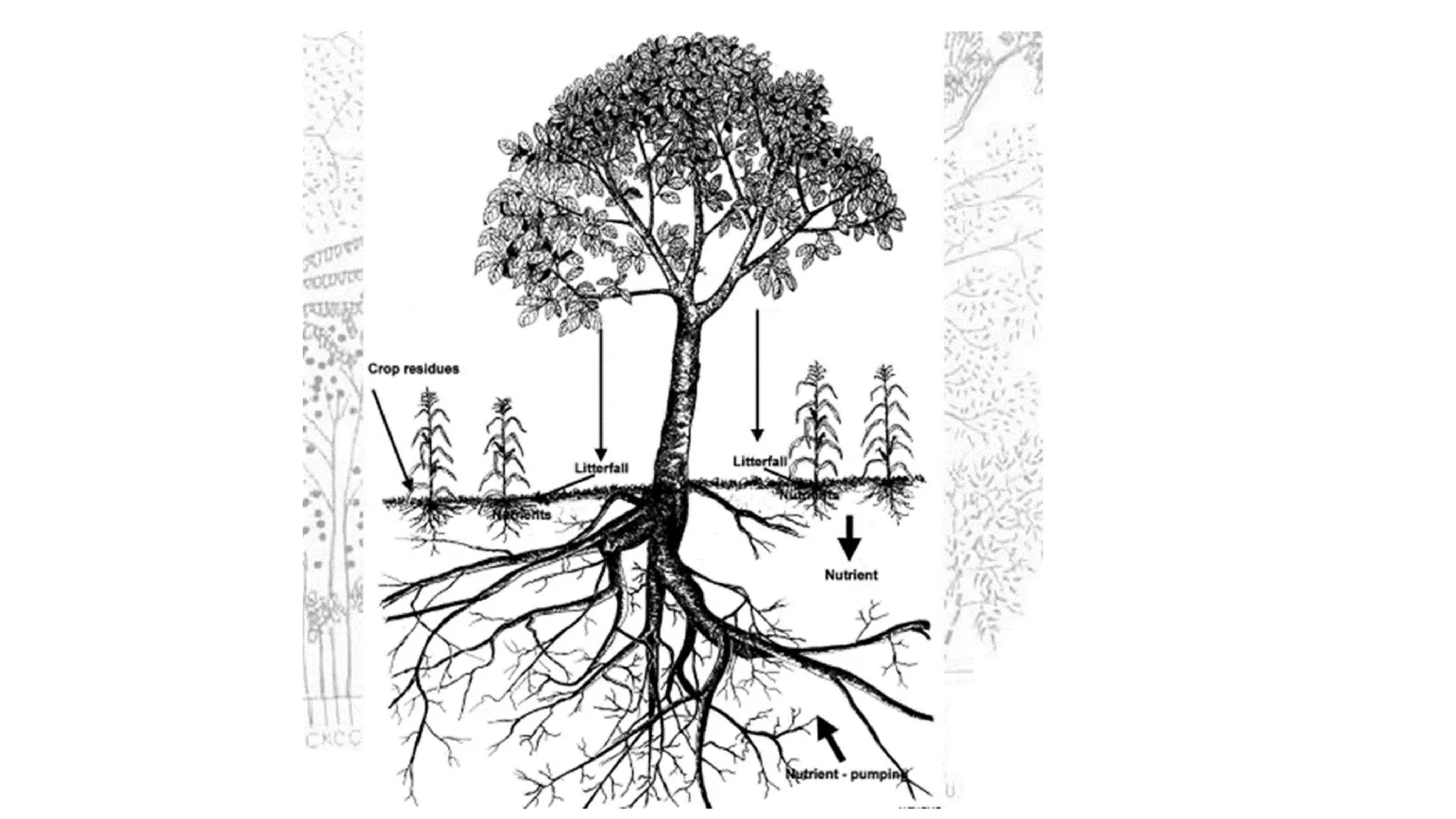
• Trees and shrubs grown in agroforestry system help to secure and renew the soil by
nutrient recycling.
• Trees with deep roots bring up nutrients from deeper soil layers, making them
available to crops.
Deep-rooting trees can absorb leached nitrate and other nutrients from the subsoil.
Nutrient recycling from the soil is a common agroforestry hypothesis.
This depends on trees and crop species, climate and soil conditions.
Deep nutrient capture by trees increases total nutrient availability in the system.
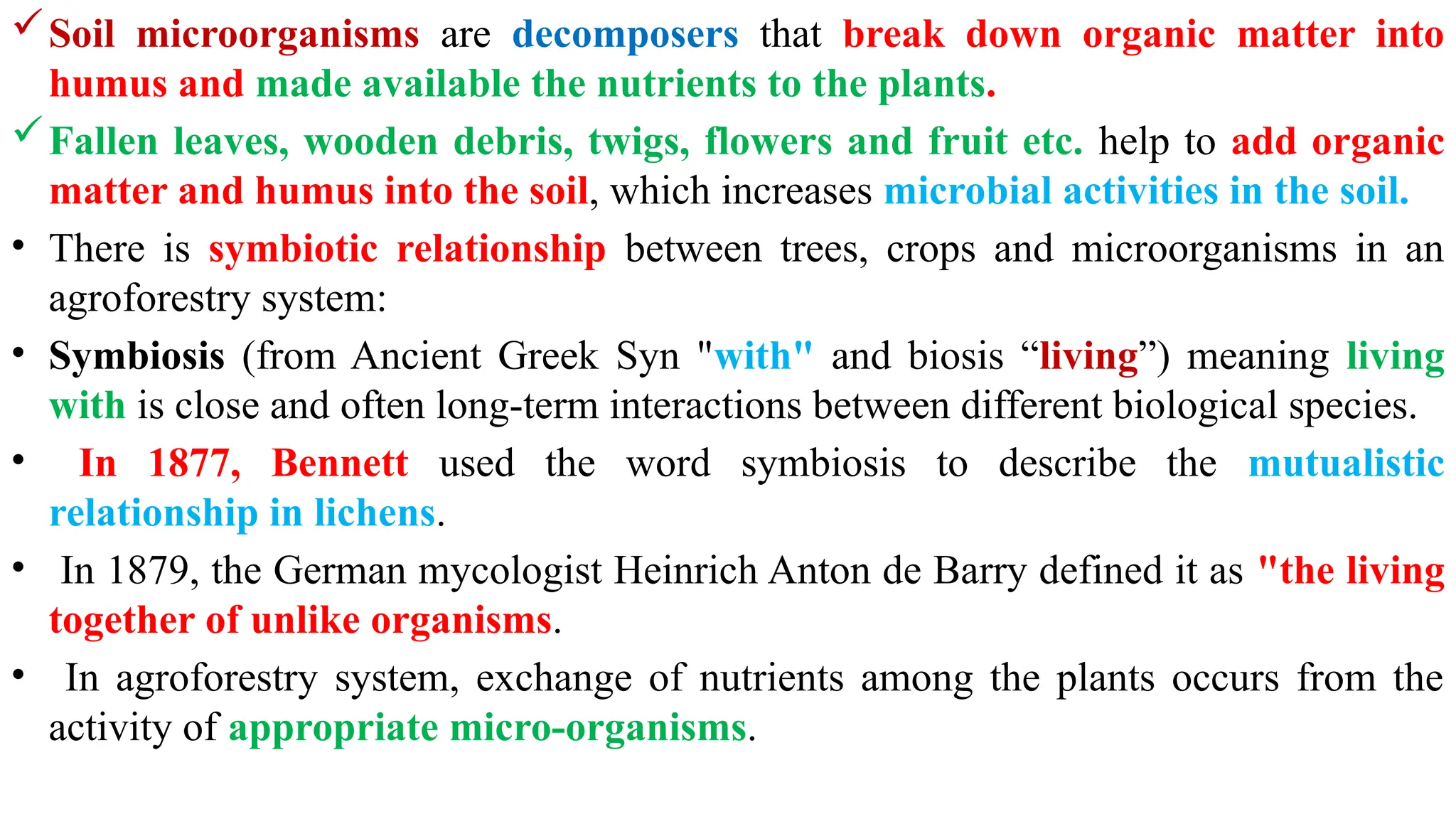
Soil microorganisms are decomposers that break down organic matter into
humus and made available the nutrients to the plants.
Fallen leaves, wooden debris, twigs, flowers and fruit etc. help to add organic
matter and humus into the soil, which increases microbial activities in the soil.
• There is symbiotic relationship between trees, crops and microorganisms in an
agroforestry system:
• Symbiosis (from Ancient Greek Syn "with" and biosis “living”) meaning living
with is close and often long-term interactions between different biological species.
• In 1877, Bennett used the word symbiosis to describe the mutualistic
relationship in lichens.
• In 1879, the German mycologist Heinrich Anton de Barry defined it as "the living
together of unlike organisms.
• In agroforestry system, exchange of nutrients among the plants occurs from the
activity of appropriate micro-organisms.
The word mycorrhiza is derived from the Greek words mykes, meaning
"fungus," and rhiza, meaning "root."
 Mycorrhiza is a specialized, symbiotic association between the roots of plants
and fungi that occurs in the vast majority of plants-both wild and cultivated.
 In a mycorrhizal relationship, the fungi assist their host plants by increasing
the plants' ability to capture water and essential elements such as phosphorus,
zinc, manganese, and copper from the soil, and transfer them into the plant's
roots.
 The fungi also provide protection against attack by pathogens and
nematodes.
 In return for these benefits, the fungal partner receives carbohydrates, amino
acids, and vitamins essential for its growth directly from the host plant.
 It has been estimated that mycorrhizal fungi amount to 15% of the total weight
of the world's plant roots.
10. Wind Protection:
• Trees act as windbreaks, reducing wind speed and preventing crop
damage and soil erosion.
11. Nitrogen Fixation:
• Leguminous trees fix atmospheric nitrogen, enriching the soil and benefiting
nitrogen-demanding crops.
• Legume trees and crops help to improve soil fertility by fixing atmospheric
nitrogen into the soil or roots.
• Subedi et al. (2001) give the following values for the nitrogen fixation capacity of
legume fodder and forage species which is 900 kg/ha/year for Desmodium, 40-
70 kg/ha/year for Stylo, 52-77 kg/ha/year for White clover, 60-168 kg/ha/year
for centro and 63-342 kg/ha/year for Ipil Ipil.
• Rhizobium (legume species) and Frankia (Utis-Alnus nepalensis) have potential
roles for nitrogen fixation, plant growth regulation, phosphate solubilization
and concerned with nutrient transformation of decaying plant materials.
• The most common and possibly the most important-mutualistic, symbiotic
relationship in the plant kingdom is known as mycorrhiza.
Negative interactions:
1) Light competition:
• In agroforestry systems light availability is the most limiting factor for the
under storey annual crops when it is planted with densely planted unpruned
trees.
2) Nutrient competition:
• In agroforestry systems both the components are taking nutrients from limited
nutrient pool in the soil, competition is likely to occur.
• Since the crop is usually the smaller component (when compared
individually), its root system will usually be confined to soil horizons that are
also available to the roots of the trees; but the trees can exploit soil volume
beyond reach of the crop.
• Therefore, the effects of nutrient competition will probably be more severe for
the crop components.
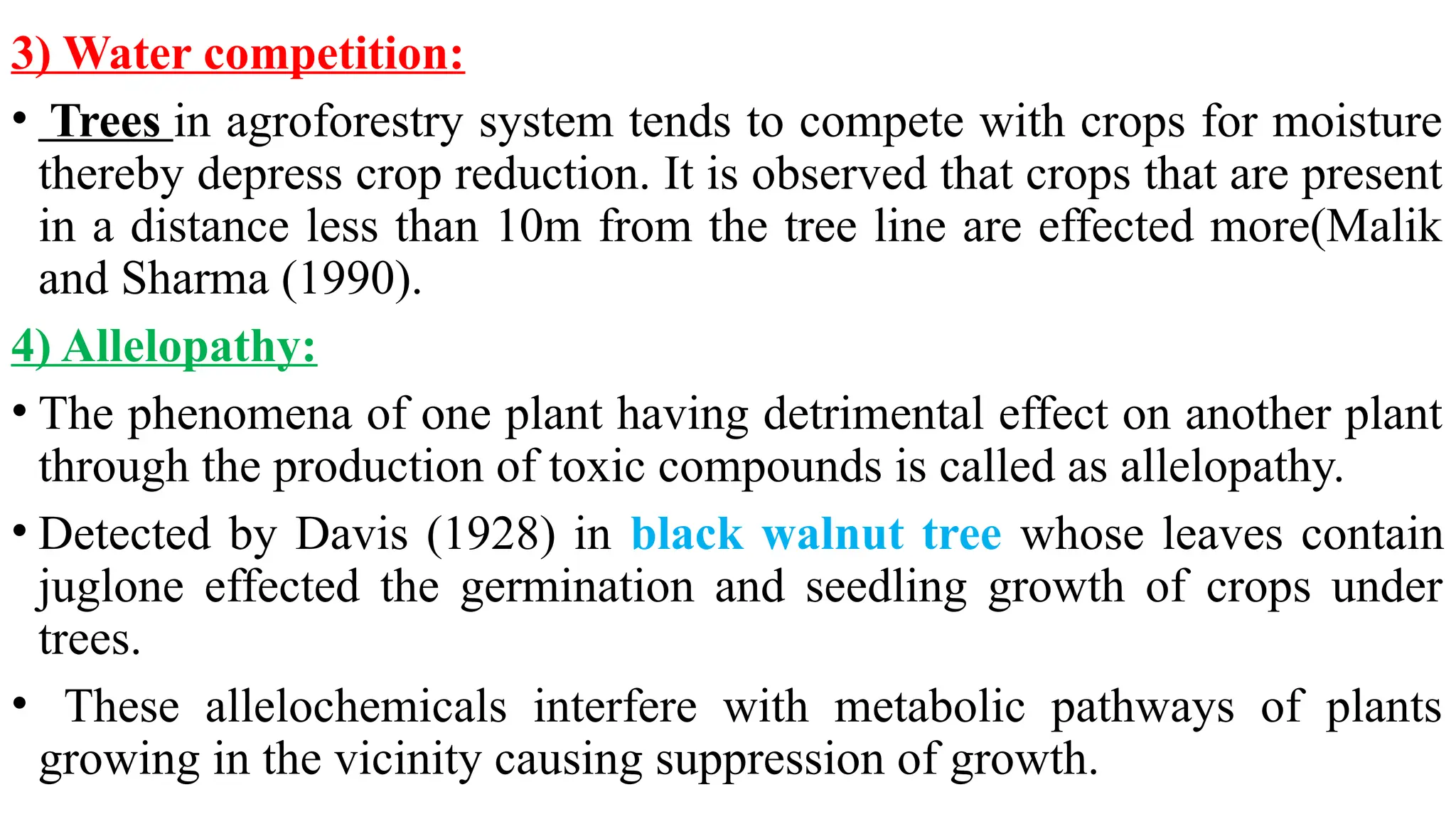
3) Water competition:
• Trees in agroforestry system tends to compete with crops for moisture
thereby depress crop reduction. It is observed that crops that are present
in a distance less than 10m from the tree line are effected more(Malik
and Sharma (1990).
4) Allelopathy:
• The phenomena of one plant having detrimental effect on another plant
through the production of toxic compounds is called as allelopathy.
• Detected by Davis (1928) in black walnut tree whose leaves contain
juglone effected the germination and seedling growth of crops under
trees.
• These allelochemicals interfere with metabolic pathways of plants
growing in the vicinity causing suppression of growth.
Tree species with potential allelopathic activities
Trees species Allelochemicals
Ipil Ipil: Leucaena leucocephala Mimosine
Walnut Juglone
Neem: Azadirachta indica Azadirachtin
Eucalyptus spp. 1,4 and 1,8- Cineole
Guava Phenolics
Peach Amygdalin
Apple: Malus domestica Phlorizin, Quercetin
Tree species with potential allelopathic activities
Tree species Allelochemicals Affected crop Effect
Leucaena
leucocephala
Mimosine Green gram, Rice Inhibitory effect on germination
and growth
Mimosine Rice, rye, lettuce Inhibitory effect on germination
and growth
Leaf extract Wheat, maize, pea. Inhibitory effect on germination
mustard
Soil Rice No effect on germination
Lear extract Rice Inhibitory effect on germination
Lear extract Rice Stimulatory effect on germination
Acacia tortilis T ,caf .stem, and soil cl'
tract
Pearl millet. sesame, cluster bean.
Wheat
lnhibitory effect on germination.
growth and yield
Tree species with potential allelopathic activities
Tree species Allelochemicals Affected crop Effect
Walnut Field study Potato. tomato. Alfalfa Inhibitory effect on gr
Field study Potato, maize, turnip Inhibitory effect on grow
Bamboo Leaf extract Groundnut Inhibitory effect Oil growth.
chlorophyll and protein content
Eucalyptus citridora Leaf. stem and root
extract
Okra, wheat, cowpea. maize Inhibitory effect on growth
Eucalyptus
terelicumis
Leaf. stem and root
extract
Sorghum, cowpea, sunflower Inhibitory effect on germination
and growth
Pinus radiata Leaf extract Ryegrass, white clover inhibitory effect on ryegrass and
stimulatory effect on while clover
Pinus roxhurghii Leaf and root leachates
decaying litter. field soil
Black gram, green gram,
horse gram, soybean
Both inhibitory and stimulatory
effect
Management strategies of tree crop interaction
Spatial Arrangement
1. Optimal Spacing:
o Maintain appropriate spacing between trees and crops to minimize competition and maximize positive
interactions.
o Use alley cropping, where crops are grown in alleys between rows of trees.
2. Zonal Planting:
o Plant trees in specific zones where their benefits are maximized, such as windbreaks or boundary planting.
Temporal Arrangement
3. Sequential Planting:
o Time the planting of crops and trees to minimize competition. For example, planting short-duration crops
between tree rows.
4. Staggered Harvesting:
o Harvest crops and tree products at different times to reduce competition and maximize resource use
efficiency.
Species Selection
5. Complementary Species:
o Choose tree and crop species with complementary growth habits and resource requirements.
o Use deep-rooted trees with shallow-rooted crops to minimize root competition.
6. Shade Tolerance:
o Select shade-tolerant crops to grow under the canopy of trees.
Soil and Water Management
7. Irrigation and Mulching:
o Implement efficient irrigation systems to ensure adequate water supply for both trees and
crops.
o Use mulching to conserve soil moisture and improve soil fertility.
8. Fertilization:
o Apply fertilizers strategically to meet the nutrient demands of both trees and crops without
causing imbalances.
Monitoring and Adaptation
9. Regular Monitoring:
o Continuously monitor the agroforestry system to identify and address any
negative interactions.
o Adapt management practices based on observations and changing conditions.
10.Research and Innovation:
o Engage in ongoing research to discover new and improved tree-crop
combinations and management practices.
o Utilize farmer knowledge and experiences to innovate and refine agroforestry
practices.
Examples of Tree-Crop Combinations
1. Agroforestry with Fruit Trees:
o Mango (Mangifera indica) intercropped with vegetables like tomatoes (Solanum
lycopersicum) or legumes like beans (Phaseolus spp.).
o Avocado (Persea americana) with shade-tolerant crops like coffee (Coffea spp.).
2. Agroforestry with Timber Trees:
o Teak (Tectona grandis) with maize (Zea mays) or soybeans (Glycine max).
o Eucalyptus (Eucalyptus spp.) with fodder crops like grasses.
3. Agroforestry with Nitrogen-fixing Trees:
o Leucaena (Leucaena leucocephala) with maize or millet (Pennisetum glaucum).
o Gliricidia (Gliricidia sepium) with cassava (Manihot esculenta) or groundnuts
(Arachis hypogaea).
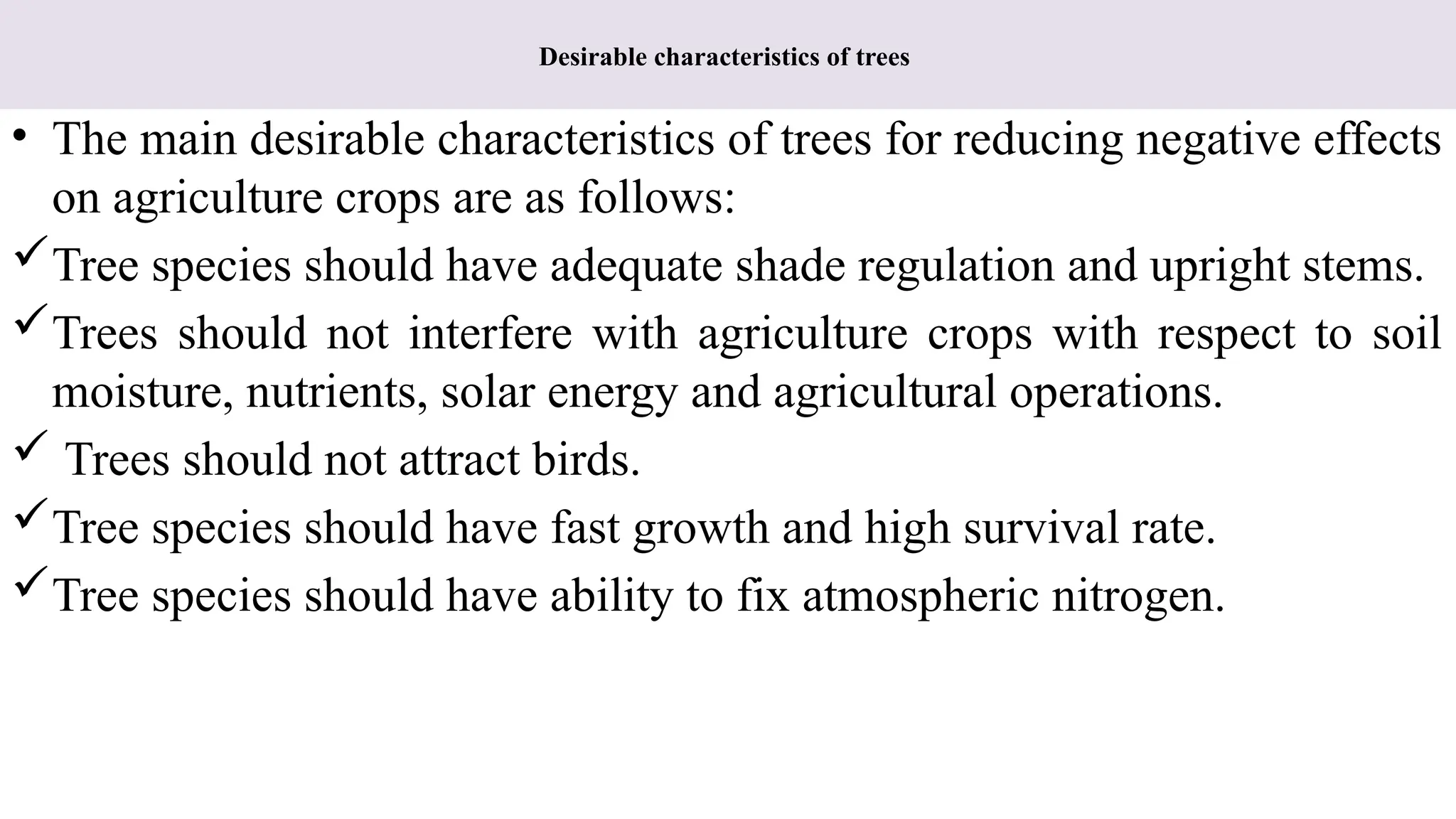
Desirable characteristics of trees
• The main desirable characteristics of trees for reducing negative effects
on agriculture crops are as follows:
Tree species should have adequate shade regulation and upright stems.
Trees should not interfere with agriculture crops with respect to soil
moisture, nutrients, solar energy and agricultural operations.
 Trees should not attract birds.
Tree species should have fast growth and high survival rate.
Tree species should have ability to fix atmospheric nitrogen.
Tree species should have high re-sprouting capacity after lopping,
coppicing, pollarding and pruning operations.
Tree species should have deep rooting system with very few lateral
roots.
Tree species should not have any toxic effects on soil and on
associated crop plants.
 Tree species should give multiple products.
 Tree species should have high yield potential and higher profitability.
 Tree species should be suitable to local climatic condition and widely
acceptable by the local farmers.
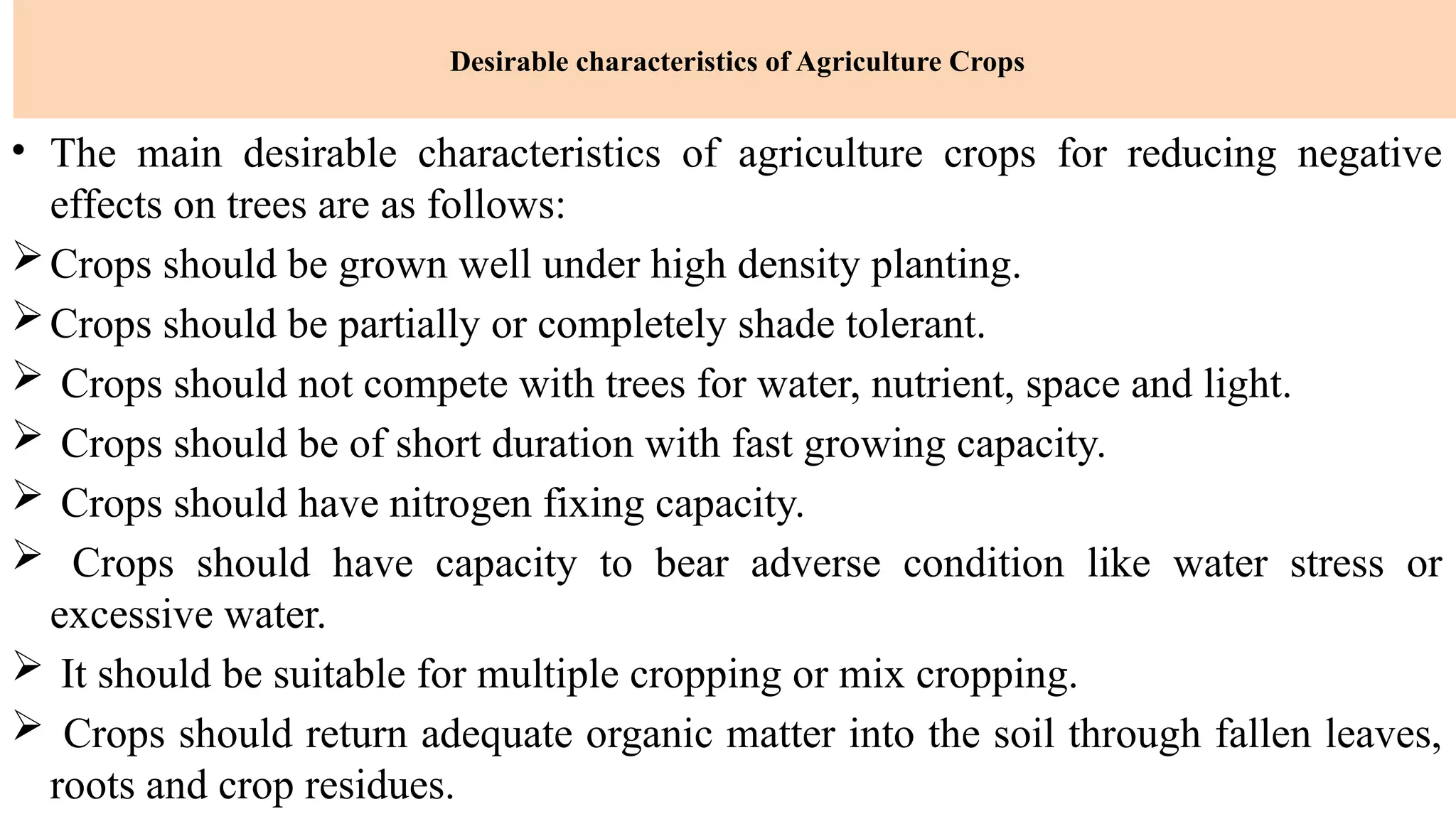
Desirable characteristics of Agriculture Crops
• The main desirable characteristics of agriculture crops for reducing negative
effects on trees are as follows:
Crops should be grown well under high density planting.
Crops should be partially or completely shade tolerant.
 Crops should not compete with trees for water, nutrient, space and light.
 Crops should be of short duration with fast growing capacity.
 Crops should have nitrogen fixing capacity.
 Crops should have capacity to bear adverse condition like water stress or
excessive water.
 It should be suitable for multiple cropping or mix cropping.
 Crops should return adequate organic matter into the soil through fallen leaves,
roots and crop residues.
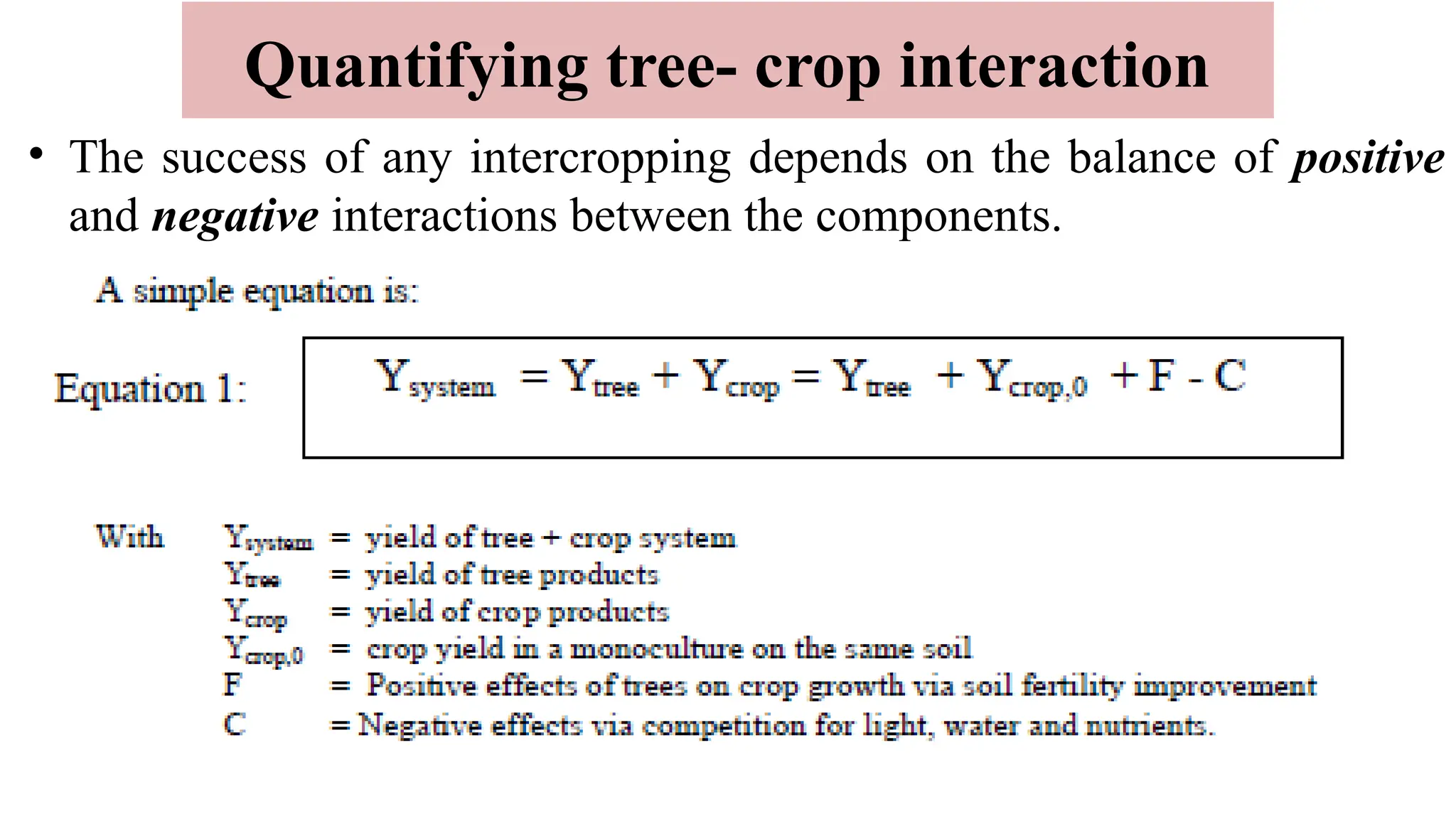
Quantifying tree- crop interaction
• The success of any intercropping depends on the balance of positive
and negative interactions between the components.
METHODS OF QUANTIFYING INTERACTION IN
AGROFORESTRY
• It is more meaningful to quantify tree crop interactions in terms of the various
benefits and changes commonly observed in agroforestry system such as fertility
improvement, soil moisture status and microclimate modification.
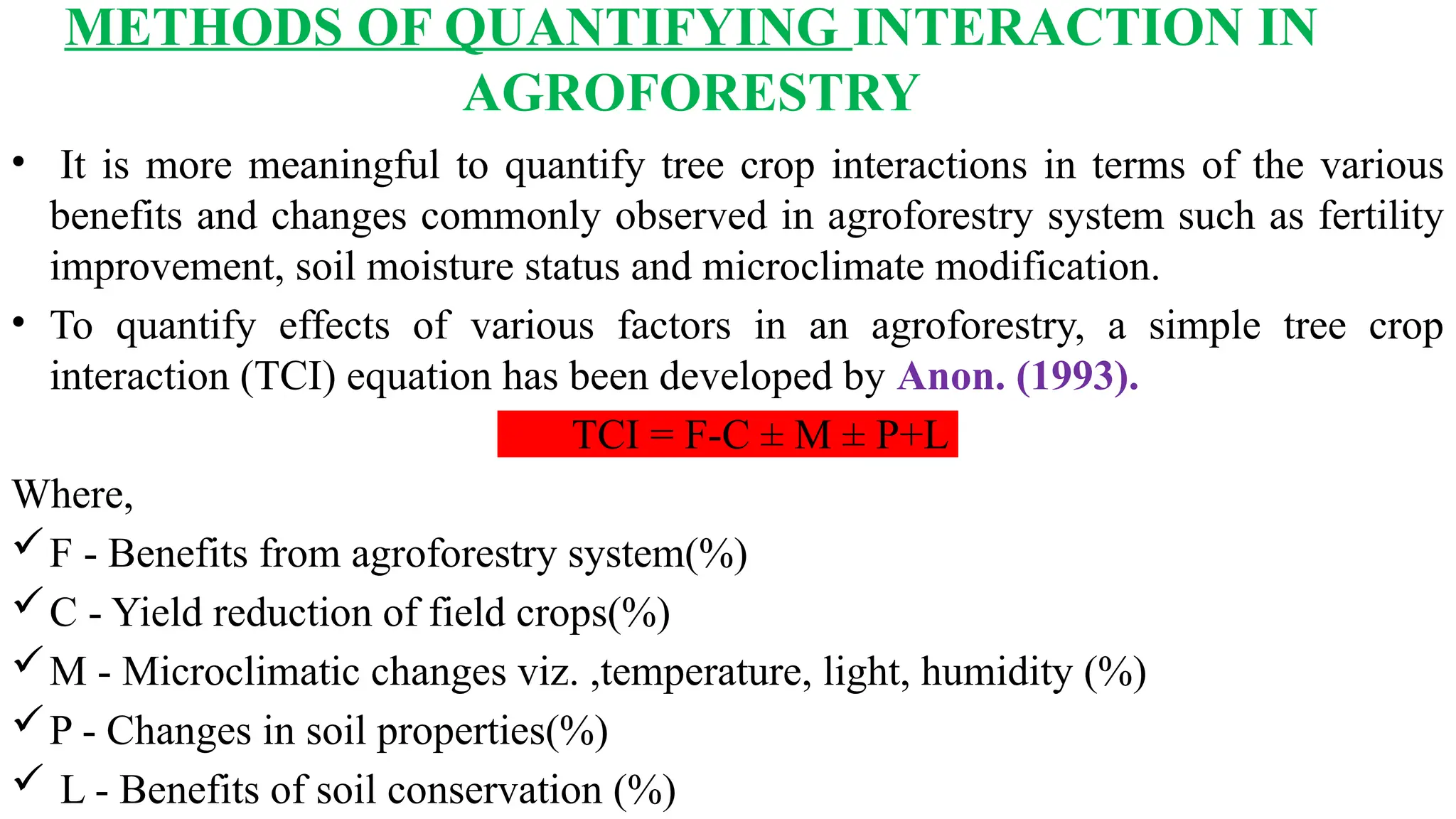
• To quantify effects of various factors in an agroforestry, a simple tree crop
interaction (TCI) equation has been developed by Anon. (1993).
TCI = F-C ± M ± P+L
Where,
F - Benefits from agroforestry system(%)
C - Yield reduction of field crops(%)
M - Microclimatic changes viz. ,temperature, light, humidity (%)
P - Changes in soil properties(%)
 L - Benefits of soil conservation (%)
How to quantify tree crop interface?
• ICRAF researchers have developed an equation for quantifying
tree crop interactions (I), considering positive effects of tree
and crop yields through soil fertility enrichment (F) and
negative effects through competition (C) for growth resources
between crop and tree.
I= F-C
• If F > C, then the interaction is Positive and Productive
• If F < C, then the interaction is Negative and Non productive
• If F=C, then the interaction is neutral
WaNulCas (Water Nutrient Light Capture) model
• The WaNuLCAS simulation
model provides a synthesis of
current understanding of the
processes in water, nutrient
and light capture in a range of
agroforestry systems, as
influenced by soil properties
and climate.
• The total balance for below ground resources (water or nutrients)
inputs into an agroforestry system is formulated in equation 2:
Equation 2:
ΔStored = Input + Recycle - Upt_crop - Upt_tree.comp -
Upt_tree,noncomp - Loss
The equation states that the change in water storage within the system is
equal to the sum of water inputs and recycled water, minus the water
uptake by the crop, the water uptake by competing tree roots, the water
uptake by non-competing tree roots, and the water losses.
Key Points:
• This equation helps in understanding how water is distributed
and utilized within an agroforestry system.
• It can be used to assess the impact of tree integration on water
availability for crops.
• By analyzing the different components of the equation,
researchers can identify potential water management strategies
to optimize crop yields and water use efficiency.
Assignment
1. Define tree crop interaction. Write down the factors affecting tree
crop interaction.
2. Briefly discuss various types of crop interaction with suitable
examples.
3. Define allelopathy. Discuss about some trees species with potential
allelopathic activities.
4. Write about the desirable characteristics of trees and crops in
agroforestry system.
5. Write about the management strategies of tree crop interaction.
6. How can we quantify tree crop interaction (interface).

Lecture 4-Tree and Crop interaction in a agroforestry system.pptx

  • 1.
    Lecture 4: Treecrop Interaction
  • 2.
    Tree- Crop interaction •Forestry, agriculture and livestock are the main components of agroforestry. • Generally, trees grow in close proximity to crops and pastures, and therefore, interactions between trees and crops occur both above and below the ground, which will have both beneficial and harmful effects. • The various sets of interactions that occurs between the tree and the crop in an agroforestry system both above and below ground including water balance, nutrients, radiation exchange, shelter and microclimate modifications is known as Tree- crop interaction.
  • 6.
    Interaction Types andDescriptions 1. Mutualism: Both populations benefit from the interaction. Example: Mycorrhizae and legumes - Mycorrhizae help the legume absorb nutrients, while the legume provides the mycorrhizae with carbohydrates. 1. Facilitation: One population benefits, while the other is unaffected. Example: Windbreaks - Windbreaks protect crops from wind, benefiting the crops without harming the windbreak trees. 2. Commensalism: One population benefits, while the other is neither helped nor harmed. Example: Support trees for vines - Vines use trees for support, benefiting themselves without affecting the trees.
  • 7.
    4. Neutralism:  Neitherpopulation is affected by the interaction.  Example: Scattered trees in crop land - The trees and crops may coexist without significant impact on each other. 5. Parasitism/Predation:  One population benefits (parasite or predator), while the other is harmed (host or prey).  Example: Pests and diseases - Pests and diseases harm crops. 6. Amensalism:  One population is harmed, while the other is unaffected.  Example: Allelopathy: Some plants release chemicals that inhibit the growth of other plants. 7.Competition and Interference:  Both populations are negatively affected due to competition for resources (e.g., light, water, nutrients).  Example: Poorly managed alley cropping - If trees and crops are too close together, they may compete for resources, reducing yields.
  • 9.
    Nature of interaction 1.Complementary • Tree and crop both are benefitted or have positive interaction. ie. Yield of both increases by the interaction than the sole cropping. 2. Supplementary • It is the interaction in which one of the component is benefitted without affecting the other component. • Yield of one component (Crop) increases without affecting the yield of the other component (tree). • For example: If the fodder yields from a tree is 25kg/tree and crop yield is 5 tones/ha when grown separately or solely but under agroforestry, the fodder yield from tree increased to 35kg/tree without any reduction of crop yield (5 tonnes).
  • 10.
    3. Competitive • Itis the interaction in which one of the component is benefitted by affecting the other component. • Increase in yield in one component (crops) leads to decrease in yield of another component (trees) or vice versa due to competition. • For example: If the fodder yields from a tree is 25kg/tree and crop yield 5 tones/ha when grown separately but under agroforestry, the fodder yield from tree increased to 35kg/tree with the reduction of crop yield to 3 tonnes or the yield of crop increases to 6 tonnes but the forage yield decreases to 20 kg/tree.
  • 12.
    Types of Interactions 1.Complementary: Representedby the green line with a positive slope. An increase in A leads to an increase in B, and vice versa. This suggests that the two components work together to enhance each other's effects. 2.Supplementary: Represented by the blue lines. In the first instance, an increase in A leads to an increase in B. In the second instance, an increase in A has no effect on B. This suggests that B is dependent on A to some extent, but can also exist independently. 3.Competitive: Represented by the red line with a negative slope. An increase in A leads to a decrease in B, and vice versa. This indicates that the two components compete for resources or have opposing effects.
  • 14.
    Factors affecting tree-crop interaction 1. Effect of species: Proper choosing of compatible tree- crop combinations. 2. Effect of light: Light crown trees, either selection of shade tolerant trees, crops or management of trees for reducing shade on agricultural crops 3. Effect of density: Number of trees/ha, planting of trees at optimum numbers of trees in a given area for reducing competition among crop and tree. 4. Effect of age: At the early stage of tree growth, the competition is minimum 5. Effect of site factors: Climatic, edaphic and physiographic features of an area affect the plant growth. 6. Effect of management (Training and pruning) • Level of management for tree crops (tree crown and roots) for benefit of agricultural crops or improving the total productivity of the system
  • 15.
    POSSIBLE INTERACTION EFFECTS •Treegrows better, agricultural crops grows worse. •Tree grow worse, agricultural crop relatively unaffected. • Both tree and agricultural crop do better than expected. • Both tree and crop adversely affected to some degree.
  • 16.
    WHY TO STUDY? •Tree crop interface studies are of particular use in obtaining preliminary information about the following: Choice of species Design of agroforestry systems Management of agroforestry system. Interactions based on components: • Tree – crop interface (TCI) • Tree – animal interface (TAI)
  • 17.
    TREE CROP INTERFACE: Positiveeffects: • Microclimate amelioration • Weed suppression • Soil and water conservation • Biomass and shading Negative effects: • Competition for light • Water • Nutrients • Allelopathy
  • 18.
    TREE ANIMAL INTERFACE: Positiveeffects: •Shade for livestock • Manure from livestock acts as fertilizer • Fodder from trees can be used to feed livestock Negative effects: •Low quality of, or toxic components within, tree fodder can adversely affect livestock production. • Soil compaction through trampling.
  • 24.
    Positive interactions: 1) Shadingeffect • Shading causes reduction in temperature which in turn reduces transpiration rate reducing water stress for shaded crops especially during short period of drought. • Shade is always beneficial for livestock and some shade loving crops like turmeric, zinger, coffee etc. Shade in summer can be beneficial for livestock, reducing heat stress.  Trees in agroforestry system are capable of increasing the precipitation and relative humidity of the area. This results in decreasing requirements of irrigation water.
  • 25.
    2)Biomass contribution: • Biomasscan be added from pruning material which increases soil condition. 3)Microclimate regulation: Increase in soil moisture Reducing soil temperature Recycling of nutrients. 4) Efficient utilization of aerial space: • Tree crop association ensures optimal utilization of aerial space both horizontally and vertically.
  • 26.
    5) Water conservation: Reducingtranspiration, pumping water from deep soil which makes the soil surface moistened. 6) Weed suppression: • Effect of shade is more severe for light demanding weeds. 7) Soil conservation: • In agroforestry system, appropriate tree crop association control soil erosion efficiently. Trees also control soil erosion by reducing the impacts of rainfall on soil because about 25-30% rainfall is intercepted by the tree crown, and 10-15% of the rainfall reaches the ground as stem flow. Thus, only about 50-60% rainfall comes to the ground directly, which will have less impact on soil erosion. • Finally, trees and shrubs grown in agroforestry systems also improve the soil productivity and production. Ex: Alley cropping, windbreaks etc.
  • 27.
    8) Efficiently useof light or reduce waste of light resource: • Light interception by monoculture never be achieved 100% where as in agroforestry system under storey crops can utilize these light, that might be lost otherwise • A multi-layered agroforestry system efficiently utilize light or reduce waste of light by using light in different layers. 9. Nutrient Cycling: • Trees and shrubs grown in agroforestry system help to secure and renew the soil by nutrient recycling. • Trees with deep roots bring up nutrients from deeper soil layers, making them available to crops. Deep-rooting trees can absorb leached nitrate and other nutrients from the subsoil. Nutrient recycling from the soil is a common agroforestry hypothesis. This depends on trees and crop species, climate and soil conditions. Deep nutrient capture by trees increases total nutrient availability in the system.
  • 28.
    Soil microorganisms aredecomposers that break down organic matter into humus and made available the nutrients to the plants. Fallen leaves, wooden debris, twigs, flowers and fruit etc. help to add organic matter and humus into the soil, which increases microbial activities in the soil. • There is symbiotic relationship between trees, crops and microorganisms in an agroforestry system: • Symbiosis (from Ancient Greek Syn "with" and biosis “living”) meaning living with is close and often long-term interactions between different biological species. • In 1877, Bennett used the word symbiosis to describe the mutualistic relationship in lichens. • In 1879, the German mycologist Heinrich Anton de Barry defined it as "the living together of unlike organisms. • In agroforestry system, exchange of nutrients among the plants occurs from the activity of appropriate micro-organisms.
  • 29.
    The word mycorrhizais derived from the Greek words mykes, meaning "fungus," and rhiza, meaning "root."  Mycorrhiza is a specialized, symbiotic association between the roots of plants and fungi that occurs in the vast majority of plants-both wild and cultivated.  In a mycorrhizal relationship, the fungi assist their host plants by increasing the plants' ability to capture water and essential elements such as phosphorus, zinc, manganese, and copper from the soil, and transfer them into the plant's roots.  The fungi also provide protection against attack by pathogens and nematodes.  In return for these benefits, the fungal partner receives carbohydrates, amino acids, and vitamins essential for its growth directly from the host plant.  It has been estimated that mycorrhizal fungi amount to 15% of the total weight of the world's plant roots.
  • 30.
    10. Wind Protection: •Trees act as windbreaks, reducing wind speed and preventing crop damage and soil erosion.
  • 31.
    11. Nitrogen Fixation: •Leguminous trees fix atmospheric nitrogen, enriching the soil and benefiting nitrogen-demanding crops. • Legume trees and crops help to improve soil fertility by fixing atmospheric nitrogen into the soil or roots. • Subedi et al. (2001) give the following values for the nitrogen fixation capacity of legume fodder and forage species which is 900 kg/ha/year for Desmodium, 40- 70 kg/ha/year for Stylo, 52-77 kg/ha/year for White clover, 60-168 kg/ha/year for centro and 63-342 kg/ha/year for Ipil Ipil. • Rhizobium (legume species) and Frankia (Utis-Alnus nepalensis) have potential roles for nitrogen fixation, plant growth regulation, phosphate solubilization and concerned with nutrient transformation of decaying plant materials. • The most common and possibly the most important-mutualistic, symbiotic relationship in the plant kingdom is known as mycorrhiza.
  • 32.
    Negative interactions: 1) Lightcompetition: • In agroforestry systems light availability is the most limiting factor for the under storey annual crops when it is planted with densely planted unpruned trees. 2) Nutrient competition: • In agroforestry systems both the components are taking nutrients from limited nutrient pool in the soil, competition is likely to occur. • Since the crop is usually the smaller component (when compared individually), its root system will usually be confined to soil horizons that are also available to the roots of the trees; but the trees can exploit soil volume beyond reach of the crop. • Therefore, the effects of nutrient competition will probably be more severe for the crop components.
  • 33.
    3) Water competition: •Trees in agroforestry system tends to compete with crops for moisture thereby depress crop reduction. It is observed that crops that are present in a distance less than 10m from the tree line are effected more(Malik and Sharma (1990). 4) Allelopathy: • The phenomena of one plant having detrimental effect on another plant through the production of toxic compounds is called as allelopathy. • Detected by Davis (1928) in black walnut tree whose leaves contain juglone effected the germination and seedling growth of crops under trees. • These allelochemicals interfere with metabolic pathways of plants growing in the vicinity causing suppression of growth.
  • 34.
    Tree species withpotential allelopathic activities Trees species Allelochemicals Ipil Ipil: Leucaena leucocephala Mimosine Walnut Juglone Neem: Azadirachta indica Azadirachtin Eucalyptus spp. 1,4 and 1,8- Cineole Guava Phenolics Peach Amygdalin Apple: Malus domestica Phlorizin, Quercetin
  • 35.
    Tree species withpotential allelopathic activities Tree species Allelochemicals Affected crop Effect Leucaena leucocephala Mimosine Green gram, Rice Inhibitory effect on germination and growth Mimosine Rice, rye, lettuce Inhibitory effect on germination and growth Leaf extract Wheat, maize, pea. Inhibitory effect on germination mustard Soil Rice No effect on germination Lear extract Rice Inhibitory effect on germination Lear extract Rice Stimulatory effect on germination Acacia tortilis T ,caf .stem, and soil cl' tract Pearl millet. sesame, cluster bean. Wheat lnhibitory effect on germination. growth and yield
  • 36.
    Tree species withpotential allelopathic activities Tree species Allelochemicals Affected crop Effect Walnut Field study Potato. tomato. Alfalfa Inhibitory effect on gr Field study Potato, maize, turnip Inhibitory effect on grow Bamboo Leaf extract Groundnut Inhibitory effect Oil growth. chlorophyll and protein content Eucalyptus citridora Leaf. stem and root extract Okra, wheat, cowpea. maize Inhibitory effect on growth Eucalyptus terelicumis Leaf. stem and root extract Sorghum, cowpea, sunflower Inhibitory effect on germination and growth Pinus radiata Leaf extract Ryegrass, white clover inhibitory effect on ryegrass and stimulatory effect on while clover Pinus roxhurghii Leaf and root leachates decaying litter. field soil Black gram, green gram, horse gram, soybean Both inhibitory and stimulatory effect
  • 39.
    Management strategies oftree crop interaction Spatial Arrangement 1. Optimal Spacing: o Maintain appropriate spacing between trees and crops to minimize competition and maximize positive interactions. o Use alley cropping, where crops are grown in alleys between rows of trees. 2. Zonal Planting: o Plant trees in specific zones where their benefits are maximized, such as windbreaks or boundary planting. Temporal Arrangement 3. Sequential Planting: o Time the planting of crops and trees to minimize competition. For example, planting short-duration crops between tree rows. 4. Staggered Harvesting: o Harvest crops and tree products at different times to reduce competition and maximize resource use efficiency.
  • 40.
    Species Selection 5. ComplementarySpecies: o Choose tree and crop species with complementary growth habits and resource requirements. o Use deep-rooted trees with shallow-rooted crops to minimize root competition. 6. Shade Tolerance: o Select shade-tolerant crops to grow under the canopy of trees. Soil and Water Management 7. Irrigation and Mulching: o Implement efficient irrigation systems to ensure adequate water supply for both trees and crops. o Use mulching to conserve soil moisture and improve soil fertility. 8. Fertilization: o Apply fertilizers strategically to meet the nutrient demands of both trees and crops without causing imbalances.
  • 41.
    Monitoring and Adaptation 9.Regular Monitoring: o Continuously monitor the agroforestry system to identify and address any negative interactions. o Adapt management practices based on observations and changing conditions. 10.Research and Innovation: o Engage in ongoing research to discover new and improved tree-crop combinations and management practices. o Utilize farmer knowledge and experiences to innovate and refine agroforestry practices.
  • 42.
    Examples of Tree-CropCombinations 1. Agroforestry with Fruit Trees: o Mango (Mangifera indica) intercropped with vegetables like tomatoes (Solanum lycopersicum) or legumes like beans (Phaseolus spp.). o Avocado (Persea americana) with shade-tolerant crops like coffee (Coffea spp.). 2. Agroforestry with Timber Trees: o Teak (Tectona grandis) with maize (Zea mays) or soybeans (Glycine max). o Eucalyptus (Eucalyptus spp.) with fodder crops like grasses. 3. Agroforestry with Nitrogen-fixing Trees: o Leucaena (Leucaena leucocephala) with maize or millet (Pennisetum glaucum). o Gliricidia (Gliricidia sepium) with cassava (Manihot esculenta) or groundnuts (Arachis hypogaea).
  • 43.
    Desirable characteristics oftrees • The main desirable characteristics of trees for reducing negative effects on agriculture crops are as follows: Tree species should have adequate shade regulation and upright stems. Trees should not interfere with agriculture crops with respect to soil moisture, nutrients, solar energy and agricultural operations.  Trees should not attract birds. Tree species should have fast growth and high survival rate. Tree species should have ability to fix atmospheric nitrogen.
  • 44.
    Tree species shouldhave high re-sprouting capacity after lopping, coppicing, pollarding and pruning operations. Tree species should have deep rooting system with very few lateral roots. Tree species should not have any toxic effects on soil and on associated crop plants.  Tree species should give multiple products.  Tree species should have high yield potential and higher profitability.  Tree species should be suitable to local climatic condition and widely acceptable by the local farmers.
  • 45.
    Desirable characteristics ofAgriculture Crops • The main desirable characteristics of agriculture crops for reducing negative effects on trees are as follows: Crops should be grown well under high density planting. Crops should be partially or completely shade tolerant.  Crops should not compete with trees for water, nutrient, space and light.  Crops should be of short duration with fast growing capacity.  Crops should have nitrogen fixing capacity.  Crops should have capacity to bear adverse condition like water stress or excessive water.  It should be suitable for multiple cropping or mix cropping.  Crops should return adequate organic matter into the soil through fallen leaves, roots and crop residues.
  • 46.
    Quantifying tree- cropinteraction • The success of any intercropping depends on the balance of positive and negative interactions between the components.
  • 47.
    METHODS OF QUANTIFYINGINTERACTION IN AGROFORESTRY • It is more meaningful to quantify tree crop interactions in terms of the various benefits and changes commonly observed in agroforestry system such as fertility improvement, soil moisture status and microclimate modification. • To quantify effects of various factors in an agroforestry, a simple tree crop interaction (TCI) equation has been developed by Anon. (1993). TCI = F-C ± M ± P+L Where, F - Benefits from agroforestry system(%) C - Yield reduction of field crops(%) M - Microclimatic changes viz. ,temperature, light, humidity (%) P - Changes in soil properties(%)  L - Benefits of soil conservation (%)
  • 48.
    How to quantifytree crop interface? • ICRAF researchers have developed an equation for quantifying tree crop interactions (I), considering positive effects of tree and crop yields through soil fertility enrichment (F) and negative effects through competition (C) for growth resources between crop and tree. I= F-C • If F > C, then the interaction is Positive and Productive • If F < C, then the interaction is Negative and Non productive • If F=C, then the interaction is neutral
  • 49.
    WaNulCas (Water NutrientLight Capture) model • The WaNuLCAS simulation model provides a synthesis of current understanding of the processes in water, nutrient and light capture in a range of agroforestry systems, as influenced by soil properties and climate.
  • 50.
    • The totalbalance for below ground resources (water or nutrients) inputs into an agroforestry system is formulated in equation 2: Equation 2: ΔStored = Input + Recycle - Upt_crop - Upt_tree.comp - Upt_tree,noncomp - Loss The equation states that the change in water storage within the system is equal to the sum of water inputs and recycled water, minus the water uptake by the crop, the water uptake by competing tree roots, the water uptake by non-competing tree roots, and the water losses.
  • 51.
    Key Points: • Thisequation helps in understanding how water is distributed and utilized within an agroforestry system. • It can be used to assess the impact of tree integration on water availability for crops. • By analyzing the different components of the equation, researchers can identify potential water management strategies to optimize crop yields and water use efficiency.
  • 52.
    Assignment 1. Define treecrop interaction. Write down the factors affecting tree crop interaction. 2. Briefly discuss various types of crop interaction with suitable examples. 3. Define allelopathy. Discuss about some trees species with potential allelopathic activities. 4. Write about the desirable characteristics of trees and crops in agroforestry system. 5. Write about the management strategies of tree crop interaction. 6. How can we quantify tree crop interaction (interface).