Environmental Biotechnology Anjala Durgapal Lecturer Department of Botany M. B. Govt. P. G. College, Haldwani (Nainital) Uttrakhand
Introduction Biotechnology is “ the integration of natural sciences and engineering in order to achieve the application of organisms, cells parts thereof and molecular analogues for products and services ” (EFB, 1989). Environmental Biotechnology is the application of these processes for the protection and restoration of the quality of our environment.
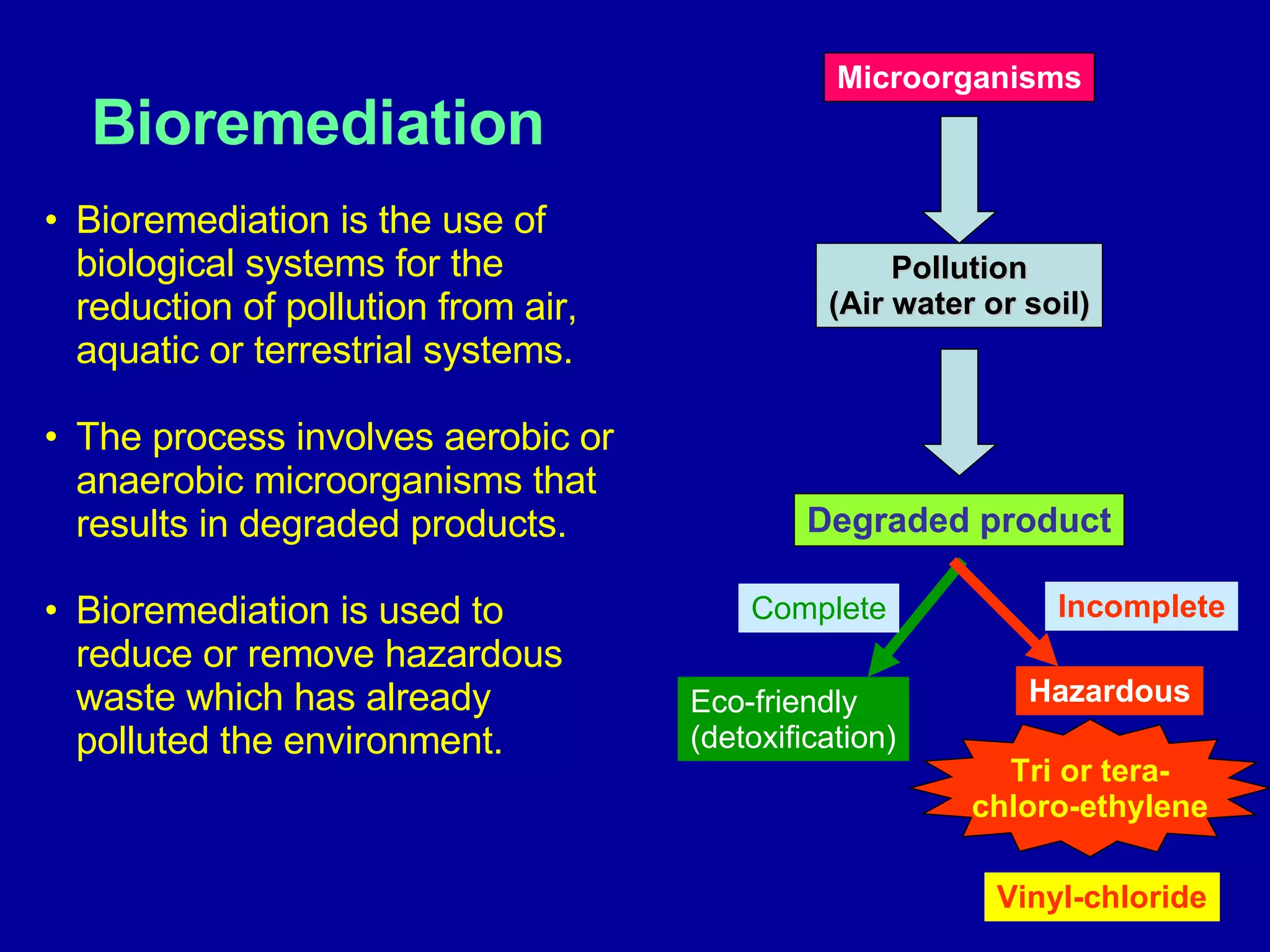
Bioremediation is the use of biological systems for the reduction of pollution from air, aquatic or terrestrial systems. The process involves aerobic or anaerobic microorganisms that results in degraded products. Bioremediation is used to reduce or remove hazardous waste which has already polluted the environment. Pollution (Air water or soil) Microorganisms Degraded product Eco-friendly (detoxification) Hazardous Bioremediation Tri or tera- chloro-ethylene Complete Incomplete Vinyl-chloride
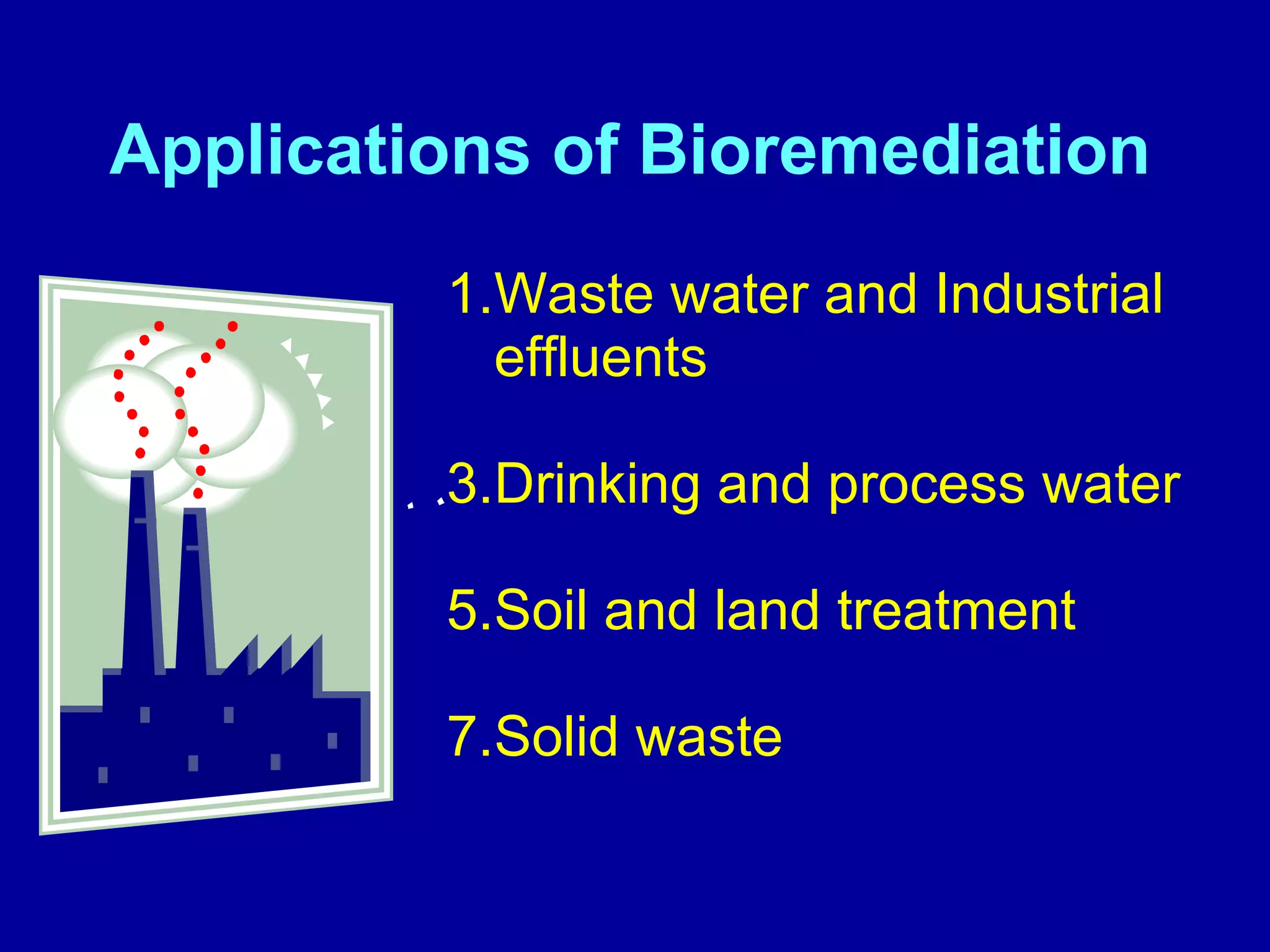
Applications of Bioremediation Waste water and Industrial effluents Drinking and process water Soil and land treatment Solid waste
Waste water and Industrial Effluents Removal of common pollutants from water before discharged into river or sea. Elimination of phosphorus nitrogen, heavy metals and chlorinated compounds. Sulfur reducing bacteria can be used to remove wastes containing sulfur. Bed containing waste material and microbes in  suspension Bioreactor
Drinking and Process water Biotechnology for the reclamation and purification of waste water for re-use Agricultural regions of the world, animal wastes and excess fertilizers result in high level of nitrates in drinking water. Biotechnology has provided successful methods by which these compounds can be removed from processed water before it is delivered to customers .
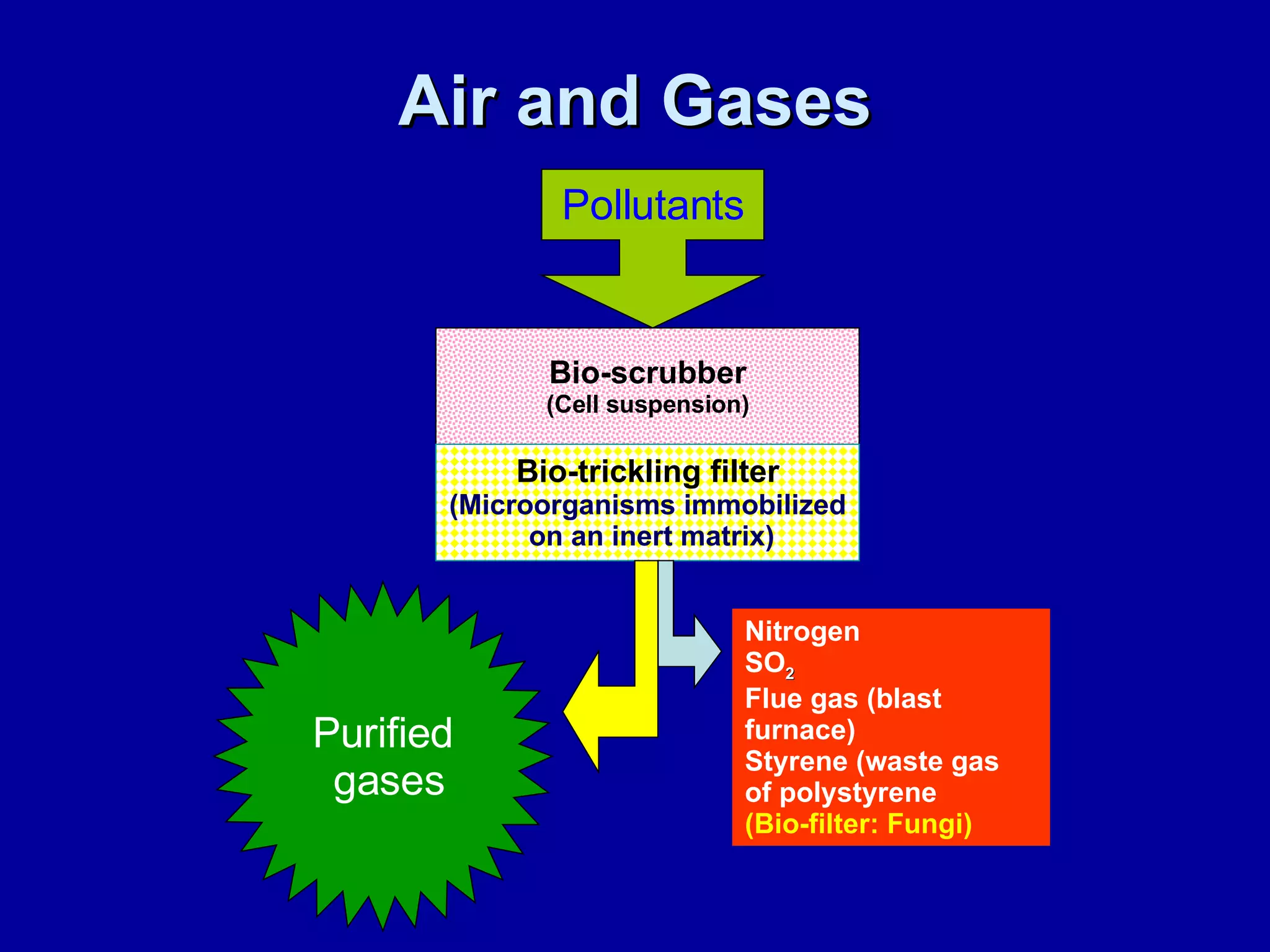
Air and Gases Bio-scrubber (Cell suspension) Bio-trickling filter (Microorganisms immobilized on an inert matrix) Pollutants Nitrogen SO 2 Flue gas (blast furnace) Styrene (waste gas  of polystyrene   (Bio-filter: Fungi) Purified gases
Soil and land treatment In-situ: Bio-augmentation [ Introduction of micro-organisms ] Bio-stimulation [ Ventilation and /or adding nutrient solutions ] Ex-situ: Removal of soil and ground water and treating it above the ground Phyto-remediation  employs use of plants and bacteria Metals from contaminated soils and ground water. For e.g.. Rhizobacteria Bio-remediation of land [bio-restoration] is cheaper than physical methods with harmless end products.
Solid waste Composed of readily biodegradable organics Bio-wastes can be converted to a valuable resource by composting or anaerobic digestion Anerobic digesters permit the recovery of substantial amounts of high value bio-gas together with  a high quality stable organic  residue The organic  residue can be used as manure. Recycling of solid waste can save enormous cost of incineration
Prevention Involves development of processes with reduced environmental impacts Biotechnological ways of prevention are- Process improvement: Use of enzymes Product innovation: Development of new products that have less impact on environment their predecessors for e.g. genetically improved plant varieties that resistant against insects/ diseases, thereby reducing the use of pesticides.
Detection and Monitoring  Established measures include:   Counting the number of plants, animals and microbial  species.  Biological detection methods Biosensors and immunoassays Detection and monitoring of microorganisms used for bioremediation.  Detection and monitoring of ecological effects Employs a range of biological methods  to detect incidents of  pollution and continuous monitoring of pollutants.
Genetic Engineering Involves the use of microorganisms genetically modified by recombinant DNA technology.  GE is a powerful tool in creating environment friendly alternatives for products and processes For e.g. : Production of enzymes Amylose free potato Indigo producing bacterium
Conclusion Concerns for new technologies released into the environment do exist. New techniques under consideration make use of genetically engineered microorganisms designed to deal with specific tasks. There is a tremendous potential for biotechnology to contribute in the remediation and protection of the environment.

Bioremediation

  • 1.
    Environmental Biotechnology AnjalaDurgapal Lecturer Department of Botany M. B. Govt. P. G. College, Haldwani (Nainital) Uttrakhand
  • 2.
    Introduction Biotechnology is“ the integration of natural sciences and engineering in order to achieve the application of organisms, cells parts thereof and molecular analogues for products and services ” (EFB, 1989). Environmental Biotechnology is the application of these processes for the protection and restoration of the quality of our environment.
  • 3.
    Bioremediation is theuse of biological systems for the reduction of pollution from air, aquatic or terrestrial systems. The process involves aerobic or anaerobic microorganisms that results in degraded products. Bioremediation is used to reduce or remove hazardous waste which has already polluted the environment. Pollution (Air water or soil) Microorganisms Degraded product Eco-friendly (detoxification) Hazardous Bioremediation Tri or tera- chloro-ethylene Complete Incomplete Vinyl-chloride
  • 4.
    Applications of BioremediationWaste water and Industrial effluents Drinking and process water Soil and land treatment Solid waste
  • 5.
    Waste water andIndustrial Effluents Removal of common pollutants from water before discharged into river or sea. Elimination of phosphorus nitrogen, heavy metals and chlorinated compounds. Sulfur reducing bacteria can be used to remove wastes containing sulfur. Bed containing waste material and microbes in suspension Bioreactor
  • 6.
    Drinking and Processwater Biotechnology for the reclamation and purification of waste water for re-use Agricultural regions of the world, animal wastes and excess fertilizers result in high level of nitrates in drinking water. Biotechnology has provided successful methods by which these compounds can be removed from processed water before it is delivered to customers .
  • 7.
    Air and GasesBio-scrubber (Cell suspension) Bio-trickling filter (Microorganisms immobilized on an inert matrix) Pollutants Nitrogen SO 2 Flue gas (blast furnace) Styrene (waste gas of polystyrene (Bio-filter: Fungi) Purified gases
  • 8.
    Soil and landtreatment In-situ: Bio-augmentation [ Introduction of micro-organisms ] Bio-stimulation [ Ventilation and /or adding nutrient solutions ] Ex-situ: Removal of soil and ground water and treating it above the ground Phyto-remediation employs use of plants and bacteria Metals from contaminated soils and ground water. For e.g.. Rhizobacteria Bio-remediation of land [bio-restoration] is cheaper than physical methods with harmless end products.
  • 9.
    Solid waste Composedof readily biodegradable organics Bio-wastes can be converted to a valuable resource by composting or anaerobic digestion Anerobic digesters permit the recovery of substantial amounts of high value bio-gas together with a high quality stable organic residue The organic residue can be used as manure. Recycling of solid waste can save enormous cost of incineration
  • 10.
    Prevention Involves developmentof processes with reduced environmental impacts Biotechnological ways of prevention are- Process improvement: Use of enzymes Product innovation: Development of new products that have less impact on environment their predecessors for e.g. genetically improved plant varieties that resistant against insects/ diseases, thereby reducing the use of pesticides.
  • 11.
    Detection and Monitoring Established measures include: Counting the number of plants, animals and microbial species. Biological detection methods Biosensors and immunoassays Detection and monitoring of microorganisms used for bioremediation. Detection and monitoring of ecological effects Employs a range of biological methods to detect incidents of pollution and continuous monitoring of pollutants.
  • 12.
    Genetic Engineering Involvesthe use of microorganisms genetically modified by recombinant DNA technology. GE is a powerful tool in creating environment friendly alternatives for products and processes For e.g. : Production of enzymes Amylose free potato Indigo producing bacterium
  • 13.
    Conclusion Concerns fornew technologies released into the environment do exist. New techniques under consideration make use of genetically engineered microorganisms designed to deal with specific tasks. There is a tremendous potential for biotechnology to contribute in the remediation and protection of the environment.