Orthologs,
Paralogs, &
Xenologs
Muhammad Osama Zafar
BS-BioTech (4th – Semester)
Gulab Devi Educational Complex
(GDEC), Lahore
CourseTitle:
Molecular Evolution
Sequence Homology
 Sequence homology is the biological homology between DNA,
RNA or Protein Sequences
 Defined in terms of shared ancestry in the evolutionary
history of life
 Homlogous genes(Homologues) are derived from a common
ancestors
 Homology among DNA, RNA, or proteins is typically inferred
from their nucleotide or amino acid sequence similarity.
Types of Sequence Homology
 Significant similarity is strong evidence that two
sequences are related by evolutionary changes from a
common ancestral sequence.
 Alignments of multiple sequences are used to indicate
which regions of each sequence are homologous.
 Two segments of DNA can have shared ancestry because of
three phenomena:
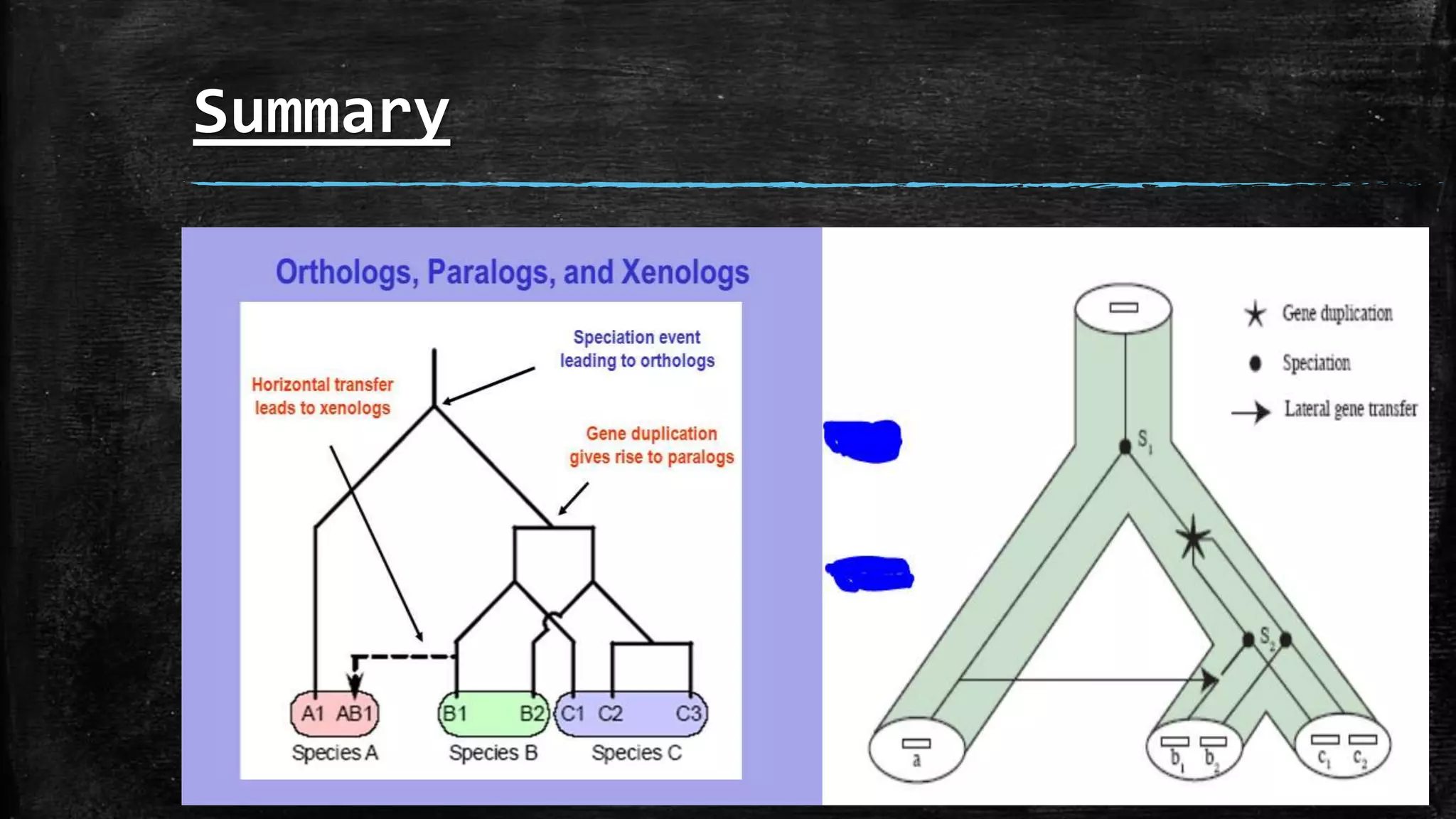
 a Speciation event (ORTHOLOGS)
 a Duplication event (PARALOGS)
 a horizontal(lateral) gene transfer event (XENOLOGS)
Orthologs
 Homologous sequences are orthologous: if they are inferred
to be descended from the same ancestral sequence separated
by a speciation event: when a species diverges into two
separate species
 The copies of a single gene in the two resulting species
are said to be orthologous.
 Orthologs, or orthologous genes, are genes in different
species that originated by vertical descent from a single
gene of the last common ancestor.
 The term "ortholog" was coined in 1970 by the Molecular
Evolutionist Walter Fitch.
Example (ORTHOLOGS)
EyeLess Gene: Controls the Eye development & formation
Paralogs
 Paralogous genes are genes that are related via duplication
events in the last common ancestor (LCA) of the species
being compared.
 They result from the mutation of duplicated genes during
separate speciation events.
 When descendants from the LCA share mutated homologs of the
original duplicated genes then those genes are considered
paralogs
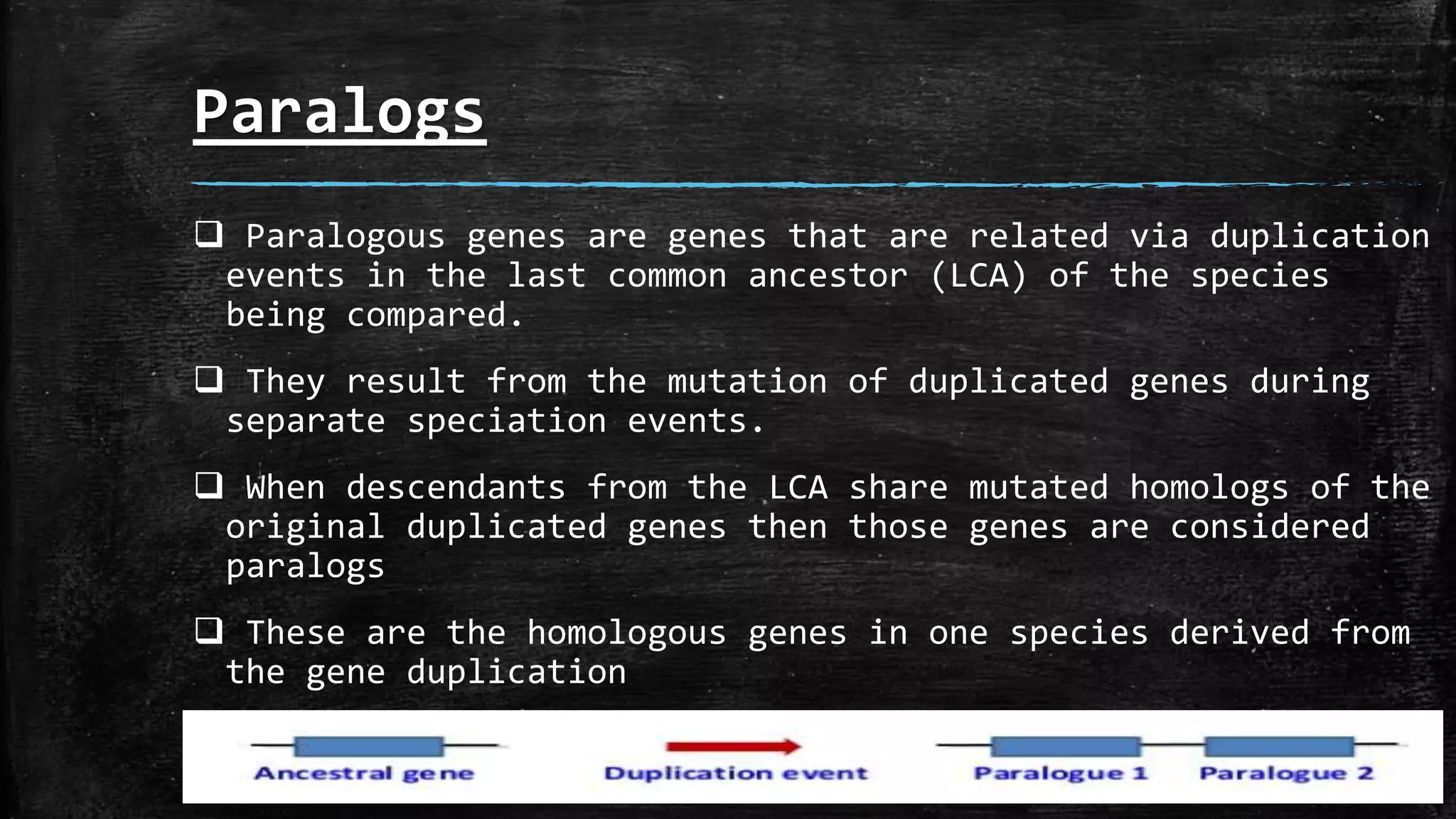
 These are the homologous genes in one species derived from
the gene duplication
Example (PARALOGS)
Drospophilla
Xenologs
 Homologs resulting from horizontal gene transfer between
two organisms.
 Xeno is a Greek word that means “Foreigner ”.
 Can have different functions if the new environment is
vastly different for the horizontally moving gene.
 In general, though, xenologs typically have similar
function in both organisms.
 The term was coined by Walter Fitch
 Results from a Horizontal Gene Transfer(HGT) between two
organisms. A direct transfer between two species.
Example (XENOLOGS)
Summary
 Orthologs,Paralogs & Xenologs

Orthologs,Paralogs & Xenologs

  • 1.
    Orthologs, Paralogs, & Xenologs Muhammad OsamaZafar BS-BioTech (4th – Semester) Gulab Devi Educational Complex (GDEC), Lahore CourseTitle: Molecular Evolution
  • 2.
    Sequence Homology  Sequencehomology is the biological homology between DNA, RNA or Protein Sequences  Defined in terms of shared ancestry in the evolutionary history of life  Homlogous genes(Homologues) are derived from a common ancestors  Homology among DNA, RNA, or proteins is typically inferred from their nucleotide or amino acid sequence similarity.
  • 3.
    Types of SequenceHomology  Significant similarity is strong evidence that two sequences are related by evolutionary changes from a common ancestral sequence.  Alignments of multiple sequences are used to indicate which regions of each sequence are homologous.  Two segments of DNA can have shared ancestry because of three phenomena:  a Speciation event (ORTHOLOGS)  a Duplication event (PARALOGS)  a horizontal(lateral) gene transfer event (XENOLOGS)
  • 4.
    Orthologs  Homologous sequencesare orthologous: if they are inferred to be descended from the same ancestral sequence separated by a speciation event: when a species diverges into two separate species  The copies of a single gene in the two resulting species are said to be orthologous.  Orthologs, or orthologous genes, are genes in different species that originated by vertical descent from a single gene of the last common ancestor.  The term "ortholog" was coined in 1970 by the Molecular Evolutionist Walter Fitch.
  • 5.
    Example (ORTHOLOGS) EyeLess Gene:Controls the Eye development & formation
  • 6.
    Paralogs  Paralogous genesare genes that are related via duplication events in the last common ancestor (LCA) of the species being compared.  They result from the mutation of duplicated genes during separate speciation events.  When descendants from the LCA share mutated homologs of the original duplicated genes then those genes are considered paralogs  These are the homologous genes in one species derived from the gene duplication
  • 7.
  • 8.
    Xenologs  Homologs resultingfrom horizontal gene transfer between two organisms.  Xeno is a Greek word that means “Foreigner ”.  Can have different functions if the new environment is vastly different for the horizontally moving gene.  In general, though, xenologs typically have similar function in both organisms.  The term was coined by Walter Fitch  Results from a Horizontal Gene Transfer(HGT) between two organisms. A direct transfer between two species.
  • 9.
  • 10.