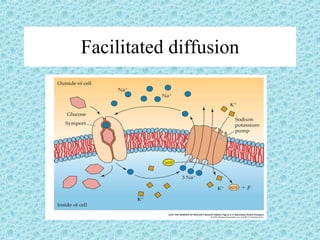
Facilitated diffusion
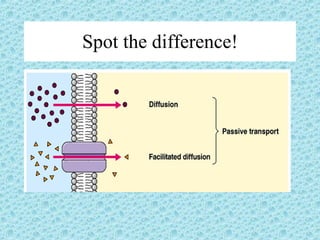
Spot the difference!
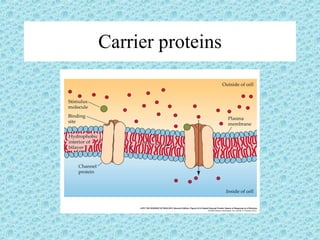
Key features It is passive – does not require energy but It uses carrier proteins Here the solute molecules “combine” with carrier proteins in the membrane.  These carrier molecules speed (or facilitate) the passage of the solute molecules across the membrane.
The molecules that use it: Large molecules such as glucose or charged ions.
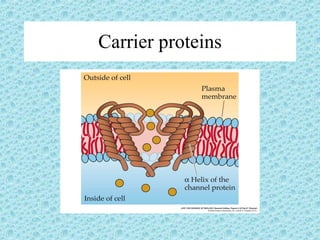
Two types of protein are involved CARRIER PROTEINS  – bind to a specific type of diffusing molecule.  They have a highly specific hydrophilic region to which the solute molecule binds.  This binding cause the protein to undergo a change in shape that moves the solute across the bilayer and release it on the other side
Carrier proteins
Carrier proteins
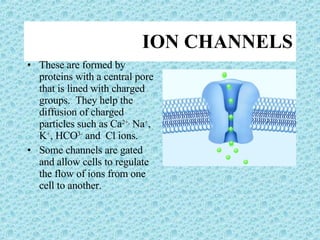
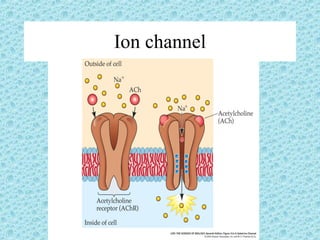
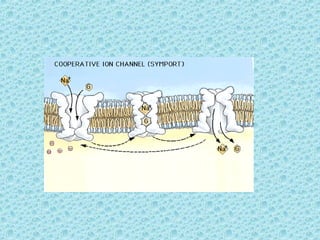
ION CHANNELS These are formed by proteins with a central pore that is lined with charged groups.  They help the diffusion of charged particles such as Ca 2+,  Na + , K + , HCO 3-  and  Cl ions. Some channels are gated and allow cells to regulate the flow of ions from one cell to another.
Ion channel
 
Comparison of diffusion and facilitated diffusion. What factors affect the diffusion rate? Concentration difference
In facilitated diffusion a point will be reached where increase in concentration differences are not accompanied by an increased rate.  Why? The system is saturated – there are only a limited number of carrier molecules per unit area of membrane. The rate of movement reaches a maximum when all the carrier molecules are fully loaded with  solute molecules
Osmosis The net movement of water molecules by diffusion from a solution of less negative water potential to a solution of more negative water potential through a partially permeable membrane.
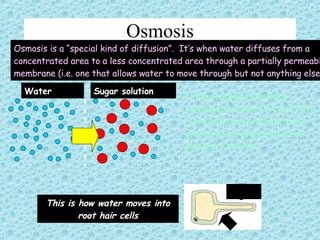
Osmosis Osmosis is a “special kind of diffusion”.  It’s when water diffuses from a concentrated area to a less concentrated area through a partially permeable membrane (i.e. one that allows water to move through but not anything else): Water Sugar solution In this example the water molecules will move from left to right (along the concentration gradient) and gradually dilute the sugar solution. This is how water moves into root hair cells
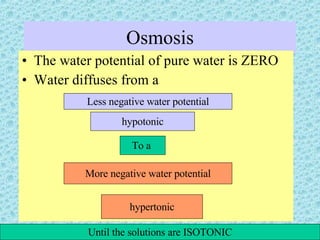
Water potentials Water moves from  a place with a  LESS NEGATIVE  (higher)  water potential to  a place with a  MORE NEGATIVE  (lower)  water potential. The water potential of  pure water is 0  (zero). Solutions  have  negative water potentials  – the more concentrated the solution, the more negative the water potential.
Water diffuses from a solution with a less negative  water potential (hypotonic) into one with a more negative water potential (hypertonic) until the solutions are the same concentration (isotonic). EXAM TIP: You MUST use these sort of terms, e.g. more negative / less negative / hypotonic / hypertonic. If you talk – larger / smaller or bigger / smaller  you won’t get  any marks!!!!!!!
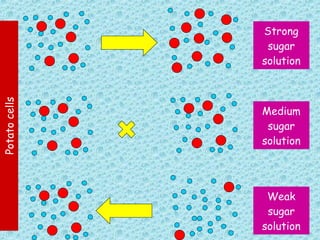
Draw the diagrams Label which solution has the more negative water potential. Which solution is: Hypotonic Hypertonic Isotonic
Strong sugar solution Medium sugar solution Weak sugar solution Potato cells
More facts…. The cell surface membrane is partially (and selectively) permeable. The membrane around the vacuole in plant cells is also partially permeable. Ions  (and sugars) in the vacuole produce a negative water potential and water enters the vacuole by osmosis. The vacuole expands, pushes against the cell wall and makes the cell TURGID. Cell turgor provides support in plants.
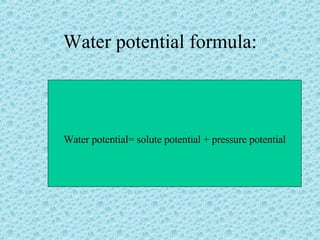
Water potential formula: Water potential= solute potential + pressure potential
Osmosis The water potential of pure water is ZERO Water diffuses from a  Less negative water potential hypotonic To a  More negative water potential hypertonic hypertonic Until the solutions are ISOTONIC
Active Transport
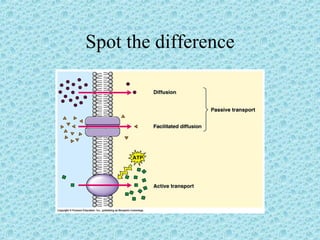
Spot the difference
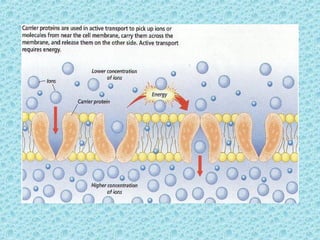
Definition Active transport is the transport of molecules or ions across a membrane by carrier proteins against a concentration gradient.
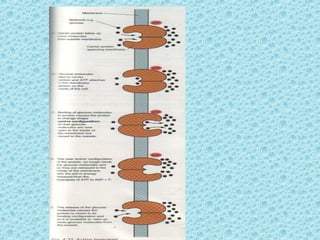
Key facts It  requires energy  from respiration Factors that reduce respiration will also reduce active transport: e.g. lower temperature; lack of oxygen; metabolic and respiratory inhibitors. Active transport involves carrier proteins  in the membrane. The hydrolysis of ATP (process of decomposition where compound reacts with water to produce other compounds) releases the energy required for active transport.
Cells involved in active transport  have a  LARGE NUMBER  of  MITOCHONDRIA  to provide the ATP required via  AEROBIC RESPIRATION.
 
 
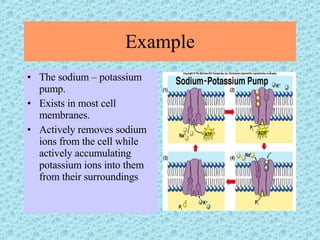
Example The sodium – potassium pump. Exists in most cell membranes. Actively removes sodium ions from the cell while actively accumulating potassium ions into them from their surroundings
 
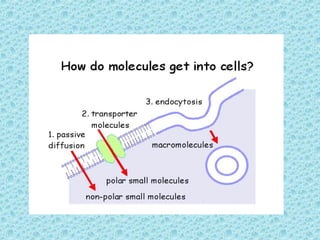
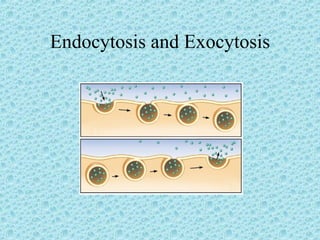
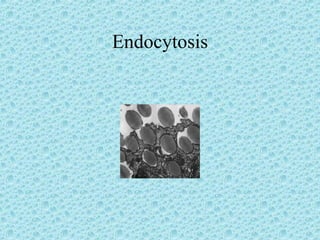
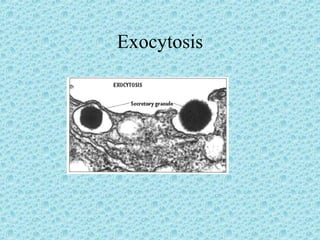
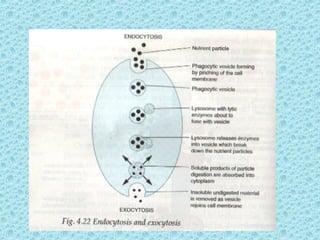
Endocytosis and Exocytosis Endocytosis is the transport of large particles into the cell in vesicles formed by invagination of the cell surface membrane. Exocytosis is the reverse process and is used to secrete proteins, e.g digestive enzymes, out of the cells.
Endocytosis and Exocytosis
Endocytosis
Exocytosis
 

transport across cell membranes

  • 1.
  • 2.
  • 3.
    Key features Itis passive – does not require energy but It uses carrier proteins Here the solute molecules “combine” with carrier proteins in the membrane. These carrier molecules speed (or facilitate) the passage of the solute molecules across the membrane.
  • 4.
    The molecules thatuse it: Large molecules such as glucose or charged ions.
  • 5.
    Two types ofprotein are involved CARRIER PROTEINS – bind to a specific type of diffusing molecule. They have a highly specific hydrophilic region to which the solute molecule binds. This binding cause the protein to undergo a change in shape that moves the solute across the bilayer and release it on the other side
  • 6.
  • 7.
  • 8.
    ION CHANNELS Theseare formed by proteins with a central pore that is lined with charged groups. They help the diffusion of charged particles such as Ca 2+, Na + , K + , HCO 3- and Cl ions. Some channels are gated and allow cells to regulate the flow of ions from one cell to another.
  • 9.
  • 10.
  • 11.
    Comparison of diffusionand facilitated diffusion. What factors affect the diffusion rate? Concentration difference
  • 12.
    In facilitated diffusiona point will be reached where increase in concentration differences are not accompanied by an increased rate. Why? The system is saturated – there are only a limited number of carrier molecules per unit area of membrane. The rate of movement reaches a maximum when all the carrier molecules are fully loaded with solute molecules
  • 13.
    Osmosis The netmovement of water molecules by diffusion from a solution of less negative water potential to a solution of more negative water potential through a partially permeable membrane.
  • 14.
    Osmosis Osmosis isa “special kind of diffusion”. It’s when water diffuses from a concentrated area to a less concentrated area through a partially permeable membrane (i.e. one that allows water to move through but not anything else): Water Sugar solution In this example the water molecules will move from left to right (along the concentration gradient) and gradually dilute the sugar solution. This is how water moves into root hair cells
  • 15.
    Water potentials Watermoves from a place with a LESS NEGATIVE (higher) water potential to a place with a MORE NEGATIVE (lower) water potential. The water potential of pure water is 0 (zero). Solutions have negative water potentials – the more concentrated the solution, the more negative the water potential.
  • 16.
    Water diffuses froma solution with a less negative water potential (hypotonic) into one with a more negative water potential (hypertonic) until the solutions are the same concentration (isotonic). EXAM TIP: You MUST use these sort of terms, e.g. more negative / less negative / hypotonic / hypertonic. If you talk – larger / smaller or bigger / smaller you won’t get any marks!!!!!!!
  • 17.
    Draw the diagramsLabel which solution has the more negative water potential. Which solution is: Hypotonic Hypertonic Isotonic
  • 18.
    Strong sugar solutionMedium sugar solution Weak sugar solution Potato cells
  • 19.
    More facts…. Thecell surface membrane is partially (and selectively) permeable. The membrane around the vacuole in plant cells is also partially permeable. Ions (and sugars) in the vacuole produce a negative water potential and water enters the vacuole by osmosis. The vacuole expands, pushes against the cell wall and makes the cell TURGID. Cell turgor provides support in plants.
  • 20.
    Water potential formula:Water potential= solute potential + pressure potential
  • 21.
    Osmosis The waterpotential of pure water is ZERO Water diffuses from a Less negative water potential hypotonic To a More negative water potential hypertonic hypertonic Until the solutions are ISOTONIC
  • 22.
  • 23.
  • 24.
    Definition Active transportis the transport of molecules or ions across a membrane by carrier proteins against a concentration gradient.
  • 25.
    Key facts It requires energy from respiration Factors that reduce respiration will also reduce active transport: e.g. lower temperature; lack of oxygen; metabolic and respiratory inhibitors. Active transport involves carrier proteins in the membrane. The hydrolysis of ATP (process of decomposition where compound reacts with water to produce other compounds) releases the energy required for active transport.
  • 26.
    Cells involved inactive transport have a LARGE NUMBER of MITOCHONDRIA to provide the ATP required via AEROBIC RESPIRATION.
  • 27.
  • 28.
  • 29.
    Example The sodium– potassium pump. Exists in most cell membranes. Actively removes sodium ions from the cell while actively accumulating potassium ions into them from their surroundings
  • 30.
  • 31.
    Endocytosis and ExocytosisEndocytosis is the transport of large particles into the cell in vesicles formed by invagination of the cell surface membrane. Exocytosis is the reverse process and is used to secrete proteins, e.g digestive enzymes, out of the cells.
  • 32.
  • 33.
  • 34.
  • 35.