Toxicology and the ECG
Andy Steval 16/03/2016
Contents
• Refresher of cardiac physiology
• Specific toxic effects of drugs on the myocardium
• Approach to ECG interpretation in the toxic patient
• Management of specific cardiotoxic drugs
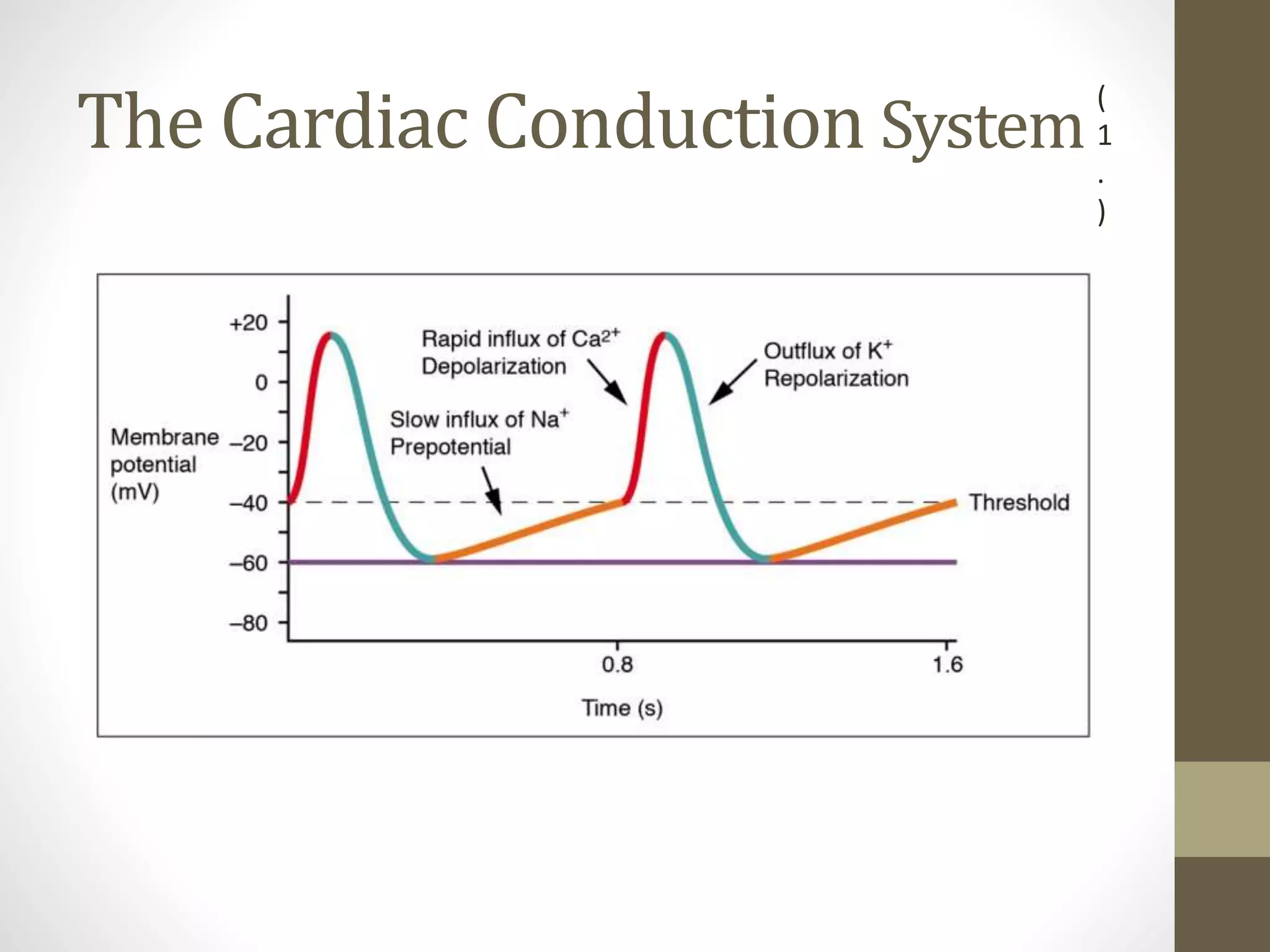
The Cardiac Conduction System
(
1
.
)
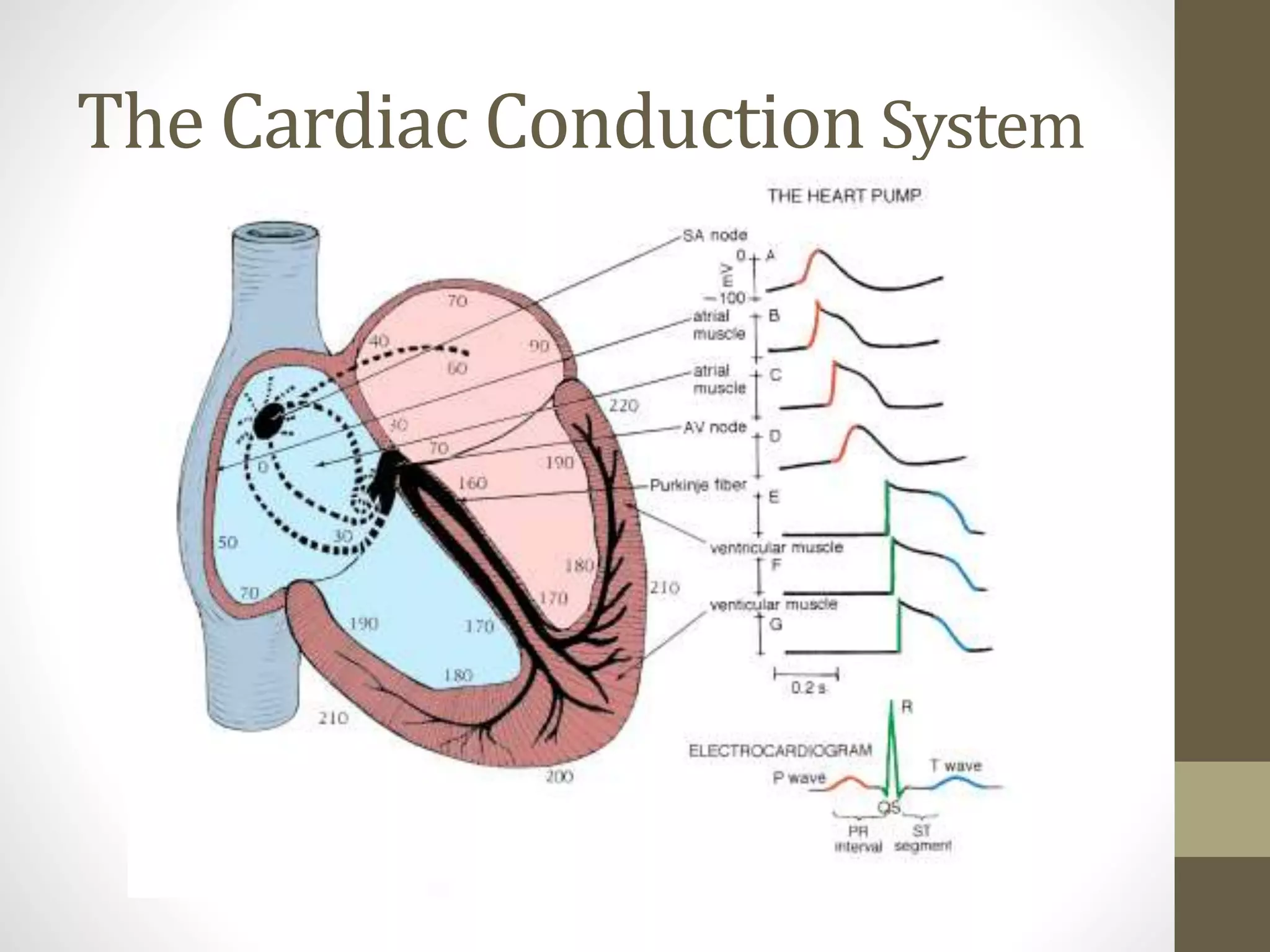
The Cardiac Conduction System
Na+
efflux
Na+ influx
Ca2+ influx
K+ efflux
The Cardiac Conduction System
Specific toxic effects of drugs
on the myocardium
• Blockage of sodium
channels results in
increased slope of phase 0
• This results in a wide QRS
and altered morphology
• Often a positive R wave in
AvR and RBBB
(
2
.
)
• Blockage of potassium
channels results in
lengthening of phase 2 and 3
• This gives rises to a long QT
and the potential for Torsades
de Pointes
Beta-Blockade
• Beta-blockers cause bradycardia through blockage of B1 receptors
• This reduces levels of cAMP and intracellular calcium
• Slope of pre-potential (phase 4) is reduced
• Often cause AV conduction disturbance (increased PR interval /heart
block) and bradycardia
Beta-blocked
Normal
Calcium Channel Blockade
• Calcum Channel blockers cause bradycardia through impaired
influx of calcium
• Slope of phase 0 is decreased
• Often cause AV conduction disturbance and bradycardia
Approach to the ECG in a poisoned
patient
• Rate/Rhythm
• PR interval
• QRS interval and morphology
• QT interval
• ST Segments
Rate/Rhythm
• Bradycardia – Suggests poisoning with:
• Calcium channel/beta blockers/Digoxin (AV block)
• Opioids/Ethanol
• Organophosphates
• Lithium
• Tachycardia – suggests poisoning with:
• Sympathomimetics e.g. methamphetamine
• Anticholinergics e.g. antidepressants, antipsychotics
• Group 1a and 1c antiarrhythmics, TCAs
• Enhanced automaticity – suggests digoxin/sympathomimetic
toxicity
• Ventricular bigeminy
• AF, irregular rhythm
• Frequent ectopics
Digoxin Overdose (3.)
PR Interval
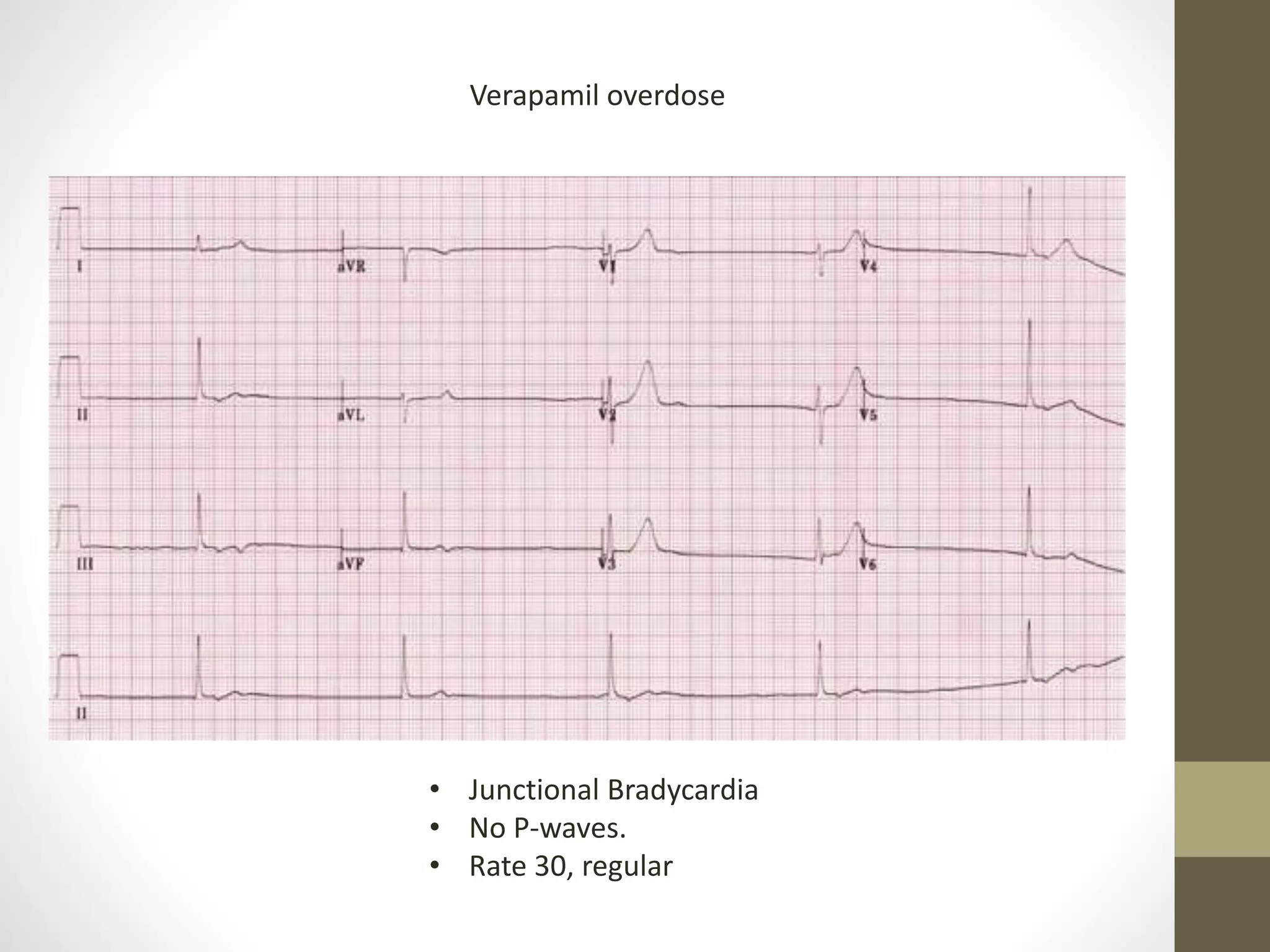
• Prolonged PR interval may indicate Calcium channel blockade,
beta blockade or digoxin toxicity.
• Other drugs include Opioids, clonidine, sedative-hypnotics
• All of these may increase vagal tone or antagonise
sympathetic system
• May present with purely 1st degree block or progress to
complete heart block.
• Junctional Bradycardia
• No P-waves.
• Rate 30, regular
Verapamil overdose
QRS Interval
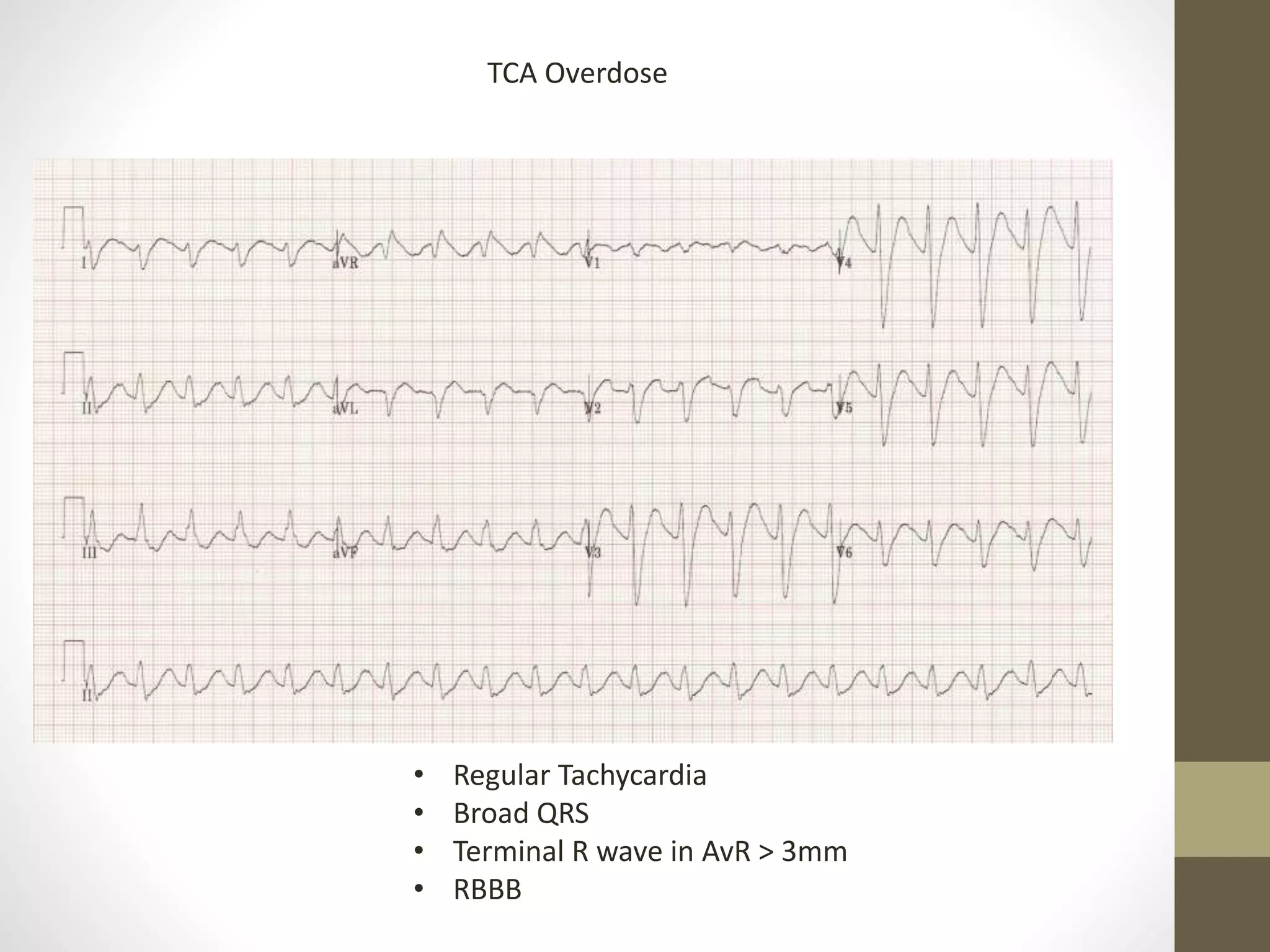
• Usually caused by drugs that block sodium channels e.g. TCA’s,
Class 1A anti-arrhythmics, carbamazepine
• QRS of over 100ms in young individuals in considered
abnormal
• Right bundle branch is preferentially blocked, leading to
prominent R wave in AVR and RBBB.
• Regular Tachycardia
• Broad QRS
• Terminal R wave in AvR > 3mm
• RBBB
TCA Overdose
• 1st Degree Heart Block
• Broad QRS complex
• Positive R wave in AvR
Flecanide overdose
(Also seen in propranolol overdose but patient would be more bradycardic )
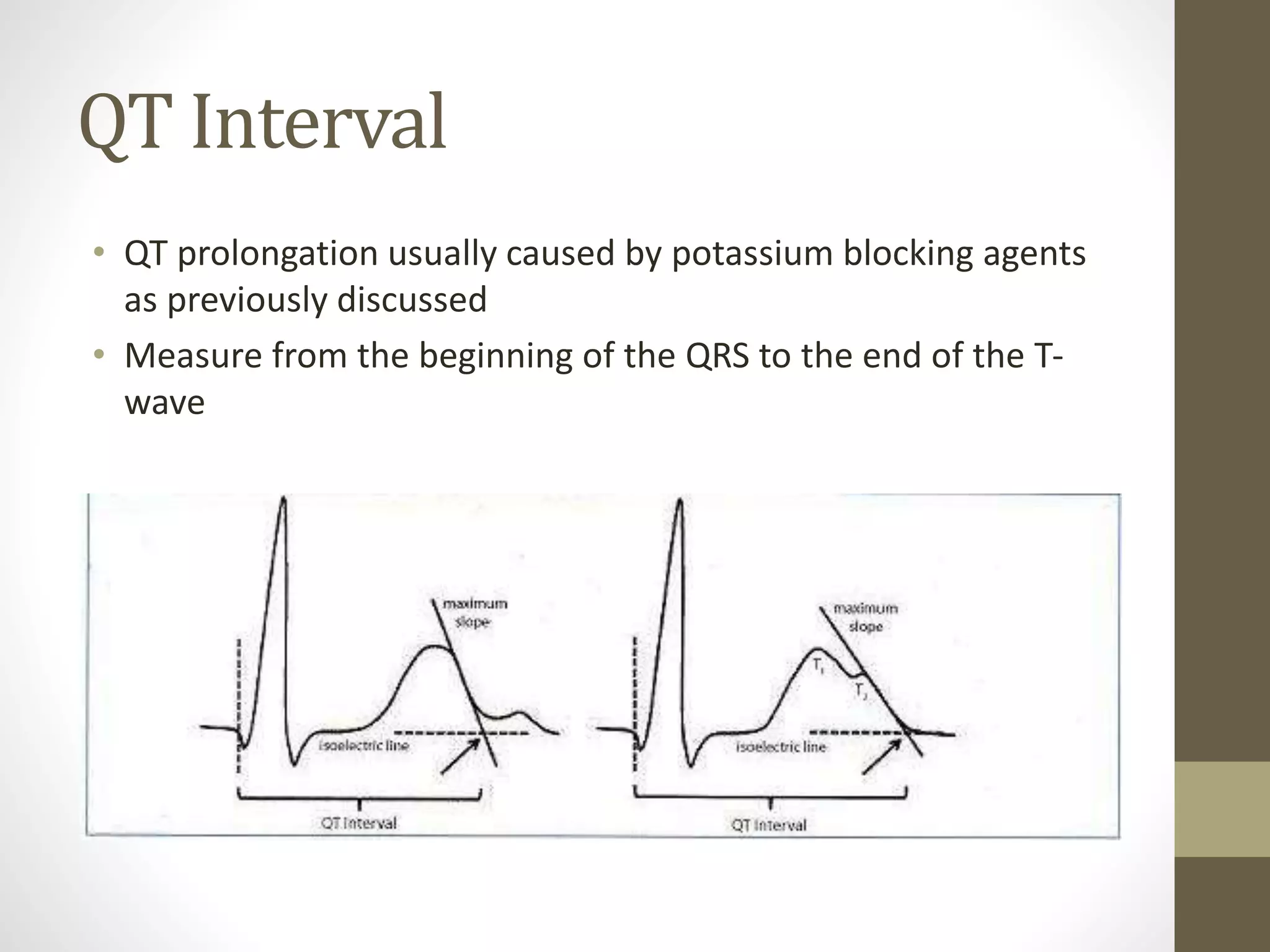
QT Interval
• QT prolongation usually caused by potassium blocking agents
as previously discussed
• Measure from the beginning of the QRS to the end of the T-
wave
QT Interval
• In toxicology, the absolute QT is a better predictor of Torsades risk
then the corrected QT (QTc)
• Therefore, it is best to use the QT nomogram to predict risk
• Drugs that cause tachycardia (e.g. Quetiapine) are less likely to
cause Torsades than drugs causing bradycardia
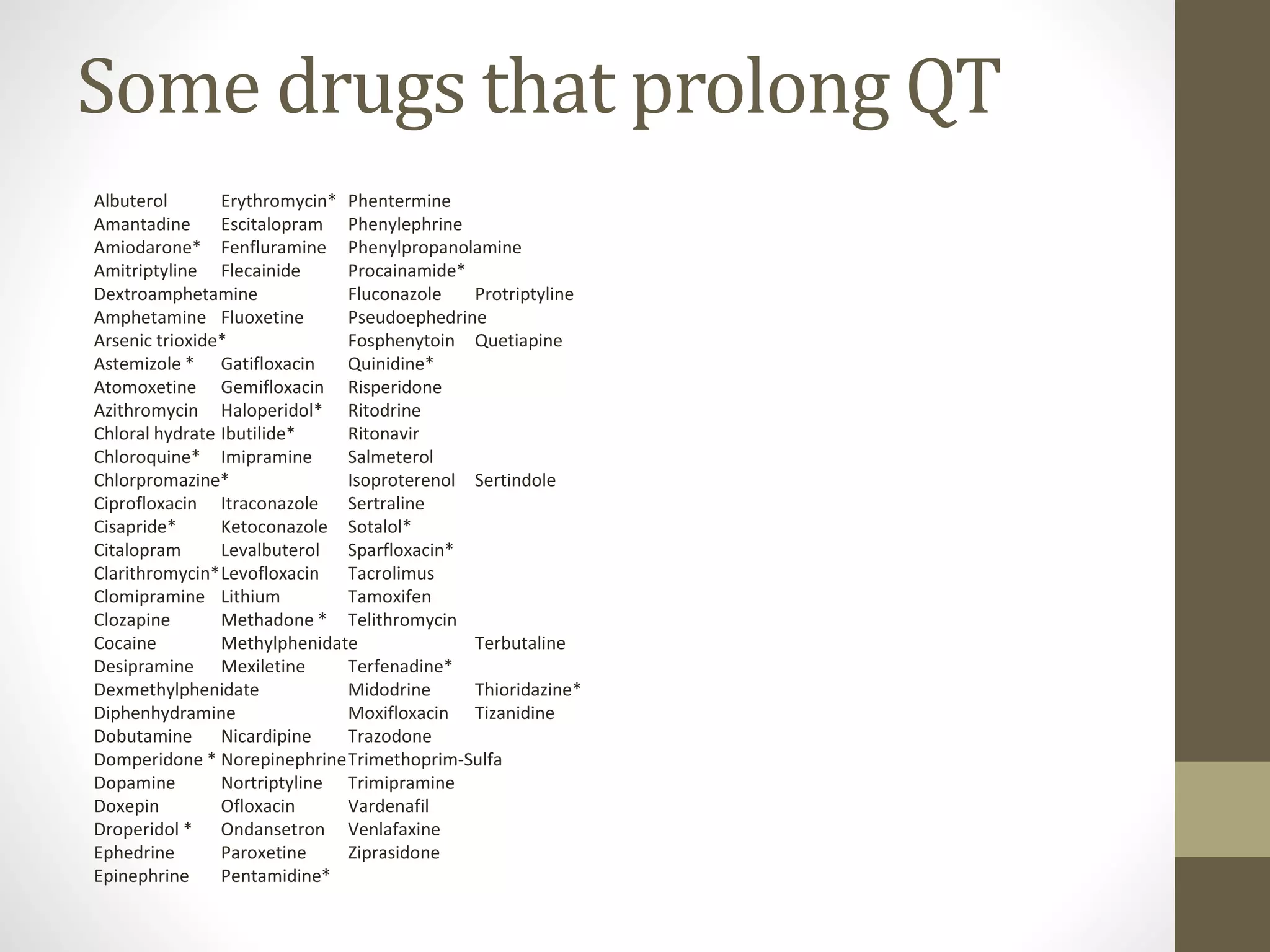
Albuterol Erythromycin* Phentermine
Amantadine Escitalopram Phenylephrine
Amiodarone* Fenfluramine Phenylpropanolamine
Amitriptyline Flecainide Procainamide*
Dextroamphetamine Fluconazole Protriptyline
Amphetamine Fluoxetine Pseudoephedrine
Arsenic trioxide* Fosphenytoin Quetiapine
Astemizole * Gatifloxacin Quinidine*
Atomoxetine Gemifloxacin Risperidone
Azithromycin Haloperidol* Ritodrine
Chloral hydrate Ibutilide* Ritonavir
Chloroquine* Imipramine Salmeterol
Chlorpromazine* Isoproterenol Sertindole
Ciprofloxacin Itraconazole Sertraline
Cisapride* Ketoconazole Sotalol*
Citalopram Levalbuterol Sparfloxacin*
Clarithromycin*Levofloxacin Tacrolimus
Clomipramine Lithium Tamoxifen
Clozapine Methadone * Telithromycin
Cocaine Methylphenidate Terbutaline
Desipramine Mexiletine Terfenadine*
Dexmethylphenidate Midodrine Thioridazine*
Diphenhydramine Moxifloxacin Tizanidine
Dobutamine Nicardipine Trazodone
Domperidone * NorepinephrineTrimethoprim-Sulfa
Dopamine Nortriptyline Trimipramine
Doxepin Ofloxacin Vardenafil
Droperidol * Ondansetron Venlafaxine
Ephedrine Paroxetine Ziprasidone
Epinephrine Pentamidine*
Some drugs that prolong QT
Management of specific
cardiotoxic drugs
Resus-RSI-DEAD
• Resuscitation
• Risk assessment
• Supportive care
• Investigations
• Decontamination
• Enhanced Elimination
• Antidotes
• Disposition
Beta-blocker overdose
• Usually present with bradycardia, varying AV block.
• Special consideration to propranolol (sodium channel blocking
effects) and sotalol (K+ channel blocking effects)
• Hypotension: Fluid resuscitation, vasopressors
• Bradycardia: Atropine, beta-agonists e.g. isoprenaline infusion
• Specific antidotes: High dose insulin euglycaemic therapy.
Glucagon infusion (inferior to HIET)
Calcium Channel blockade
• Usually present with bradycardia, varying AV block, myocardial
depression, hyperglycaemia
• Hypotension: Fluid resuscitation, cardiac inotropes,
vasopressors, ECMO
• Bradycardia: Atropine, pacing
• Specific antidotes: Calcium gluconate bolus, High dose insulin
euglycaemic therapy.
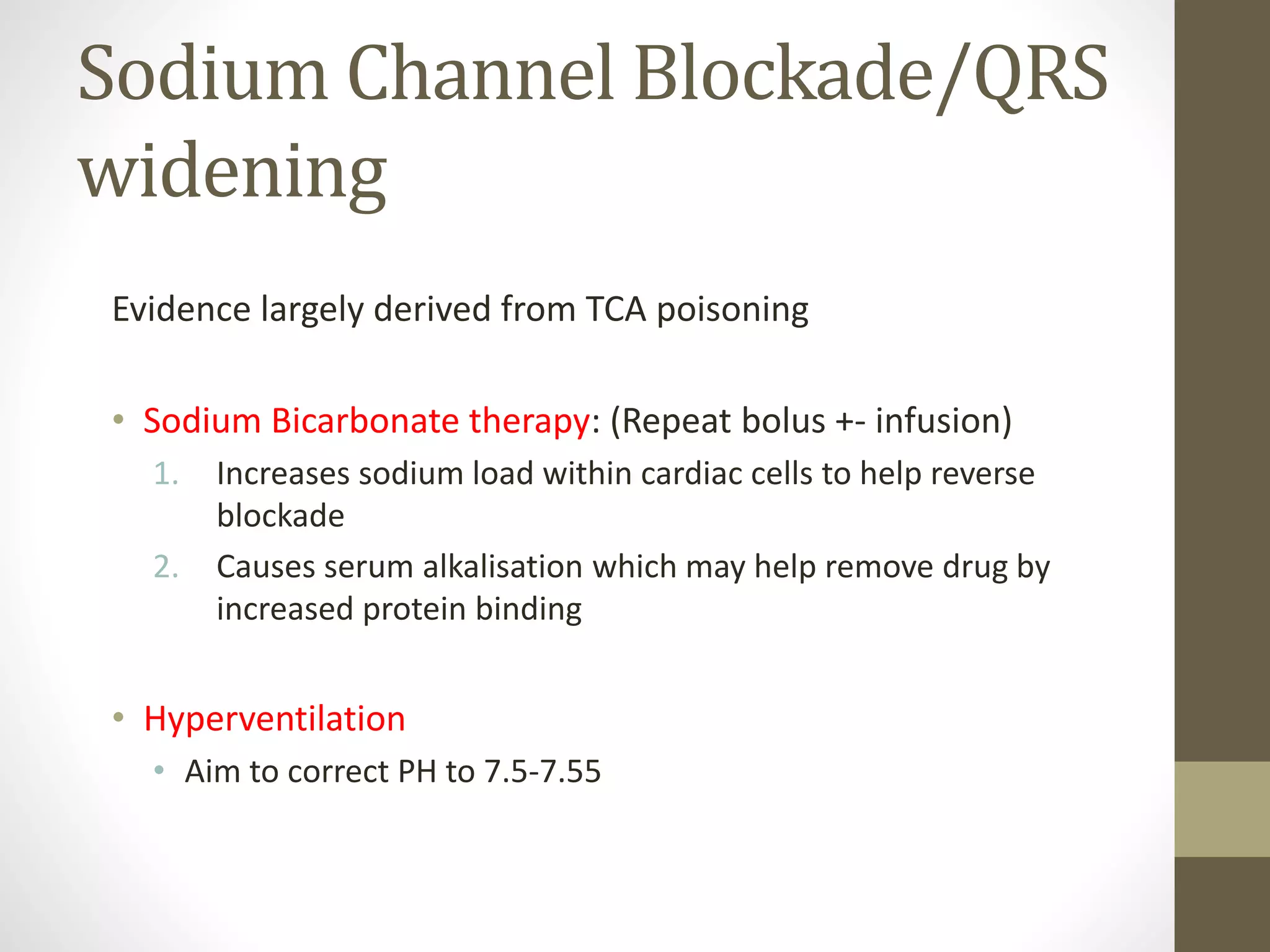
Sodium Channel Blockade/QRS
widening
Evidence largely derived from TCA poisoning
• Sodium Bicarbonate therapy: (Repeat bolus +- infusion)
1. Increases sodium load within cardiac cells to help reverse
blockade
2. Causes serum alkalisation which may help remove drug by
increased protein binding
• Hyperventilation
• Aim to correct PH to 7.5-7.55
Drug-induced QT prolongation
May cause life-threatening arrhythmias e.g. Torsades De Pointes.
Onset Proceeded by U-waves, Ventricular ectopics, Runs of VT.
• Magnesium sulphate bolus/infusion
• Electrolyte correction
• DC Cardioversion if life-threatening arrhythmia develops
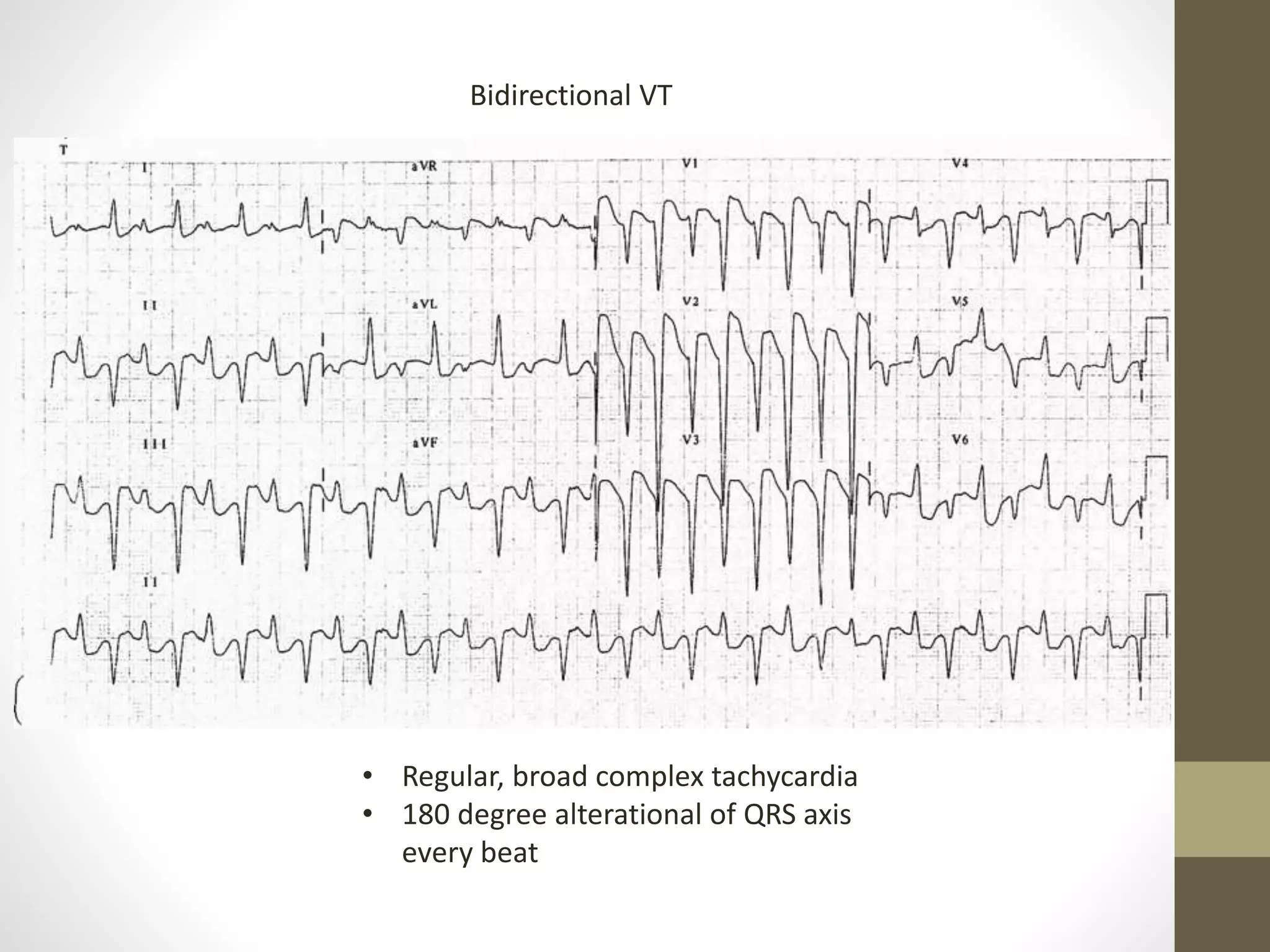
Bidirectional VT
• Regular, broad complex tachycardia
• 180 degree alterational of QRS axis
every beat
Cardiac glycoside toxicity
May present with variable ECG changes: Increased automaticity,
AV blockade, Arrhythmia, Bidirectional VT
Toxicity can be acute or chronic
• Mild toxicity
• Mild symptoms without serious ECG changes
• Supportive care, cardiac monitoring
• Severe toxicity: Digoxin-specific Fab
Summary
• Use a step-wise approach when interpreting the toxicological
ECG do avoid missing subtle changes.
• Manage using the R-RSI-DEAD mnemonic
• Don’t forget standard ABC resuscitation when dealing with the
cardiotoxic patient
References
1. OpenStax CNX Anatomy and physiology
http://cnx.org/contents/FPtK1zmh@6.27:MCgS6S0t@3/Cardiac-Muscle-and-
Electrical-
1. Utility of the Electrocardiogram in Drug Overdose and Poisoning: Theoretical
Considerations and Clinical Implications Christopher Yates1, Alex F Manini. Curr
Cardiol Rev. 2012 May; 8(2): 137–151.
2. Life in the Fast Lane: http://lifeinthefastlane.com/ecg-library/basics/

Toxicology and the ECG

  • 1.
    Toxicology and theECG Andy Steval 16/03/2016
  • 2.
    Contents • Refresher ofcardiac physiology • Specific toxic effects of drugs on the myocardium • Approach to ECG interpretation in the toxic patient • Management of specific cardiotoxic drugs
  • 3.
  • 4.
    The Cardiac ConductionSystem ( 1 . )
  • 5.
    The Cardiac ConductionSystem Na+ efflux Na+ influx Ca2+ influx K+ efflux
  • 6.
  • 7.
    Specific toxic effectsof drugs on the myocardium
  • 8.
    • Blockage ofsodium channels results in increased slope of phase 0 • This results in a wide QRS and altered morphology • Often a positive R wave in AvR and RBBB ( 2 . )
  • 9.
    • Blockage ofpotassium channels results in lengthening of phase 2 and 3 • This gives rises to a long QT and the potential for Torsades de Pointes
  • 10.
    Beta-Blockade • Beta-blockers causebradycardia through blockage of B1 receptors • This reduces levels of cAMP and intracellular calcium • Slope of pre-potential (phase 4) is reduced • Often cause AV conduction disturbance (increased PR interval /heart block) and bradycardia Beta-blocked Normal
  • 11.
    Calcium Channel Blockade •Calcum Channel blockers cause bradycardia through impaired influx of calcium • Slope of phase 0 is decreased • Often cause AV conduction disturbance and bradycardia
  • 12.
    Approach to theECG in a poisoned patient • Rate/Rhythm • PR interval • QRS interval and morphology • QT interval • ST Segments
  • 13.
    Rate/Rhythm • Bradycardia –Suggests poisoning with: • Calcium channel/beta blockers/Digoxin (AV block) • Opioids/Ethanol • Organophosphates • Lithium • Tachycardia – suggests poisoning with: • Sympathomimetics e.g. methamphetamine • Anticholinergics e.g. antidepressants, antipsychotics • Group 1a and 1c antiarrhythmics, TCAs • Enhanced automaticity – suggests digoxin/sympathomimetic toxicity
  • 14.
    • Ventricular bigeminy •AF, irregular rhythm • Frequent ectopics Digoxin Overdose (3.)
  • 15.
    PR Interval • ProlongedPR interval may indicate Calcium channel blockade, beta blockade or digoxin toxicity. • Other drugs include Opioids, clonidine, sedative-hypnotics • All of these may increase vagal tone or antagonise sympathetic system • May present with purely 1st degree block or progress to complete heart block.
  • 16.
    • Junctional Bradycardia •No P-waves. • Rate 30, regular Verapamil overdose
  • 17.
    QRS Interval • Usuallycaused by drugs that block sodium channels e.g. TCA’s, Class 1A anti-arrhythmics, carbamazepine • QRS of over 100ms in young individuals in considered abnormal • Right bundle branch is preferentially blocked, leading to prominent R wave in AVR and RBBB.
  • 18.
    • Regular Tachycardia •Broad QRS • Terminal R wave in AvR > 3mm • RBBB TCA Overdose
  • 19.
    • 1st DegreeHeart Block • Broad QRS complex • Positive R wave in AvR Flecanide overdose (Also seen in propranolol overdose but patient would be more bradycardic )
  • 20.
    QT Interval • QTprolongation usually caused by potassium blocking agents as previously discussed • Measure from the beginning of the QRS to the end of the T- wave
  • 21.
    QT Interval • Intoxicology, the absolute QT is a better predictor of Torsades risk then the corrected QT (QTc) • Therefore, it is best to use the QT nomogram to predict risk • Drugs that cause tachycardia (e.g. Quetiapine) are less likely to cause Torsades than drugs causing bradycardia
  • 22.
    Albuterol Erythromycin* Phentermine AmantadineEscitalopram Phenylephrine Amiodarone* Fenfluramine Phenylpropanolamine Amitriptyline Flecainide Procainamide* Dextroamphetamine Fluconazole Protriptyline Amphetamine Fluoxetine Pseudoephedrine Arsenic trioxide* Fosphenytoin Quetiapine Astemizole * Gatifloxacin Quinidine* Atomoxetine Gemifloxacin Risperidone Azithromycin Haloperidol* Ritodrine Chloral hydrate Ibutilide* Ritonavir Chloroquine* Imipramine Salmeterol Chlorpromazine* Isoproterenol Sertindole Ciprofloxacin Itraconazole Sertraline Cisapride* Ketoconazole Sotalol* Citalopram Levalbuterol Sparfloxacin* Clarithromycin*Levofloxacin Tacrolimus Clomipramine Lithium Tamoxifen Clozapine Methadone * Telithromycin Cocaine Methylphenidate Terbutaline Desipramine Mexiletine Terfenadine* Dexmethylphenidate Midodrine Thioridazine* Diphenhydramine Moxifloxacin Tizanidine Dobutamine Nicardipine Trazodone Domperidone * NorepinephrineTrimethoprim-Sulfa Dopamine Nortriptyline Trimipramine Doxepin Ofloxacin Vardenafil Droperidol * Ondansetron Venlafaxine Ephedrine Paroxetine Ziprasidone Epinephrine Pentamidine* Some drugs that prolong QT
  • 23.
  • 24.
    Resus-RSI-DEAD • Resuscitation • Riskassessment • Supportive care • Investigations • Decontamination • Enhanced Elimination • Antidotes • Disposition
  • 25.
    Beta-blocker overdose • Usuallypresent with bradycardia, varying AV block. • Special consideration to propranolol (sodium channel blocking effects) and sotalol (K+ channel blocking effects) • Hypotension: Fluid resuscitation, vasopressors • Bradycardia: Atropine, beta-agonists e.g. isoprenaline infusion • Specific antidotes: High dose insulin euglycaemic therapy. Glucagon infusion (inferior to HIET)
  • 26.
    Calcium Channel blockade •Usually present with bradycardia, varying AV block, myocardial depression, hyperglycaemia • Hypotension: Fluid resuscitation, cardiac inotropes, vasopressors, ECMO • Bradycardia: Atropine, pacing • Specific antidotes: Calcium gluconate bolus, High dose insulin euglycaemic therapy.
  • 27.
    Sodium Channel Blockade/QRS widening Evidencelargely derived from TCA poisoning • Sodium Bicarbonate therapy: (Repeat bolus +- infusion) 1. Increases sodium load within cardiac cells to help reverse blockade 2. Causes serum alkalisation which may help remove drug by increased protein binding • Hyperventilation • Aim to correct PH to 7.5-7.55
  • 28.
    Drug-induced QT prolongation Maycause life-threatening arrhythmias e.g. Torsades De Pointes. Onset Proceeded by U-waves, Ventricular ectopics, Runs of VT. • Magnesium sulphate bolus/infusion • Electrolyte correction • DC Cardioversion if life-threatening arrhythmia develops
  • 29.
    Bidirectional VT • Regular,broad complex tachycardia • 180 degree alterational of QRS axis every beat
  • 30.
    Cardiac glycoside toxicity Maypresent with variable ECG changes: Increased automaticity, AV blockade, Arrhythmia, Bidirectional VT Toxicity can be acute or chronic • Mild toxicity • Mild symptoms without serious ECG changes • Supportive care, cardiac monitoring • Severe toxicity: Digoxin-specific Fab
  • 31.
    Summary • Use astep-wise approach when interpreting the toxicological ECG do avoid missing subtle changes. • Manage using the R-RSI-DEAD mnemonic • Don’t forget standard ABC resuscitation when dealing with the cardiotoxic patient
  • 32.
    References 1. OpenStax CNXAnatomy and physiology http://cnx.org/contents/FPtK1zmh@6.27:MCgS6S0t@3/Cardiac-Muscle-and- Electrical- 1. Utility of the Electrocardiogram in Drug Overdose and Poisoning: Theoretical Considerations and Clinical Implications Christopher Yates1, Alex F Manini. Curr Cardiol Rev. 2012 May; 8(2): 137–151. 2. Life in the Fast Lane: http://lifeinthefastlane.com/ecg-library/basics/