ECG QUIZ
Sir William Osler said, “Variability is the law of life, and as no two faces are the same, so no two bodies are alike, and no two individuals react alike and behave alike under the abnormal conditions which we know as disease
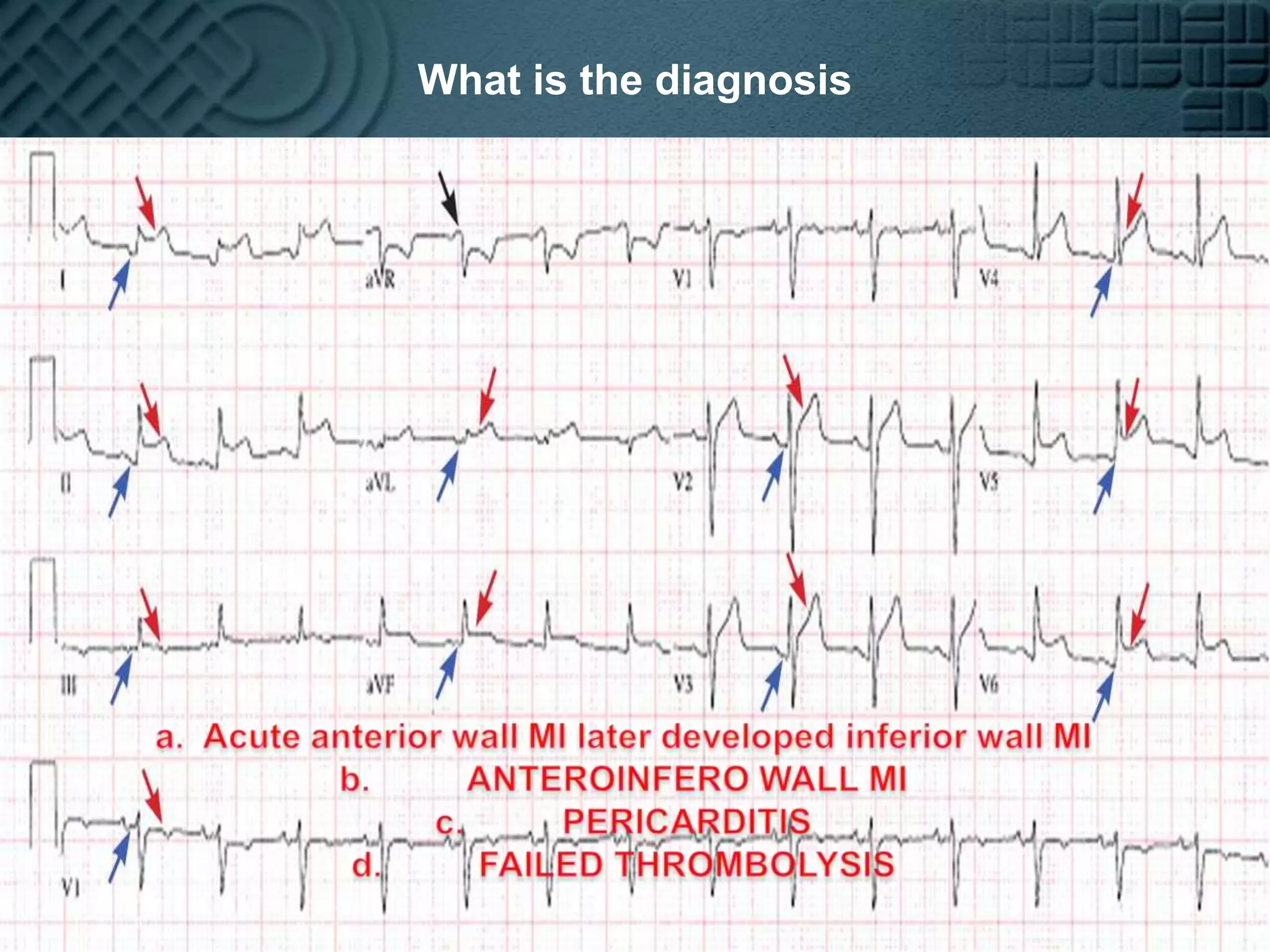
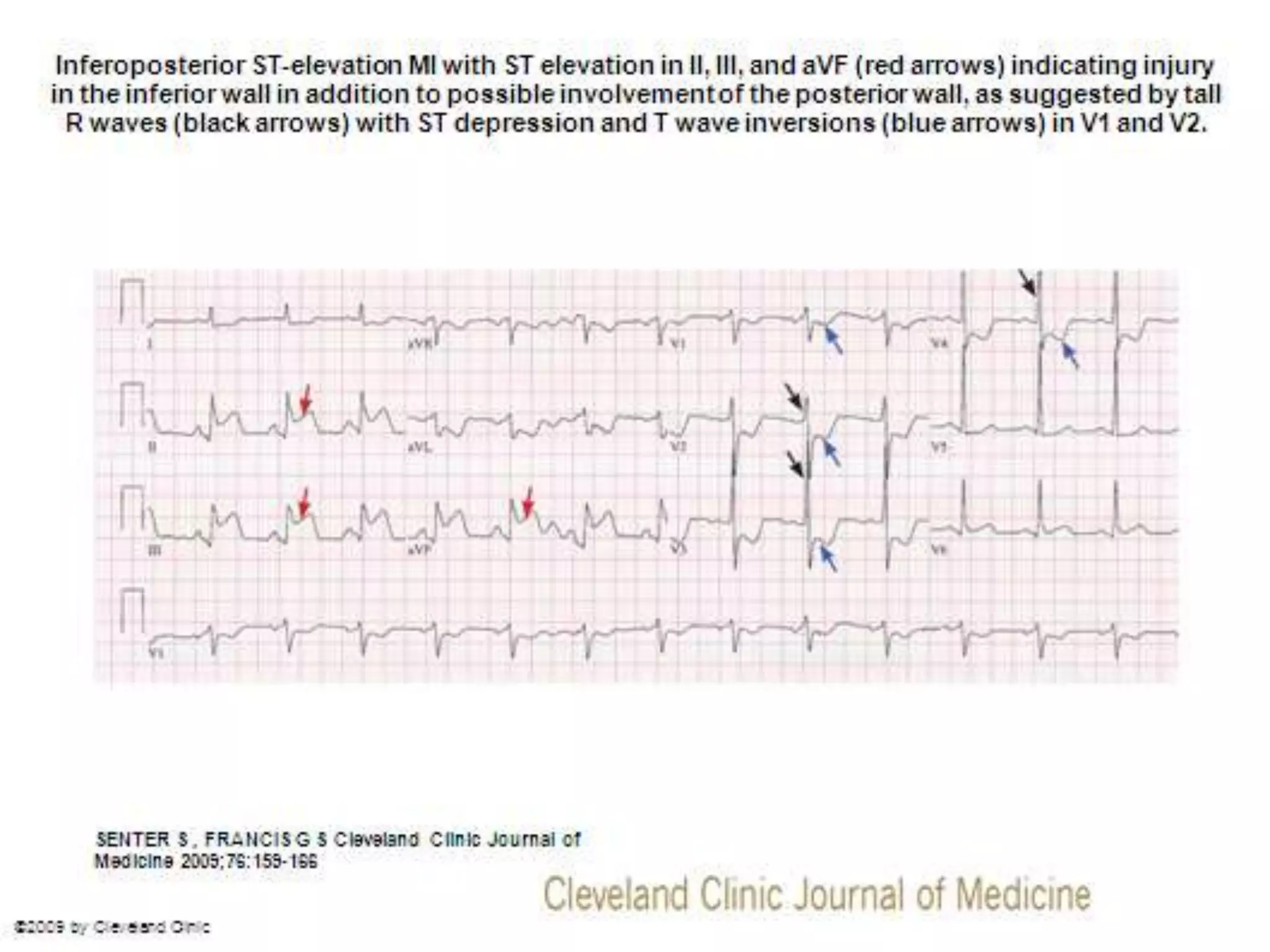
What is the diagnosisAcute anterior wall MI later developed inferior wall MI ANTEROINFERO WALL MIPERICARDITISFAILED THROMBOLYSIS a.Acute MI                  b.Inferoposterior with RVMI             c.Pericarditis                                            d. anterolateral MI who later developed inferior wall MI
Acute pericarditis with elevation of the ST segment in all leads, often up-sloping (red arrows), and PR depression in all leads (blue arrows), except for PR elevation in aVR (black arrow).
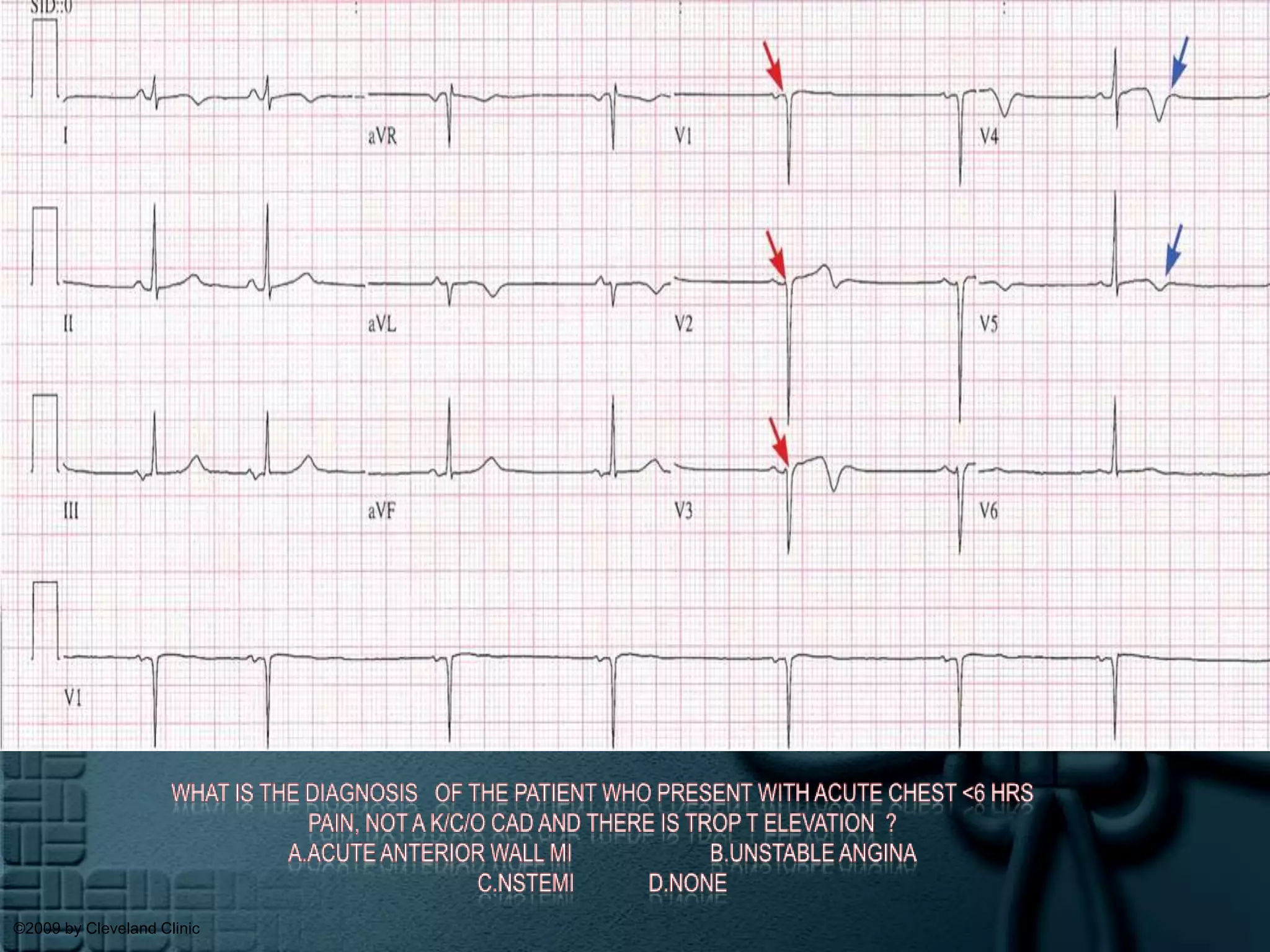
What is the diagnosis   of the patient who present with acute chest <6 hrs Pain, not a k/c/o cad and there is trop t elevation  ?a.Acute anterior wall MI                        b.Unstable anginac.Nstemid.none©2009 by Cleveland Clinic
Poor R wave progression (red arrows) with terminally symmetric T waves in leads V1 through V6 (blue arrows), which suggests possible myocardial injury; this patient had positive troponin consistent with non-ST-elevation MI.
ST depression across the precordium (V1–V6) suggestive of subendocardial injury (black arrows).Where is the occlusion?
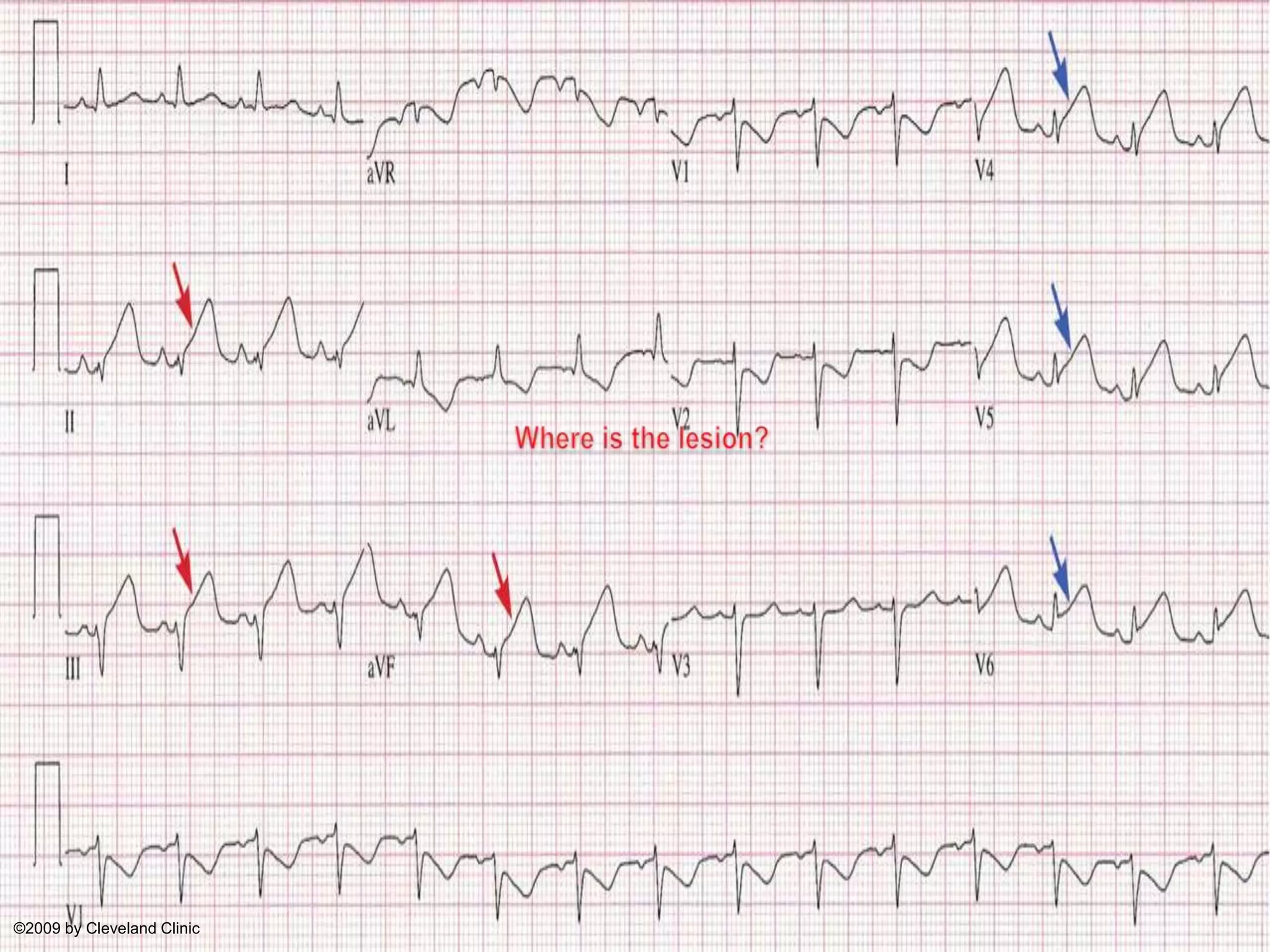
Where is the lesion?©2009 by Cleveland Clinic
Inferolateral ST-elevation MI with ST elevation in II, III, and aVF (red arrows) indicating injury in the inferior wall in addition to ST elevation in V4 through V6 (blue arrows).
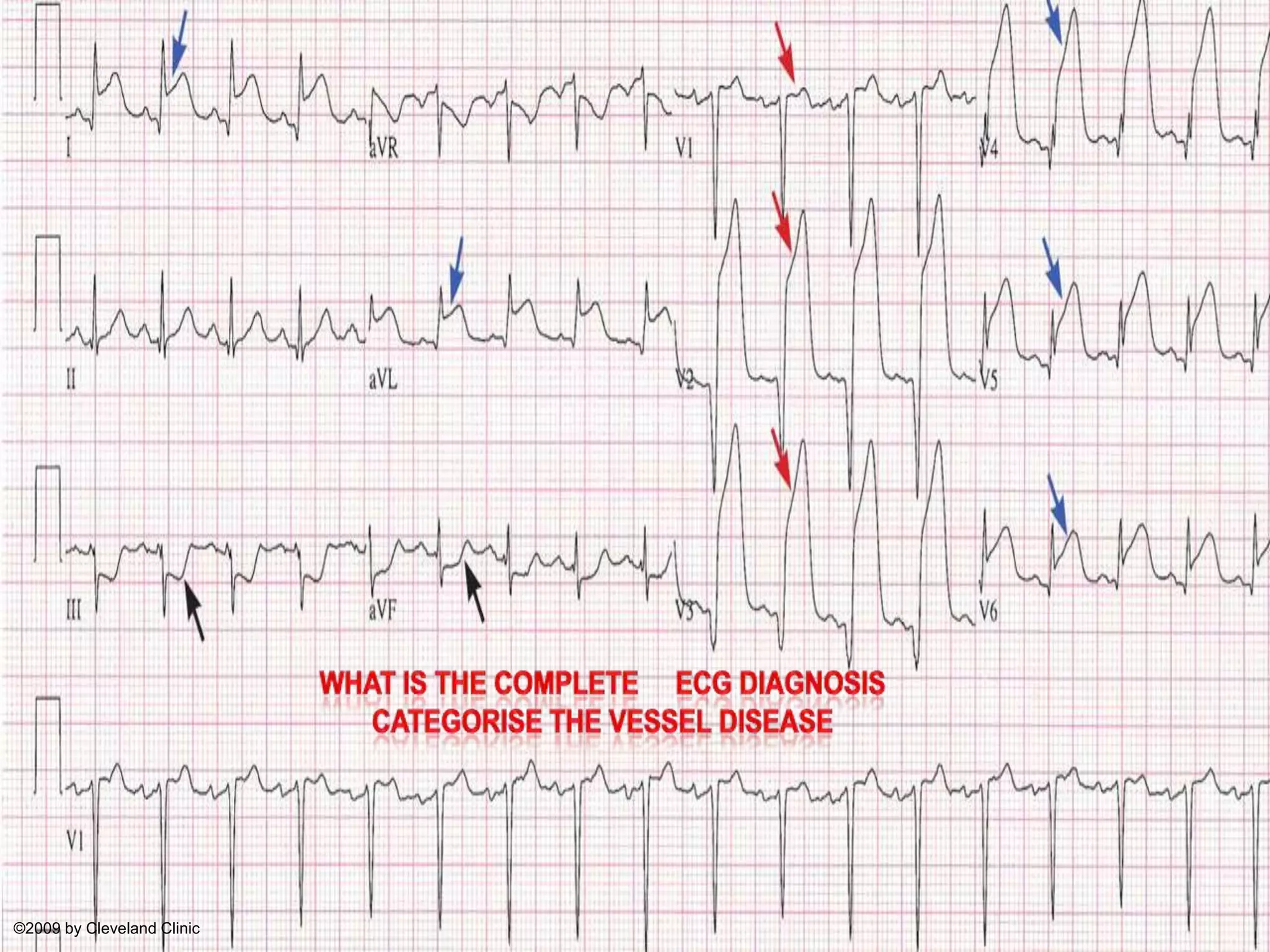
What is the complete     Ecg diagnosisCategorise the vessel disease©2009 by Cleveland Clinic
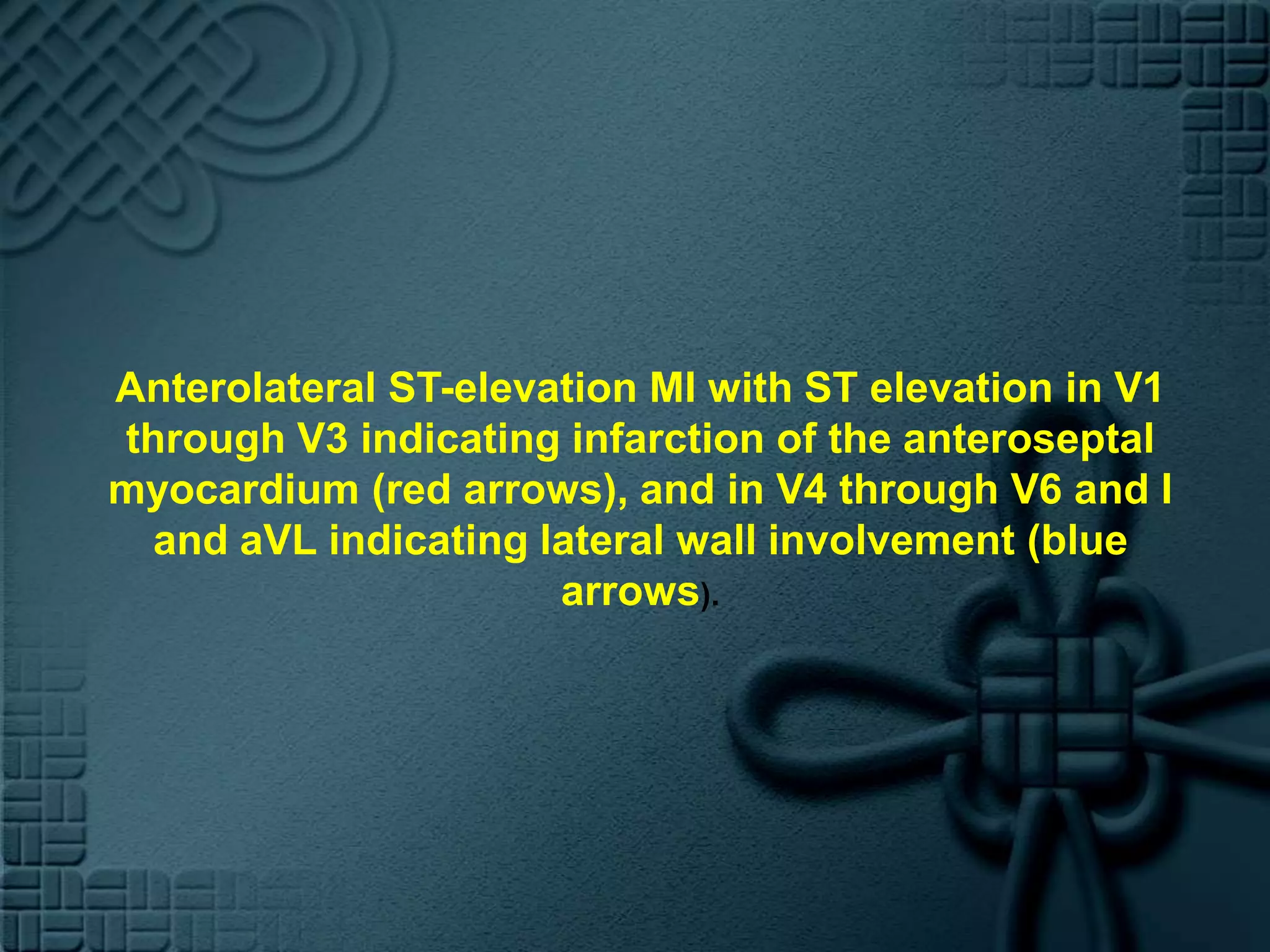
Anterolateral ST-elevation MI with ST elevation in V1 through V3 indicating infarction of the anteroseptal myocardium (red arrows), and in V4 through V6 and I and aVL indicating lateral wall involvement (blue arrows).
5.which mimicks the STEMI more  closely even in clinical features than the other ?A.pericarditisB.earlyrepolarisation variantC.taksotsubocardiomyopathyD.brugada syndrome
Answer : taksotsubocardiomyopathyThe ECG findings are often confused with those found during an acute anterior wall myocardial infarction.Itclassically mimics ST-segment elevation myocardial infarction, and is characterised by acute onset of transient ventricular apical wall motion abnormalities (ballooning) accompanied by chest pain, dyspnea, ST-segment elevation, T-wave inversion or QT-interval prolongation on ECG. Elevation of myocardial enzymes is moderate at worst and there is absence of significant coronary artery disease.[1]
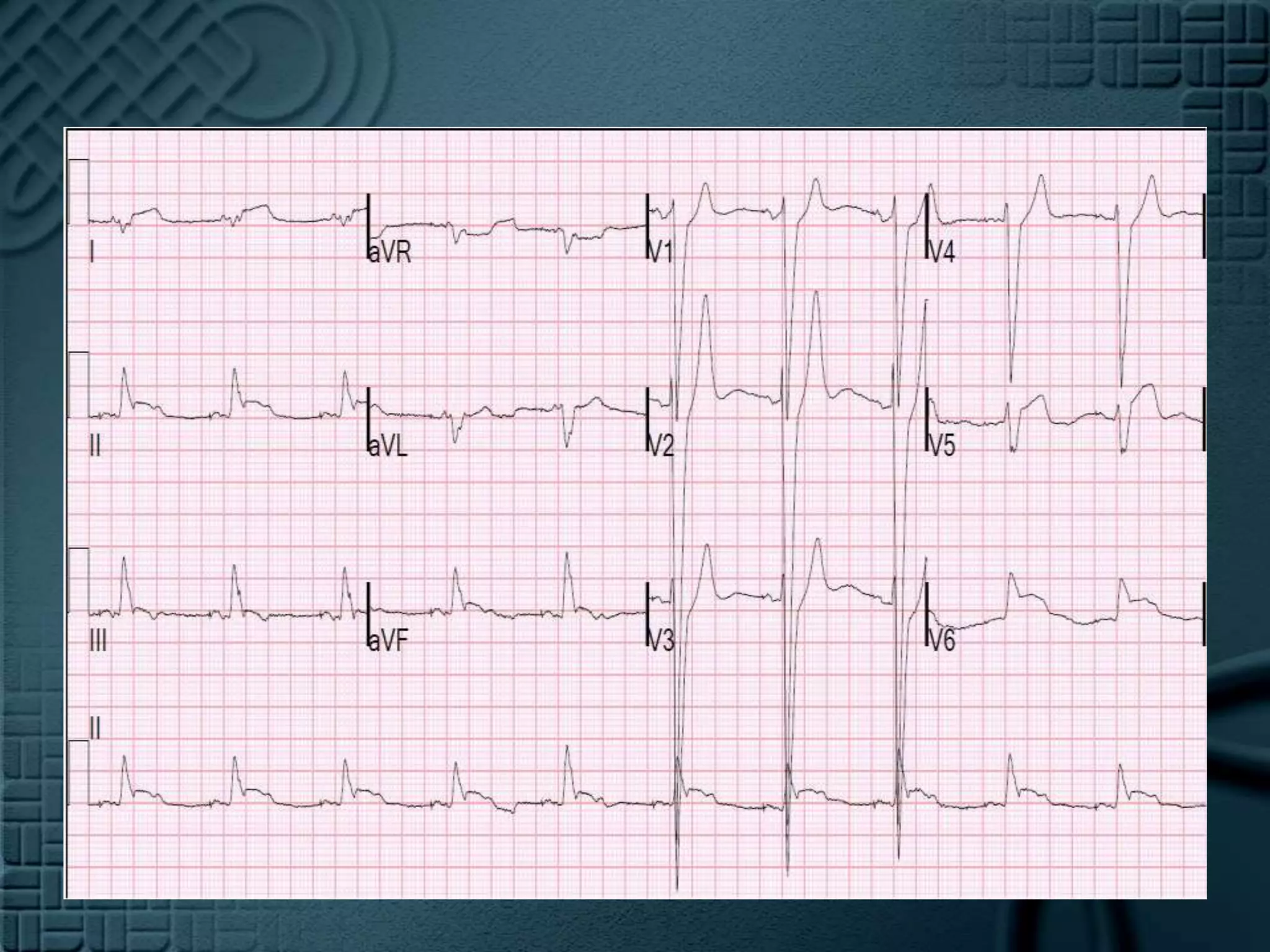
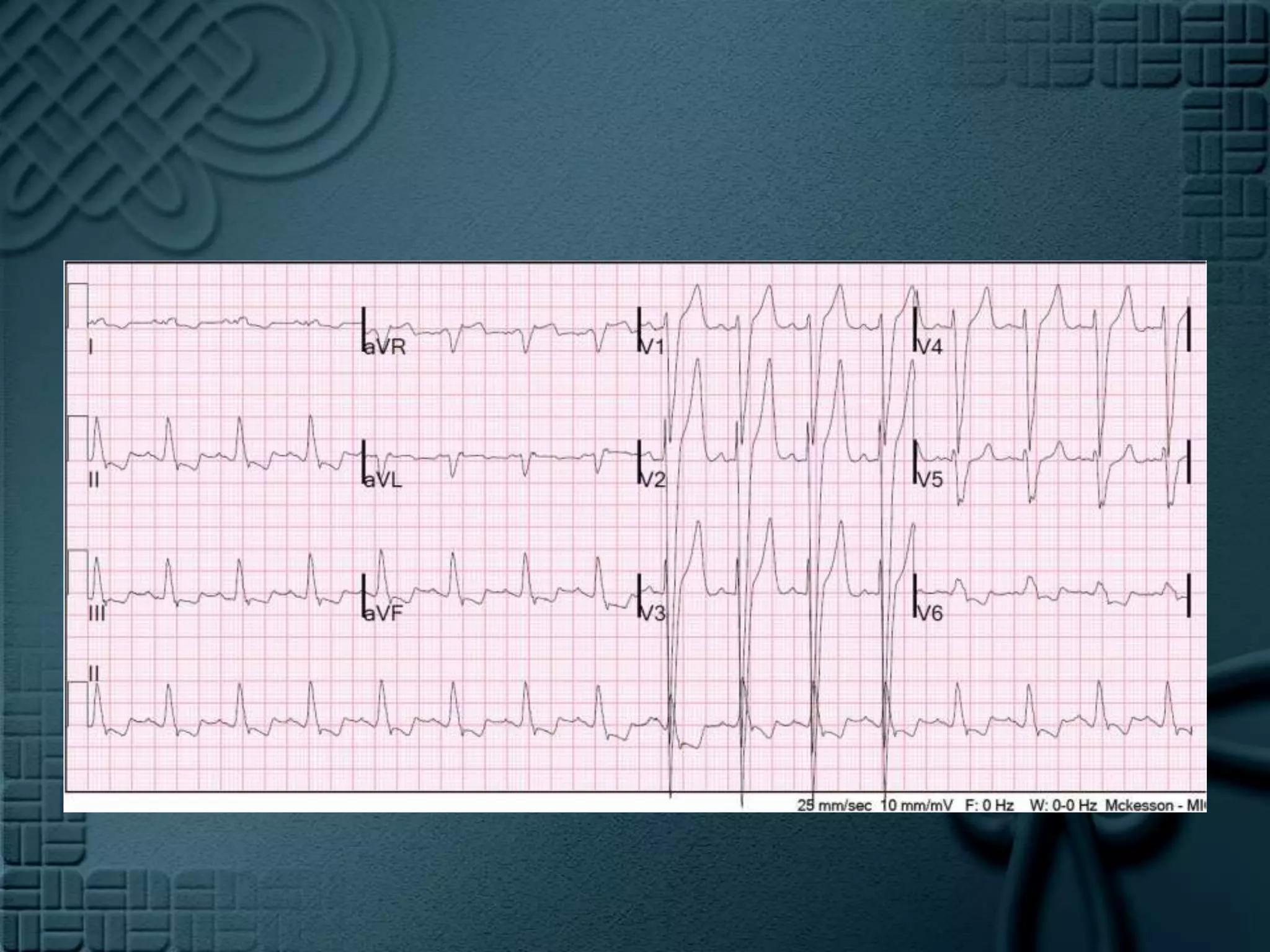
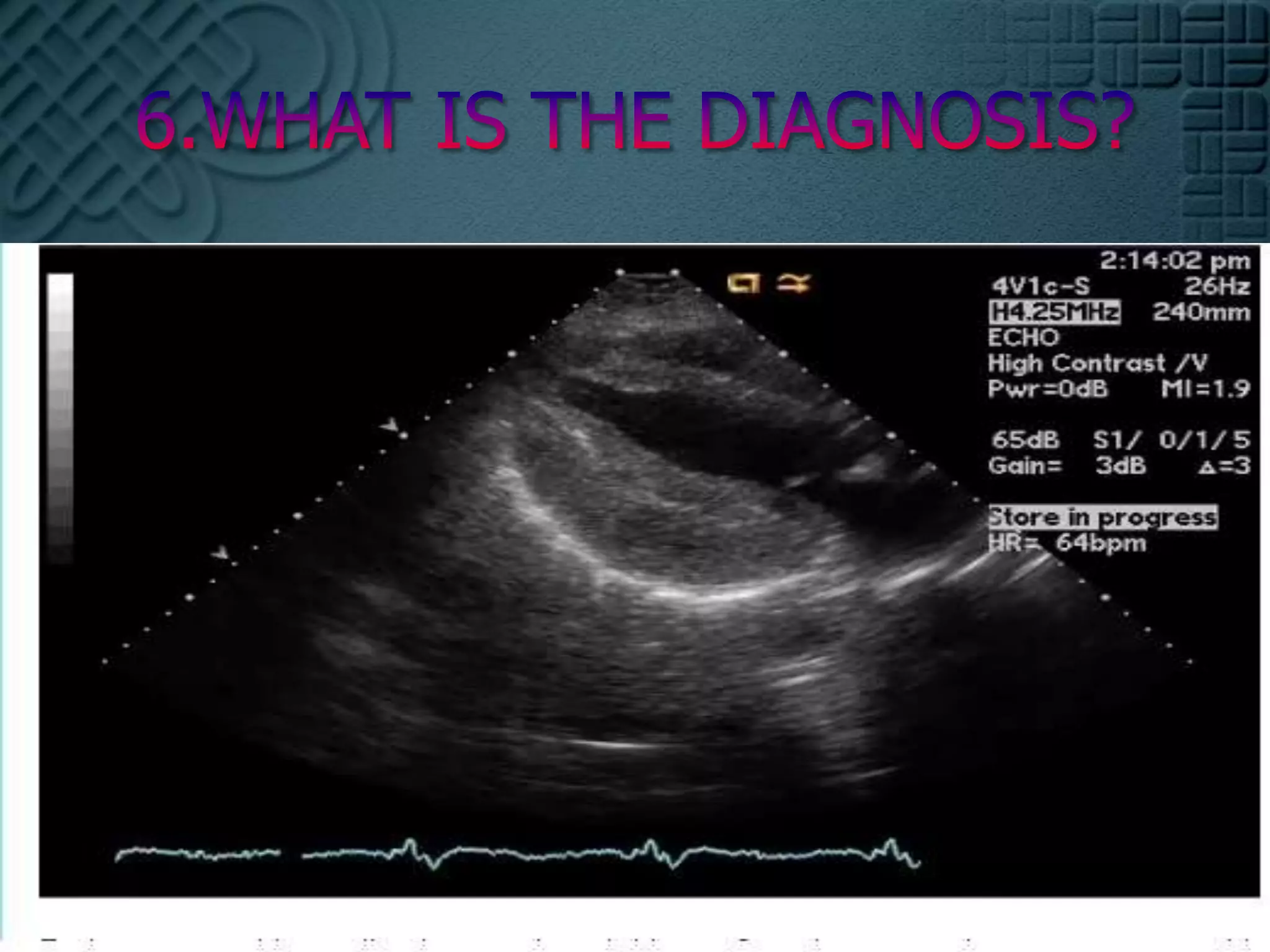
6.This 74 yo male had just returned to his unit bed after successful PTCA of tight lesions of the first diagonal and obtuse marginal coronaries. He complained of chest pain. This ECG was recorded. The previous is below.
6.WHAT IS THE DIAGNOSIS?
7.a patient had renal failure .creatinine clearance is 60ml/min ..what should the patient receive post thrombolysis?A.UFH onlyB.LMWH same dosesC.LMWH reduced dose.
B.LMWH same doseOnly when creatinine clearance is less than 30 ml/min the dose to be reduced.Ncbl.nim.com
8.which is most fibrin specific ..and what is its advantage?A.tenectplaseB.reteplaseC.alteplaseD.streptokinase
Ans –tenectplaseSingle bolusMore fibrin specific
9.a patient developed bradycardia on monitoring..ecg diagnosis was made..which is more at risk of going into CHB and who to be sent for pacemaker?A.anterior wall MI with mobitz type 1 blockB.Anterior wall MI with mobitz type 2 blockC,.Inferior wall MI with mobitz type 2 blockD.Inferior wall MI with unresponse to atropine
Anterior wall MI with mobitz type 2 block..
10 .which papillary muscle is damaged in anterior wall MI and inferior wall MI ?WHY so ?
Anterolateral in anterior wall miPosteromedial in inferior wall MI
THANK   YOU

Ecg quiz

  • 1.
  • 2.
    Sir William Oslersaid, “Variability is the law of life, and as no two faces are the same, so no two bodies are alike, and no two individuals react alike and behave alike under the abnormal conditions which we know as disease
  • 4.
    What is thediagnosisAcute anterior wall MI later developed inferior wall MI ANTEROINFERO WALL MIPERICARDITISFAILED THROMBOLYSIS a.Acute MI b.Inferoposterior with RVMI c.Pericarditis d. anterolateral MI who later developed inferior wall MI
  • 5.
    Acute pericarditis withelevation of the ST segment in all leads, often up-sloping (red arrows), and PR depression in all leads (blue arrows), except for PR elevation in aVR (black arrow).
  • 6.
    What is thediagnosis of the patient who present with acute chest <6 hrs Pain, not a k/c/o cad and there is trop t elevation ?a.Acute anterior wall MI b.Unstable anginac.Nstemid.none©2009 by Cleveland Clinic
  • 7.
    Poor R waveprogression (red arrows) with terminally symmetric T waves in leads V1 through V6 (blue arrows), which suggests possible myocardial injury; this patient had positive troponin consistent with non-ST-elevation MI.
  • 8.
    ST depression acrossthe precordium (V1–V6) suggestive of subendocardial injury (black arrows).Where is the occlusion?
  • 10.
    Where is thelesion?©2009 by Cleveland Clinic
  • 11.
    Inferolateral ST-elevation MIwith ST elevation in II, III, and aVF (red arrows) indicating injury in the inferior wall in addition to ST elevation in V4 through V6 (blue arrows).
  • 12.
    What is thecomplete Ecg diagnosisCategorise the vessel disease©2009 by Cleveland Clinic
  • 13.
    Anterolateral ST-elevation MIwith ST elevation in V1 through V3 indicating infarction of the anteroseptal myocardium (red arrows), and in V4 through V6 and I and aVL indicating lateral wall involvement (blue arrows).
  • 14.
    5.which mimicks theSTEMI more closely even in clinical features than the other ?A.pericarditisB.earlyrepolarisation variantC.taksotsubocardiomyopathyD.brugada syndrome
  • 15.
    Answer : taksotsubocardiomyopathyTheECG findings are often confused with those found during an acute anterior wall myocardial infarction.Itclassically mimics ST-segment elevation myocardial infarction, and is characterised by acute onset of transient ventricular apical wall motion abnormalities (ballooning) accompanied by chest pain, dyspnea, ST-segment elevation, T-wave inversion or QT-interval prolongation on ECG. Elevation of myocardial enzymes is moderate at worst and there is absence of significant coronary artery disease.[1]
  • 16.
    6.This 74 yomale had just returned to his unit bed after successful PTCA of tight lesions of the first diagonal and obtuse marginal coronaries. He complained of chest pain. This ECG was recorded. The previous is below.
  • 19.
    6.WHAT IS THEDIAGNOSIS?
  • 20.
    7.a patient hadrenal failure .creatinine clearance is 60ml/min ..what should the patient receive post thrombolysis?A.UFH onlyB.LMWH same dosesC.LMWH reduced dose.
  • 21.
    B.LMWH same doseOnlywhen creatinine clearance is less than 30 ml/min the dose to be reduced.Ncbl.nim.com
  • 22.
    8.which is mostfibrin specific ..and what is its advantage?A.tenectplaseB.reteplaseC.alteplaseD.streptokinase
  • 23.
  • 24.
    9.a patient developedbradycardia on monitoring..ecg diagnosis was made..which is more at risk of going into CHB and who to be sent for pacemaker?A.anterior wall MI with mobitz type 1 blockB.Anterior wall MI with mobitz type 2 blockC,.Inferior wall MI with mobitz type 2 blockD.Inferior wall MI with unresponse to atropine
  • 25.
    Anterior wall MIwith mobitz type 2 block..
  • 26.
    10 .which papillarymuscle is damaged in anterior wall MI and inferior wall MI ?WHY so ?
  • 27.
    Anterolateral in anteriorwall miPosteromedial in inferior wall MI
  • 28.