Facial Trauma
Plastic and Reconstructive Surgery
Department
SCGH
Dr Sepehr Lajevardi
Dr Qadir Khan
Dr Mike O’Hallaren
Dr Guy Watts
Standard Clinical Assessment
History
Mode of injury, loss of consciousness,
symptoms at examination, medications,
alcohol or drugs and fasting status
General Examination
External Examination for Hard / Soft injury
Inspection looking for oedema, ecchymosis
and lacerations.
Palpate for bony deformity. Orbital rims,
zygomatic arches, nasal bones, mandibular
body and condyles.
Neurologic Examination
Cranial Nerves V and VII
Intra-oral Examination
Intra-oral examination in good lighting.
Inspect for ecchymosis in buccal or lingual
sulci. Mucosal haematoma over underlying
fractures
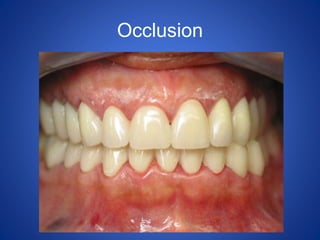
Dentition and Occlusion examination
New deformity indicates discrepant maxillary
and/or mandibular position.
Standard Clinical Assessment
Orbital Examination
Ocular movements, ocular position. Intra-
ocular pathology.
Close observation essential in zygoma
fractures.
Nasal Examination
Septal haematoma, deviation, patency, CSF
Rhinorrhoea
Ear Examination
Blood in EA canal, behind membrane, mastoid
Standard Clinical Assessment
Occlusion
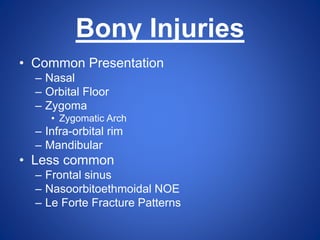
Bony Injuries
• Common Presentation
– Nasal
– Orbital Floor
– Zygoma
• Zygomatic Arch
– Infra-orbital rim
– Mandibular
• Less common
– Frontal sinus
– Nasoorbitoethmoidal NOE
– Le Forte Fracture Patterns
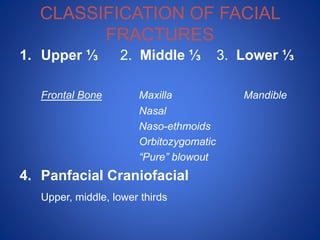
CLASSIFICATION OF FACIAL
FRACTURES
1. Upper ⅓ 2. Middle ⅓ 3. Lower ⅓
Frontal Bone Maxilla Mandible
Nasal
Naso-ethmoids
Orbitozygomatic
“Pure” blowout
4. Panfacial Craniofacial
Upper, middle, lower thirds
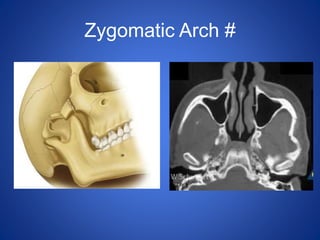
Zygomatic Arch #
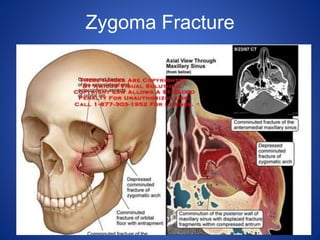
Zygoma Fracture
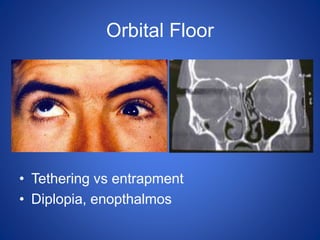
Orbital Floor
• Tethering vs entrapment
• Diplopia, enopthalmos
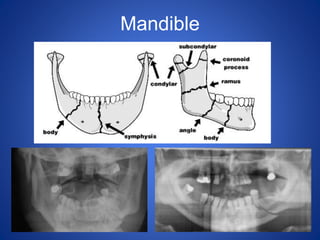
Mandible
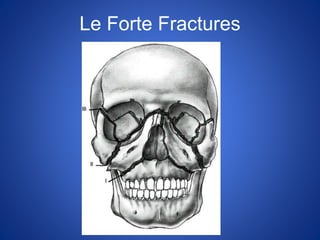
Le Forte Fractures
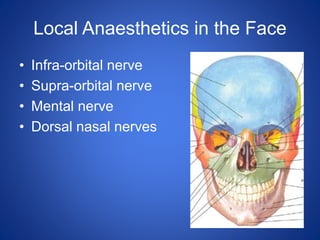
Local Anaesthetics in the Face
• Infra-orbital nerve
• Supra-orbital nerve
• Mental nerve
• Dorsal nasal nerves
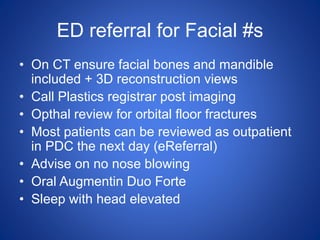
ED referral for Facial #s
• On CT ensure facial bones and mandible
included + 3D reconstruction views
• Call Plastics registrar post imaging
• Opthal review for orbital floor fractures
• Most patients can be reviewed as outpatient
in PDC the next day (eReferral)
• Advise on no nose blowing
• Oral Augmentin Duo Forte
• Sleep with head elevated

Facial Trauma

  • 1.
    Facial Trauma Plastic andReconstructive Surgery Department SCGH Dr Sepehr Lajevardi Dr Qadir Khan Dr Mike O’Hallaren Dr Guy Watts
  • 9.
    Standard Clinical Assessment History Modeof injury, loss of consciousness, symptoms at examination, medications, alcohol or drugs and fasting status General Examination External Examination for Hard / Soft injury Inspection looking for oedema, ecchymosis and lacerations. Palpate for bony deformity. Orbital rims, zygomatic arches, nasal bones, mandibular body and condyles.
  • 10.
    Neurologic Examination Cranial NervesV and VII Intra-oral Examination Intra-oral examination in good lighting. Inspect for ecchymosis in buccal or lingual sulci. Mucosal haematoma over underlying fractures Dentition and Occlusion examination New deformity indicates discrepant maxillary and/or mandibular position. Standard Clinical Assessment
  • 11.
    Orbital Examination Ocular movements,ocular position. Intra- ocular pathology. Close observation essential in zygoma fractures. Nasal Examination Septal haematoma, deviation, patency, CSF Rhinorrhoea Ear Examination Blood in EA canal, behind membrane, mastoid Standard Clinical Assessment
  • 12.
  • 13.
    Bony Injuries • CommonPresentation – Nasal – Orbital Floor – Zygoma • Zygomatic Arch – Infra-orbital rim – Mandibular • Less common – Frontal sinus – Nasoorbitoethmoidal NOE – Le Forte Fracture Patterns
  • 14.
    CLASSIFICATION OF FACIAL FRACTURES 1.Upper ⅓ 2. Middle ⅓ 3. Lower ⅓ Frontal Bone Maxilla Mandible Nasal Naso-ethmoids Orbitozygomatic “Pure” blowout 4. Panfacial Craniofacial Upper, middle, lower thirds
  • 15.
  • 16.
  • 17.
    Orbital Floor • Tetheringvs entrapment • Diplopia, enopthalmos
  • 18.
  • 19.
  • 20.
    Local Anaesthetics inthe Face • Infra-orbital nerve • Supra-orbital nerve • Mental nerve • Dorsal nasal nerves
  • 21.
    ED referral forFacial #s • On CT ensure facial bones and mandible included + 3D reconstruction views • Call Plastics registrar post imaging • Opthal review for orbital floor fractures • Most patients can be reviewed as outpatient in PDC the next day (eReferral) • Advise on no nose blowing • Oral Augmentin Duo Forte • Sleep with head elevated

Editor's Notes

  • #9 Get new picture Put vascular supply to the face photo
  • #16 Isolated arch: cosmetic vs functional
  • #17 ZMC complex