Tonsillitis
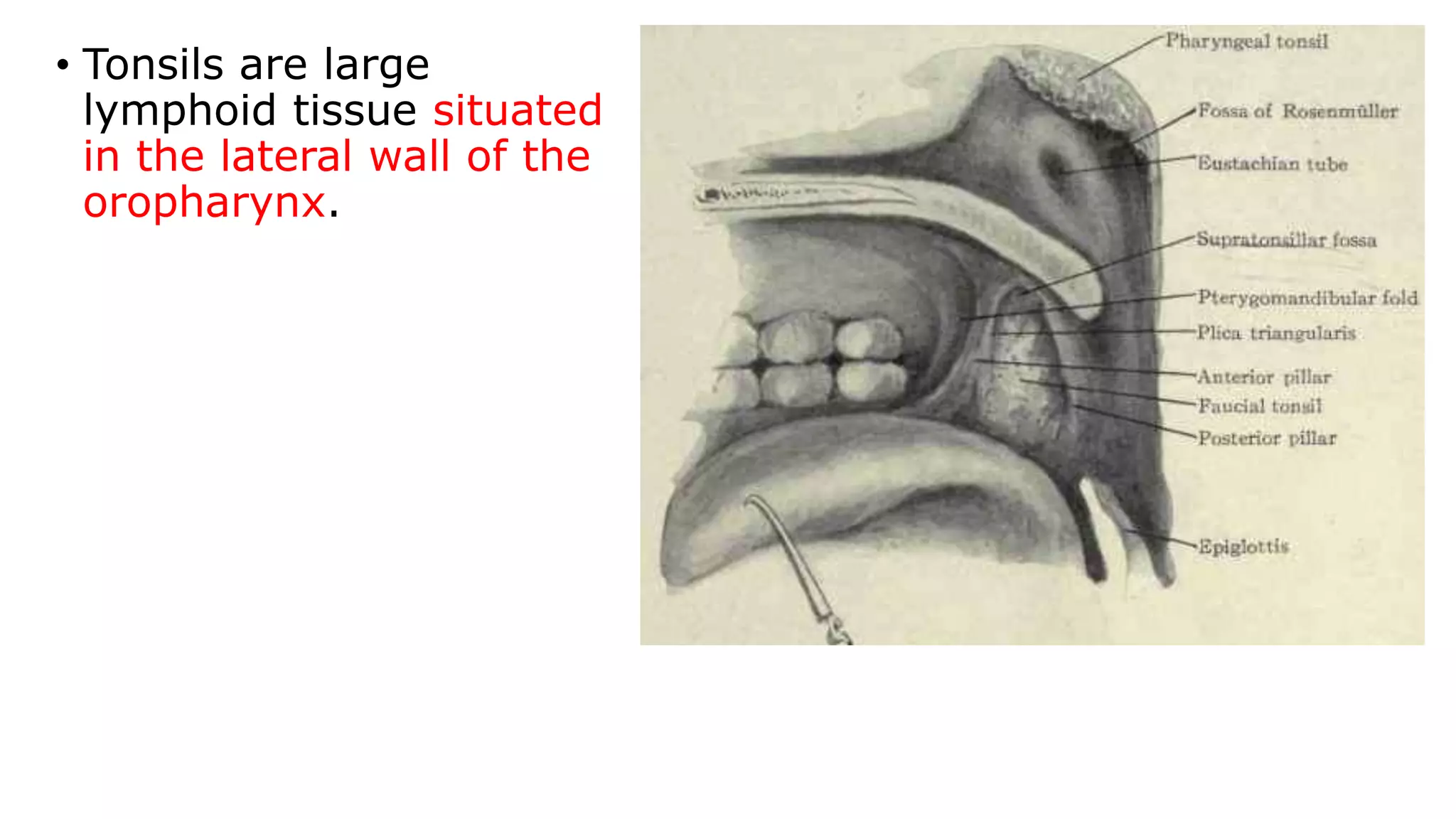
• Tonsils are large
lymphoid tissue situated
in the lateral wall of the
oropharynx.
Definition
• Infection of the tonsils
Types
• Acute tonsillitis
• Chronic tonsillitis
Etiology
• Pre-existing URTI
• Pre-existing chronic tonsillitis
• Sinusitis
• Low resistance
• Ingestion of cold drinks and foods
• Foreign body
• Beta-haemolytic streptococcus
• Staphylococcus
• Haemophilus influenzae
• Pneumococcus
Pathological types
• Acute parenchymatous tonsillitis
• Acute follicular tonsillitis
Symptoms
• Raw sensation in the throat
• Pain in the throat
• Refusal to eat because of odynophagia
• Voice may be thick
• Jugulodigastric node enlargement and painful
• Halitosis
• Secretions increase and become tenacious
Complications
• Quinsy
• Laryngeal edema
• Pharyngeal and retropharyngeal abscess
• Acute otitis media
• Rhematism, Sub-acute Bacterial Endocarditis and acute nephritis
• Septecemia
• Chronic tonsillitis
Treatment
• Bed Rest and soft diet
• Antibiotics
• Analgesics
• Warm saline gargles
• Lozenges
Catarrhal tonsillitis
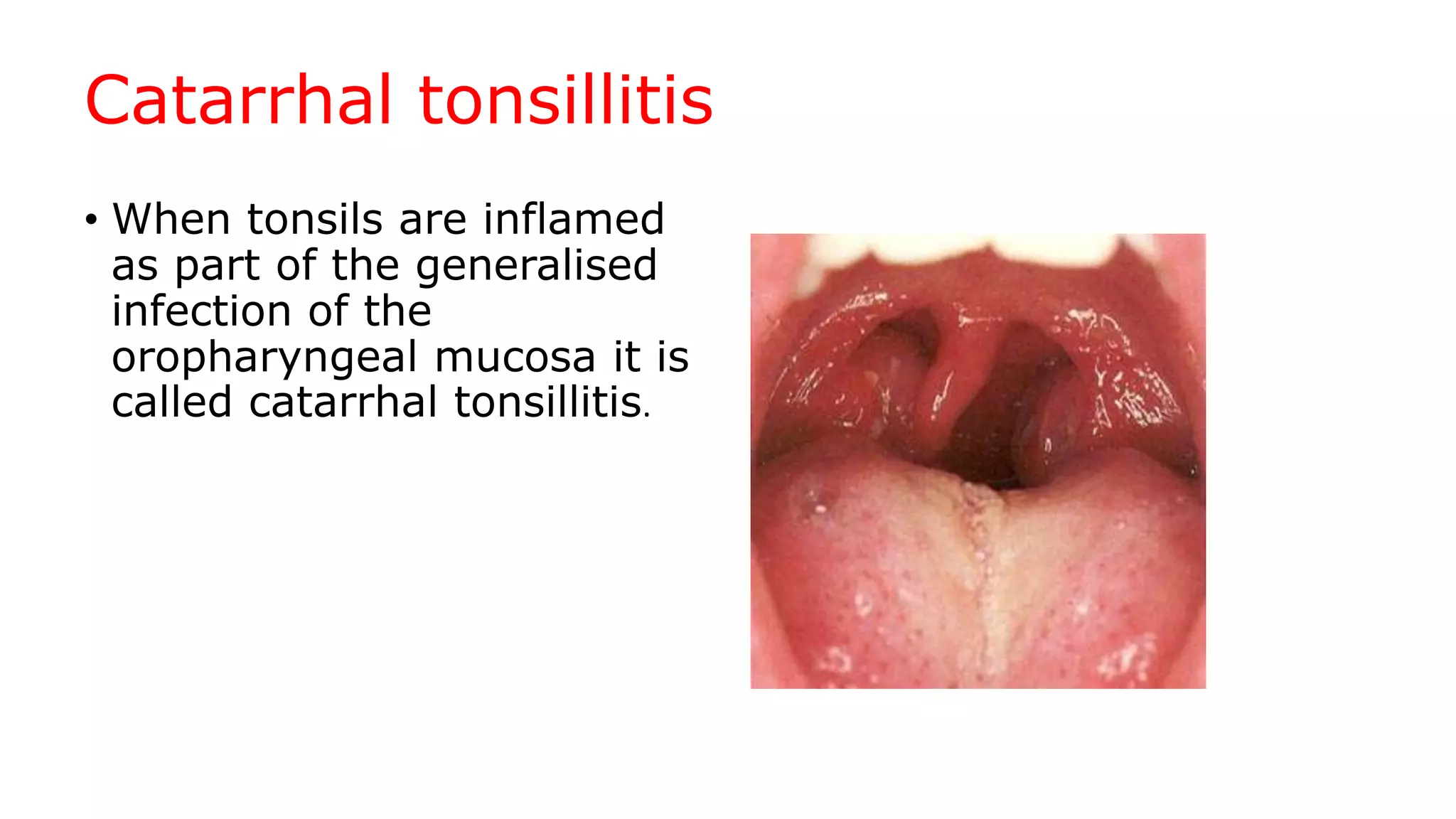
• When tonsils are inflamed
as part of the generalised
infection of the
oropharyngeal mucosa it is
called catarrhal tonsillitis.
Membranous tonsillitis.
• Some times exudation from
crypts may coalesce to form
a membrane over the
surface of tonsil, giving rise
to clinical picture of
membranous tonsillitis.
Parenchymatous tonsillitis
• When the whole tonsil is
uniformly congested and
swollen it is called acute
parenchymatous tonsillitis
Surgery
• Tonsillectomy
Post Op Management
• NBM till gag reflex returns
• First 48 hours Cold foods
• Soft non-spicy food for one week after the third day
• Following GA- Tonsillar position is given
• Following LA- Semi-sitting position is given
• Condy’s gargles (1:4000 Potassium Permanganate) or diluted
Hydrogen peroxide gargles for 8-10 days
• Ask patient to blow balloons to stretch the palate
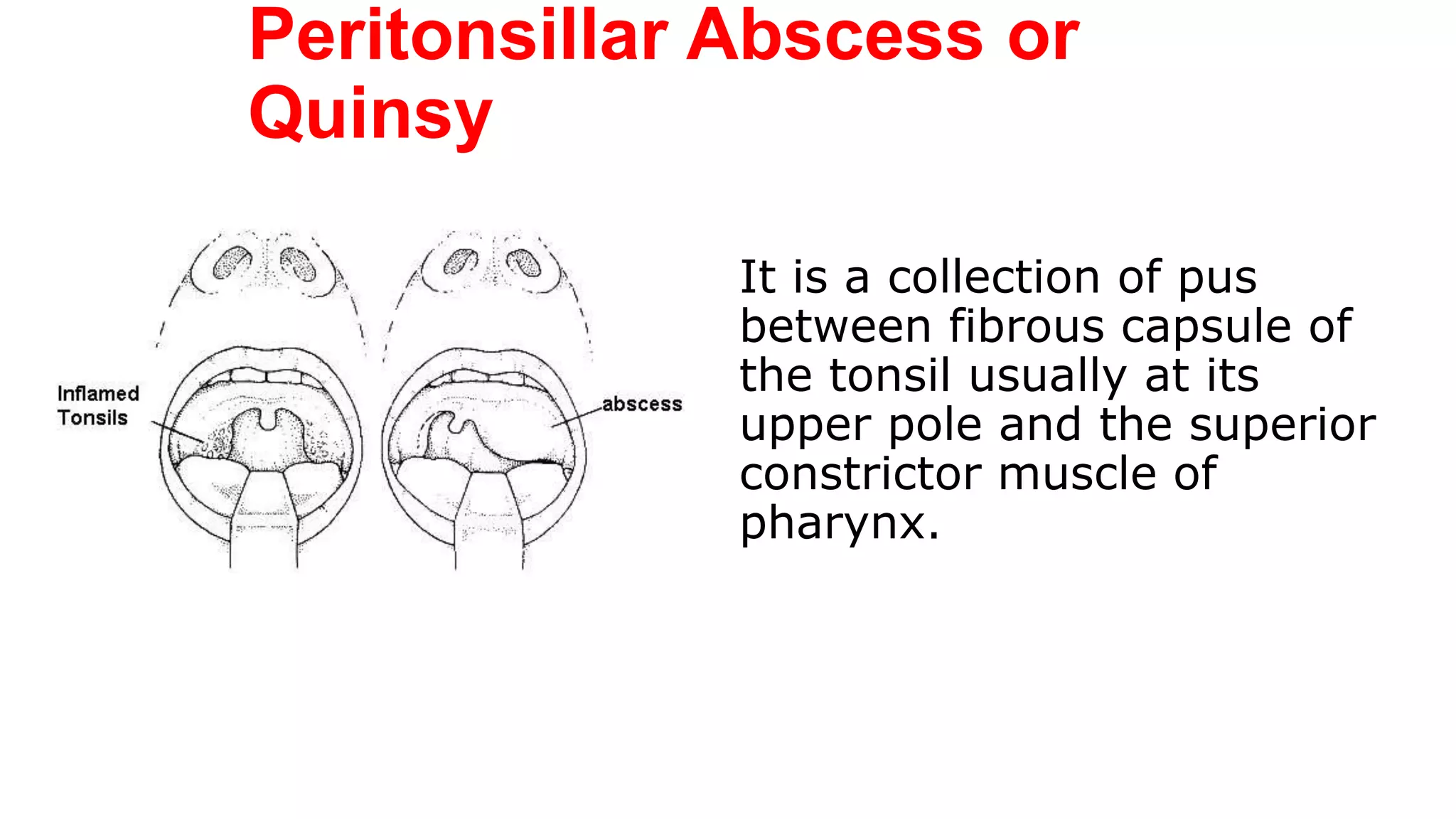
Peritonsillar Abscess or
Quinsy
• It is a collection of pus
between fibrous capsule of
the tonsil usually at its
upper pole and the superior
constrictor muscle of
pharynx.
Types
•Anterior
•Posterior
•Lingual
•Tonsillar
Etiology

•More common in males
•Recurrent tonsillitis
•Foreign body embedded in the tonsils
•Tonsillar tag left behind after
tonsillectomy
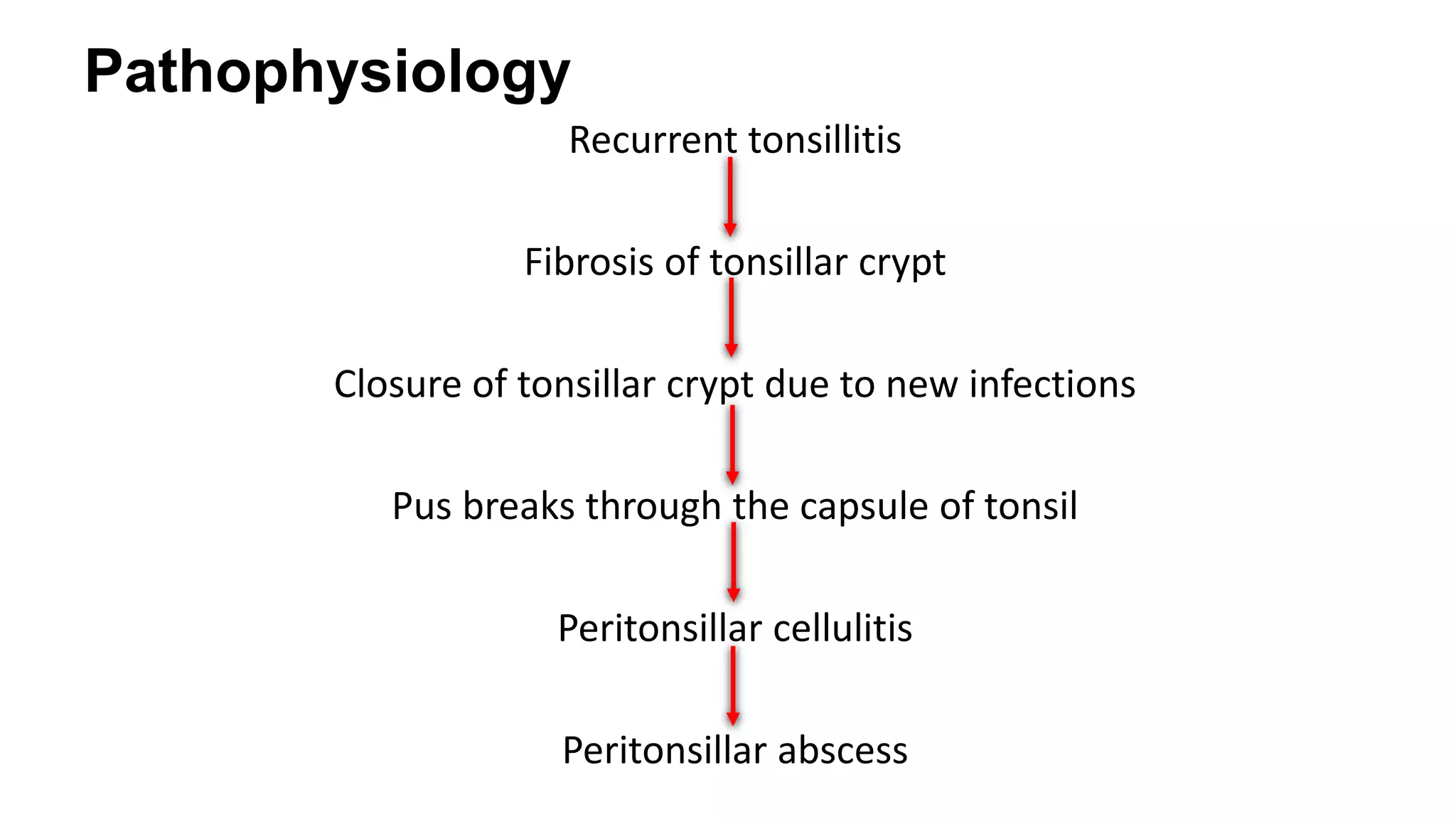
Pathophysiology
Recurrent tonsillitis
Fibrosis of tonsillar crypt
Closure of tonsillar crypt due to new infections
Pus breaks through the capsule of tonsil
Peritonsillar cellulitis
Peritonsillar abscess
Signs

• Ill looking patient
• Pyrexia
• Often with severe trismus
• Striking asymmetry with
oedema and hyperaemia of the
soft palate.
• Enlarged hyperaemic and
displaced tonsil
• Trismus
• Halitosis
• Rupture of the abscess
Symptoms
• Throat pain
• Trismus
• Increased salivation
• Thick speech
Complications
• Parapharyngeal abscess
• Phlebitis of the Internal jugular
vein
• Septecemia
• Hemorrhage
• Supraglottic edema
Treatment
• Analgesics and antibiotics.
• Adequate hydration
• I&D
• Tonsillectomy
• Quincy tonsillectomy
Adenoids
When hypertrophied nasopharyngeal tonsil starts
producing symptoms the condition is referred to as
adenoids.
The normal involution of nasopharyngeal tonsil starts
from the onset of puberty, but sometimes it can persist
for a longer period.
Etiology
• Between 3-10 years of age.
• TB and other infections
• Causes similar to tonsillitis.
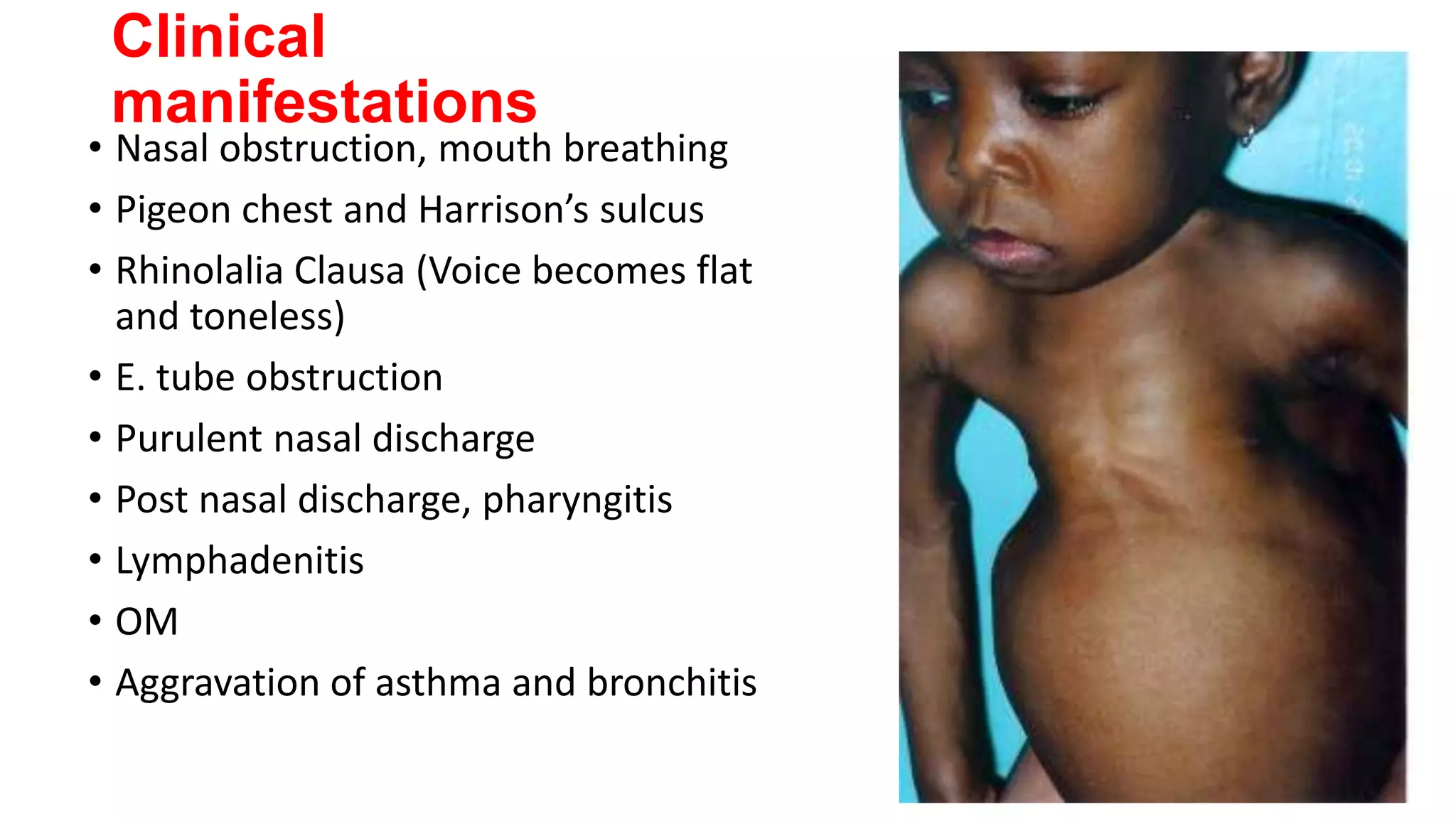
Clinical
manifestations

• Nasal obstruction, mouth breathing
• Pigeon chest and Harrison’s sulcus
• Rhinolalia Clausa (Voice becomes flat
and toneless)
• E. tube obstruction
• Purulent nasal discharge
• Post nasal discharge, pharyngitis
• Lymphadenitis
• OM
• Aggravation of asthma and bronchitis
Diagnosis
• Clinical manifestations
• Posterior rhinoscopy
• Digital palpation
• Radical examination
Treatment
• Antibiotics
• Decongestants
• Breathing exercises
• Adenoidectomy
• Antral lavage to drain sinusitis
• Grommet may be inserted to ear of a patient having
secretary OM
Thank you

Tonsillitis, quinsy and adenoiditis