06/18/14 1
06/18/14 2
Dr. Shakeel Ahmed
House Surgeon
ENT Department, Capital Hospital
06/18/14 3
Most common causes
of
Conductive Hearing
Loss
1.Ear wax impaction
2. Otitis Media with Effusion
Department of Oto- Rhino- Laryngology
06/18/14 4
Normal Hearing
Outer and middle Ear:
 Any abnormality or
disease could result in
conductive hearing loss
Inner Ear:
 Abnormality or disease
would result in Sensory
Hearing loss
Cochlear nerve and
auditory centres:
 Abn. or disease would
result in Neural hearing
loss.
06/18/14 5
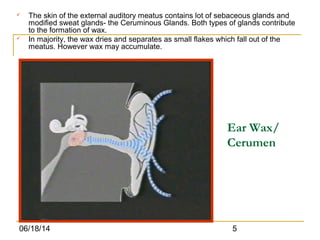
Ear Wax/
Cerumen
 The skin of the external auditory meatus contains lot of sebaceous glands and
modified sweat glands- the Ceruminous Glands. Both types of glands contribute
to the formation of wax.
 In majority, the wax dries and separates as small flakes which fall out of the
meatus. However wax may accumulate.
06/18/14 6
Clinical Features
SYMPTOMS:
 Normally this does not give rise to any symptoms, however under
certain circumstances, it produces symptoms.
 Deafness of short duration and sudden onset is usually due to wax.
 If wax swells up suddenly by imbibition of moisture from the atmosphere
during rainy season or if water accidently enters the ear during bathing
etc, it causes acute pain and even otitis externa.
 If wax touches the TM, it can give rise to tinnitus or vertigo. Cough or
dyspepsia are occasional effects due to vagal reflex.
ON EXAMINATION:
 Meatus is seen to contain some black, dark brown or brown material
looking waxy in appearance. Some times it contains lot of shed off
epithelial cells and then its colour may be much lighter. It may appear
very dry and hard.
06/18/14 7
How the earis kept clean?
06/18/14 8
Treatment
 No Symptoms : No Treatment
 Wax impaction causing symptoms : Removal
06/18/14 9
Removal of Wax
Two Methods: Wet and Dry
WET METHOD
If the wax looks soft and shiny, it can be
syringed out at once, but if it is dry and hard, the
best plan is to soften it first by instilling warm
soda glycerin drops in the ear four times a day
for 3-4 days and then syringe it out.
06/18/14 10
Syringing
 Requirements: Aural syringe 50 or 100 cc capacity, a kidney tray
and warm saline at body temperature (Not to produce caloric reaction
and vertigo)
 Procedure: Patient sits before the operator with the ear to be
syringed facing him. The nozzle of the syringe is detached and the
syringe is filled with water/ saline. The nozzle is then tightly reapplied
and air pushed out of the syringe in vertical position. Light is thrown on
to the patient’s ear by means of head mirror/ light. The kidney tray is
held below the ear. The pinna of the patient is pulled upwards,
backwards and outwards with one hand of the operator to straighten
out the meatus and by means of the syringe, the jet of the fluid is
ordinarily directed towards the postero-superior wall of the meatus.
The force used should be moderate and canal washed of wax. The
meatus should be inspected after each syringing to see the TM so that
operator does not go on syringing unnecessarily. After syringing, the
meatus should be dried with cotton wool on carrier.
 Contraindications: Generalized & Localized otitis
externa,Perforation of ear drum, Acute otitis media, Scarred ear drum,
Recent or old fracture of base of skull, Patient suffering from heart
disease for fear of vagal reflex.
06/18/14 11
The wax should be
removed by means of
a wax hook or with
the help of a suction
machine.
DRY METHOD
06/18/14 12
Cleaning of ahearing aid
06/18/14 13
Thank you
and
over to Dr. Rizwan

Ear wax management

  • 1.
  • 2.
    06/18/14 2 Dr. ShakeelAhmed House Surgeon ENT Department, Capital Hospital
  • 3.
    06/18/14 3 Most commoncauses of Conductive Hearing Loss 1.Ear wax impaction 2. Otitis Media with Effusion Department of Oto- Rhino- Laryngology
  • 4.
    06/18/14 4 Normal Hearing Outerand middle Ear:  Any abnormality or disease could result in conductive hearing loss Inner Ear:  Abnormality or disease would result in Sensory Hearing loss Cochlear nerve and auditory centres:  Abn. or disease would result in Neural hearing loss.
  • 5.
    06/18/14 5 Ear Wax/ Cerumen The skin of the external auditory meatus contains lot of sebaceous glands and modified sweat glands- the Ceruminous Glands. Both types of glands contribute to the formation of wax.  In majority, the wax dries and separates as small flakes which fall out of the meatus. However wax may accumulate.
  • 6.
    06/18/14 6 Clinical Features SYMPTOMS: Normally this does not give rise to any symptoms, however under certain circumstances, it produces symptoms.  Deafness of short duration and sudden onset is usually due to wax.  If wax swells up suddenly by imbibition of moisture from the atmosphere during rainy season or if water accidently enters the ear during bathing etc, it causes acute pain and even otitis externa.  If wax touches the TM, it can give rise to tinnitus or vertigo. Cough or dyspepsia are occasional effects due to vagal reflex. ON EXAMINATION:  Meatus is seen to contain some black, dark brown or brown material looking waxy in appearance. Some times it contains lot of shed off epithelial cells and then its colour may be much lighter. It may appear very dry and hard.
  • 7.
    06/18/14 7 How theearis kept clean?
  • 8.
    06/18/14 8 Treatment  NoSymptoms : No Treatment  Wax impaction causing symptoms : Removal
  • 9.
    06/18/14 9 Removal ofWax Two Methods: Wet and Dry WET METHOD If the wax looks soft and shiny, it can be syringed out at once, but if it is dry and hard, the best plan is to soften it first by instilling warm soda glycerin drops in the ear four times a day for 3-4 days and then syringe it out.
  • 10.
    06/18/14 10 Syringing  Requirements:Aural syringe 50 or 100 cc capacity, a kidney tray and warm saline at body temperature (Not to produce caloric reaction and vertigo)  Procedure: Patient sits before the operator with the ear to be syringed facing him. The nozzle of the syringe is detached and the syringe is filled with water/ saline. The nozzle is then tightly reapplied and air pushed out of the syringe in vertical position. Light is thrown on to the patient’s ear by means of head mirror/ light. The kidney tray is held below the ear. The pinna of the patient is pulled upwards, backwards and outwards with one hand of the operator to straighten out the meatus and by means of the syringe, the jet of the fluid is ordinarily directed towards the postero-superior wall of the meatus. The force used should be moderate and canal washed of wax. The meatus should be inspected after each syringing to see the TM so that operator does not go on syringing unnecessarily. After syringing, the meatus should be dried with cotton wool on carrier.  Contraindications: Generalized & Localized otitis externa,Perforation of ear drum, Acute otitis media, Scarred ear drum, Recent or old fracture of base of skull, Patient suffering from heart disease for fear of vagal reflex.
  • 11.
    06/18/14 11 The waxshould be removed by means of a wax hook or with the help of a suction machine. DRY METHOD
  • 12.
  • 13.