PHARYNGITIS
Ms. SAHELI C
LECTURER
IACN
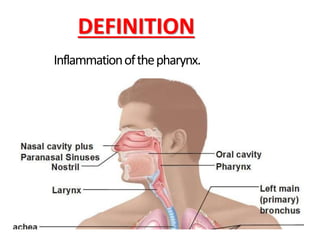
DEFINITION
Inflammationofthepharynx.
ACUTE PHARYNGITIS (SORE THROAT):
is a sudden painful inflammation of the pharynx,
the back portion of the throat that includes the
posterior third of the tongue, soft palate, and tonsils.
ETIOLOGY
• Environmental exposure to viral agents - adenovirus, influenza
virus, Epstein-Barr virus, and herpes simplex virus
• Poorly ventilated rooms.
• Winter and early spring.
• Bacterial infection - group A beta- hemolytic streptococcus
(GABHS), which is commonly referred to as group A streptococcus
(GAS) or streptococcal pharyngitis or strep throat.
• Other bacterial organism includes - Mycoplasma pneumoniae,
Neisseria gonorrhoeae, H. influenzae type B.
CLINICAL FEATURES
• Fiery red pharyngeal membrane.
• Redness and swelling in the tonsillar pillar, uvula, and soft palate.
• Swollen lymph node.
• Enlarged and tender cervical lymph node.
• Fever higher than 101˚F, malaise, headache, myalgia and painful sore
throat.
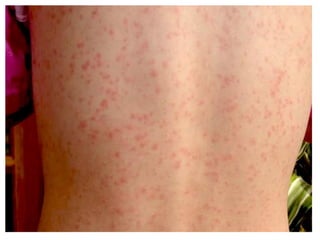
• Occasionally patient with GAS pharyngitis exhibit vomiting, anorexia
and scarlet fever.
• Bad breath.
DIAGNOSIS
• History Collection.
• Physicalexamination.
• Culture & sensitivity test.
• Blood investigation.
• Rapid streptococcal antigen test [RSAT]
TREATMENT
• Viral pharyngitis is treated with supportive measures because
antibiotics have no effect on the causal organism.
• Penicillin V potassium given for 5 days is the regimen of choice for
bacterial pharyngitis.
• Patient with resistant to penicillin or erythromycin; Cephalosporin
(5-10 day course) and macrolides (eg. Azithromycin for 3 days)
may be used.
• Analgesic eg. Aspirin or acetaminophen for 4-6 hour
interval
• Salt water gargling to be soothing.
• In severe cases, gargles with benzocaine may relieve
symptoms.
NUTRITIONAL THERAPY
• A liquid or soft diet.
• Cool beverages, warm liquids, and flavored frozen desserts
such as Popsicles are often soothing. Occasionally, the throat
is so sore that liquids cannot be taken in adequate amounts
bymouth.
• In severe situations, intravenous (IV) fluidsmay be needed.
• Otherwise, the patient is encouraged to drink as much fluid
as possible (at least 2 to 3 L perday).
CHRONIC PHARYNGITIS
• Chronic pharyngitis is a persistent inflammation of
the pharynx charecterised by multiple, white
elongated keratinized epithelial outgrowths project
from the surface of tonsil, base of tongue or
posterior pharyngeal wall.
It is common in adults -
• who work in dusty surroundings.
• Who use their voice to excess.
• suffer from chronic cough
• Habitually use alcohol and tobacco.
INCIDENCE
TYPES OF CHRONIC PHARYNGITIS:
1. Hypertrophic: characterized by general thickening and
congestion of the pharyngeal mucous membrane
2. Atrophic: probably a late stage of the first type (the
membrane is thin, whitish, glistening, and at times
wrinkled)
• Chronic granular (“clergyman’s sore throat”) :
characterized by numerous swollen lymph follicles on
the pharyngeal wall
CLINICAL MANIFESTATIONS
• Constant sense of irritation or fullness in the
throat, mucus that collects in the throat and can
be expelled by coughing, and difficulty
swallowing.
• A sore throat that is worse with swallowing in the
absence of pharyngitis suggests the possibility of
thyroiditis.
MEDICAL MANAGEMENT
• Treatment of chronic pharyngitis is based on relieving
symptoms.
• Avoiding exposure to irritants.
• Correcting upper respiratory, pulmonary, gastrointestinal
or cardiac condition that might be responsible for a
chronic cough.
• Nasal spray- to relived nasal congestion.
• Antihistamine decongestant medications for patient
with allergy; eg Pseudoephedrine orally for every 4-6
hours.
• Analgesic- Aspirin
SURGICAL MANAGEMENT
• Tonsillectomy : In case of severe chronic pharyngitis
followed by tonsillitis.
NURSING MANAGEMENT
➢Prevent the infection from spreading.
➢Recommends avoidance of alcohol, tobacco, second
hand smoke.
➢Recommend to avoid the exposure to cold or to
environmental or occupational pollutants.
➢Encourage patient to wear a disposable facemask.
➢Encourages the patient to drink plenty of fluids.
➢Gargling with warm saline solution may relieve throat
discomfort.
➢Lozenges keep the throat moistened.
➢An ice collar also can relieve severe sore throats.
➢Mouth care may promote the patients comfort and
prevent the development of fissures of the lips and oral
inflammation when bacterial infection is present.
➢The nurse instructs the patient and family about the
importance of taking the full course of therapy and inform
them about the symptoms to watch for complications.
➢ Instruct the patient about the preventive measures such
as not sharing the infected persons utensils, glasses,
napkins, food or towels, cleaning telephones after use, use
a tissue to cough or sneeze, replace his or her toothbrush
with a new one.
THANK YOU

Pharyngitis converted

  • 1.
  • 3.
  • 4.
    ACUTE PHARYNGITIS (SORETHROAT): is a sudden painful inflammation of the pharynx, the back portion of the throat that includes the posterior third of the tongue, soft palate, and tonsils.
  • 5.
    ETIOLOGY • Environmental exposureto viral agents - adenovirus, influenza virus, Epstein-Barr virus, and herpes simplex virus • Poorly ventilated rooms. • Winter and early spring. • Bacterial infection - group A beta- hemolytic streptococcus (GABHS), which is commonly referred to as group A streptococcus (GAS) or streptococcal pharyngitis or strep throat. • Other bacterial organism includes - Mycoplasma pneumoniae, Neisseria gonorrhoeae, H. influenzae type B.
  • 7.
    CLINICAL FEATURES • Fieryred pharyngeal membrane. • Redness and swelling in the tonsillar pillar, uvula, and soft palate. • Swollen lymph node. • Enlarged and tender cervical lymph node. • Fever higher than 101˚F, malaise, headache, myalgia and painful sore throat. • Occasionally patient with GAS pharyngitis exhibit vomiting, anorexia and scarlet fever. • Bad breath.
  • 9.
    DIAGNOSIS • History Collection. •Physicalexamination. • Culture & sensitivity test. • Blood investigation. • Rapid streptococcal antigen test [RSAT]
  • 10.
    TREATMENT • Viral pharyngitisis treated with supportive measures because antibiotics have no effect on the causal organism. • Penicillin V potassium given for 5 days is the regimen of choice for bacterial pharyngitis. • Patient with resistant to penicillin or erythromycin; Cephalosporin (5-10 day course) and macrolides (eg. Azithromycin for 3 days) may be used.
  • 11.
    • Analgesic eg.Aspirin or acetaminophen for 4-6 hour interval • Salt water gargling to be soothing. • In severe cases, gargles with benzocaine may relieve symptoms.
  • 12.
    NUTRITIONAL THERAPY • Aliquid or soft diet. • Cool beverages, warm liquids, and flavored frozen desserts such as Popsicles are often soothing. Occasionally, the throat is so sore that liquids cannot be taken in adequate amounts bymouth. • In severe situations, intravenous (IV) fluidsmay be needed. • Otherwise, the patient is encouraged to drink as much fluid as possible (at least 2 to 3 L perday).
  • 13.
    CHRONIC PHARYNGITIS • Chronicpharyngitis is a persistent inflammation of the pharynx charecterised by multiple, white elongated keratinized epithelial outgrowths project from the surface of tonsil, base of tongue or posterior pharyngeal wall.
  • 14.
    It is commonin adults - • who work in dusty surroundings. • Who use their voice to excess. • suffer from chronic cough • Habitually use alcohol and tobacco. INCIDENCE
  • 15.
    TYPES OF CHRONICPHARYNGITIS: 1. Hypertrophic: characterized by general thickening and congestion of the pharyngeal mucous membrane 2. Atrophic: probably a late stage of the first type (the membrane is thin, whitish, glistening, and at times wrinkled) • Chronic granular (“clergyman’s sore throat”) : characterized by numerous swollen lymph follicles on the pharyngeal wall
  • 16.
    CLINICAL MANIFESTATIONS • Constantsense of irritation or fullness in the throat, mucus that collects in the throat and can be expelled by coughing, and difficulty swallowing. • A sore throat that is worse with swallowing in the absence of pharyngitis suggests the possibility of thyroiditis.
  • 17.
    MEDICAL MANAGEMENT • Treatmentof chronic pharyngitis is based on relieving symptoms. • Avoiding exposure to irritants. • Correcting upper respiratory, pulmonary, gastrointestinal or cardiac condition that might be responsible for a chronic cough. • Nasal spray- to relived nasal congestion.
  • 18.
    • Antihistamine decongestantmedications for patient with allergy; eg Pseudoephedrine orally for every 4-6 hours. • Analgesic- Aspirin SURGICAL MANAGEMENT • Tonsillectomy : In case of severe chronic pharyngitis followed by tonsillitis.
  • 19.
    NURSING MANAGEMENT ➢Prevent theinfection from spreading. ➢Recommends avoidance of alcohol, tobacco, second hand smoke. ➢Recommend to avoid the exposure to cold or to environmental or occupational pollutants. ➢Encourage patient to wear a disposable facemask. ➢Encourages the patient to drink plenty of fluids. ➢Gargling with warm saline solution may relieve throat discomfort.
  • 20.
    ➢Lozenges keep thethroat moistened. ➢An ice collar also can relieve severe sore throats. ➢Mouth care may promote the patients comfort and prevent the development of fissures of the lips and oral inflammation when bacterial infection is present. ➢The nurse instructs the patient and family about the importance of taking the full course of therapy and inform them about the symptoms to watch for complications.
  • 21.
    ➢ Instruct thepatient about the preventive measures such as not sharing the infected persons utensils, glasses, napkins, food or towels, cleaning telephones after use, use a tissue to cough or sneeze, replace his or her toothbrush with a new one.
  • 22.