Aquatic Biomes
• Freshwater
–Ponds & Lakes
–Streams &
Rivers
–Wetlands
Marine
Oceans
Coral Reefs
Estuaries
Freshwater
Ponds & Lakes
Streams & Rivers
Wetlands
Freshwater
• Freshwater is defined as having a low salt
concentration—usually less than 1%
• Plants and animals in freshwater regions
are adjusted to the low salt content and
would not be able to survive in areas of
high salt concentration (i.e, ocean)
Ponds and Lakes
range in size from just a few square meters
to thousands of square kilometers
ponds may be seasonal, lasting just a
couple of months (such as sessile pools)
lakes may exist for hundreds of years or
more
may have limited species diversity since
they are often isolated from one another
and from other water sources like rivers
and oceans
Lakes and Ponds are divided into three
different “zones” determined by depth and
distance from the shoreline
littoral zone
limnetic zone
profundal zone
Ponds and
Lakes
Streams & Rivers
• bodies of flowing water moving in one direction
• found everywhere—they get their start at
headwaters, which may be springs, snowmelt
or even lakes
• travel all the way to their mouths, usually
another water channel or the ocean
Streams &
Rivers
Wetlands
Wetlands are areas of standing
water that support aquatic
plants.
Marshes, swamps, and bogs are
all considered wetlands
Freshwater Wetlands
• highest species diversity of all fresh water
ecosystems.
• many species of amphibians, reptiles, birds
(such as ducks and waders), and furbearers
can be found in the wetlands
• There are also salt water wetlands and
marshes.
Wetlands
Aquatic Ecosystems
Marine
Oceans
Coral Reefs
Estuaries
Marine Biomes
• cover about three-fourths (72%) of the Earth’s
surface and include oceans, coral reefs, and
estuaries
• algae supply much of the world’s oxygen
supply and take in a huge amount of
atmospheric carbon dioxide
• evaporation of the seawater provides
rainwater for the land
Estuaries
• enclosed body of water formed where
freshwater from rivers and streams flows
into the ocean, mixing with the salty sea
water
• estuaries and the lands surrounding them
are places of transition from land to sea,
and from fresh to salt water
• although influenced by the tides, estuaries
are protected from the full force of ocean
waves, winds, and storms
Estuaries
• Estuaries are almost as abundant in life as tropical
rainforests.
• Estuaries are sometimes called “marine nurseries”
– habitats for many juvenile organisms, especially
for fishes
Oceans
• largest of all the ecosystems
• dominate the Earth’s surface
• great diversity of species
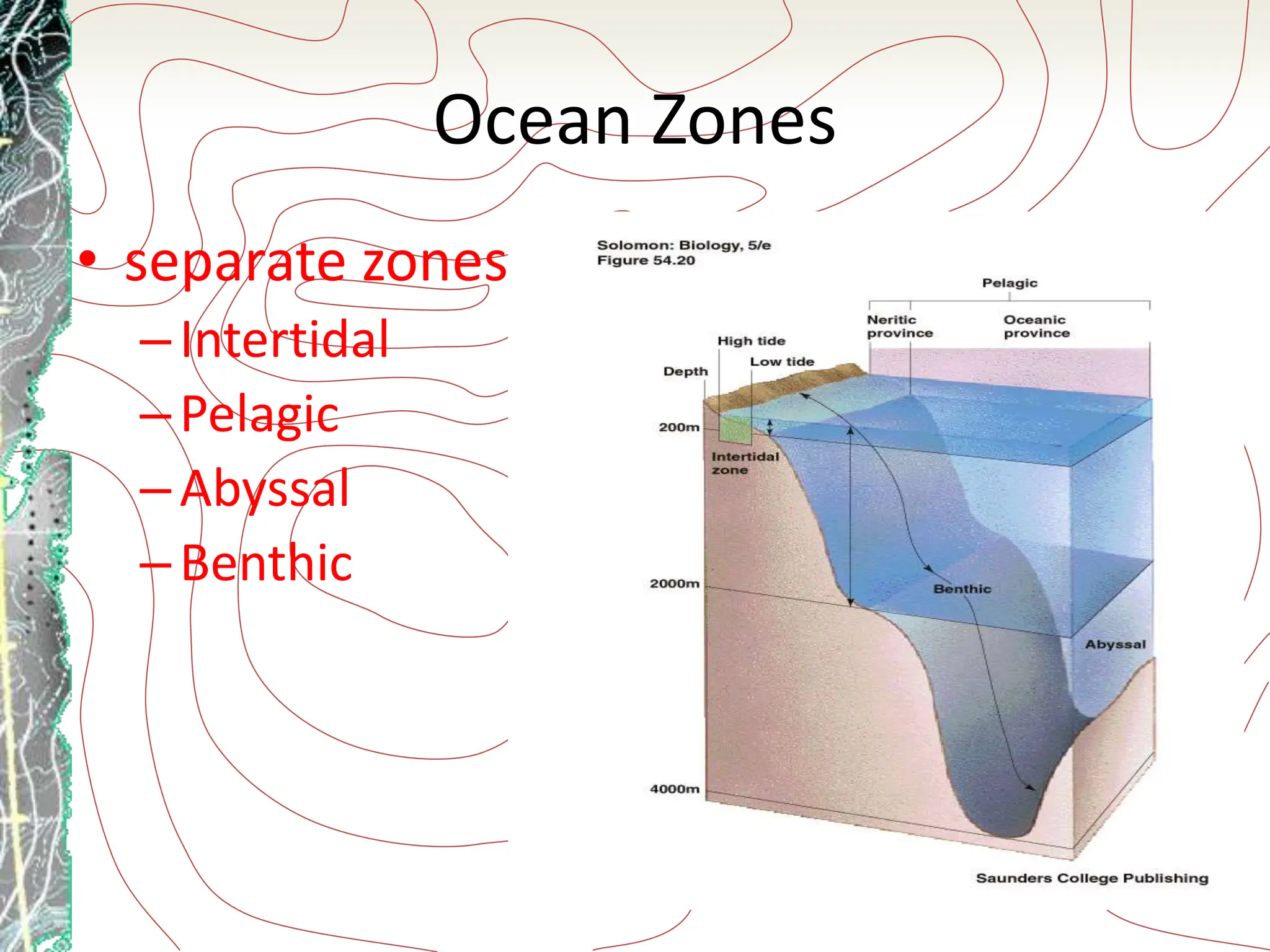
Ocean Zones
• separate zones
–Intertidal
–Pelagic
–Abyssal
–Benthic
Intertidal Zone
where the ocean meets the land
sometimes submerged and at other
times exposed
Pelagic – Open Ocean
Waters deeper than intertidal leading all the
way to open ocean.
Closer to shore is called the Neritic Zone.
Benthic Zone
• The Benthic Zone is just a deep layer of the
Palagic Zone.
• The Benthic Zone holds deep water sea
creatures.
Narcomedusa
Vampire Squid
Snake Dragon
Angler Fish
Amphi - crustacean
Ctenophore – voracious predator
Deepstaria very slow swimmers,
no tentacles, close flexible bells
(up to a meter across) around
their prey
Big Red
grows to over
a meter across
Abyssal Zone
• Abyssal Zone is the deepest of the deep.
Many creatures are not able to live in these
conditions. Life is not abundant.
• It is the absolutely lowest section of the
pelagic zone.
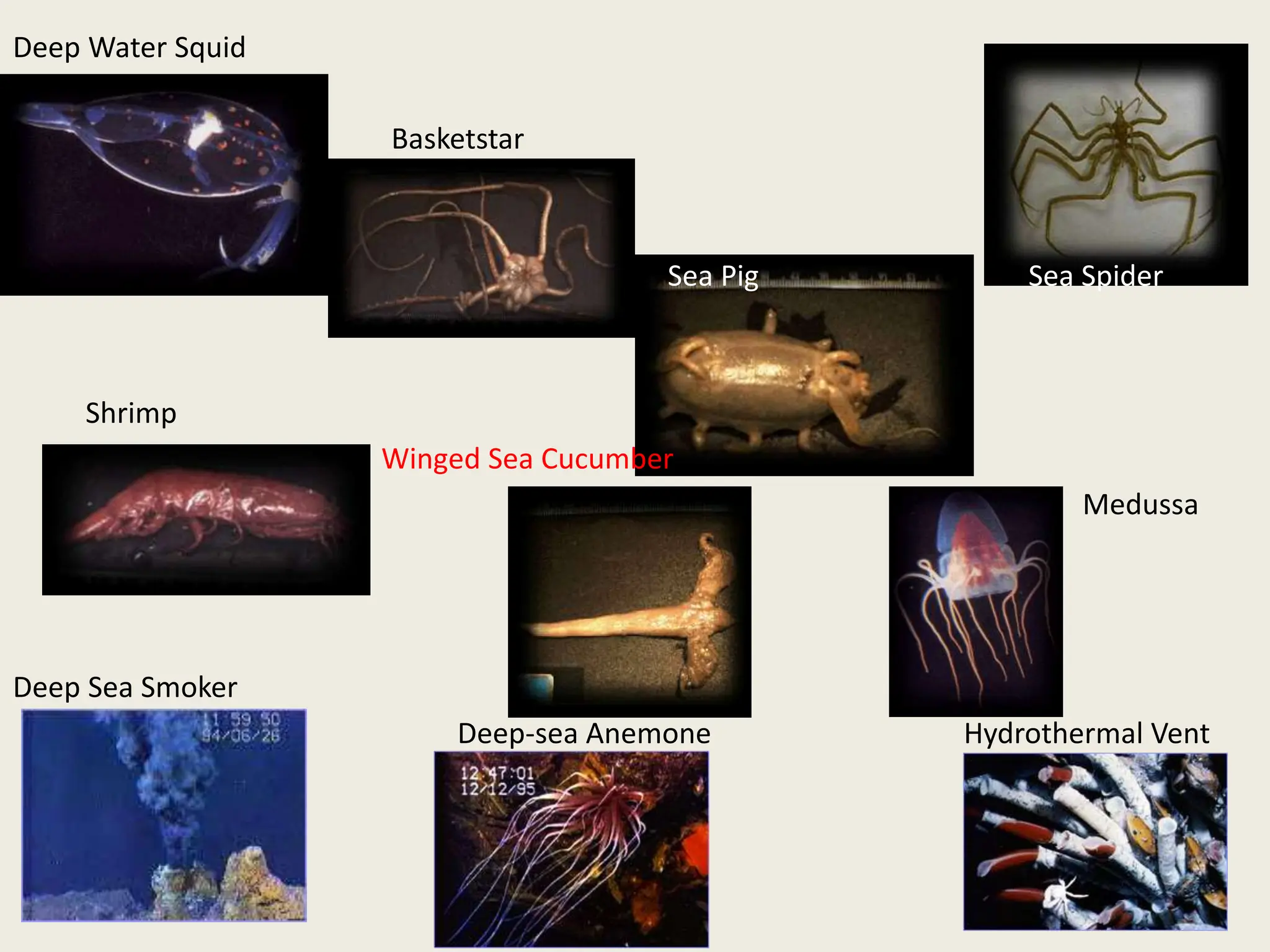
Deep Water Squid
Basketstar
Sea Pig Sea Spider
Shrimp
Winged Sea Cucumber
Medussa
Deep Sea Smoker
Deep-sea Anemone Hydrothermal Vent
Oceanic Zones
• The Ocean does not receive light all the way
to the bottom.
• The upper layer of the ocean that receives
light is called the photic zone.
• The lower area that does not receive light is
called the aphotic zone.

aquaticbiome.ppt

  • 1.
    Aquatic Biomes • Freshwater –Ponds& Lakes –Streams & Rivers –Wetlands Marine Oceans Coral Reefs Estuaries
  • 2.
  • 3.
    Freshwater • Freshwater isdefined as having a low salt concentration—usually less than 1% • Plants and animals in freshwater regions are adjusted to the low salt content and would not be able to survive in areas of high salt concentration (i.e, ocean)
  • 4.
    Ponds and Lakes rangein size from just a few square meters to thousands of square kilometers ponds may be seasonal, lasting just a couple of months (such as sessile pools) lakes may exist for hundreds of years or more may have limited species diversity since they are often isolated from one another and from other water sources like rivers and oceans
  • 5.
    Lakes and Pondsare divided into three different “zones” determined by depth and distance from the shoreline littoral zone limnetic zone profundal zone
  • 6.
  • 7.
    Streams & Rivers •bodies of flowing water moving in one direction • found everywhere—they get their start at headwaters, which may be springs, snowmelt or even lakes • travel all the way to their mouths, usually another water channel or the ocean
  • 8.
  • 9.
    Wetlands Wetlands are areasof standing water that support aquatic plants. Marshes, swamps, and bogs are all considered wetlands
  • 10.
    Freshwater Wetlands • highestspecies diversity of all fresh water ecosystems. • many species of amphibians, reptiles, birds (such as ducks and waders), and furbearers can be found in the wetlands • There are also salt water wetlands and marshes.
  • 11.
  • 12.
  • 13.
    Marine Biomes • coverabout three-fourths (72%) of the Earth’s surface and include oceans, coral reefs, and estuaries • algae supply much of the world’s oxygen supply and take in a huge amount of atmospheric carbon dioxide • evaporation of the seawater provides rainwater for the land
  • 14.
    Estuaries • enclosed bodyof water formed where freshwater from rivers and streams flows into the ocean, mixing with the salty sea water • estuaries and the lands surrounding them are places of transition from land to sea, and from fresh to salt water • although influenced by the tides, estuaries are protected from the full force of ocean waves, winds, and storms
  • 15.
    Estuaries • Estuaries arealmost as abundant in life as tropical rainforests. • Estuaries are sometimes called “marine nurseries” – habitats for many juvenile organisms, especially for fishes
  • 16.
    Oceans • largest ofall the ecosystems • dominate the Earth’s surface • great diversity of species
  • 17.
    Ocean Zones • separatezones –Intertidal –Pelagic –Abyssal –Benthic
  • 18.
    Intertidal Zone where theocean meets the land sometimes submerged and at other times exposed
  • 19.
    Pelagic – OpenOcean Waters deeper than intertidal leading all the way to open ocean. Closer to shore is called the Neritic Zone.
  • 22.
    Benthic Zone • TheBenthic Zone is just a deep layer of the Palagic Zone. • The Benthic Zone holds deep water sea creatures.
  • 23.
    Narcomedusa Vampire Squid Snake Dragon AnglerFish Amphi - crustacean Ctenophore – voracious predator Deepstaria very slow swimmers, no tentacles, close flexible bells (up to a meter across) around their prey Big Red grows to over a meter across
  • 24.
    Abyssal Zone • AbyssalZone is the deepest of the deep. Many creatures are not able to live in these conditions. Life is not abundant. • It is the absolutely lowest section of the pelagic zone.
  • 25.
    Deep Water Squid Basketstar SeaPig Sea Spider Shrimp Winged Sea Cucumber Medussa Deep Sea Smoker Deep-sea Anemone Hydrothermal Vent
  • 26.
    Oceanic Zones • TheOcean does not receive light all the way to the bottom. • The upper layer of the ocean that receives light is called the photic zone. • The lower area that does not receive light is called the aphotic zone.