WATER BIOMES
WATER BIOMES
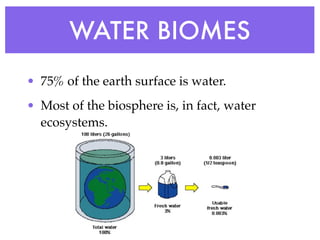
• 75% of the earth surface is water.
• Most of the biosphere is, in fact, water
  ecosystems.
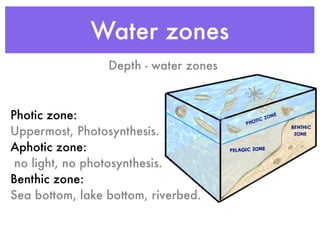
Water zones
                 Depth - water zones


Photic zone:
Uppermost, Photosynthesis.
Aphotic zone:
 no light, no photosynthesis.
Benthic zone:
Sea bottom, lake bottom, riverbed.
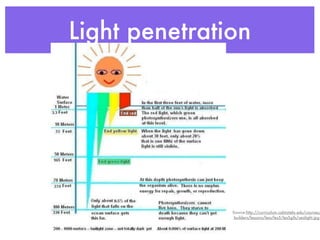
Light penetration


               Source:http://curriculum.calstatela.edu/courses/
                builders/lessons/less/les5/les5gifs/sealight.jpg
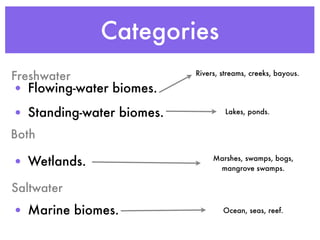
Categories
Freshwater                 Rivers, streams, creeks, bayous.

• Flowing-water biomes.
• Standing-water biomes.            Lakes, ponds.


Both

• Wetlands.                     Marshes, swamps, bogs,
                                 mangrove swamps.

Saltwater
• Marine biomes.                   Ocean, seas, reef.
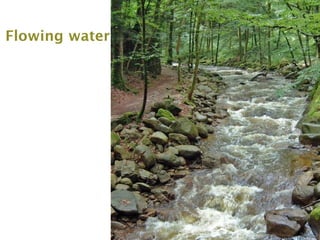
Flowing water.
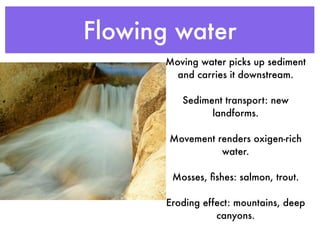
Flowing water
      Moving water picks up sediment
        and carries it downstream.

          Sediment transport: new
                landforms.

       Movement renders oxigen-rich
                 water.

        Mosses, fishes: salmon, trout.

       Eroding effect: mountains, deep
                  canyons.
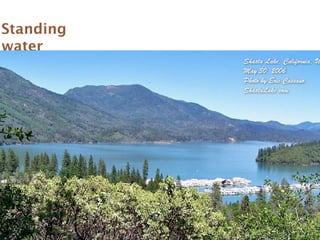
Standing
water
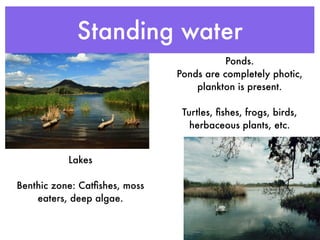
Standing water
                                          Ponds.
                               Ponds are completely photic,
                                   plankton is present.

                                Turtles, fishes, frogs, birds,
                                  herbaceous plants, etc.


           Lakes

Benthic zone: Catfishes, moss
    eaters, deep algae.
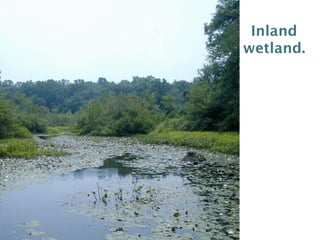
Inland
wetland.
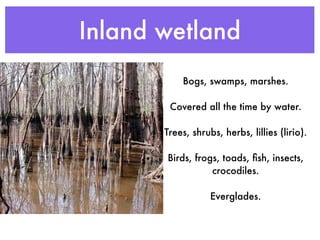
Inland wetland
           Bogs, swamps, marshes.

        Covered all the time by water.

       Trees, shrubs, herbs, lillies (lirio).

       Birds, frogs, toads, fish, insects,
                  crocodiles.

                   Everglades.
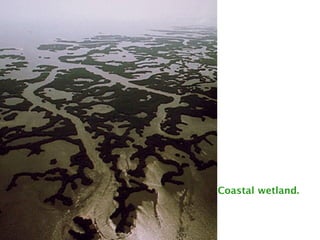
Coastal wetland.
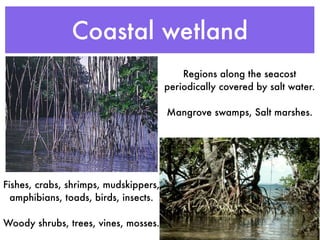
Coastal wetland
                                           Regions along the seacost
                                       periodically covered by salt water.

                                       Mangrove swamps, Salt marshes.


Fishes, crabs, shrimps, mudskippers,
  amphibians, toads, birds, insects.

Woody shrubs, trees, vines, mosses.
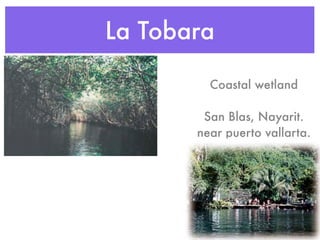
La Tobara

         Coastal wetland

        San Blas, Nayarit.
       near puerto vallarta.
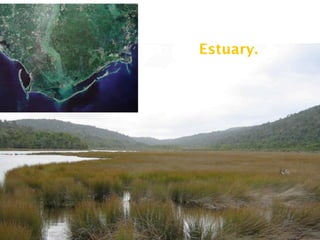
Estuary.
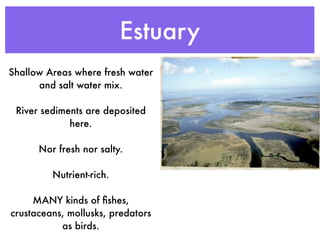
Estuary
Shallow Areas where fresh water
      and salt water mix.

 River sediments are deposited
             here.

      Nor fresh nor salty.

         Nutrient-rich.

     MANY kinds of fishes,
crustaceans, mollusks, predators
           as birds.
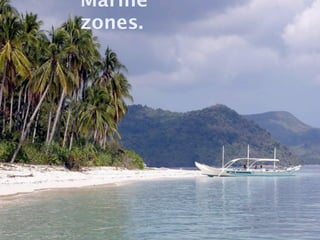
Marine
zones.
Marine Zones - Overall
              70 % of the earth’s surface.

     Biotic factors change abruptly through depth.

   Salinity and temperature vary from place to place.

      VERY diverse (”Rainforest” of water biomes)

Coastal zones: 10% of the marine biome, contain 90% of
                      marine life.
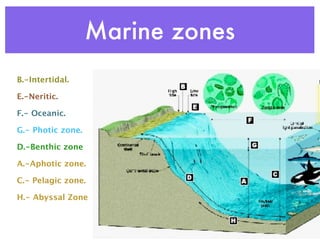
Marine zones
B.-Intertidal.

E.-Neritic.

F.- Oceanic.

G.- Photic zone.

D.-Benthic zone

A.-Aphotic zone.

C.- Pelagic zone.

H.- Abyssal Zone
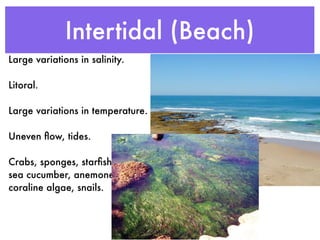
Intertidal (Beach)
Large variations in salinity.

Litoral.

Large variations in temperature.

Uneven flow, tides.

Crabs, sponges, starfish, tidepool1.jpg
sea cucumber, anemones,
coraline algae, snails.
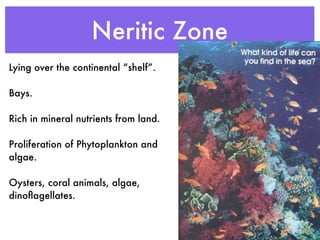
Neritic Zone
Lying over the continental “shelf”.

Bays.

Rich in mineral nutrients from land.

Proliferation of Phytoplankton and
algae.

Oysters, coral animals, algae,
dinoflagellates.
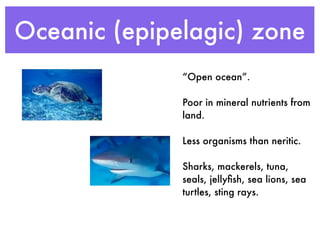
Oceanic (epipelagic) zone
              “Open ocean”.

              Poor in mineral nutrients from
              land.

              Less organisms than neritic.

              Sharks, mackerels, tuna,
              seals, jellyfish, sea lions, sea
              turtles, sting rays.
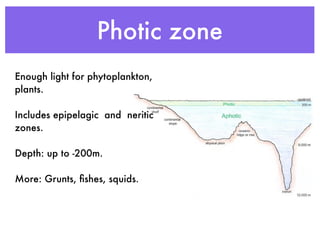
Photic zone
Enough light for phytoplankton,
plants.

Includes epipelagic and neritic
zones.

Depth: up to -200m.

More: Grunts, fishes, squids.
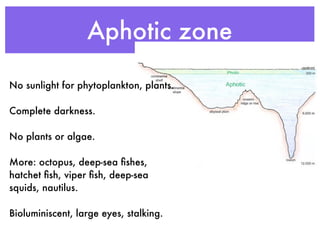
Aphotic zone

No sunlight for phytoplankton, plants.

Complete darkness.

No plants or algae.

More: octopus, deep-sea fishes,
hatchet fish, viper fish, deep-sea
squids, nautilus.

Bioluminiscent, large eyes, stalking.
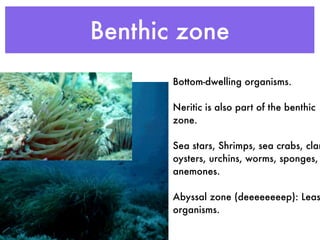
Benthic zone
       Bottom-dwelling organisms.

       Neritic is also part of the benthic
       zone.

       Sea stars, Shrimps, sea crabs, clam
       oysters, urchins, worms, sponges,
       anemones.

       Abyssal zone (deeeeeeeep): Leas
       organisms.
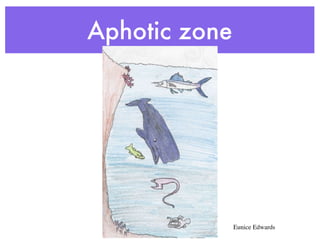
Aphotic zone


               Eunice Edwards

Aquatic biomes

  • 1.
  • 2.
    WATER BIOMES • 75%of the earth surface is water. • Most of the biosphere is, in fact, water ecosystems.
  • 3.
    Water zones Depth - water zones Photic zone: Uppermost, Photosynthesis. Aphotic zone: no light, no photosynthesis. Benthic zone: Sea bottom, lake bottom, riverbed.
  • 4.
    Light penetration Source:http://curriculum.calstatela.edu/courses/ builders/lessons/less/les5/les5gifs/sealight.jpg
  • 5.
    Categories Freshwater Rivers, streams, creeks, bayous. • Flowing-water biomes. • Standing-water biomes. Lakes, ponds. Both • Wetlands. Marshes, swamps, bogs, mangrove swamps. Saltwater • Marine biomes. Ocean, seas, reef.
  • 6.
  • 7.
    Flowing water Moving water picks up sediment and carries it downstream. Sediment transport: new landforms. Movement renders oxigen-rich water. Mosses, fishes: salmon, trout. Eroding effect: mountains, deep canyons.
  • 8.
  • 9.
    Standing water Ponds. Ponds are completely photic, plankton is present. Turtles, fishes, frogs, birds, herbaceous plants, etc. Lakes Benthic zone: Catfishes, moss eaters, deep algae.
  • 10.
  • 11.
    Inland wetland Bogs, swamps, marshes. Covered all the time by water. Trees, shrubs, herbs, lillies (lirio). Birds, frogs, toads, fish, insects, crocodiles. Everglades.
  • 12.
  • 13.
    Coastal wetland Regions along the seacost periodically covered by salt water. Mangrove swamps, Salt marshes. Fishes, crabs, shrimps, mudskippers, amphibians, toads, birds, insects. Woody shrubs, trees, vines, mosses.
  • 14.
    La Tobara Coastal wetland San Blas, Nayarit. near puerto vallarta.
  • 15.
  • 16.
    Estuary Shallow Areas wherefresh water and salt water mix. River sediments are deposited here. Nor fresh nor salty. Nutrient-rich. MANY kinds of fishes, crustaceans, mollusks, predators as birds.
  • 17.
  • 18.
    Marine Zones -Overall 70 % of the earth’s surface. Biotic factors change abruptly through depth. Salinity and temperature vary from place to place. VERY diverse (”Rainforest” of water biomes) Coastal zones: 10% of the marine biome, contain 90% of marine life.
  • 19.
    Marine zones B.-Intertidal. E.-Neritic. F.- Oceanic. G.-Photic zone. D.-Benthic zone A.-Aphotic zone. C.- Pelagic zone. H.- Abyssal Zone
  • 20.
    Intertidal (Beach) Large variationsin salinity. Litoral. Large variations in temperature. Uneven flow, tides. Crabs, sponges, starfish, tidepool1.jpg sea cucumber, anemones, coraline algae, snails.
  • 21.
    Neritic Zone Lying overthe continental “shelf”. Bays. Rich in mineral nutrients from land. Proliferation of Phytoplankton and algae. Oysters, coral animals, algae, dinoflagellates.
  • 22.
    Oceanic (epipelagic) zone “Open ocean”. Poor in mineral nutrients from land. Less organisms than neritic. Sharks, mackerels, tuna, seals, jellyfish, sea lions, sea turtles, sting rays.
  • 23.
    Photic zone Enough lightfor phytoplankton, plants. Includes epipelagic and neritic zones. Depth: up to -200m. More: Grunts, fishes, squids.
  • 24.
    Aphotic zone No sunlightfor phytoplankton, plants. Complete darkness. No plants or algae. More: octopus, deep-sea fishes, hatchet fish, viper fish, deep-sea squids, nautilus. Bioluminiscent, large eyes, stalking.
  • 25.
    Benthic zone Bottom-dwelling organisms. Neritic is also part of the benthic zone. Sea stars, Shrimps, sea crabs, clam oysters, urchins, worms, sponges, anemones. Abyssal zone (deeeeeeeep): Leas organisms.
  • 26.
    Aphotic zone Eunice Edwards