World Biomes


 Fresh water
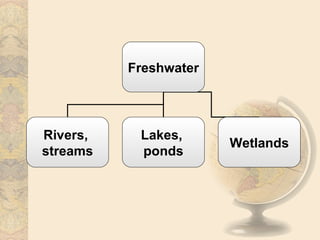
Freshwater


Rivers,    Lakes,
                       Wetlands
streams    ponds
Wetlands
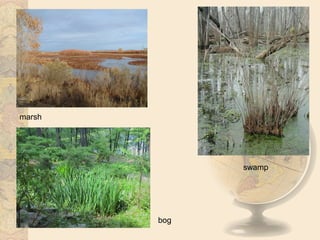
• Bogs, swamps, and marshes are wetlands. All
  wetlands have waterlogged soil. Bogs and swamps
  are flooded, but a marsh is wet only part of the year.
  Some wetlands are flooded with salty ocean water;
  others are covered with fresh water from rivers and
  lakes.
marsh


              swamp


        bog
Wetland distribution
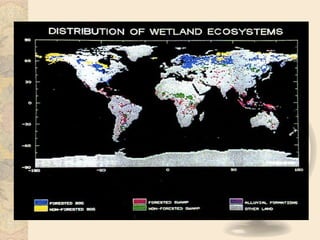
• Wetland biomes are found all over the world. They are
  often near lakes and rivers, but they also develop in
  sunken areas of grassy plains.
Wetland climate
• Unlike some other biomes, wetlands do not have a
  characteristic climate. They exist in polar, temperate,
  and tropical zones, although usually not in deserts.
  However, they are very sensitive to changes in
  climate, such as a decrease in precipitation (rain,
  sleet, or snow). The amount of precipitation and
  changes in temperature affect the growth rate of
  wetland plants. Some wetlands are seasonal, which
  means that they are dry for one or more seasons of
  the year.
Wetland soil
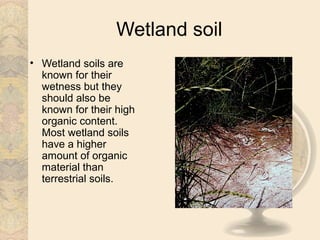
• Wetland soils are
  known for their
  wetness but they
  should also be
  known for their high
  organic content.
  Most wetland soils
  have a higher
  amount of organic
  material than
  terrestrial soils.
Wetland plants
• More than 5,000 species of plants live in or near
  wetlands. Wetlands have high biological productivity
  (the rate at which life forms grow in a certain period of
  time).
• The kinds of plants that may be found in a wetland are
  determined by several factors, especially the type of
  soil and the quantity of water.
• Some plants grow only in water or extremely wet soil.
  Other plants need moist but not saturated soil. When a
  wetland dries up, the area fills with plants adapted to
  life in dry habitats and can survive where other
  wetland plants would wilt.
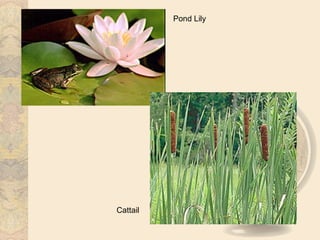
Pond Lily


Cattail
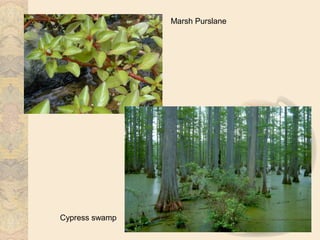
Marsh Purslane


Cypress swamp
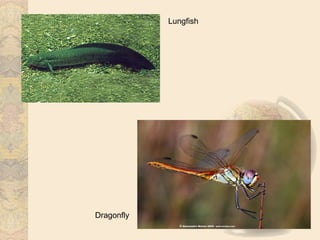
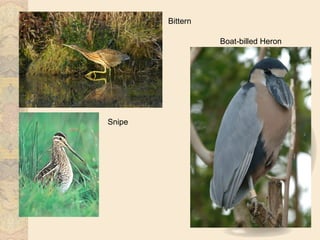
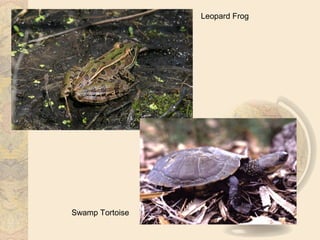
Animals
• Wetlands have been called "biological supermarkets."
  Besides animals that live there permanently, many
  nonwetland animals visit for food and water.
• Wetland conditions make it necessary for the animals
  that live there permanently to adapt in special ways.
Lungfish


Dragonfly
Bittern

                  Boat-billed Heron


Snipe
Leopard Frog


Swamp Tortoise
Rivers
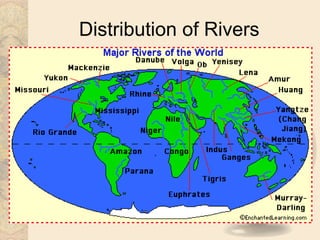
• These are bodies of flowing water moving in one
  direction. Streams and rivers can be found everywhere
  —they get their starts at headwaters, which may be
  springs, snowmelt or even lakes, and then travel all
  the way to their mouths, usually another water channel
  or the ocean. The characteristics of a river or stream
  change during the journey from the source to the
  mouth.
Distribution of Rivers
Conditions in Rivers
• The temperature is cooler at the source than it is at the
  mouth. The water is also clearer, has higher oxygen
  levels.
• Towards the middle part of the stream/river, the width
  increases, as does species diversity—numerous
  aquatic green plants and algae can be found.
• Toward the mouth of the river/stream, the water
  becomes murky from all the sediments that it has
  picked up upstream, decreasing the amount of light
  that can penetrate through the water. Since there is
  less light, there is less diversity of flora, and because
  of the lower oxygen levels, fish that require less
  oxygen.
River plants
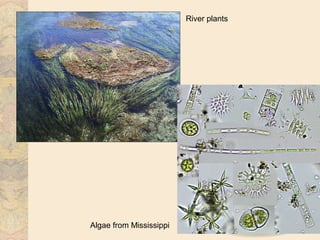
• In fast streams and rivers many plants have special
  structures that keep them from being carried away by
  the water. Some aquatic plants have strong roots that
  keep them anchored securely, while others have
  stems that bend easily with the movement of the
  water. Certain mosses are able to cling to rocks.
River plants


Algae from Mississippi
River animals
• In fast moving waters animals that have to hold onto
  rocks and the bottom may have suction-cup like
  structures on their bodies.
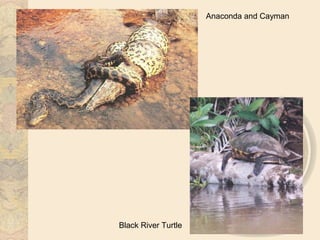
Anaconda and Cayman


Black River Turtle
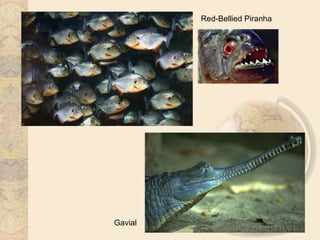
Red-Bellied Piranha


Gavial
Lakes
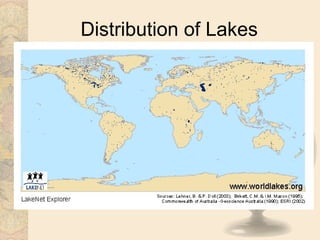
• These regions range in size from just a few square
  meters to thousands of square kilometres. Scattered
  throughout the Earth. Many ponds are seasonal,
  lasting just a couple of months while lakes may exist
  for hundreds of years or more. Ponds and lakes may
  have limited species diversity since they are often
  isolated from one another and from other water
  sources like rivers and oceans.
Distribution of Lakes
Conditions in Lakes
• The zone, which is closet to the shore is host to a wide
  variety of species due to its warm, shallow
  environment. Various species of invertebrates,
  crustaceans, plants and amphibians thrive in this
  environment, and in turn provide food for predators
  such as birds, reptiles and other creatures inhabiting
  the shoreline.
• The open water near the surface of a lake or pond, is
  home to a variety of phytoplankton, and zooplankton,
  which play an important role in the food chain. Several
  species of freshwater fish such as bass and lake trout
  can also be found this area, mainly feeding on insects
  and plankton.
• The deeper region of a lake is shrouded in darkness,
  and serves as a repository for dead plankton, and is
  inhabited by creatures which feed mostly on decaying
  organisms.
Lake plants
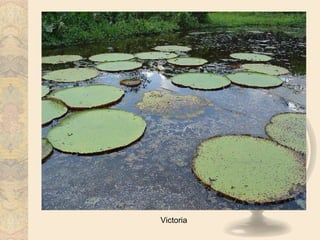
• Underwater plants need to stay close to the water's
  surface so sunlight can reach them. Some freshwater
  plants, such as water lilies, grow flowers and leaves
  that float on the water's surface.
Victoria
Lake animals
• Many types of animals live in ponds because they are
  not in danger of being swept away by a current.
  Insects, birds, turtles, frogs, and fish are some of the
  animals you can find in ponds and lakes.
• In regions with colder climate some animals have to
  hibernate during winter.
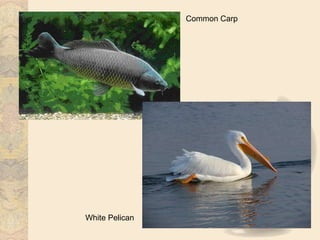
Common Carp


White Pelican
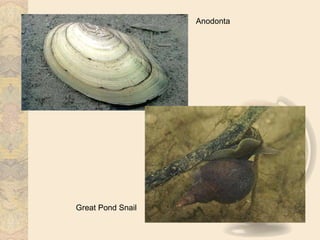
Anodonta


Great Pond Snail
People I
• Without freshwater biomes we would not be alive.
  Freshwater ecosystems are important because they
  provide us water for drinking; energy and
  transportation.
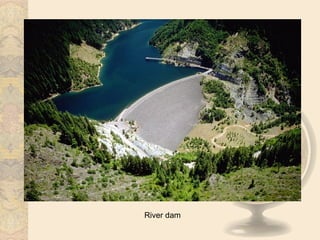
• Dams may provide pollution-free energy, and create
  lakes for people to enjoy, but they can also damage
  the environment. Salmon are a species that use rivers
  to spawn, and are often hurt by dams.
• Wetlands are also an important type of freshwater
  ecosystem. They may be soggy and stinky, but they
  provide critical habitat for tons of plants and animals,
  help clean our water, control floods, and provide food
  for humans.
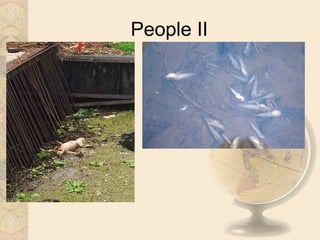
• By fertilizing the lawn with chemicals and allowing our
  cars to drip nasty oils and fluids we are polluting
  freshwater biomes. The rain carries these pollutants
  into rivers, streams, lakes and ponds.
People II
River dam

Biomes freshwater

  • 1.
  • 2.
    Freshwater Rivers, Lakes, Wetlands streams ponds
  • 3.
    Wetlands • Bogs, swamps,and marshes are wetlands. All wetlands have waterlogged soil. Bogs and swamps are flooded, but a marsh is wet only part of the year. Some wetlands are flooded with salty ocean water; others are covered with fresh water from rivers and lakes.
  • 4.
    marsh swamp bog
  • 5.
    Wetland distribution • Wetlandbiomes are found all over the world. They are often near lakes and rivers, but they also develop in sunken areas of grassy plains.
  • 7.
    Wetland climate • Unlikesome other biomes, wetlands do not have a characteristic climate. They exist in polar, temperate, and tropical zones, although usually not in deserts. However, they are very sensitive to changes in climate, such as a decrease in precipitation (rain, sleet, or snow). The amount of precipitation and changes in temperature affect the growth rate of wetland plants. Some wetlands are seasonal, which means that they are dry for one or more seasons of the year.
  • 8.
    Wetland soil • Wetlandsoils are known for their wetness but they should also be known for their high organic content. Most wetland soils have a higher amount of organic material than terrestrial soils.
  • 9.
    Wetland plants • Morethan 5,000 species of plants live in or near wetlands. Wetlands have high biological productivity (the rate at which life forms grow in a certain period of time). • The kinds of plants that may be found in a wetland are determined by several factors, especially the type of soil and the quantity of water. • Some plants grow only in water or extremely wet soil. Other plants need moist but not saturated soil. When a wetland dries up, the area fills with plants adapted to life in dry habitats and can survive where other wetland plants would wilt.
  • 10.
  • 11.
  • 12.
    Animals • Wetlands havebeen called "biological supermarkets." Besides animals that live there permanently, many nonwetland animals visit for food and water. • Wetland conditions make it necessary for the animals that live there permanently to adapt in special ways.
  • 13.
  • 14.
    Bittern Boat-billed Heron Snipe
  • 15.
  • 16.
    Rivers • These arebodies of flowing water moving in one direction. Streams and rivers can be found everywhere —they get their starts at headwaters, which may be springs, snowmelt or even lakes, and then travel all the way to their mouths, usually another water channel or the ocean. The characteristics of a river or stream change during the journey from the source to the mouth.
  • 17.
  • 18.
    Conditions in Rivers •The temperature is cooler at the source than it is at the mouth. The water is also clearer, has higher oxygen levels. • Towards the middle part of the stream/river, the width increases, as does species diversity—numerous aquatic green plants and algae can be found. • Toward the mouth of the river/stream, the water becomes murky from all the sediments that it has picked up upstream, decreasing the amount of light that can penetrate through the water. Since there is less light, there is less diversity of flora, and because of the lower oxygen levels, fish that require less oxygen.
  • 19.
    River plants • Infast streams and rivers many plants have special structures that keep them from being carried away by the water. Some aquatic plants have strong roots that keep them anchored securely, while others have stems that bend easily with the movement of the water. Certain mosses are able to cling to rocks.
  • 20.
  • 21.
    River animals • Infast moving waters animals that have to hold onto rocks and the bottom may have suction-cup like structures on their bodies.
  • 22.
  • 23.
  • 24.
    Lakes • These regionsrange in size from just a few square meters to thousands of square kilometres. Scattered throughout the Earth. Many ponds are seasonal, lasting just a couple of months while lakes may exist for hundreds of years or more. Ponds and lakes may have limited species diversity since they are often isolated from one another and from other water sources like rivers and oceans.
  • 25.
  • 26.
    Conditions in Lakes •The zone, which is closet to the shore is host to a wide variety of species due to its warm, shallow environment. Various species of invertebrates, crustaceans, plants and amphibians thrive in this environment, and in turn provide food for predators such as birds, reptiles and other creatures inhabiting the shoreline. • The open water near the surface of a lake or pond, is home to a variety of phytoplankton, and zooplankton, which play an important role in the food chain. Several species of freshwater fish such as bass and lake trout can also be found this area, mainly feeding on insects and plankton. • The deeper region of a lake is shrouded in darkness, and serves as a repository for dead plankton, and is inhabited by creatures which feed mostly on decaying organisms.
  • 27.
    Lake plants • Underwaterplants need to stay close to the water's surface so sunlight can reach them. Some freshwater plants, such as water lilies, grow flowers and leaves that float on the water's surface.
  • 28.
  • 29.
    Lake animals • Manytypes of animals live in ponds because they are not in danger of being swept away by a current. Insects, birds, turtles, frogs, and fish are some of the animals you can find in ponds and lakes. • In regions with colder climate some animals have to hibernate during winter.
  • 30.
  • 31.
  • 32.
    People I • Withoutfreshwater biomes we would not be alive. Freshwater ecosystems are important because they provide us water for drinking; energy and transportation. • Dams may provide pollution-free energy, and create lakes for people to enjoy, but they can also damage the environment. Salmon are a species that use rivers to spawn, and are often hurt by dams. • Wetlands are also an important type of freshwater ecosystem. They may be soggy and stinky, but they provide critical habitat for tons of plants and animals, help clean our water, control floods, and provide food for humans. • By fertilizing the lawn with chemicals and allowing our cars to drip nasty oils and fluids we are polluting freshwater biomes. The rain carries these pollutants into rivers, streams, lakes and ponds.
  • 33.
  • 34.