THROMBOTIC
MICROANGIOPATHY
Mr.Jagdish sambad
M.Sc. Nursing in Nephrology
IKDRC College of Nursing
AHMEDABAD
 Pathologic term for a condition
characterized by microvascular
changes including thrombosis in
association with laboratory
abnormalities of microangiopathic
hemolytic anemia (MAHA) and
thrombocytopenia.
Definition
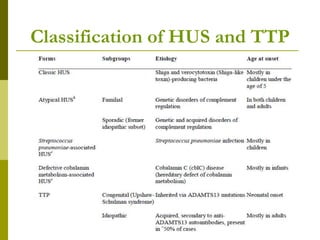
Classification
 Classic HUS
 Atypical HUS
 Familial
 Sporadic (idiopathic)
 Streptococcus
pneumoniae associated
 Cobalamin C (cblC)
disorder
 Secondary forms
 Infections
 Autoimmune disorders
 Drugs
 Pregnancy/postpartum
 HELLP syndrome
 Other
 TTP
 Congenital
 Idiopathic
 Secondary forms
 Infections
 Autoimmune disorders
 Drugs
 Pregnancy/postpartum
 HELLP syndrome
 Other
 Other TMAs
 Glomerulopathies
 Malignant hypertension
 Malignancies
 Solid organ transplantation
 Scleroderma renal crisis
 Radiation nephropathy
 HSCT
Classification of HUS and TTP
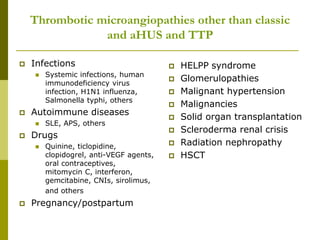
Thrombotic microangiopathies other than classic
and aHUS and TTP
 Infections
 Systemic infections, human
immunodeficiency virus
infection, H1N1 influenza,
Salmonella typhi, others
 Autoimmune diseases
 SLE, APS, others
 Drugs
 Quinine, ticlopidine,
clopidogrel, anti-VEGF agents,
oral contraceptives,
mitomycin C, interferon,
gemcitabine, CNIs, sirolimus,
and others
 Pregnancy/postpartum
 HELPP syndrome
 Glomerulopathies
 Malignant hypertension
 Malignancies
 Solid organ transplantation
 Scleroderma renal crisis
 Radiation nephropathy
 HSCT
CLASSIC HUS
(DIARRHEA-POSITIVE (D+) OR
EPIDEMIC HUS)
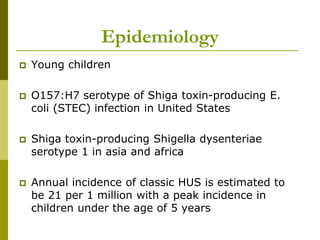
Epidemiology
 Young children
 O157:H7 serotype of Shiga toxin-producing E.
coli (STEC) infection in United States
 Shiga toxin-producing Shigella dysenteriae
serotype 1 in asia and africa
 Annual incidence of classic HUS is estimated to
be 21 per 1 million with a peak incidence in
children under the age of 5 years
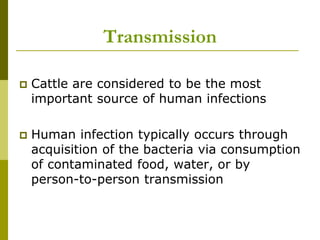
Transmission
 Cattle are considered to be the most
important source of human infections
 Human infection typically occurs through
acquisition of the bacteria via consumption
of contaminated food, water, or by
person-to-person transmission
Clinical presentation
 Begins with watery diarrhea and may progress rapidly to
bloody diarrhea with hemorrhagic colitis.
 Second phase occurs abruptly within 3 to 4 days of the
onset of gastrointestinal symptoms,characterized by
various combinations of acute renal failure, proteinuria,
hematuria, anemia, bleeding abnormalities, central
nervous system disorders and cardiovascular changes
 The prognosis is relatively good with most patients fully
recovering
Renal manifestations
 Oliguria or anuria, hematuria, hemoglobinuria,
proteinuria, various types of casts in the urine
 Hyperkalemia
 Elevated blood urea nitrogen (BUN) and serum
creatinine level
Laboratory findings
 Helmet cells, burr cells, and fragmented cells
(schistocytes) in the peripheral blood
 Reticulocytes are increased.
 The Coombs test is almost invariably negative.
 Leukocytosis is common in the early stages.
 Platelets are decreased to varying degrees
 Serum lactic dehydrogenase level and concomitant
reduction in the serum haptoglobin
 Normal PT,APTT
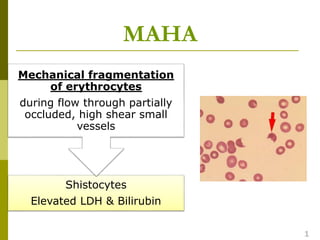
MAHA
Shistocytes
Elevated LDH & Bilirubin
Mechanical fragmentation
of erythrocytes
during flow through partially
occluded, high shear small
vessels
1
 Nonenteropathic or diarrhea-negative
 Affects both children and adults
 5% to 12% of all cases of HUS
 Majority of cases are sporadic, and approximately
20% to 30% are familial
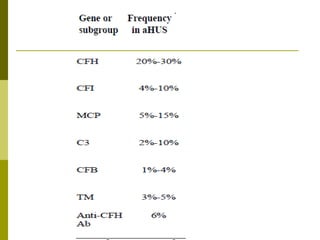
 Genetic or acquired abnormalities of the
complement regulatory proteins have been
identified as the most common etiology in the
aHUS group
Atypical HUS
 Develop without prior diarrhea and/or
hemorrhagic colitis.
 The onset is usually sudden with general distress,
fatigue, vomiting, and drowsiness.
 In most patients, the diagnostic triad of MAHA,
thrombocytopenia, and renal impairment are
present.
Atypical HUS
 The prognosis of aHUS is poor
 The mortality rate is 10% to 15% during
the acute phase
 50% of patients develop end-stage renal
disease
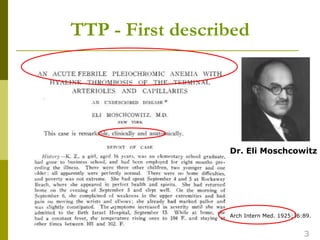
TTP - First described
Dr. Eli Moschcowitz
Arch Intern Med. 1925;36:89.
3
“Classic Signs”
 Fever
 Thrombocytopenia
 Neurological abnormalities
 Microangiopathic hemolytic anemia
 Renal dysfunction
TTP
 Rare disease with a reported incidence of 6 cases
per million
 Peak incidence in 3rd decade of life
 Higher among females,African Americans and
obese patients
 The clinical features of TTP are similar to those of
aHUS, and in most instances
TTP
 The clinical diagnosis of TTP requires exclusion of
other etiologies, such as systemic infection or
another cause of TMA.
 Since renal involvement in TTP is typically mild,
the renal prognosis is good
TTP
Relationship Between Hemolytic-Uremic Syndrome
and Thrombotic Thrombocytopenic Purpura
TTP
 occurs among adults
 affects the central nervous system more
commonly
 exhibits less frequent and less severe
involvement of the kidney
 involves multiple organs and has a poorer
prognosis
PATHOGENESIS
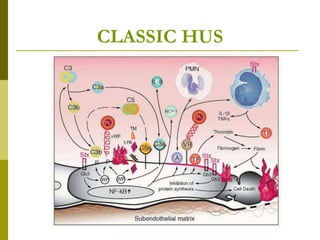
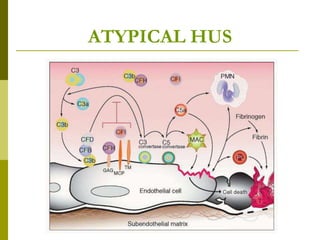
One underlying fact
Endothelial damage
[stx,Complement,neuraminidase,drugs]
Exposure of subendoth.surface with Platelet
activation and aggregation
Thrombi and cellular proliferation in glomeruli
and arterioles. Red blood cell hemolysis is
caused by mechanical disruption in traversing
fibrin meshwork of microcirculation
CLASSIC HUS
ATYPICAL HUS
Streptococcus pneumoniae-
Associated HUS
 Neuraminidase producing organisms
 Expose the usually hidden T-crypt antigen
 Preformed circulating IgM antibodies to this
antigen, the antigen-antibody reaction followed
by complement activation through the classical
pathway damages endothelial, red-cell, and
platelet surfaces and leads to intravascular
thrombosis, hemolysis, and thrombocytopenia
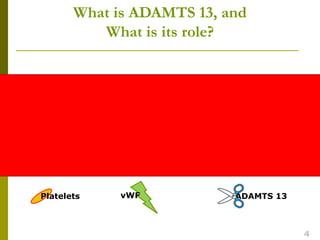
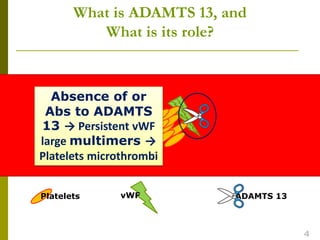
Platelets vWF ADAMTS 13
What is ADAMTS 13, and
What is its role?
4
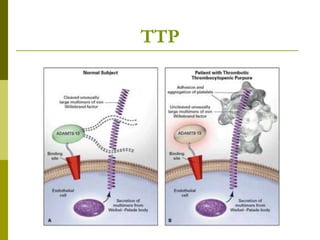
Absence of or
Abs to ADAMTS
13 → Persistent vWF
large multimers →
Platelets microthrombi
What is ADAMTS 13, and
What is its role?
Platelets vWF ADAMTS 13
4
TTP
THROMBOTIC
MICROANGIOPATHY IN
ASSOCIATION WITH OTHER
RENAL OR SYSTEMIC
DISEASES
Systemic infections
 Brucellosis, streptococcal infection with
acute glomerulonephritis, angioinvasive
fungal infections, CMV, HIV, ehrlichiosis,
and Rocky Mountain spotted fever, may
cause microvascular injury
TMA,Drugs
 aHUS caused by drugs
 Direct endothelial injury or immune
mediated
 Chemotherapeutic drugs
 Anti-VEGF
 CNIs
 Antiplatelet drugs
 quinine
Antiphospholipid antibodies
 The most common renal manifestations of APS
are those of microvascular thrombotic lesions,
that is, TMA.
 Acute TMA may present with rapidly progressive
renal failure, proteinuria, sometimes in the
nephrotic range, and severe hypertension, often
in the malignant range, MAHA and
thrombocytopenia can also be seen.
 Chronic TMA, the clinical presentation is more
subtle
Hematopoietic stem cell
transplant
 Multifactorial
 Radiation
 Cyclosporine and tacrolimus
 Cmv,fungal and H.pylori
 GVHD
 HLA mismatched transplants
 No ADAMTS13 abnormaility
Postpartum HUS
 Symptoms manifest postpartum within 24
hrs to several weeks
 Etiology-
 Genetic abnormailities in complement system
 Increased susceptibility during postpartum
Systemic sclerosis
 Endothelial damage of the arteries and
arterioles in the kidney.
 Undue permeability of the endothelial barrier
 Endothelial damage may also initiate a chain of
events leading to coagulation and release of
factors
Cancer associated TMA
 Stomach, breast and prostate cancers
 Insidious onset
 Pathophysiology can be due to either:
 –tumor microemboli leading to microvascular occlusion
 –cytokines (ie.TNFα) leading to endothelial injury
 –acquired ADAMTS-13 deficiency (paraneoplastic
syndrome)
 Poor prognosis
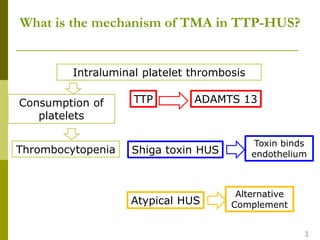
Intraluminal platelet thrombosis
Thrombocytopenia
Consumption of
platelets
TTP
Shiga toxin HUS
Atypical HUS
ADAMTS 13
Toxin binds
endothelium
Alternative
Complement
What is the mechanism of TMA in TTP-HUS?
1
PATHOLOGICAL
FINDINGS
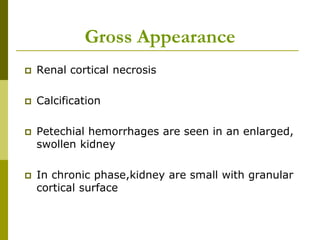
Gross Appearance
 Renal cortical necrosis
 Calcification
 Petechial hemorrhages are seen in an enlarged,
swollen kidney
 In chronic phase,kidney are small with granular
cortical surface
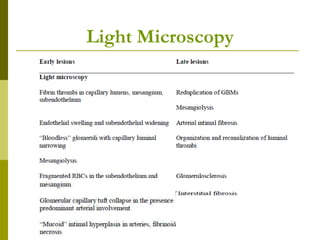
Light Microscopy
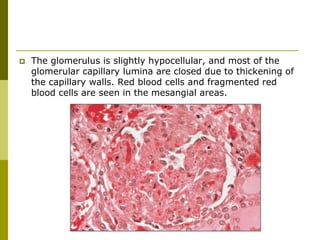
 The glomerulus is slightly hypocellular, and most of the
glomerular capillary lumina are closed due to thickening of
the capillary walls. Red blood cells and fragmented red
blood cells are seen in the mesangial areas.
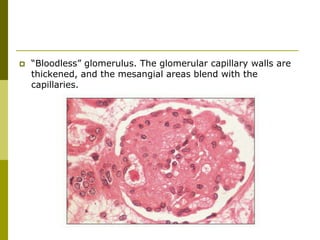
 “Bloodless” glomerulus. The glomerular capillary walls are
thickened, and the mesangial areas blend with the
capillaries.
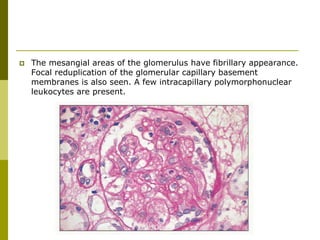
 The mesangial areas of the glomerulus have fibrillary appearance.
Focal reduplication of the glomerular capillary basement
membranes is also seen. A few intracapillary polymorphonuclear
leukocytes are present.
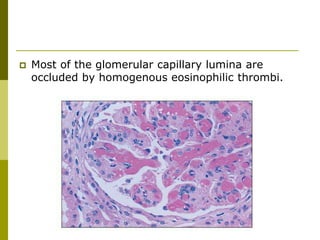
 Most of the glomerular capillary lumina are
occluded by homogenous eosinophilic thrombi.
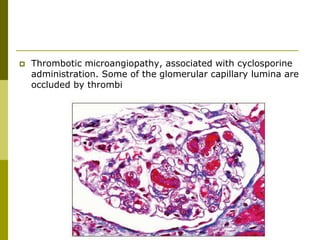
 Thrombotic microangiopathy, associated with cyclosporine
administration. Some of the glomerular capillary lumina are
occluded by thrombi
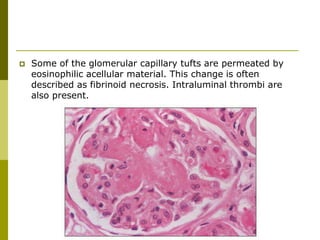
 Some of the glomerular capillary tufts are permeated by
eosinophilic acellular material. This change is often
described as fibrinoid necrosis. Intraluminal thrombi are
also present.
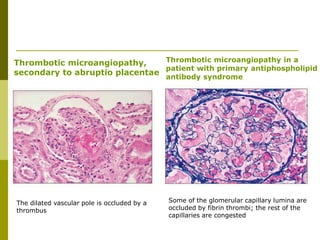
Thrombotic microangiopathy,
secondary to abruptio placentae
Thrombotic microangiopathy in a
patient with primary antiphospholipid
antibody syndrome
Some of the glomerular capillary lumina are
occluded by fibrin thrombi; the rest of the
capillaries are congested
The dilated vascular pole is occluded by a
thrombus
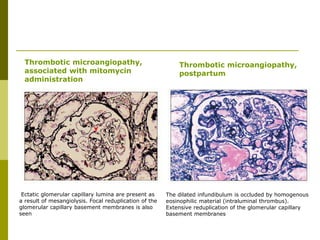
Ectatic glomerular capillary lumina are present as
a result of mesangiolysis. Focal reduplication of the
glomerular capillary basement membranes is also
seen
Thrombotic microangiopathy,
associated with mitomycin
administration
Thrombotic microangiopathy,
postpartum
The dilated infundibulum is occluded by homogenous
eosinophilic material (intraluminal thrombus).
Extensive reduplication of the glomerular capillary
basement membranes
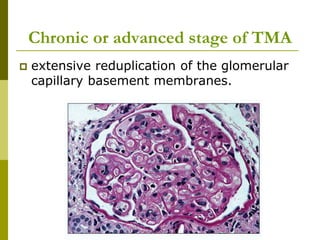
Chronic or advanced stage of TMA
 extensive reduplication of the glomerular
capillary basement membranes.
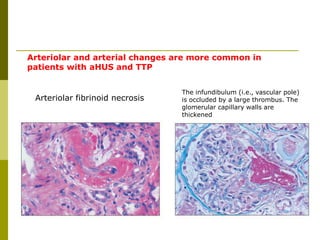
Arteriolar fibrinoid necrosis
The infundibulum (i.e., vascular pole)
is occluded by a large thrombus. The
glomerular capillary walls are
thickened
Arteriolar and arterial changes are more common in
patients with aHUS and TTP
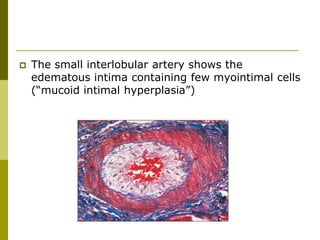
 The small interlobular artery shows the
edematous intima containing few myointimal cells
(“mucoid intimal hyperplasia”)
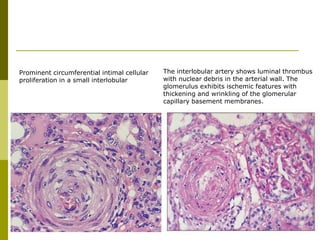
The interlobular artery shows luminal thrombus
with nuclear debris in the arterial wall. The
glomerulus exhibits ischemic features with
thickening and wrinkling of the glomerular
capillary basement membranes.
Prominent circumferential intimal cellular
proliferation in a small interlobular
Tubules and interstitium
 Hyaline casts and red blood cells.
 Acute tubular necrosis as is seen with ischemia may be
present. Iron pigment and hyaline droplets
 In later stages, tubular atrophy may be seen
 Interstitium may be edematous or fibrous, and in some
cases, it contains mild mononuclear cell infiltration.
 Large numbers of red blood cells are present in the
interstitium in areas of cortical necrosis.
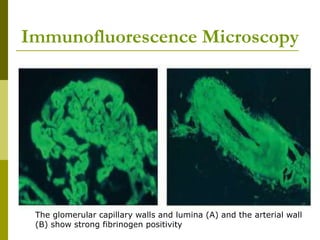
Immunofluorescence Microscopy
The glomerular capillary walls and lumina (A) and the arterial wall
(B) show strong fibrinogen positivity
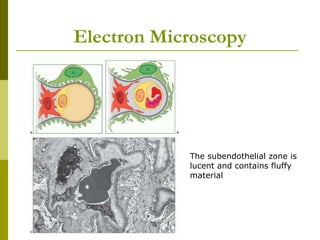
Electron Microscopy
The subendothelial zone is
lucent and contains fluffy
material
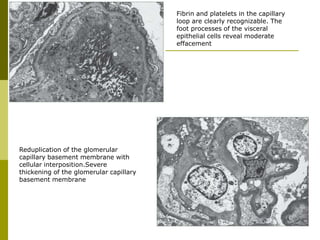
Fibrin and platelets in the capillary
loop are clearly recognizable. The
foot processes of the visceral
epithelial cells reveal moderate
effacement
Reduplication of the glomerular
capillary basement membrane with
cellular interposition.Severe
thickening of the glomerular capillary
basement membrane
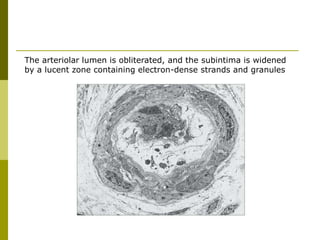
The arteriolar lumen is obliterated, and the subintima is widened
by a lucent zone containing electron-dense strands and granules
Outcome and Prognostic
Features
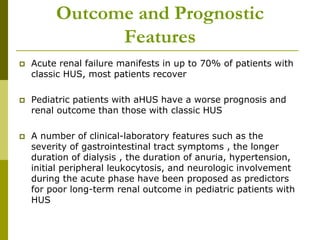
 Acute renal failure manifests in up to 70% of patients with
classic HUS, most patients recover
 Pediatric patients with aHUS have a worse prognosis and
renal outcome than those with classic HUS
 A number of clinical-laboratory features such as the
severity of gastrointestinal tract symptoms , the longer
duration of dialysis , the duration of anuria, hypertension,
initial peripheral leukocytosis, and neurologic involvement
during the acute phase have been proposed as predictors
for poor long-term renal outcome in pediatric patients with
HUS
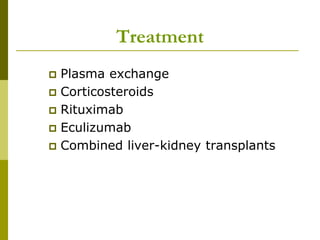
Treatment
 Plasma exchange
 Corticosteroids
 Rituximab
 Eculizumab
 Combined liver-kidney transplants
THANK YOU

Thrombotic microangiopathy

  • 1.
    THROMBOTIC MICROANGIOPATHY Mr.Jagdish sambad M.Sc. Nursingin Nephrology IKDRC College of Nursing AHMEDABAD
  • 2.
     Pathologic termfor a condition characterized by microvascular changes including thrombosis in association with laboratory abnormalities of microangiopathic hemolytic anemia (MAHA) and thrombocytopenia. Definition
  • 3.
    Classification  Classic HUS Atypical HUS  Familial  Sporadic (idiopathic)  Streptococcus pneumoniae associated  Cobalamin C (cblC) disorder  Secondary forms  Infections  Autoimmune disorders  Drugs  Pregnancy/postpartum  HELLP syndrome  Other  TTP  Congenital  Idiopathic  Secondary forms  Infections  Autoimmune disorders  Drugs  Pregnancy/postpartum  HELLP syndrome  Other
  • 4.
     Other TMAs Glomerulopathies  Malignant hypertension  Malignancies  Solid organ transplantation  Scleroderma renal crisis  Radiation nephropathy  HSCT
  • 5.
  • 6.
    Thrombotic microangiopathies otherthan classic and aHUS and TTP  Infections  Systemic infections, human immunodeficiency virus infection, H1N1 influenza, Salmonella typhi, others  Autoimmune diseases  SLE, APS, others  Drugs  Quinine, ticlopidine, clopidogrel, anti-VEGF agents, oral contraceptives, mitomycin C, interferon, gemcitabine, CNIs, sirolimus, and others  Pregnancy/postpartum  HELPP syndrome  Glomerulopathies  Malignant hypertension  Malignancies  Solid organ transplantation  Scleroderma renal crisis  Radiation nephropathy  HSCT
  • 7.
  • 8.
    Epidemiology  Young children O157:H7 serotype of Shiga toxin-producing E. coli (STEC) infection in United States  Shiga toxin-producing Shigella dysenteriae serotype 1 in asia and africa  Annual incidence of classic HUS is estimated to be 21 per 1 million with a peak incidence in children under the age of 5 years
  • 9.
    Transmission  Cattle areconsidered to be the most important source of human infections  Human infection typically occurs through acquisition of the bacteria via consumption of contaminated food, water, or by person-to-person transmission
  • 10.
    Clinical presentation  Beginswith watery diarrhea and may progress rapidly to bloody diarrhea with hemorrhagic colitis.  Second phase occurs abruptly within 3 to 4 days of the onset of gastrointestinal symptoms,characterized by various combinations of acute renal failure, proteinuria, hematuria, anemia, bleeding abnormalities, central nervous system disorders and cardiovascular changes  The prognosis is relatively good with most patients fully recovering
  • 11.
    Renal manifestations  Oliguriaor anuria, hematuria, hemoglobinuria, proteinuria, various types of casts in the urine  Hyperkalemia  Elevated blood urea nitrogen (BUN) and serum creatinine level
  • 12.
    Laboratory findings  Helmetcells, burr cells, and fragmented cells (schistocytes) in the peripheral blood  Reticulocytes are increased.  The Coombs test is almost invariably negative.  Leukocytosis is common in the early stages.  Platelets are decreased to varying degrees  Serum lactic dehydrogenase level and concomitant reduction in the serum haptoglobin  Normal PT,APTT
  • 13.
    MAHA Shistocytes Elevated LDH &Bilirubin Mechanical fragmentation of erythrocytes during flow through partially occluded, high shear small vessels 1
  • 14.
     Nonenteropathic ordiarrhea-negative  Affects both children and adults  5% to 12% of all cases of HUS  Majority of cases are sporadic, and approximately 20% to 30% are familial  Genetic or acquired abnormalities of the complement regulatory proteins have been identified as the most common etiology in the aHUS group Atypical HUS
  • 15.
     Develop withoutprior diarrhea and/or hemorrhagic colitis.  The onset is usually sudden with general distress, fatigue, vomiting, and drowsiness.  In most patients, the diagnostic triad of MAHA, thrombocytopenia, and renal impairment are present. Atypical HUS
  • 16.
     The prognosisof aHUS is poor  The mortality rate is 10% to 15% during the acute phase  50% of patients develop end-stage renal disease
  • 17.
    TTP - Firstdescribed Dr. Eli Moschcowitz Arch Intern Med. 1925;36:89. 3
  • 18.
    “Classic Signs”  Fever Thrombocytopenia  Neurological abnormalities  Microangiopathic hemolytic anemia  Renal dysfunction TTP
  • 19.
     Rare diseasewith a reported incidence of 6 cases per million  Peak incidence in 3rd decade of life  Higher among females,African Americans and obese patients  The clinical features of TTP are similar to those of aHUS, and in most instances TTP
  • 20.
     The clinicaldiagnosis of TTP requires exclusion of other etiologies, such as systemic infection or another cause of TMA.  Since renal involvement in TTP is typically mild, the renal prognosis is good TTP
  • 21.
    Relationship Between Hemolytic-UremicSyndrome and Thrombotic Thrombocytopenic Purpura TTP  occurs among adults  affects the central nervous system more commonly  exhibits less frequent and less severe involvement of the kidney  involves multiple organs and has a poorer prognosis
  • 22.
  • 23.
    One underlying fact Endothelialdamage [stx,Complement,neuraminidase,drugs] Exposure of subendoth.surface with Platelet activation and aggregation Thrombi and cellular proliferation in glomeruli and arterioles. Red blood cell hemolysis is caused by mechanical disruption in traversing fibrin meshwork of microcirculation
  • 24.
  • 25.
  • 27.
    Streptococcus pneumoniae- Associated HUS Neuraminidase producing organisms  Expose the usually hidden T-crypt antigen  Preformed circulating IgM antibodies to this antigen, the antigen-antibody reaction followed by complement activation through the classical pathway damages endothelial, red-cell, and platelet surfaces and leads to intravascular thrombosis, hemolysis, and thrombocytopenia
  • 28.
    Platelets vWF ADAMTS13 What is ADAMTS 13, and What is its role? 4
  • 29.
    Absence of or Absto ADAMTS 13 → Persistent vWF large multimers → Platelets microthrombi What is ADAMTS 13, and What is its role? Platelets vWF ADAMTS 13 4
  • 30.
  • 31.
    THROMBOTIC MICROANGIOPATHY IN ASSOCIATION WITHOTHER RENAL OR SYSTEMIC DISEASES
  • 32.
    Systemic infections  Brucellosis,streptococcal infection with acute glomerulonephritis, angioinvasive fungal infections, CMV, HIV, ehrlichiosis, and Rocky Mountain spotted fever, may cause microvascular injury
  • 33.
    TMA,Drugs  aHUS causedby drugs  Direct endothelial injury or immune mediated  Chemotherapeutic drugs  Anti-VEGF  CNIs  Antiplatelet drugs  quinine
  • 34.
    Antiphospholipid antibodies  Themost common renal manifestations of APS are those of microvascular thrombotic lesions, that is, TMA.  Acute TMA may present with rapidly progressive renal failure, proteinuria, sometimes in the nephrotic range, and severe hypertension, often in the malignant range, MAHA and thrombocytopenia can also be seen.  Chronic TMA, the clinical presentation is more subtle
  • 35.
    Hematopoietic stem cell transplant Multifactorial  Radiation  Cyclosporine and tacrolimus  Cmv,fungal and H.pylori  GVHD  HLA mismatched transplants  No ADAMTS13 abnormaility
  • 36.
    Postpartum HUS  Symptomsmanifest postpartum within 24 hrs to several weeks  Etiology-  Genetic abnormailities in complement system  Increased susceptibility during postpartum
  • 37.
    Systemic sclerosis  Endothelialdamage of the arteries and arterioles in the kidney.  Undue permeability of the endothelial barrier  Endothelial damage may also initiate a chain of events leading to coagulation and release of factors
  • 38.
    Cancer associated TMA Stomach, breast and prostate cancers  Insidious onset  Pathophysiology can be due to either:  –tumor microemboli leading to microvascular occlusion  –cytokines (ie.TNFα) leading to endothelial injury  –acquired ADAMTS-13 deficiency (paraneoplastic syndrome)  Poor prognosis
  • 39.
    Intraluminal platelet thrombosis Thrombocytopenia Consumptionof platelets TTP Shiga toxin HUS Atypical HUS ADAMTS 13 Toxin binds endothelium Alternative Complement What is the mechanism of TMA in TTP-HUS? 1
  • 40.
  • 41.
    Gross Appearance  Renalcortical necrosis  Calcification  Petechial hemorrhages are seen in an enlarged, swollen kidney  In chronic phase,kidney are small with granular cortical surface
  • 42.
  • 43.
     The glomerulusis slightly hypocellular, and most of the glomerular capillary lumina are closed due to thickening of the capillary walls. Red blood cells and fragmented red blood cells are seen in the mesangial areas.
  • 44.
     “Bloodless” glomerulus.The glomerular capillary walls are thickened, and the mesangial areas blend with the capillaries.
  • 45.
     The mesangialareas of the glomerulus have fibrillary appearance. Focal reduplication of the glomerular capillary basement membranes is also seen. A few intracapillary polymorphonuclear leukocytes are present.
  • 46.
     Most ofthe glomerular capillary lumina are occluded by homogenous eosinophilic thrombi.
  • 47.
     Thrombotic microangiopathy,associated with cyclosporine administration. Some of the glomerular capillary lumina are occluded by thrombi
  • 48.
     Some ofthe glomerular capillary tufts are permeated by eosinophilic acellular material. This change is often described as fibrinoid necrosis. Intraluminal thrombi are also present.
  • 49.
    Thrombotic microangiopathy, secondary toabruptio placentae Thrombotic microangiopathy in a patient with primary antiphospholipid antibody syndrome Some of the glomerular capillary lumina are occluded by fibrin thrombi; the rest of the capillaries are congested The dilated vascular pole is occluded by a thrombus
  • 50.
    Ectatic glomerular capillarylumina are present as a result of mesangiolysis. Focal reduplication of the glomerular capillary basement membranes is also seen Thrombotic microangiopathy, associated with mitomycin administration Thrombotic microangiopathy, postpartum The dilated infundibulum is occluded by homogenous eosinophilic material (intraluminal thrombus). Extensive reduplication of the glomerular capillary basement membranes
  • 51.
    Chronic or advancedstage of TMA  extensive reduplication of the glomerular capillary basement membranes.
  • 52.
    Arteriolar fibrinoid necrosis Theinfundibulum (i.e., vascular pole) is occluded by a large thrombus. The glomerular capillary walls are thickened Arteriolar and arterial changes are more common in patients with aHUS and TTP
  • 53.
     The smallinterlobular artery shows the edematous intima containing few myointimal cells (“mucoid intimal hyperplasia”)
  • 54.
    The interlobular arteryshows luminal thrombus with nuclear debris in the arterial wall. The glomerulus exhibits ischemic features with thickening and wrinkling of the glomerular capillary basement membranes. Prominent circumferential intimal cellular proliferation in a small interlobular
  • 55.
    Tubules and interstitium Hyaline casts and red blood cells.  Acute tubular necrosis as is seen with ischemia may be present. Iron pigment and hyaline droplets  In later stages, tubular atrophy may be seen  Interstitium may be edematous or fibrous, and in some cases, it contains mild mononuclear cell infiltration.  Large numbers of red blood cells are present in the interstitium in areas of cortical necrosis.
  • 56.
    Immunofluorescence Microscopy The glomerularcapillary walls and lumina (A) and the arterial wall (B) show strong fibrinogen positivity
  • 57.
    Electron Microscopy The subendothelialzone is lucent and contains fluffy material
  • 58.
    Fibrin and plateletsin the capillary loop are clearly recognizable. The foot processes of the visceral epithelial cells reveal moderate effacement Reduplication of the glomerular capillary basement membrane with cellular interposition.Severe thickening of the glomerular capillary basement membrane
  • 59.
    The arteriolar lumenis obliterated, and the subintima is widened by a lucent zone containing electron-dense strands and granules
  • 60.
    Outcome and Prognostic Features Acute renal failure manifests in up to 70% of patients with classic HUS, most patients recover  Pediatric patients with aHUS have a worse prognosis and renal outcome than those with classic HUS  A number of clinical-laboratory features such as the severity of gastrointestinal tract symptoms , the longer duration of dialysis , the duration of anuria, hypertension, initial peripheral leukocytosis, and neurologic involvement during the acute phase have been proposed as predictors for poor long-term renal outcome in pediatric patients with HUS
  • 61.
    Treatment  Plasma exchange Corticosteroids  Rituximab  Eculizumab  Combined liver-kidney transplants
  • 63.