Thrombotic microangiopathy
K.Sampath Kumar.MD,DM,FRCP
Meenakshi Mission Hospital
Madurai
Definition
• Lesion of arterioles and capillaries with wall
thickening , intraluminal platelet thrombosis
and partial or complete obstruction of vessel
lumina.
Beginning of the story
• 1924
• Moschcowitz treats a 16 yr old girl
• Purpura, Pallor, hemiparesis
• Dies of cardiac failure
• Autopsy- Hyaline thrombi in microcirculation
incl. Kidneys
• ? TTP [ ADAMSTS13 Def.]
• More people studied it than suffered from it !
3 Defining features
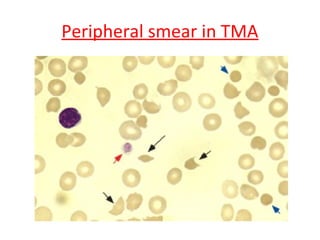
• 1. Microangiopathic hemolytic anemia
• 2.Thrombocytopenia
• 3.Organ injury due to microcirculatory
obstruction by platelet rich thrombi
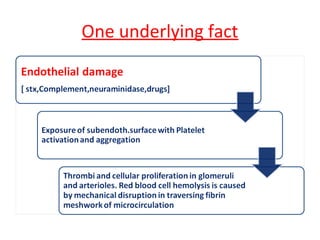
One underlying fact
Peripheral smear in TMA
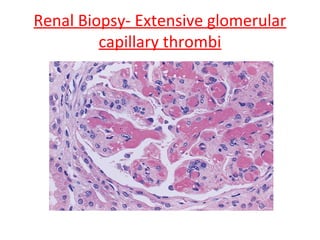
Renal Biopsy- Extensive glomerular
capillary thrombi
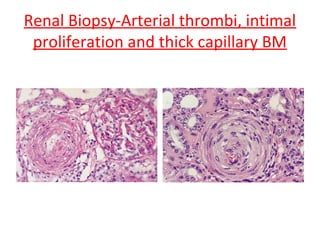
Renal Biopsy-Arterial thrombi, intimal
proliferation and thick capillary BM
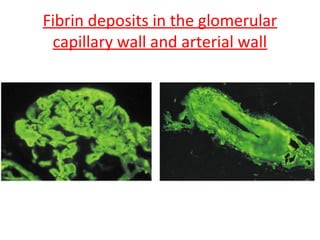
Fibrin deposits in the glomerular
capillary wall and arterial wall
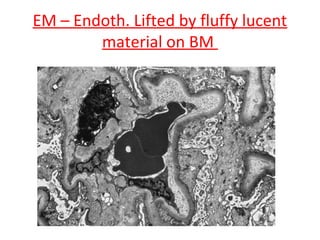
EM – Endoth. Lifted by fluffy lucent
material on BM
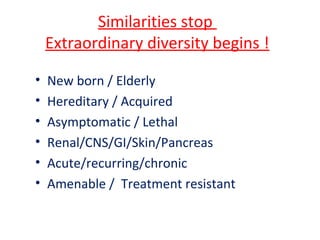
Similarities stop
Extraordinary diversity begins !
• New born / Elderly
• Hereditary / Acquired
• Asymptomatic / Lethal
• Renal/CNS/GI/Skin/Pancreas
• Acute/recurring/chronic
• Amenable / Treatment resistant
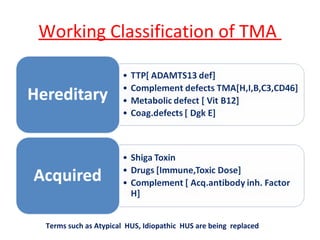
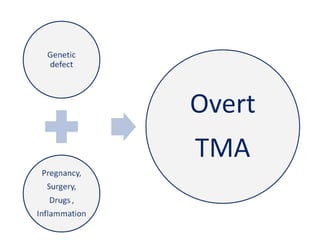
Working Classification of TMA
Terms such as Atypical HUS, Idiopathic HUS are being replaced
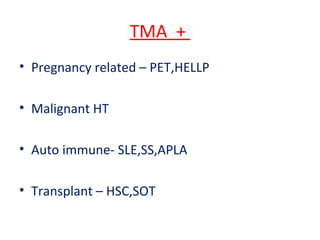
TMA +
• Pregnancy related – PET,HELLP
• Malignant HT
• Auto immune- SLE,SS,APLA
• Transplant – HSC,SOT
TTP [ ADAMTS 13 defect ]
• ADAMTS13 is secreted from Liver
• Gene on chr.9q34
• Cleaves vWf multimers of vasc. Endoth
• If deficient – vWf are uncut and large
• Platelet thrombi in small vv. with high
shear states
Hereditary [Upshaw Schulman]
Homozy, compd het.of
ADAMTS 13
Acquired
Auto antibody inh.ADAMTS13
Females
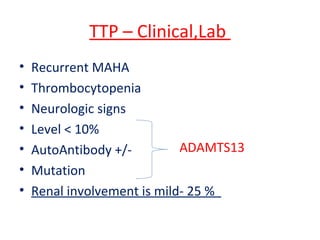
TTP – Clinical,Lab
• Recurrent MAHA
• Thrombocytopenia
• Neurologic signs
• Level < 10%
• AutoAntibody +/-
• Mutation
• Renal involvement is mild- 25 %
ADAMTS13
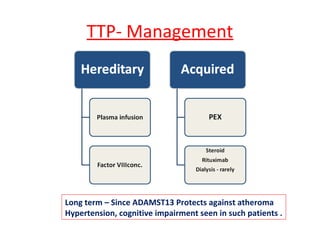
TTP- Management
Long term – Since ADAMST13 Protects against atheroma
Hypertension, cognitive impairment seen in such patients .
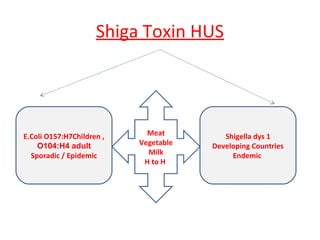
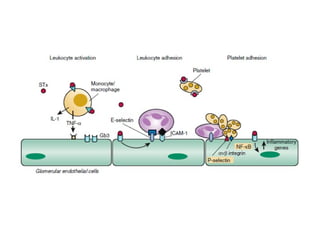
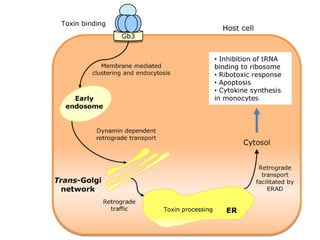
Shiga Toxin HUS
E.Coli O157:H7Children ,
O104:H4 adult
Sporadic / Epidemic
Shigella dys 1
Developing Countries
Endemic
Meat
Vegetable
Milk
H to H
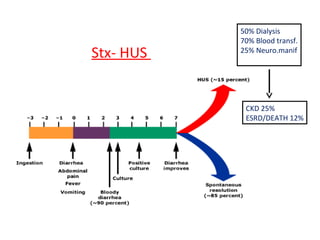
50% Dialysis
70% Blood transf.
25% Neuro.manif
CKD 25%
ESRD/DEATH 12%
Stx- HUS
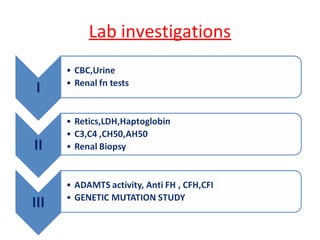
Lab investigations
Management of Stx HUS
• Aggressive hydration with isotonic fluids
• Antibiotics – Warning ! [E.Coli. Infection]
• May increase Stx release
• Quinolones,TMP- Induce of Stx gene transcr.
• However , In Shigellosis – Early antibiotics
indicated
• Stx binder SYNSORB was not effective
• PEX or P.Infusion – Effective along with
Dialysis
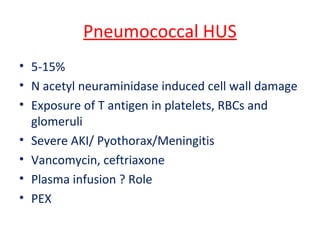
Pneumococcal HUS
• 5-15%
• N acetyl neuraminidase induced cell wall damage
• Exposure of T antigen in platelets, RBCs and
glomeruli
• Severe AKI/ Pyothorax/Meningitis
• Vancomycin, ceftriaxone
• Plasma infusion ? Role
• PEX
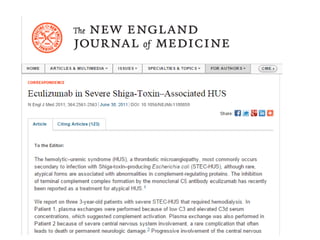
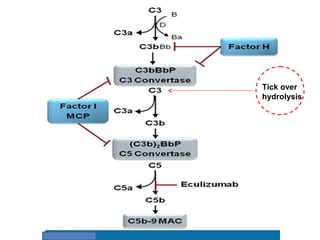
Complement factors and TMA
[C-TMA]
Tick over
hydrolysis
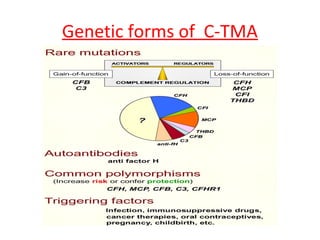
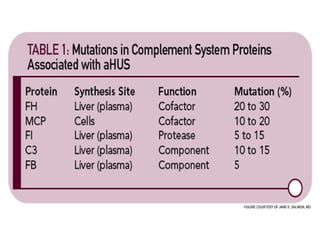
Genetic forms of C-TMA
Genetics of C-TMA
Missing Links
• Family members carrying same heterozygous
mutations are normal [ ? Modifier genes]
• SNP in CFH,CD46
• Copy No. variations in CFH1,3 Genes
• Fusion genes of CFHR and CFH due to
homologous recombination
• Normal plasma C3,C4,CFH,CFB,CFI does not
exclude C-HUS
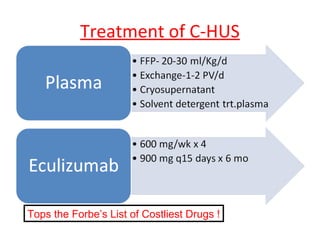
Treatment of C-HUS
Tops the Forbe’s List of Costliest Drugs !
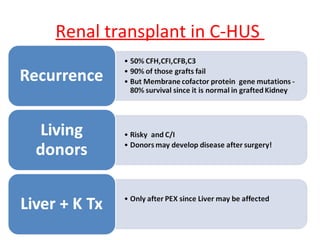
Renal transplant in C-HUS
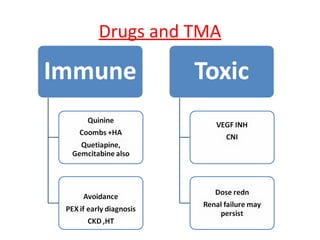
Drugs and TMA
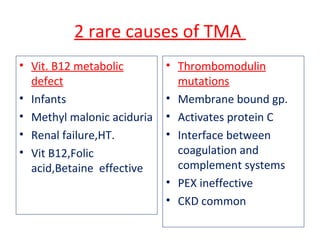
2 rare causes of TMA
• Vit. B12 metabolic
defect
• Infants
• Methyl malonic aciduria
• Renal failure,HT.
• Vit B12,Folic
acid,Betaine effective
• Thrombomodulin
mutations
• Membrane bound gp.
• Activates protein C
• Interface between
coagulation and
complement systems
• PEX ineffective
• CKD common
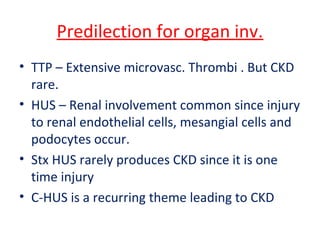
Predilection for organ inv.
• TTP – Extensive microvasc. Thrombi . But CKD
rare.
• HUS – Renal involvement common since injury
to renal endothelial cells, mesangial cells and
podocytes occur.
• Stx HUS rarely produces CKD since it is one
time injury
• C-HUS is a recurring theme leading to CKD
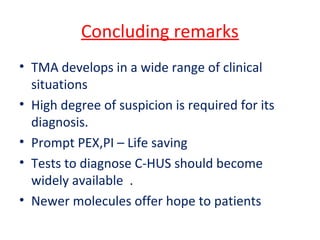
Concluding remarks
• TMA develops in a wide range of clinical
situations
• High degree of suspicion is required for its
diagnosis.
• Prompt PEX,PI – Life saving
• Tests to diagnose C-HUS should become
widely available .
• Newer molecules offer hope to patients

Thrombotic Microangiopathy

  • 1.
  • 2.
    Definition • Lesion ofarterioles and capillaries with wall thickening , intraluminal platelet thrombosis and partial or complete obstruction of vessel lumina.
  • 3.
    Beginning of thestory • 1924 • Moschcowitz treats a 16 yr old girl • Purpura, Pallor, hemiparesis • Dies of cardiac failure • Autopsy- Hyaline thrombi in microcirculation incl. Kidneys • ? TTP [ ADAMSTS13 Def.] • More people studied it than suffered from it !
  • 4.
    3 Defining features •1. Microangiopathic hemolytic anemia • 2.Thrombocytopenia • 3.Organ injury due to microcirculatory obstruction by platelet rich thrombi
  • 5.
  • 6.
  • 7.
    Renal Biopsy- Extensiveglomerular capillary thrombi
  • 8.
    Renal Biopsy-Arterial thrombi,intimal proliferation and thick capillary BM
  • 9.
    Fibrin deposits inthe glomerular capillary wall and arterial wall
  • 10.
    EM – Endoth.Lifted by fluffy lucent material on BM
  • 11.
    Similarities stop Extraordinary diversitybegins ! • New born / Elderly • Hereditary / Acquired • Asymptomatic / Lethal • Renal/CNS/GI/Skin/Pancreas • Acute/recurring/chronic • Amenable / Treatment resistant
  • 12.
    Working Classification ofTMA Terms such as Atypical HUS, Idiopathic HUS are being replaced
  • 13.
    TMA + • Pregnancyrelated – PET,HELLP • Malignant HT • Auto immune- SLE,SS,APLA • Transplant – HSC,SOT
  • 15.
    TTP [ ADAMTS13 defect ] • ADAMTS13 is secreted from Liver • Gene on chr.9q34 • Cleaves vWf multimers of vasc. Endoth • If deficient – vWf are uncut and large • Platelet thrombi in small vv. with high shear states Hereditary [Upshaw Schulman] Homozy, compd het.of ADAMTS 13 Acquired Auto antibody inh.ADAMTS13 Females
  • 16.
    TTP – Clinical,Lab •Recurrent MAHA • Thrombocytopenia • Neurologic signs • Level < 10% • AutoAntibody +/- • Mutation • Renal involvement is mild- 25 % ADAMTS13
  • 17.
    TTP- Management Long term– Since ADAMST13 Protects against atheroma Hypertension, cognitive impairment seen in such patients .
  • 18.
    Shiga Toxin HUS E.ColiO157:H7Children , O104:H4 adult Sporadic / Epidemic Shigella dys 1 Developing Countries Endemic Meat Vegetable Milk H to H
  • 21.
    50% Dialysis 70% Bloodtransf. 25% Neuro.manif CKD 25% ESRD/DEATH 12% Stx- HUS
  • 22.
  • 23.
    Management of StxHUS • Aggressive hydration with isotonic fluids • Antibiotics – Warning ! [E.Coli. Infection] • May increase Stx release • Quinolones,TMP- Induce of Stx gene transcr. • However , In Shigellosis – Early antibiotics indicated • Stx binder SYNSORB was not effective • PEX or P.Infusion – Effective along with Dialysis
  • 25.
    Pneumococcal HUS • 5-15% •N acetyl neuraminidase induced cell wall damage • Exposure of T antigen in platelets, RBCs and glomeruli • Severe AKI/ Pyothorax/Meningitis • Vancomycin, ceftriaxone • Plasma infusion ? Role • PEX
  • 26.
  • 27.
  • 28.
  • 30.
    Genetics of C-TMA MissingLinks • Family members carrying same heterozygous mutations are normal [ ? Modifier genes] • SNP in CFH,CD46 • Copy No. variations in CFH1,3 Genes • Fusion genes of CFHR and CFH due to homologous recombination • Normal plasma C3,C4,CFH,CFB,CFI does not exclude C-HUS
  • 31.
    Treatment of C-HUS Topsthe Forbe’s List of Costliest Drugs !
  • 32.
  • 34.
  • 35.
    2 rare causesof TMA • Vit. B12 metabolic defect • Infants • Methyl malonic aciduria • Renal failure,HT. • Vit B12,Folic acid,Betaine effective • Thrombomodulin mutations • Membrane bound gp. • Activates protein C • Interface between coagulation and complement systems • PEX ineffective • CKD common
  • 36.
    Predilection for organinv. • TTP – Extensive microvasc. Thrombi . But CKD rare. • HUS – Renal involvement common since injury to renal endothelial cells, mesangial cells and podocytes occur. • Stx HUS rarely produces CKD since it is one time injury • C-HUS is a recurring theme leading to CKD
  • 37.
    Concluding remarks • TMAdevelops in a wide range of clinical situations • High degree of suspicion is required for its diagnosis. • Prompt PEX,PI – Life saving • Tests to diagnose C-HUS should become widely available . • Newer molecules offer hope to patients