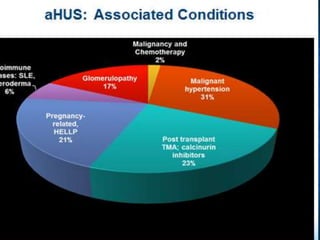
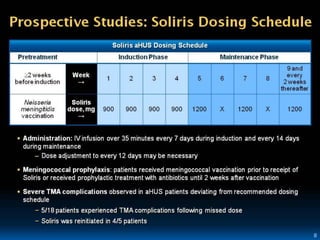
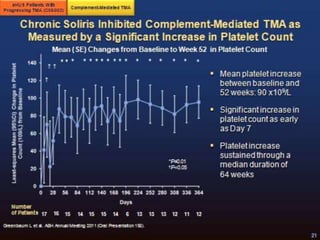
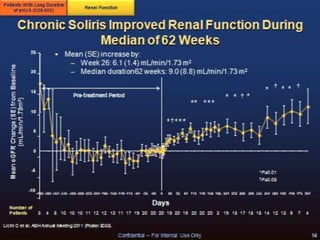
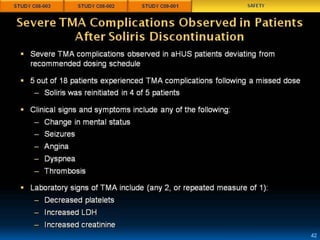
Thrombotic Microangiopathies:
Diagnosis, Pathophysiology,
Treatment
Jeffrey Laurence, M.D.
Professor of Medicine
Division of Hematology and Medical
Oncology
Weill Cornell Medical College
Confidential – For Educational Purposes Only 2
Confidential – For Educational Purposes Only 3
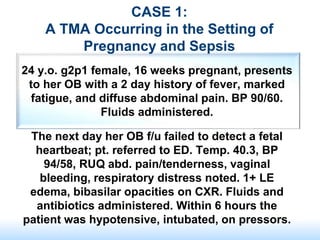
CASE 1:
A TMA Occurring in the Setting of
Pregnancy and Sepsis
24 y.o. g2p1 female, 16 weeks pregnant, presents
to her OB with a 2 day history of fever, marked
fatigue, and diffuse abdominal pain. BP 90/60.
Fluids administered.
The next day her OB f/u failed to detect a fetal
heartbeat; pt. referred to ED. Temp. 40.3, BP
94/58, RUQ abd. pain/tenderness, vaginal
bleeding, respiratory distress noted. 1+ LE
edema, bibasilar opacities on CXR. Fluids and
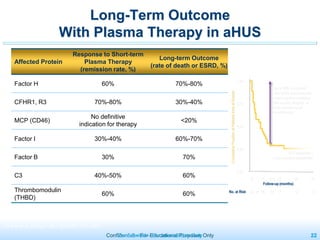
antibiotics administered. Within 6 hours the
patient was hypotensive, intubated, on pressors.
Confidential – For Educational Purposes Only 6
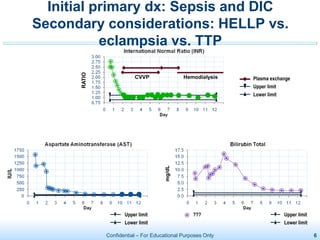
Initial primary dx: Sepsis and DIC
Secondary considerations: HELLP vs.
eclampsia vs. TTP
CVVP Hemodialysis
●



 ●●●●●●●●●●●●●●●●●



●●
Plasma exchange
Upper limit
Lower limit
RATIO



●
 
      ● ●
IU/L
Upper limit
Lower limit












    
mg/dL
Upper limit
Lower limit
 ???
Confidential – For Educational Purposes Only 7
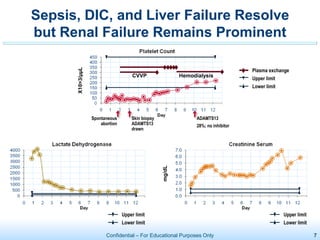
Sepsis, DIC, and Liver Failure Resolve
but Renal Failure Remains Prominent




     
Upper limit
Lower limit













mg/dL
Upper limit
Lower limit
Spontaneous
abortion
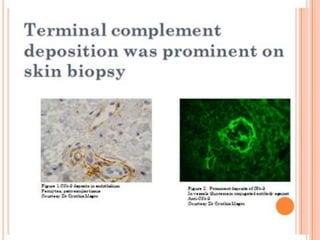
Skin biopsy
ADAMTS13
drawn
ADAMTS13
28%; no inhibitor
CVVP Hemodialysis



 




 X10>3/µµL
Plasma exchange
Upper limit
Lower limit
Confidential – For Educational Purposes Only 8
Platelets Normalized but
Low Level Hemolysis Persists












     
mg/dL
Upper limit
Lower limit



●●●●
●
Upper limit
Lower limit●
mg/dL
g/µL
Upper limit
Lower limit












 

  
Confidential – For Educational Purposes Only 9
Confidential – For Educational Purposes Only 10
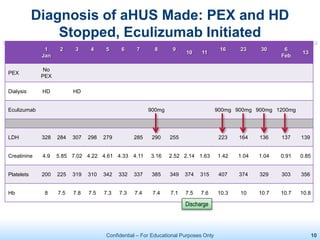
Diagnosis of aHUS Made: PEX and HD
Stopped, Eculizumab Initiated
1
Jan
2 3 4 5 6 7 8 9
10 11
16 23 30 6
Feb
13
PEX
No
PEX
Dialysis HD HD
Eculizumab 900mg 900mg 900mg 900mg 1200mg
LDH 328 284 307 298 279 285 290 255 223 164 136 137 139
Creatinine 4.9 5.85 7.02 4.22 4.61 4.33 4.11 3.16 2.52 2.14 1.63 1.42 1.04 1.04 0.91 0.85
Platelets 200 225 319 310 342 332 337 385 349 374 315 407 374 329 303 356
Hb 8 7.5 7.8 7.5 7.3 7.3 7.4 7.4 7.1 7.5 7.6 10.3 10 10.7 10.7 10.8
Discharge
Confidential – For Educational Purposes Only 11
 TTP and aHUS are ultra-rare diseases (4/1 million incidence): lack of
clinical suspicion
 Clinical presentations are similar, if not identical, in TTP, aHUS and
STEC-HUS, as well as in other conditions characterized by TMA
 Coexisting disorders can unmask aHUS
 Diagnosis: Plasma intervention prior to ADAMTS13 blood draw
 Response: Defining a CR in TTP patients treated with plasma
 Response: Often diagnosed late when there is already organ damage
 Historically limited interest in differentiating aHUS from TTP as, until
September 2011, no specific treatment for aHUS
Challenges in Distinguishing Among the
TMAs
Confidential – For Educational Purposes Only 12
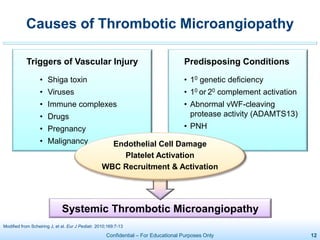
Systemic Thrombotic Microangiopathy
Predisposing Conditions
• 10 genetic deficiency
• 10 or 20 complement activation
• Abnormal vWF-cleaving
protease activity (ADAMTS13)
• PNH
Triggers of Vascular Injury
• Shiga toxin
• Viruses
• Immune complexes
• Drugs
• Pregnancy
• Malignancy
Causes of Thrombotic Microangiopathy
Modified from Scheiring J, et al. Eur J Pediatr. 2010;169:7-13
Endothelial Cell Damage
Platelet Activation
WBC Recruitment & Activation
Confidential – For Educational Purposes Only 13
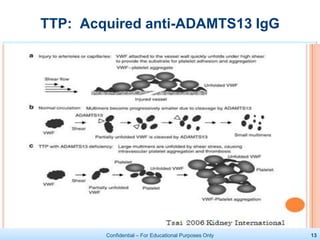
TTP: Acquired anti-ADAMTS13 IgG
Confidential – For Educational Purposes Only 14
Cell Destruction
Inflammation
Thrombosis
ConsequencesConsequences
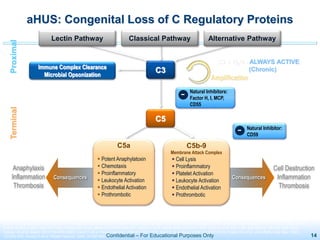
aHUS: Congenital Loss of C Regulatory Proteins
ProximalTerminal
C3
C5
C5a
 Potent Anaphylatoxin
 Chemotaxis
 Proinflammatory
 Leukocyte Activation
 Endothelial Activation
 Prothrombotic
C5b-9
Membrane Attack Complex
 Cell Lysis
 Proinflammatory
 Platelet Activation
 Leukocyte Activation
 Endothelial Activation
 Prothrombotic
Amplification
Immune Complex Clearance
Microbial Opsonization
Anaphylaxis
Inflammation
Thrombosis
C3 + H2O - ALWAYS ACTIVE
(Chronic)
Lectin Pathway Alternative PathwayClassical Pathway
Figueroa JE, Densen P. Clin Microbiol Rev. 1991;4:359-395; Walport MJ. N Engl J Med. 2001;344:1058-1066; Rother RP et al. Nature Biotech. 2007;25:1256-1264; Meyers G et al. Blood.
2007;110:Abstract 3683; Hill A et al. Br J Hematol. 2010;149:414-425; Hillmen P et al. Am J Hematol 2010; 85:553-559, International PNH Interest Group. Blood. 2005;106:3699-3709; Hillmen
P et al. N Engl J Med. 1995;333:1253; Nishimura J et al. Medicine.2004;83:193-207; Caprioli J et al. Blood 2006;108:1267-1279; Noris M, et al. Clin J Am Soc Nephrol. 2010;5:1844-1859;
George JN et al. Blood. 2010;116:4060-4069; Loirat C, et al. Pediatr Nephrol. 2008;23:1957-1972; Stahl A, et al Blood. 2008;111:5307-5315; Hosler GA, et al Arch Pathol Lab Med. 2003;
127;834-839; Ariceta G et al. Pediatr Nephrol. 2009; 24:687-696.
Natural Inhibitors:
Factor H, I, MCP,
CD55
Natural Inhibitor:
CD59
Confidential – For Educational Purposes Only 15
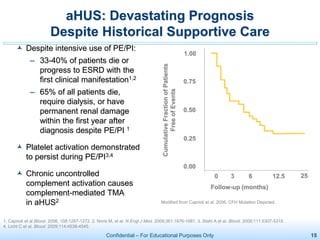
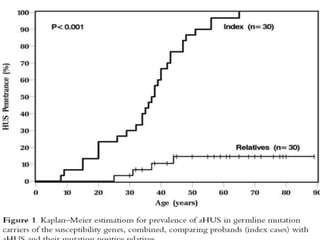
aHUS: Devastating Prognosis
Despite Historical Supportive Care
 Despite intensive use of PE/PI:
– 33-40% of patients die or
progress to ESRD with the
first clinical manifestation1,2
– 65% of all patients die,
require dialysis, or have
permanent renal damage
within the first year after
diagnosis despite PE/PI 1
 Platelet activation demonstrated
to persist during PE/PI3,4
 Chronic uncontrolled
complement activation causes
complement-mediated TMA
in aHUS2
1. Caprioli et al Blood. 2006; 108:1267-1272. 2. Noris M, et al. N Engl J Med. 2009;361:1676-1687. 3. Stahl A et al. Blood. 2008;111:5307-5315.
4. Licht C et al. Blood. 2009;114:4538-4545.
1.00
0.75
0.50
0.25
0.00
0 3 6 2512.5
CumulativeFractionofPatients
FreeofEvents
Follow-up (months)
Modified from Caprioli et al. 2006. CFH Mutation Depicted.
Confidential – For Educational Purposes Only 16
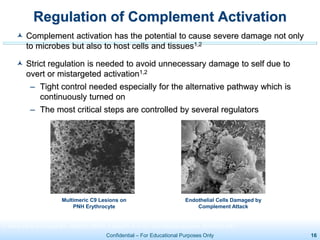
Regulation of Complement Activation
 Complement activation has the potential to cause severe damage not only
to microbes but also to host cells and tissues1,2
 Strict regulation is needed to avoid unnecessary damage to self due to
overt or mistargeted activation1,2
– Tight control needed especially for the alternative pathway which is
continuously turned on
– The most critical steps are controlled by several regulators
Endothelial Cells Damaged by
Complement Attack
Photo: S. Meri, Univ. of Helsinki
Multimeric C9 Lesions on
PNH Erythrocyte
Photo: W Rosse
1. Holers VM et al. Immunol Rev. 2008;223:300-316. 2. Zipfel PF et al. Curr Opin Nephrol Hypertens. 2010;4:372-378.
Confidential – For Educational Purposes Only 17
Confidential – For Educational Purposes Only 18
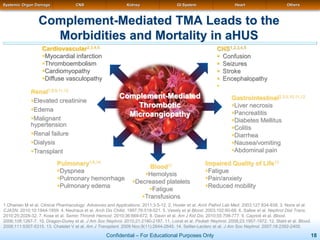
Complement-Mediated TMA Leads to the
Morbidities and Mortality in aHUS
1.Ohanian M et al. Clinical Pharmacology: Advances and Applications. 2011;3:5-12. 2. Hosler et al. Arch Pathol Lab Med. 2003;127:834-839. 3. Noris et al.
CJASN. 2010;10:1844-1859. 4. Neuhaus et al. Arch Dis Chilid. 1997;76:518-521. 5. Vesely et al Blood. 2003;102:60-68. 6. Sallee et al. Nephrol Dial Trans.
2010;25:2028-32. 7. Kose et al. Semin Thromb Hemost. 2010;36:669-672. 8. Davin et al. Am J Kid Dis. 2010;55:708-777. 9. Caprioli et al. Blood.
2006;108:1267-7. 10. Dragon-Durey et al. J Am Soc Nephrol. 2010;21:2180-2187. 11. Loirat et al. Pediatr Nephrol. 2008;23:1957-1972. 12. Stahl et al. Blood.
2008;111:5307-5315. 13. Chatelet V et al. Am J Transplant. 2009 Nov;9(11):2644-2645. 14. Sellier-Leclerc et al. J Am Soc Nephrol. 2007;18:2392-2400.
Renal7,8,9,11,12
Elevated creatinine
Edema
Malignant
hypertension
Renal failure
Dialysis
Transplant
Gastrointestinal2,3,5,10,11,12
Liver necrosis
Pancreatitis
Diabetes Mellitus
Colitis
Diarrhea
Nausea/vomiting
Abdominal pain
Blood11
Hemolysis
Decreased platelets
Fatigue
Transfusions
Impaired Quality of Life13
Fatigue
Pain/anxiety
Reduced mobility
Pulmonary1,6,14
Dyspnea
Pulmonary hemorrhage
Pulmonary edema
Cardiovascular2,3,4,6
Myocardial infarction
Thromboembolism
Cardiomyopathy
Diffuse vasculopathy
CNS1,2,3,4,5
 Confusion
 Seizures
 Stroke
 Encephalopathy
 Diffuse cerebral dysfunction
Complement-Mediated
Thrombotic
Microangiopathy
Systemic Organ Damage CNS Kidney GI System Heart Others
Confidential – For Educational Purposes Only 19
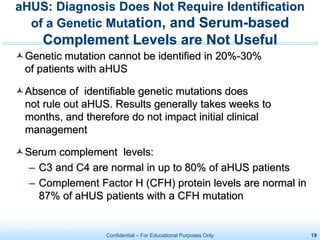
Genetic mutation cannot be identified in 20%-30%
of patients with aHUS
Absence of identifiable genetic mutations does
not rule out aHUS. Results generally takes weeks to
months, and therefore do not impact initial clinical
management
Serum complement levels:
– C3 and C4 are normal in up to 80% of aHUS patients
– Complement Factor H (CFH) protein levels are normal in
87% of aHUS patients with a CFH mutation
aHUS: Diagnosis Does Not Require Identification
of a Genetic Mutation, and Serum-based
Complement Levels are Not Useful
1. Noris M et al. Clin J Am Soc Nephrol. 2010;5:1844-1859.
Confidential – For Educational Purposes Only 20
Confidential – For Educational Purposes Only 21
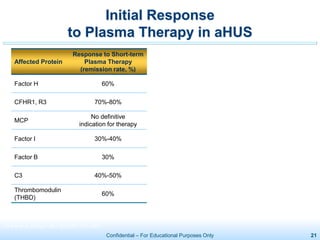
Affected Protein
Response to Short-term
Plasma Therapy
(remission rate, %)
Factor H 60%
CFHR1, R3 70%-80%
MCP
No definitive
indication for therapy
Factor I 30%-40%
Factor B 30%
C3 40%-50%
Thrombomodulin
(THBD)
60%
Noris M et al. N Engl J Med. 2009;361:1676-1687.
Initial Response
to Plasma Therapy in aHUS
Confidential – For Educational Purposes Only 22
Affected Protein
Response to Short-term
Plasma Therapy
(remission rate, %)
Long-term Outcome
(rate of death or ESRD, %)
Factor H 60% 70%-80%
CFHR1, R3 70%-80% 30%-40%
MCP (CD46)
No definitive
indication for therapy
<20%
Factor I 30%-40% 60%-70%
Factor B 30% 70%
C3 40%-50% 60%
Thrombomodulin
(THBD)
60% 60%
Noris M et al. N Engl J Med. 2009;361:1676-1687.
Long-Term Outcome
With Plasma Therapy in aHUS
Confidential – For Internal Use Only 22
1.00
0.75
0.50
0.25
0.00
0 3 6 2512.5
CumulativeFractionofPatientsFreeofEvents
Follow-up (months)
50 75
40 27 20 712 5 3No. at Risk
Up to 70% of patients
with aHUS who have the
most common mutation
die, require dialysis, or
have chronic renal
insufficiency
CFH mutation =
most common population
Modified from Caprioli et al. Blood. 2006;108(4):1267-1272.
Confidential – For Educational Purposes Only 23
Confidential – For Educational Purposes Only 24
Confidential – For Educational Purposes Only 25
Confidential – For Educational Purposes Only 26
Confidential – For Educational Purposes Only 27
Confidential – For Educational Purposes Only 28
Confidential – For Educational Purposes Only 29
Confidential – For Educational Purposes Only 30
Confidential – For Educational Purposes Only 31
Confidential – For Educational Purposes Only 32
Confidential – For Educational Purposes Only 33
Confidential – For Educational Purposes Only 34
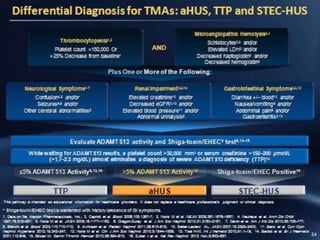
SUMMARY: Distinguishing Among the TMAs
 The three major forms of TMA, TTP, aHUS, and STEC-HUS, are
indistinguishable clinically: 50% of aHUS cases have prominent CNS
findings; 20% of aHUS cases present with normal serum creatinine; and
bloody diarrhea can occur in all TMAs. In general, with plts > 40K and/or
creatinine >1.7, think aHUS, not TTP.
 Up to 80% of aHUS cases will have a complete hematologic response to
PE, but tissue damage continues
 ADAMTS13 activity <5-10% defines most cases of TTP, with CR induced
after 20-40 liters of FFP via PE
 TTP is virtually always acquired, involving IgG anti-ADAMTS13 antibodies.
These antibodies are very difficult to deplete via PE. 1-2 PEs are unlikely to
raise an ADAMTS13 originally <5-10% to >10-20%
 aHUS is virtually always congenital, involving C regulatory factor mutations.
There is no role for plasma . Eculizumab is the only FDA-approved therapy.
 Diagnostic dilemmas may require tissue biopsy or C mutation analysis.

Tma lecture mskcc

  • 1.
    Thrombotic Microangiopathies: Diagnosis, Pathophysiology, Treatment JeffreyLaurence, M.D. Professor of Medicine Division of Hematology and Medical Oncology Weill Cornell Medical College
  • 2.
    Confidential – ForEducational Purposes Only 2
  • 3.
    Confidential – ForEducational Purposes Only 3
  • 5.
    CASE 1: A TMAOccurring in the Setting of Pregnancy and Sepsis 24 y.o. g2p1 female, 16 weeks pregnant, presents to her OB with a 2 day history of fever, marked fatigue, and diffuse abdominal pain. BP 90/60. Fluids administered. The next day her OB f/u failed to detect a fetal heartbeat; pt. referred to ED. Temp. 40.3, BP 94/58, RUQ abd. pain/tenderness, vaginal bleeding, respiratory distress noted. 1+ LE edema, bibasilar opacities on CXR. Fluids and antibiotics administered. Within 6 hours the patient was hypotensive, intubated, on pressors.
  • 6.
    Confidential – ForEducational Purposes Only 6 Initial primary dx: Sepsis and DIC Secondary considerations: HELLP vs. eclampsia vs. TTP CVVP Hemodialysis ●     ●●●●●●●●●●●●●●●●●    ●● Plasma exchange Upper limit Lower limit RATIO    ●         ● ● IU/L Upper limit Lower limit                  mg/dL Upper limit Lower limit  ???
  • 7.
    Confidential – ForEducational Purposes Only 7 Sepsis, DIC, and Liver Failure Resolve but Renal Failure Remains Prominent           Upper limit Lower limit              mg/dL Upper limit Lower limit Spontaneous abortion Skin biopsy ADAMTS13 drawn ADAMTS13 28%; no inhibitor CVVP Hemodialysis           X10>3/µµL Plasma exchange Upper limit Lower limit
  • 8.
    Confidential – ForEducational Purposes Only 8 Platelets Normalized but Low Level Hemolysis Persists                   mg/dL Upper limit Lower limit    ●●●● ● Upper limit Lower limit● mg/dL g/µL Upper limit Lower limit                  
  • 9.
    Confidential – ForEducational Purposes Only 9
  • 10.
    Confidential – ForEducational Purposes Only 10 Diagnosis of aHUS Made: PEX and HD Stopped, Eculizumab Initiated 1 Jan 2 3 4 5 6 7 8 9 10 11 16 23 30 6 Feb 13 PEX No PEX Dialysis HD HD Eculizumab 900mg 900mg 900mg 900mg 1200mg LDH 328 284 307 298 279 285 290 255 223 164 136 137 139 Creatinine 4.9 5.85 7.02 4.22 4.61 4.33 4.11 3.16 2.52 2.14 1.63 1.42 1.04 1.04 0.91 0.85 Platelets 200 225 319 310 342 332 337 385 349 374 315 407 374 329 303 356 Hb 8 7.5 7.8 7.5 7.3 7.3 7.4 7.4 7.1 7.5 7.6 10.3 10 10.7 10.7 10.8 Discharge
  • 11.
    Confidential – ForEducational Purposes Only 11  TTP and aHUS are ultra-rare diseases (4/1 million incidence): lack of clinical suspicion  Clinical presentations are similar, if not identical, in TTP, aHUS and STEC-HUS, as well as in other conditions characterized by TMA  Coexisting disorders can unmask aHUS  Diagnosis: Plasma intervention prior to ADAMTS13 blood draw  Response: Defining a CR in TTP patients treated with plasma  Response: Often diagnosed late when there is already organ damage  Historically limited interest in differentiating aHUS from TTP as, until September 2011, no specific treatment for aHUS Challenges in Distinguishing Among the TMAs
  • 12.
    Confidential – ForEducational Purposes Only 12 Systemic Thrombotic Microangiopathy Predisposing Conditions • 10 genetic deficiency • 10 or 20 complement activation • Abnormal vWF-cleaving protease activity (ADAMTS13) • PNH Triggers of Vascular Injury • Shiga toxin • Viruses • Immune complexes • Drugs • Pregnancy • Malignancy Causes of Thrombotic Microangiopathy Modified from Scheiring J, et al. Eur J Pediatr. 2010;169:7-13 Endothelial Cell Damage Platelet Activation WBC Recruitment & Activation
  • 13.
    Confidential – ForEducational Purposes Only 13 TTP: Acquired anti-ADAMTS13 IgG
  • 14.
    Confidential – ForEducational Purposes Only 14 Cell Destruction Inflammation Thrombosis ConsequencesConsequences aHUS: Congenital Loss of C Regulatory Proteins ProximalTerminal C3 C5 C5a  Potent Anaphylatoxin  Chemotaxis  Proinflammatory  Leukocyte Activation  Endothelial Activation  Prothrombotic C5b-9 Membrane Attack Complex  Cell Lysis  Proinflammatory  Platelet Activation  Leukocyte Activation  Endothelial Activation  Prothrombotic Amplification Immune Complex Clearance Microbial Opsonization Anaphylaxis Inflammation Thrombosis C3 + H2O - ALWAYS ACTIVE (Chronic) Lectin Pathway Alternative PathwayClassical Pathway Figueroa JE, Densen P. Clin Microbiol Rev. 1991;4:359-395; Walport MJ. N Engl J Med. 2001;344:1058-1066; Rother RP et al. Nature Biotech. 2007;25:1256-1264; Meyers G et al. Blood. 2007;110:Abstract 3683; Hill A et al. Br J Hematol. 2010;149:414-425; Hillmen P et al. Am J Hematol 2010; 85:553-559, International PNH Interest Group. Blood. 2005;106:3699-3709; Hillmen P et al. N Engl J Med. 1995;333:1253; Nishimura J et al. Medicine.2004;83:193-207; Caprioli J et al. Blood 2006;108:1267-1279; Noris M, et al. Clin J Am Soc Nephrol. 2010;5:1844-1859; George JN et al. Blood. 2010;116:4060-4069; Loirat C, et al. Pediatr Nephrol. 2008;23:1957-1972; Stahl A, et al Blood. 2008;111:5307-5315; Hosler GA, et al Arch Pathol Lab Med. 2003; 127;834-839; Ariceta G et al. Pediatr Nephrol. 2009; 24:687-696. Natural Inhibitors: Factor H, I, MCP, CD55 Natural Inhibitor: CD59
  • 15.
    Confidential – ForEducational Purposes Only 15 aHUS: Devastating Prognosis Despite Historical Supportive Care  Despite intensive use of PE/PI: – 33-40% of patients die or progress to ESRD with the first clinical manifestation1,2 – 65% of all patients die, require dialysis, or have permanent renal damage within the first year after diagnosis despite PE/PI 1  Platelet activation demonstrated to persist during PE/PI3,4  Chronic uncontrolled complement activation causes complement-mediated TMA in aHUS2 1. Caprioli et al Blood. 2006; 108:1267-1272. 2. Noris M, et al. N Engl J Med. 2009;361:1676-1687. 3. Stahl A et al. Blood. 2008;111:5307-5315. 4. Licht C et al. Blood. 2009;114:4538-4545. 1.00 0.75 0.50 0.25 0.00 0 3 6 2512.5 CumulativeFractionofPatients FreeofEvents Follow-up (months) Modified from Caprioli et al. 2006. CFH Mutation Depicted.
  • 16.
    Confidential – ForEducational Purposes Only 16 Regulation of Complement Activation  Complement activation has the potential to cause severe damage not only to microbes but also to host cells and tissues1,2  Strict regulation is needed to avoid unnecessary damage to self due to overt or mistargeted activation1,2 – Tight control needed especially for the alternative pathway which is continuously turned on – The most critical steps are controlled by several regulators Endothelial Cells Damaged by Complement Attack Photo: S. Meri, Univ. of Helsinki Multimeric C9 Lesions on PNH Erythrocyte Photo: W Rosse 1. Holers VM et al. Immunol Rev. 2008;223:300-316. 2. Zipfel PF et al. Curr Opin Nephrol Hypertens. 2010;4:372-378.
  • 17.
    Confidential – ForEducational Purposes Only 17
  • 18.
    Confidential – ForEducational Purposes Only 18 Complement-Mediated TMA Leads to the Morbidities and Mortality in aHUS 1.Ohanian M et al. Clinical Pharmacology: Advances and Applications. 2011;3:5-12. 2. Hosler et al. Arch Pathol Lab Med. 2003;127:834-839. 3. Noris et al. CJASN. 2010;10:1844-1859. 4. Neuhaus et al. Arch Dis Chilid. 1997;76:518-521. 5. Vesely et al Blood. 2003;102:60-68. 6. Sallee et al. Nephrol Dial Trans. 2010;25:2028-32. 7. Kose et al. Semin Thromb Hemost. 2010;36:669-672. 8. Davin et al. Am J Kid Dis. 2010;55:708-777. 9. Caprioli et al. Blood. 2006;108:1267-7. 10. Dragon-Durey et al. J Am Soc Nephrol. 2010;21:2180-2187. 11. Loirat et al. Pediatr Nephrol. 2008;23:1957-1972. 12. Stahl et al. Blood. 2008;111:5307-5315. 13. Chatelet V et al. Am J Transplant. 2009 Nov;9(11):2644-2645. 14. Sellier-Leclerc et al. J Am Soc Nephrol. 2007;18:2392-2400. Renal7,8,9,11,12 Elevated creatinine Edema Malignant hypertension Renal failure Dialysis Transplant Gastrointestinal2,3,5,10,11,12 Liver necrosis Pancreatitis Diabetes Mellitus Colitis Diarrhea Nausea/vomiting Abdominal pain Blood11 Hemolysis Decreased platelets Fatigue Transfusions Impaired Quality of Life13 Fatigue Pain/anxiety Reduced mobility Pulmonary1,6,14 Dyspnea Pulmonary hemorrhage Pulmonary edema Cardiovascular2,3,4,6 Myocardial infarction Thromboembolism Cardiomyopathy Diffuse vasculopathy CNS1,2,3,4,5  Confusion  Seizures  Stroke  Encephalopathy  Diffuse cerebral dysfunction Complement-Mediated Thrombotic Microangiopathy Systemic Organ Damage CNS Kidney GI System Heart Others
  • 19.
    Confidential – ForEducational Purposes Only 19 Genetic mutation cannot be identified in 20%-30% of patients with aHUS Absence of identifiable genetic mutations does not rule out aHUS. Results generally takes weeks to months, and therefore do not impact initial clinical management Serum complement levels: – C3 and C4 are normal in up to 80% of aHUS patients – Complement Factor H (CFH) protein levels are normal in 87% of aHUS patients with a CFH mutation aHUS: Diagnosis Does Not Require Identification of a Genetic Mutation, and Serum-based Complement Levels are Not Useful 1. Noris M et al. Clin J Am Soc Nephrol. 2010;5:1844-1859.
  • 20.
    Confidential – ForEducational Purposes Only 20
  • 21.
    Confidential – ForEducational Purposes Only 21 Affected Protein Response to Short-term Plasma Therapy (remission rate, %) Factor H 60% CFHR1, R3 70%-80% MCP No definitive indication for therapy Factor I 30%-40% Factor B 30% C3 40%-50% Thrombomodulin (THBD) 60% Noris M et al. N Engl J Med. 2009;361:1676-1687. Initial Response to Plasma Therapy in aHUS
  • 22.
    Confidential – ForEducational Purposes Only 22 Affected Protein Response to Short-term Plasma Therapy (remission rate, %) Long-term Outcome (rate of death or ESRD, %) Factor H 60% 70%-80% CFHR1, R3 70%-80% 30%-40% MCP (CD46) No definitive indication for therapy <20% Factor I 30%-40% 60%-70% Factor B 30% 70% C3 40%-50% 60% Thrombomodulin (THBD) 60% 60% Noris M et al. N Engl J Med. 2009;361:1676-1687. Long-Term Outcome With Plasma Therapy in aHUS Confidential – For Internal Use Only 22 1.00 0.75 0.50 0.25 0.00 0 3 6 2512.5 CumulativeFractionofPatientsFreeofEvents Follow-up (months) 50 75 40 27 20 712 5 3No. at Risk Up to 70% of patients with aHUS who have the most common mutation die, require dialysis, or have chronic renal insufficiency CFH mutation = most common population Modified from Caprioli et al. Blood. 2006;108(4):1267-1272.
  • 23.
    Confidential – ForEducational Purposes Only 23
  • 24.
    Confidential – ForEducational Purposes Only 24
  • 25.
    Confidential – ForEducational Purposes Only 25
  • 26.
    Confidential – ForEducational Purposes Only 26
  • 27.
    Confidential – ForEducational Purposes Only 27
  • 28.
    Confidential – ForEducational Purposes Only 28
  • 29.
    Confidential – ForEducational Purposes Only 29
  • 30.
    Confidential – ForEducational Purposes Only 30
  • 31.
    Confidential – ForEducational Purposes Only 31
  • 32.
    Confidential – ForEducational Purposes Only 32
  • 33.
    Confidential – ForEducational Purposes Only 33
  • 34.
    Confidential – ForEducational Purposes Only 34 SUMMARY: Distinguishing Among the TMAs  The three major forms of TMA, TTP, aHUS, and STEC-HUS, are indistinguishable clinically: 50% of aHUS cases have prominent CNS findings; 20% of aHUS cases present with normal serum creatinine; and bloody diarrhea can occur in all TMAs. In general, with plts > 40K and/or creatinine >1.7, think aHUS, not TTP.  Up to 80% of aHUS cases will have a complete hematologic response to PE, but tissue damage continues  ADAMTS13 activity <5-10% defines most cases of TTP, with CR induced after 20-40 liters of FFP via PE  TTP is virtually always acquired, involving IgG anti-ADAMTS13 antibodies. These antibodies are very difficult to deplete via PE. 1-2 PEs are unlikely to raise an ADAMTS13 originally <5-10% to >10-20%  aHUS is virtually always congenital, involving C regulatory factor mutations. There is no role for plasma . Eculizumab is the only FDA-approved therapy.  Diagnostic dilemmas may require tissue biopsy or C mutation analysis.