1
Presented to:
Sir Akash Ali
Presented by:
Sanya Yaseen
(4010)
Topic
Thermoregulation
in Vertebrates
Introduction
Page 6
 Animals divided into two main
categories:-
1. Pikilotherms: (cold blooded)
change their body temp.
according to environment e.g. fishes,
amphibians & reptiles
2. Homeotherms: (warm blooded)
Maintain their body temp. e.g.
birds and mammals
Page 7
Modern classification of
animals
1. Ectotherms:
take heat from outside e.g. fish
amphibian & reptiles also invertebrates
2. Endotherms:
take heat from inside e.g.
mammals, birds and some fishes
3. Heterotherms:
take heat from inside but body
temp. change e.g. bat, humming bird
Thermoregulation
in Fishes
 cold blooded but Ectotherms as well
 Core body temp. close to environment
 2 types of thermoregulation:
a) Behavioral thermoregulation
b) Physiological thermoregulation
Behavioral thermoregulation
 Occurs when it seeks out areas of water with higher
or lower temperature.
 Move from surface to downward or reverse
 E.g.
juveniles of the Bear Lake Sculpin lives in bottom
(5°C in day time) eat food and move to the surface at
night (14°C) to digest their stored food.
 Another example is Sockeye Salmon
o Feed only at dawn to dusk
o At dusk, they move 11m down(15°C)
o At dawn, move 37m down(5°C)
o Because night is short and day is long in Canada
o In doing so they reduce their metabolic costs
Physiological thermoregulation
 occurs in only a few species, all of which are marine
and swim constantly
 controls its core body temperature by means of
internal physiological and metabolic activities
 Network of blood capillaries (rete mirabile) b/w
swimming red muscles, act as heat exchanger
 Heat from muscle transported to blood
 Oxygen-depleted blood is sent to gills.
 In gills, thin blood vessels takes heat and thus blood
becomes warmer
 Blood in both vessels move in opposite direction due
to which process becomes more efficient
 No body heat is lost
 Body temp. rise from 5-14°C to environment
 Especially done in sharks and tuna
Thermoregulation in
Amphibians
Are Ectotherms
Face daily and seasonal changes
Produce little heat from metabolism and
lose it rapidly
Show behavioral adaptation
Have moist skin which helps in
evaporative cooling in warm temp.
To get moist, live in shady areas mostly
Bullfrog secrete mucus for evaporating
cooling
Sun basking early in dawn
Change their color darker in cooling
envior.
Lighter color in warmer envior
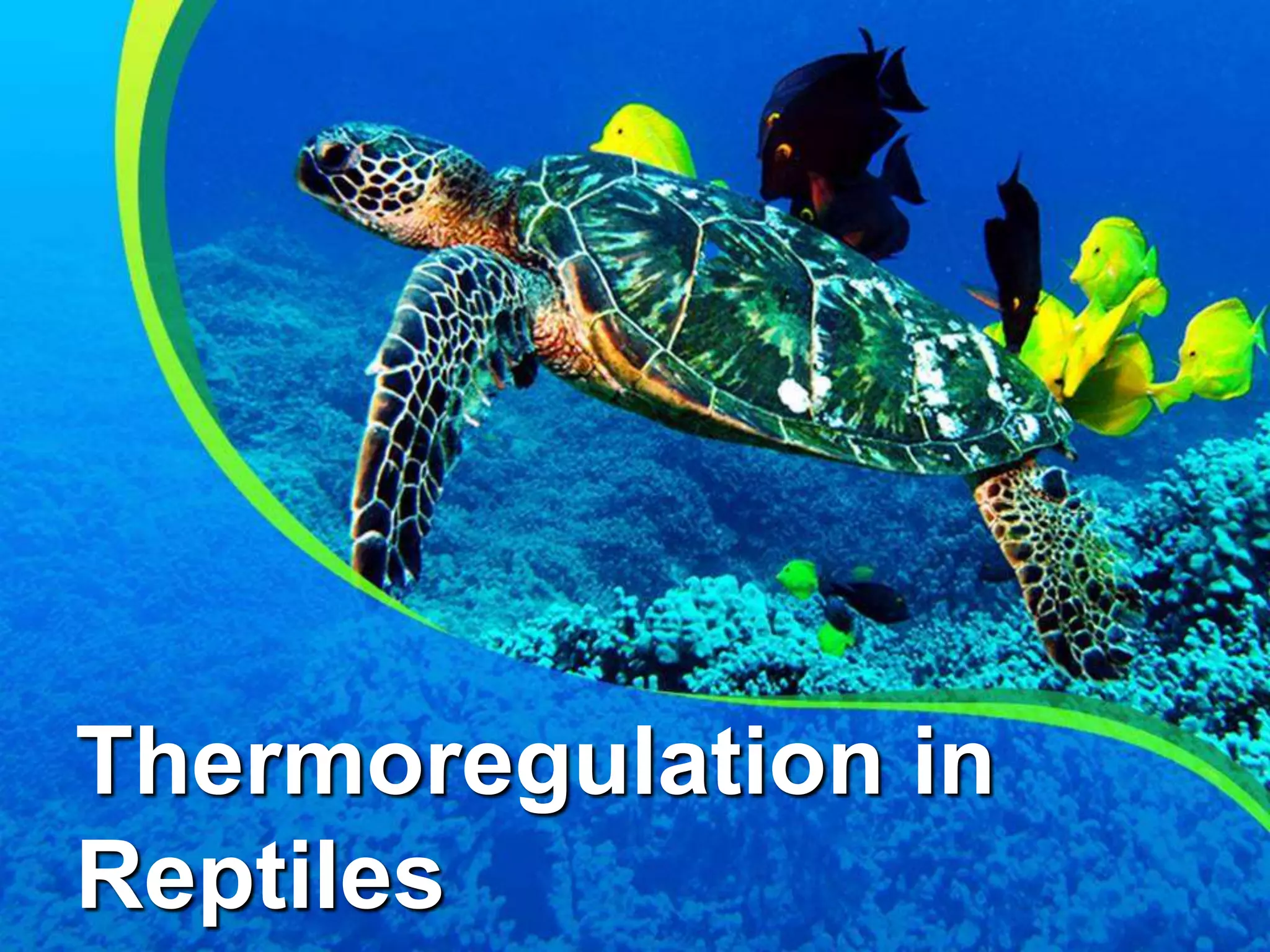
Thermoregulation in
Reptiles
Have dry skin, reduce water loss
 have extensible rib cage, provides efficient
ventilation
Conserve body heat into the center of body
Increase heat production in response to
hormones thyroxine and epinephrine
tortoises and land turtles can cool themselves
through salivating and frothing at the mouth
Thermoregulation in Birds
 Are endothermic
 All energy demands are
generated by metabolic process
 Regulate their body temp.
 Don’t have sweat gland, lose heat
from gular pouches present in
throat.
 Their fluttering increase
evaporation from respiratory
system
 In some spp., feathers
provides insulation
 Downy type feather trap air
next to body to prevent
body heat loss
 Aquatic species has “rete
mirabile” process in their
legs & feet
 As temp. fluctuates they
sun themselves or seek
shades.
Thermoregulation
in Mammals
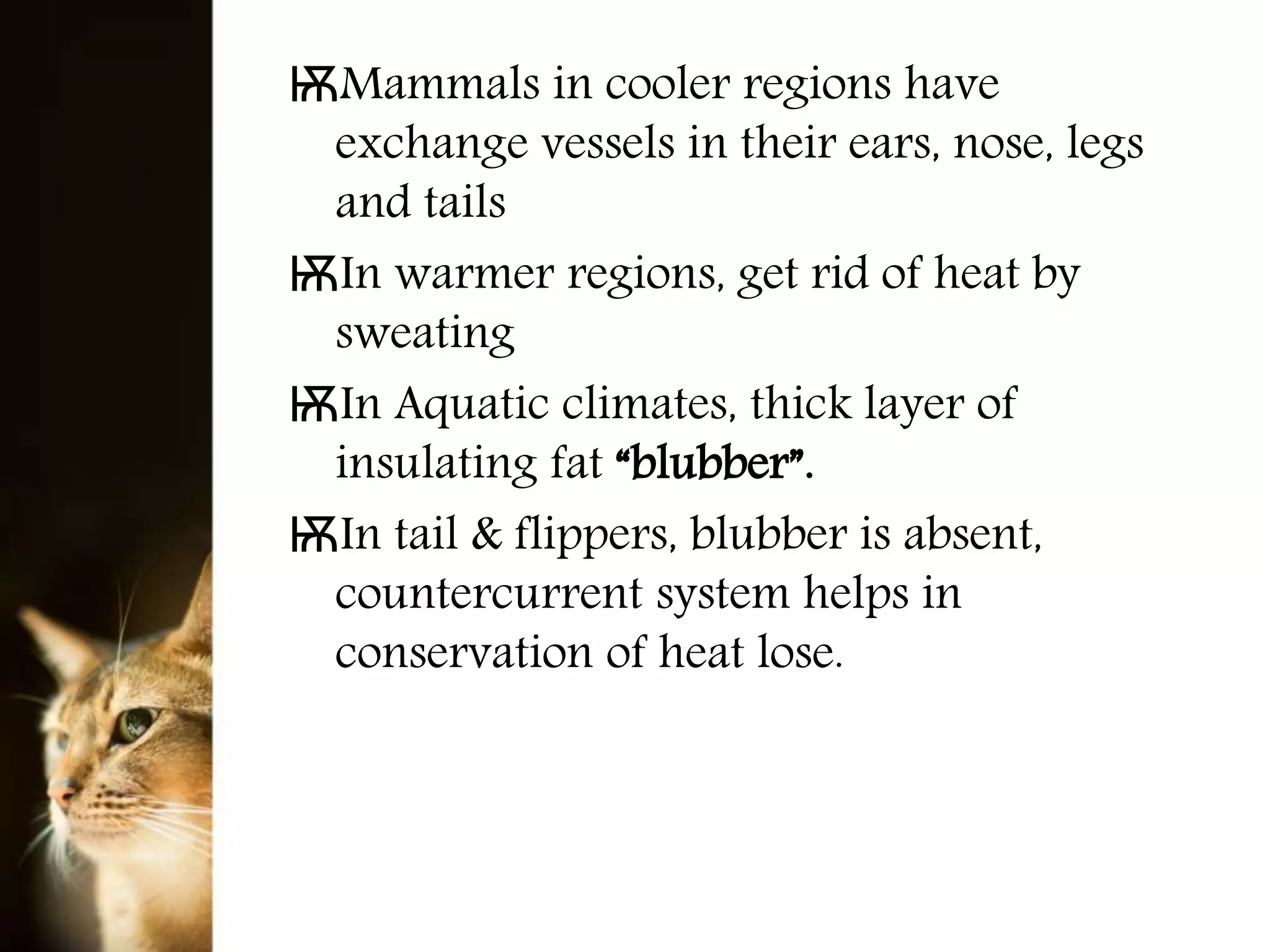
ѬMammals in cooler regions have
exchange vessels in their ears, nose, legs
and tails
ѬIn warmer regions, get rid of heat by
sweating
ѬIn Aquatic climates, thick layer of
insulating fat “blubber”.
ѬIn tail & flippers, blubber is absent,
countercurrent system helps in
conservation of heat lose.
Heat production in Birds &
Mammals
o Can generate heat by:
1. Muscle contraction
2. ATPase pump enzymes
3. Oxidation of Fatty acids in brown
fats
4. Basal metabolic rate
 In each muscle contraction, actin
and myosin fiber slide over each
other and hydrolysis of ATP
generate heat
 Both voluntary and involuntary
muscular work generate heat
 Called “Shivering
thermogenesis”
• ATPase pump in cell membrane
helps in generation of heat
• When body cools, thyroid gland
releases thyroxine
• It increases the permeability of
NA+ ions into cells
• In the process, ATP is
hydrolyzed & generate heat
• Called “non-shivering
thermogenesis”
• Brown fat, special type of protein
found in youngness in cold climate
• Brown color is due to large amount
of mitochondria with their
iron-containing cytochromes
• Deposit in ribs & shoulders
• Large amount of heat is produced
• Blood passing through them is
heated and warm the body
FEEDBACK MECHANISM
Control of
thermoregulation
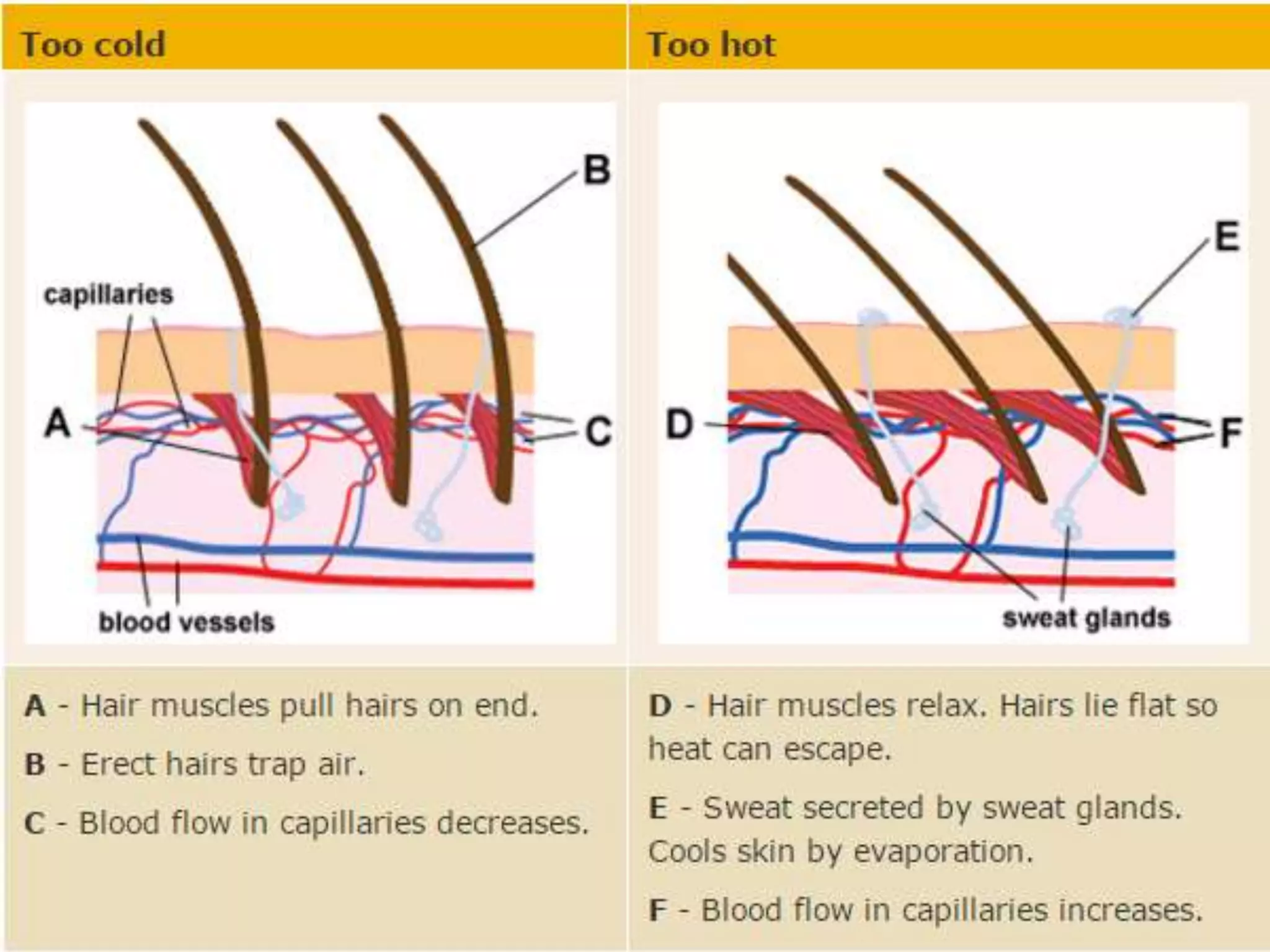
• It is controlled by 3 ways in
humans:
a) By sweat gland
b) By blood circulation
(vasoconstriction/
vasodilation)
c) By hairs
Thermoregulation in vertebrates

Thermoregulation in vertebrates

  • 1.
  • 3.
    Presented to: Sir AkashAli Presented by: Sanya Yaseen (4010)
  • 4.
  • 5.
  • 6.
    Page 6  Animalsdivided into two main categories:- 1. Pikilotherms: (cold blooded) change their body temp. according to environment e.g. fishes, amphibians & reptiles 2. Homeotherms: (warm blooded) Maintain their body temp. e.g. birds and mammals
  • 7.
    Page 7 Modern classificationof animals 1. Ectotherms: take heat from outside e.g. fish amphibian & reptiles also invertebrates 2. Endotherms: take heat from inside e.g. mammals, birds and some fishes 3. Heterotherms: take heat from inside but body temp. change e.g. bat, humming bird
  • 8.
  • 9.
     cold bloodedbut Ectotherms as well  Core body temp. close to environment  2 types of thermoregulation: a) Behavioral thermoregulation b) Physiological thermoregulation
  • 10.
    Behavioral thermoregulation  Occurswhen it seeks out areas of water with higher or lower temperature.  Move from surface to downward or reverse  E.g. juveniles of the Bear Lake Sculpin lives in bottom (5°C in day time) eat food and move to the surface at night (14°C) to digest their stored food.
  • 11.
     Another exampleis Sockeye Salmon o Feed only at dawn to dusk o At dusk, they move 11m down(15°C) o At dawn, move 37m down(5°C) o Because night is short and day is long in Canada o In doing so they reduce their metabolic costs
  • 12.
    Physiological thermoregulation  occursin only a few species, all of which are marine and swim constantly  controls its core body temperature by means of internal physiological and metabolic activities  Network of blood capillaries (rete mirabile) b/w swimming red muscles, act as heat exchanger  Heat from muscle transported to blood  Oxygen-depleted blood is sent to gills.
  • 13.
     In gills,thin blood vessels takes heat and thus blood becomes warmer  Blood in both vessels move in opposite direction due to which process becomes more efficient  No body heat is lost  Body temp. rise from 5-14°C to environment  Especially done in sharks and tuna
  • 15.
  • 16.
    Are Ectotherms Face dailyand seasonal changes Produce little heat from metabolism and lose it rapidly Show behavioral adaptation Have moist skin which helps in evaporative cooling in warm temp.
  • 17.
    To get moist,live in shady areas mostly Bullfrog secrete mucus for evaporating cooling Sun basking early in dawn Change their color darker in cooling envior. Lighter color in warmer envior
  • 18.
  • 19.
    Have dry skin,reduce water loss  have extensible rib cage, provides efficient ventilation Conserve body heat into the center of body Increase heat production in response to hormones thyroxine and epinephrine tortoises and land turtles can cool themselves through salivating and frothing at the mouth
  • 20.
  • 21.
     Are endothermic All energy demands are generated by metabolic process  Regulate their body temp.  Don’t have sweat gland, lose heat from gular pouches present in throat.  Their fluttering increase evaporation from respiratory system
  • 22.
     In somespp., feathers provides insulation  Downy type feather trap air next to body to prevent body heat loss  Aquatic species has “rete mirabile” process in their legs & feet  As temp. fluctuates they sun themselves or seek shades.
  • 23.
  • 24.
    ѬMammals in coolerregions have exchange vessels in their ears, nose, legs and tails ѬIn warmer regions, get rid of heat by sweating ѬIn Aquatic climates, thick layer of insulating fat “blubber”. ѬIn tail & flippers, blubber is absent, countercurrent system helps in conservation of heat lose.
  • 26.
    Heat production inBirds & Mammals o Can generate heat by: 1. Muscle contraction 2. ATPase pump enzymes 3. Oxidation of Fatty acids in brown fats 4. Basal metabolic rate
  • 27.
     In eachmuscle contraction, actin and myosin fiber slide over each other and hydrolysis of ATP generate heat  Both voluntary and involuntary muscular work generate heat  Called “Shivering thermogenesis”
  • 28.
    • ATPase pumpin cell membrane helps in generation of heat • When body cools, thyroid gland releases thyroxine • It increases the permeability of NA+ ions into cells • In the process, ATP is hydrolyzed & generate heat • Called “non-shivering thermogenesis”
  • 29.
    • Brown fat,special type of protein found in youngness in cold climate • Brown color is due to large amount of mitochondria with their iron-containing cytochromes • Deposit in ribs & shoulders • Large amount of heat is produced • Blood passing through them is heated and warm the body
  • 30.
  • 31.
    Control of thermoregulation • Itis controlled by 3 ways in humans: a) By sweat gland b) By blood circulation (vasoconstriction/ vasodilation) c) By hairs