HOMEOSTASIS.
IGCSE BIOLOGY.
BY
MR. WILLY WAMBUA
BIOLOGY/CHEMISTRY TEACHER
AGA KHAN HIGH SCHOOL, NAIROBI
KENYA.
Homeostasis
The human body has the ability to maintain a
constant internal environment so that every
organ and cell is provided the perfect
conditions to perform its functions. This is
called homeostasis. There is no organ system
for this function. However, every organ plays a
role in maintaining a constant internal
environment. For example the lungs are
responsible for the supply of oxygen to cells.
The liver is to maintain a constant level of
glucose and amino acids, and so on..
Temperature Regulation:
A healthy human should have a body temperature of
37°C. If the body temperature drops below 37°C,
metabolic reactions become slower because
molecules move slower and have less kinetic energy.
If the temperature rises above 37°C, the enzymes of
the body begin to get denatured and metabolic
reactions will be much slower.
Sometimes, the temperature of the area you are at is
low enough to decrease your body temperature.
Sometimes it is high enough to raise your body
temperature. This is why the body has the ability to
control its body temperature. Our skin is responsible
for this process.
Monitoring body temperature
In humans and other mammals, the core body
temperature is monitored by a part of the brain
called thermoregulatory centre. This is located in
the hypothalamus of the brain.
It acts as the body’s thermostat ( a switch that is
turned on and off by a change in temperature, eg
in iron box).
The skin and temperature control.
Functions of the skin
• Forming a tough outer layer able to resist
mechanical damage.
• Acts as barrier to the entry of disease- causing
microorganisms.
• Forming an impermeable surface, preventing
loss of water.
• Acts as a sense organ for touch and temperature
changes.
• Controls heat loss through the body surface.
The structure and function of the skin.
The skin is an organ that coats your entire body.
The skin is made up of three layers, the Epidermis,
the dermis and hypodermis.
The epidermis’s main function is to protect the
dermis which contains most of the structures, and
protect the body from ultra-violet rays. The
surface of the epidermis is made of tough, dead
cells.
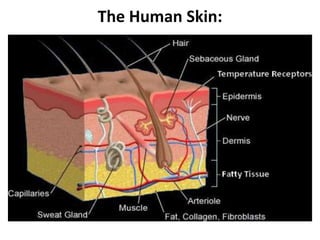
The Human Skin:
The dermis contains many useful
structures. Hairs, sweat and
sebaceous glands, sense receptors
and erector muscles are
responsible for controlling the
body temperature. Blood vessels
transport oxygen and nutrients to
the cells of the skin.
A healthy body is continuously gaining
and losing heat. Metabolic reactions
like respiration release a lot of heat
energy, muscular activity increase the
metabolic rate and release more heat
energy. The body can also gain
temperature from the surroundings
like the sun or by eating hot food. Heat
is lost by the body through exposed
skin by conduction.
If there is sweat or water on the
skin, it will absorb body heat to
evaporate which drops the
temperature. All these factors are
normal however, but it is
considered dangerous when the
body temperature keeps on
dropping or rising severely.
Cooling Down the Body:
When the body is overheated, the body takes
several actions to drop it by trying to lose heat in
several ways:
Vasodilation: this action causes the body to lose
heat quickly. It involves widening the lumen of
blood vessels of the skin, this increases blood flow
and rate of heat loss. The vessels are also brought
near the surface of the skin to reduce the distance
heat has to travel to escape.
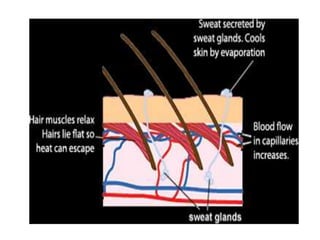
Sweating: Sweat glands near the
skin begin to secret sweat on the
surface of the skin through the
pores. This sweat acts as a heat
consumer to absorb the body heat
and use it in evaporation. The
activity of sweat glands is
increased when the temperature
of the body rises.
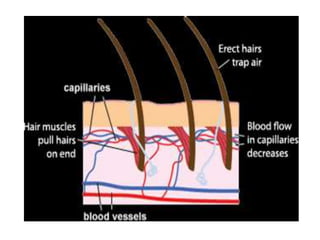
Hairs lie flat: The muscle erectors of
the hairs relax making the hairs lay flat
of the skin. When the hairs are erect,
they trap air in the gaps between
them, this acts as an insulation and
prevents heat loss. But when the hairs
are flat, less air is trapped between
them so there is no insulation and
more heat can be lost.
Heating Up the Body:
When the body temperatures drop, the body
takes several actions to regulate its temperature
by insulation to prevent heat loss and producing
heat energy:
Vasoconstriction: this causes the blood vessels to
become narrower to reduce heat loss. They also
sink deep into the skin to increase the distance
heat has to travel to escape thus reducing heat
loss.
Shivering: the muscles in the limbs
start to contract and relax rapidly,
thus increasing the rate of
respiration and amount of heat
energy released by it.
Hairs become erect: muscle
erectors contract and make the
hairs erect and stand up vertically
trapping air in the gaps between
them. This acts as insulation to
reduce heat loss.
How the Body Senses Change in
internal environment:
When the body’s internal temperature changes the
temperature of the blood changes with it. When
the blood flows through the brain, a part of it
called the hypothalamus detects the drop or rise in
temperature. The brain then starts sending
electrical impulses to the rest of the body so that it
works on heating or cooling its self.
This process is called Negative
Feedback. Negative feedback is
not for change in temperature only
though, it is for any change in the
internal temperature including the
blood glucose level.

Homeostasis and thermoregulation.

  • 1.
    HOMEOSTASIS. IGCSE BIOLOGY. BY MR. WILLYWAMBUA BIOLOGY/CHEMISTRY TEACHER AGA KHAN HIGH SCHOOL, NAIROBI KENYA.
  • 2.
    Homeostasis The human bodyhas the ability to maintain a constant internal environment so that every organ and cell is provided the perfect conditions to perform its functions. This is called homeostasis. There is no organ system for this function. However, every organ plays a role in maintaining a constant internal environment. For example the lungs are responsible for the supply of oxygen to cells. The liver is to maintain a constant level of glucose and amino acids, and so on..
  • 3.
    Temperature Regulation: A healthyhuman should have a body temperature of 37°C. If the body temperature drops below 37°C, metabolic reactions become slower because molecules move slower and have less kinetic energy. If the temperature rises above 37°C, the enzymes of the body begin to get denatured and metabolic reactions will be much slower. Sometimes, the temperature of the area you are at is low enough to decrease your body temperature. Sometimes it is high enough to raise your body temperature. This is why the body has the ability to control its body temperature. Our skin is responsible for this process.
  • 4.
    Monitoring body temperature Inhumans and other mammals, the core body temperature is monitored by a part of the brain called thermoregulatory centre. This is located in the hypothalamus of the brain. It acts as the body’s thermostat ( a switch that is turned on and off by a change in temperature, eg in iron box).
  • 5.
    The skin andtemperature control. Functions of the skin • Forming a tough outer layer able to resist mechanical damage. • Acts as barrier to the entry of disease- causing microorganisms. • Forming an impermeable surface, preventing loss of water. • Acts as a sense organ for touch and temperature changes. • Controls heat loss through the body surface.
  • 6.
    The structure andfunction of the skin. The skin is an organ that coats your entire body. The skin is made up of three layers, the Epidermis, the dermis and hypodermis. The epidermis’s main function is to protect the dermis which contains most of the structures, and protect the body from ultra-violet rays. The surface of the epidermis is made of tough, dead cells.
  • 7.
  • 8.
    The dermis containsmany useful structures. Hairs, sweat and sebaceous glands, sense receptors and erector muscles are responsible for controlling the body temperature. Blood vessels transport oxygen and nutrients to the cells of the skin.
  • 9.
    A healthy bodyis continuously gaining and losing heat. Metabolic reactions like respiration release a lot of heat energy, muscular activity increase the metabolic rate and release more heat energy. The body can also gain temperature from the surroundings like the sun or by eating hot food. Heat is lost by the body through exposed skin by conduction.
  • 10.
    If there issweat or water on the skin, it will absorb body heat to evaporate which drops the temperature. All these factors are normal however, but it is considered dangerous when the body temperature keeps on dropping or rising severely.
  • 11.
    Cooling Down theBody: When the body is overheated, the body takes several actions to drop it by trying to lose heat in several ways: Vasodilation: this action causes the body to lose heat quickly. It involves widening the lumen of blood vessels of the skin, this increases blood flow and rate of heat loss. The vessels are also brought near the surface of the skin to reduce the distance heat has to travel to escape.
  • 12.
    Sweating: Sweat glandsnear the skin begin to secret sweat on the surface of the skin through the pores. This sweat acts as a heat consumer to absorb the body heat and use it in evaporation. The activity of sweat glands is increased when the temperature of the body rises.
  • 13.
    Hairs lie flat:The muscle erectors of the hairs relax making the hairs lay flat of the skin. When the hairs are erect, they trap air in the gaps between them, this acts as an insulation and prevents heat loss. But when the hairs are flat, less air is trapped between them so there is no insulation and more heat can be lost.
  • 15.
    Heating Up theBody: When the body temperatures drop, the body takes several actions to regulate its temperature by insulation to prevent heat loss and producing heat energy: Vasoconstriction: this causes the blood vessels to become narrower to reduce heat loss. They also sink deep into the skin to increase the distance heat has to travel to escape thus reducing heat loss.
  • 16.
    Shivering: the musclesin the limbs start to contract and relax rapidly, thus increasing the rate of respiration and amount of heat energy released by it.
  • 17.
    Hairs become erect:muscle erectors contract and make the hairs erect and stand up vertically trapping air in the gaps between them. This acts as insulation to reduce heat loss.
  • 19.
    How the BodySenses Change in internal environment: When the body’s internal temperature changes the temperature of the blood changes with it. When the blood flows through the brain, a part of it called the hypothalamus detects the drop or rise in temperature. The brain then starts sending electrical impulses to the rest of the body so that it works on heating or cooling its self.
  • 20.
    This process iscalled Negative Feedback. Negative feedback is not for change in temperature only though, it is for any change in the internal temperature including the blood glucose level.