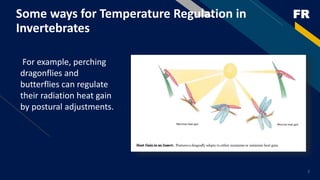
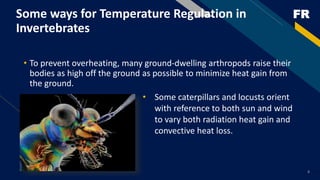
This document discusses temperature regulation in invertebrates. It notes that many invertebrates passively conform to the temperature of their environment as they lack mechanisms for thermoregulation. Some higher invertebrates can sense temperature differences. Many arthropods like insects and crustaceans can sense thermal variation, such as ticks detecting warmth from nearby hosts. Some invertebrates regulate temperature through processes like reducing water content to avoid freezing, producing antifreeze compounds, or shivering muscles to warm up. Larger flying insects prevent overheating by circulating heat through their bodies. Certain desert-dwelling cicadas and beetles have evolved evaporative cooling and wax blooms respectively to regulate temperature.





![Jaw suspension in vertebrates [autosaved]](https://cdn.slidesharecdn.com/ss_thumbnails/jawsuspensioninvertebratesautosaved-201219155254-thumbnail.jpg?width=640&height=640&fit=bounds)


![谷歌留痕技术 [ 𝙩𝙤𝙥 𝟮𝟯𝟯. 𝙘 𝙤𝙢 ]](https://cdn.slidesharecdn.com/ss_thumbnails/top233-260130174328-3833018c-thumbnail.jpg?width=640&height=640&fit=bounds)


