1
2
Presented by:
Sanya Yaseen
4010
3
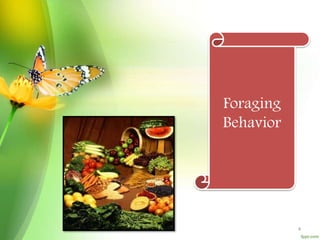
Foraging
Behavior
4
 Introduction
 Decision of Foraging
 Factors influencing for Foraging
 Types of Foraging
Contents
5
Behavior
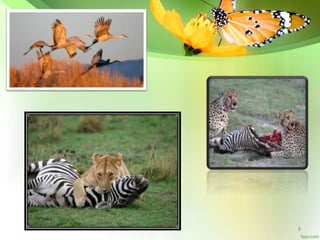
“It refers to the activities animals perform
during their lifetime, including locomotion,
feeding, breeding, capture of prey, avoidance
of predator, and social behavior”.
6
Foraging Behavior
Finding Processing
Eating Food
7
8
Grizzly bear (Ursus arctos horribilis) mother
and cubs foraging.
9
₪ Energetic value
₪ How easy it is to carry?
₪ Its distance from cover
₪ And how these variables interact ?
Decisions For Foraging
10
Factors influencing foraging behavior
Learning
Predation
Parasitism
Genetics
11
Learning
• An animal consuming new food, or
using a new foraging technique in
response to their dynamic living
environment.
• Observing and learning from other
members of the group ensure that the
younger members of the group learn
what is safe to eat and become
proficient foragers.
12
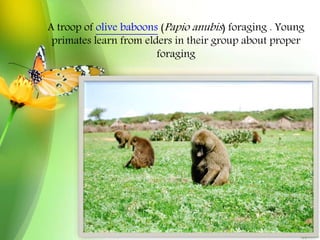
A troop of olive baboons (Papio anubis) foraging . Young
primates learn from elders in their group about proper
foraging
13
Genetics
The genes associated with foraging
behavior have been widely studied
in honeybees with reference to the
following; onset of foraging
behavior, task division between
foragers and workers, and bias in
foraging for either pollen or nectar.
14
A European honey bee extracts nectar.
15
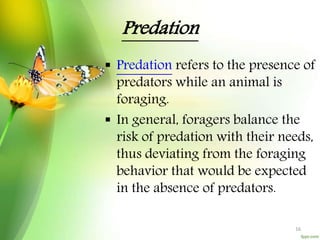
Predation
 Predation refers to the presence of
predators while an animal is
foraging.
 In general, foragers balance the
risk of predation with their needs,
thus deviating from the foraging
behavior that would be expected
in the absence of predators.
16
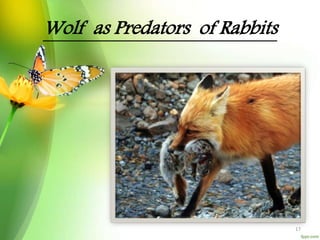
Wolf as Predators of Rabbits
17
Parasitism
 Animals might simply avoid food items
that increase their risk of being
parasitized, as when the prey items are
intermediate hosts of parasites.
 Animals might also avoid areas that
would expose them to a high risk of
parasitism.
18
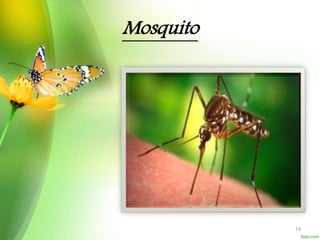
Mosquito
19
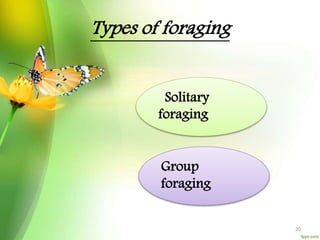
Types of foraging
Group
foraging
Solitary
foraging
20
Solitary foraging
• Solitary foraging is when animals find,
capture and consume their prey alone.
21
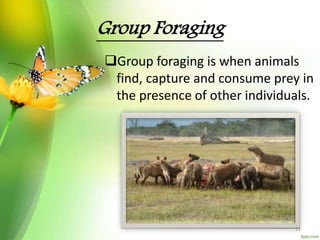
Group Foraging
Group foraging is when animals
find, capture and consume prey in
the presence of other individuals.
22
Foraging Strategies
“sit and wait” (ambush predator -
uses primarily visual cues,
movement)
Advantages - expend little energy, not seen
by predators
Disadvantages - how often does food come
along?
“active predators” (hunters - use
visual and olfactory cues)
23
24
25

Animal behaviour