Thermoregulation
Objectives Describe the thermoregulatory center and its functions. Explain the mechanisms of heat transfer. Explain the pathophysiological mechanisms involved in temperature disorders.
Body Temperature Shell temperature: Temperature closer to skin Oral temperature 36.6 o -37.0 o C (97.9 o -98.6 o F) Core temperature: Most important temperature Temperature of “core” (organs in cranial, thoracic and abdominal cavities) Rectal temperature 37.2 o -37.6 o C (99.0 o -99.7 o F)
Heat Production Exergonic reactions: Oxidation and ATP use. Most heat generated by brain, heart, liver and glands at rest. Skeletal muscles 20-30% at rest.  Can increase 30-40 times during exercise.
Thermoregulatory Center Hypothalamus: Preoptic area neurons: hypothalamic thermostat: Heat-losing center Heat-promoting center Monitors temperature of blood and receives signals from peripheral thermoreceptors. Negative feedback loops
Thermoregulatory Center Heat-losing center: Activates heat losing mechanisms: Dilation of dermal arterioles: increase blood flow to skin. Sweating. Increased respiration through mouth. Behavioral: remove clothing. Inhibits heat-promoting center.
Thermoregulatory Center Heat-promoting center: Activates heat generating mechanisms: SNS:  Vasoconstriction of dermal arterioles: decrease blood flow to skin  Stimulates arrector pili muscles: hair stands on end Shivering thermogenesis: spinal reflex of alternating contractions in antagonistic muscles Nonshivering thermogenesis: Long-term mechanism stimulating thyroid hormone release T 3  and T 4 . Inhibits heat-loss center.
Thermoregulatory Center Hypothalamus: Peripheral thermoreceptors: Temperature of skin. Central thermoreceptors: Temperature of core. Most important located in hypothalamus.
Mechanisms of Heat Transfer Radiation: Infrared radiation. Conduction: Direct transfer of energy through physical contact. Convection: Heat loss to air around the human body. Evaporation: Energy change in water molecule from liquid to vapor.
Heat Exhaustion Acute heat injury due to dehydration. Heat-loss center stimulated. Sweat production increases. Decrease in BP because heat loss center stimulates peripheral vasodilation. Blood flow to brain decreases. Compensatory mechanisms: SNS Aldosterone ADH
Heat Exhaustion Symptoms: Headache Nausea Actively sweating Skin cool and pale Fainting Treatment: Increase fluids Shade or AC room Cold wet towels  Can progress to heat stroke.
Heat Stroke Core rectal temperature approaches 41 o C 2 types: Individuals with compromised homeostatic mechanisms: Young children Elderly Exertional: Healthy individual under strenuous exercise
Heat Stroke Renal and splanchnic vasoconstriction. Peripheral blood flow decreases. Impaired thermoregulation. CNS dysfunction: Cerebral edema and increased intracranial pressure. Tissue damage due to uncoupling during oxidative phosphorylation. Proteins denature.
Heat Stroke Complications Rhabomyolysis Multiple organ failure: Cardiac Hepatic Renal DIC: fibrinolysis CNS hallucinations, coma Anhydrosis more common in classic than exertional heat stroke.
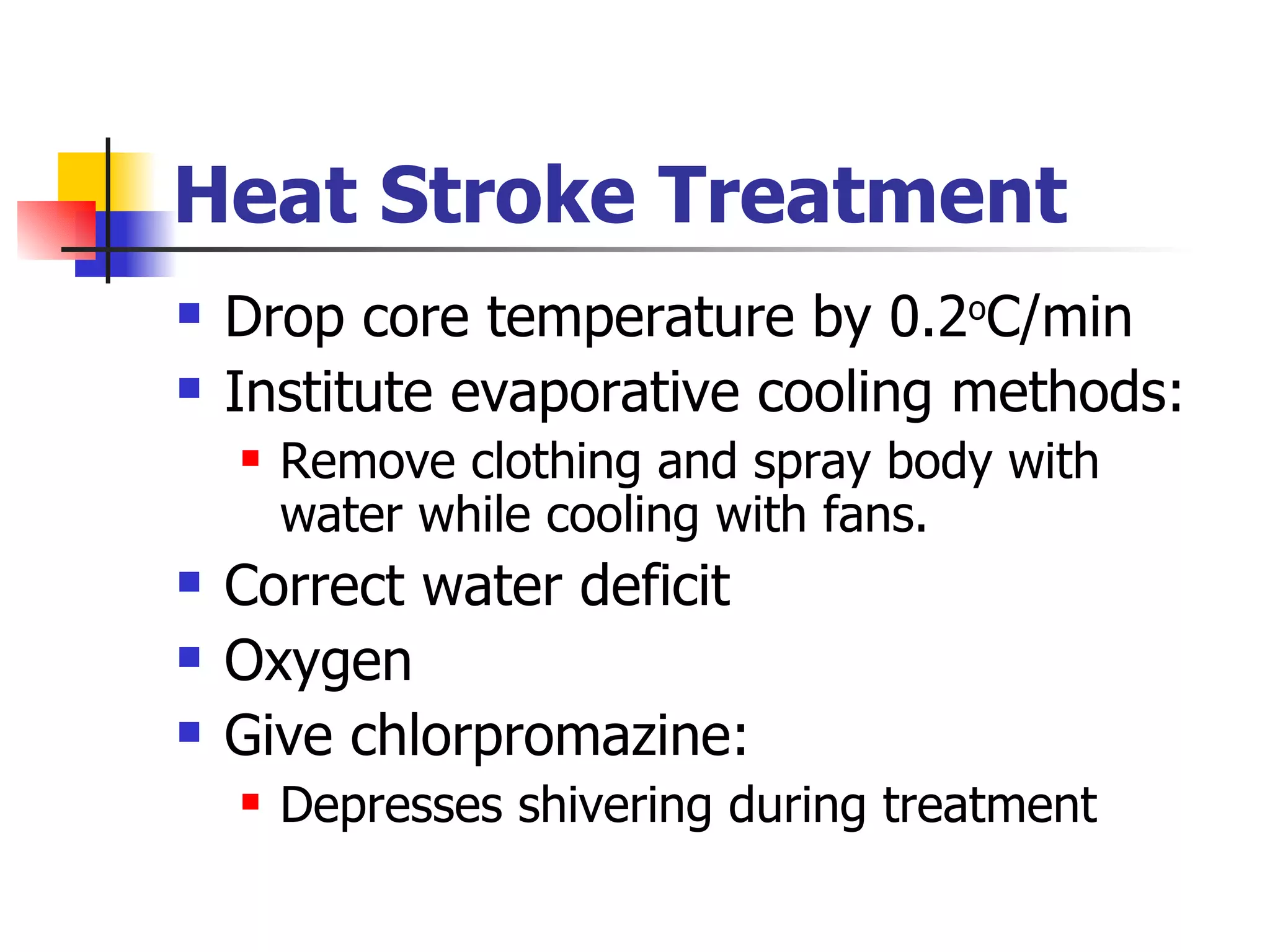
Heat Stroke Treatment Drop core temperature by 0.2 o C/min Institute evaporative cooling methods: Remove clothing and spray body with water while cooling with fans. Correct water deficit Oxygen Give chlorpromazine: Depresses shivering during treatment
Exercise Maximum exercise, heat production can be 10-20 times resting. Highest temperatures occur in the exercising muscles. Body temperature increases during exercise and levels off a few degrees above normal (except at extreme temperatures). Regulated response with heat loss = heat production at a stabilized core temperature.
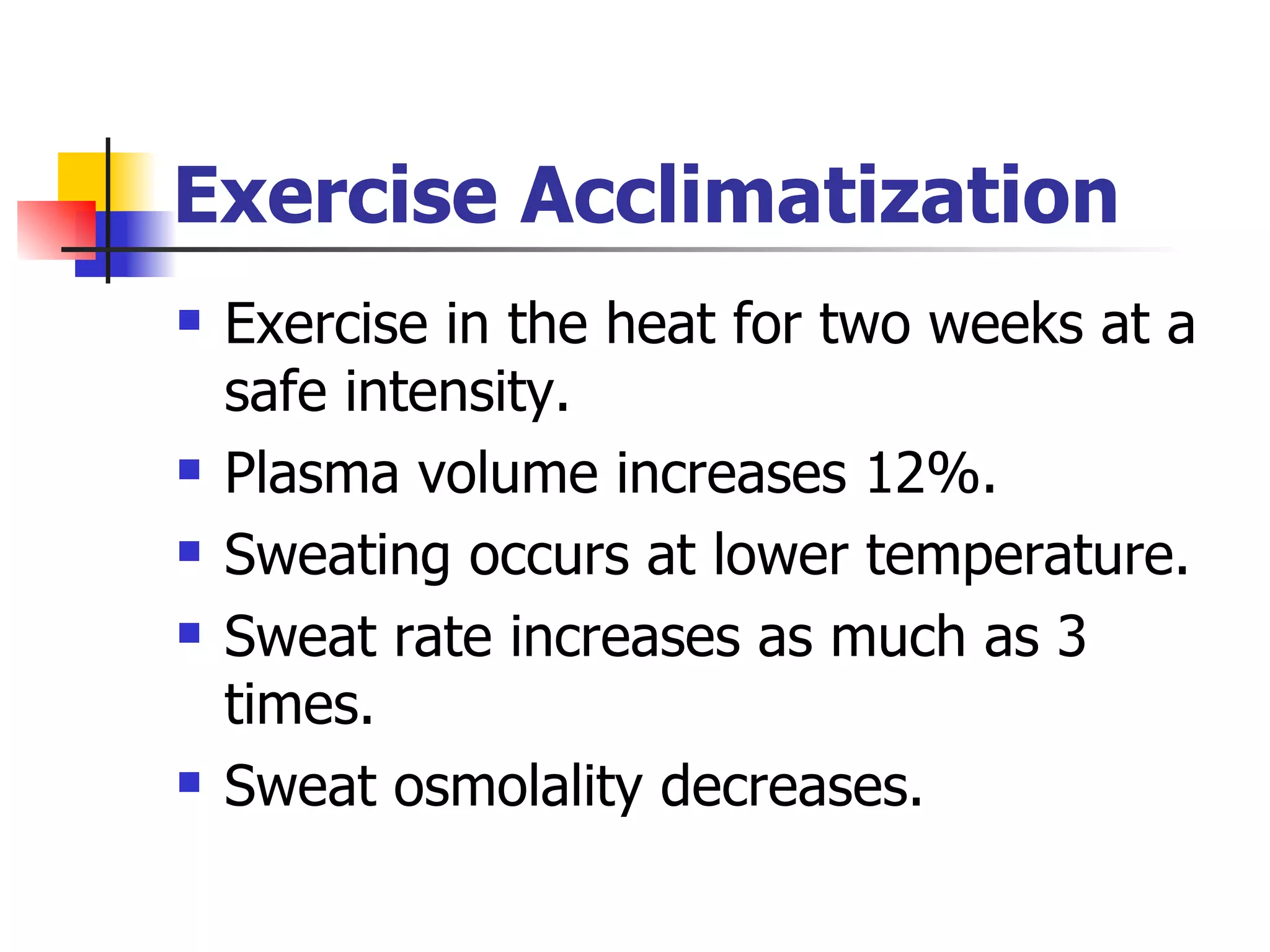
Exercise Acclimatization Exercise in the heat for two weeks at a safe intensity. Plasma volume increases 12%. Sweating occurs at lower temperature. Sweat rate increases as much as 3 times. Sweat osmolality decreases.
Hypothermia Core temperature below 95 o F. Gradual loss of mental and physical activity. Changes in motor coordination. Shivering. Slurred speech. Abnormally slow rate of breathing. Cold, pale skin. Fatigue, lethargy.
Hypothermia If core temperature remains above 90 o F, recovery is good. If core temperature falls below 80 o  F, prognosis poor. Treatment: Move person out of cold. Insulate the person’s body. Warm beverages. Give warm IV fluids, slowly otherwise vasodilation occurs, bringing too large volume of chilled blood; cardiac arrhythmias . Frostbite: Vasoconstriction to cold, causes irreparable tissue damage. Cells decrease ATP production, hypoxia. Do not rub tissue.

termoregulation

  • 1.
  • 2.
    Objectives Describe thethermoregulatory center and its functions. Explain the mechanisms of heat transfer. Explain the pathophysiological mechanisms involved in temperature disorders.
  • 3.
    Body Temperature Shelltemperature: Temperature closer to skin Oral temperature 36.6 o -37.0 o C (97.9 o -98.6 o F) Core temperature: Most important temperature Temperature of “core” (organs in cranial, thoracic and abdominal cavities) Rectal temperature 37.2 o -37.6 o C (99.0 o -99.7 o F)
  • 4.
    Heat Production Exergonicreactions: Oxidation and ATP use. Most heat generated by brain, heart, liver and glands at rest. Skeletal muscles 20-30% at rest. Can increase 30-40 times during exercise.
  • 5.
    Thermoregulatory Center Hypothalamus:Preoptic area neurons: hypothalamic thermostat: Heat-losing center Heat-promoting center Monitors temperature of blood and receives signals from peripheral thermoreceptors. Negative feedback loops
  • 6.
    Thermoregulatory Center Heat-losingcenter: Activates heat losing mechanisms: Dilation of dermal arterioles: increase blood flow to skin. Sweating. Increased respiration through mouth. Behavioral: remove clothing. Inhibits heat-promoting center.
  • 7.
    Thermoregulatory Center Heat-promotingcenter: Activates heat generating mechanisms: SNS: Vasoconstriction of dermal arterioles: decrease blood flow to skin Stimulates arrector pili muscles: hair stands on end Shivering thermogenesis: spinal reflex of alternating contractions in antagonistic muscles Nonshivering thermogenesis: Long-term mechanism stimulating thyroid hormone release T 3 and T 4 . Inhibits heat-loss center.
  • 8.
    Thermoregulatory Center Hypothalamus:Peripheral thermoreceptors: Temperature of skin. Central thermoreceptors: Temperature of core. Most important located in hypothalamus.
  • 9.
    Mechanisms of HeatTransfer Radiation: Infrared radiation. Conduction: Direct transfer of energy through physical contact. Convection: Heat loss to air around the human body. Evaporation: Energy change in water molecule from liquid to vapor.
  • 10.
    Heat Exhaustion Acuteheat injury due to dehydration. Heat-loss center stimulated. Sweat production increases. Decrease in BP because heat loss center stimulates peripheral vasodilation. Blood flow to brain decreases. Compensatory mechanisms: SNS Aldosterone ADH
  • 11.
    Heat Exhaustion Symptoms:Headache Nausea Actively sweating Skin cool and pale Fainting Treatment: Increase fluids Shade or AC room Cold wet towels Can progress to heat stroke.
  • 12.
    Heat Stroke Corerectal temperature approaches 41 o C 2 types: Individuals with compromised homeostatic mechanisms: Young children Elderly Exertional: Healthy individual under strenuous exercise
  • 13.
    Heat Stroke Renaland splanchnic vasoconstriction. Peripheral blood flow decreases. Impaired thermoregulation. CNS dysfunction: Cerebral edema and increased intracranial pressure. Tissue damage due to uncoupling during oxidative phosphorylation. Proteins denature.
  • 14.
    Heat Stroke ComplicationsRhabomyolysis Multiple organ failure: Cardiac Hepatic Renal DIC: fibrinolysis CNS hallucinations, coma Anhydrosis more common in classic than exertional heat stroke.
  • 15.
    Heat Stroke TreatmentDrop core temperature by 0.2 o C/min Institute evaporative cooling methods: Remove clothing and spray body with water while cooling with fans. Correct water deficit Oxygen Give chlorpromazine: Depresses shivering during treatment
  • 16.
    Exercise Maximum exercise,heat production can be 10-20 times resting. Highest temperatures occur in the exercising muscles. Body temperature increases during exercise and levels off a few degrees above normal (except at extreme temperatures). Regulated response with heat loss = heat production at a stabilized core temperature.
  • 17.
    Exercise Acclimatization Exercisein the heat for two weeks at a safe intensity. Plasma volume increases 12%. Sweating occurs at lower temperature. Sweat rate increases as much as 3 times. Sweat osmolality decreases.
  • 18.
    Hypothermia Core temperaturebelow 95 o F. Gradual loss of mental and physical activity. Changes in motor coordination. Shivering. Slurred speech. Abnormally slow rate of breathing. Cold, pale skin. Fatigue, lethargy.
  • 19.
    Hypothermia If coretemperature remains above 90 o F, recovery is good. If core temperature falls below 80 o F, prognosis poor. Treatment: Move person out of cold. Insulate the person’s body. Warm beverages. Give warm IV fluids, slowly otherwise vasodilation occurs, bringing too large volume of chilled blood; cardiac arrhythmias . Frostbite: Vasoconstriction to cold, causes irreparable tissue damage. Cells decrease ATP production, hypoxia. Do not rub tissue.