The World At Risk AS Geography
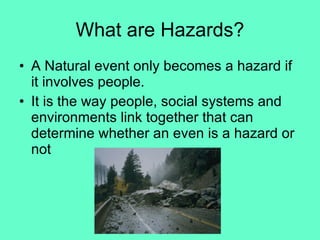
What are Hazards? A Natural event only becomes a hazard if it involves people. It is the way people, social systems and environments link together that can determine whether an even is a hazard or not
Example A Rock fall in the Rocky mountains kills no one  Rock fall in Wales kills 17 children One is a natural event – the other a natural disaster.
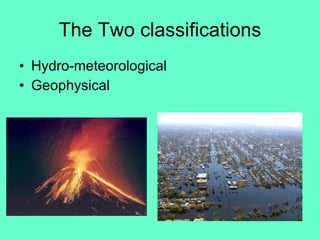
The Two classifications Hydro-meteorological Geophysical
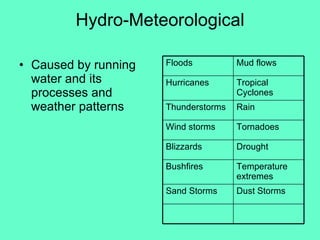
Hydro-Meteorological Caused by running water and its processes and weather patterns Dust Storms Sand Storms Temperature extremes Bushfires Drought Blizzards Tornadoes Wind storms Rain Thunderstorms Tropical Cyclones Hurricanes Mud flows Floods
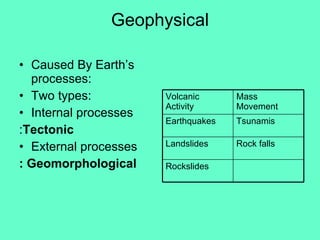
Geophysical Caused By Earth’s processes: Two types: Internal processes : Tectonic External processes : Geomorphological Tsunamis Earthquakes Mass Movement Volcanic Activity Rock falls Landslides Rockslides
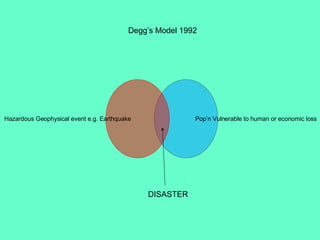
DISASTER Degg’s Model 1992 Pop’n Vulnerable to human or economic loss Hazardous Geophysical event e.g. Earthquake
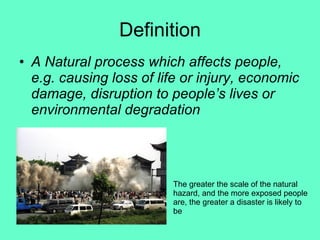
Definition A Natural process which affects people, e.g. causing loss of life or injury, economic damage, disruption to people’s lives or environmental degradation The greater the scale of the natural hazard, and the more exposed people are, the greater a disaster is likely to be
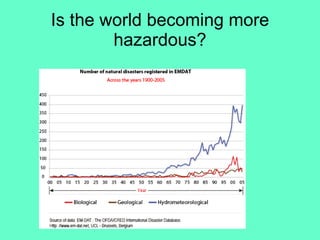
Is the world becoming more hazardous?
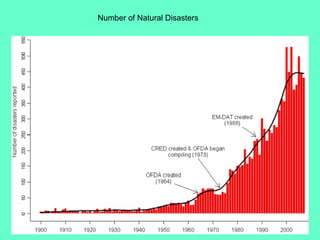
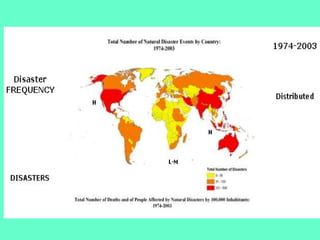
Number of Natural Disasters
CRED CRED – Centre for research on the Epidemiology of Disasters CRED created EM-DAT CRED
EM-DAT EM-DAT – Stands for Emergency events database and was created by the WHO and the Belgium govt EM-DAT have many criteria and much info on thousands of disasters EM-DAT
OFDA OFDA – The Office of U.S. Foreign Disaster Assistance OFDA is the office within USAID responsible for providing non-food humanitarian assistance in response to international crises and disasters. OFDA
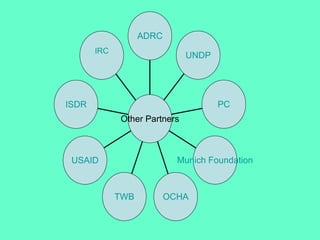
IRC ISDR USAID TWB OCHA Munich Foundation PC UNDP ADRC Other Partners
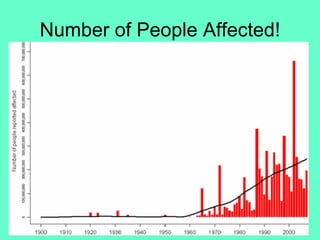
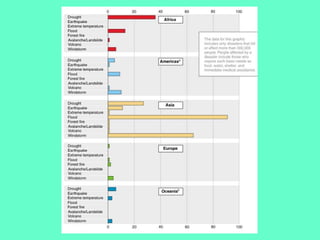
Number of People Affected!
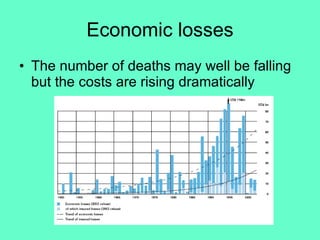
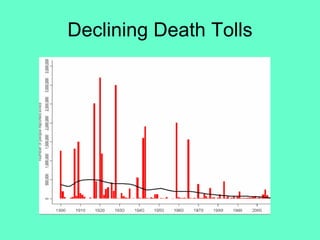
Economic losses The number of deaths may well be falling but the costs are rising dramatically
Questions Why has the number of disasters gone up but the number who have died gone down? Why has the death tolls gone down but the number of people affected gone up? Why has the death tolls gone down but the economic losses gone up?
 
 
Declining Death Tolls
Reasons Reflects the ability of mankind to understand natural disasters Improvements in prediction techniques Appropriate precautions Construction techniques Are these the same for the MEDC’s and the LEDC’s
Capacity and Vulnerability We have an increase in our capacity to cope with disaster We have an increase in our vulnerability through economic, socio-demographic and technological factors. These outweigh the gains in our capacity
Finally….
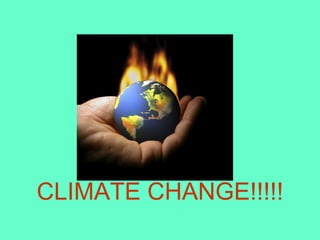
CLIMATE CHANGE!!!!!

The World At Risk

  • 1.
    The World AtRisk AS Geography
  • 2.
    What are Hazards?A Natural event only becomes a hazard if it involves people. It is the way people, social systems and environments link together that can determine whether an even is a hazard or not
  • 3.
    Example A Rockfall in the Rocky mountains kills no one Rock fall in Wales kills 17 children One is a natural event – the other a natural disaster.
  • 4.
    The Two classificationsHydro-meteorological Geophysical
  • 5.
    Hydro-Meteorological Caused byrunning water and its processes and weather patterns Dust Storms Sand Storms Temperature extremes Bushfires Drought Blizzards Tornadoes Wind storms Rain Thunderstorms Tropical Cyclones Hurricanes Mud flows Floods
  • 6.
    Geophysical Caused ByEarth’s processes: Two types: Internal processes : Tectonic External processes : Geomorphological Tsunamis Earthquakes Mass Movement Volcanic Activity Rock falls Landslides Rockslides
  • 7.
    DISASTER Degg’s Model1992 Pop’n Vulnerable to human or economic loss Hazardous Geophysical event e.g. Earthquake
  • 8.
    Definition A Naturalprocess which affects people, e.g. causing loss of life or injury, economic damage, disruption to people’s lives or environmental degradation The greater the scale of the natural hazard, and the more exposed people are, the greater a disaster is likely to be
  • 9.
    Is the worldbecoming more hazardous?
  • 10.
  • 11.
    CRED CRED –Centre for research on the Epidemiology of Disasters CRED created EM-DAT CRED
  • 12.
    EM-DAT EM-DAT –Stands for Emergency events database and was created by the WHO and the Belgium govt EM-DAT have many criteria and much info on thousands of disasters EM-DAT
  • 13.
    OFDA OFDA –The Office of U.S. Foreign Disaster Assistance OFDA is the office within USAID responsible for providing non-food humanitarian assistance in response to international crises and disasters. OFDA
  • 14.
    IRC ISDR USAIDTWB OCHA Munich Foundation PC UNDP ADRC Other Partners
  • 15.
  • 16.
    Economic losses Thenumber of deaths may well be falling but the costs are rising dramatically
  • 17.
    Questions Why hasthe number of disasters gone up but the number who have died gone down? Why has the death tolls gone down but the number of people affected gone up? Why has the death tolls gone down but the economic losses gone up?
  • 18.
  • 19.
  • 20.
  • 21.
    Reasons Reflects theability of mankind to understand natural disasters Improvements in prediction techniques Appropriate precautions Construction techniques Are these the same for the MEDC’s and the LEDC’s
  • 22.
    Capacity and VulnerabilityWe have an increase in our capacity to cope with disaster We have an increase in our vulnerability through economic, socio-demographic and technological factors. These outweigh the gains in our capacity
  • 23.
  • 24.