Peter P. Debbarma, Department of Geography
Asst. Professor
Disclaimer
 Many of the slides have been designed in order
to properly understand of the concepts related.
Some Charts and slides are procured from
various google web and slideshare,research net
from across the globes. I have modified, edited
and also included many slides designed solely by
me for proper understanding of the concepts.
Hence, I do not claim to be the sole author
of this presentations.
 In service for students…………….
Scope
• Disasters are as old as our Earth & Mankind.
• It was even before Mankind-Earth faces through different extremes of
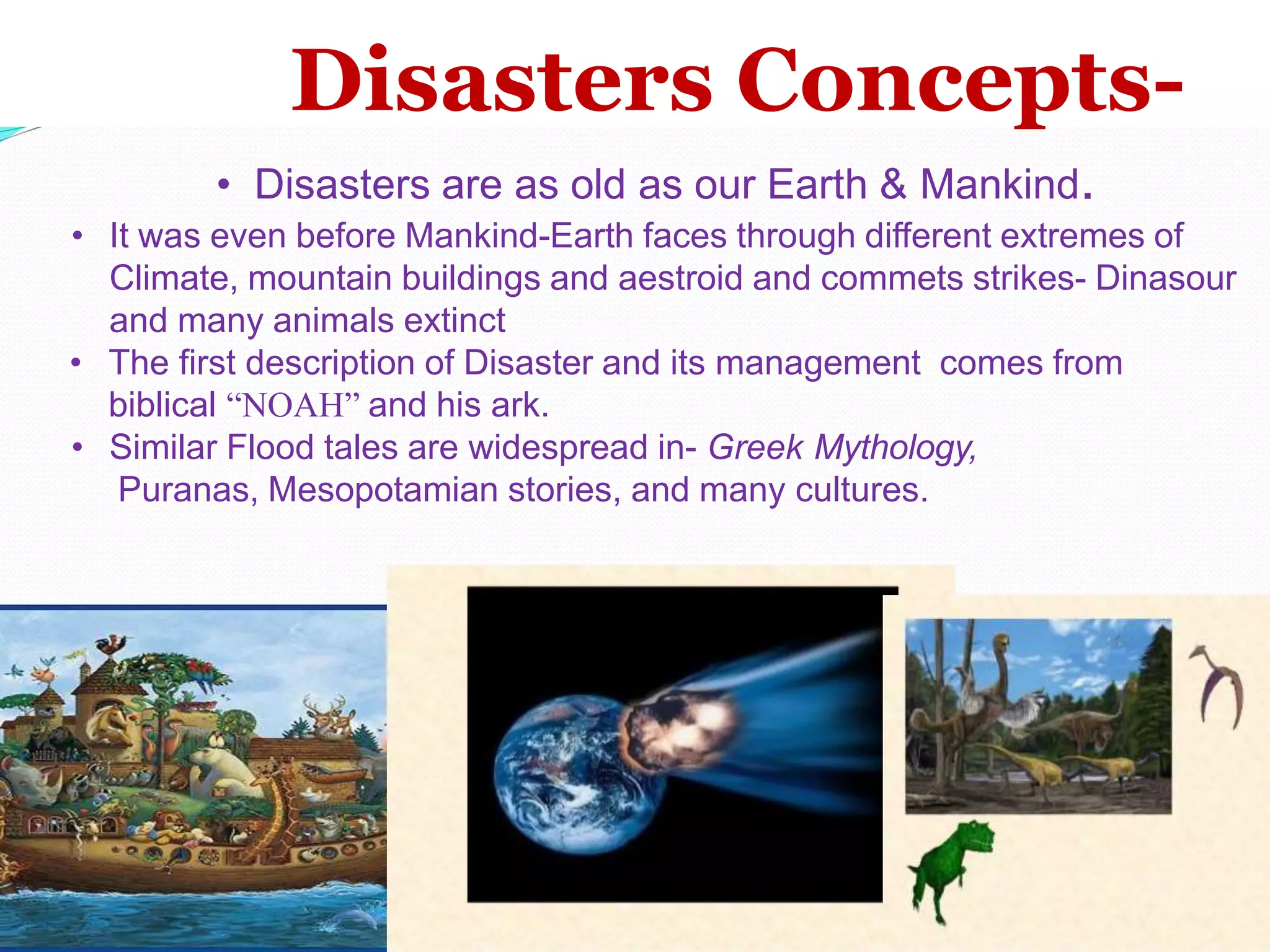
Climate, mountain buildings and aestroid and commets strikes- Dinasour
and many animals extinct
• The first description of Disaster and its management comes from
biblical “NOAH” and his ark.
• Similar Flood tales are widespread in- Greek Mythology,
Puranas, Mesopotamian stories, and many cultures.
Disasters Concepts-
3
Some Terms to be Dealt with
DISASTER
A major hazard event that causes widespread disruption to a community or region that the affected
community is unable to deal with adequately without outside help. It is an event of hazard
occurrence and assessments of magnitude loss of life and property
HAZARD
A threat (whether natural or human) that has the potential to cause loss of life, injury, property
damage, socio-economic disruption or environmental degradation. A hazard may not always bring
disaster but if not properly handled or well prepared, they can bring big disaster. It remains threat so
long it does not bring disaster.
HAZARD EVENT
The occurrence (realization) of a hazard, the effects of which change demographic, economic and/or
environmental conditions.
RISK
The probability of a hazard event causing harmful consequences (expected losses in terms of deaths,
injuries, property damage, economy and environment). Eg. There are risks when you don’t wear
helmet while driving motor cycle
VULNERABILITY
The susceptibility of a community to a hazard or to the impacts of a hazard event. Eg. Assam is
vulnerable to floods because of its plain land, nearby big rivers and heavy rainfall region
WHAT are DISASTERS ?
Any occurrence that causes damage, ecological disruption, loss of human
life,deterioration of health and health services on a scale, sufficient to warrant an
extraordinary response from outside the affected community or
area.(WHO)
A disaster can be defined as an occurrence either nature or man made that
causes human suffering and creates human needs that victim cannot alleviate without
assistance.
(American Red Cross)
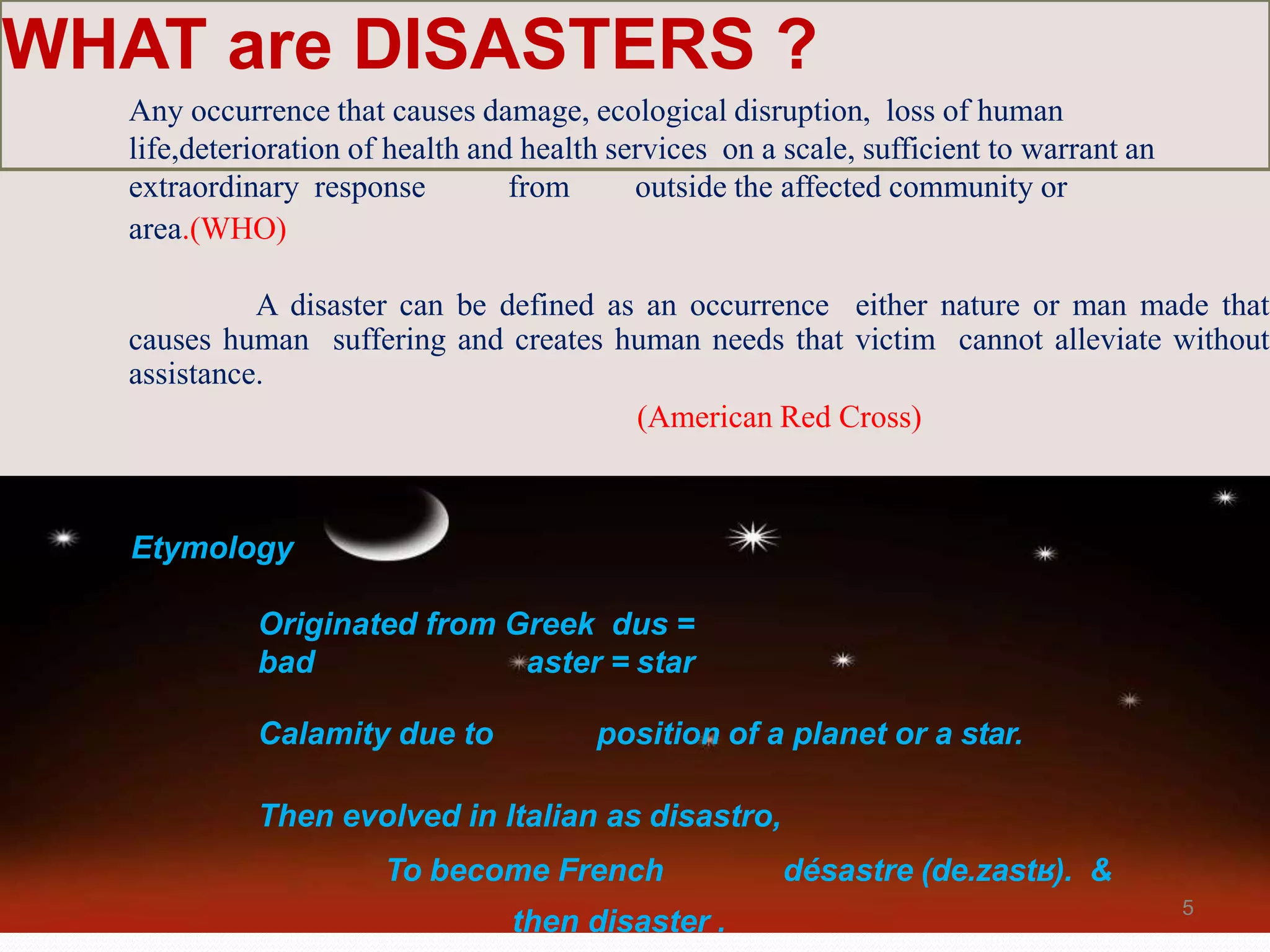
Etymology
Originated from Greek dus =
bad aster = star
Calamity due to position of a planet or a star.
Then evolved in Italian as disastro,
To become French désastre (de.zastʁ). &
then disaster .
5
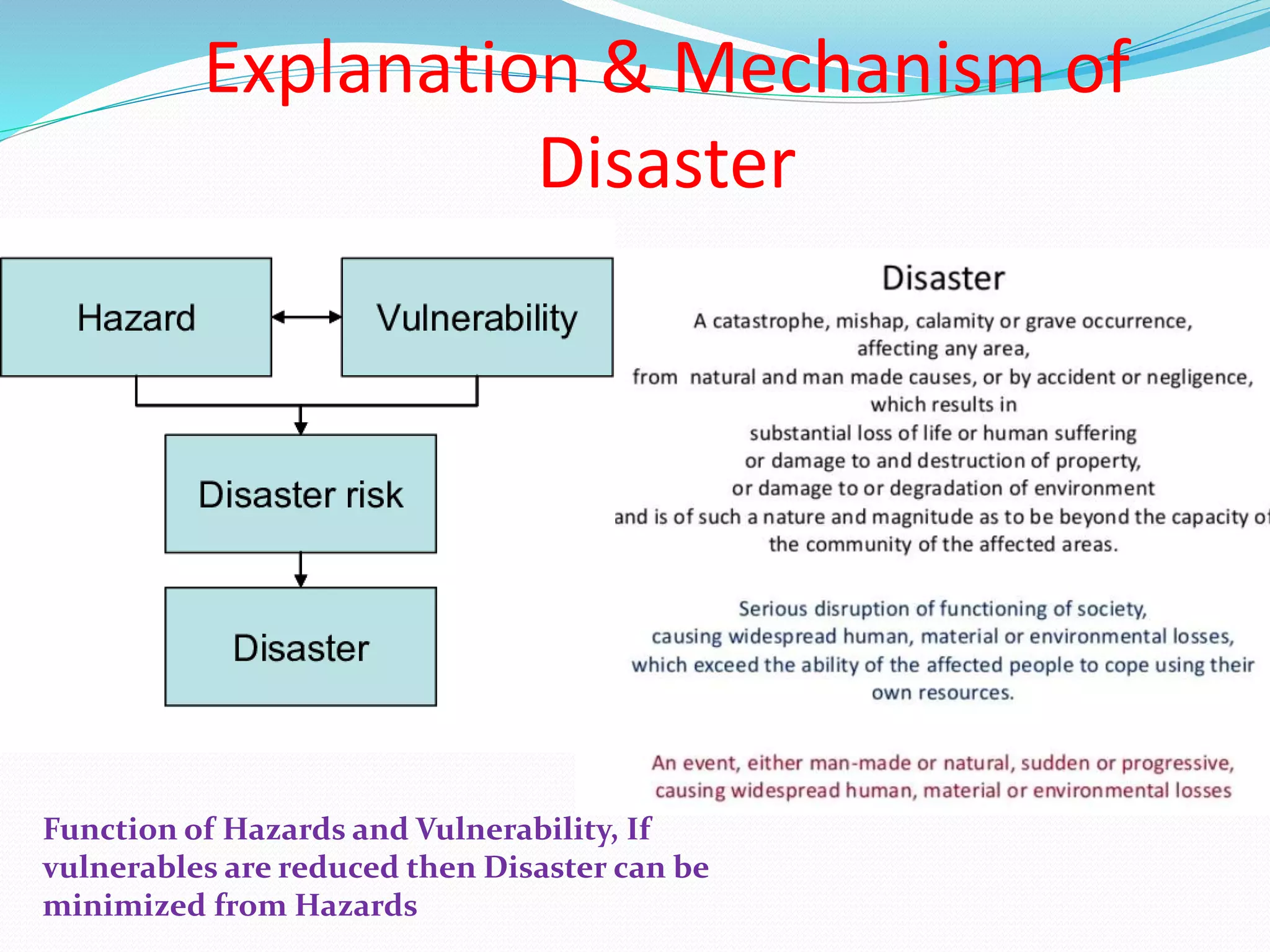
Explanation & Mechanism of
Disaster
Function of Hazards and Vulnerability, If
vulnerables are reduced then Disaster can be
minimized from Hazards
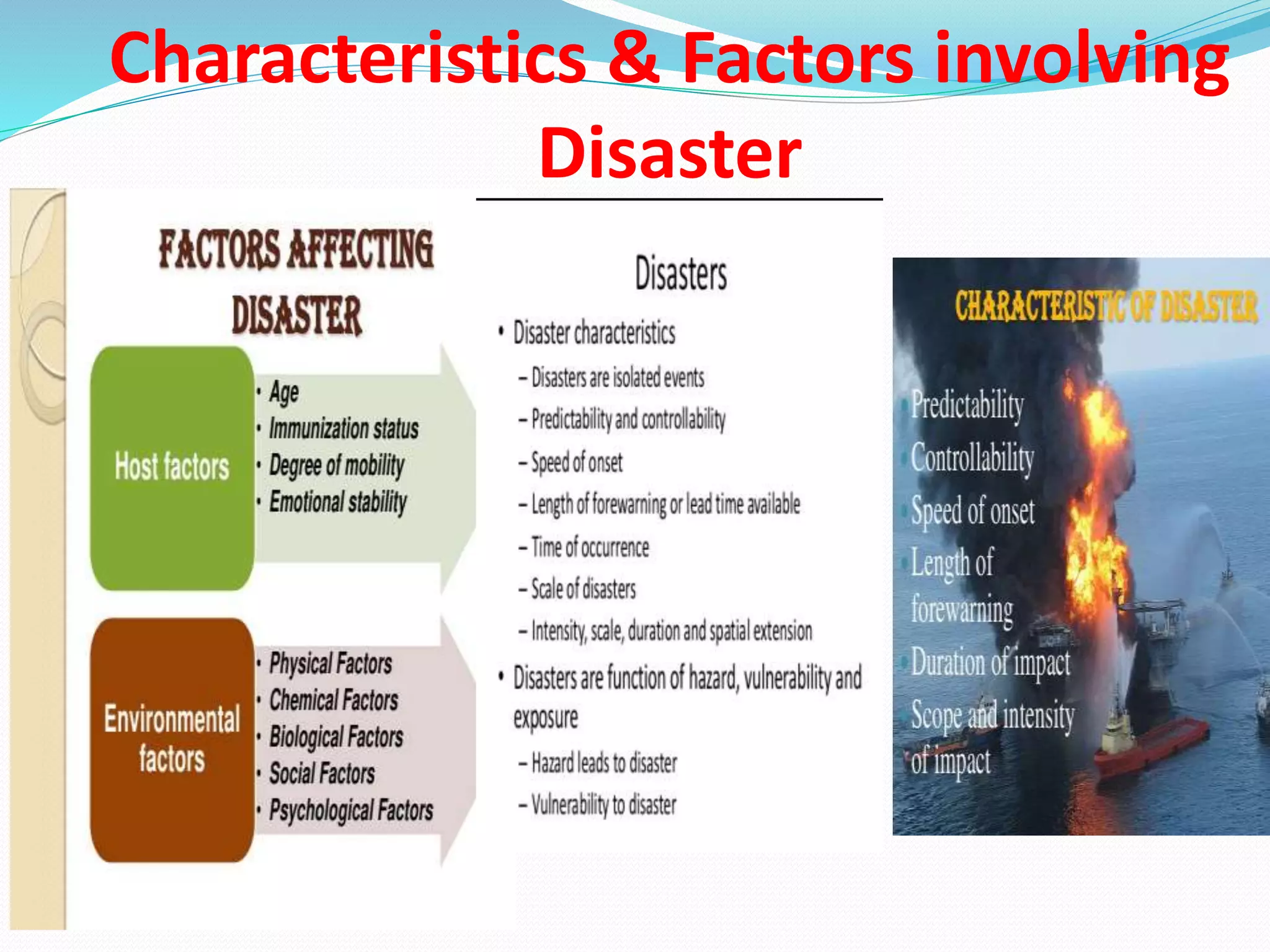
Characteristics & Factors involving
Disaster
What are Hazards?
8
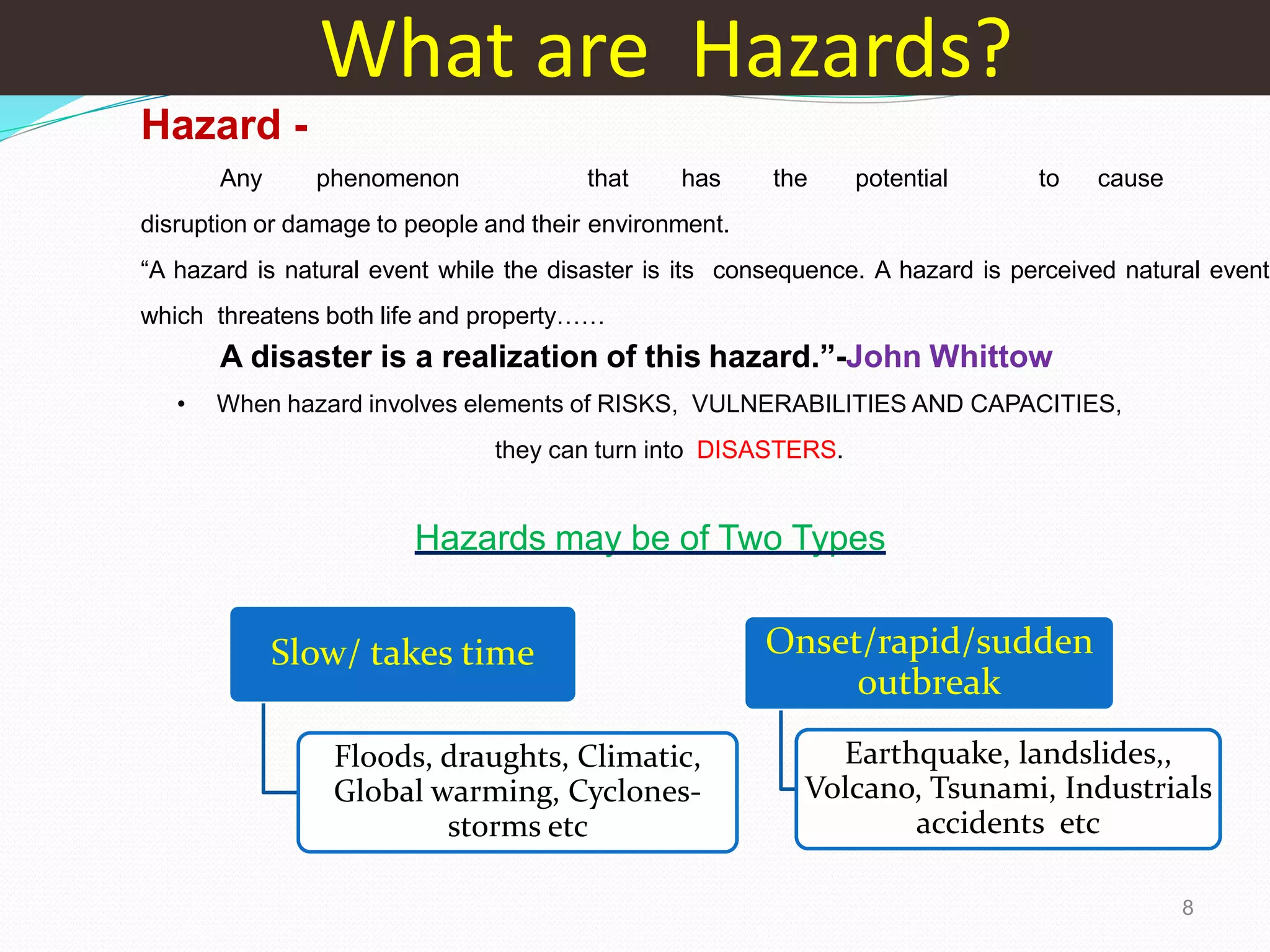
Hazard -
Any phenomenon that has the potential to cause
disruption or damage to people and their environment.
“A hazard is natural event while the disaster is its consequence. A hazard is perceived natural event
which threatens both life and property……
A disaster is a realization of this hazard.”-John Whittow
• When hazard involves elements of RISKS, VULNERABILITIES AND CAPACITIES,
they can turn into DISASTERS.
Hazards may be of Two Types
Slow/ takes time
Floods, draughts, Climatic,
Global warming, Cyclones-
storms etc
Onset/rapid/sudden
outbreak
Earthquake, landslides,,
Volcano, Tsunami, Industrials
accidents etc
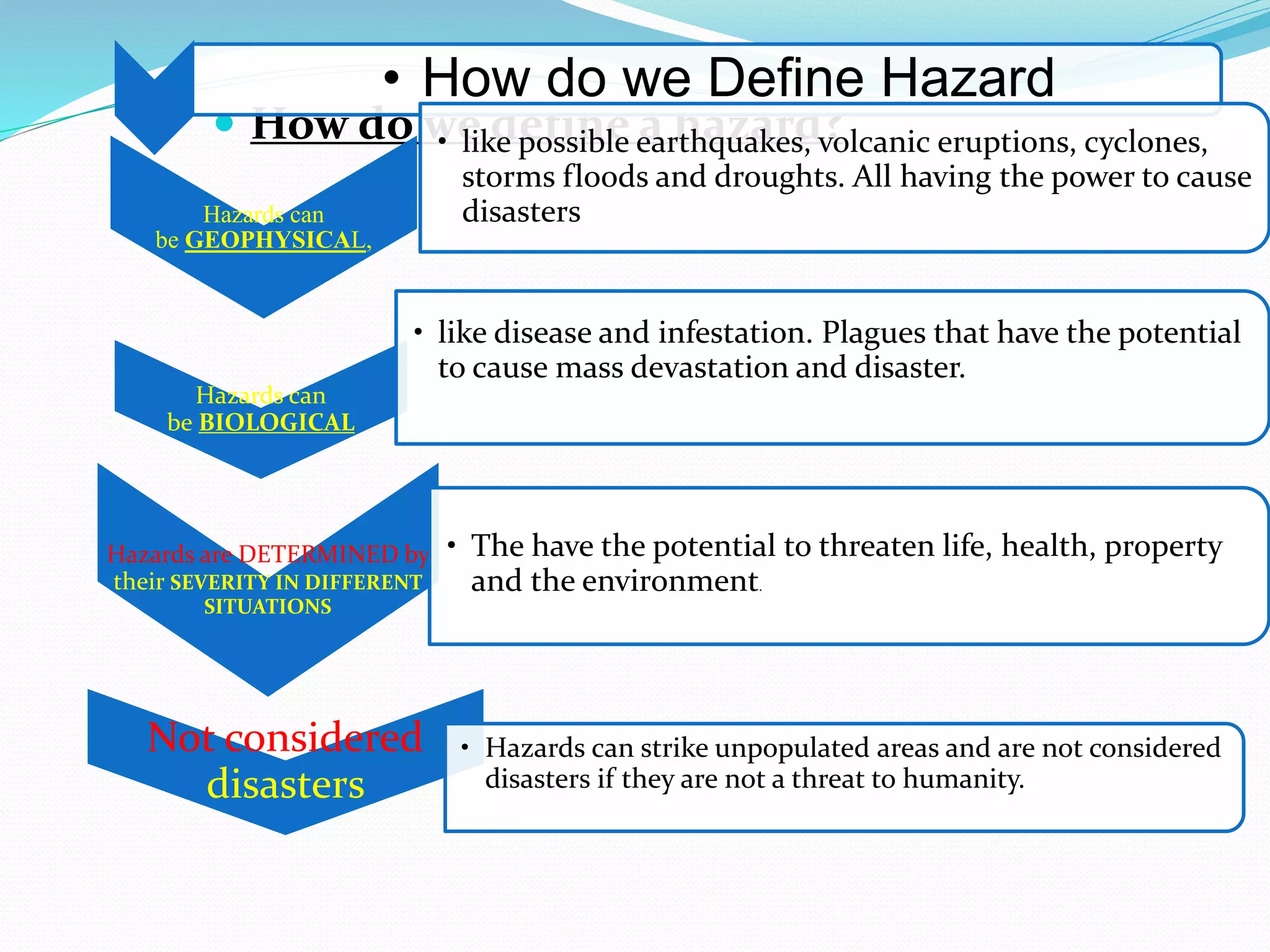
 How do we define a hazard?
• How do we Define Hazard
Hazards can
be GEOPHYSICAL,
• like possible earthquakes, volcanic eruptions, cyclones,
storms floods and droughts. All having the power to cause
disasters
Hazards can
be BIOLOGICAL
• like disease and infestation. Plagues that have the potential
to cause mass devastation and disaster.
Hazards are DETERMINED by
their SEVERITY IN DIFFERENT
SITUATIONS
• The have the potential to threaten life, health, property
and the environment.
Not considered
disasters
• Hazards can strike unpopulated areas and are not considered
disasters if they are not a threat to humanity.
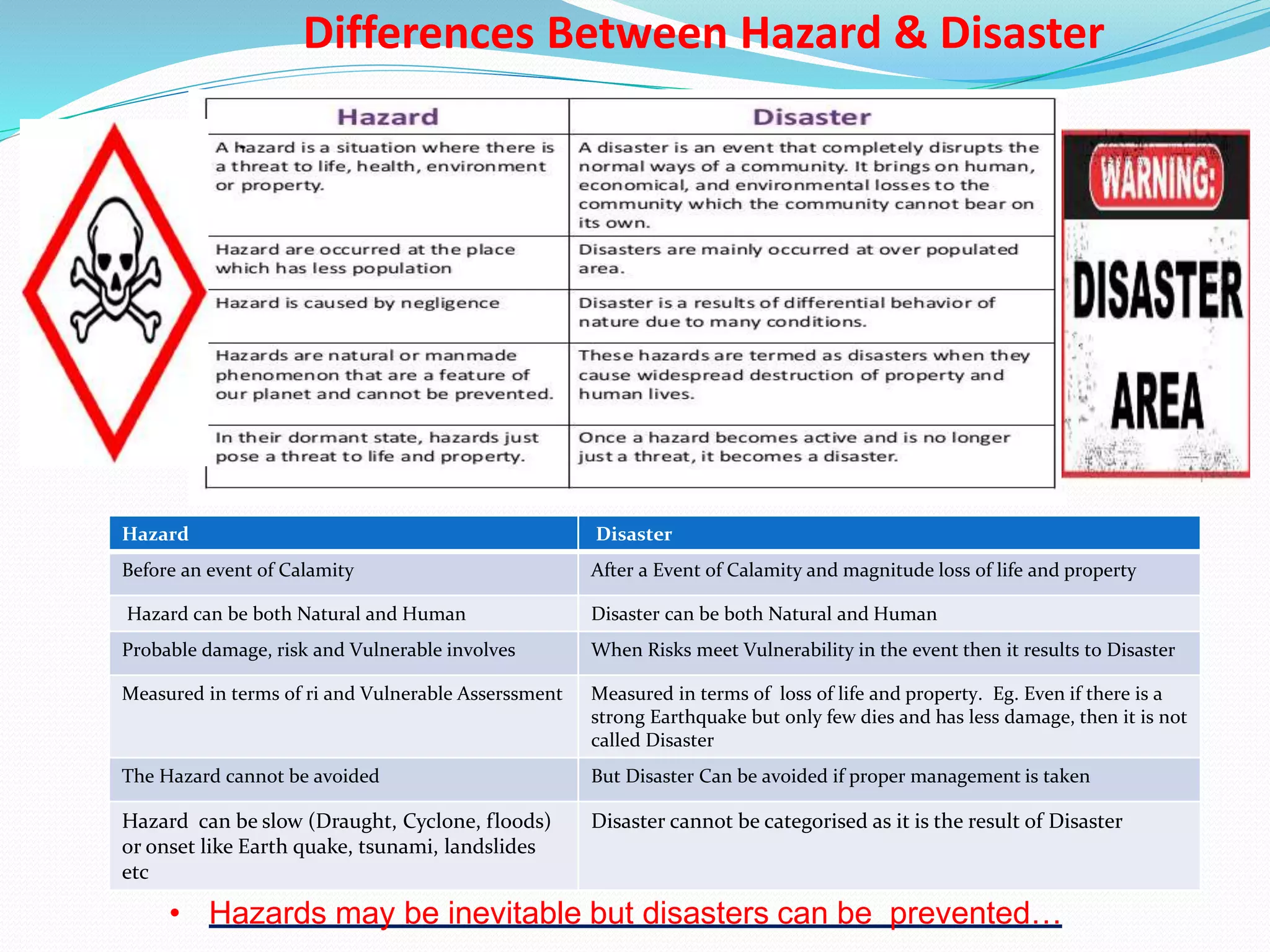
Differences Between Hazard & Disaster
Hazard Disaster
Before an event of Calamity After a Event of Calamity and magnitude loss of life and property
Hazard can be both Natural and Human Disaster can be both Natural and Human
Probable damage, risk and Vulnerable involves When Risks meet Vulnerability in the event then it results to Disaster
Measured in terms of ri and Vulnerable Asserssment Measured in terms of loss of life and property. Eg. Even if there is a
strong Earthquake but only few dies and has less damage, then it is not
called Disaster
The Hazard cannot be avoided But Disaster Can be avoided if proper management is taken
Hazard can be slow (Draught, Cyclone, floods)
or onset like Earth quake, tsunami, landslides
etc
Disaster cannot be categorised as it is the result of Disaster
• Hazards may be inevitable but disasters can be prevented…
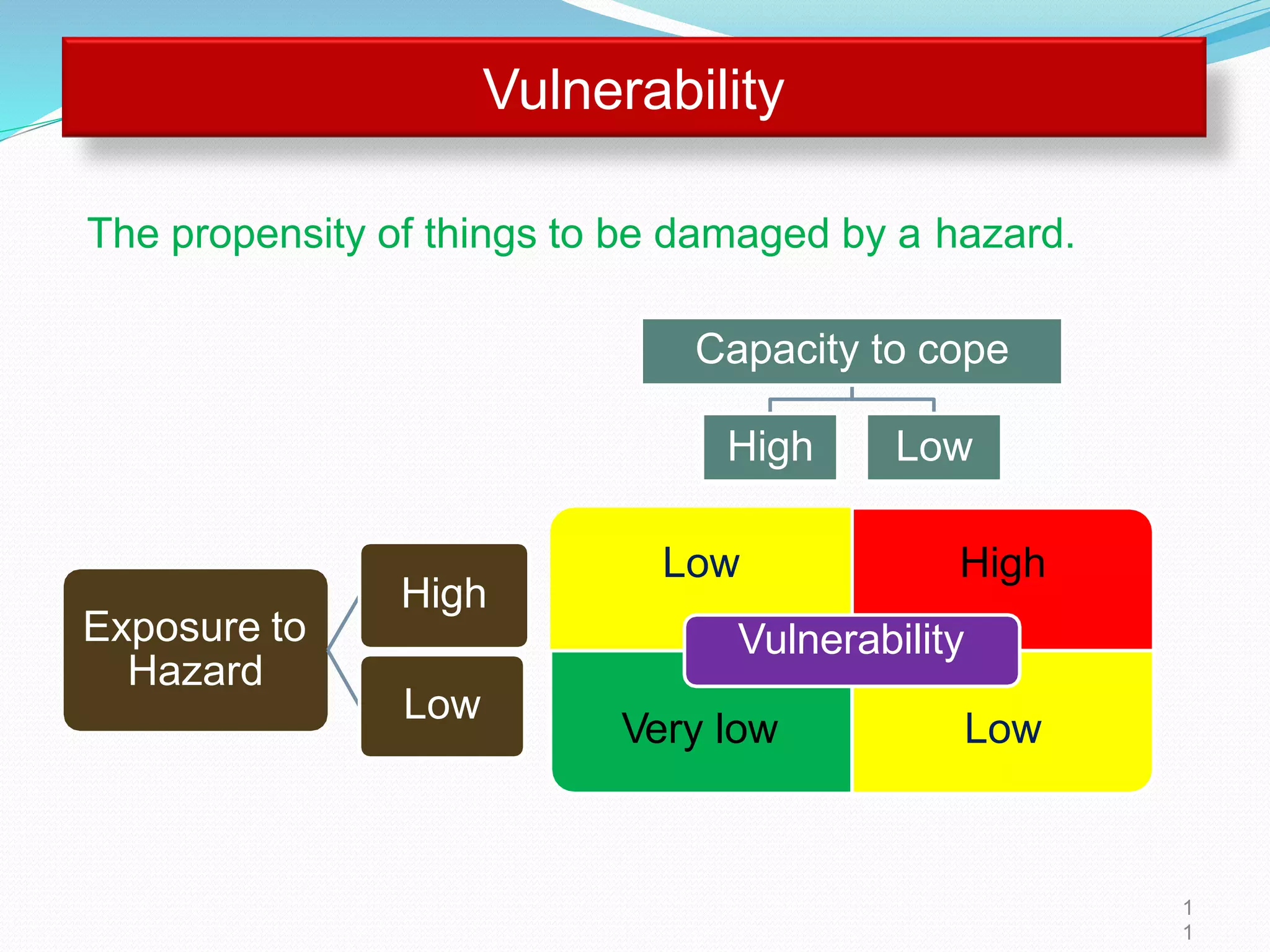
Vulnerability
Capacity to cope
High Low
Low High
Vulnerability
Very low Low
Exposure to
Hazard
High
Low
1
1
The propensity of things to be damaged by a hazard.
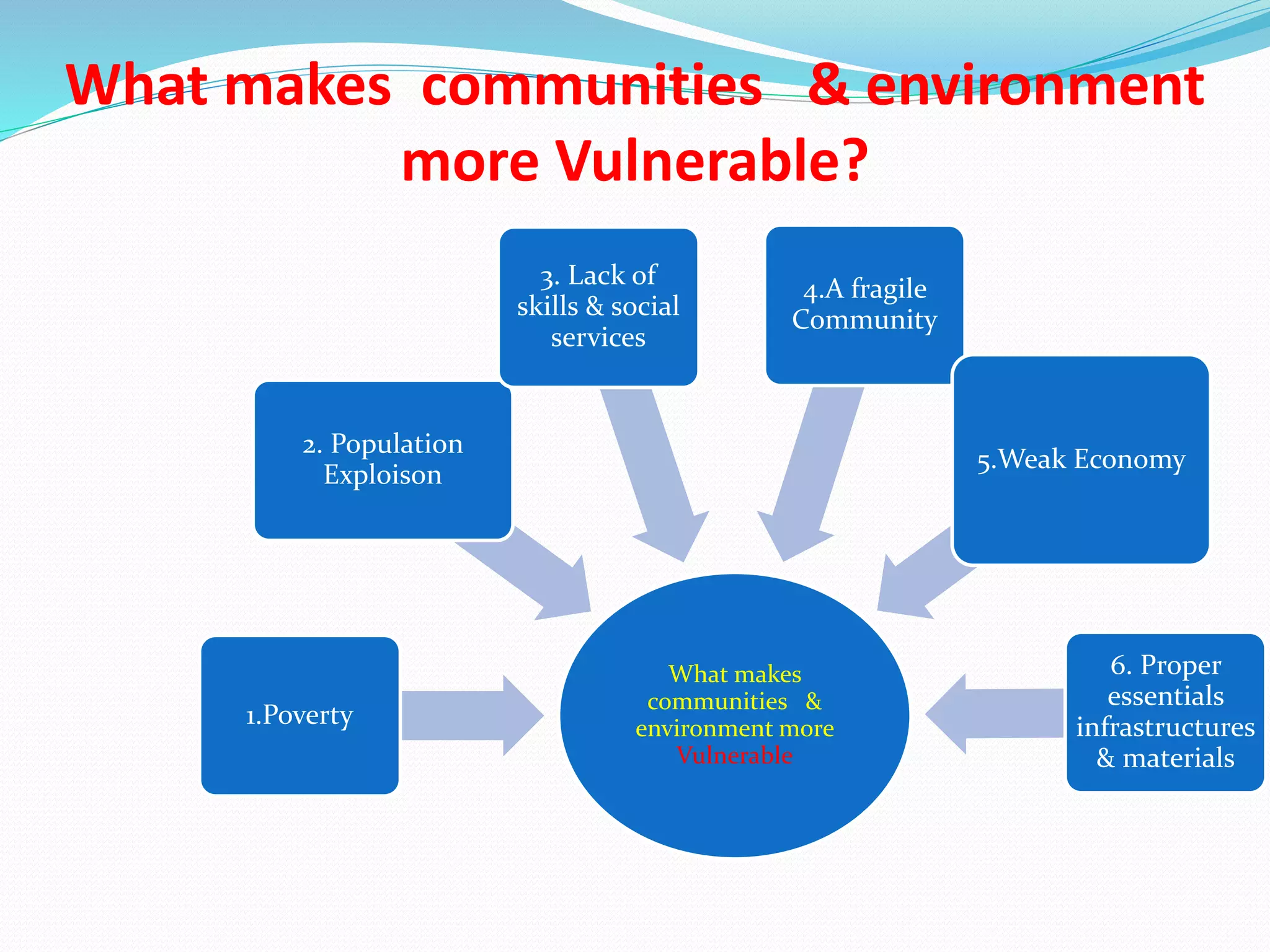
What makes communities & environment
more Vulnerable?
What makes
communities &
environment more
Vulnerable
1.Poverty
2. Population
Exploison
3. Lack of
skills & social
services
4.A fragile
Community
5.Weak Economy
6. Proper
essentials
infrastructures
& materials
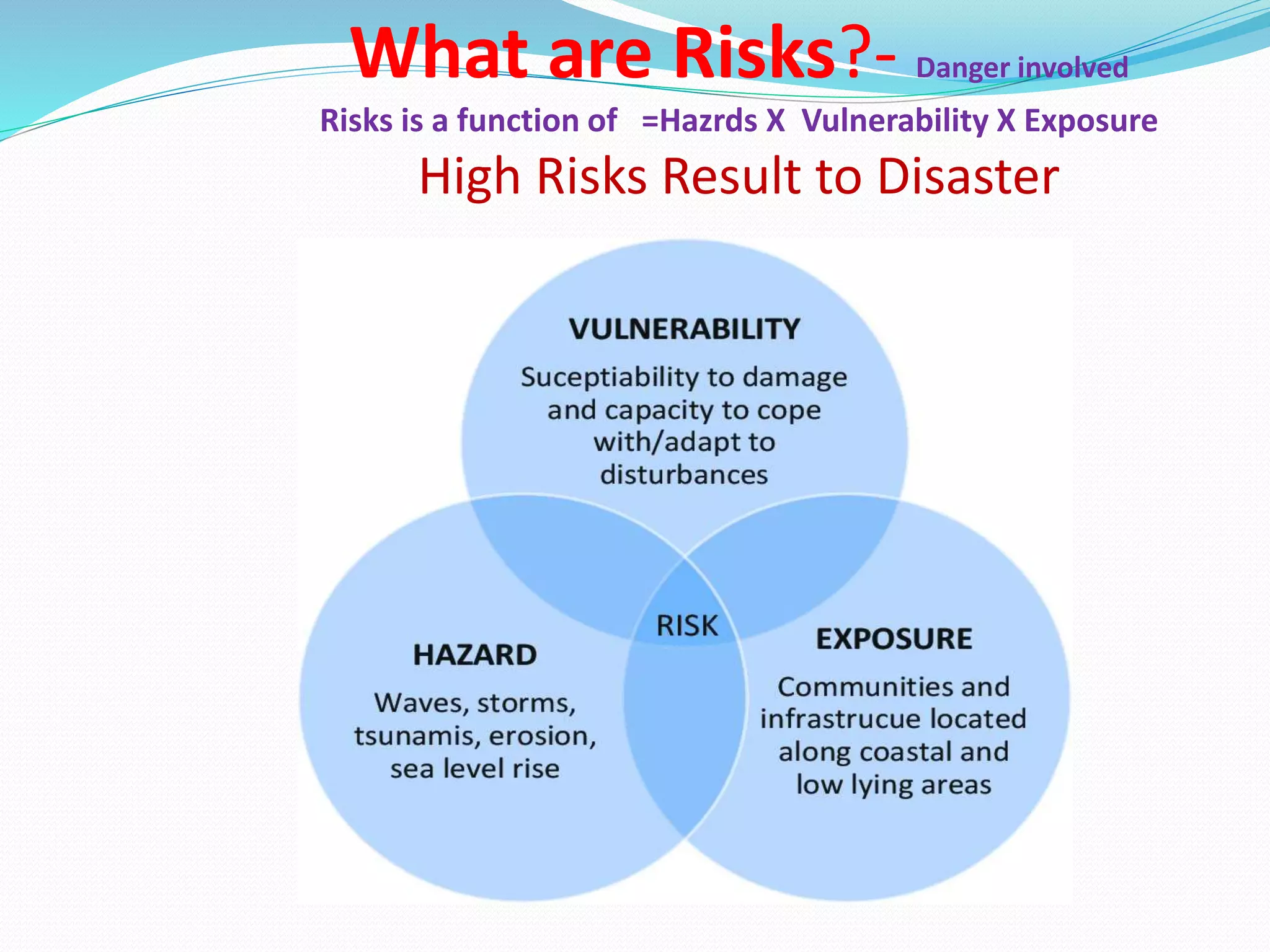
What are Risks?- Danger involved
Risks is a function of =Hazrds X Vulnerability X Exposure
High Risks Result to Disaster
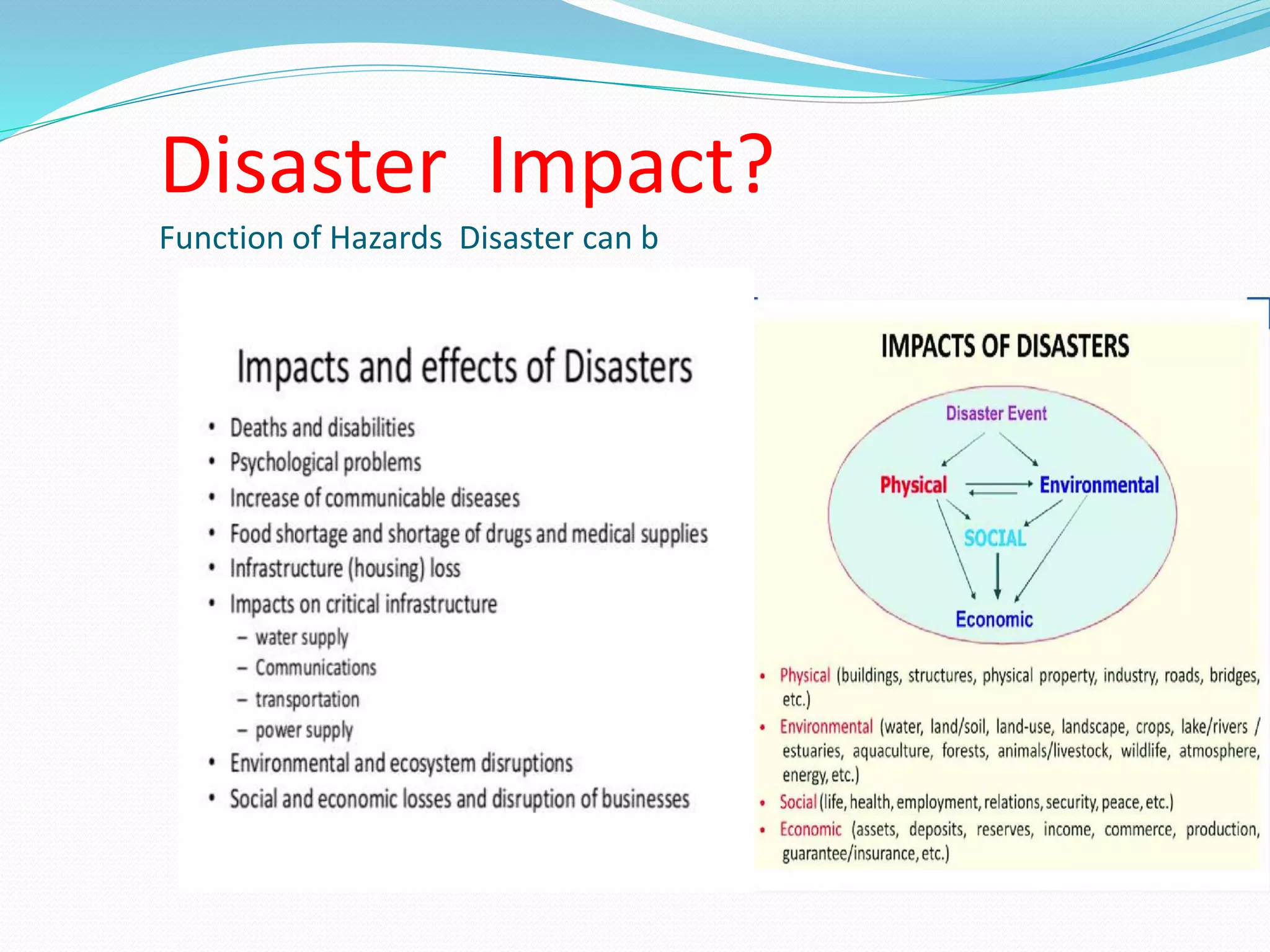
Disaster Impact?
Function of Hazards Disaster can b
Technological
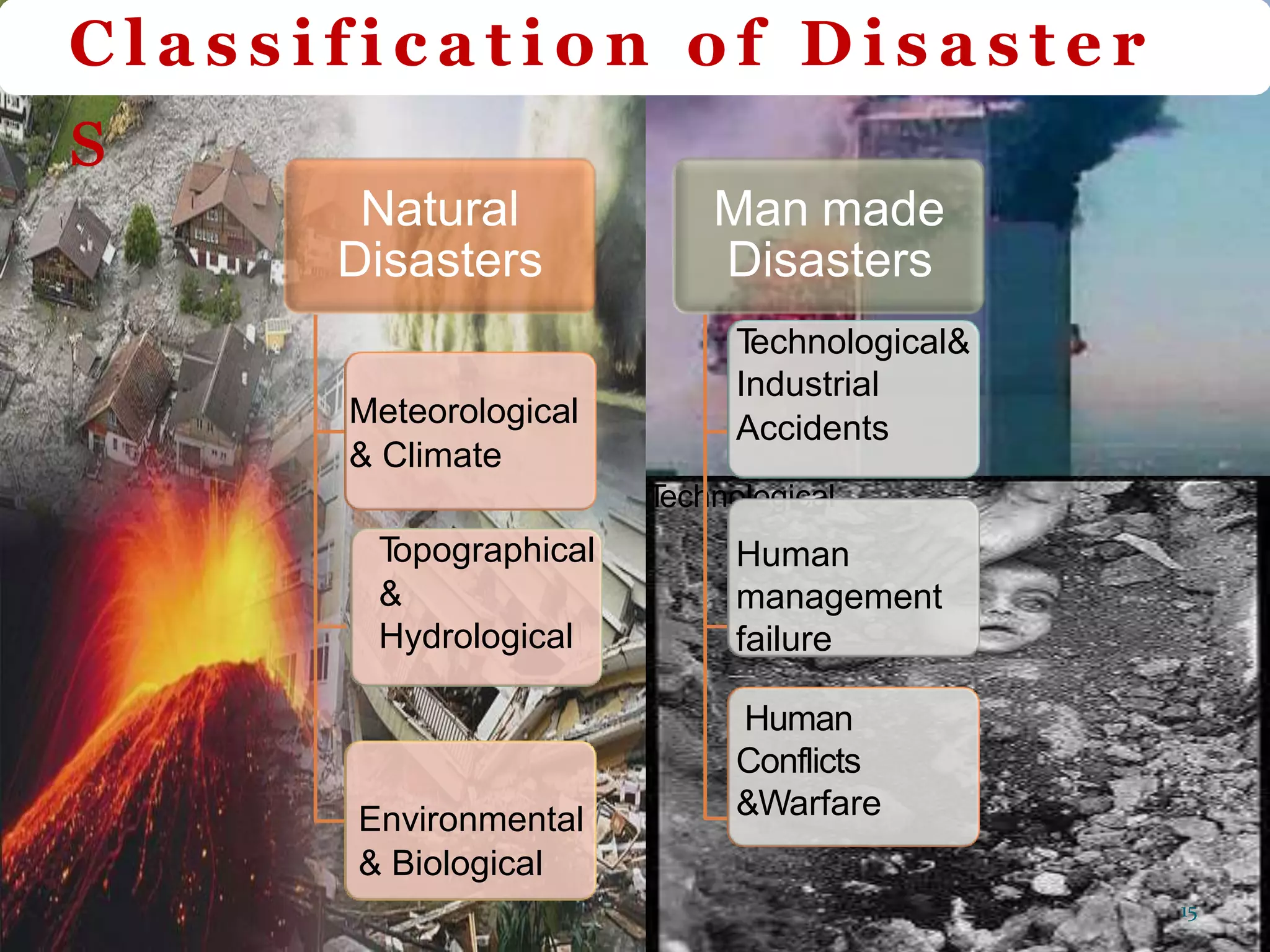
C l a s s i f i c a t i o n o f D i s a s t e r
s
15
Natural
Disasters
Meteorological
& Climate
Topographical
&
Hydrological
Environmental
& Biological
Man made
Disasters
Technological&
Industrial
Accidents
Human
management
failure
Human
Conflicts
&Warfare
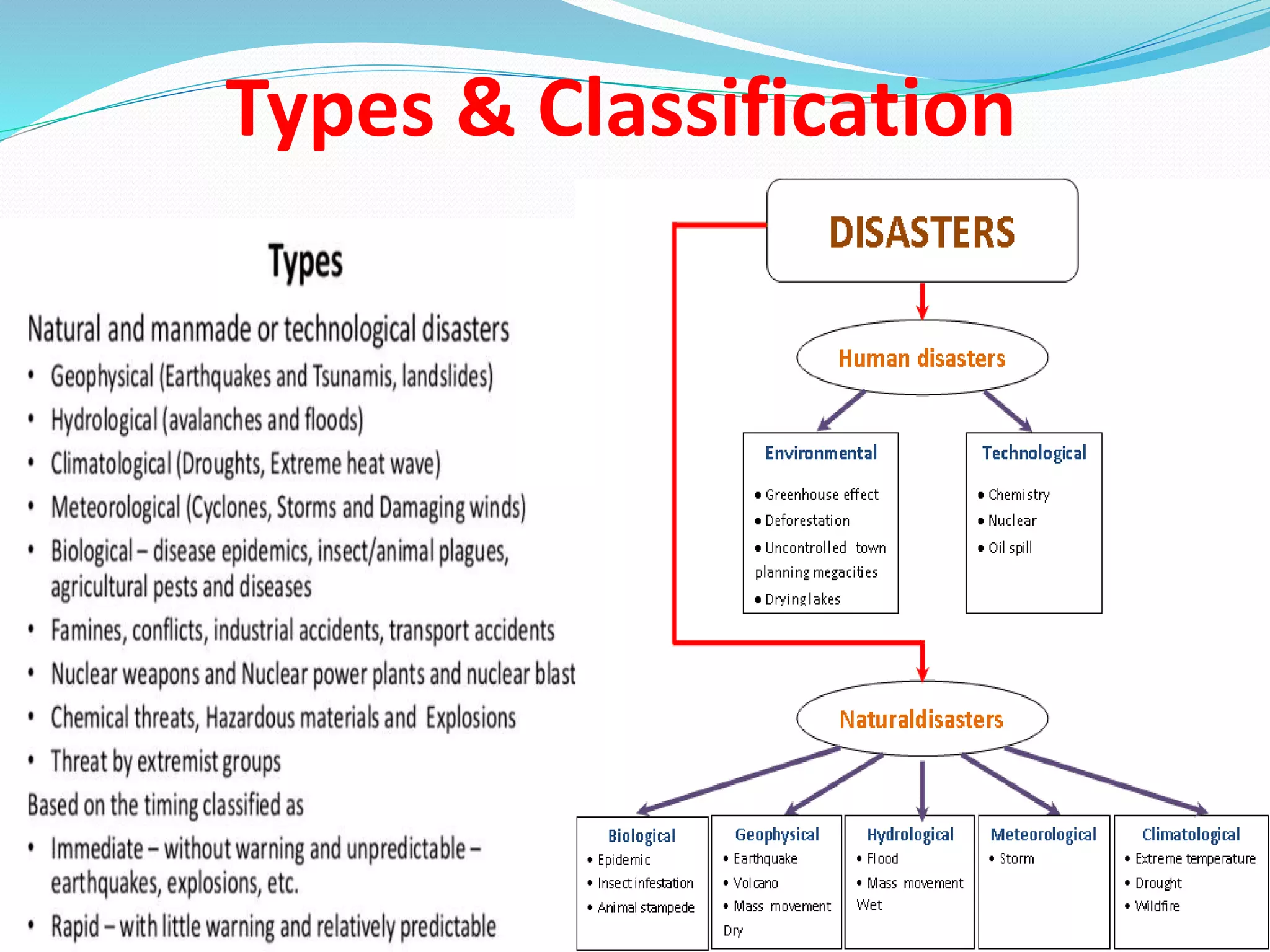
Types & Classification
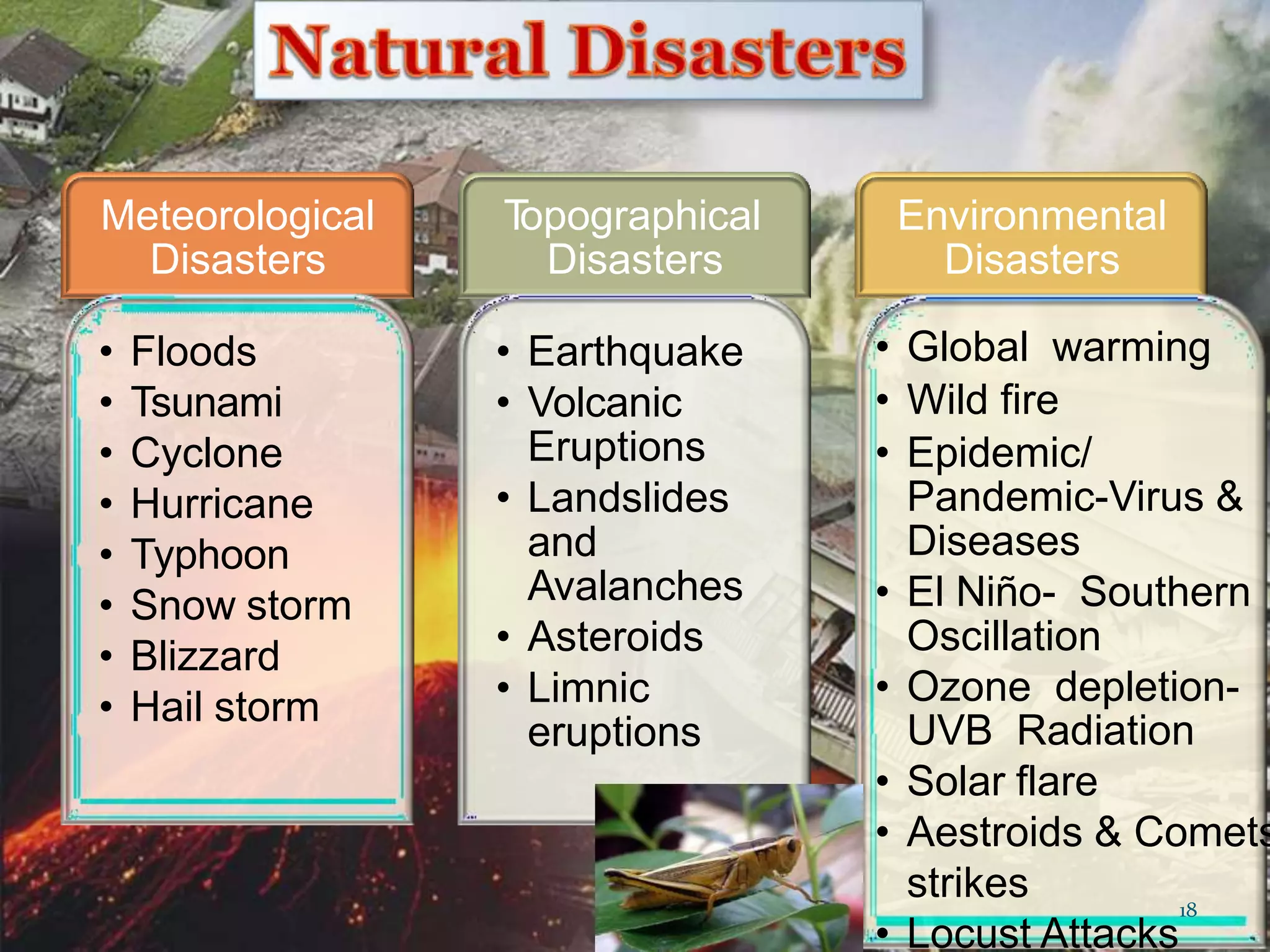
Meteorological
Disasters
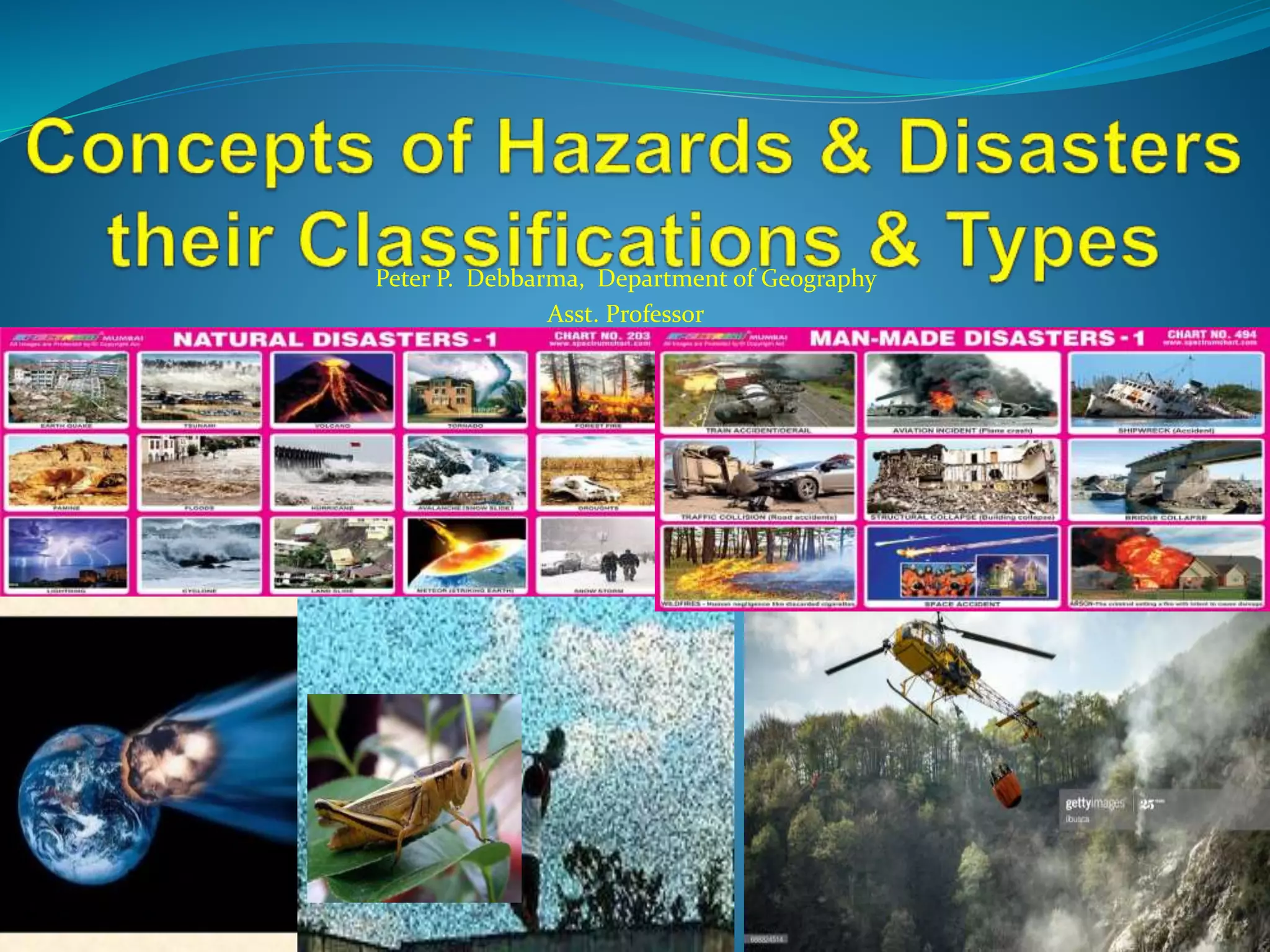
• Floods
• Tsunami
• Cyclone
• Hurricane
• Typhoon
• Snow storm
• Blizzard
• Hail storm
Topographical
Disasters
• Earthquake
• Volcanic
Eruptions
• Landslides
and
Avalanches
• Asteroids
• Limnic
eruptions
Environmental
Disasters
• Global warming
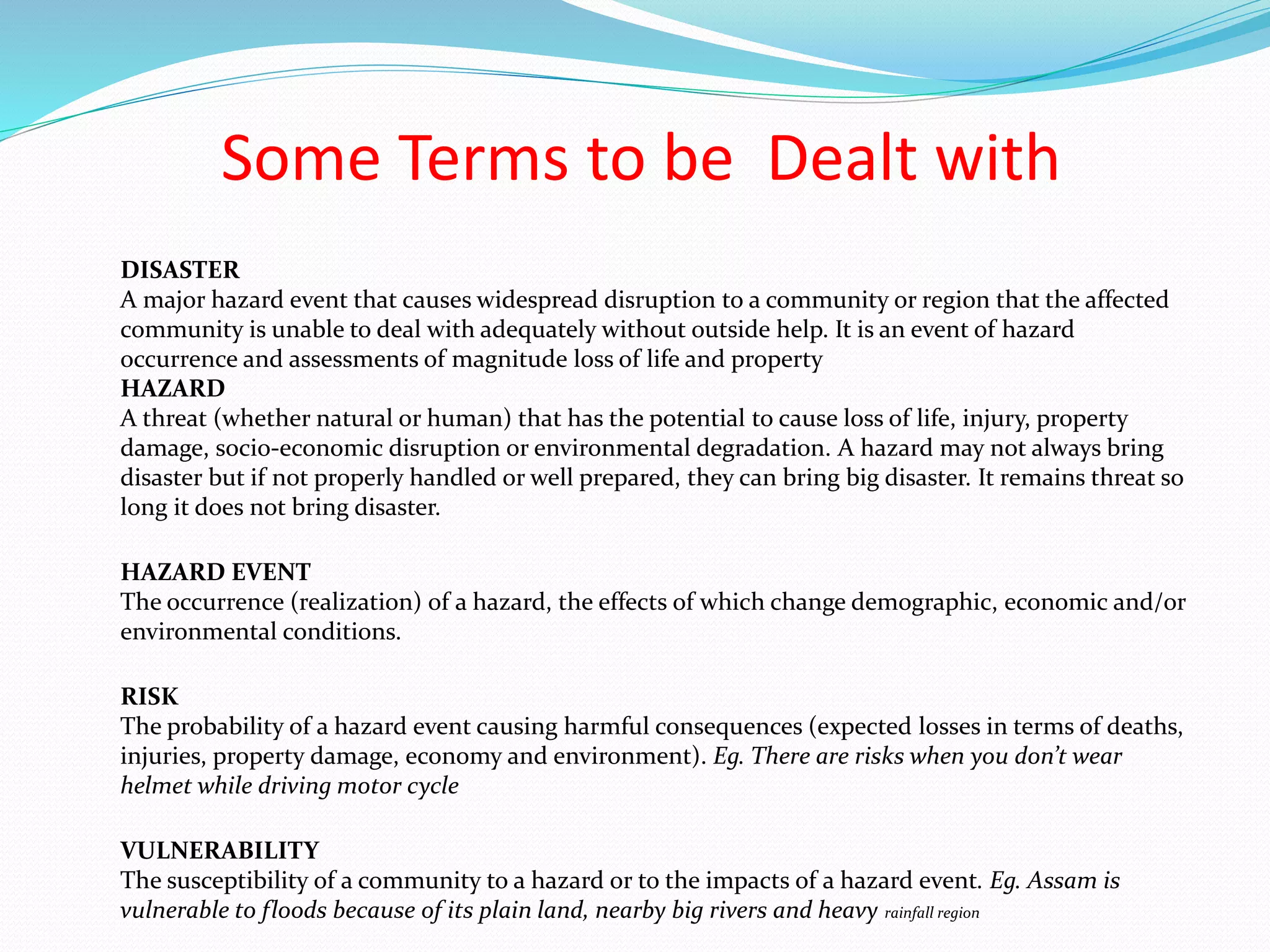
• Wild fire
• Epidemic/
Pandemic-Virus &
Diseases
• El Niño- Southern
Oscillation
• Ozone depletion-
UVB Radiation
• Solar flare
• Aestroids & Comets
strikes
• Locust Attacks
18
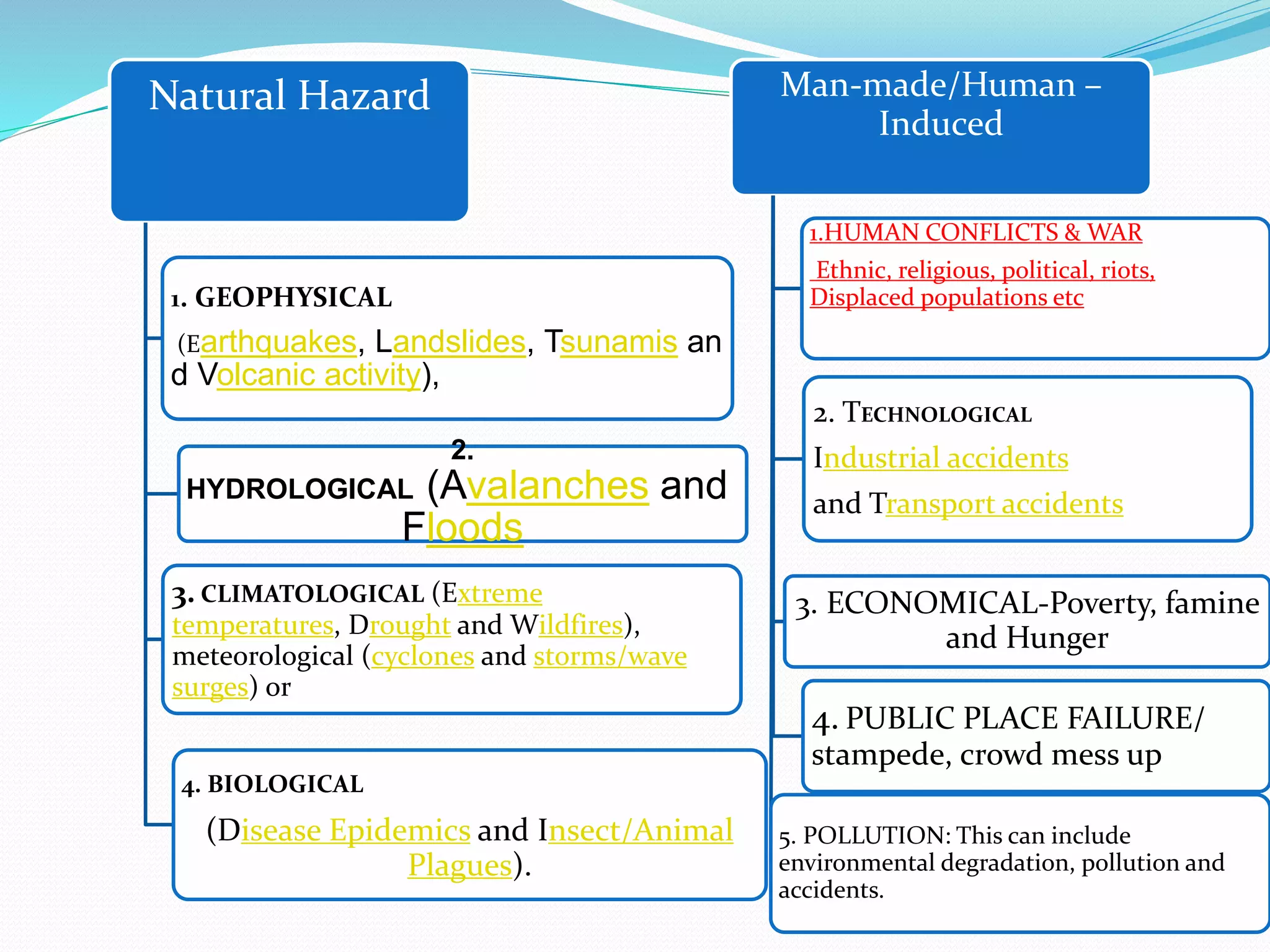
Natural Hazard
1. GEOPHYSICAL
(Earthquakes, Landslides, Tsunamis an
d Volcanic activity),
4. BIOLOGICAL
(Disease Epidemics and Insect/Animal
Plagues).
3. CLIMATOLOGICAL (Extreme
temperatures, Drought and Wildfires),
meteorological (cyclones and storms/wave
surges) or
2.
HYDROLOGICAL (Avalanches and
Floods
Man-made/Human –
Induced
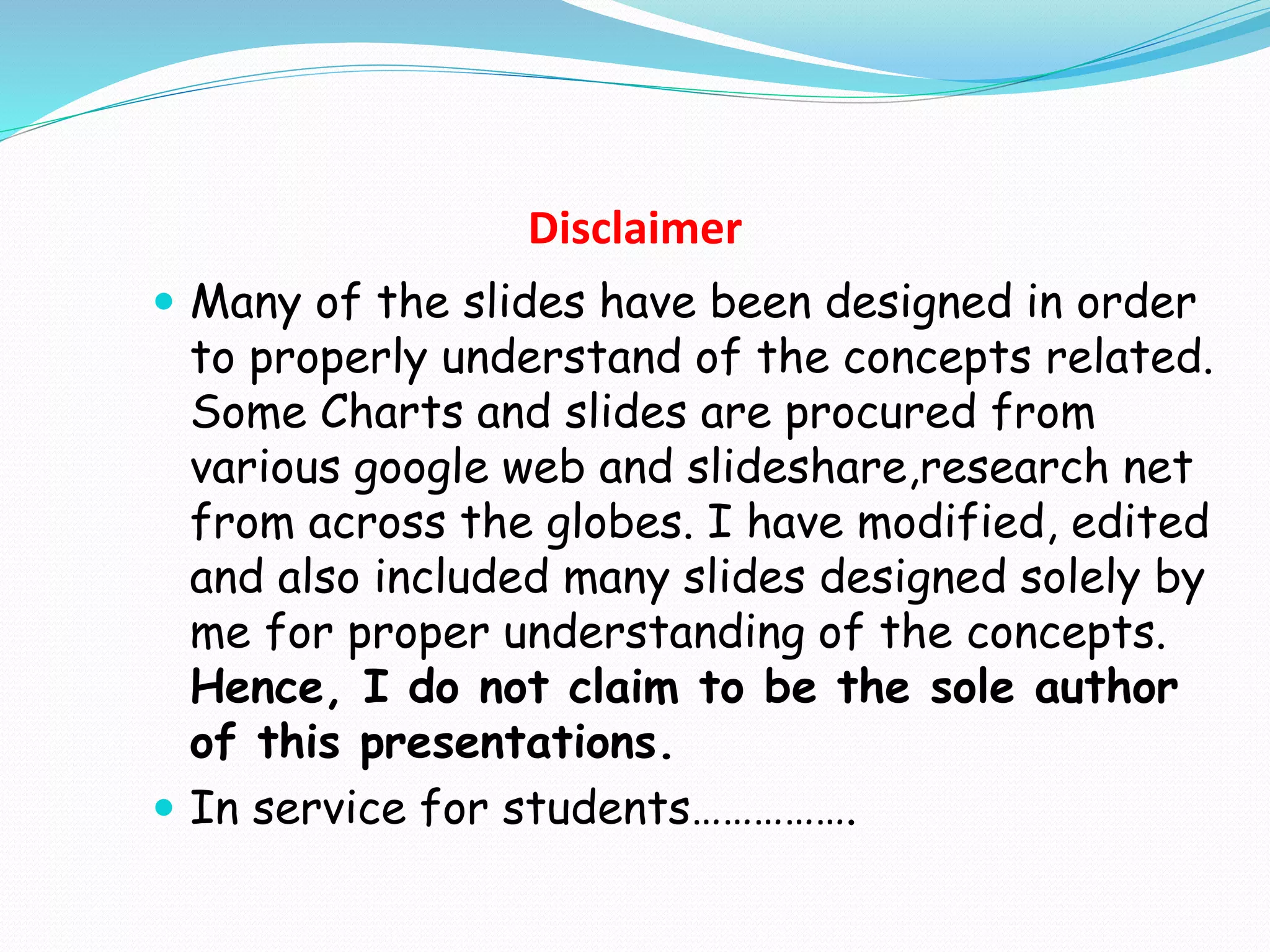
1.HUMAN CONFLICTS & WAR
Ethnic, religious, political, riots,
Displaced populations etc
2. TECHNOLOGICAL
Industrial accidents
and Transport accidents
5. POLLUTION: This can include
environmental degradation, pollution and
accidents.
4. PUBLIC PLACE FAILURE/
stampede, crowd mess up
3. ECONOMICAL-Poverty, famine
and Hunger
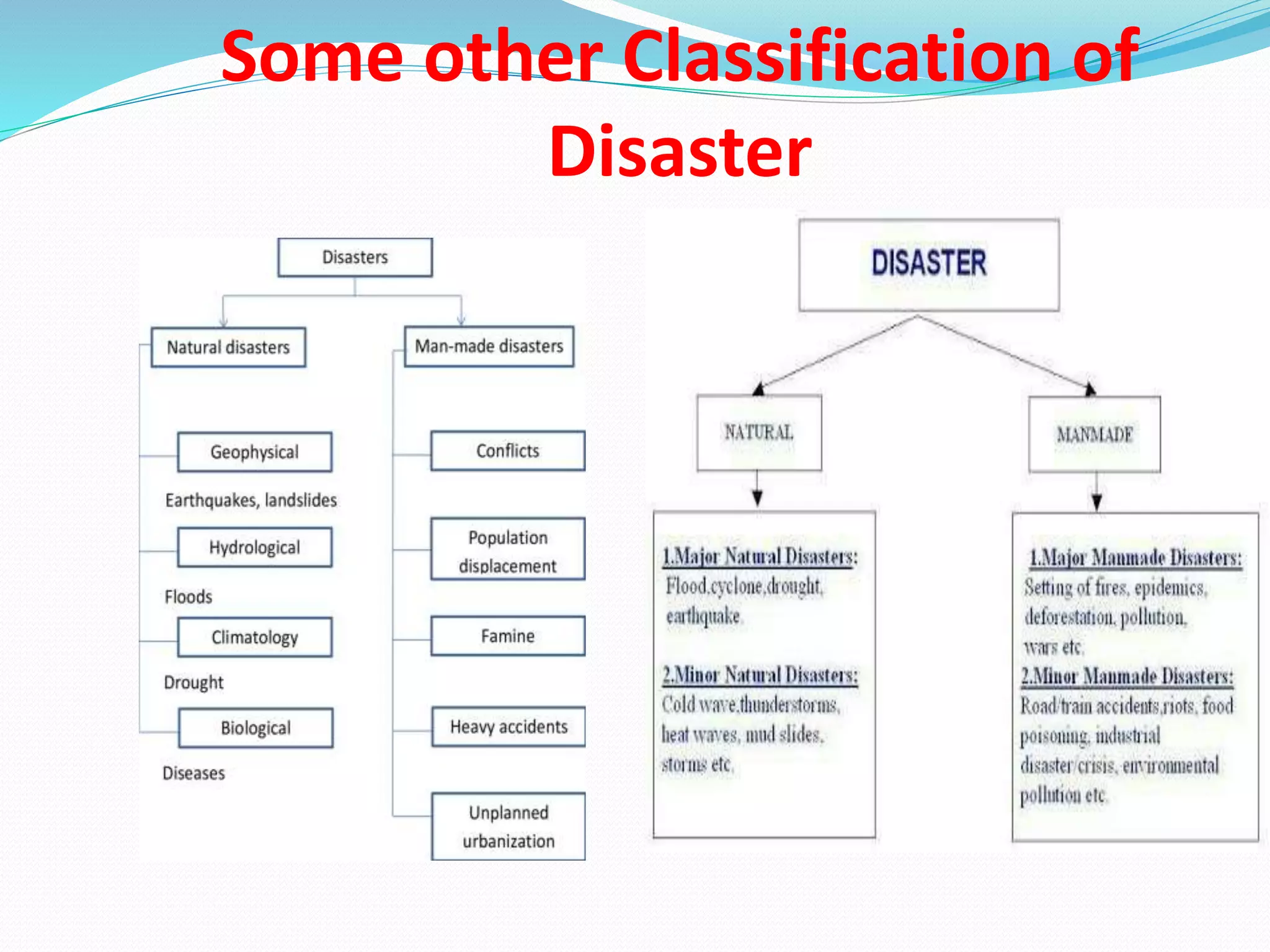
Some other Classification of
Disaster
Natural Disaster
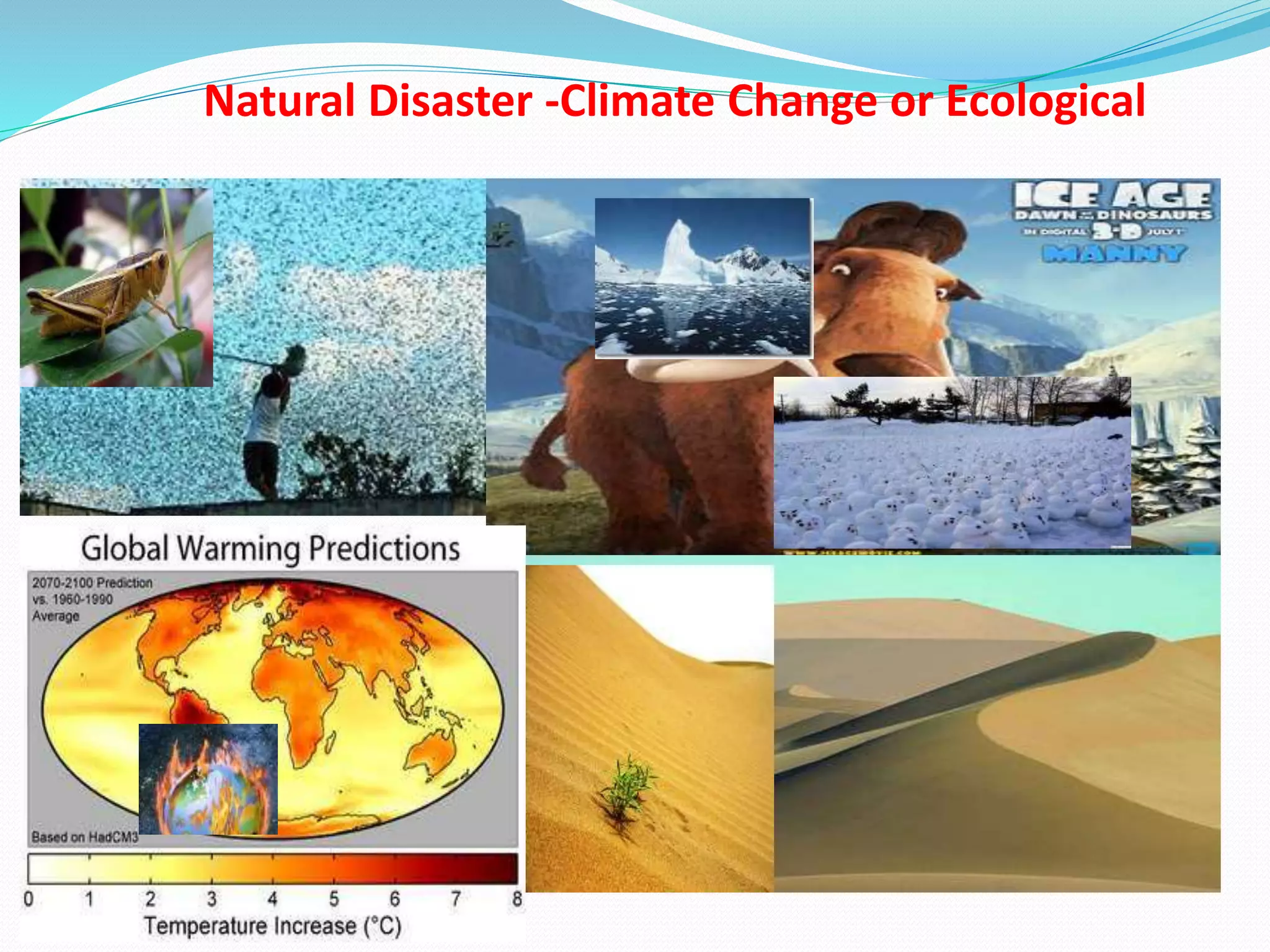
Natural Disaster -Climate Change or Ecological
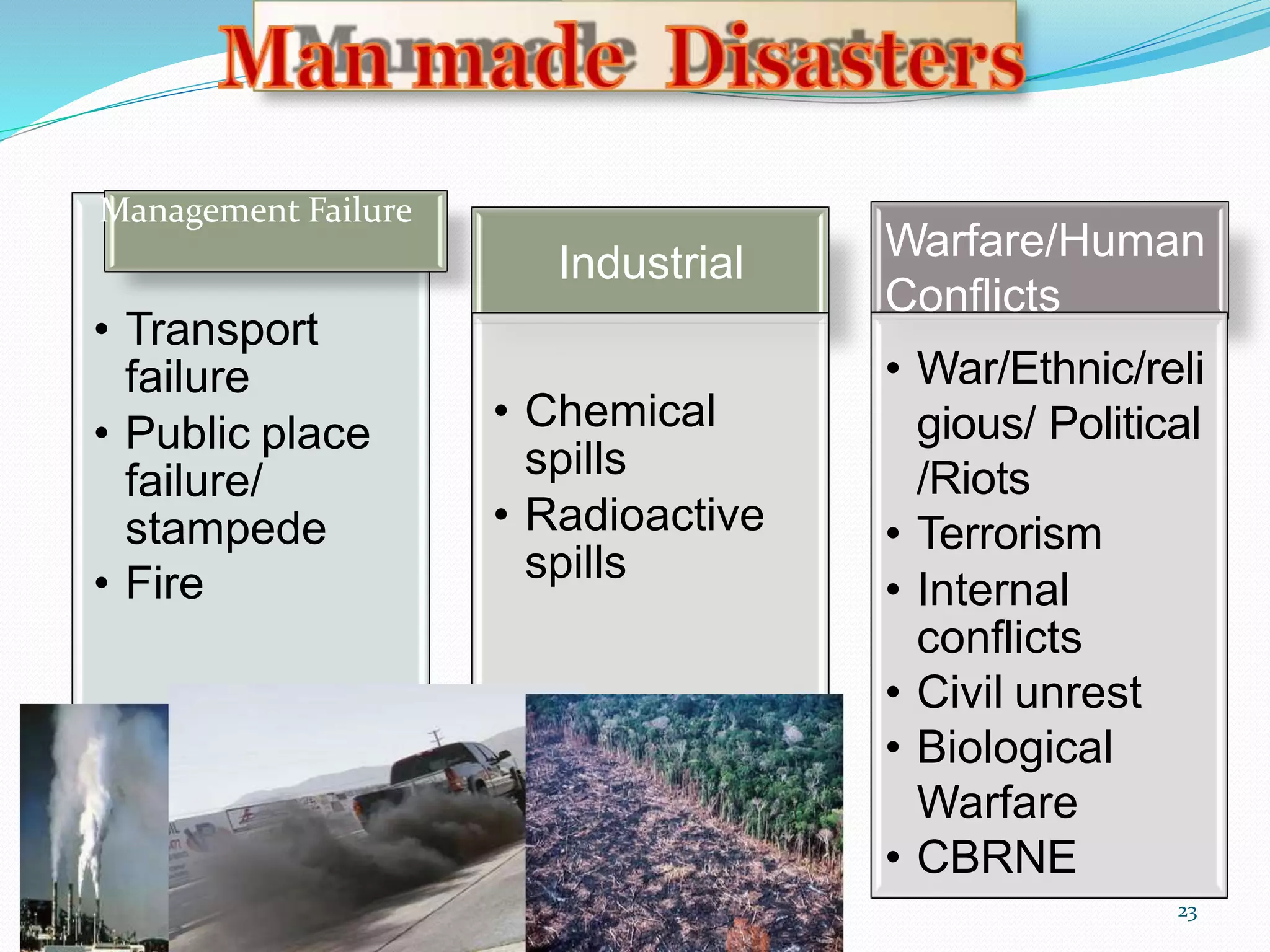
Technological
• Transport
failure
• Public place
failure/
stampede
• Fire
Industrial
• Chemical
spills
• Radioactive
spills
Warfare/Human
Conflicts
23
• War/Ethnic/reli
gious/ Political
/Riots
• Terrorism
• Internal
conflicts
• Civil unrest
• Biological
Warfare
• CBRNE
Management Failure
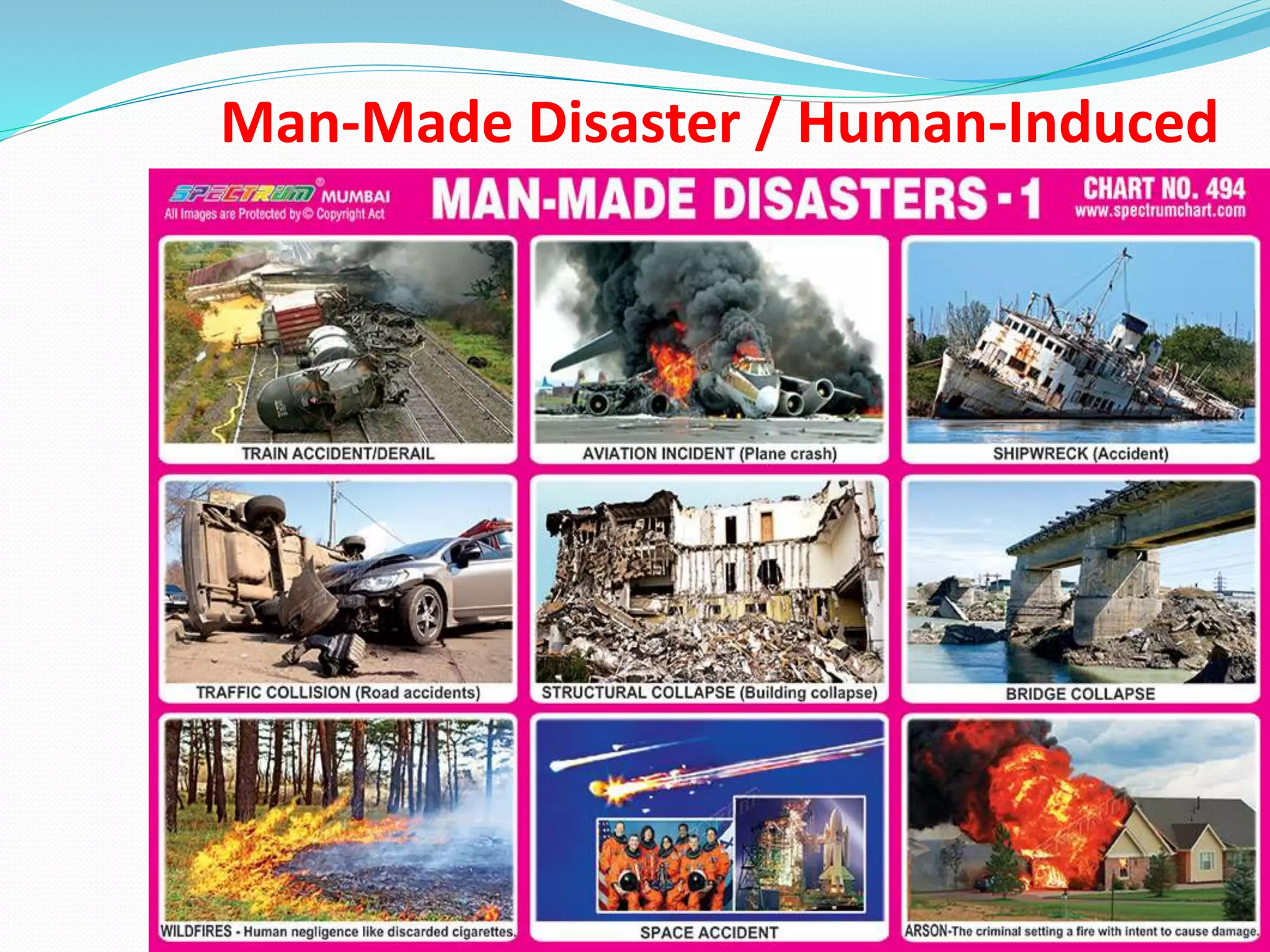
Man-Made Disaster / Human-Induced
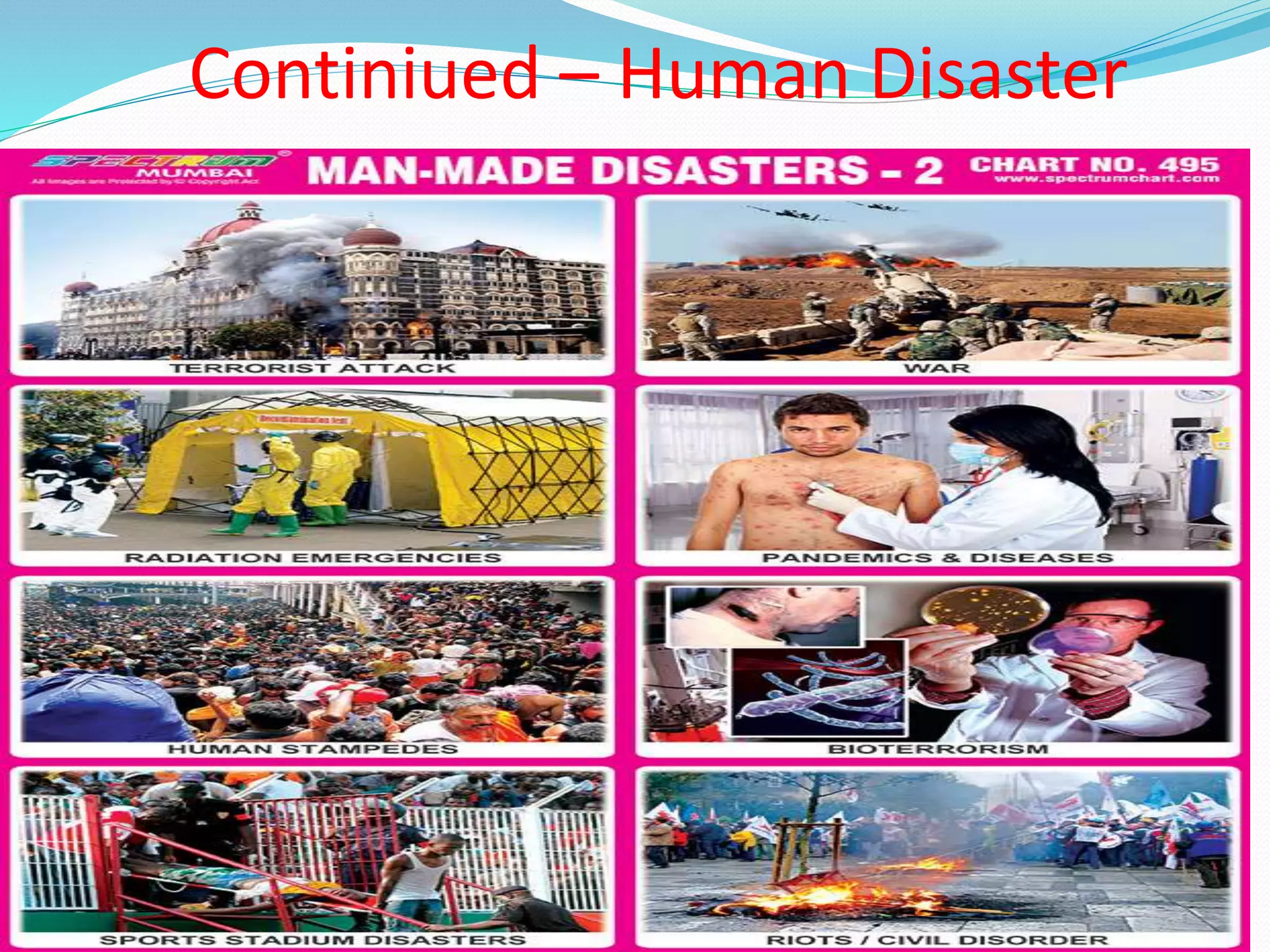
Continiued – Human Disaster

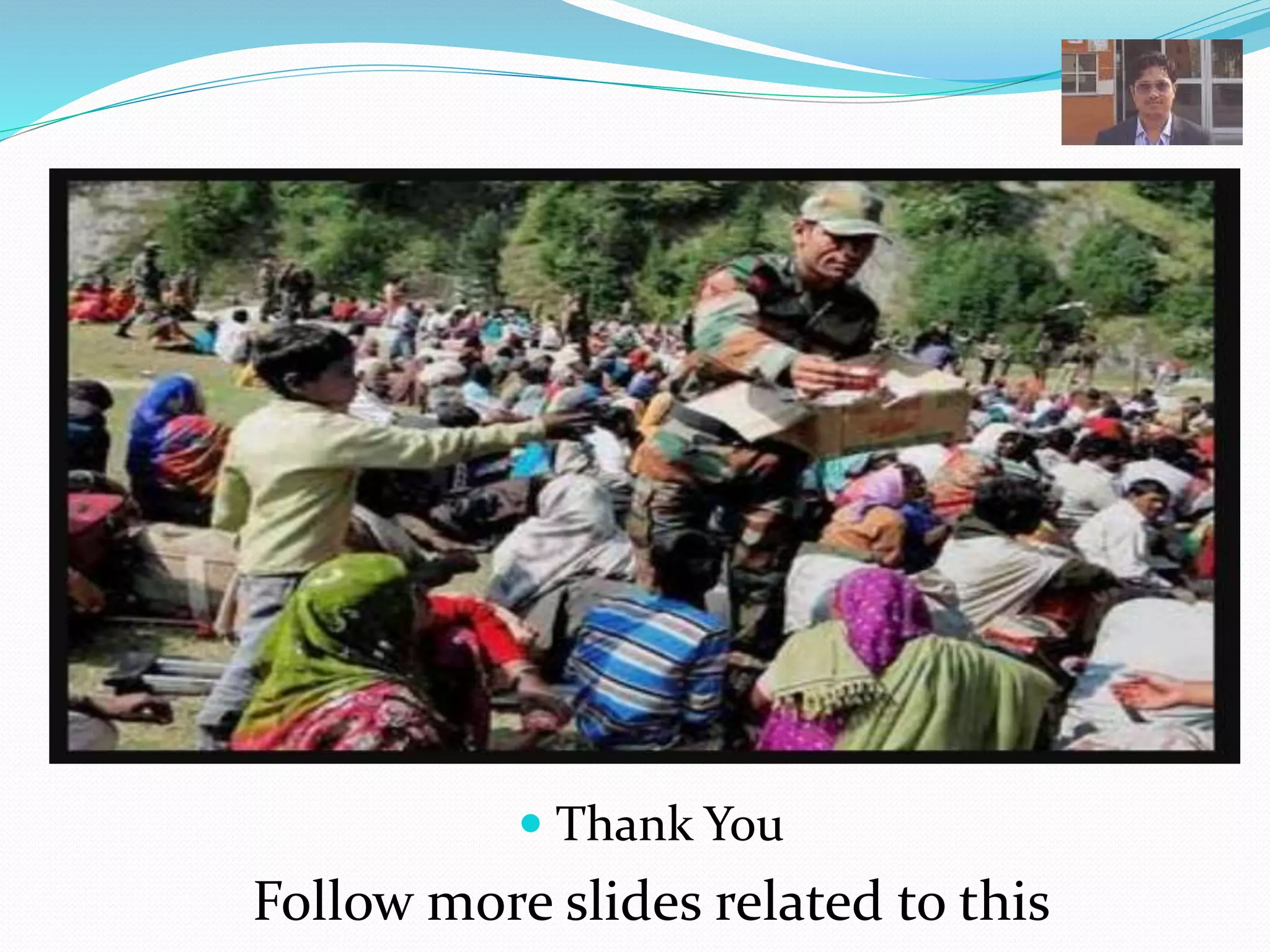
 Thank You
Follow more slides related to this

Concepts of hazard, disasters, their classification and types

  • 1.
    Peter P. Debbarma,Department of Geography Asst. Professor
  • 2.
    Disclaimer  Many ofthe slides have been designed in order to properly understand of the concepts related. Some Charts and slides are procured from various google web and slideshare,research net from across the globes. I have modified, edited and also included many slides designed solely by me for proper understanding of the concepts. Hence, I do not claim to be the sole author of this presentations.  In service for students…………….
  • 3.
    Scope • Disasters areas old as our Earth & Mankind. • It was even before Mankind-Earth faces through different extremes of Climate, mountain buildings and aestroid and commets strikes- Dinasour and many animals extinct • The first description of Disaster and its management comes from biblical “NOAH” and his ark. • Similar Flood tales are widespread in- Greek Mythology, Puranas, Mesopotamian stories, and many cultures. Disasters Concepts- 3
  • 4.
    Some Terms tobe Dealt with DISASTER A major hazard event that causes widespread disruption to a community or region that the affected community is unable to deal with adequately without outside help. It is an event of hazard occurrence and assessments of magnitude loss of life and property HAZARD A threat (whether natural or human) that has the potential to cause loss of life, injury, property damage, socio-economic disruption or environmental degradation. A hazard may not always bring disaster but if not properly handled or well prepared, they can bring big disaster. It remains threat so long it does not bring disaster. HAZARD EVENT The occurrence (realization) of a hazard, the effects of which change demographic, economic and/or environmental conditions. RISK The probability of a hazard event causing harmful consequences (expected losses in terms of deaths, injuries, property damage, economy and environment). Eg. There are risks when you don’t wear helmet while driving motor cycle VULNERABILITY The susceptibility of a community to a hazard or to the impacts of a hazard event. Eg. Assam is vulnerable to floods because of its plain land, nearby big rivers and heavy rainfall region
  • 5.
    WHAT are DISASTERS? Any occurrence that causes damage, ecological disruption, loss of human life,deterioration of health and health services on a scale, sufficient to warrant an extraordinary response from outside the affected community or area.(WHO) A disaster can be defined as an occurrence either nature or man made that causes human suffering and creates human needs that victim cannot alleviate without assistance. (American Red Cross) Etymology Originated from Greek dus = bad aster = star Calamity due to position of a planet or a star. Then evolved in Italian as disastro, To become French désastre (de.zastʁ). & then disaster . 5
  • 6.
    Explanation & Mechanismof Disaster Function of Hazards and Vulnerability, If vulnerables are reduced then Disaster can be minimized from Hazards
  • 7.
    Characteristics & Factorsinvolving Disaster
  • 8.
    What are Hazards? 8 Hazard- Any phenomenon that has the potential to cause disruption or damage to people and their environment. “A hazard is natural event while the disaster is its consequence. A hazard is perceived natural event which threatens both life and property…… A disaster is a realization of this hazard.”-John Whittow • When hazard involves elements of RISKS, VULNERABILITIES AND CAPACITIES, they can turn into DISASTERS. Hazards may be of Two Types Slow/ takes time Floods, draughts, Climatic, Global warming, Cyclones- storms etc Onset/rapid/sudden outbreak Earthquake, landslides,, Volcano, Tsunami, Industrials accidents etc
  • 9.
     How dowe define a hazard? • How do we Define Hazard Hazards can be GEOPHYSICAL, • like possible earthquakes, volcanic eruptions, cyclones, storms floods and droughts. All having the power to cause disasters Hazards can be BIOLOGICAL • like disease and infestation. Plagues that have the potential to cause mass devastation and disaster. Hazards are DETERMINED by their SEVERITY IN DIFFERENT SITUATIONS • The have the potential to threaten life, health, property and the environment. Not considered disasters • Hazards can strike unpopulated areas and are not considered disasters if they are not a threat to humanity.
  • 10.
    Differences Between Hazard& Disaster Hazard Disaster Before an event of Calamity After a Event of Calamity and magnitude loss of life and property Hazard can be both Natural and Human Disaster can be both Natural and Human Probable damage, risk and Vulnerable involves When Risks meet Vulnerability in the event then it results to Disaster Measured in terms of ri and Vulnerable Asserssment Measured in terms of loss of life and property. Eg. Even if there is a strong Earthquake but only few dies and has less damage, then it is not called Disaster The Hazard cannot be avoided But Disaster Can be avoided if proper management is taken Hazard can be slow (Draught, Cyclone, floods) or onset like Earth quake, tsunami, landslides etc Disaster cannot be categorised as it is the result of Disaster • Hazards may be inevitable but disasters can be prevented…
  • 11.
    Vulnerability Capacity to cope HighLow Low High Vulnerability Very low Low Exposure to Hazard High Low 1 1 The propensity of things to be damaged by a hazard.
  • 12.
    What makes communities& environment more Vulnerable? What makes communities & environment more Vulnerable 1.Poverty 2. Population Exploison 3. Lack of skills & social services 4.A fragile Community 5.Weak Economy 6. Proper essentials infrastructures & materials
  • 13.
    What are Risks?-Danger involved Risks is a function of =Hazrds X Vulnerability X Exposure High Risks Result to Disaster
  • 14.
    Disaster Impact? Function ofHazards Disaster can b
  • 15.
    Technological C l as s i f i c a t i o n o f D i s a s t e r s 15 Natural Disasters Meteorological & Climate Topographical & Hydrological Environmental & Biological Man made Disasters Technological& Industrial Accidents Human management failure Human Conflicts &Warfare
  • 16.
  • 18.
    Meteorological Disasters • Floods • Tsunami •Cyclone • Hurricane • Typhoon • Snow storm • Blizzard • Hail storm Topographical Disasters • Earthquake • Volcanic Eruptions • Landslides and Avalanches • Asteroids • Limnic eruptions Environmental Disasters • Global warming • Wild fire • Epidemic/ Pandemic-Virus & Diseases • El Niño- Southern Oscillation • Ozone depletion- UVB Radiation • Solar flare • Aestroids & Comets strikes • Locust Attacks 18
  • 19.
    Natural Hazard 1. GEOPHYSICAL (Earthquakes,Landslides, Tsunamis an d Volcanic activity), 4. BIOLOGICAL (Disease Epidemics and Insect/Animal Plagues). 3. CLIMATOLOGICAL (Extreme temperatures, Drought and Wildfires), meteorological (cyclones and storms/wave surges) or 2. HYDROLOGICAL (Avalanches and Floods Man-made/Human – Induced 1.HUMAN CONFLICTS & WAR Ethnic, religious, political, riots, Displaced populations etc 2. TECHNOLOGICAL Industrial accidents and Transport accidents 5. POLLUTION: This can include environmental degradation, pollution and accidents. 4. PUBLIC PLACE FAILURE/ stampede, crowd mess up 3. ECONOMICAL-Poverty, famine and Hunger
  • 20.
  • 21.
  • 22.
    Natural Disaster -ClimateChange or Ecological
  • 23.
    Technological • Transport failure • Publicplace failure/ stampede • Fire Industrial • Chemical spills • Radioactive spills Warfare/Human Conflicts 23 • War/Ethnic/reli gious/ Political /Riots • Terrorism • Internal conflicts • Civil unrest • Biological Warfare • CBRNE Management Failure
  • 24.
    Man-Made Disaster /Human-Induced
  • 25.
  • 27.
      Thank You Followmore slides related to this